
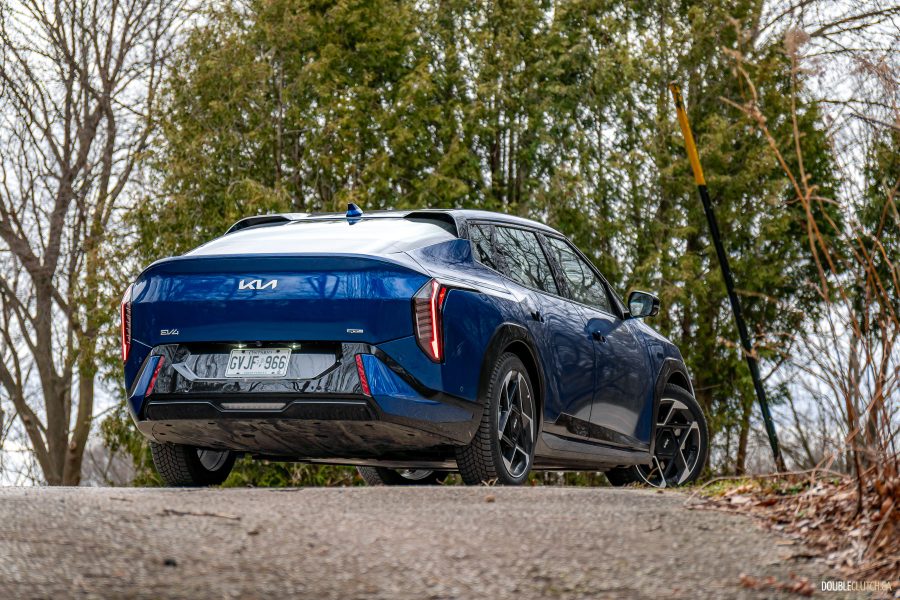
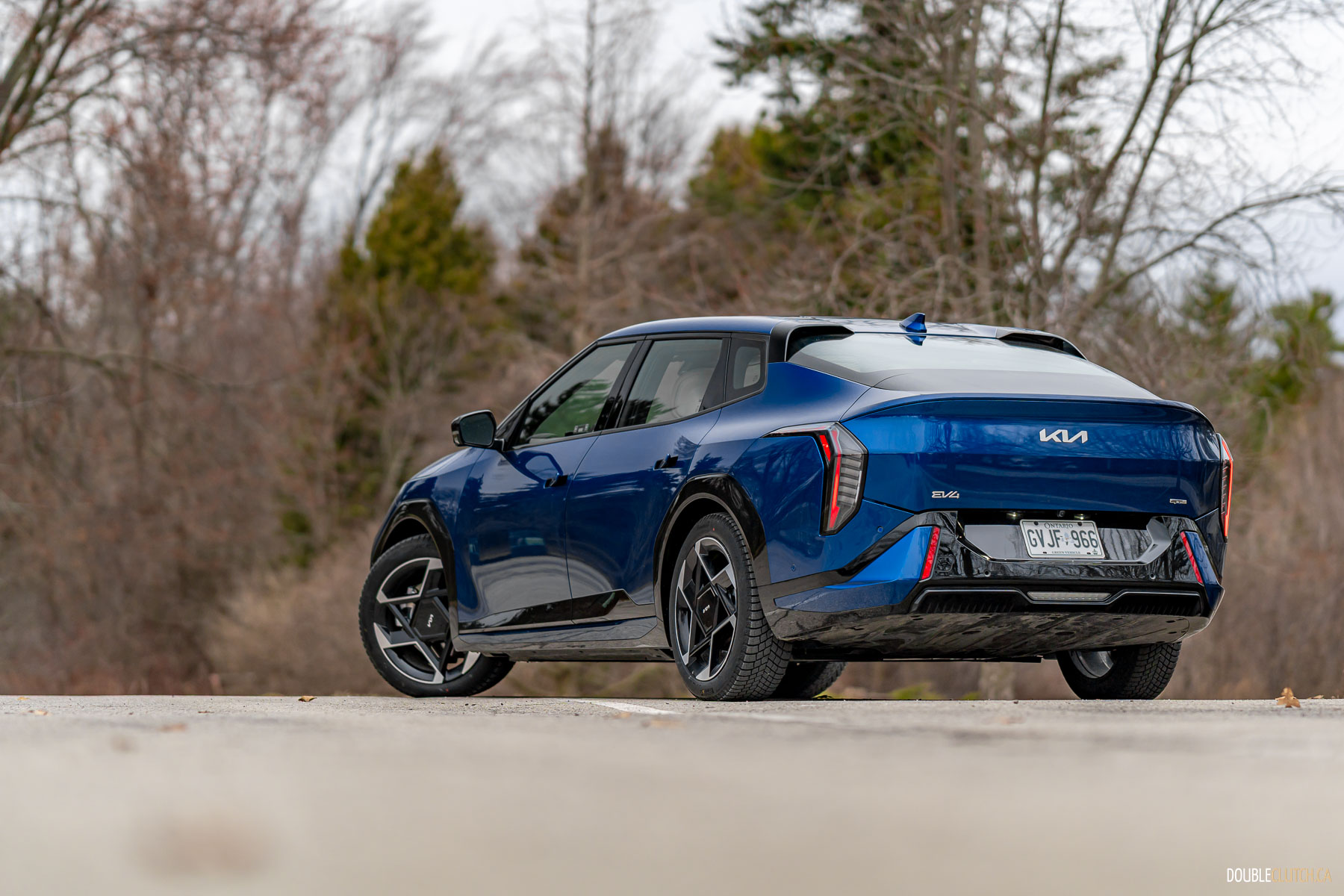
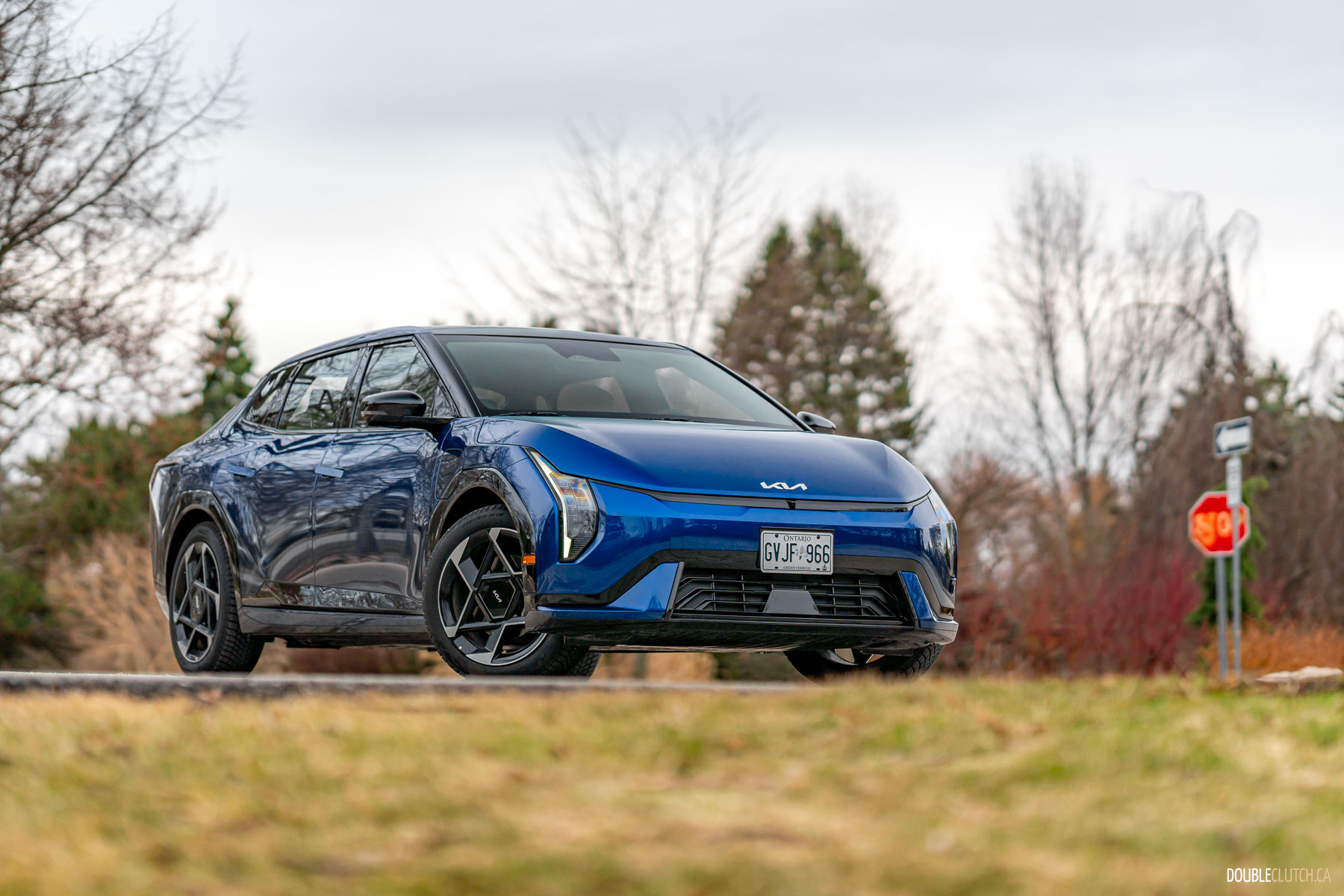
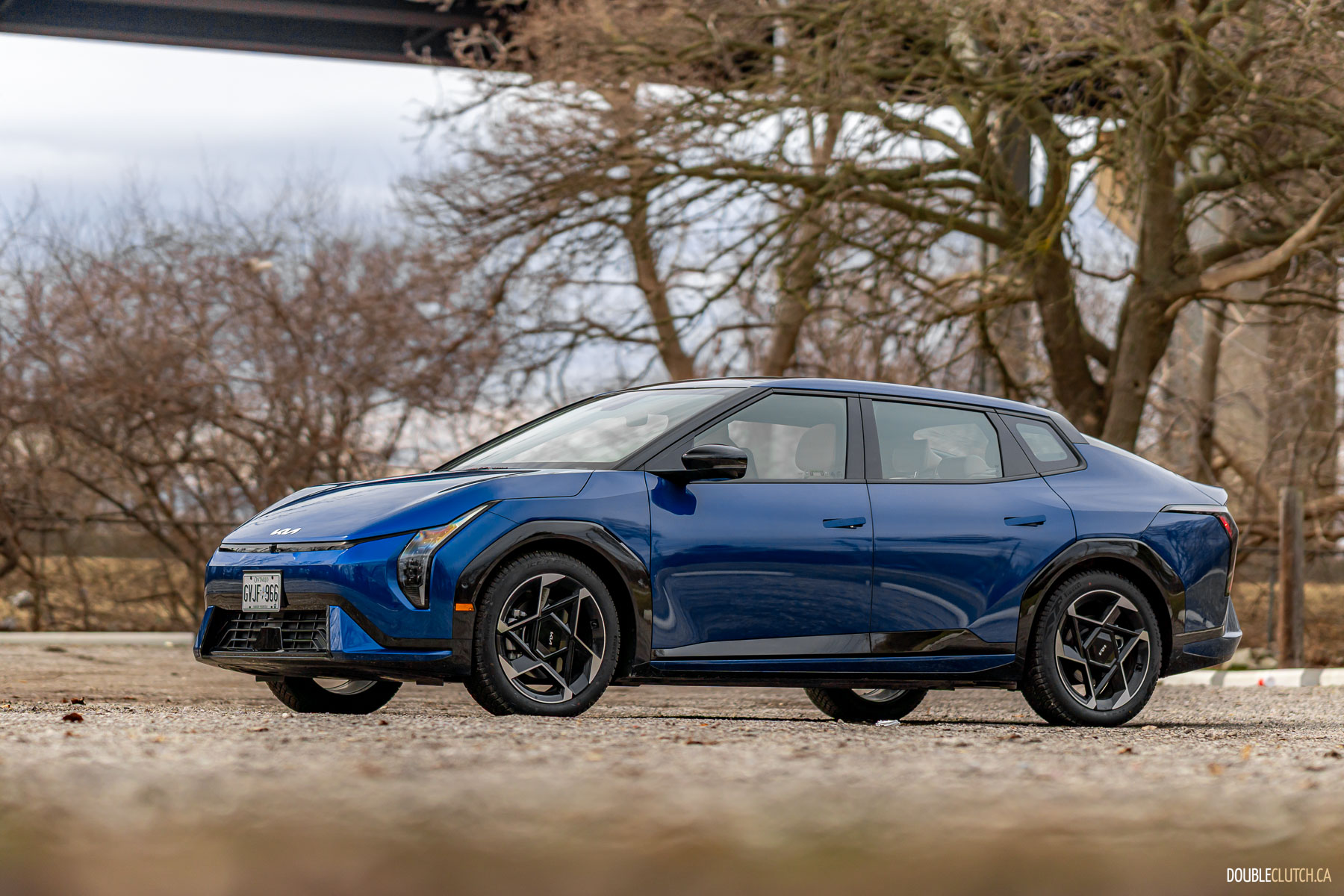
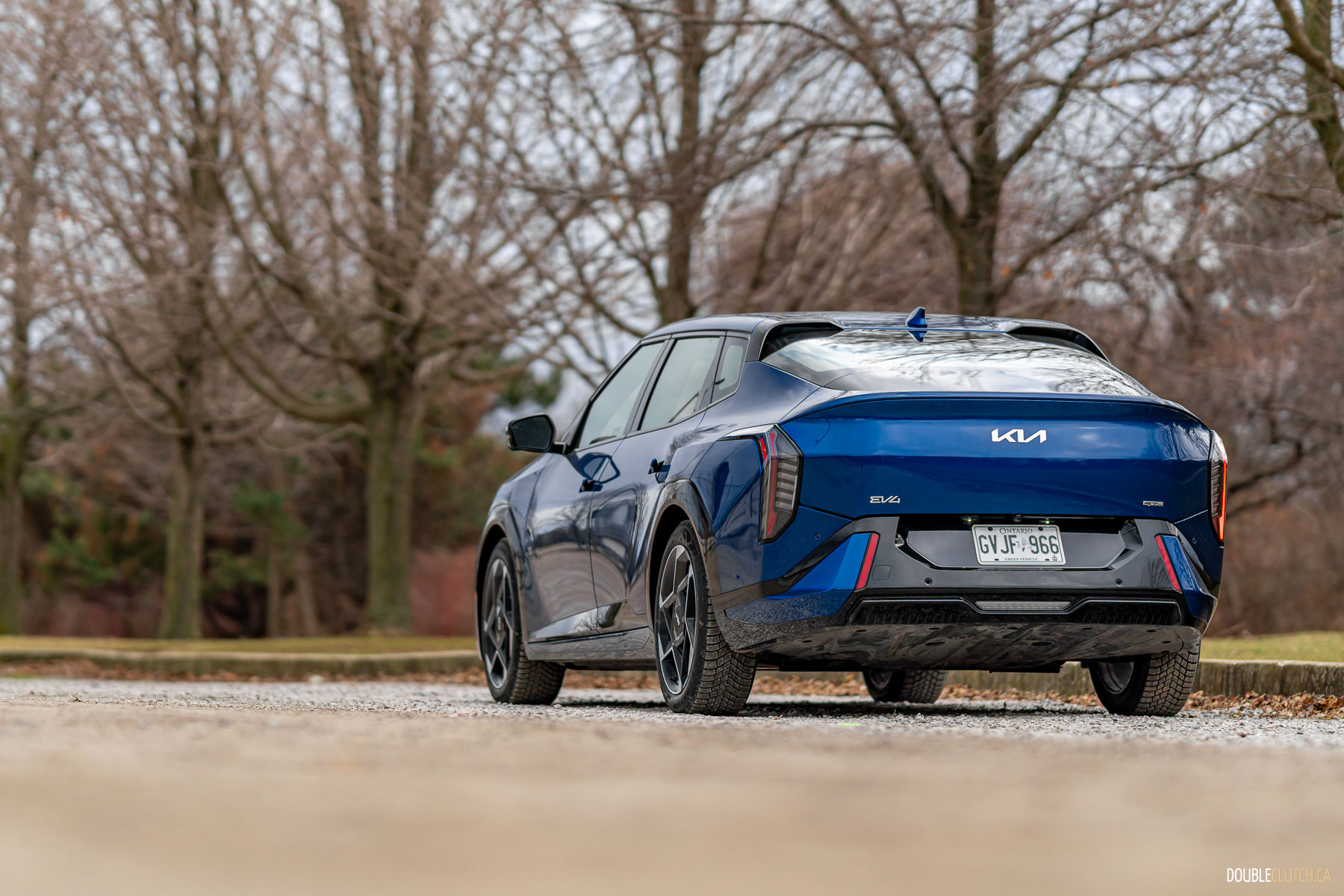
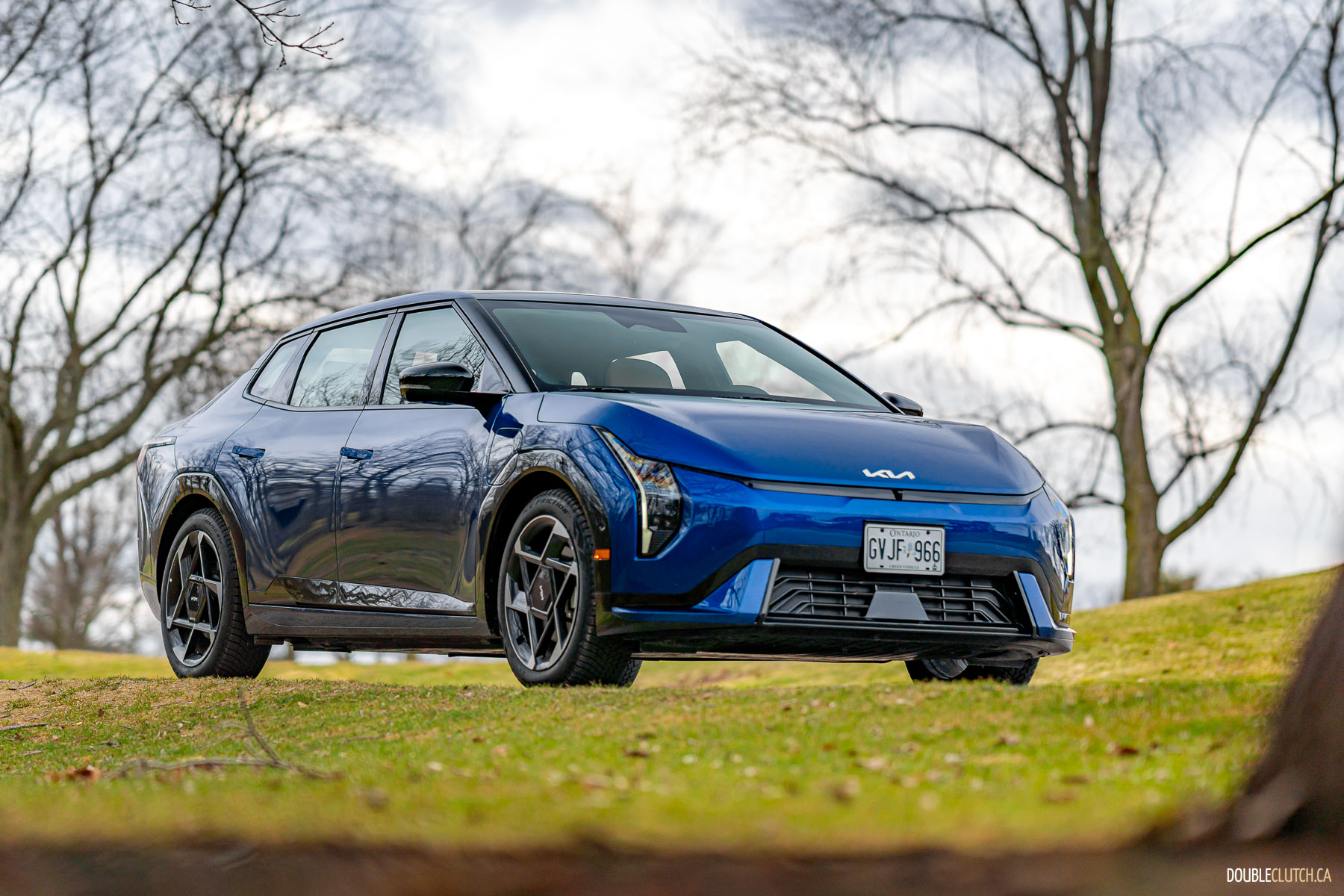
Every animal deserves love. Some people like hairless cats. Some people like little flat-faced pugs. These can be sweet pets, but they are… not what you’d call conventionally attractive. The 2026 Kia EV4 reminds me of these curious, lovable creatures.
What isn’t unconventional is the near-universal appeal of practical, affordable little car. While trends have come and gone in cars (and pets), there has always been a place for a smart little car that makes sense. That smart, affordable little car has rarely been electric, as batteries are expensive, the amount of battery that fits in an economy car budget makes for a compromised vehicle. The all-new EV4 seeks to be that viable alternative for those seeking an affordable little car, and who could benefit from an electric car, but can’t afford to deal with a car that can’t deal with their lives.
Wrap-up:
It’s an excellent little commuter car that frees the people from the volatility of fuel pricing, if the people aren’t shallow.
What’s new? · Everything you can see
Slotting in underneath the mid-size EV6 and the EV9 three-row SUV, the Kia EV4 is a not-so-compact sedan built on the same E-GMP platform as its corporate cousin, the Hyundai Ioniq 6. As such, it uses most of the same battery options and charging technology – more on that below.
Despite being fairly familiar underneath, everything you can see and touch is all new. The headline takeaway is that its most affordable Light trim level rings in under forty grand with an MSRP of $38,995, and a range of 391 kilometers on that model, with a max range of 552 kilometers on the Wind model for $42,995.
Powertrain · Batteries, charging, and a lone motor
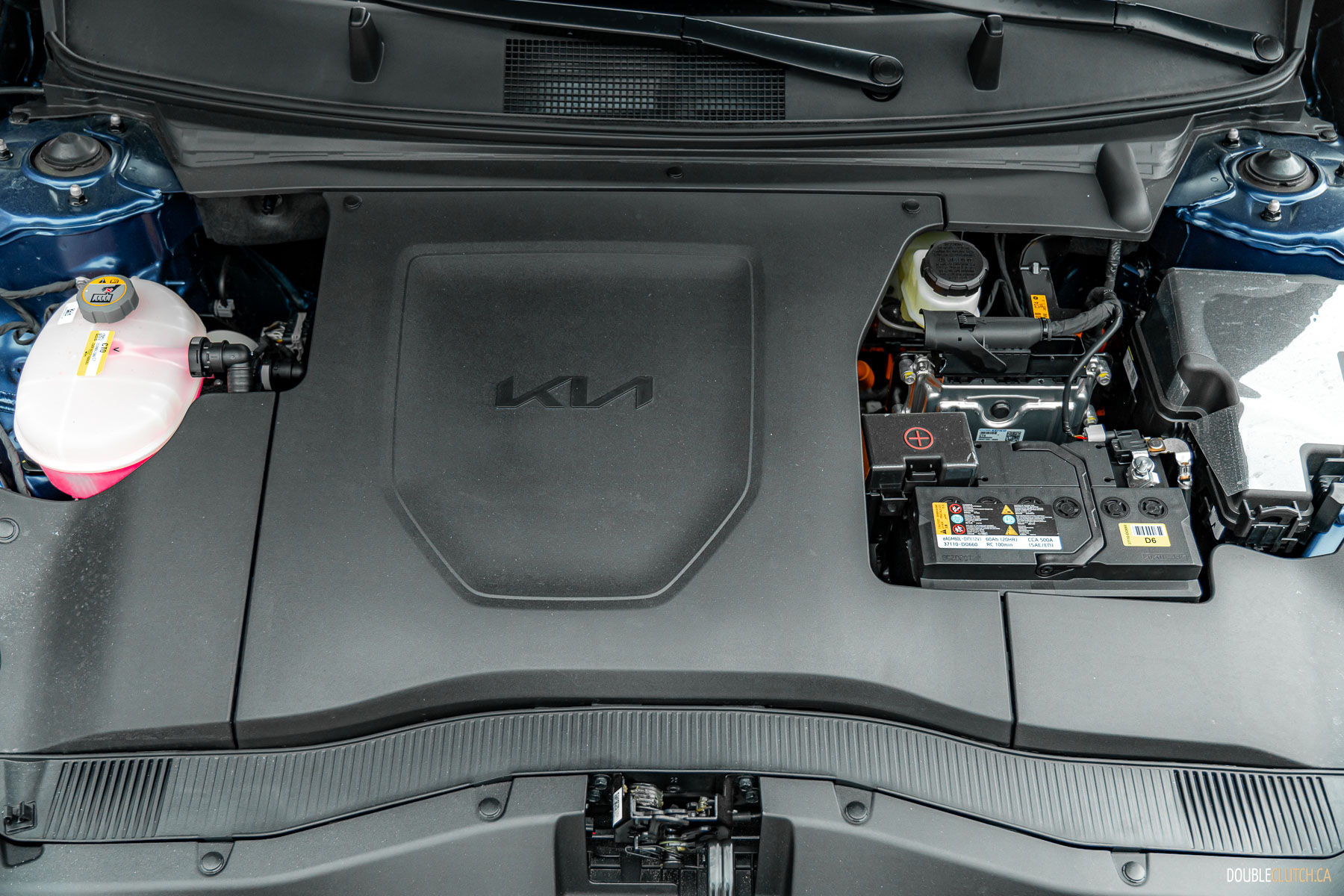
It uses the same batteries as its Ioniq 5 and 6 siblings, with 58 or 84 kWh capacities, albeit on a simplified 400-volt architecture, rather than Hyundai’s switchable that can swing up to 800 volts.
This helps reduce cost, and I’m not sure there is a single public DC fast charger in the country that’s healthy enough to make the most of that, anyway. All EV4s are powered by a single front-mounted motor, producing 201 horsepower and 209 foot-pounds of torque. Only the Light gets the 58 kWh battery, whereas every other trim gets the 84 kWh battery by default. This simplified build sheet helps bring cost down without sacrificing usability.
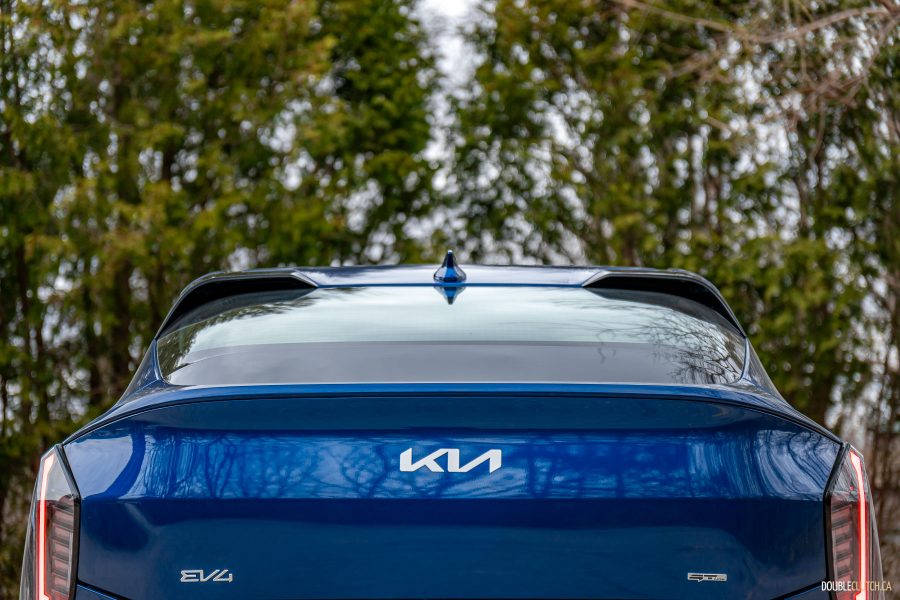
The EV4 is fitted with a Tesla-style NACS charging port, with a fairly healthy 11kWh on-board inverter for charging on a home or Level 2 charging outlet. It’s capable of charging at 150kW on a DC fast charger (more than most I’ve seen, anyway), and the bigger-battery models can go from 10-80% in 30 minutes – about the same as we’ve seen from the likes of BMW and Polestar.
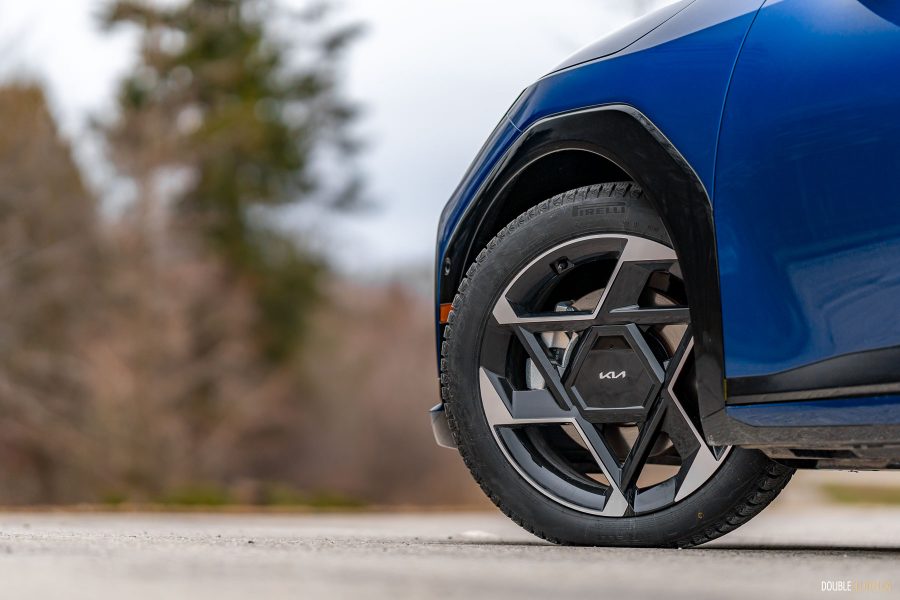
Some of you may bemoan the absence of all wheel drive. I’ll remind you that EVs benefit from vastly more precise traction management than the gas cars you may be used to, and aren’t hindered by snow in my experience. A good set of snow tires – which you should be using anyway – will be more than enough for almost all of you reading this.
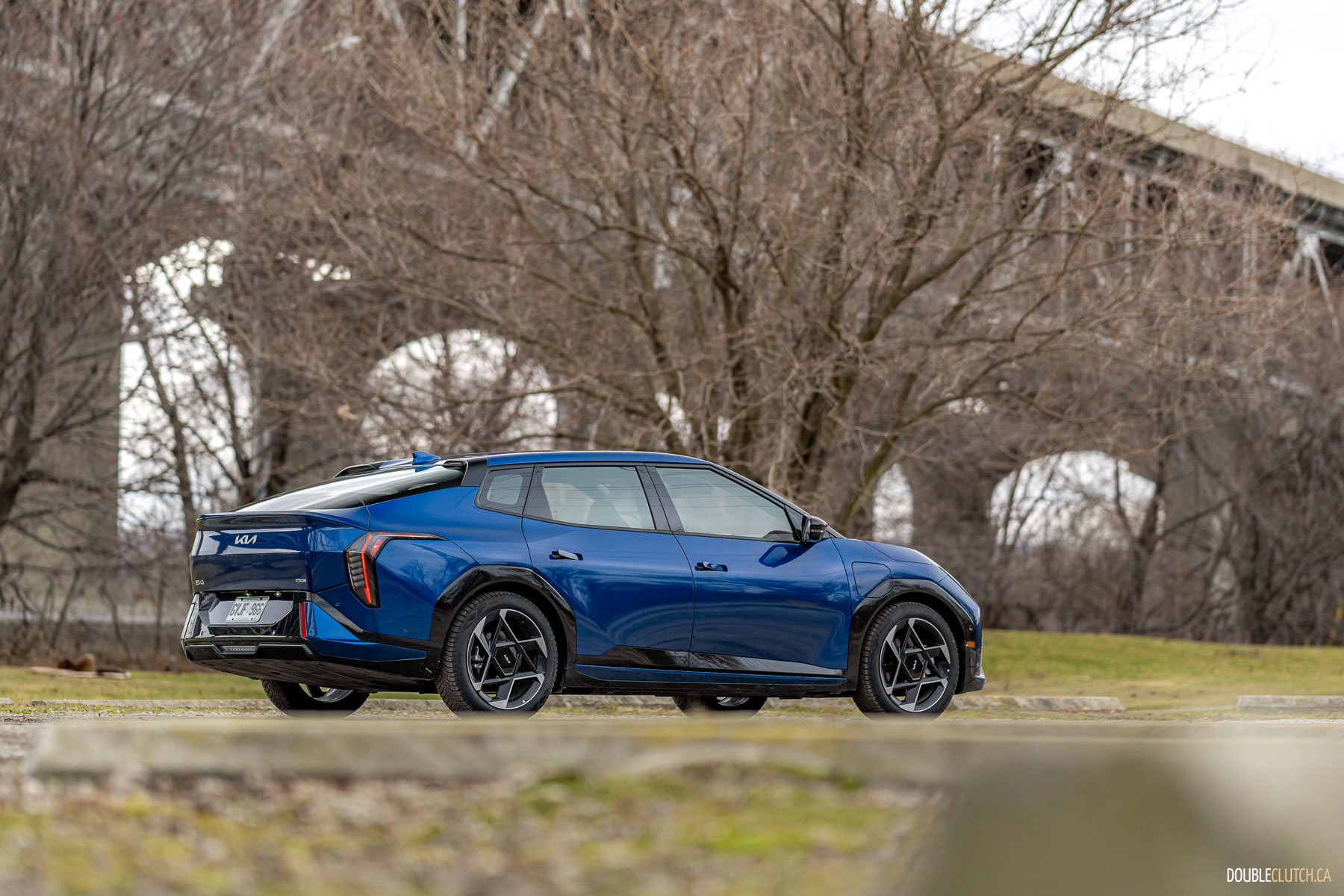
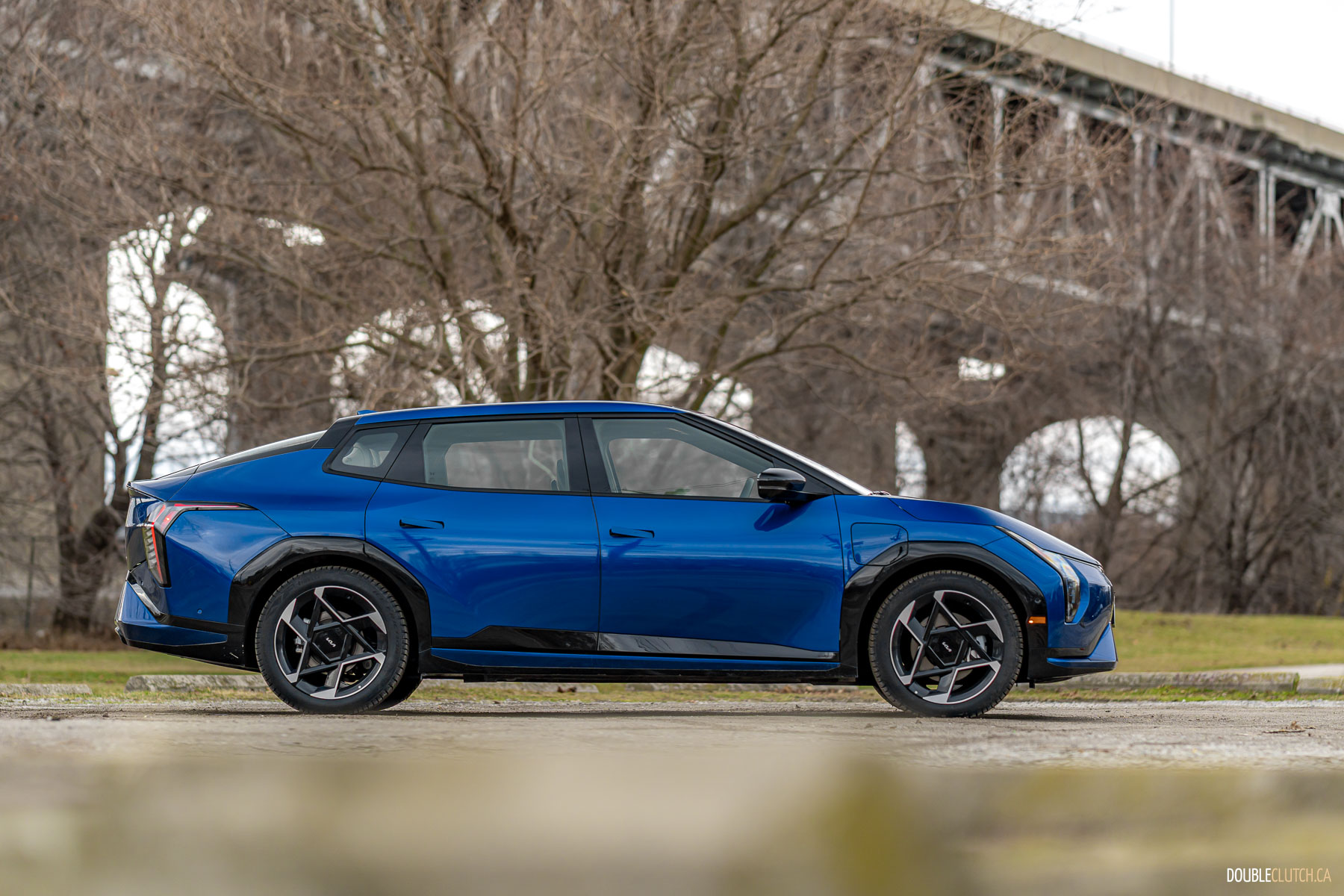
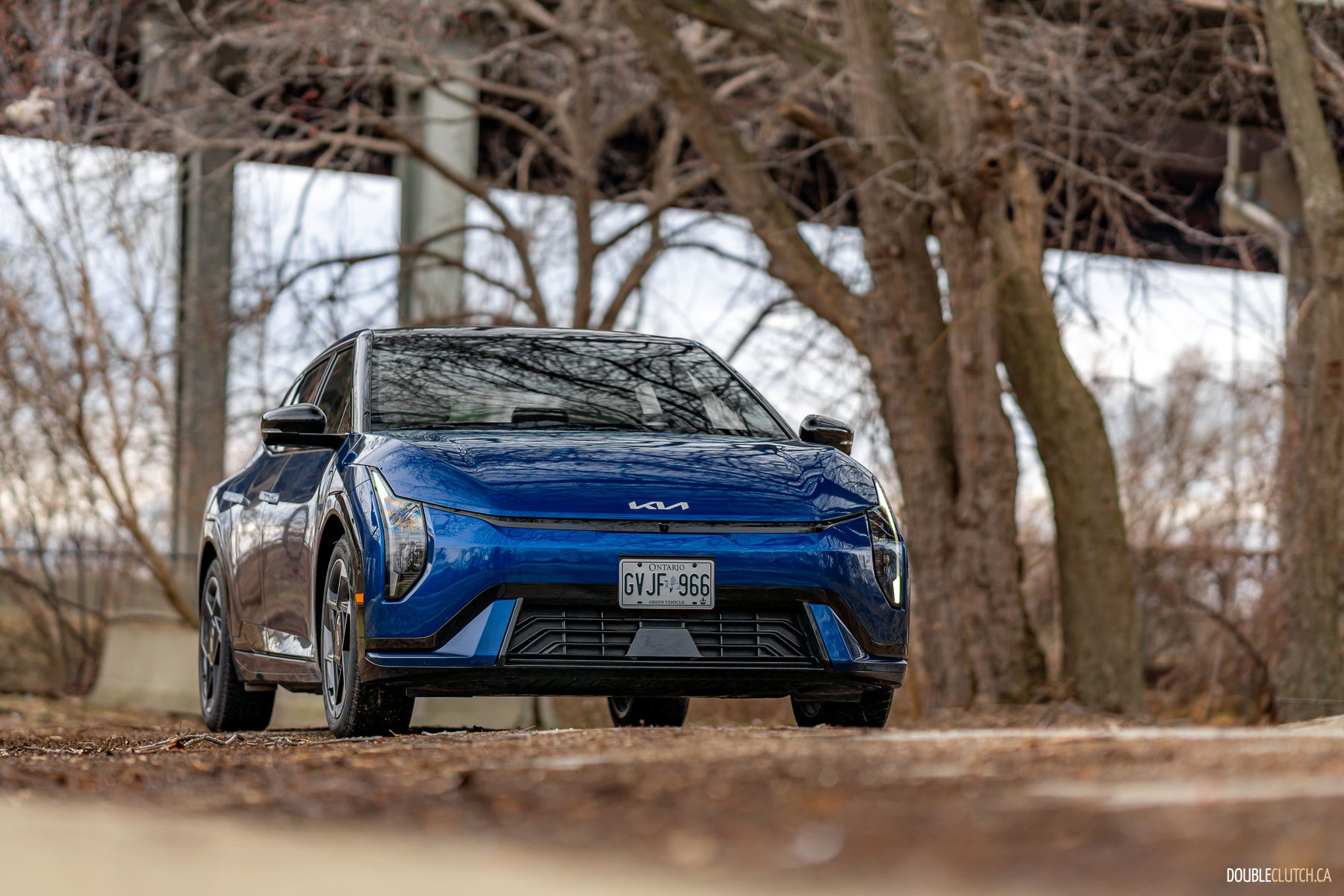
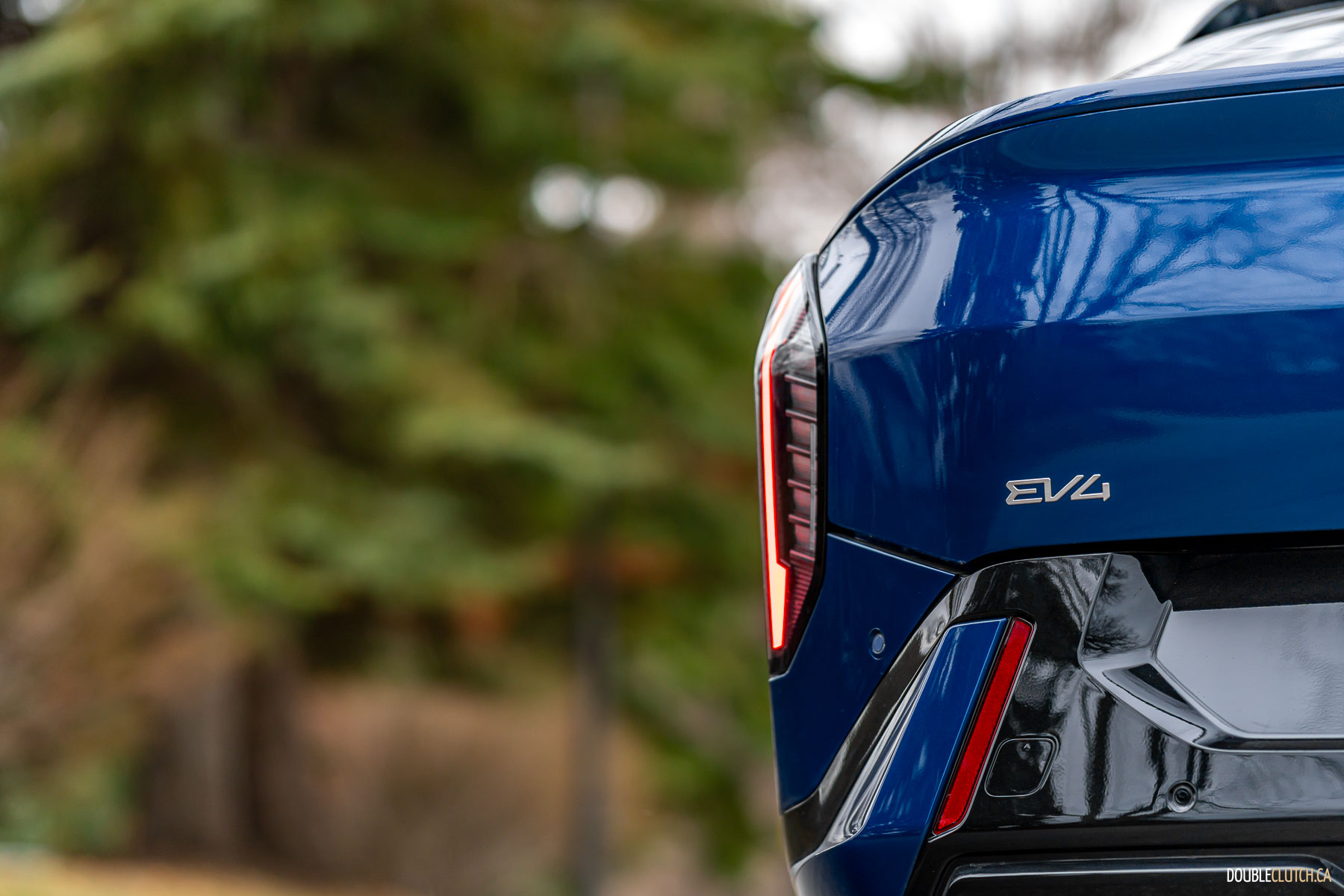
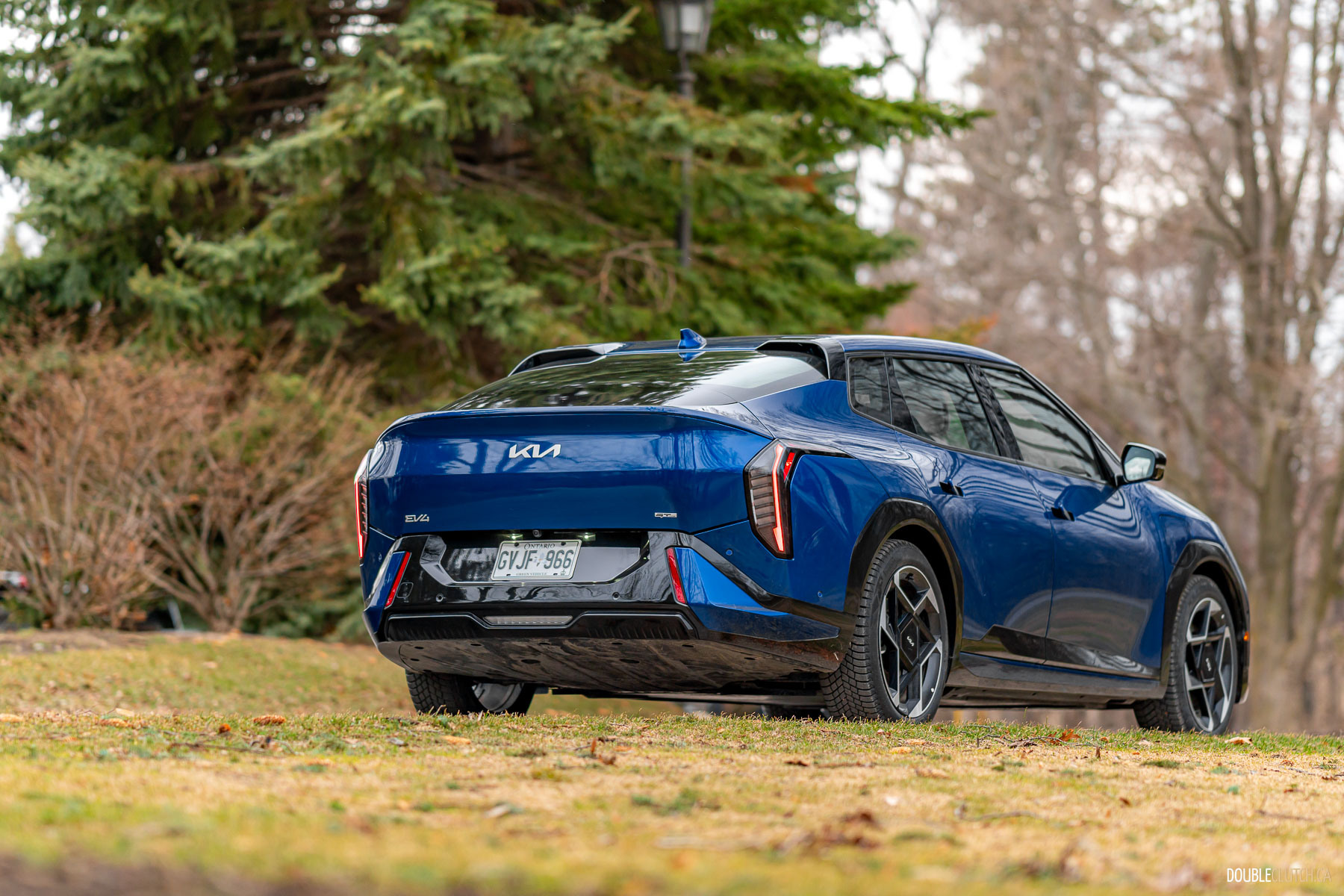
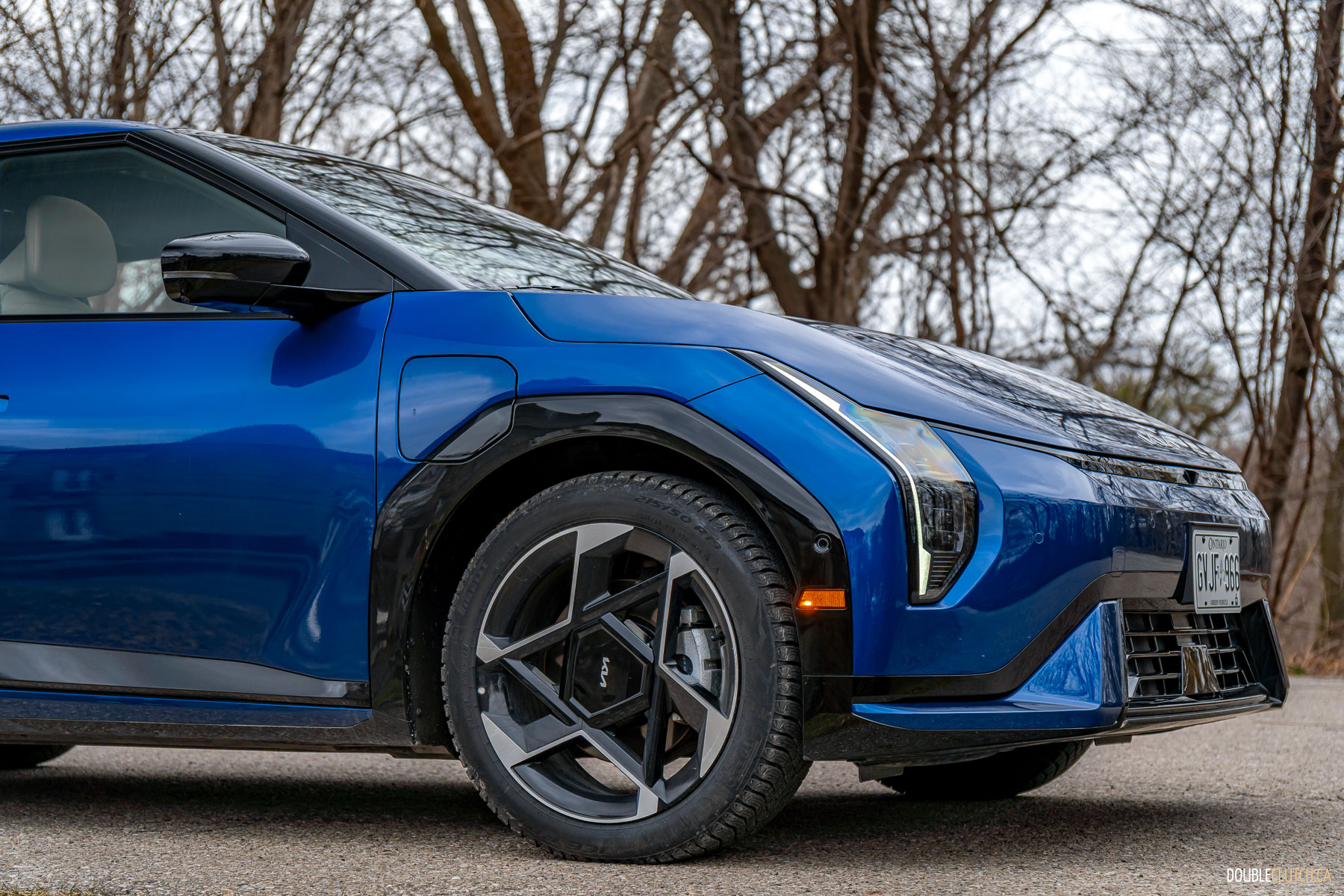
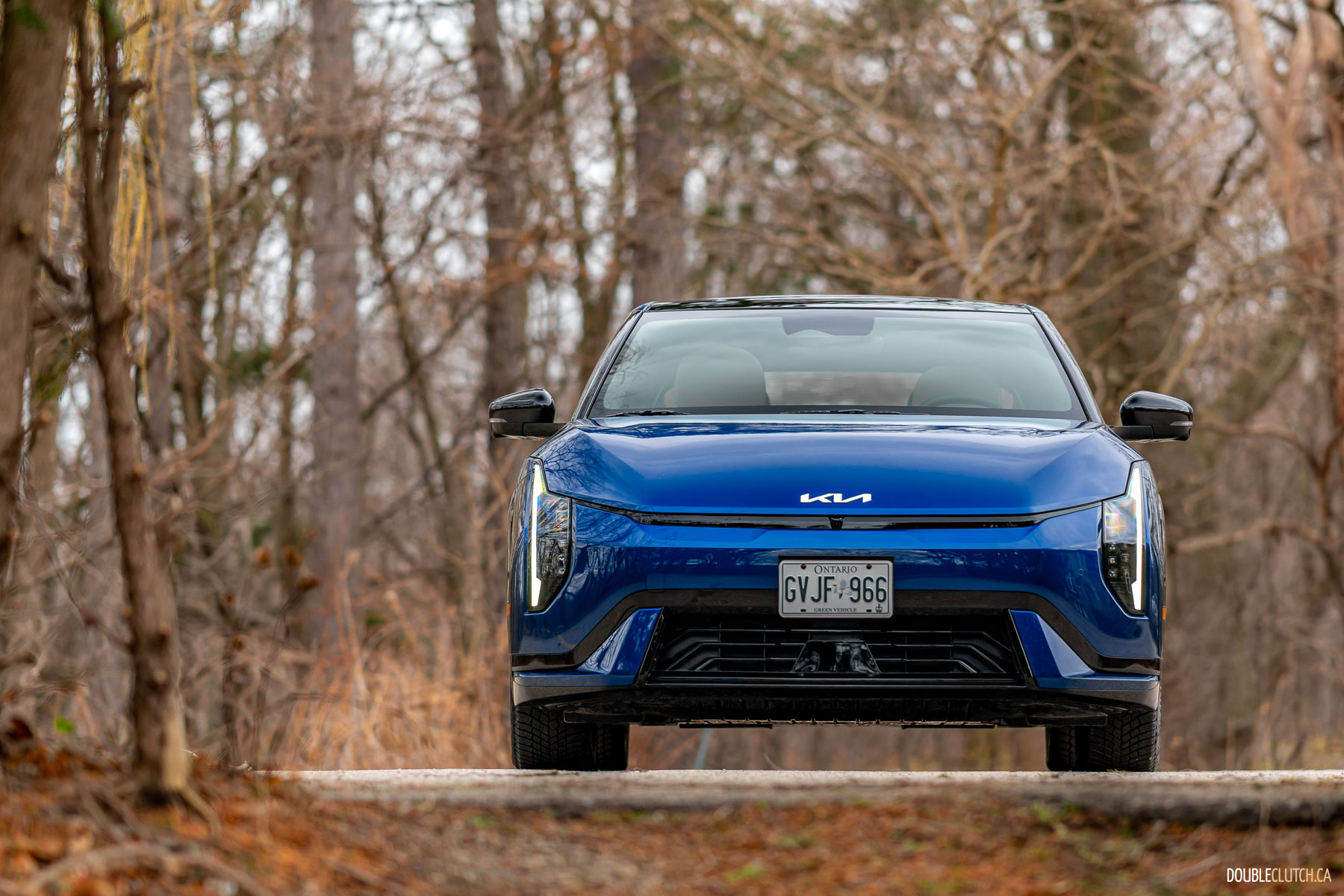
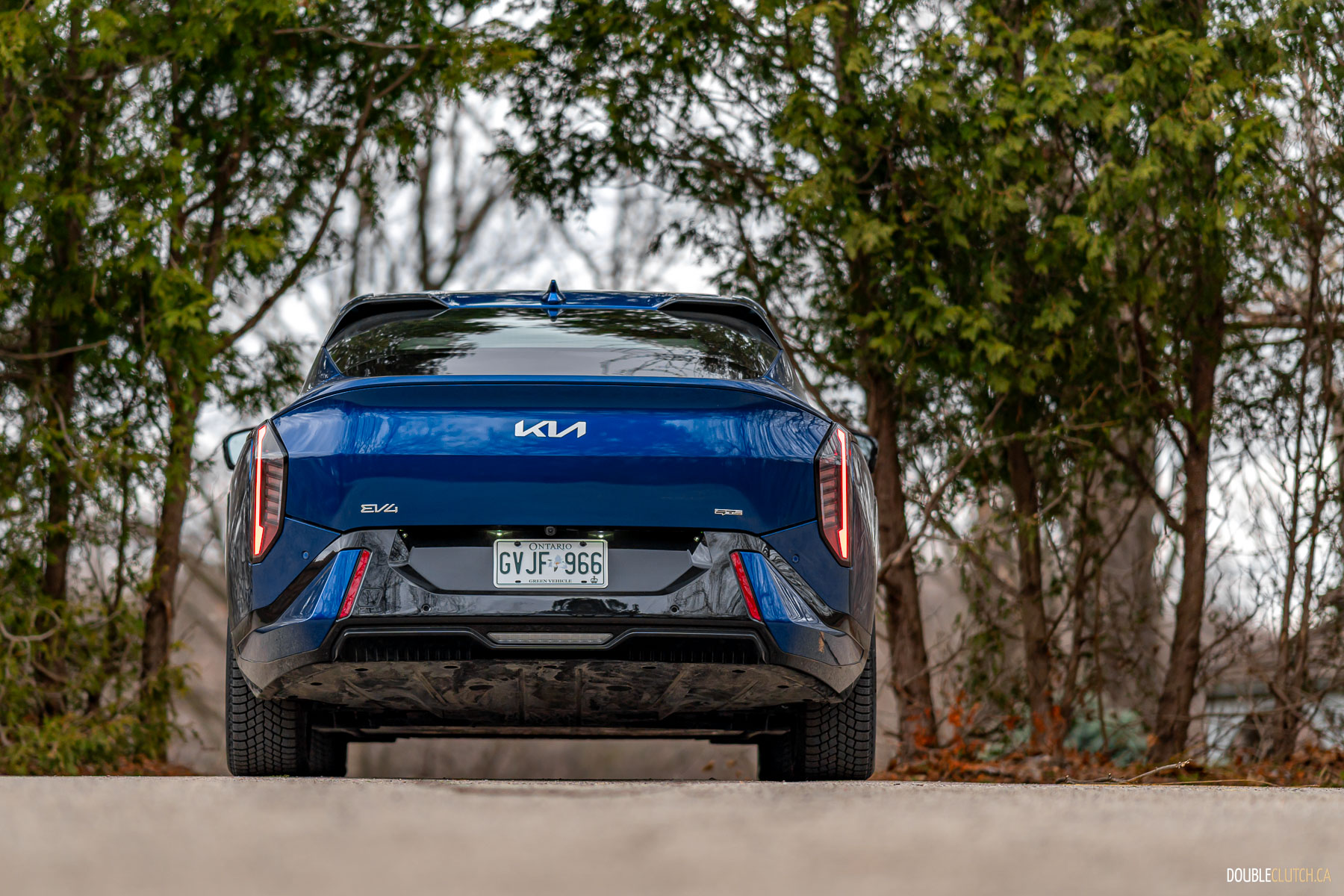
Exterior styling · Yeah, about that…
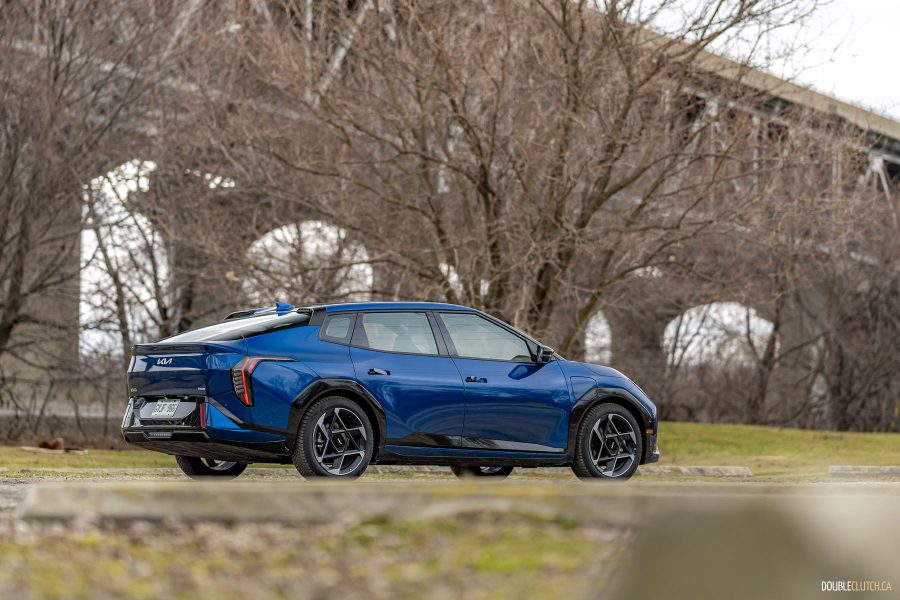
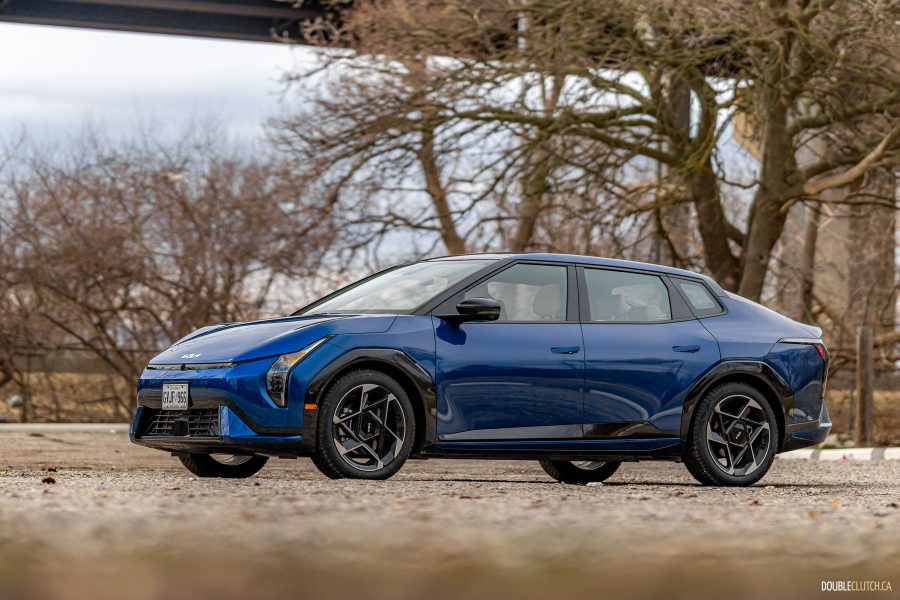
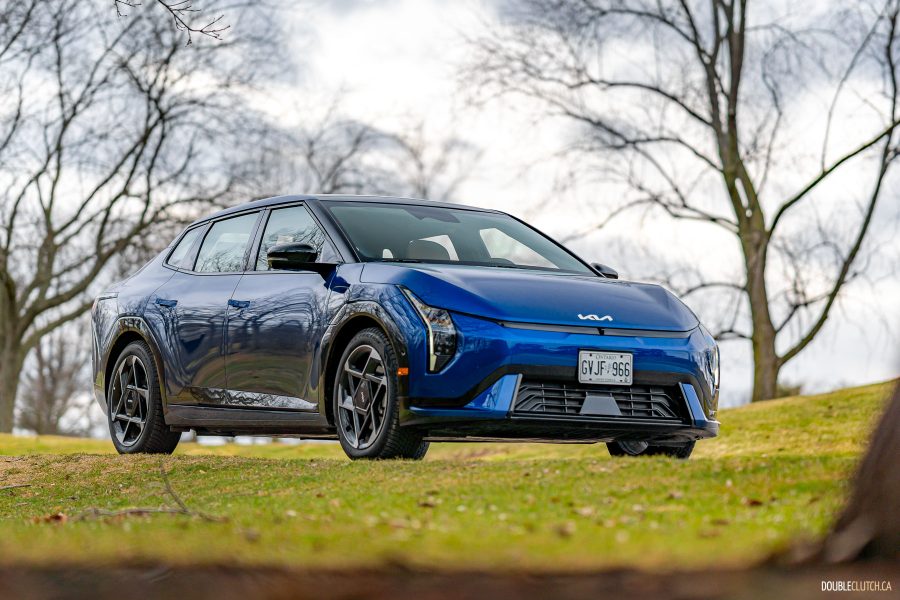
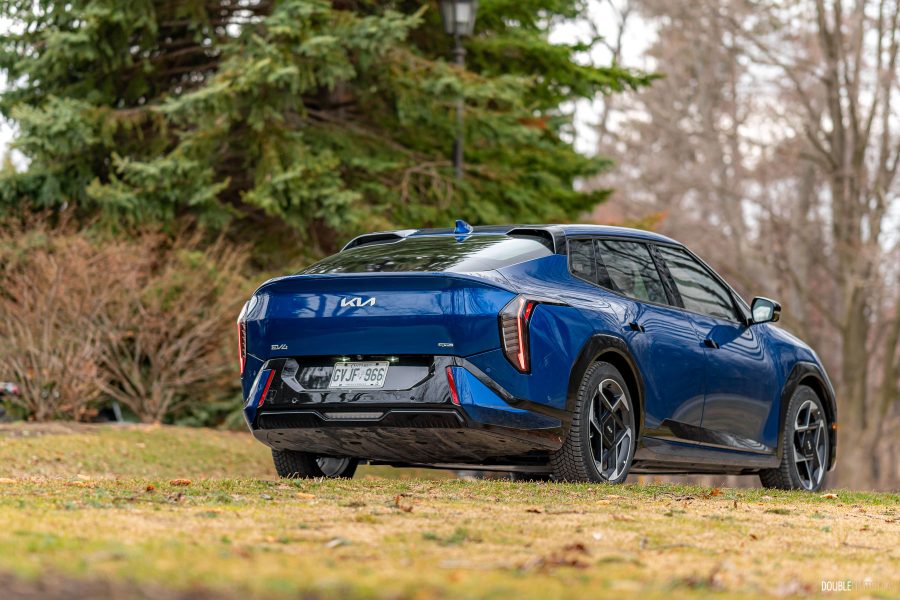
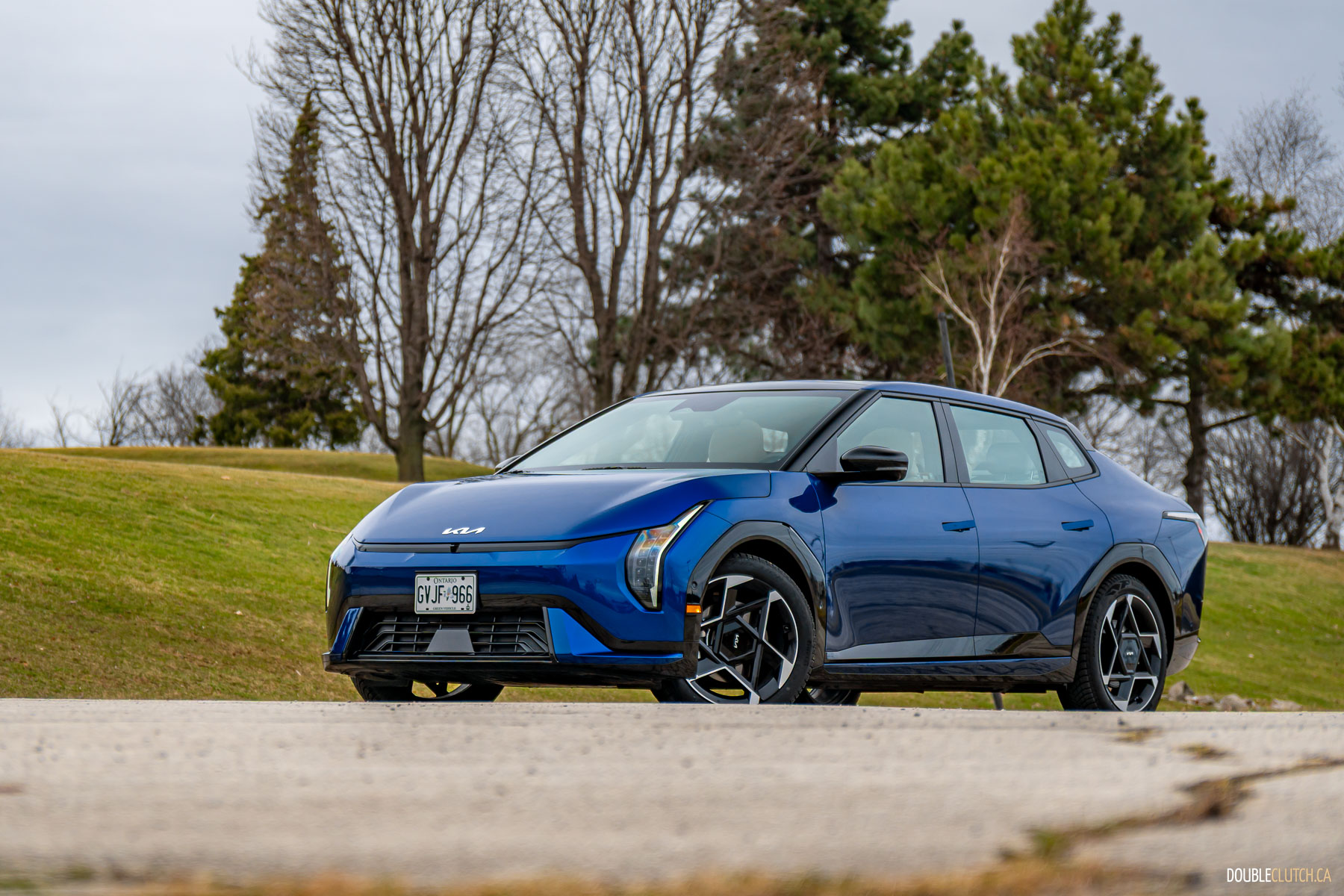
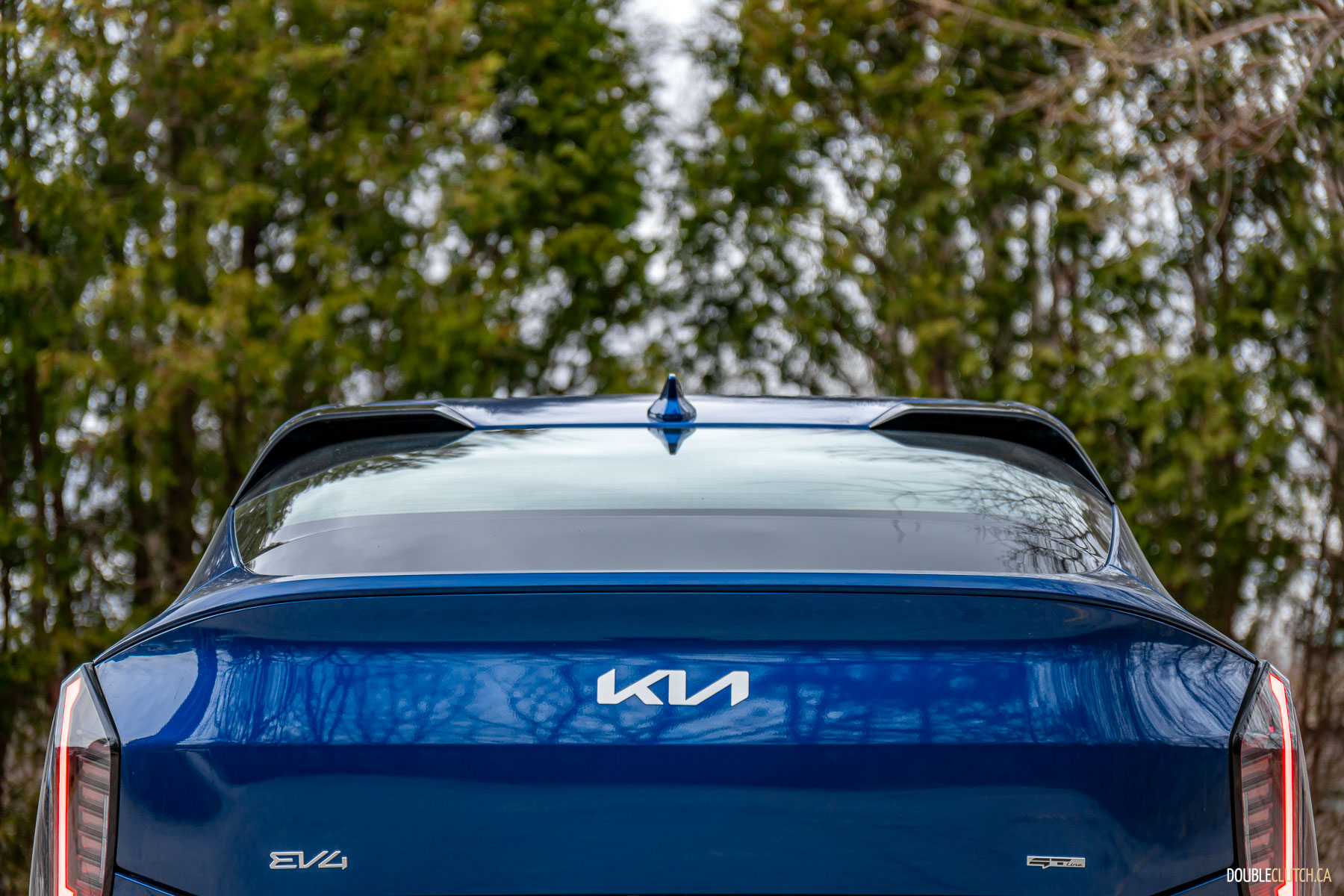
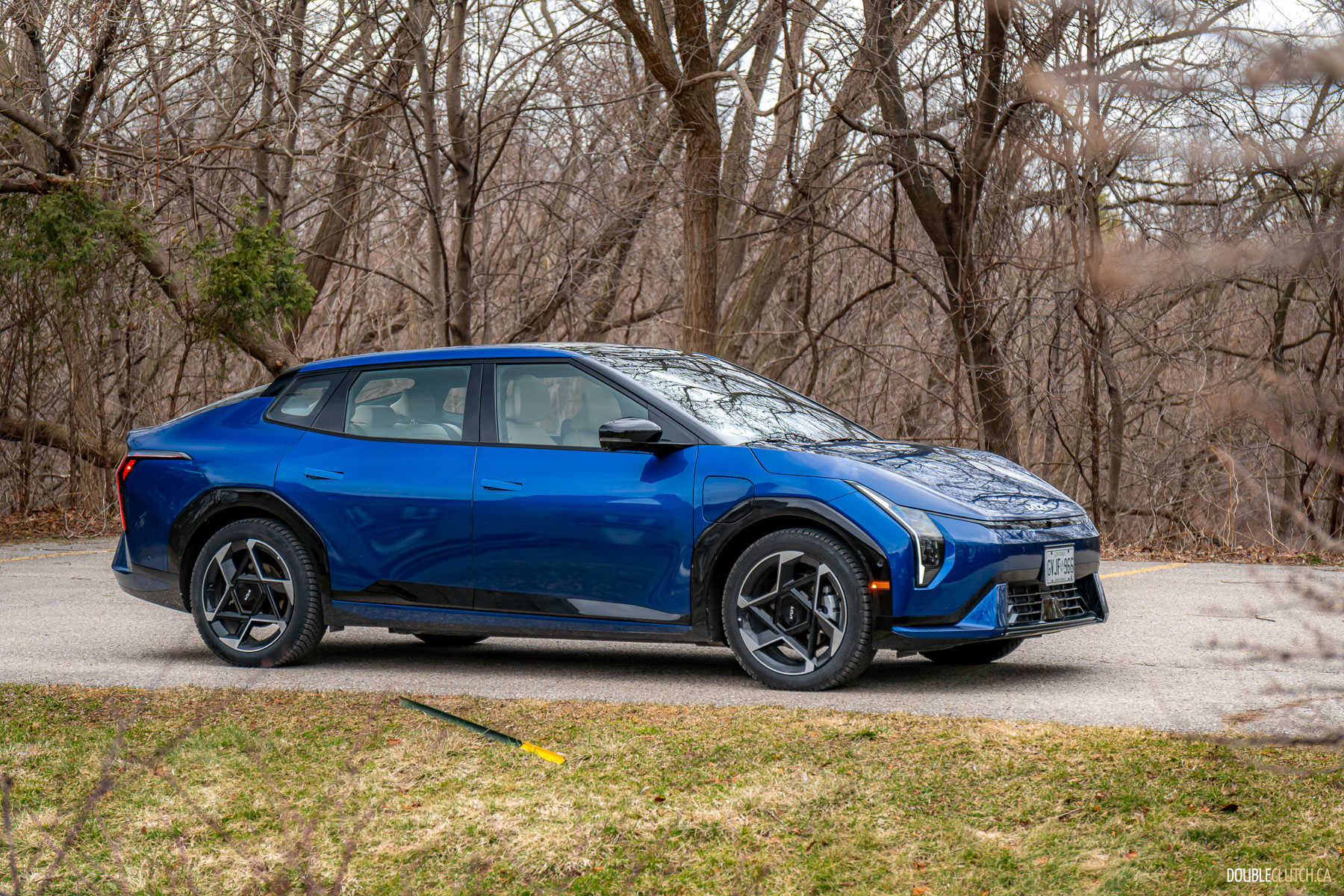
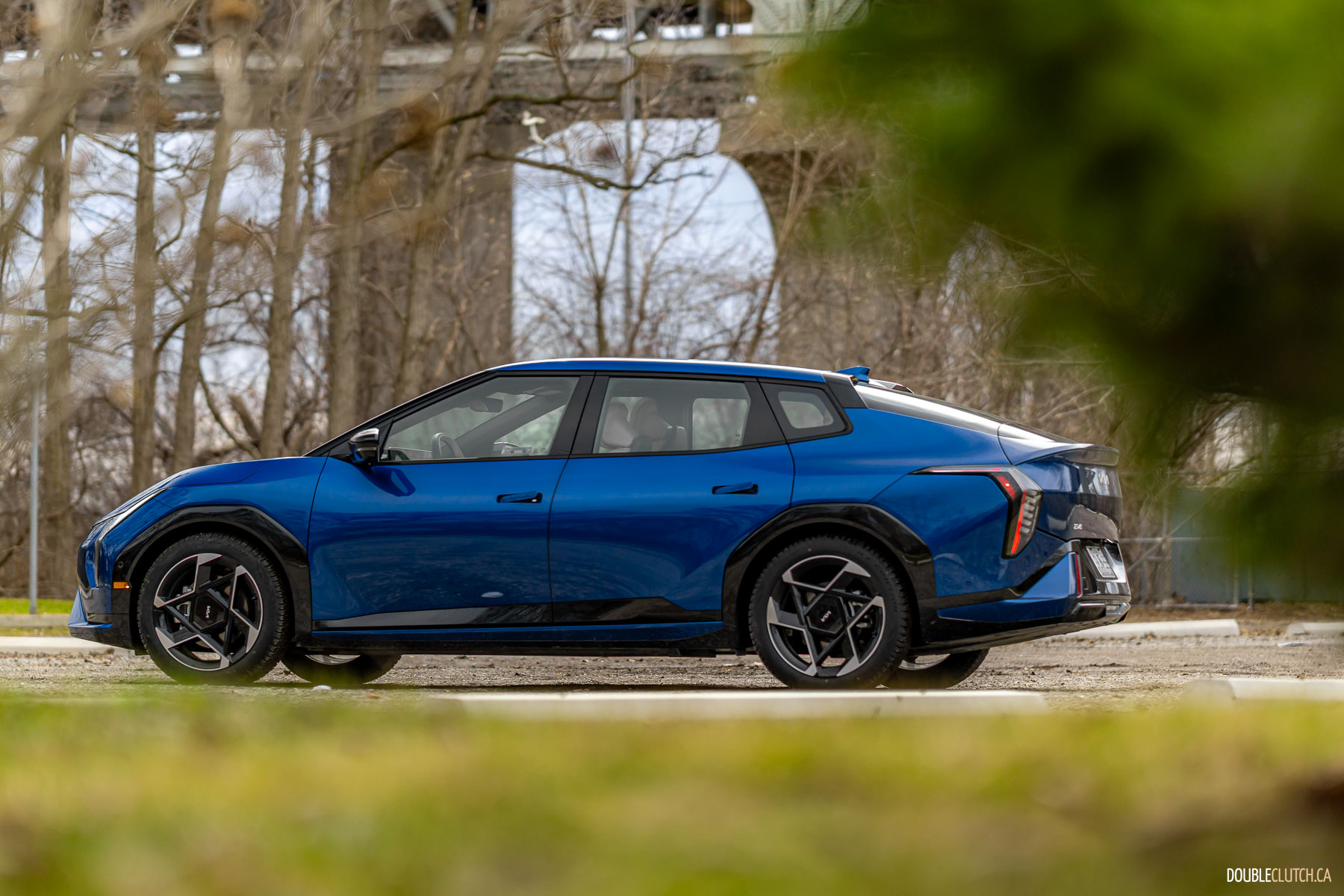
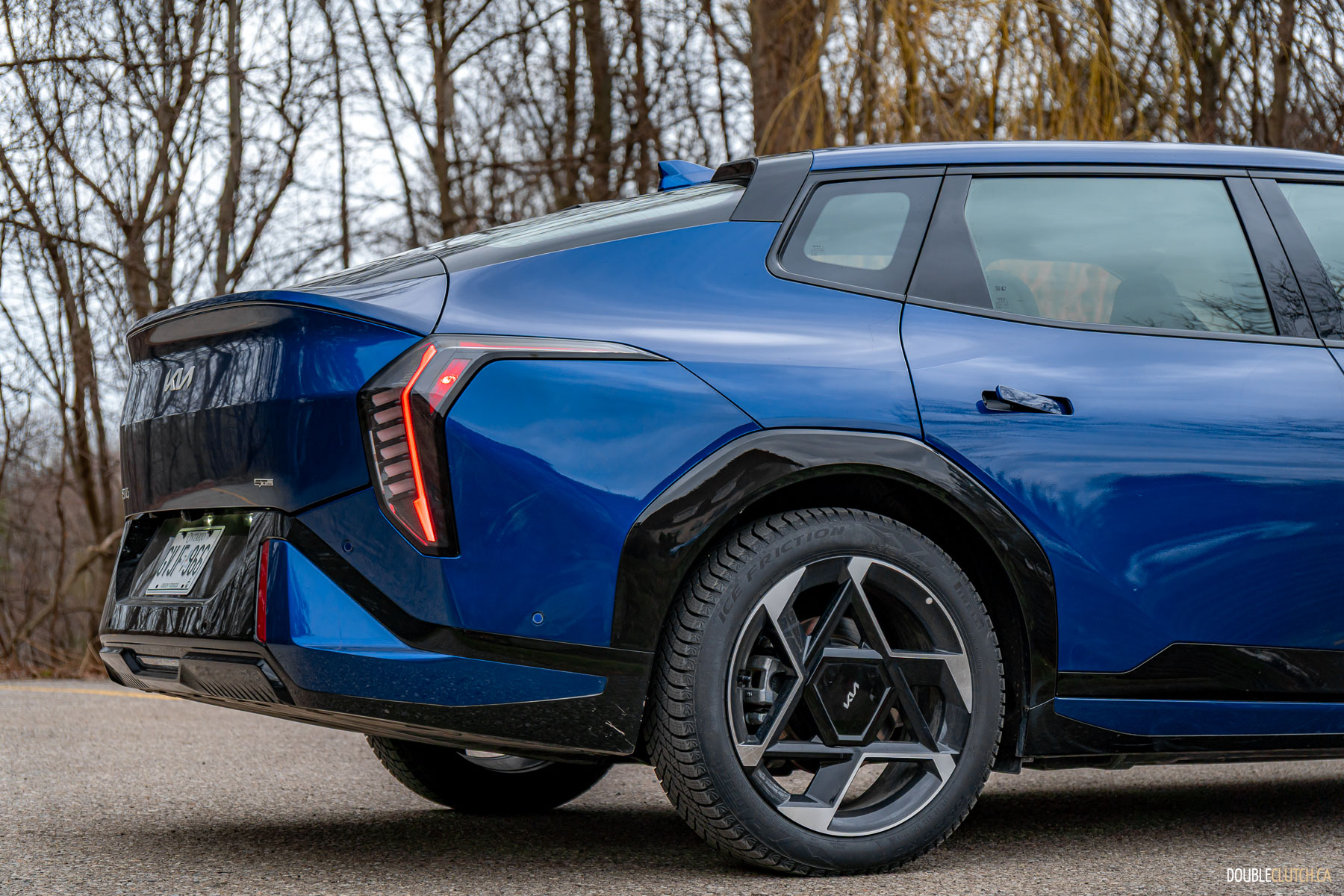
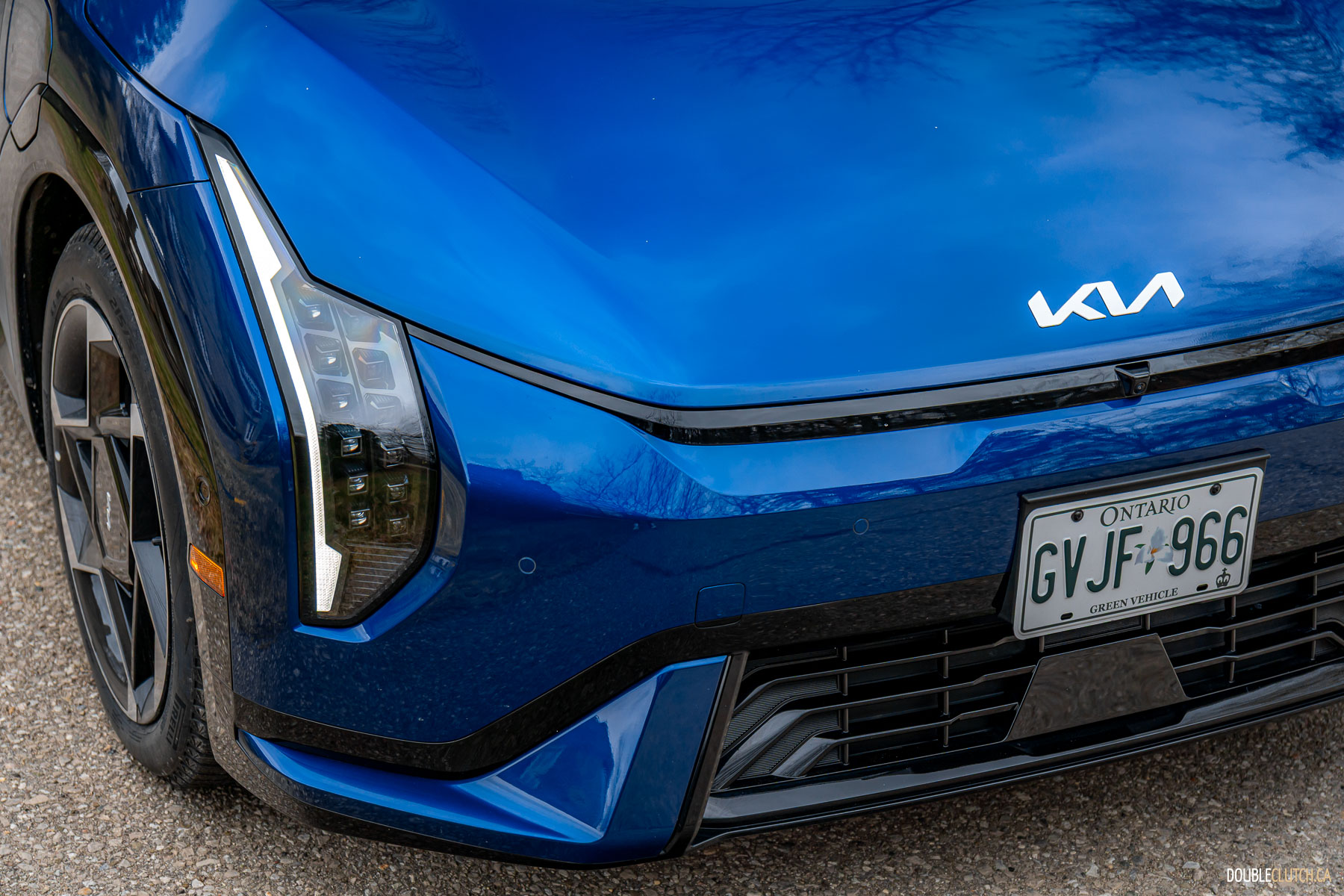
I’m reading Bob Lutz’s book Car Guys vs. Bean Counters about his time at General Motors in the mid-aughts, and he spends a lot of time talking about the convoluted process of finalizing a design in the miasma that was(/is?) GM’s management structure. Basically, GM did have talented people coming up with real beauty, but were almost always overruled by the vehicle line executives who were more concerned about hitting cost-saving performance targets, with predictable results. I wonder if that’s what we’re looking at with this EV4, because I can’t imagine how else a team of people thought this looked good.
Wins:
Comfy, tons of space, tons of range, not a ton of money
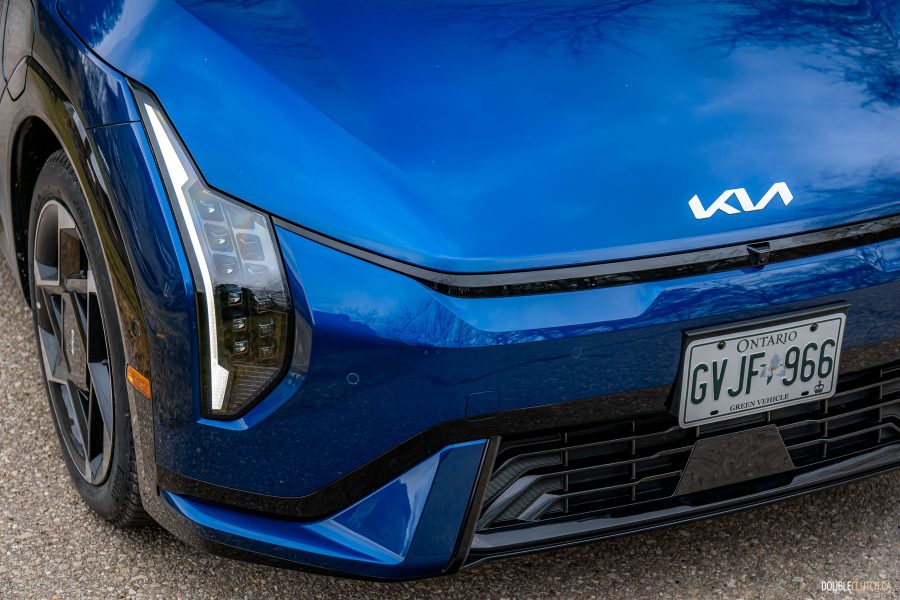
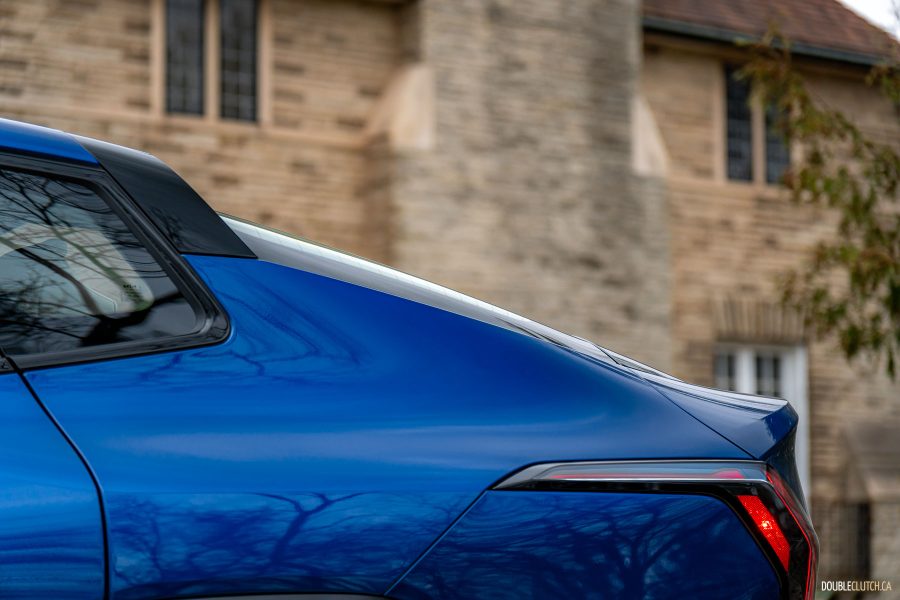
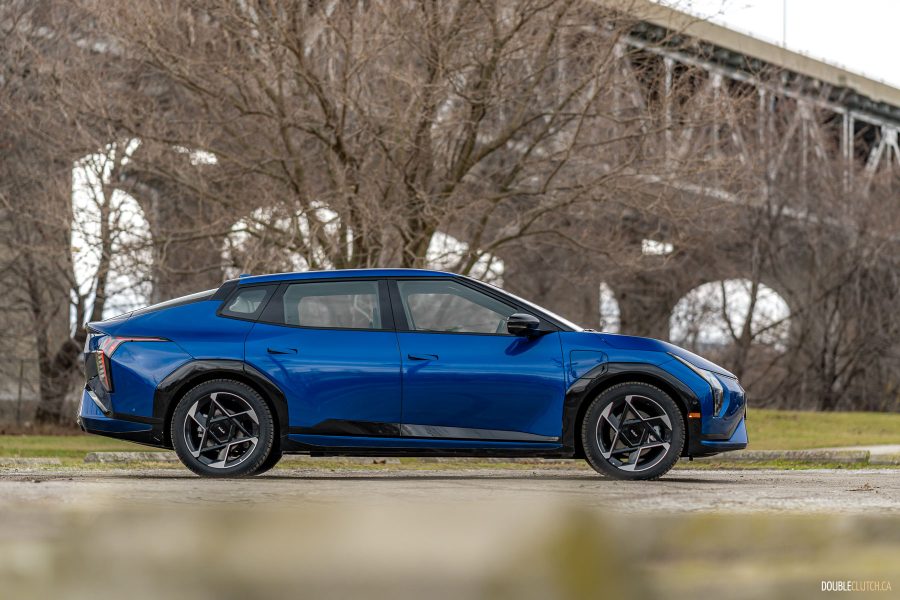
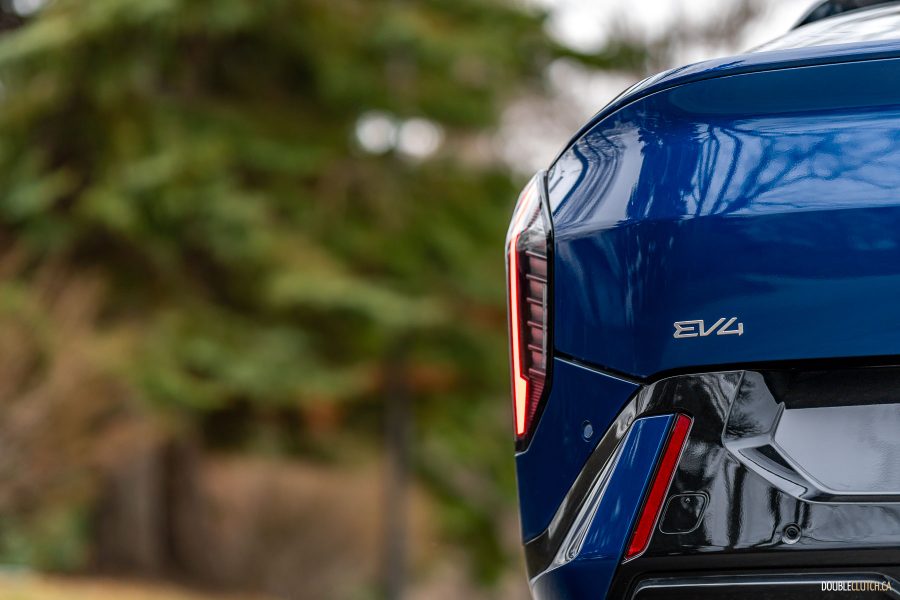
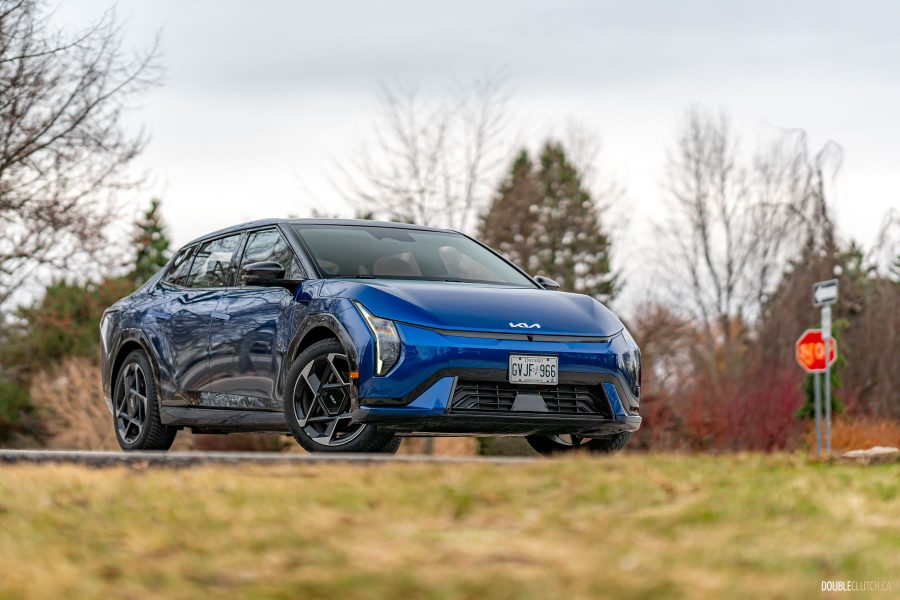
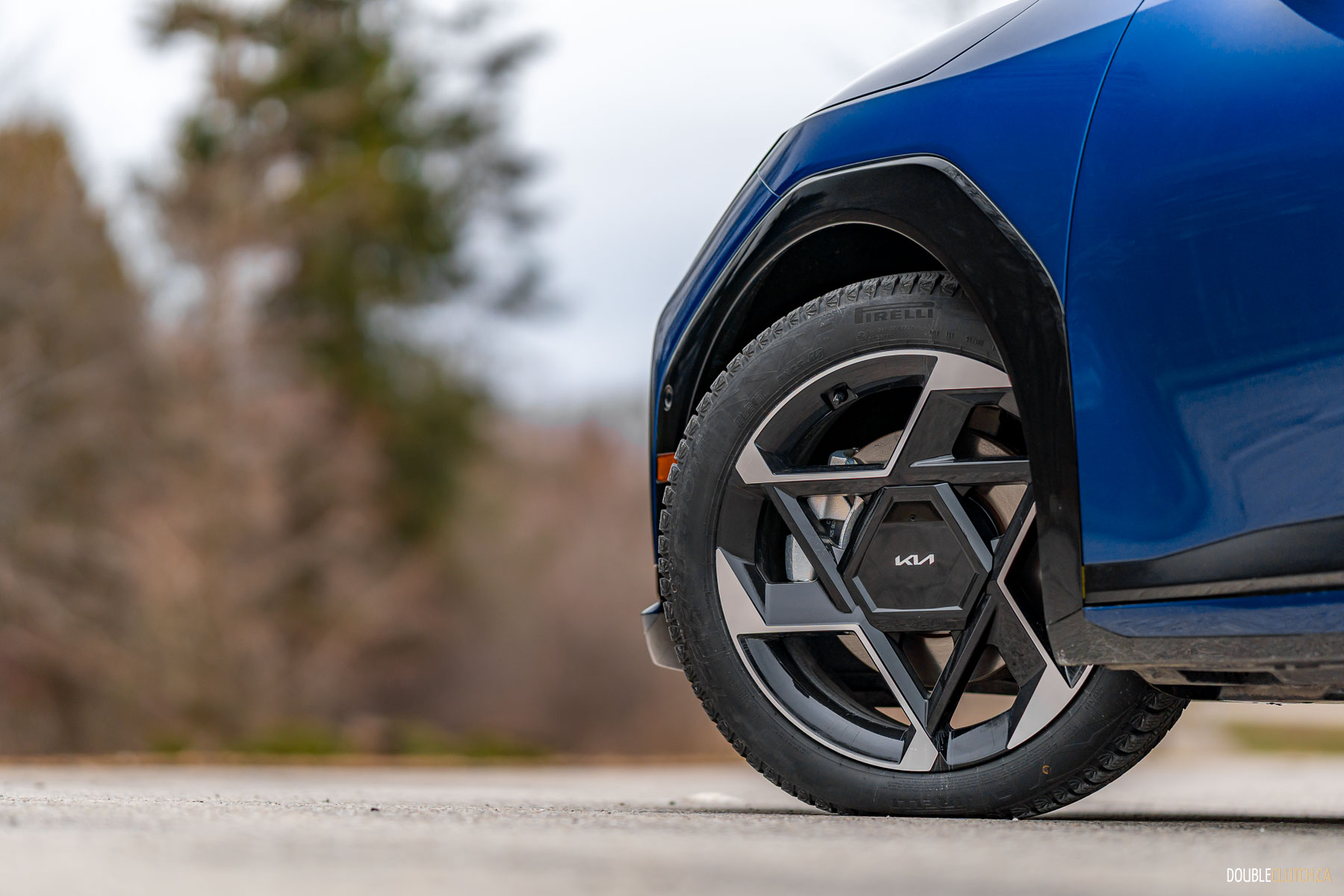
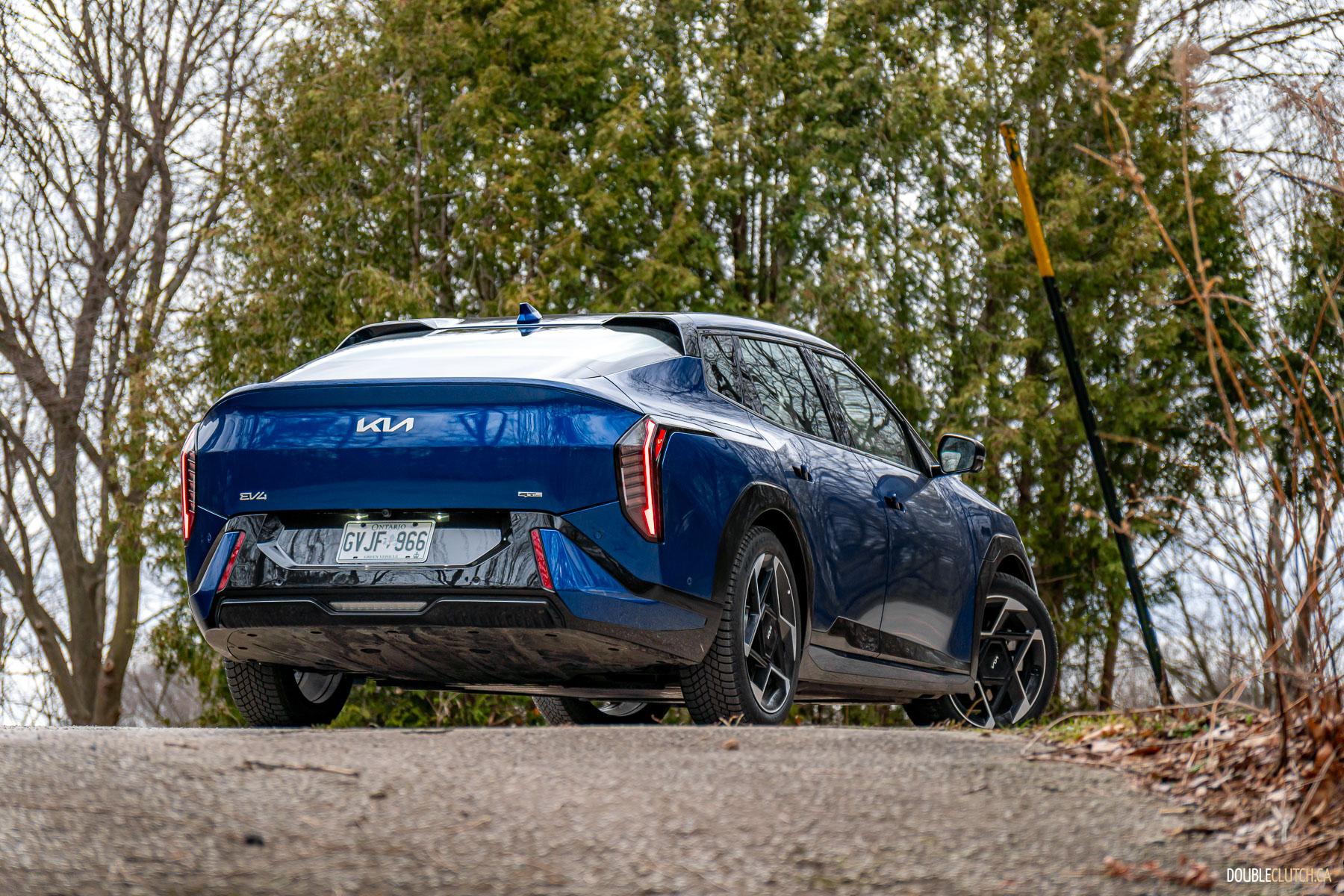
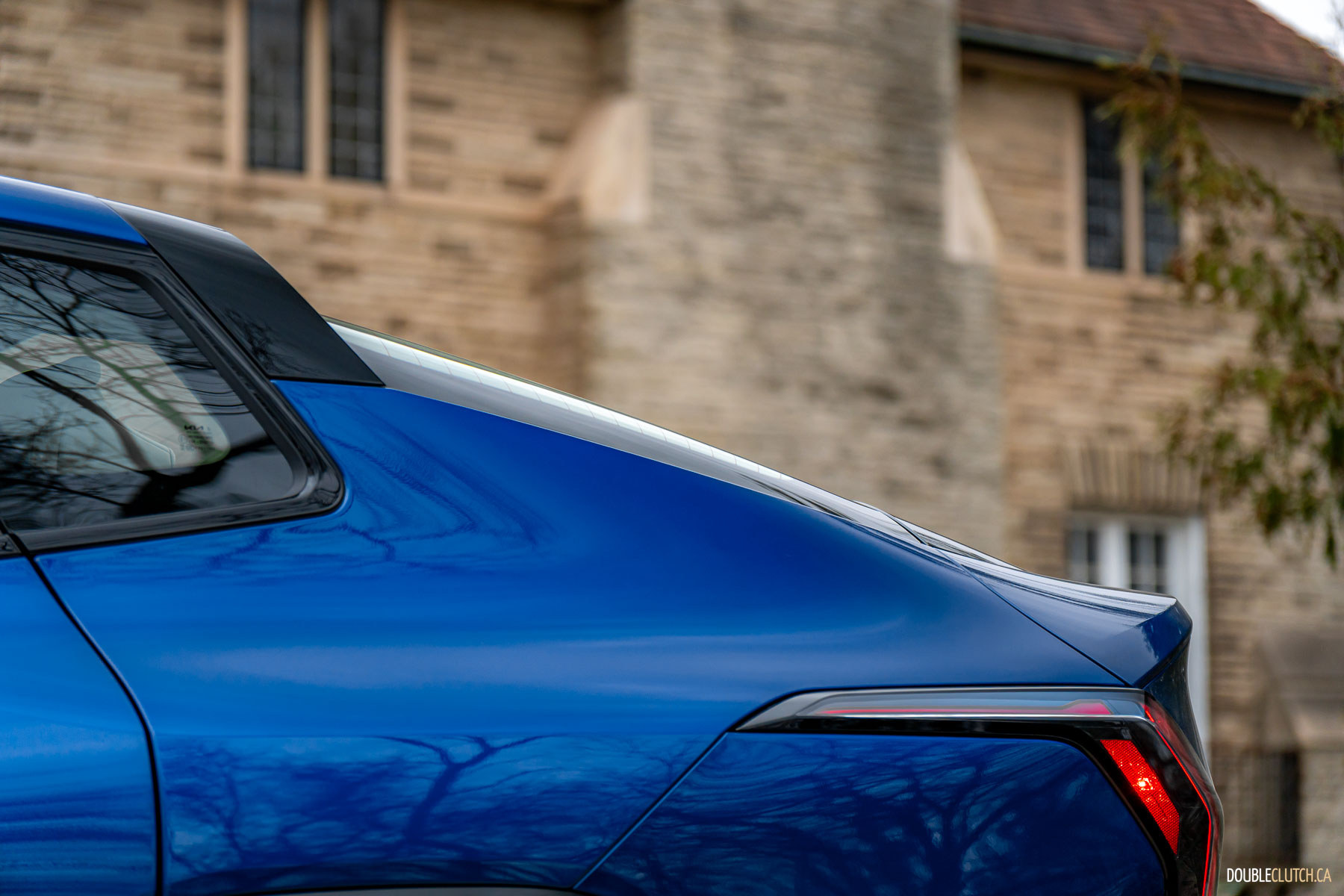
To be clear, I do not hate it. I try to see the positive in things, and I think I can see there was a really cool concept that preceded the EV4 being stretched around the Ioniq 6’s structure. Initially, I really struggled with it, and I don’t think there’s hiding from the fact that it’s an awkward shape, but eventually I came around to thinking it’s so-ugly-it’s-cute, like a toy bulldog, or a Fiat Multipla.
In its defence, it is exceptionally aerodynamic, with a drag coefficient of just 0.23, making it one of the most slippery cars ever built. And, as I’ll elaborate on shortly, it has a massive amount of space inside, so it is highly practical. But, I think Kia’s “Opposites United” design language (that has produced some winners) has failed to unite on this one.
Interior accommodations · That’s better
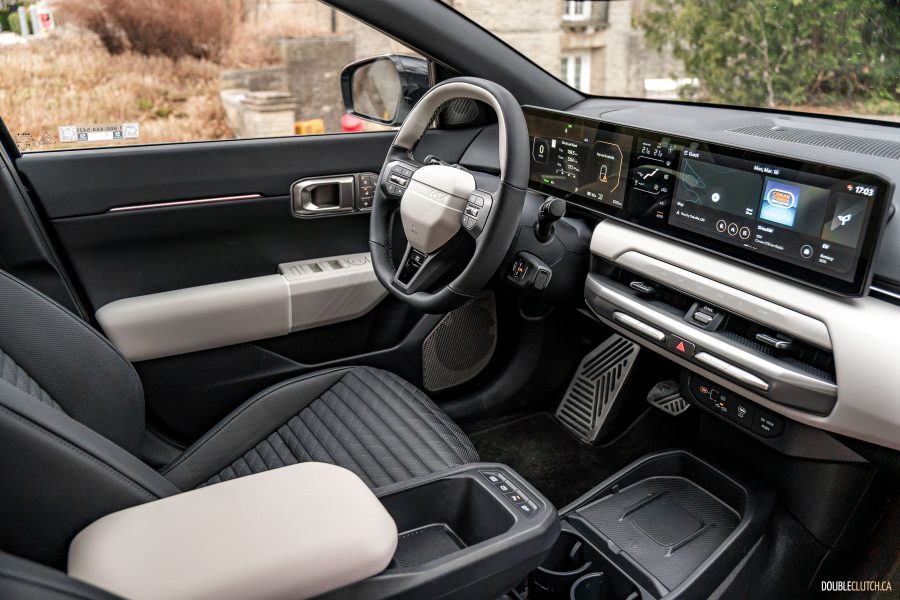
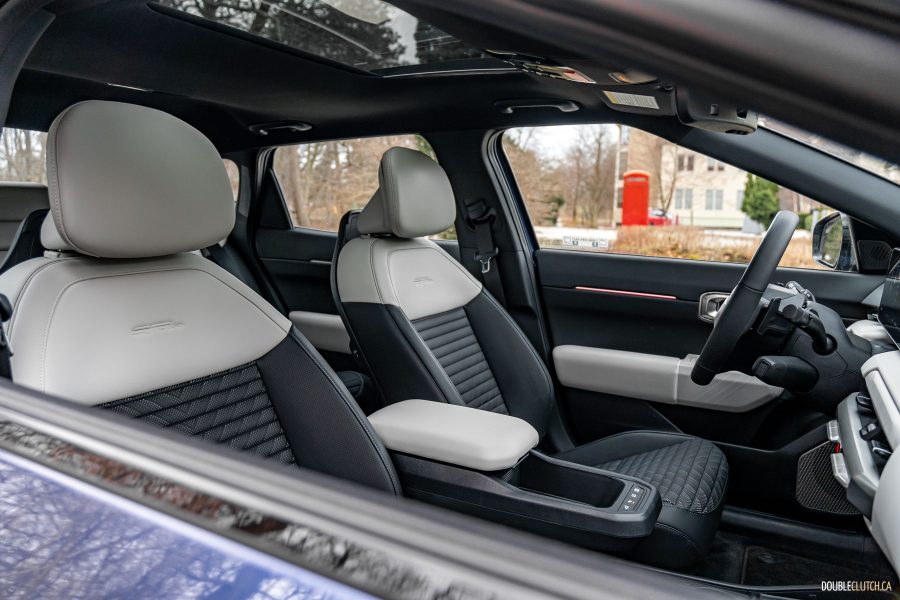
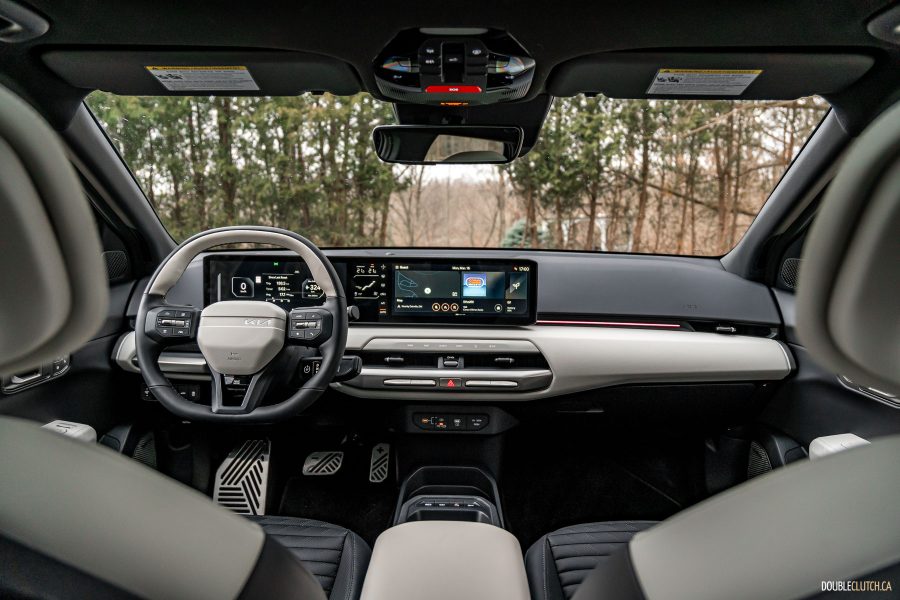
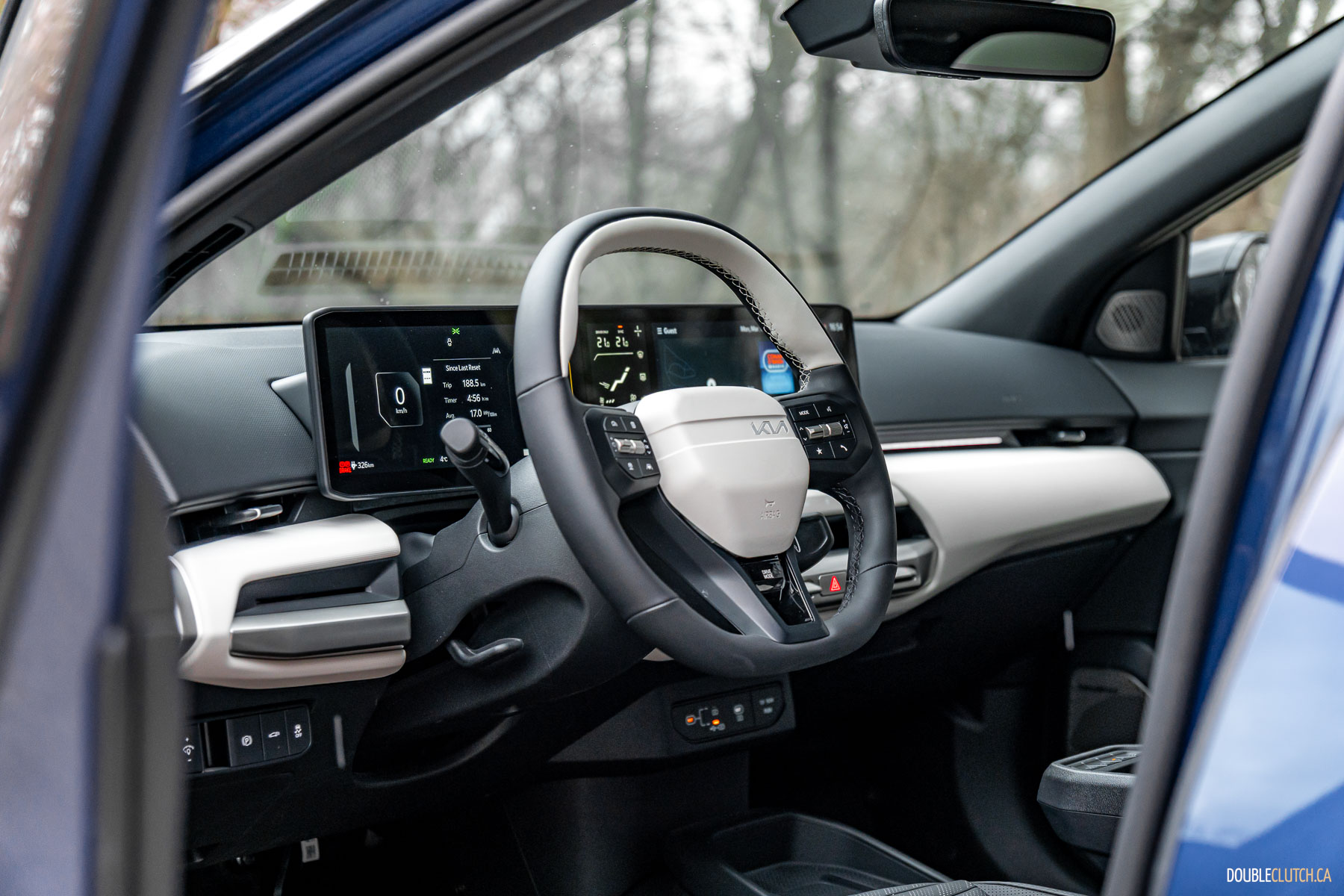
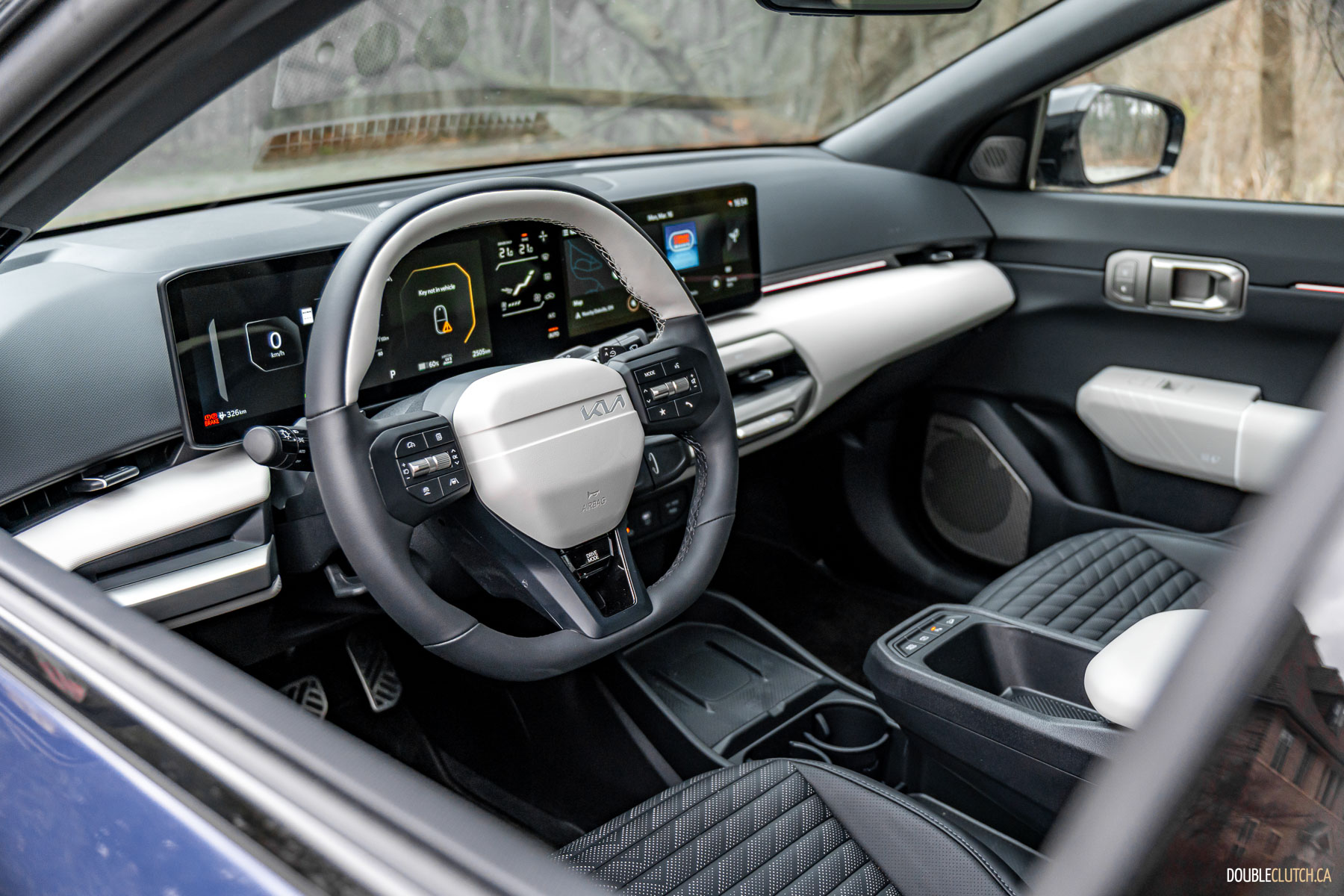
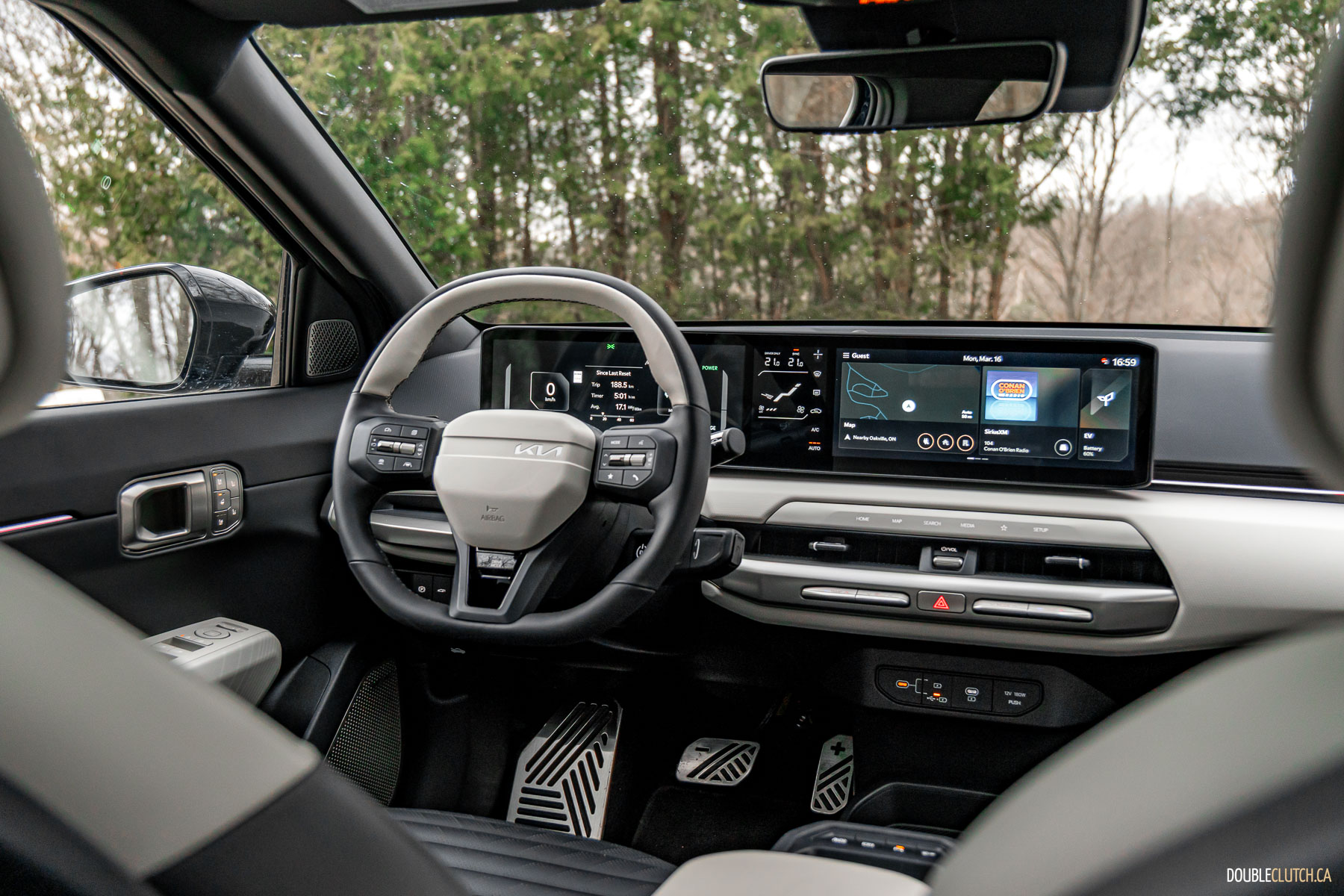
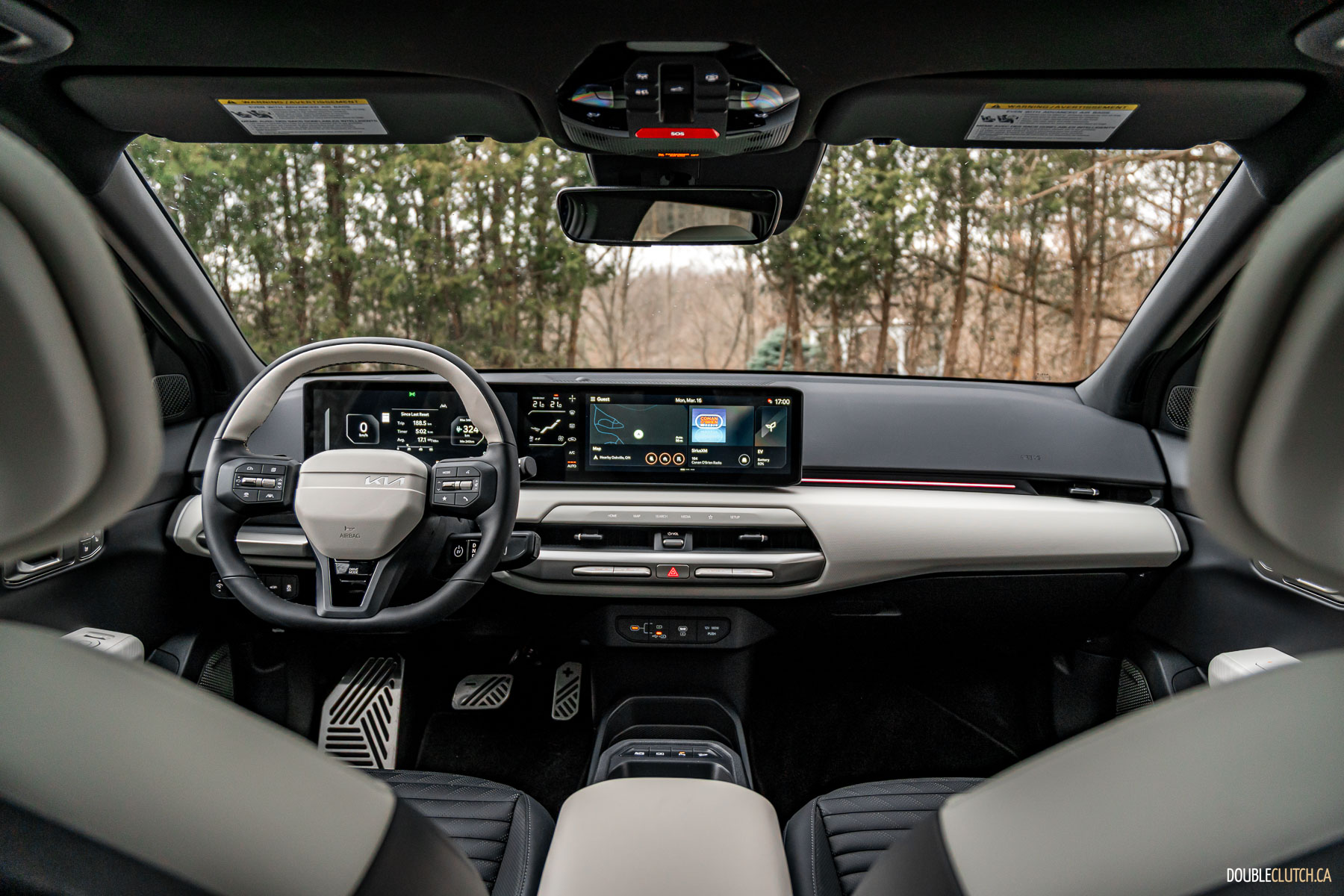
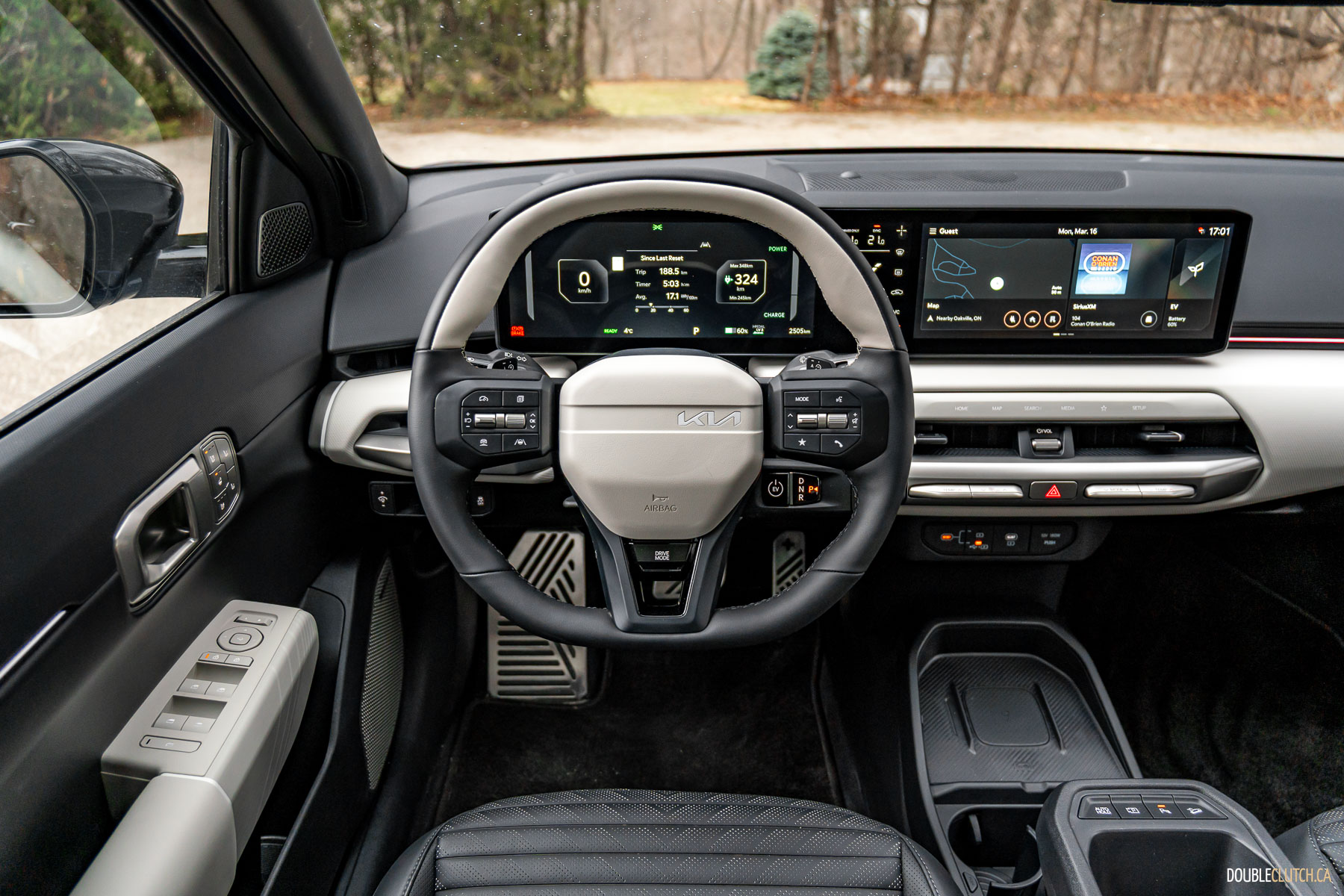
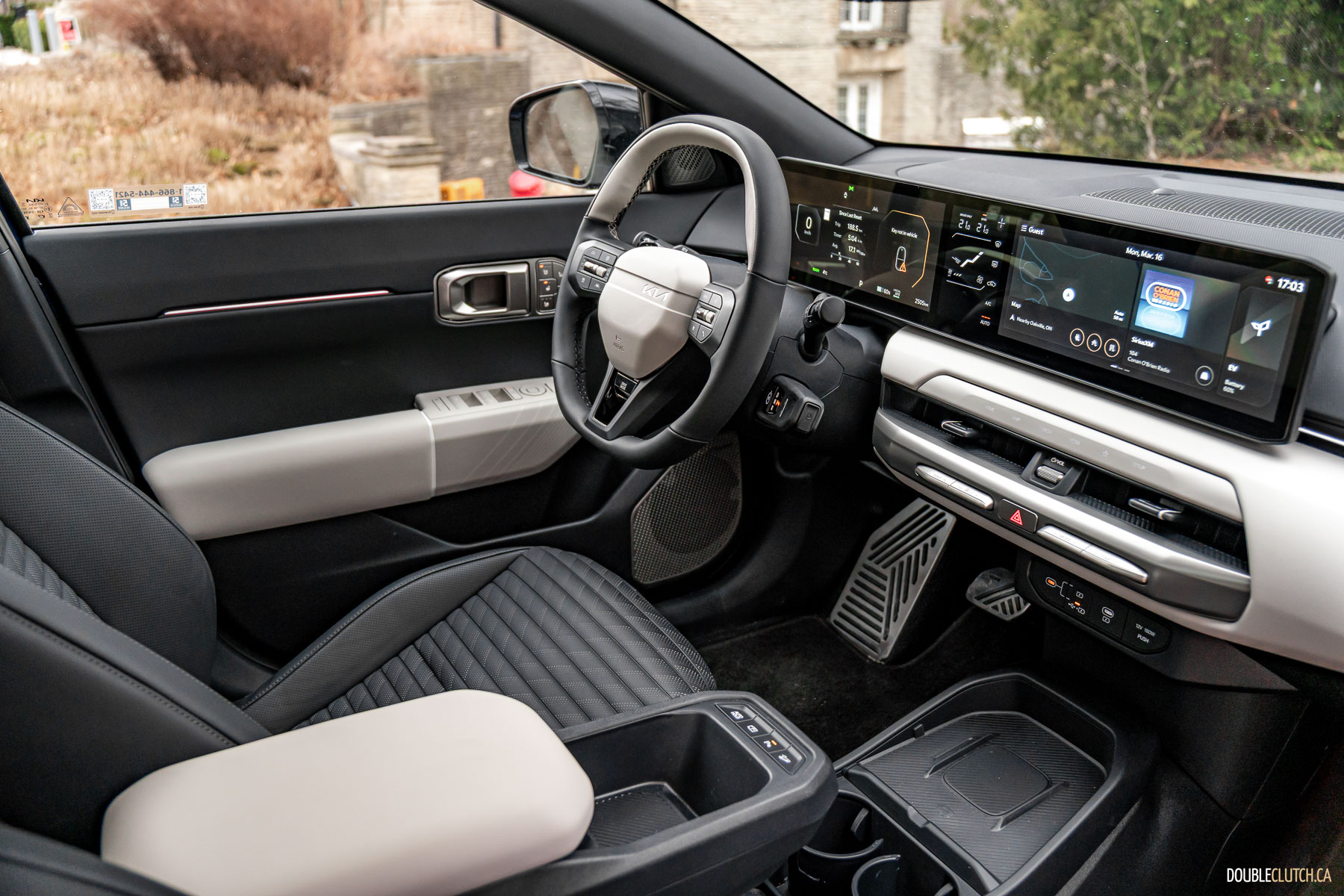
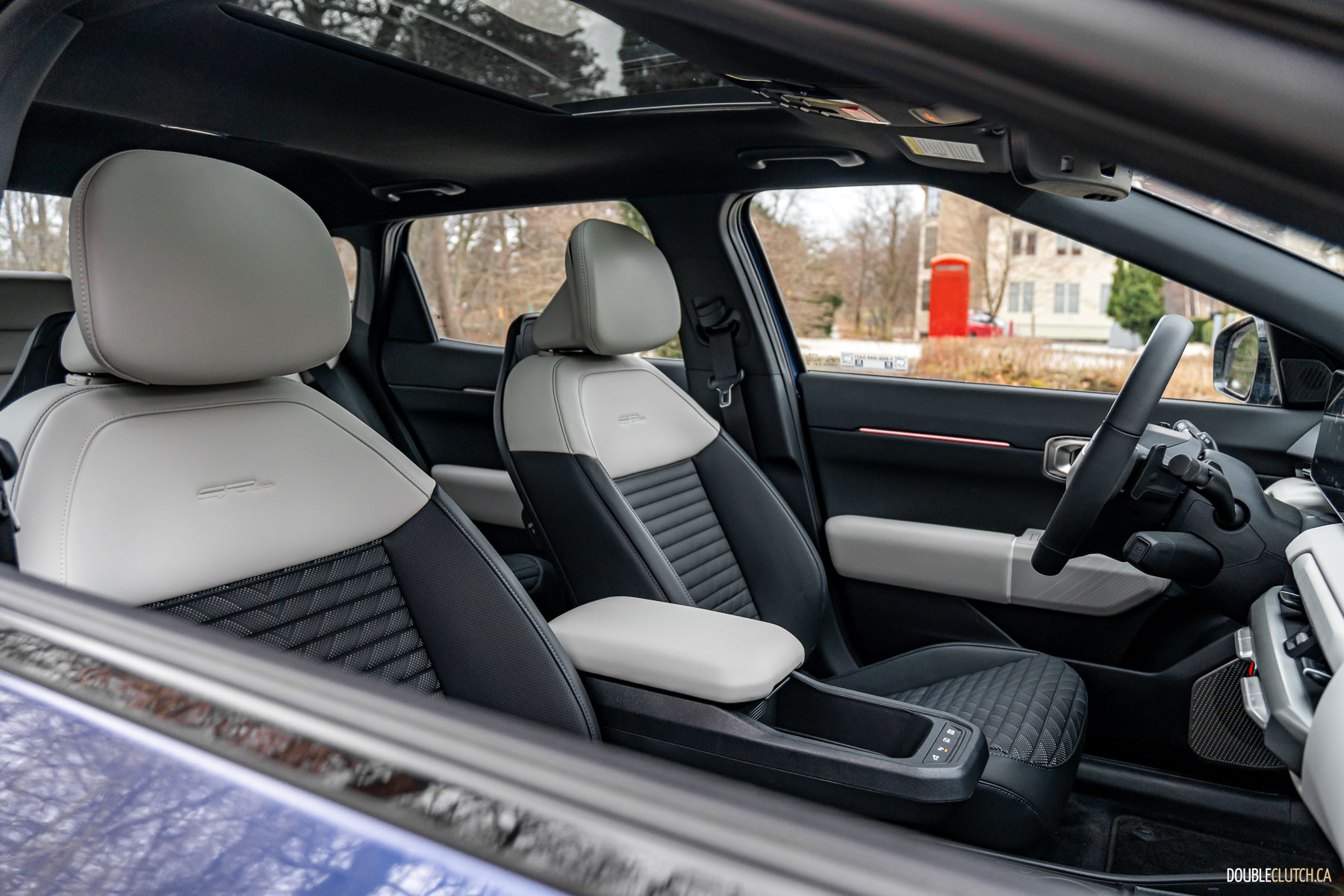
The cabin of the EV4 is handsome, modern, and well-thought out. It’s bright, airy, and so spacious that it undermines its classification as a compact car. Our loaded GT-Line limited tester came with niceties like heated and ventilated power leatherette seats with contrasting perforations, and a Harmon Kardon sound system.
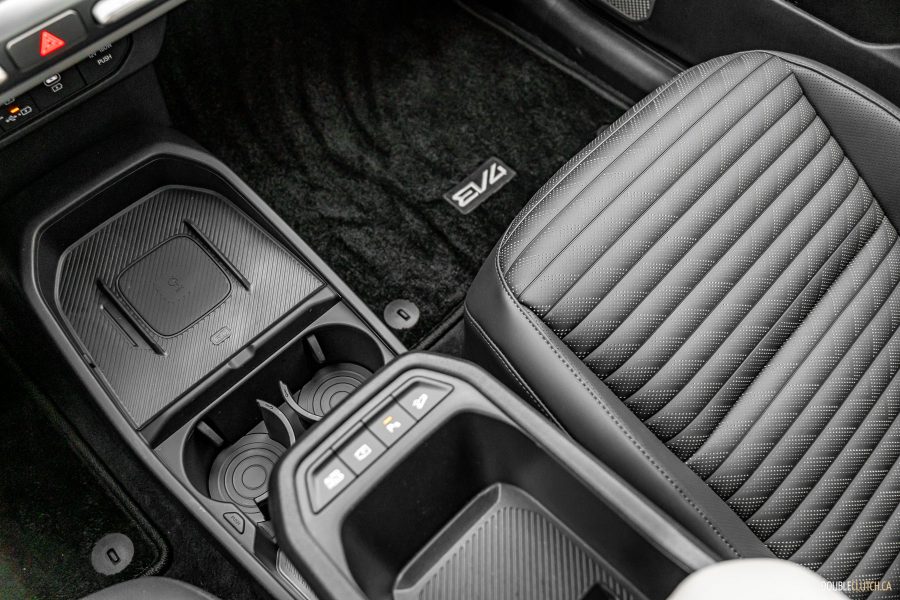
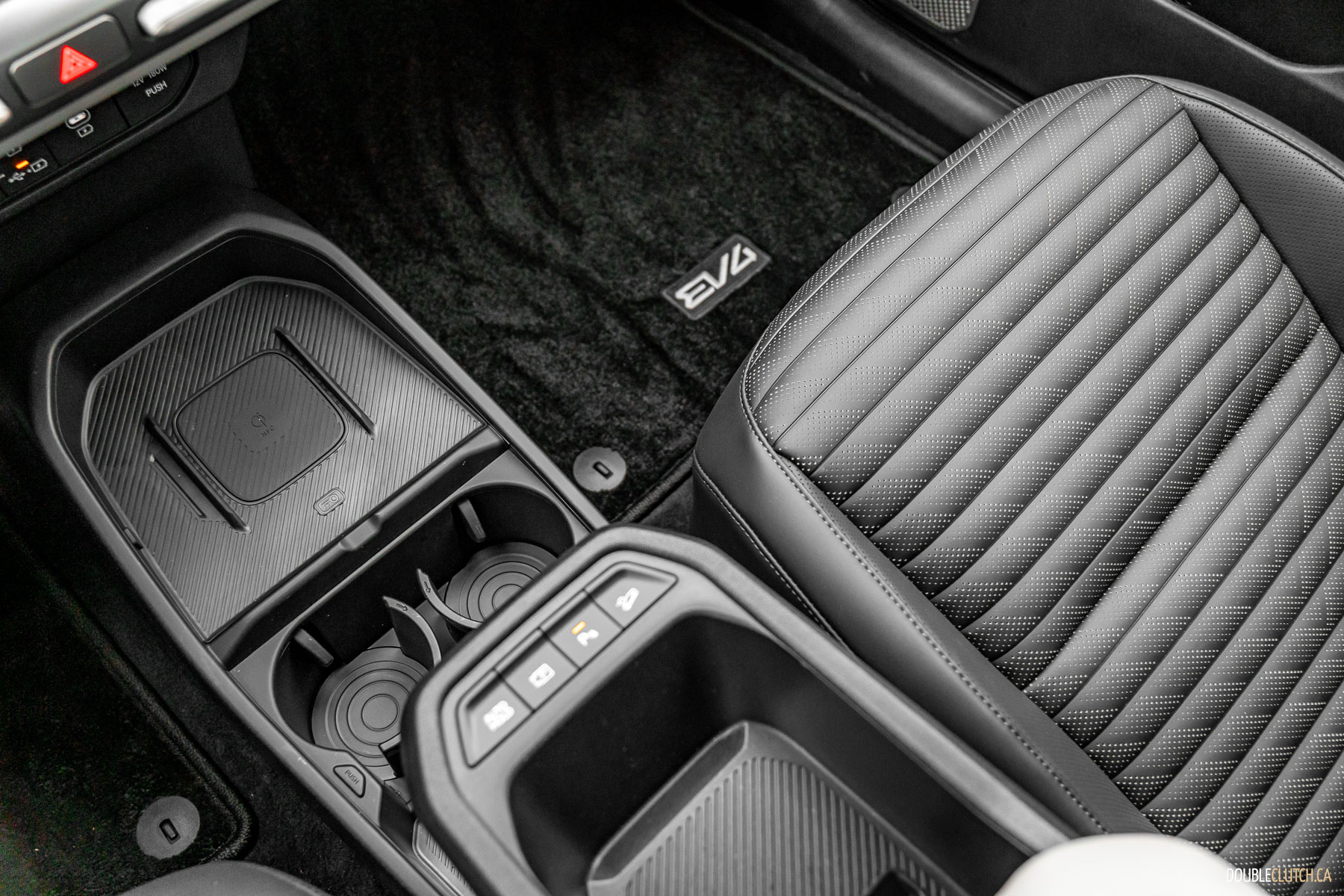
As is typical for Kia, materials are well chosen, switchgear looks and feels good, and even the less-glamorous hard plastic surfaces don’t feel cheap or chintzy. Everything is logically laid out and there’s a good mix of physical and digital controls, with my only nitpick being that it’s a slight reach to the centre touchscreen. The centre console/armrest has a cleverly integrated phone holder, with a separate wireless charging pad below in the configurable storage and cupholder tray.
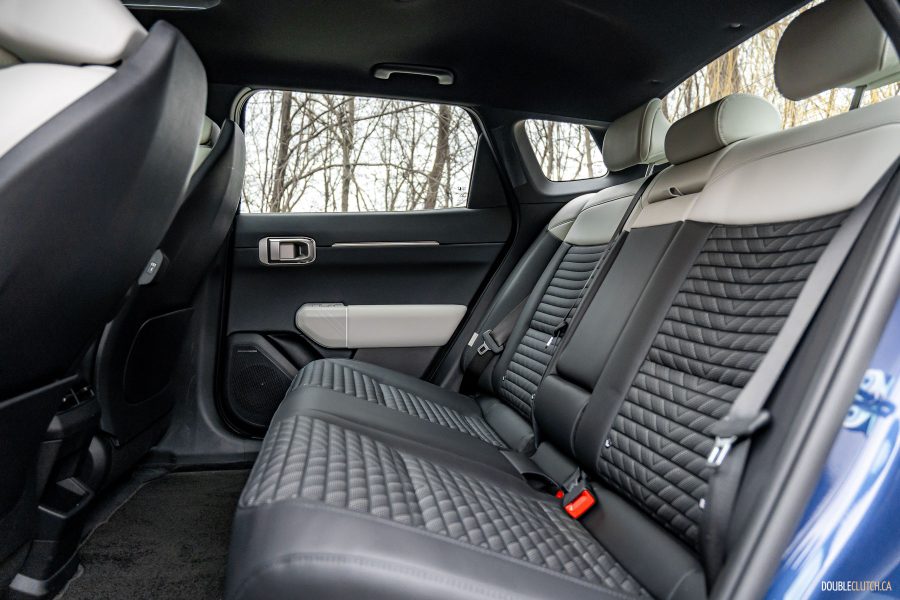
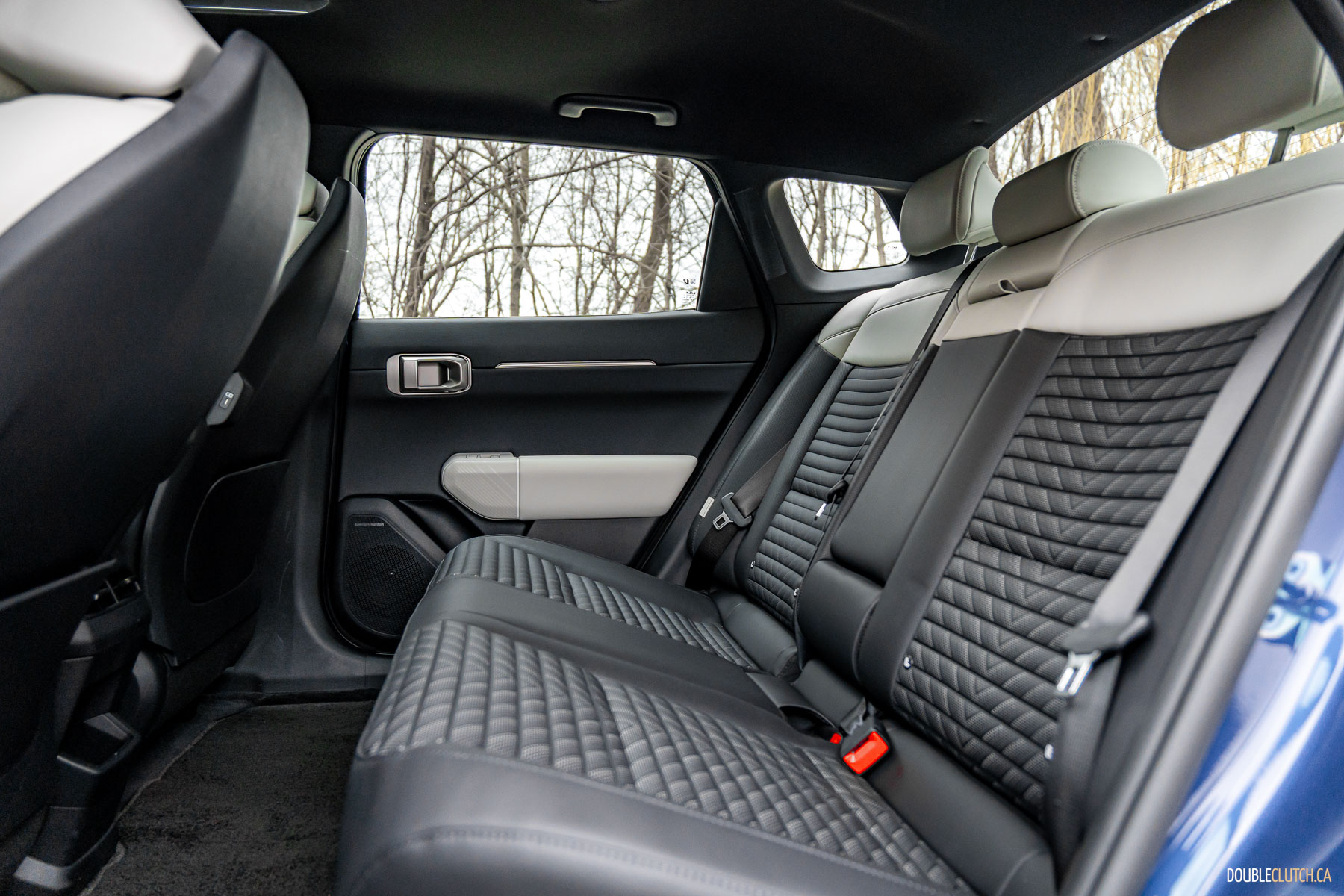
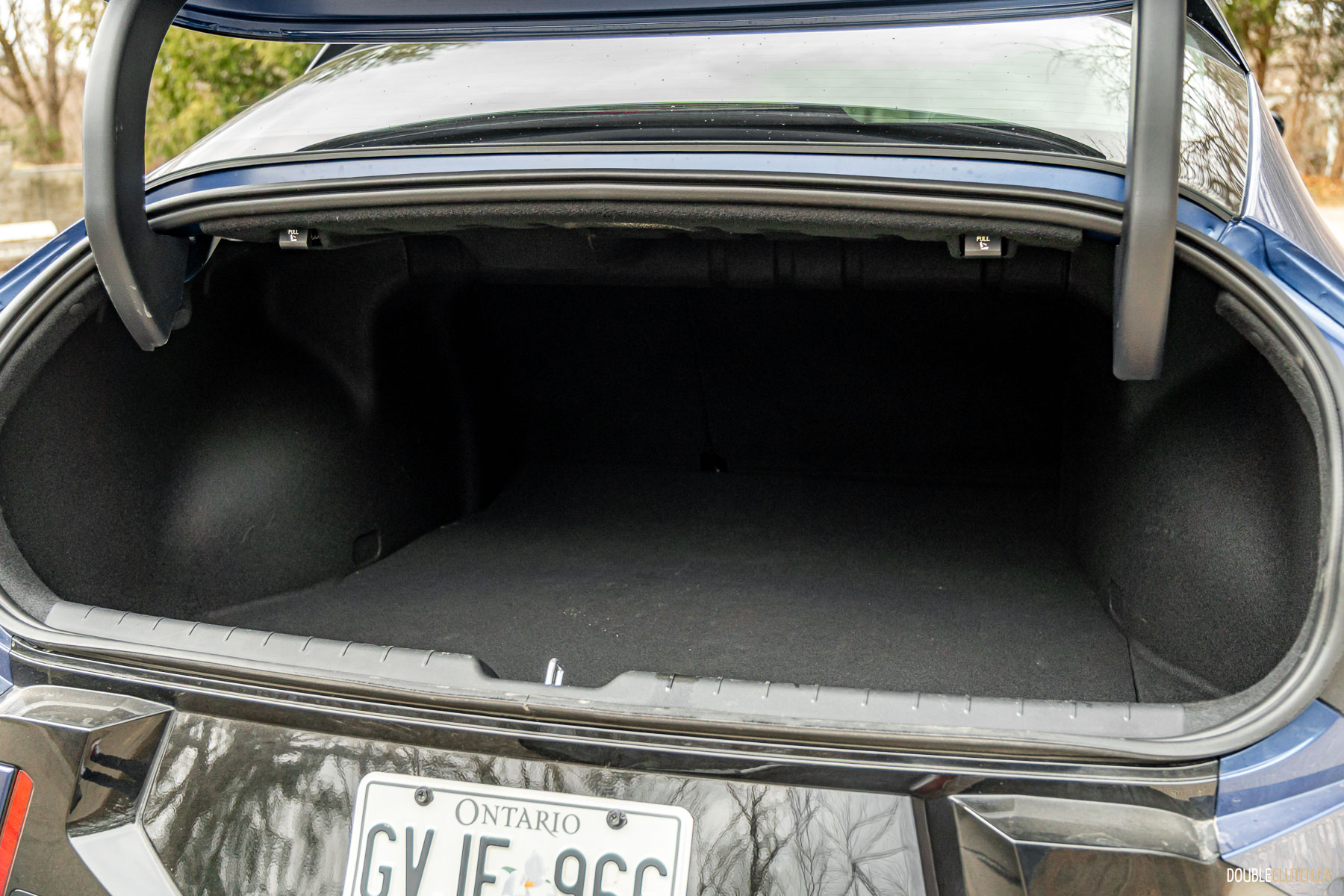
The rear seating is fabulous, with tons of room for legs, shoulders, and your head. Similarly, the trunk is enormous, and has a large, flat opening not dissimilar to the brilliant Lucid Air. It may be an unusual shape on the outside, but it works very well inside.
Infotainment and Driving Tech · More for less
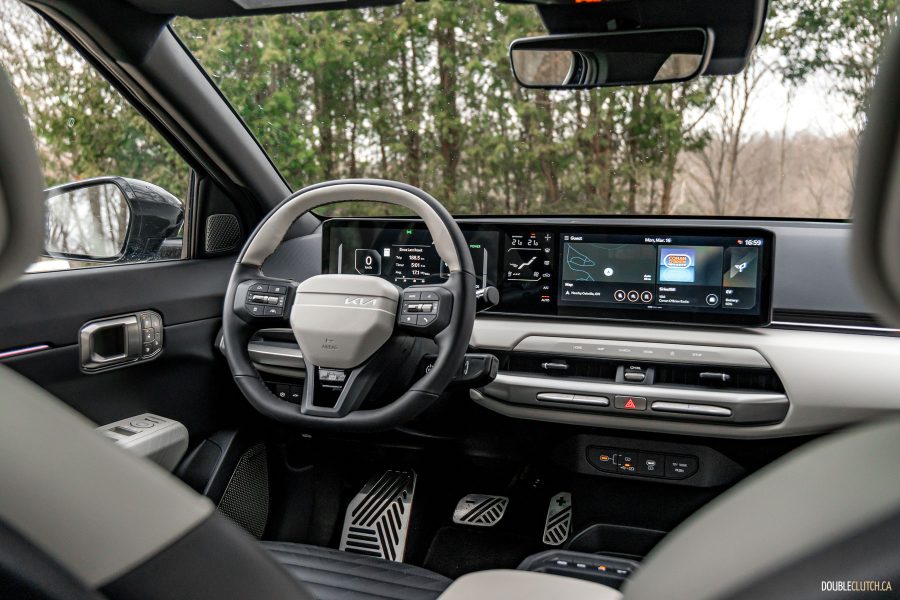
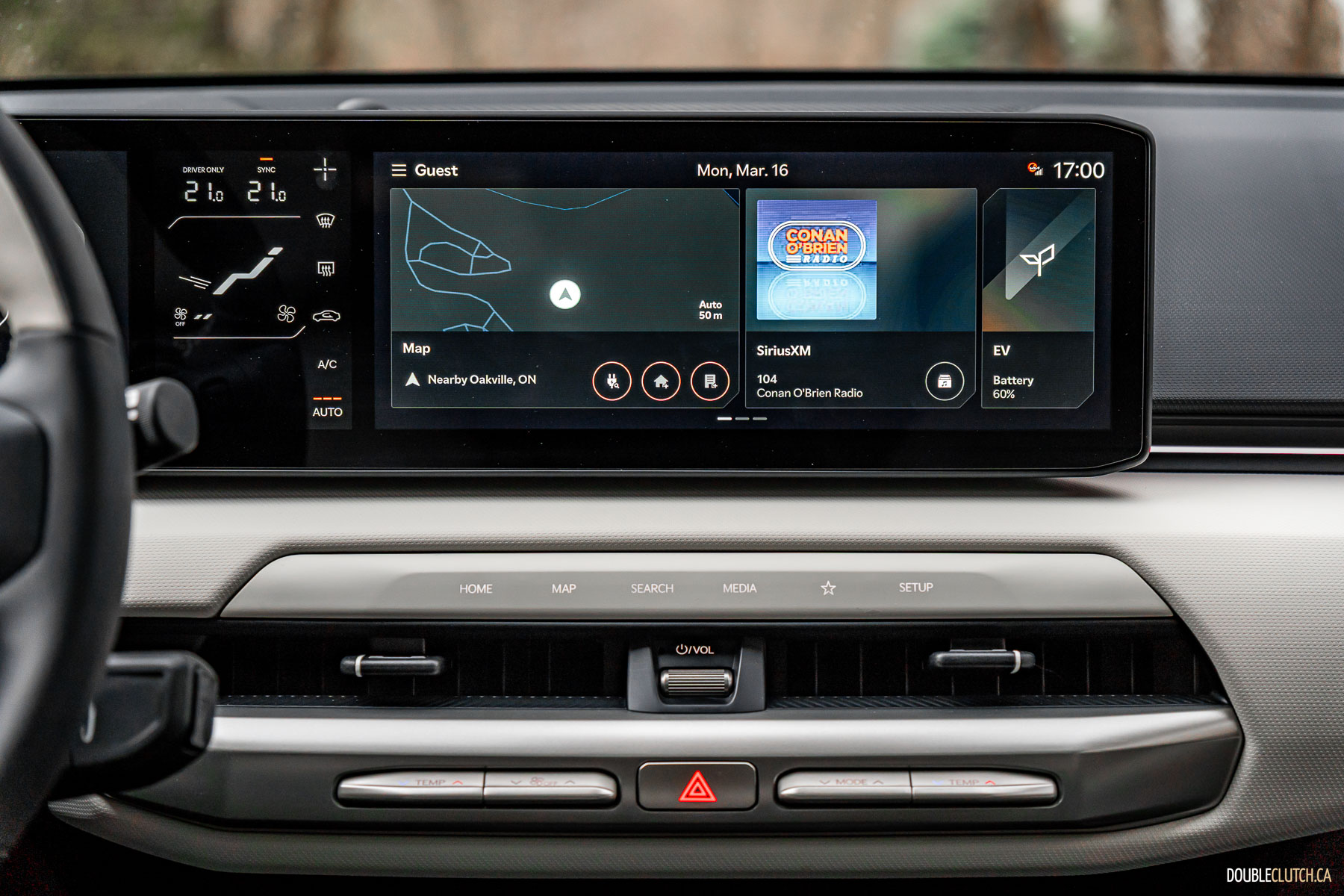
Perched top the dashboard is an ultra-wide screen housing three displays: two 12.3-inch screens for the gauge cluster and centre touch interface, and a 5-incher in the middle for climate. This is the same as seen on the EV9, and it all works together quite well, with an attractive interface that’s easy to use. Wireless Apple CarPlay and Android Auto are standard.
All EV4’s come standard with this display setup, as well as a comprehensive suite a driver aids, including adaptive cruise control with the ability to stop and go, lane keep assist and lane following, front and rear collision avoidance, blind spot monitoring, and driver attention monitoring. Our loaded GT-Line Limited tester adds a blind spot camera when changing lanes, a clever 3D surround view monitor, and even the ability to change lanes on its own, among others.
All of the above work better than ever and are impressive at this price point – this EV4 is quite close to being to able to commute on your behalf – but I most enjoyed Kia’s newest i-Pedal software. It means that one pedal drive works much more effectively and consistently, plus as a very nice little quality-of-life tweak, it stays where you left it after it’s been shut off, instead of needing the click through paddles to enable it every time you get in.
Driving Impressions · Perfectly pleasant
With only 200-odd ponies moving nearly two tons, exciting isn’t the word I’d use to describe the EV4 – and that’s fine, it is supposed to be basic transport first and it excels at that. What people want in basic transport is ease of use and practicality, which it has nailed, and then comfort, where it does equally well.
It is thoroughly hushed at all speeds, and its chassis is well calibrated for tranquility, with impressive composure over harsh roads, without some of the under-damped body movements I noticed in the similar Ioniq 5. The driving position is comfortable, visibility is generally good, aided by tech where it is hindered out back. Overall it’s just nice, pleasant, and inoffensive.
Whiffs:
Pokey performance, a face only a mother could love
Powertrain response is a little languid at launch, with Kia trying to protect you from roasting the front tires like the Soul EV was so eager to do. Things are improved once underway, where the EV4 has enough power to accelerate, merge, and pass with confidence. A Sport driving mode sharpens throttle response and stiffens steering to moderate degree, but it’s not its strong suit. It feels natural enough, there’s no awkwardness from the brakes or regenerative braking, and the steering is predictable. It’s fine, and that’s fine.
Range · You can count on it
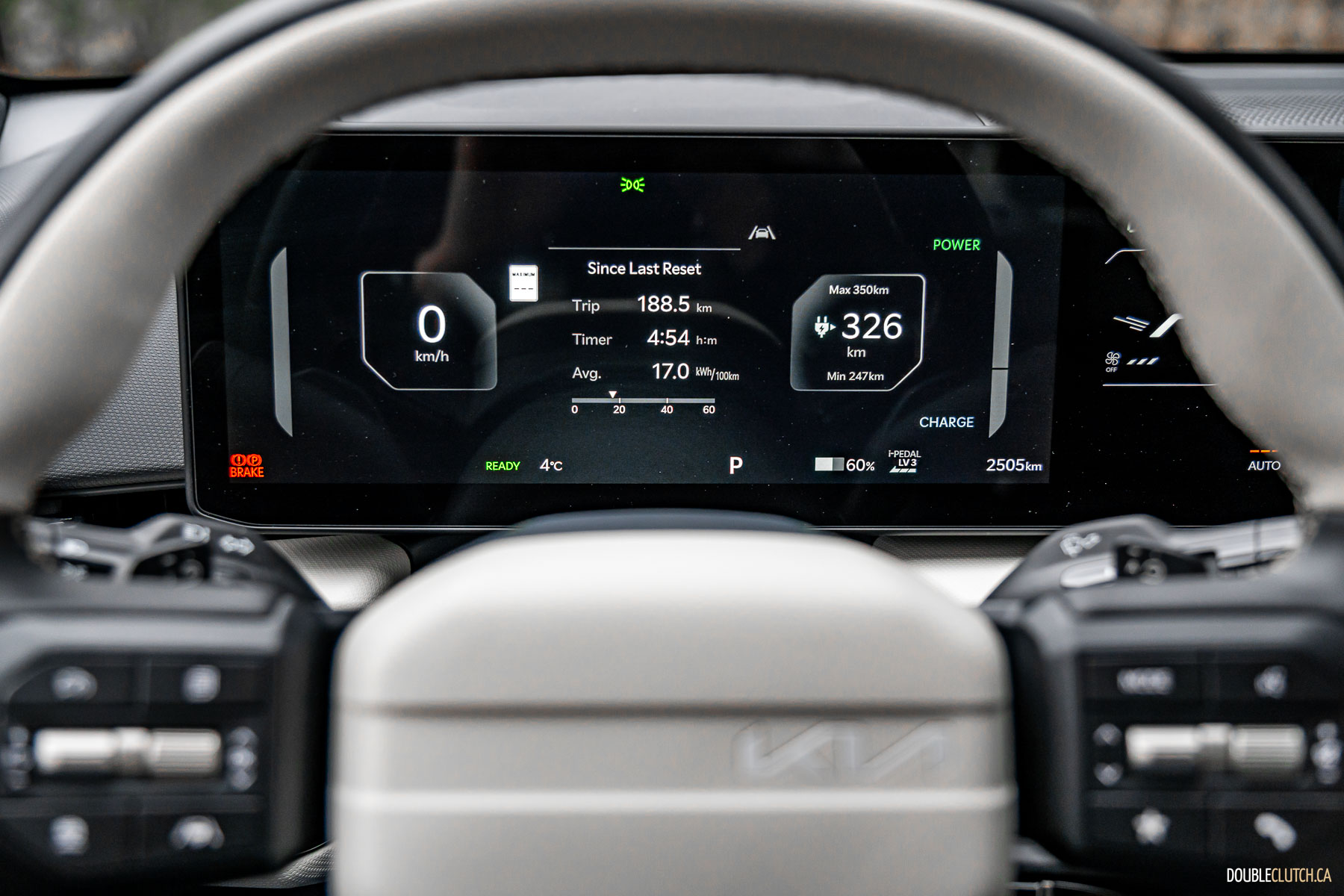
I imagine most of you would not get into an electric vehicle with 6% of charge left in it, and expect it to actually go anywhere other than the nearest charger. I felt bold and decided to push the limits of the EV4’s vitally important range calculator – which is smart, and shows theoretical best and worst case scenarios above and below your estimated range calculation. I picked it up with a full charge on a warm morning, showing over 500 kilometers of calculated range – the official estimate is 488km on this trim level – and proceeded to run it down over the next few days. I wasn’t going for maximum distance, I just wanted to see what it happens as it got lower, so I wasn’t frugal with energy. And it got cold quickly.
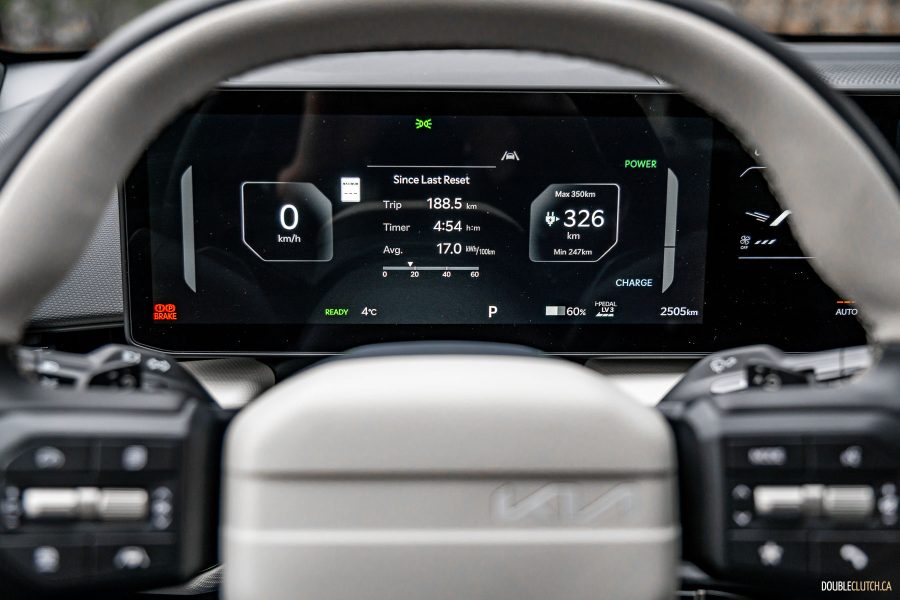
I left my house on a cold morning with 6%, or 44km worth of electric pixies left alive in the battery, down one from the night before. It’s a 26km commute. It reminded me at 20 and 10 percent the previous day I that should really charge it (and helpfully offered to navigate me to a charging station). I set off and ran the heat because I’m selfish. About half way to work, it was down to 1% and told me I had limited power available, but was still chugging along on the highway – at this point I decided to stop pushing my luck, turned the heat off, and got off the highway. A few minutes later it showed 0%… but kept going, showing 24km left.
I arrived at work (where there’s a charger) with 17km remaining; just one click off its projected estimate (44km original estimate – 26km commute = 18km). It covered 408km on that charge, 17% down from the official estimate of 488km, in cold weather and with a wasteful pilot. We routinely see a loss greater than 20% under better conditions. Color me impressed.
Value · There’s a lot here
For $51,995 for this loaded GT-Line Limited, Kia throws everything and the kitchen sink in terms of amenities at this EV4, and the result is a car that’s exceptionally comfortable, useful, and has every amenity you could possibly want, as Kia is pulling the same grab-bag of toys and tricks as luxuriously appointed top-trim Hyundais and opulent Genesis vehicles. If you can get over what it looks like, it ticks all the boxes well.
If it were me, I’d be willing to give up the sunroof, leather seating, Digital Key, and I’d opt for the one-up-from-base Wind model, with the bigger battery, heat pump, and the same practical, comfortable vehicle for $42,995, to fully realize the Kia EV4’s mission of delivering fantastic value.
Wrap it up
We’re at a point where owning a vehicle (and just about everything else) is more costly that it’s ever been before. And, as we’ve all recently been reminded, the cost of fuel is volatile beast that we’re all at the mercy of. Electric vehicles have never made more sense than they do, and the 2026 Kia EV4 arrives at a key moment to offer a viable alternative to everyone who’s feeling pinched by the cost of getting around, without punishing you for pinching pennies. Maybe that’s enough to get over its pugnacious mug.
–

Editor-in-Chief
Nathan is an eccentric car enthusiast who likes driver-focused cars and thoughtful design. He can't stand listening to people reminisce about the "good ole days" of cars because he started doing it before it was cool, and is also definitely not a hipster doofus.