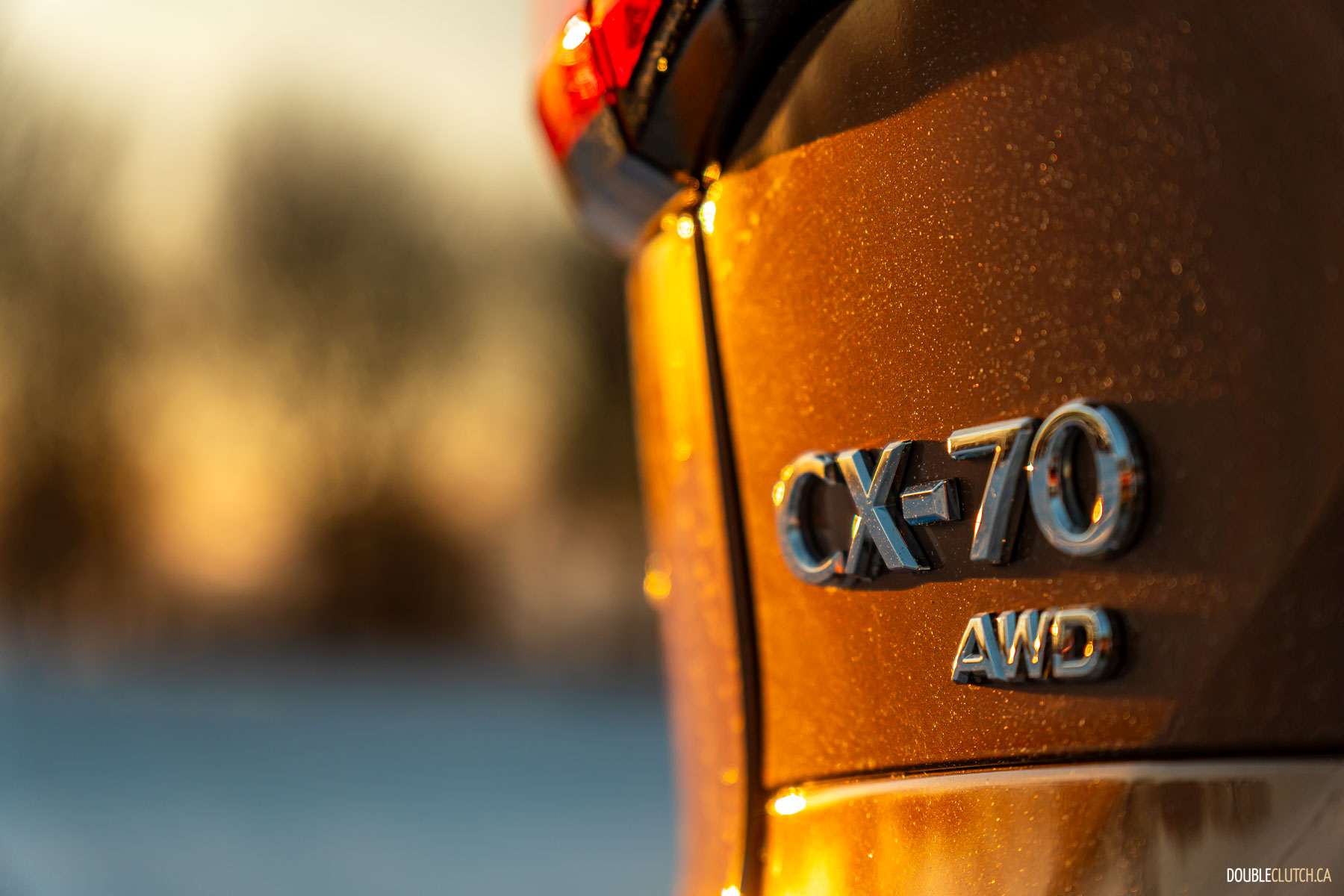
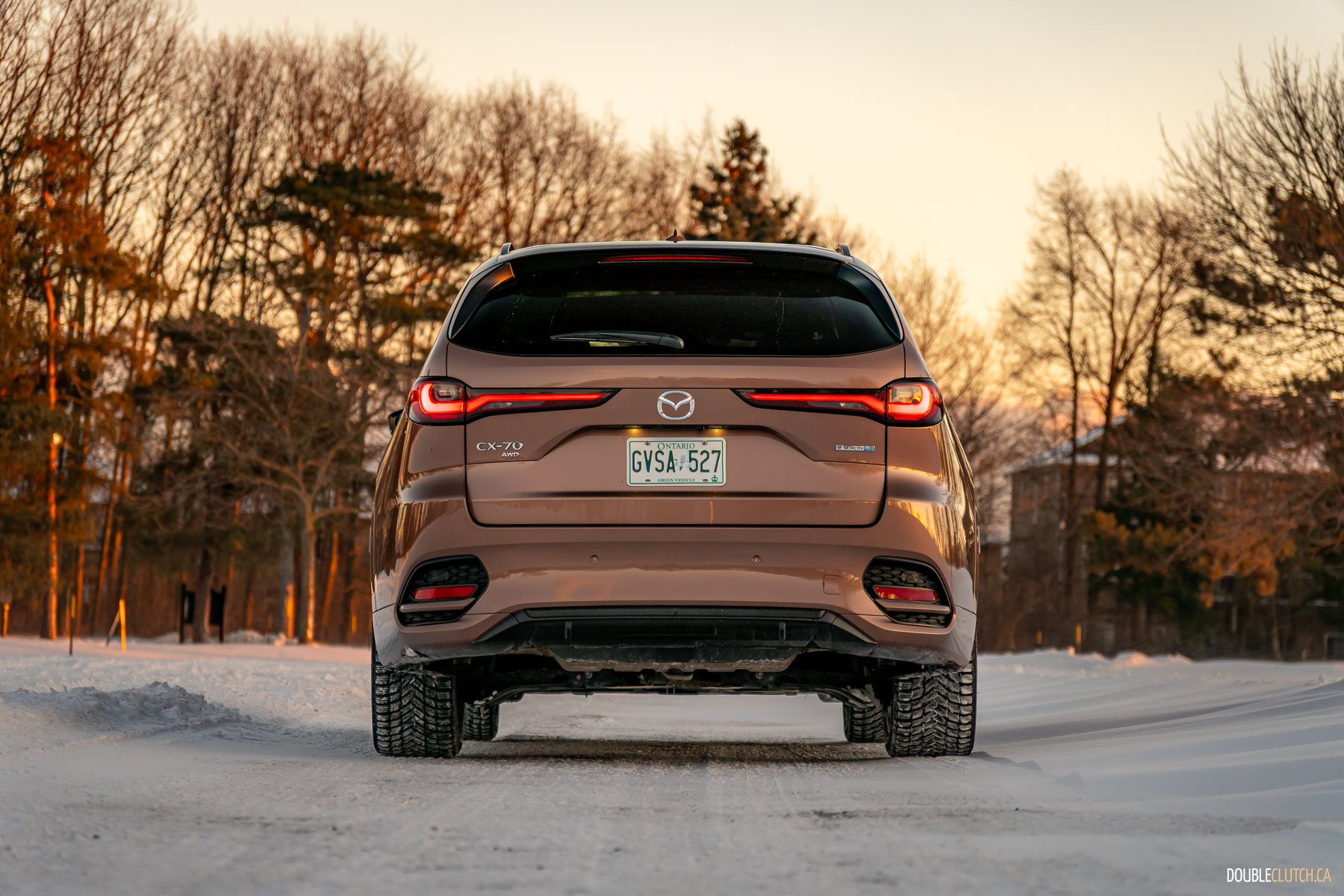
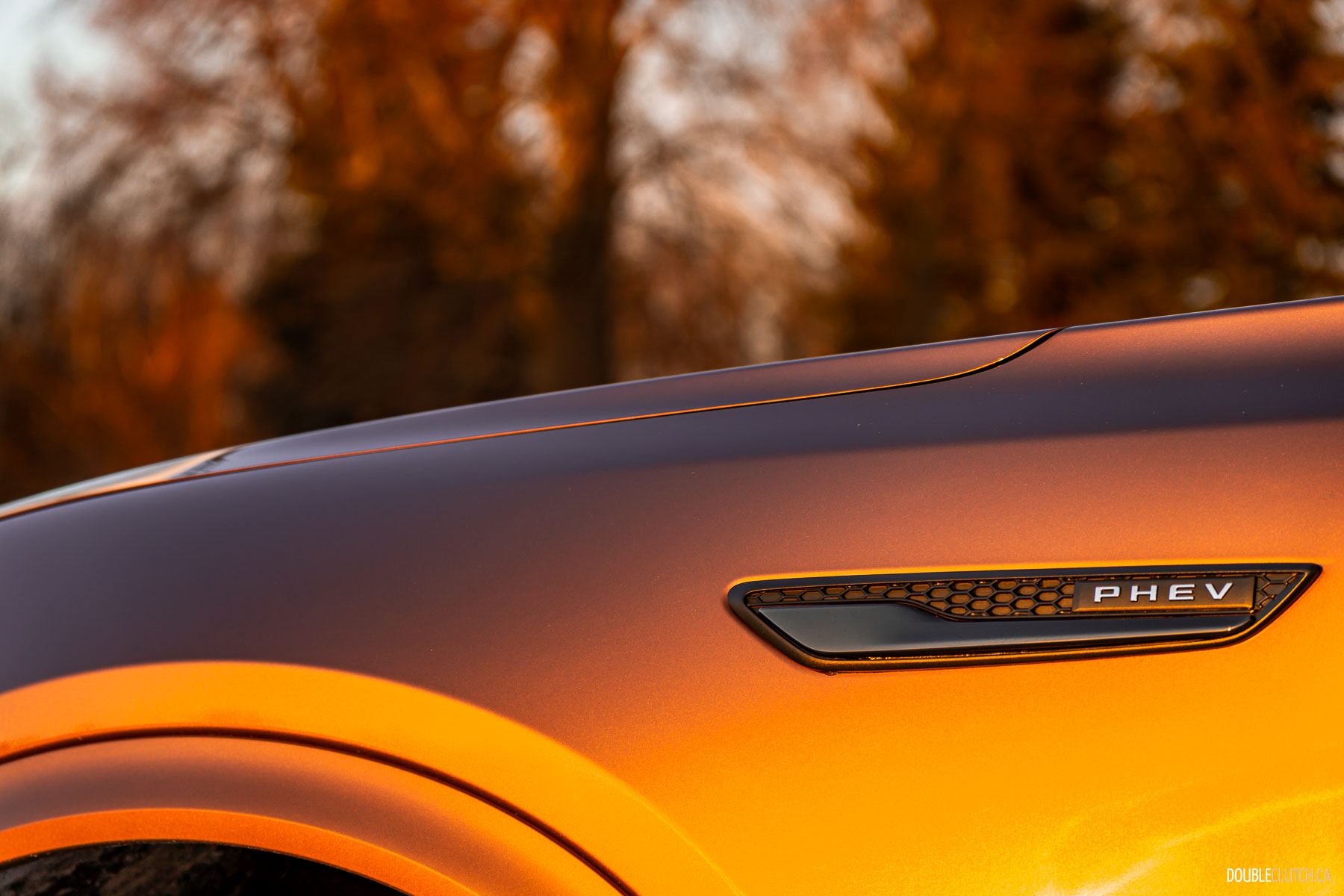
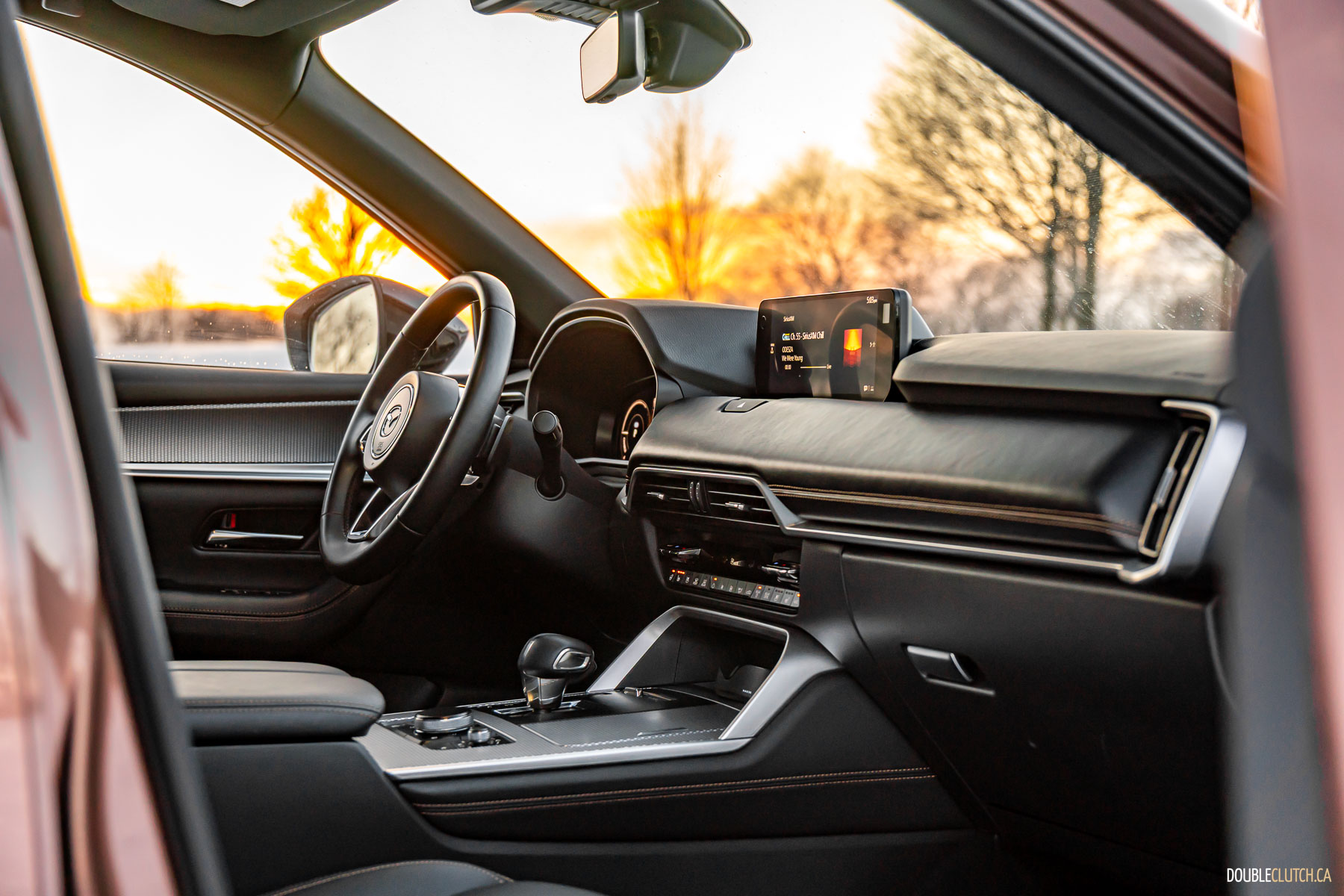
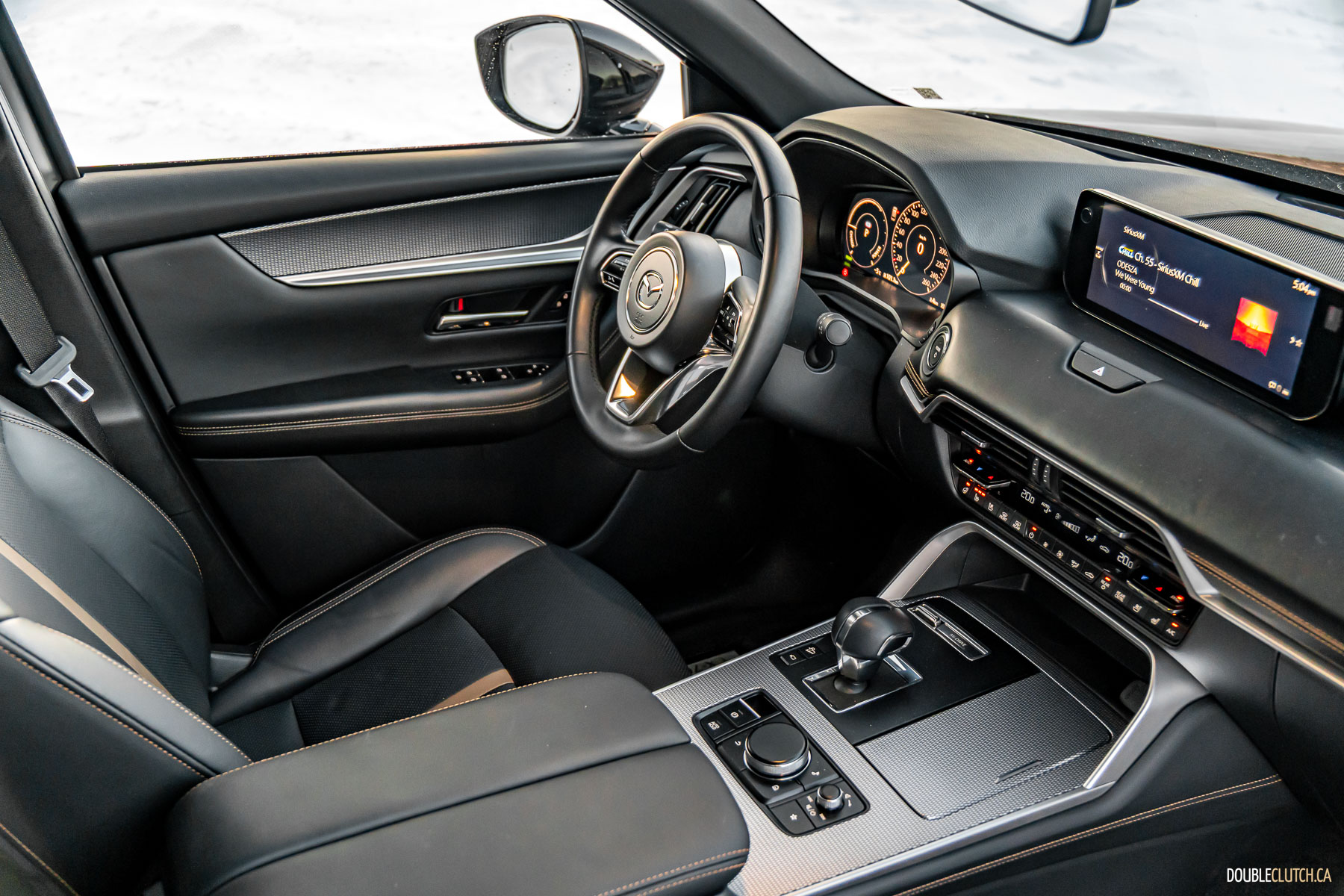
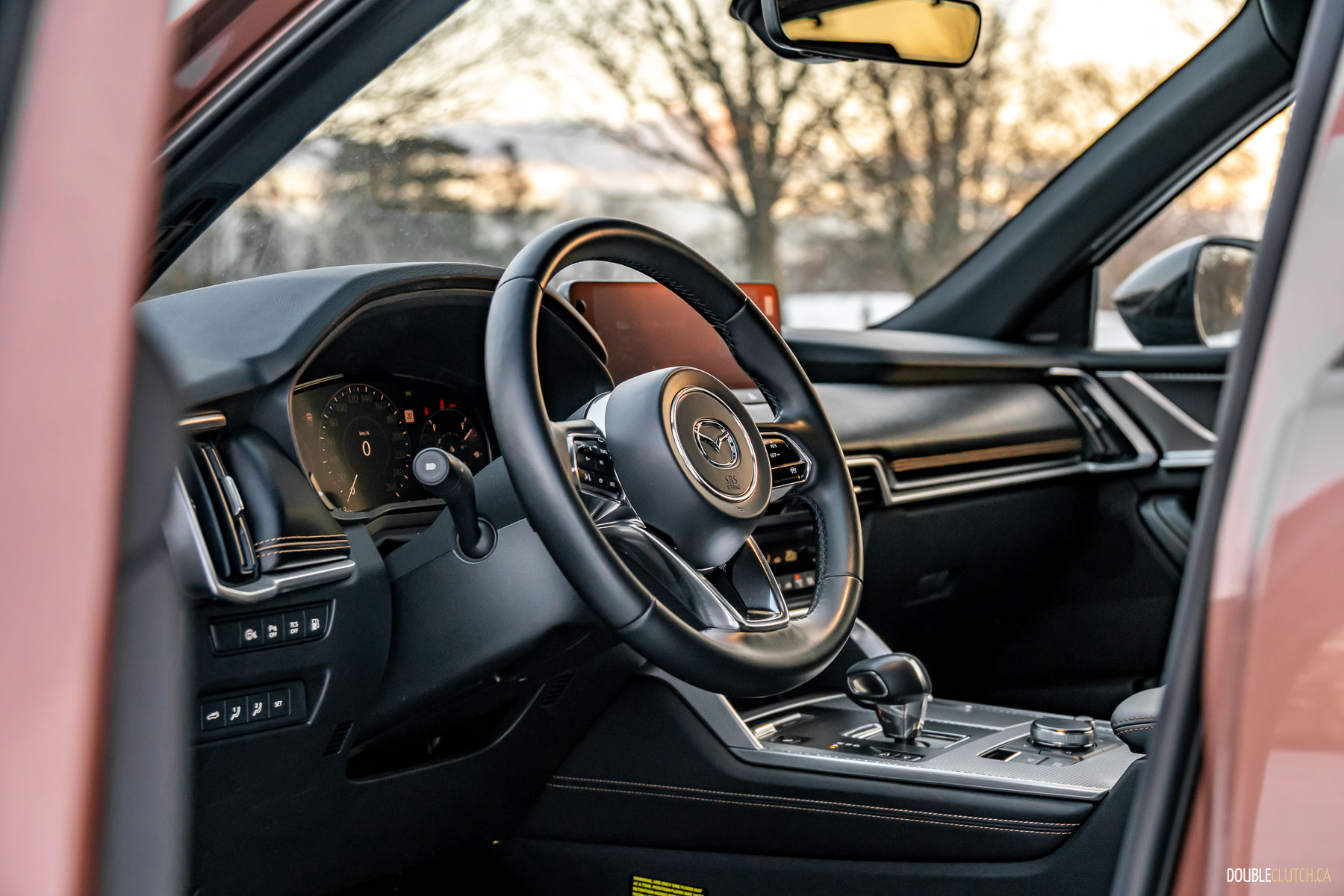
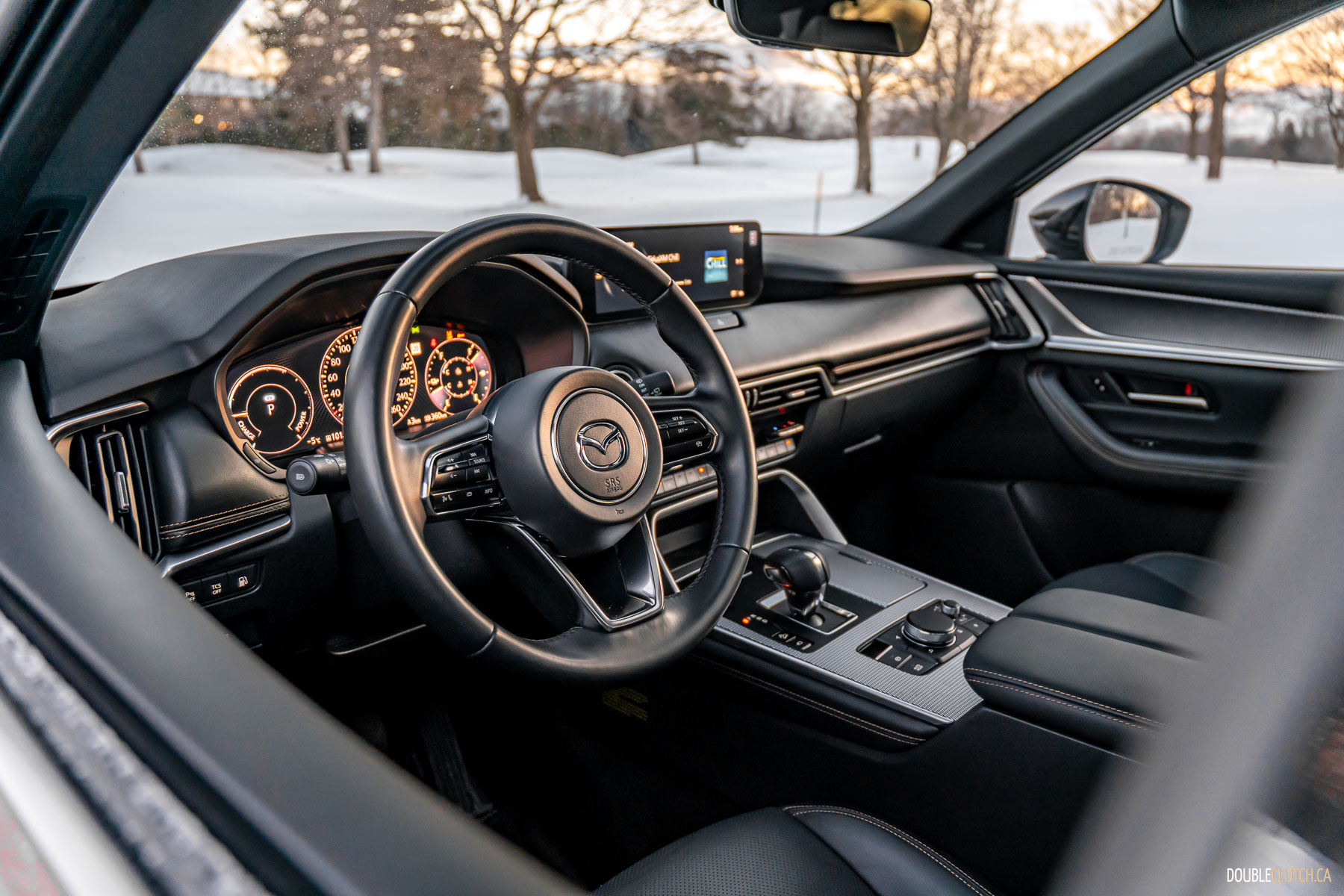
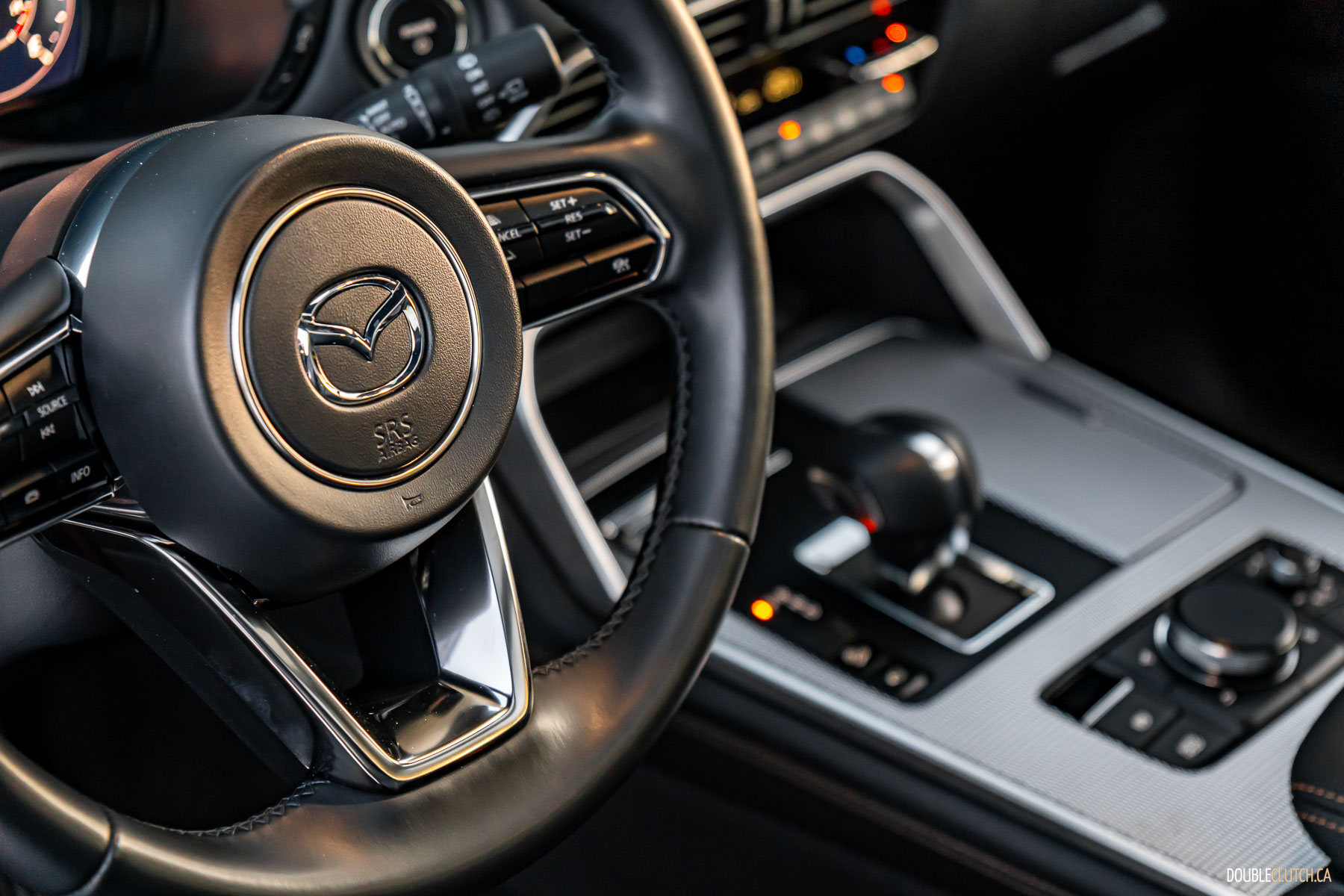
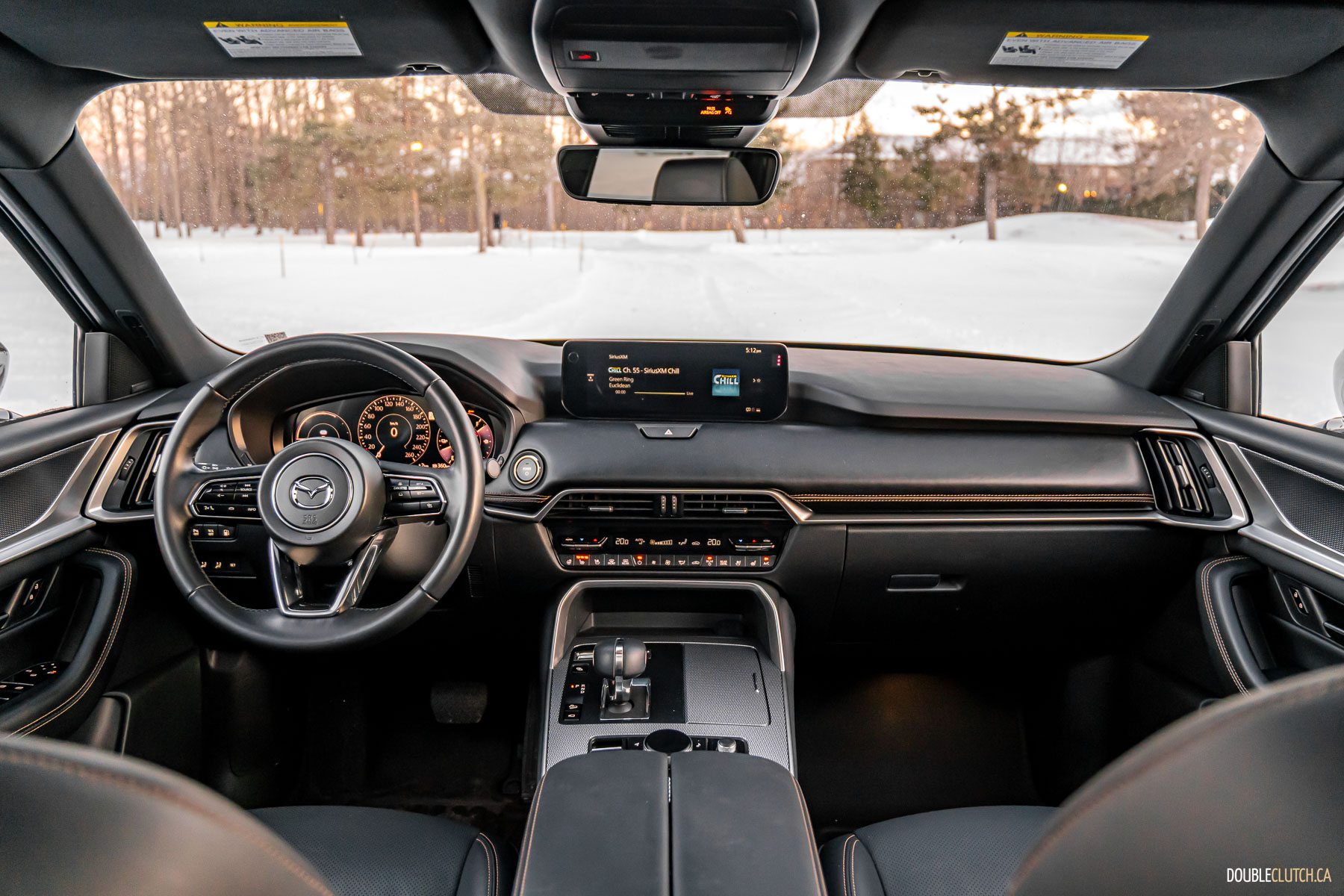
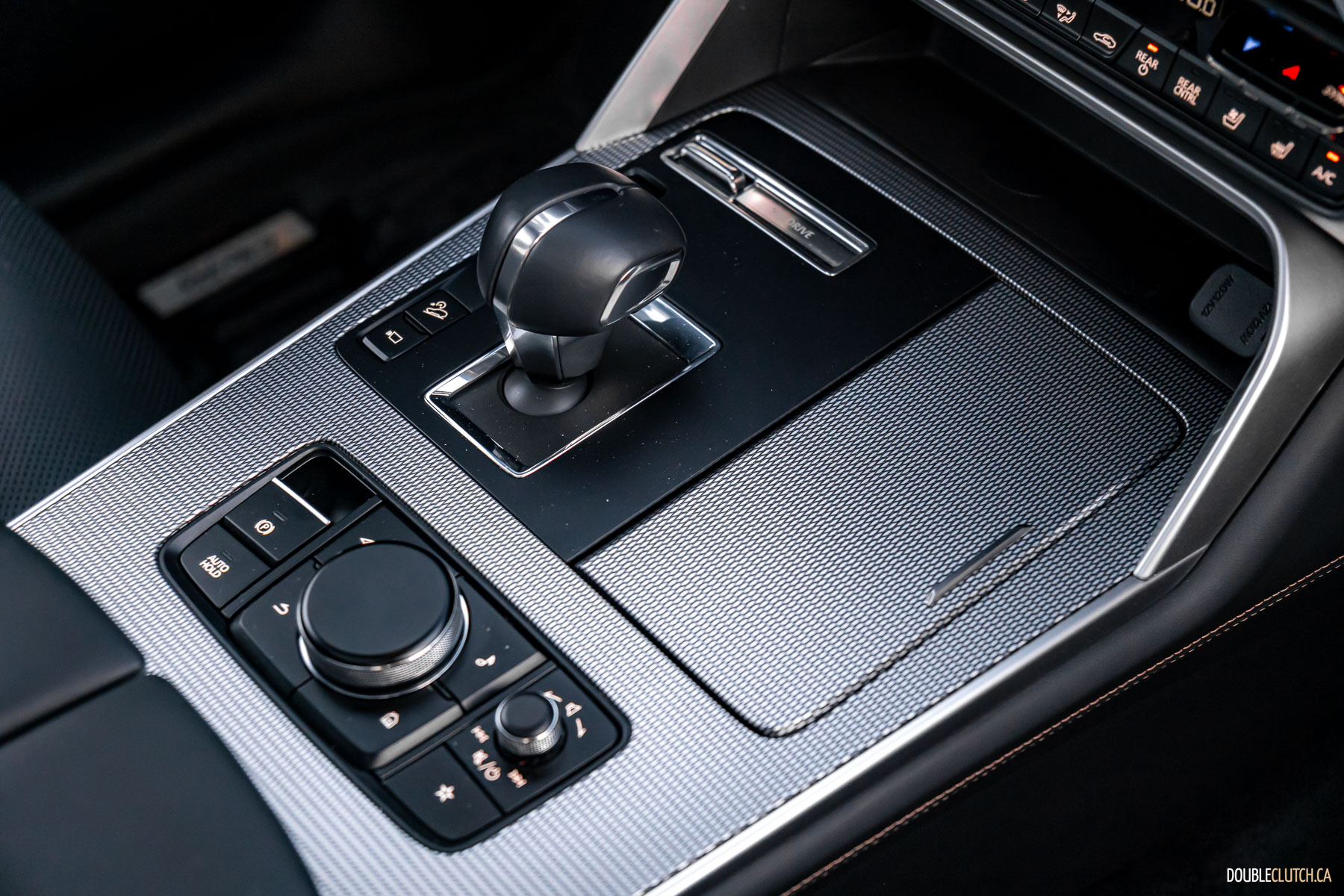
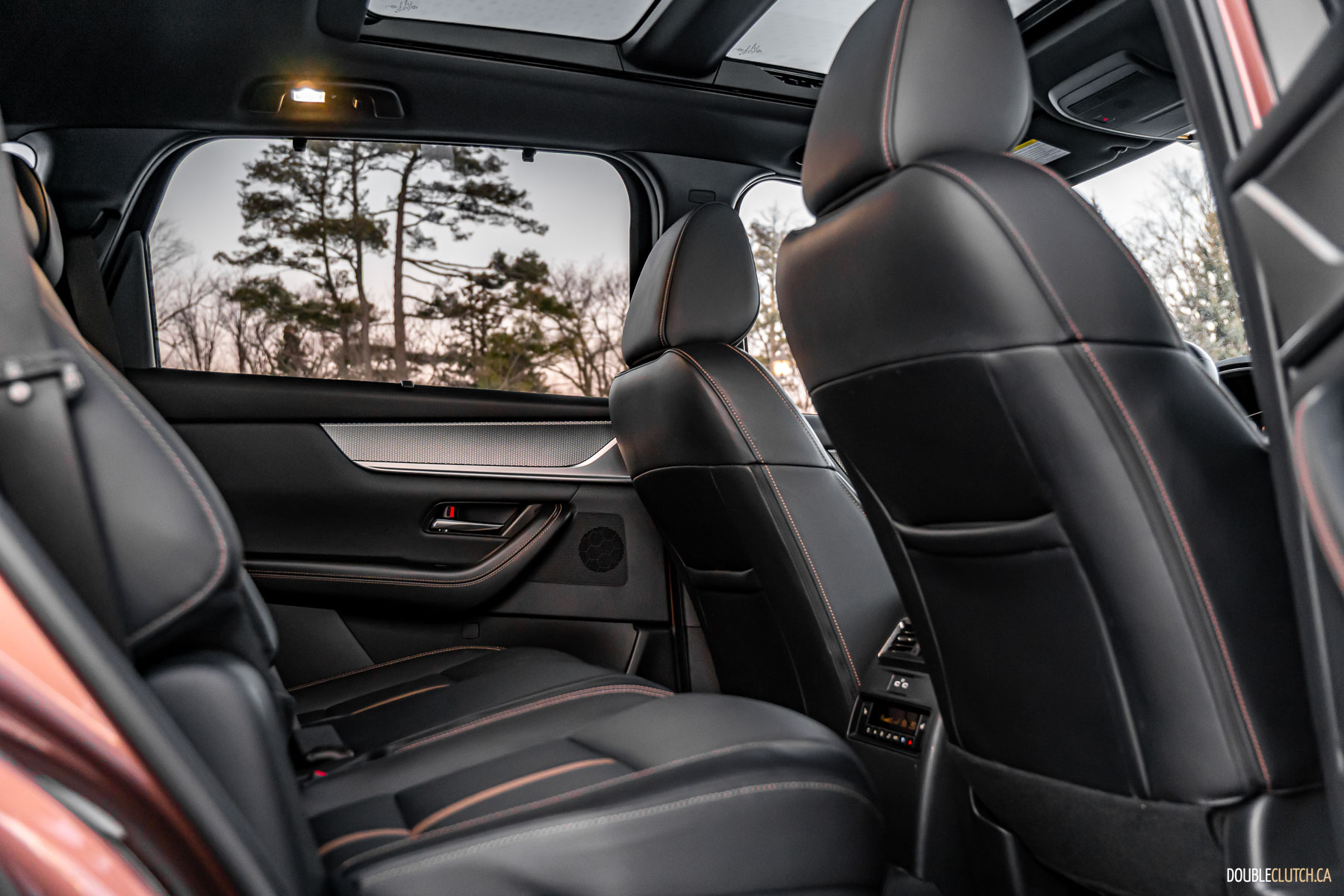
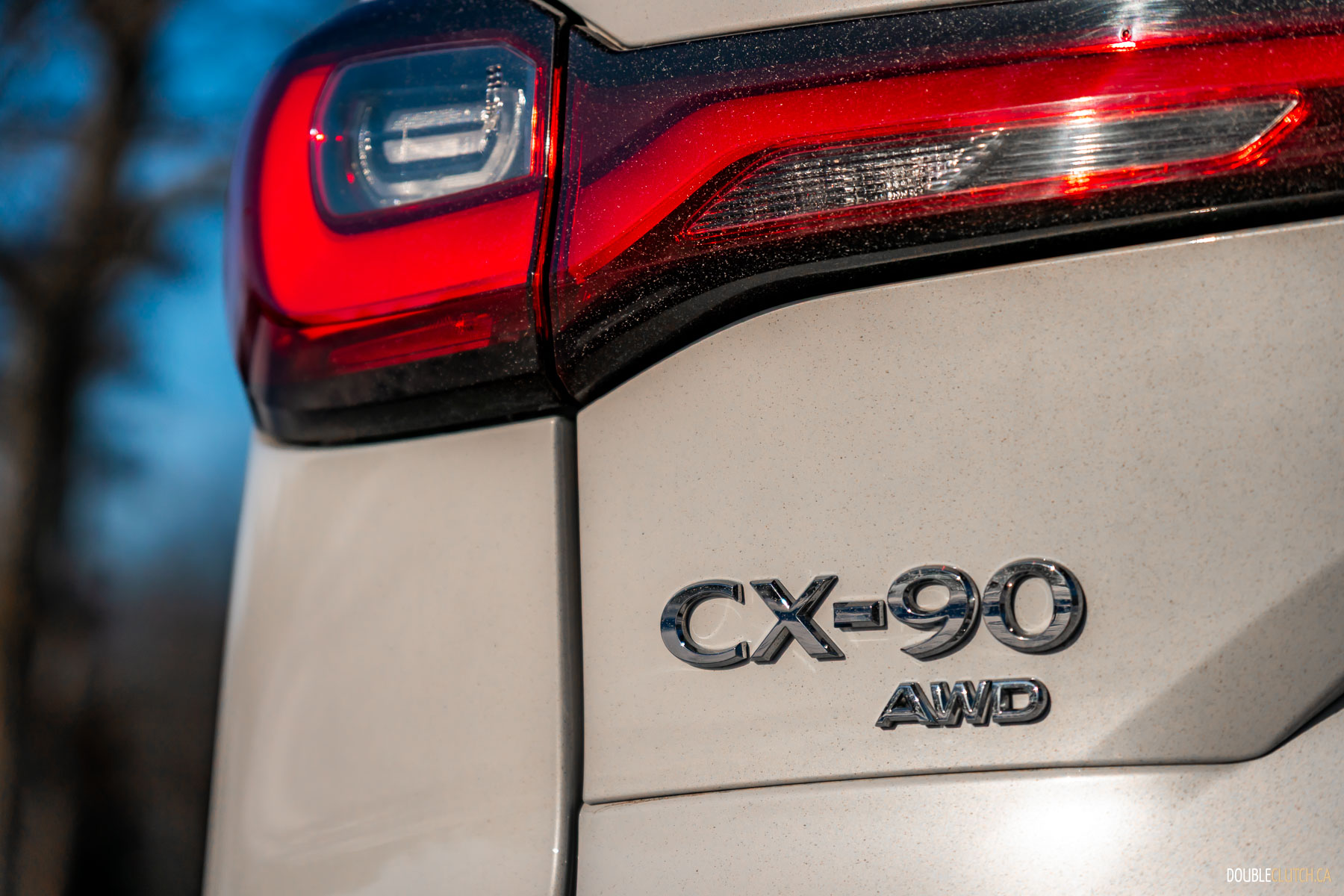
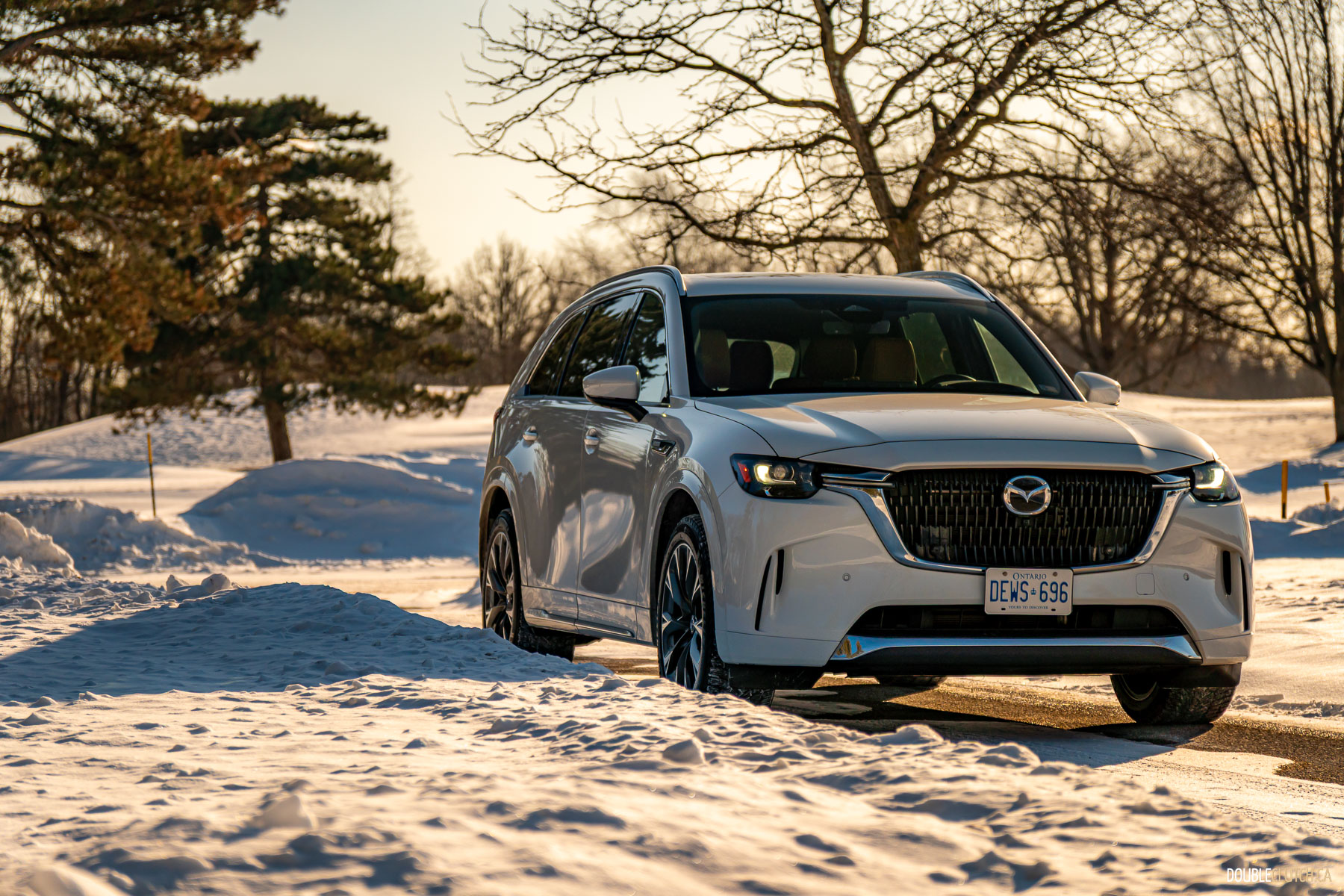
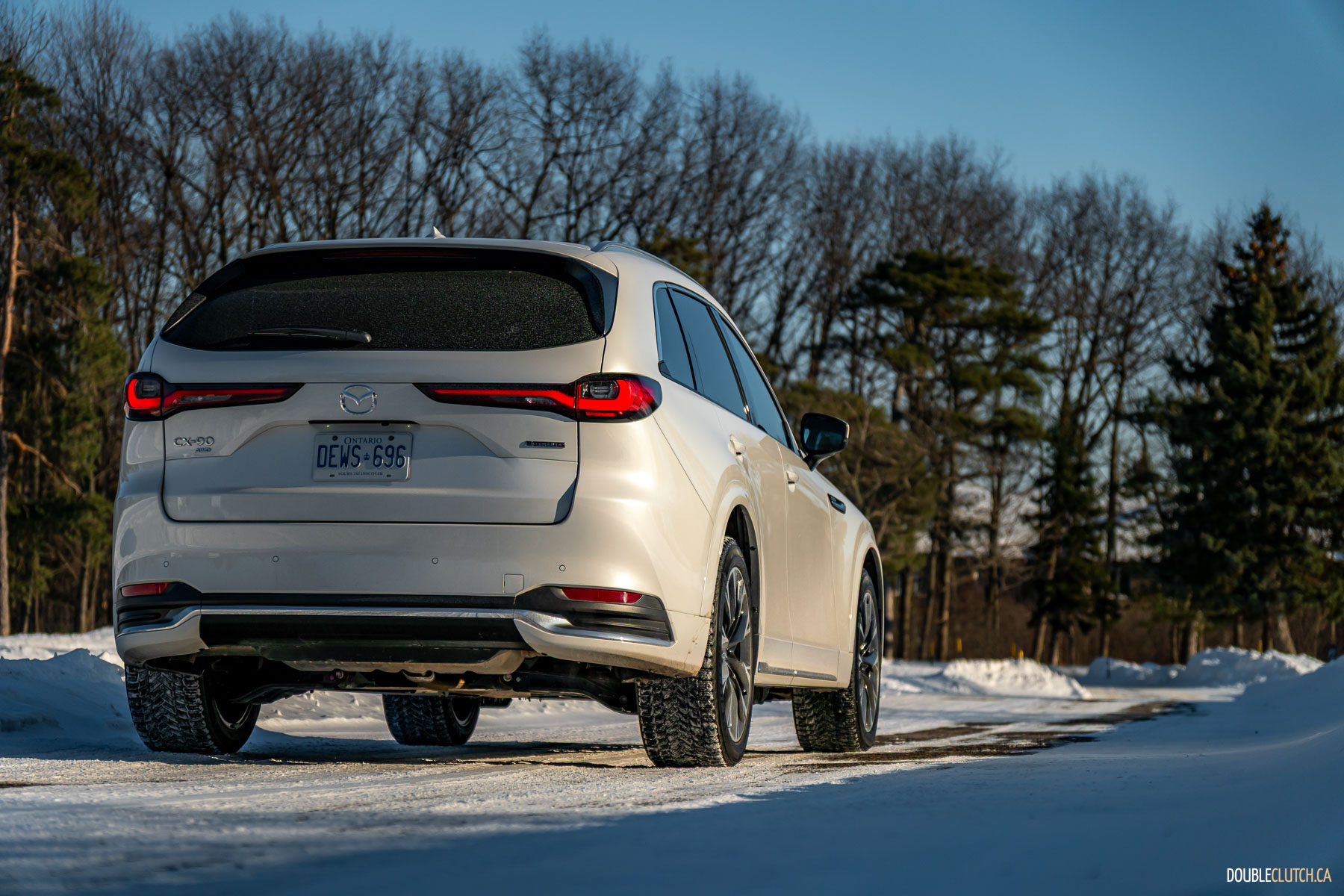
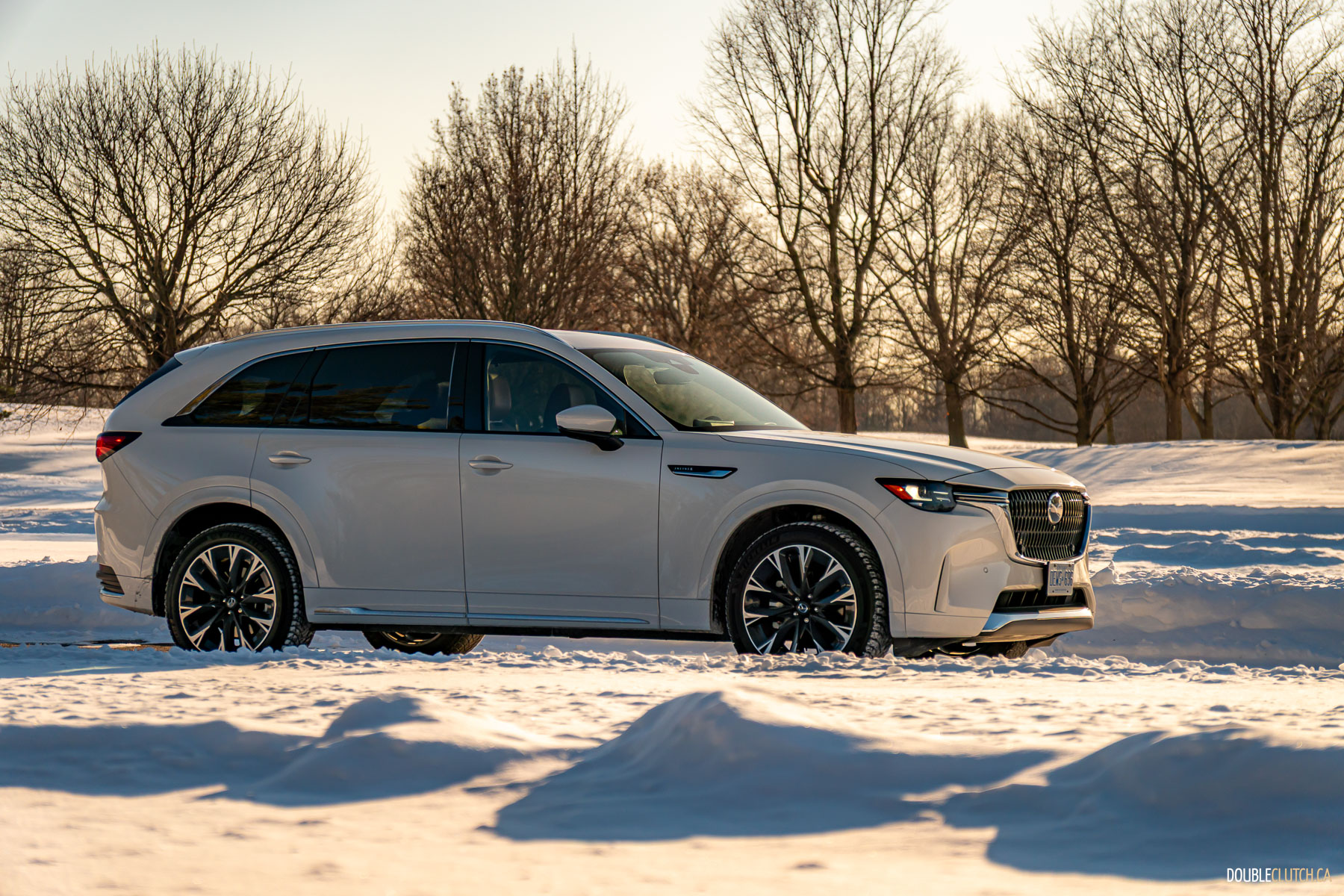
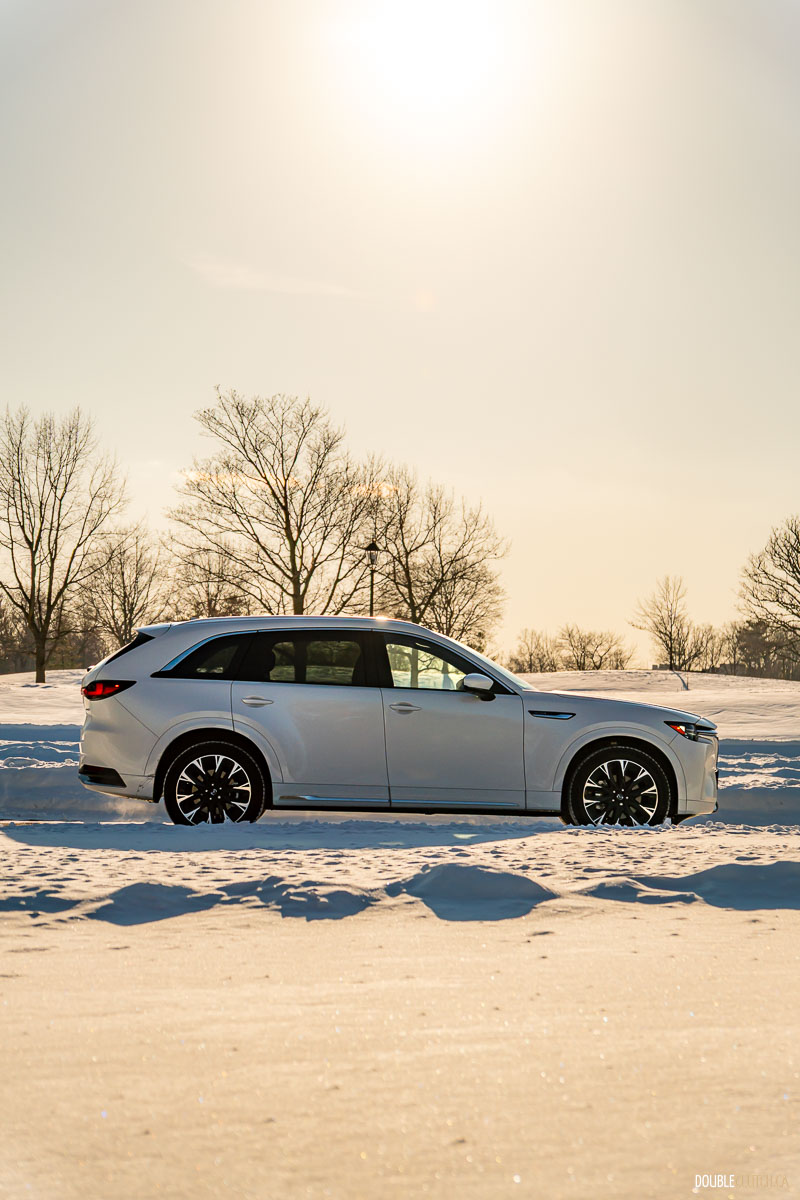
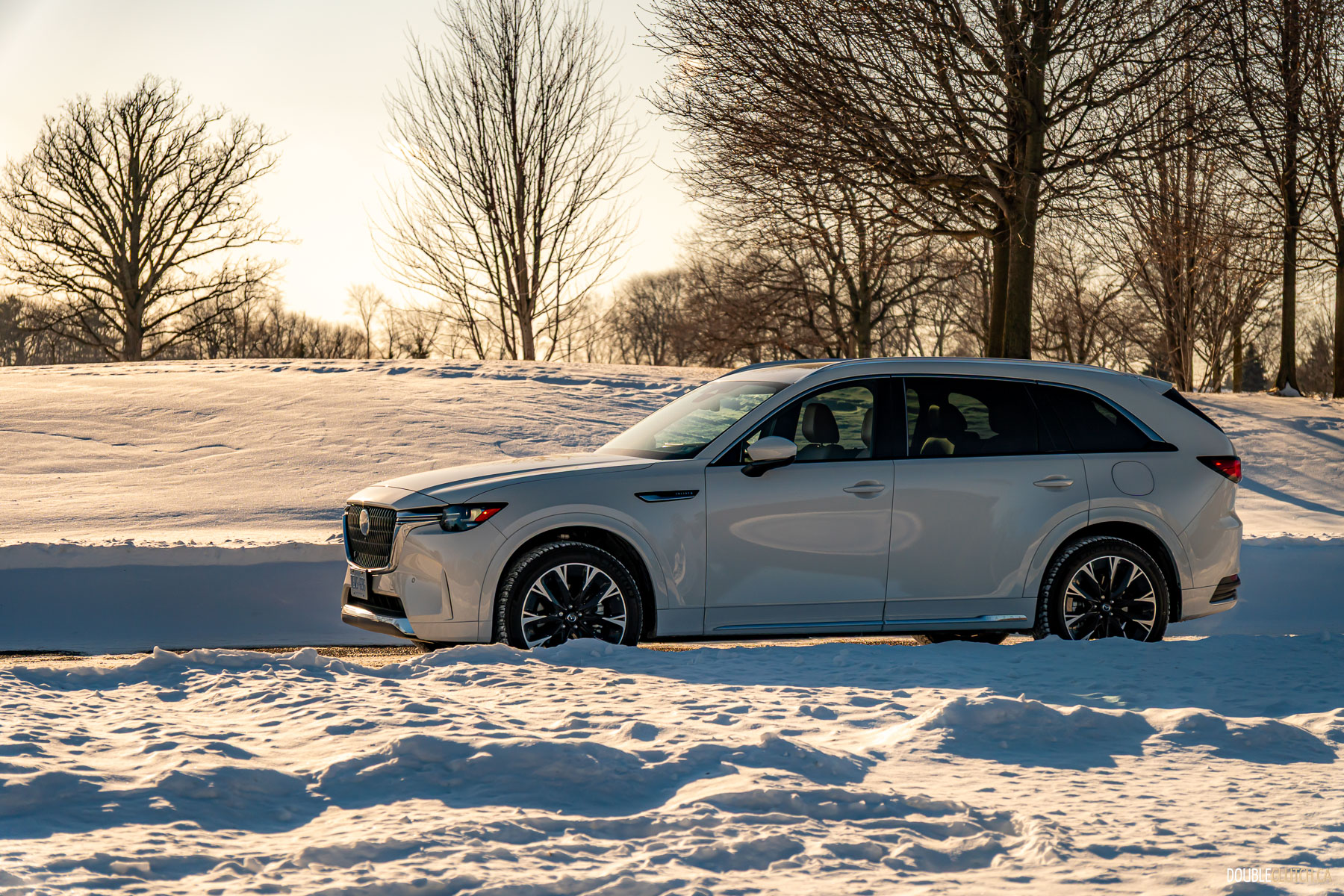
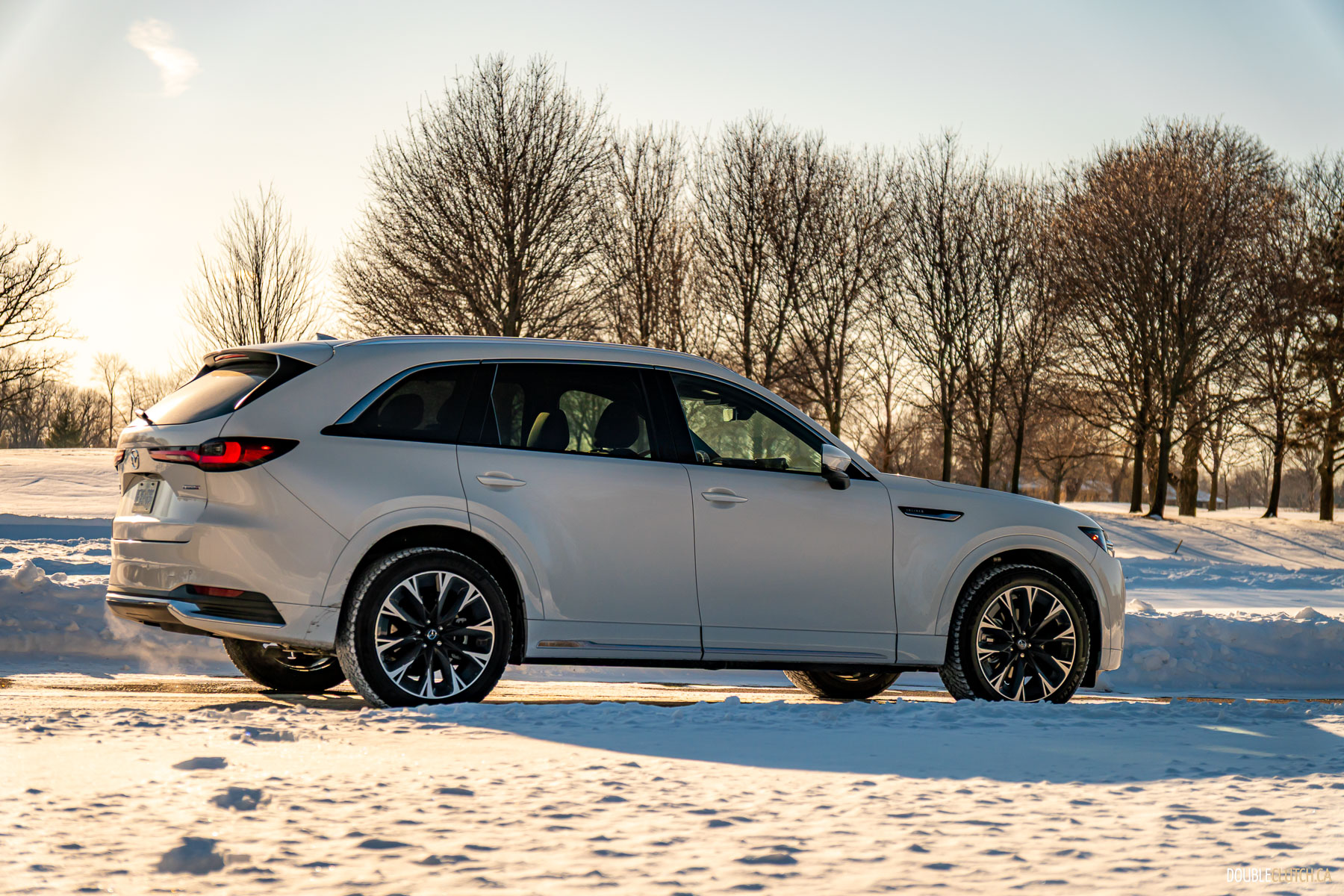
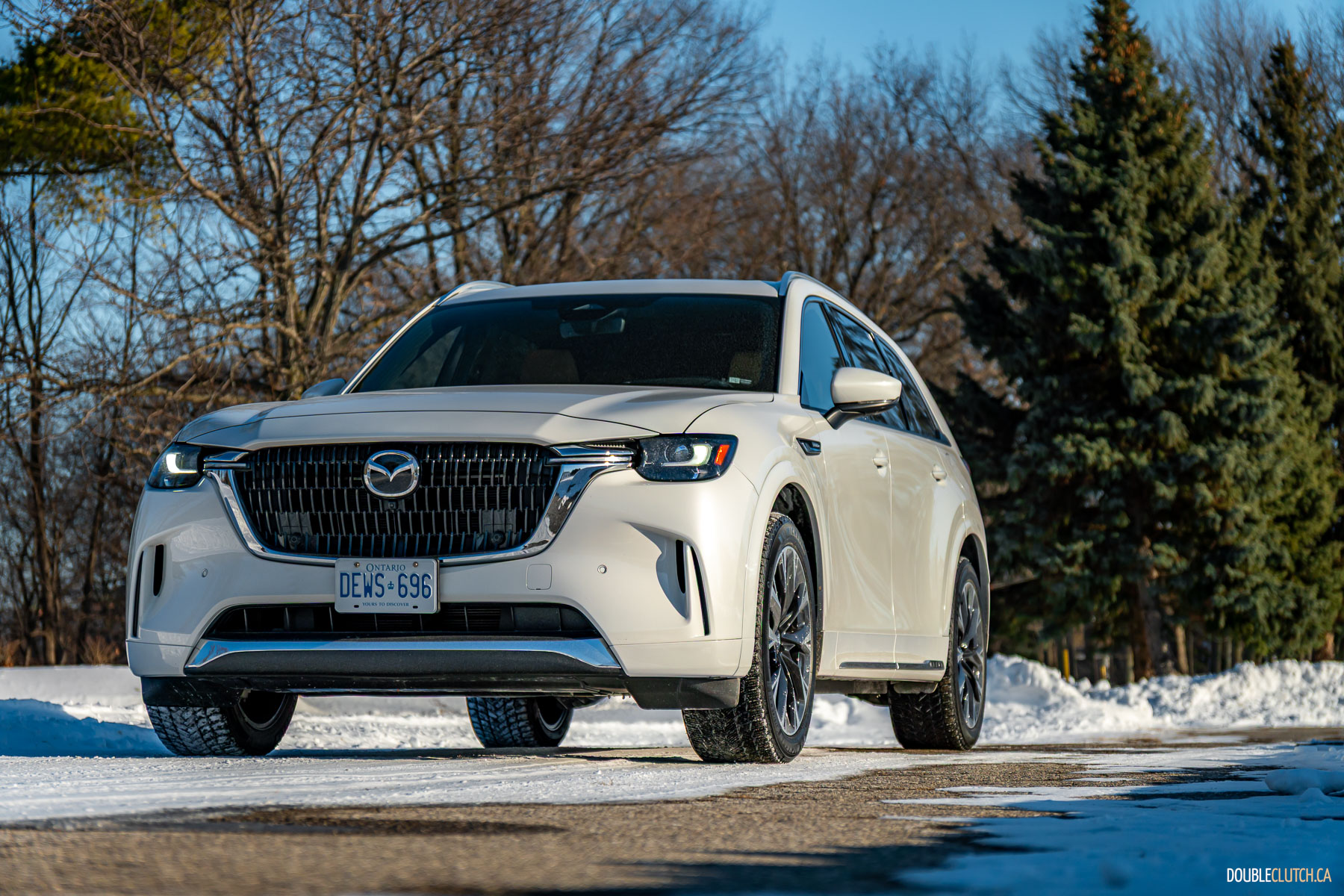
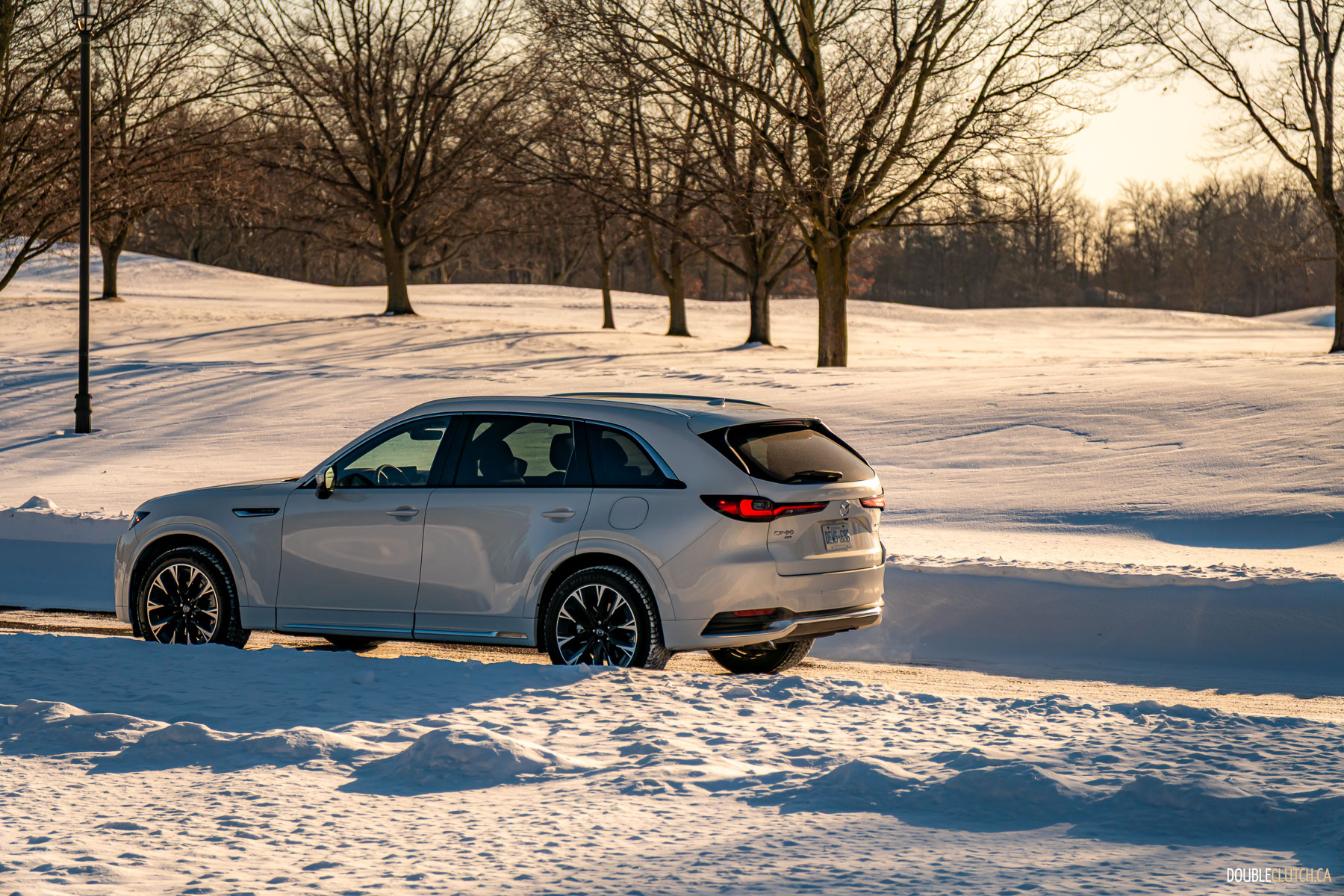
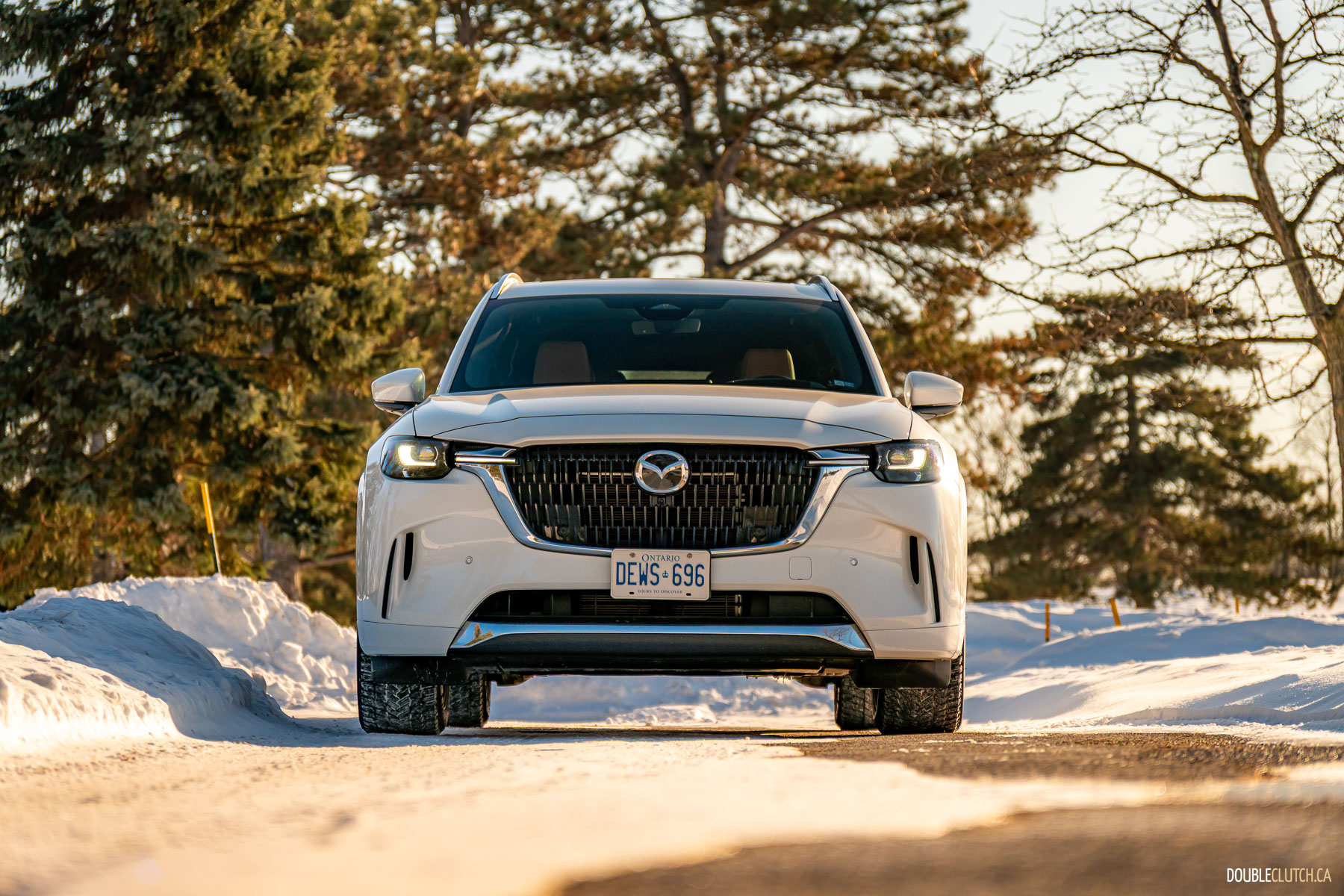
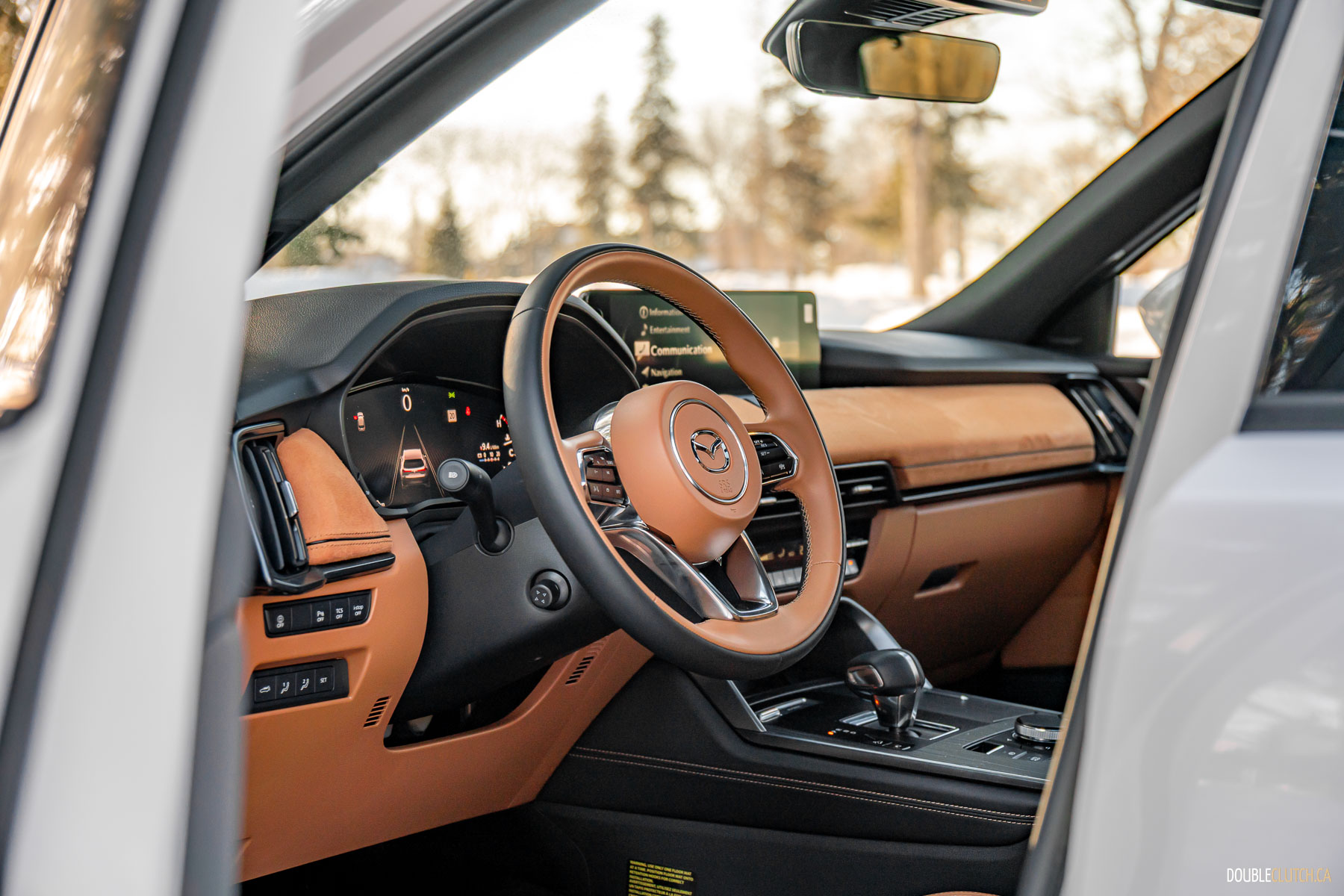
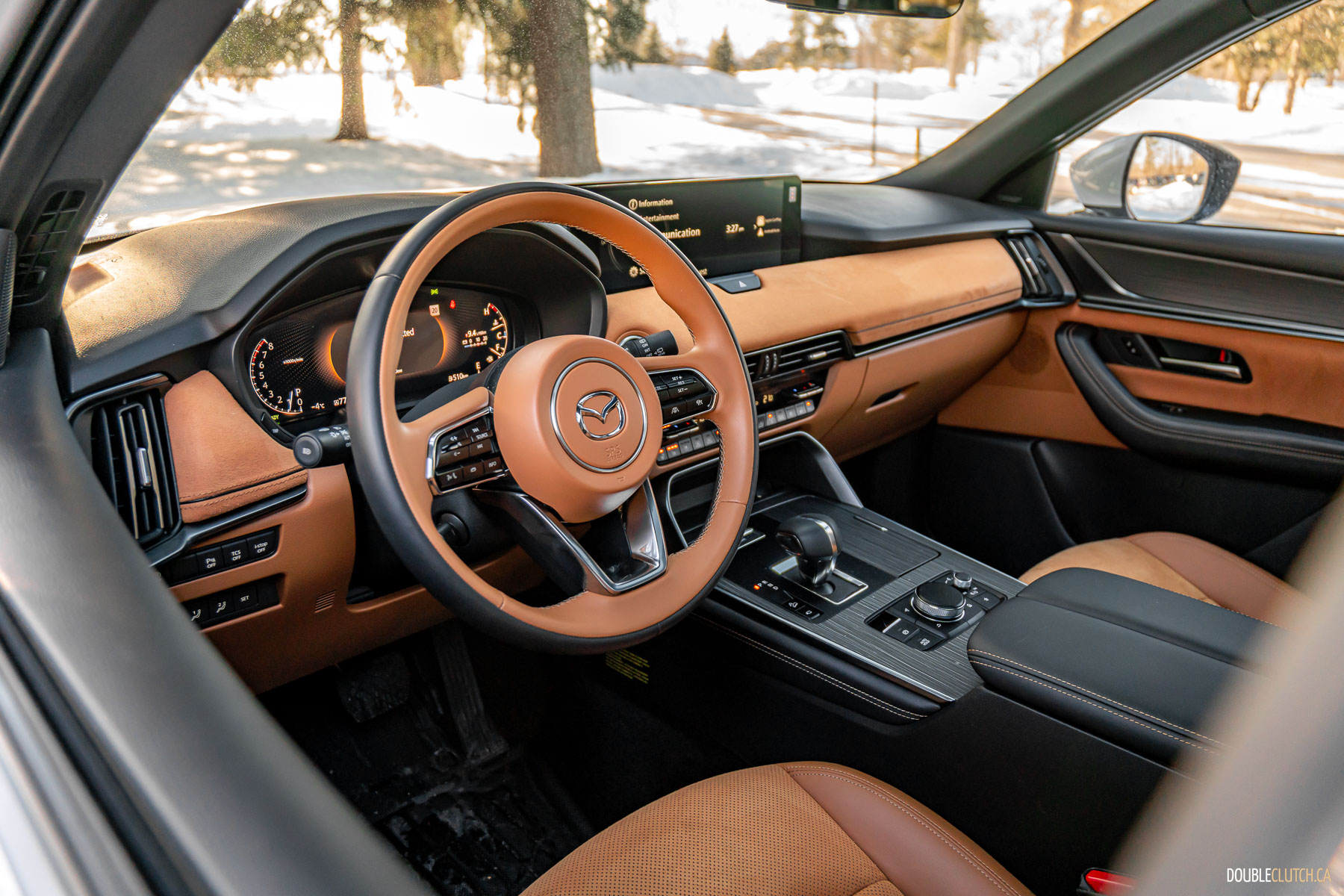
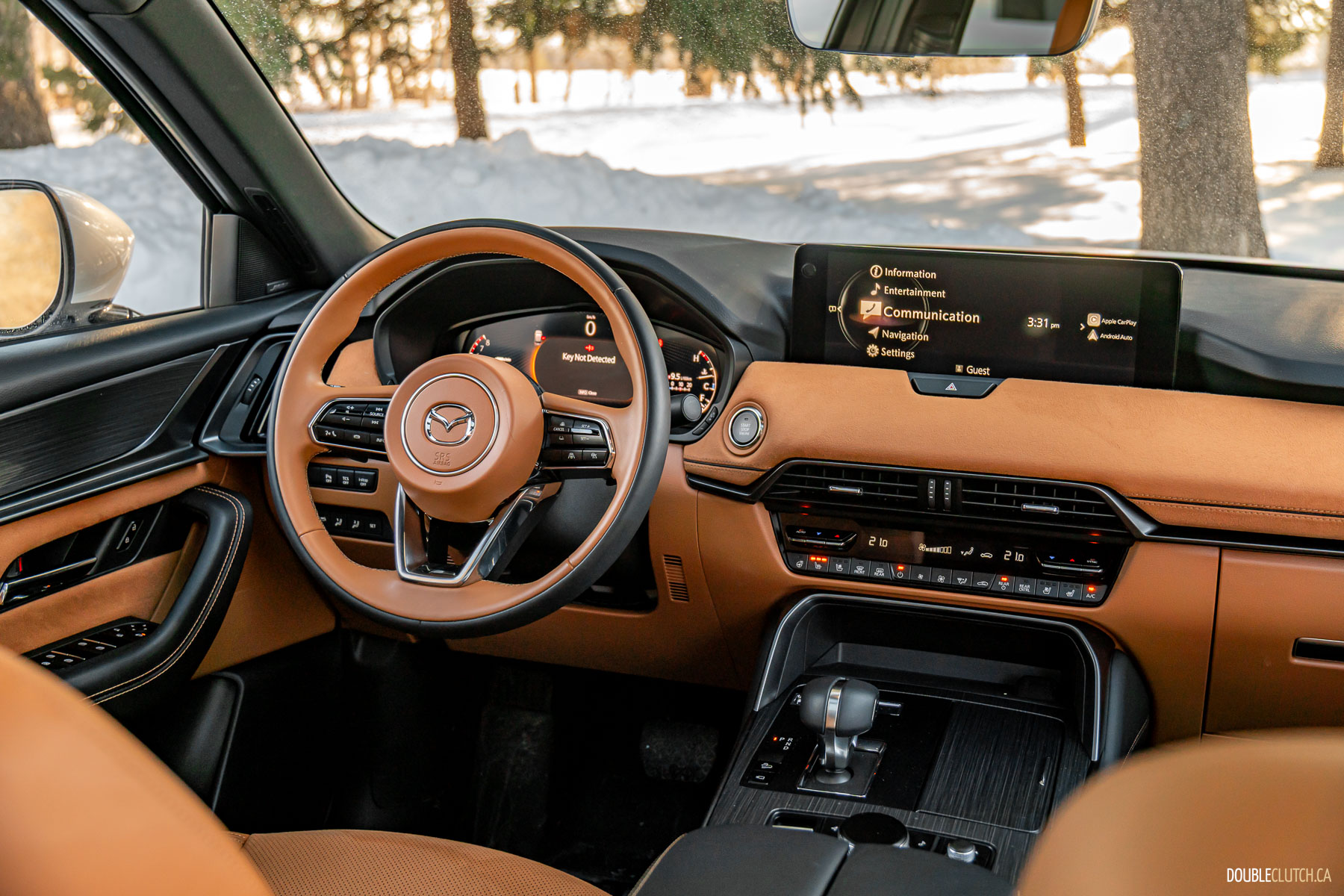
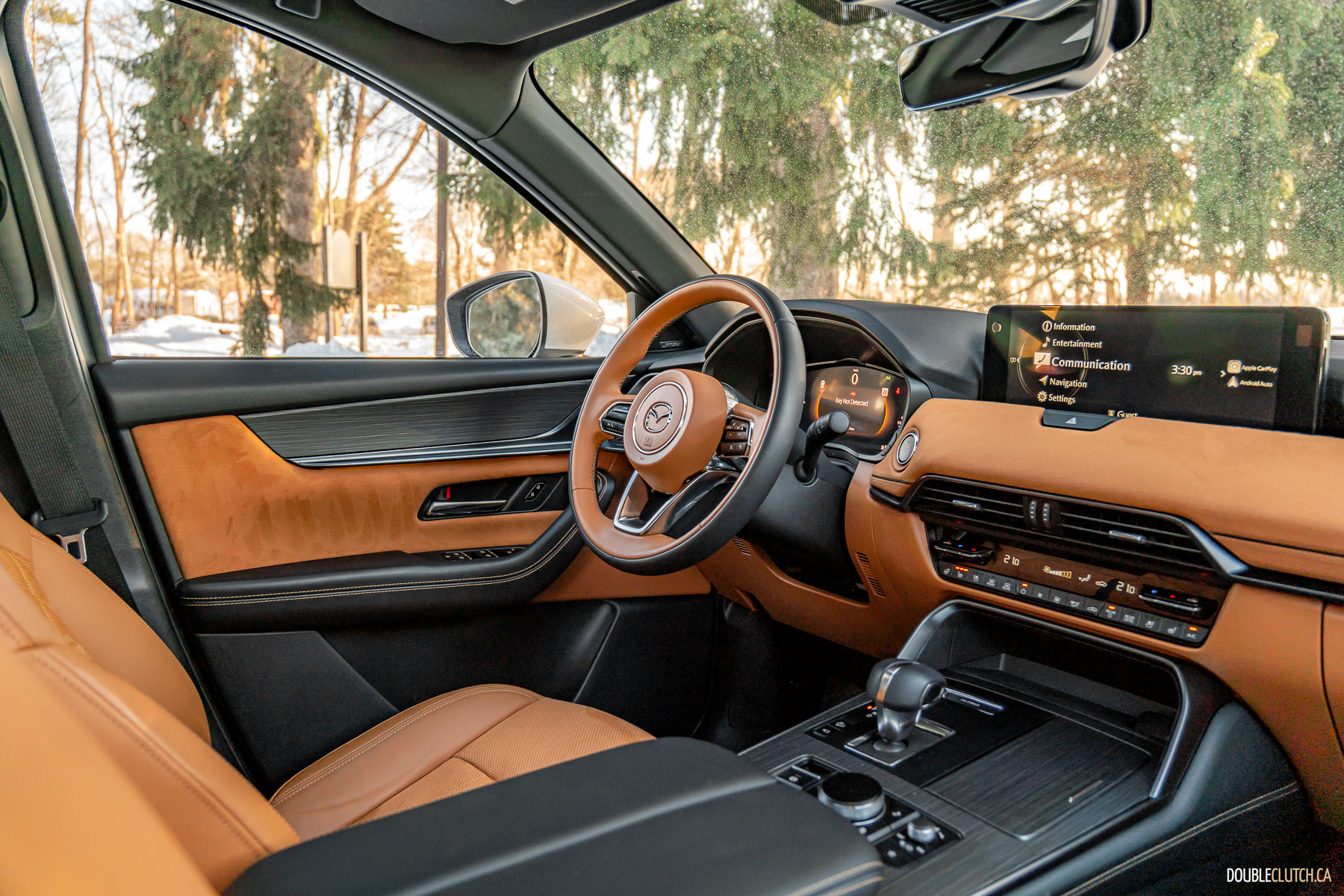
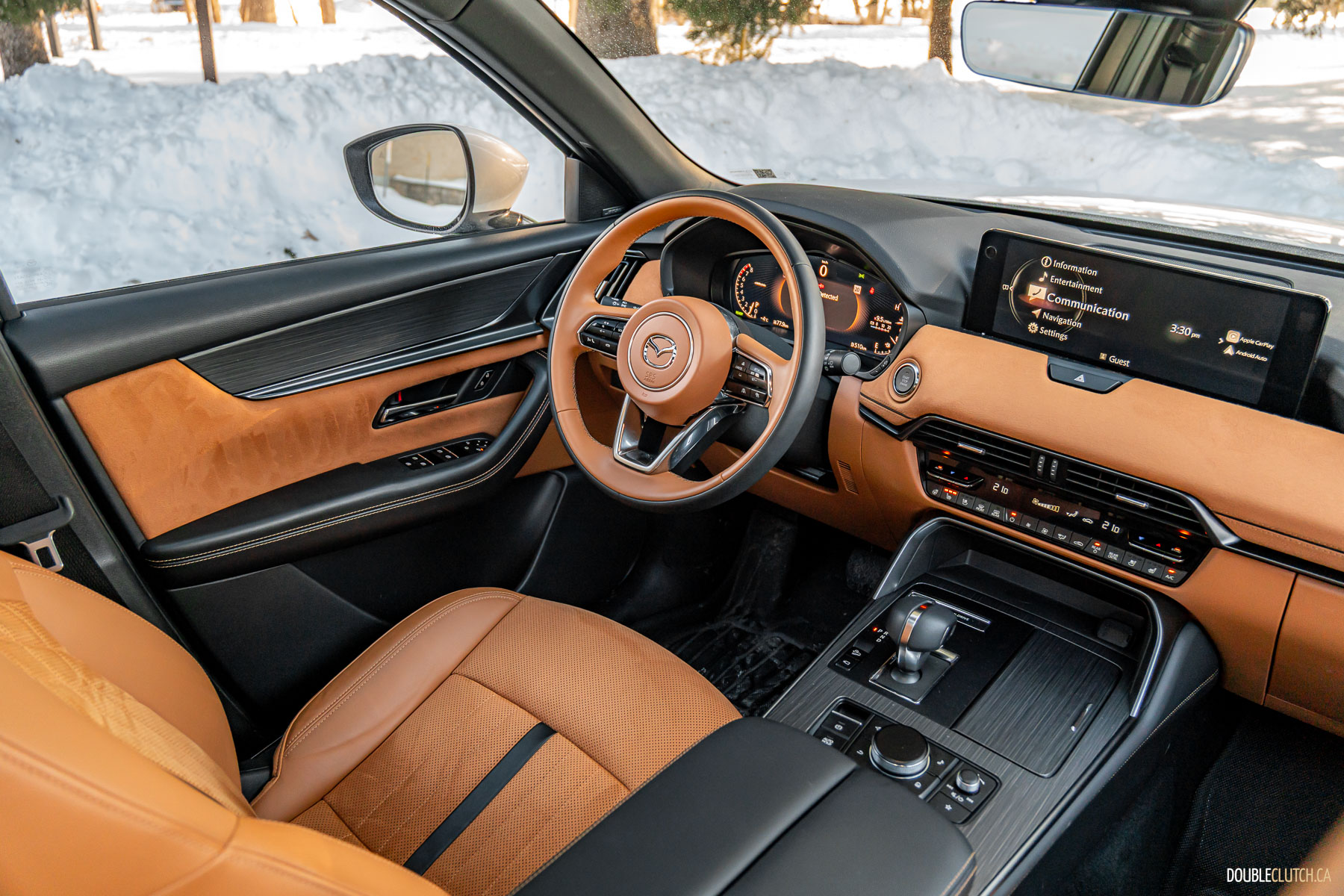
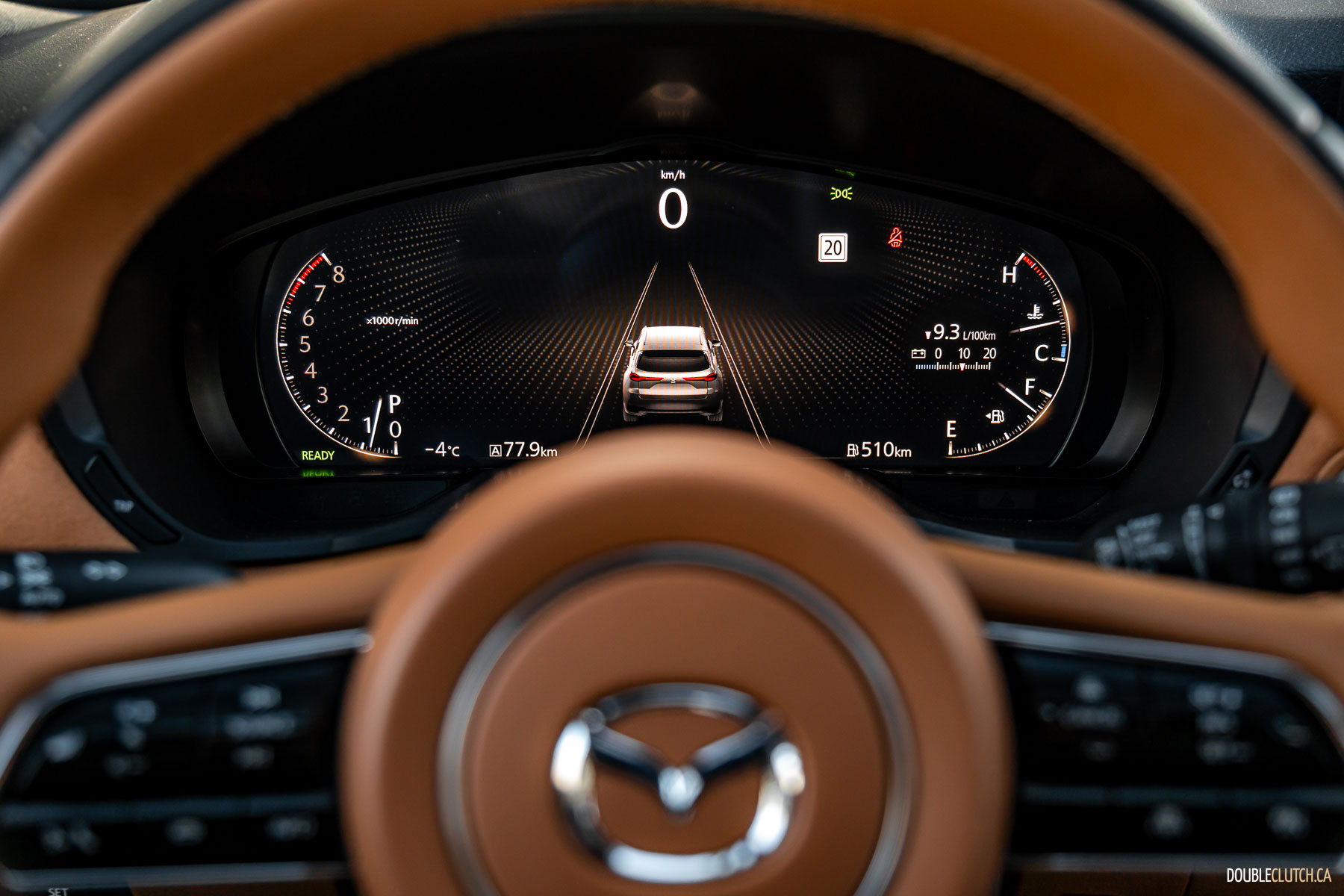
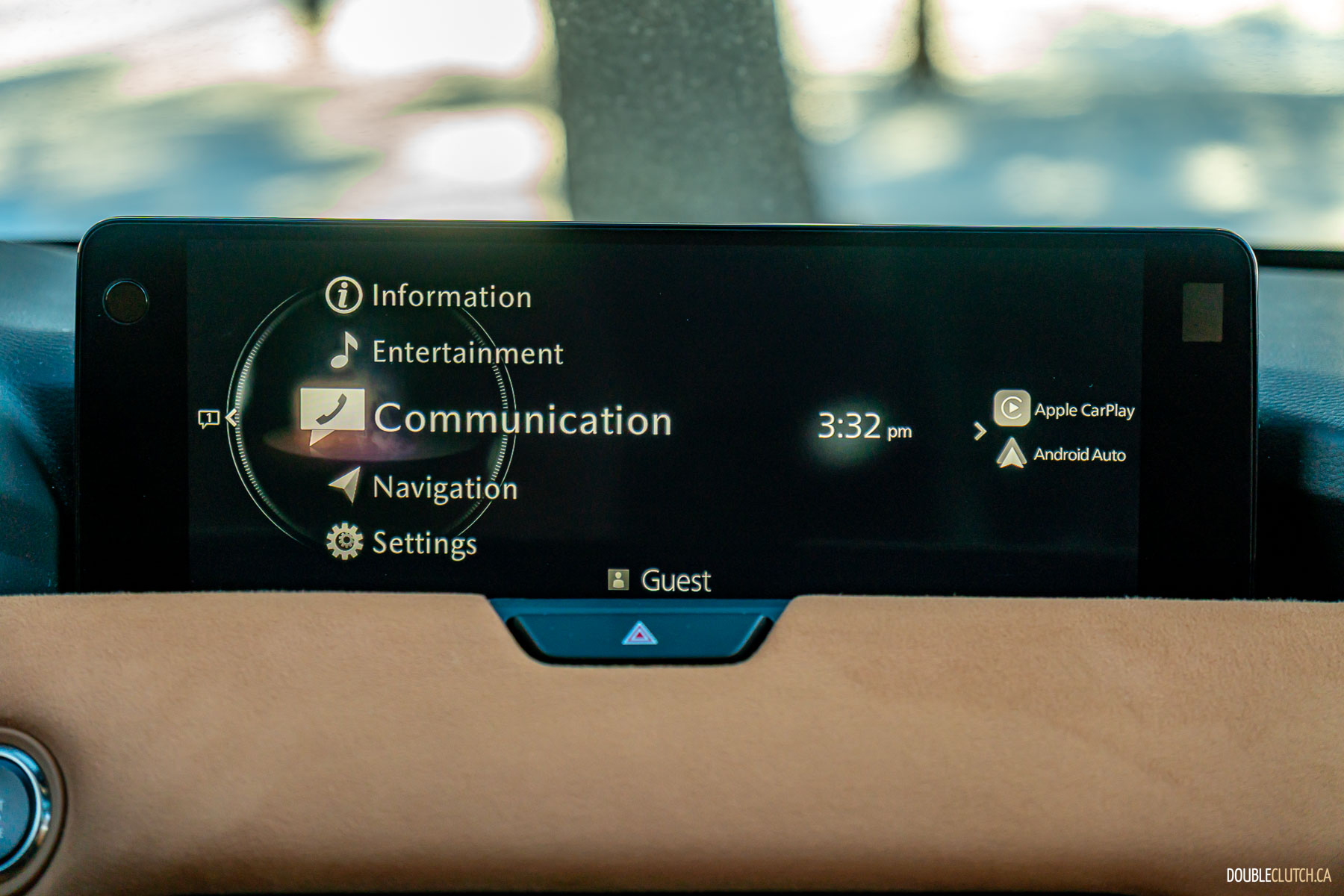
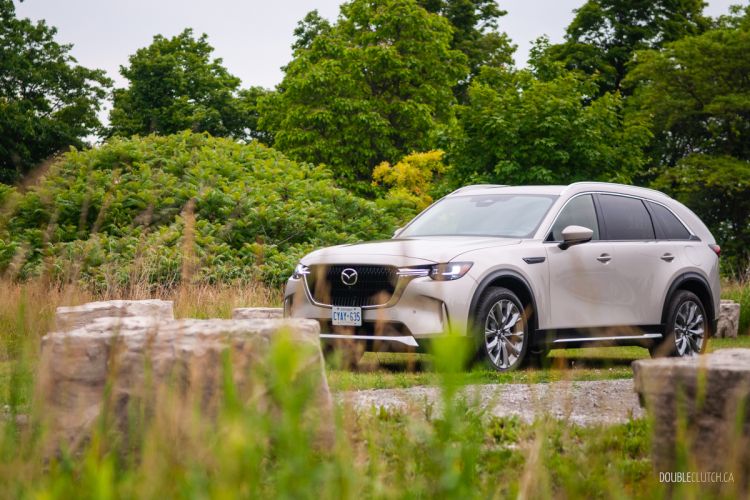
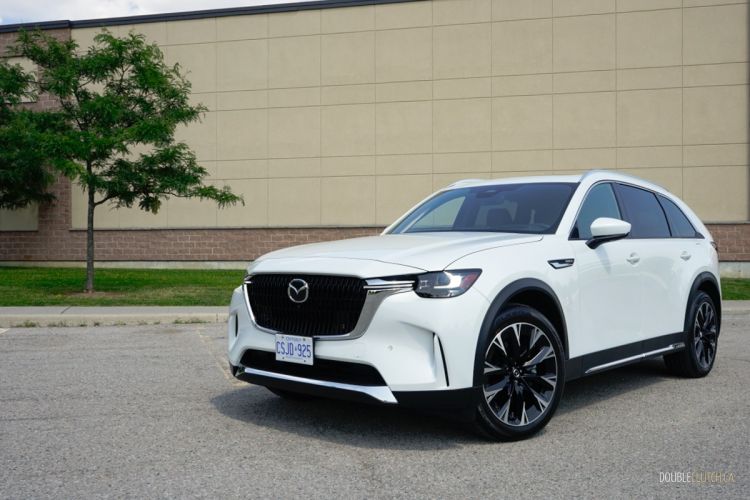
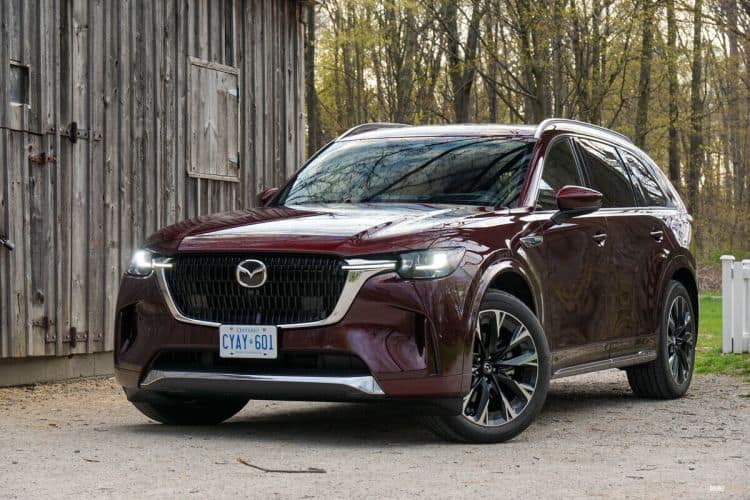
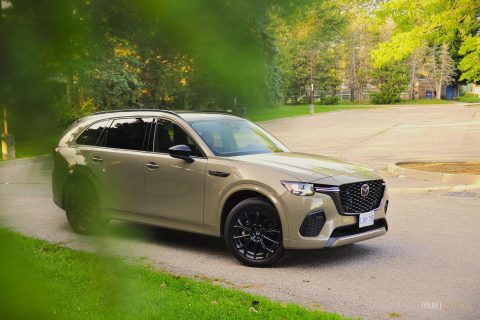
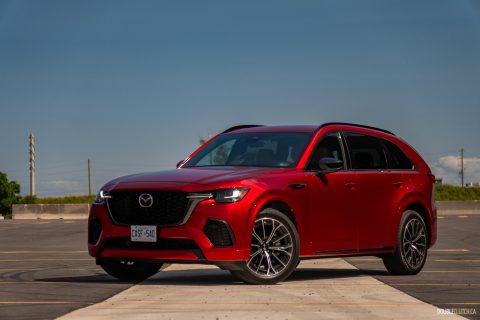
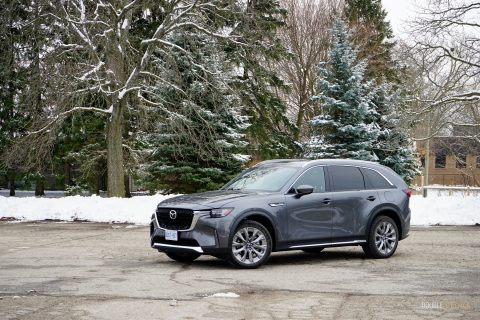
We’re big fans of Mazda’s new flagship SUVs, the Mazda CX-70 and CX-90, so much so that they’ve collected annual awards from us for two years in a row. They are hugely ambitious vehicles from the relatively small, independent car maker, bucking industry trends with an all-new rear-drive-based architecture, double wishbone front suspension, new mild-hybrid and plug-in hybrid powertrains, and interior and exterior design that punch well above their weight.
In an era of downsizing and cost-cutting, the CX-70 and CX-90 swing the other way, with engineering and design choices that are typically reserved for more traditionally upmarket brands. They demonstrate Mazda’s commitment to building cars that will please drivers, not just shareholders, and we really like that sort of thing.
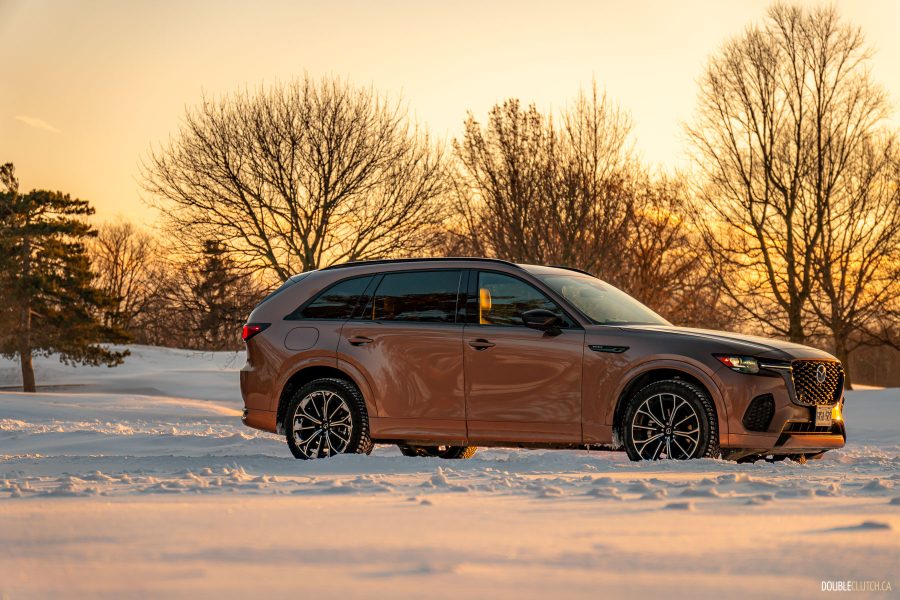
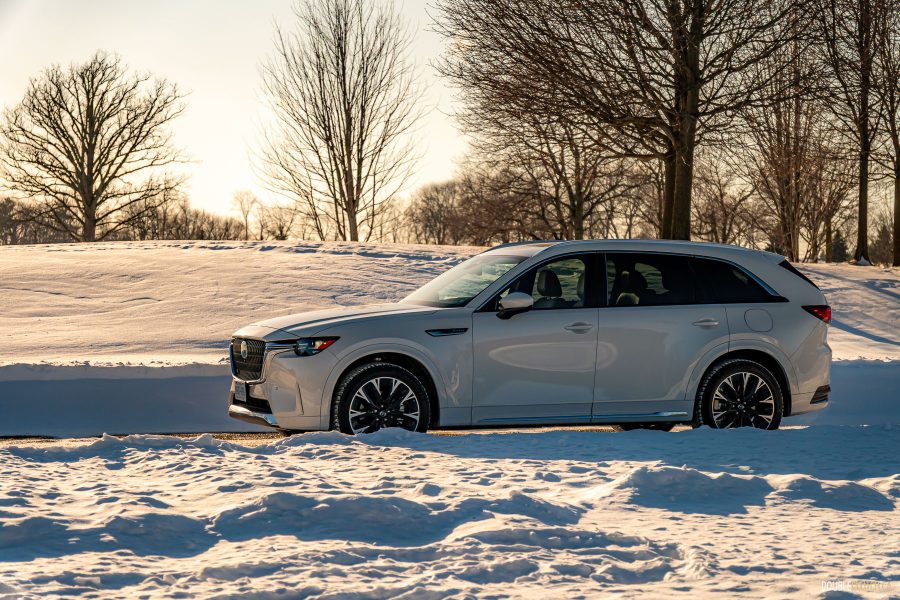
As-tested:
CX-70 GT PHEV: $63,650 (Melting Copper)
CX-90 Signature: $64,050 (Rhodium White)
But we wouldn’t blame you for being a bit confused about them. They look identical. They share engines, but those engines are very different. So what’s the difference? And while we’re at it, what’s the difference between a mild hybrid and a plug-in hybrid anyway?
We decided to get these two together to answer some of those questions – and it was a convenient excuse to spend a couple weeks with some of our favourite SUVs.
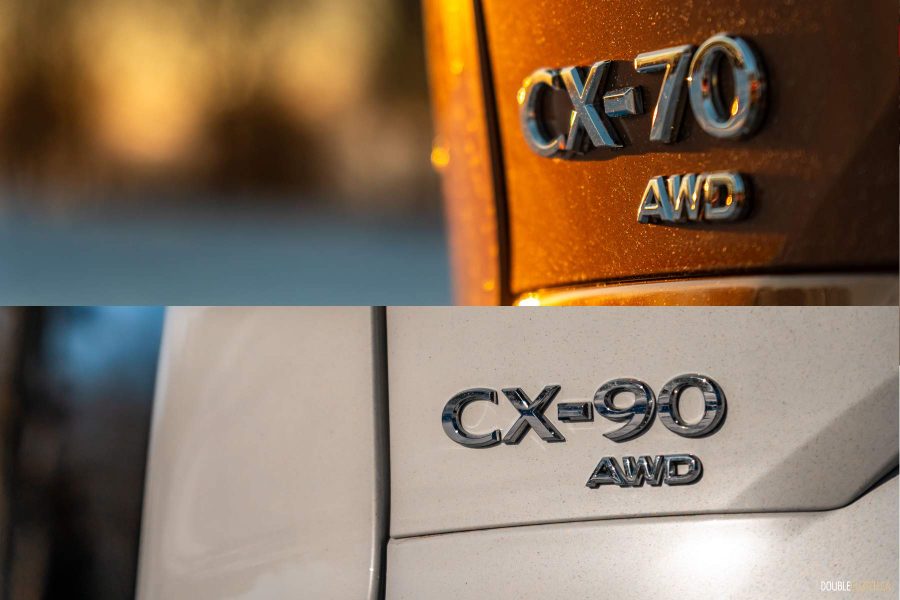
CX-70 vs CX-90: The Differences
The CX-70 has two rows of seating. The CX-90 has three. That’s it. That’s the only meaningful difference.
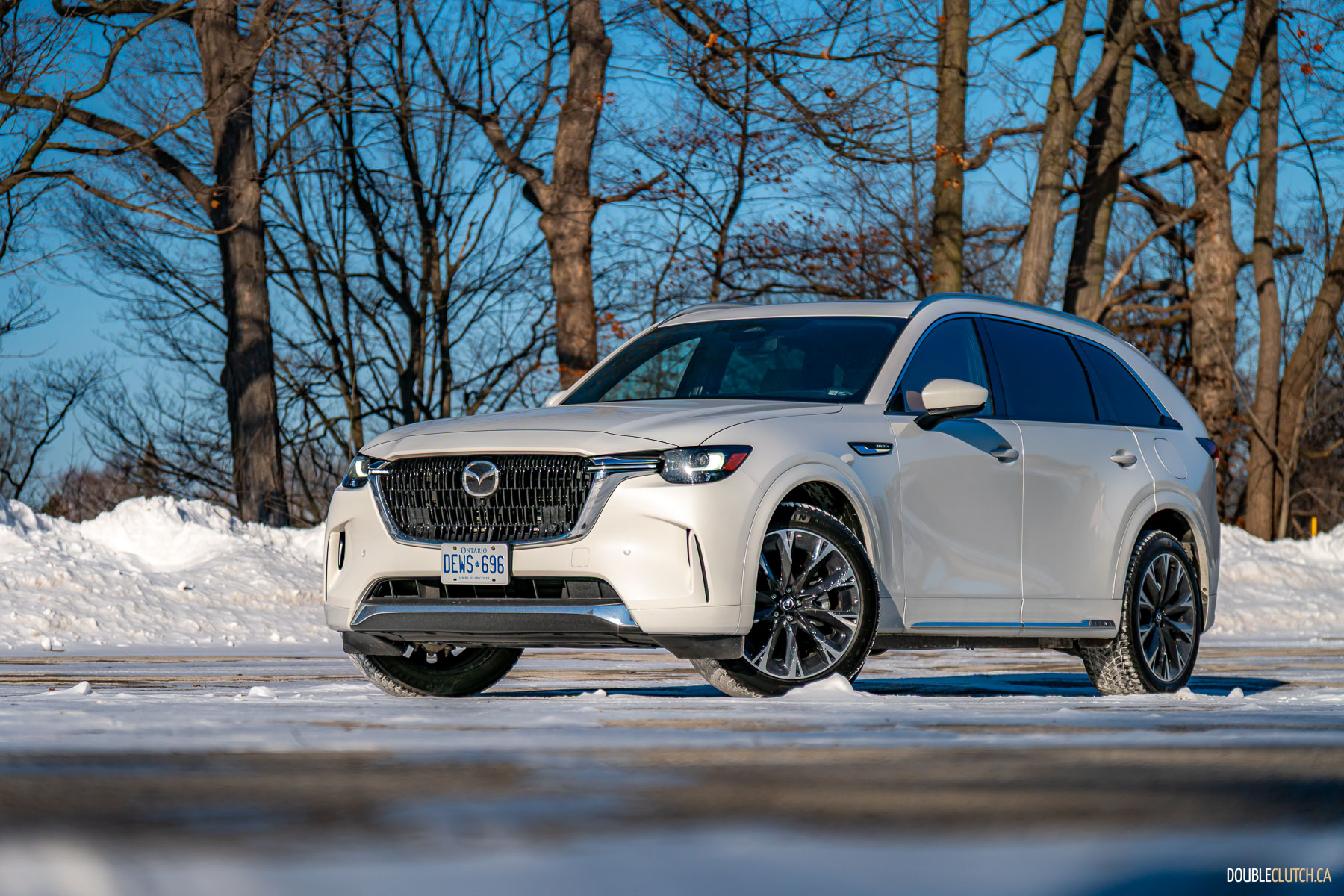
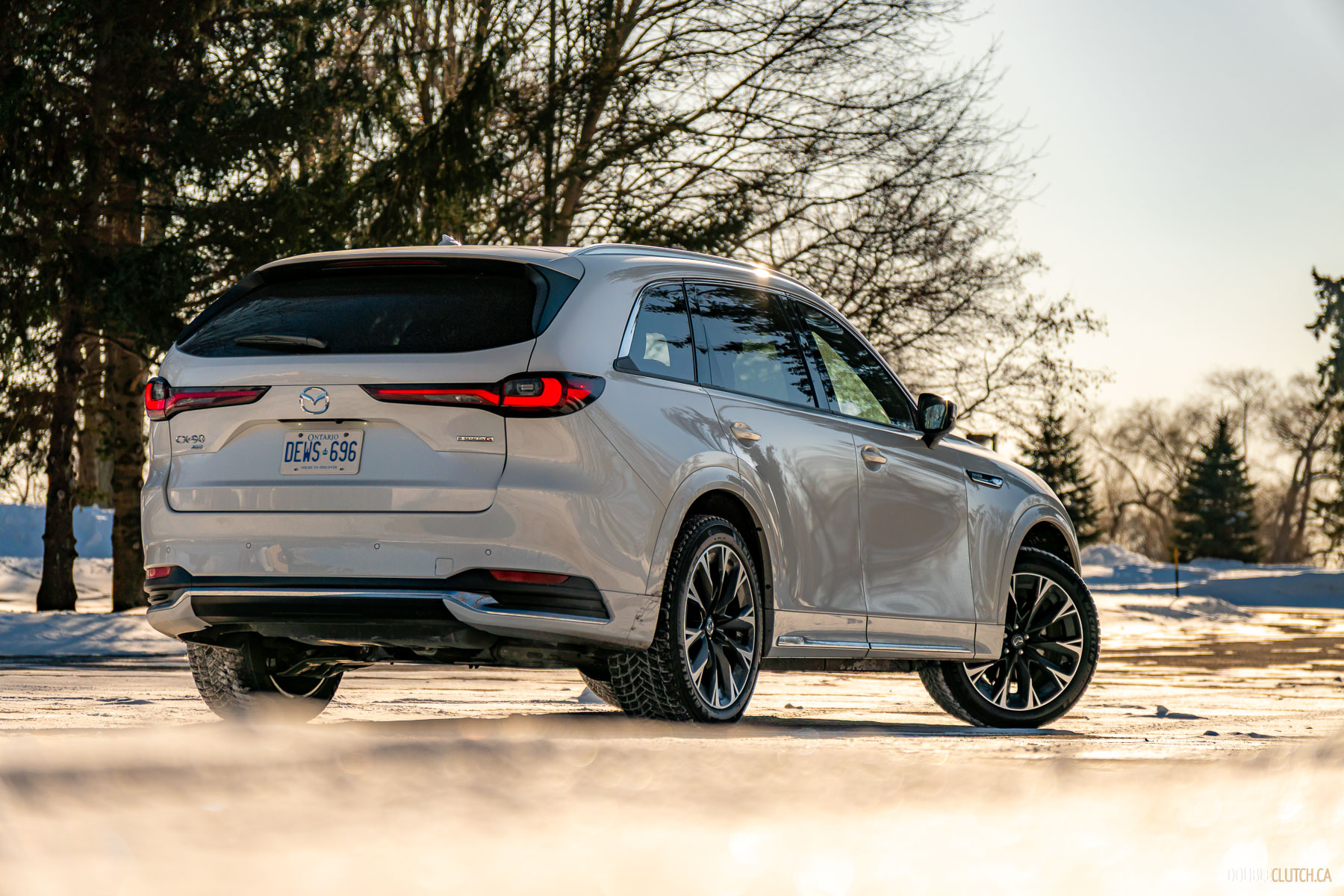
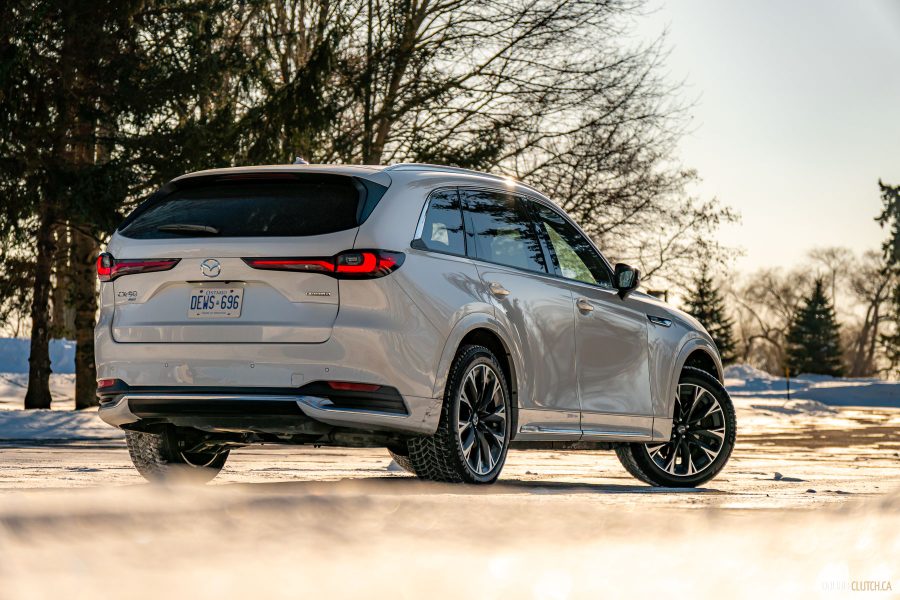
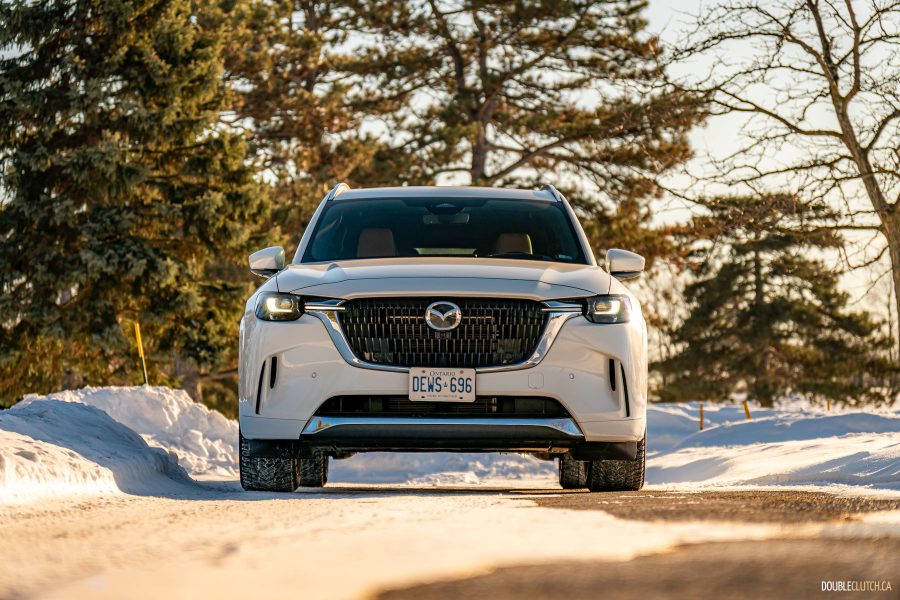
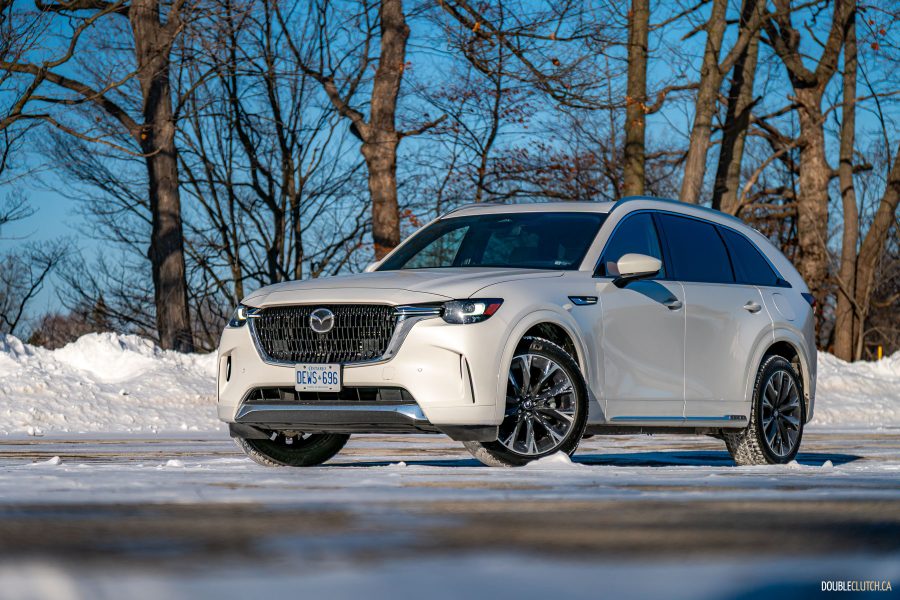
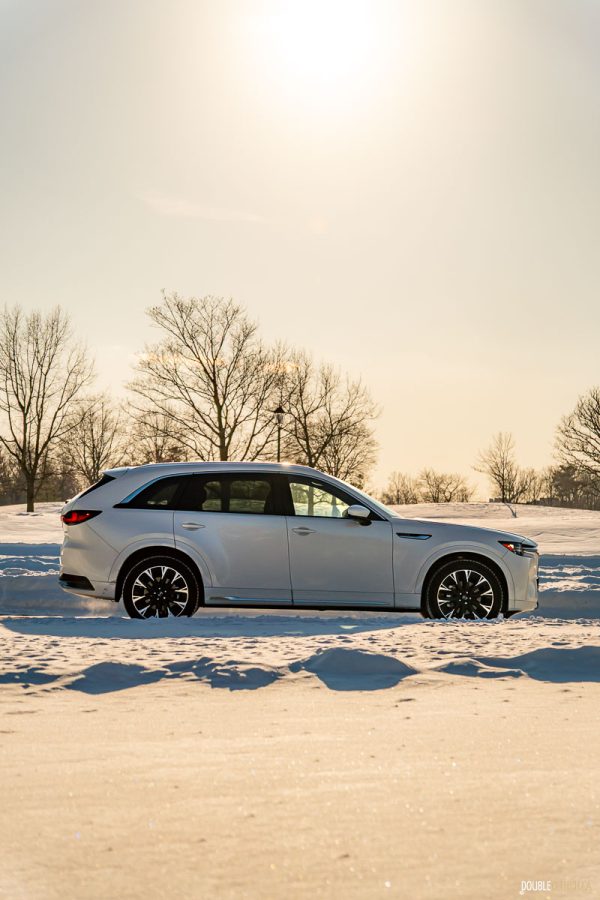
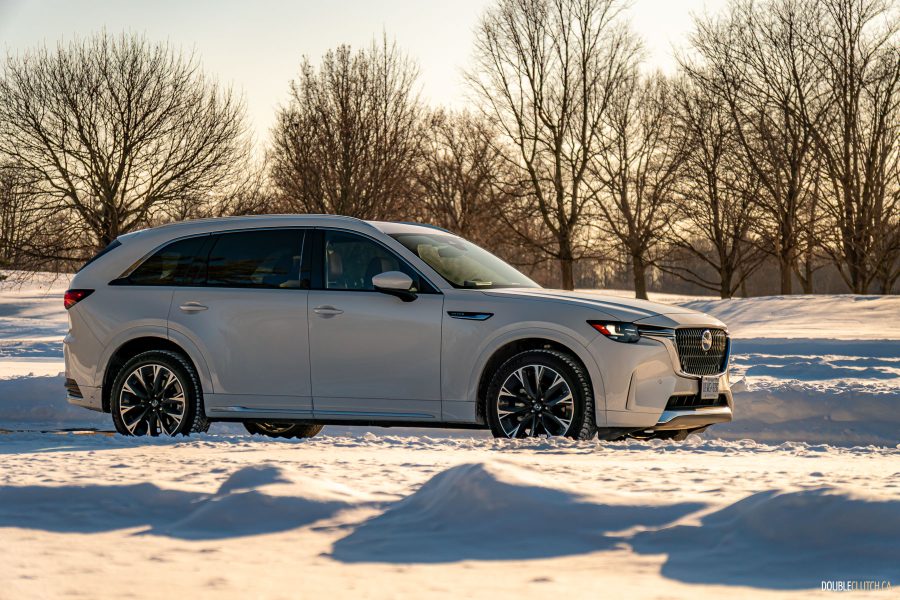
When the CX-70 arrived a year after the CX-90, there were some questions as to whether or not they were exactly the same, but indeed they are very slightly different outside. The CX-70 is designed to be a touch more athletic, with large inlets on the front fascia and a marginally more prominent rear spoiler. The CX-90 is ever so slightly more mature with a more subdued front fascia with a little more brightwork. Wheel designs are slightly different between the two, but for the large part, they are the same.
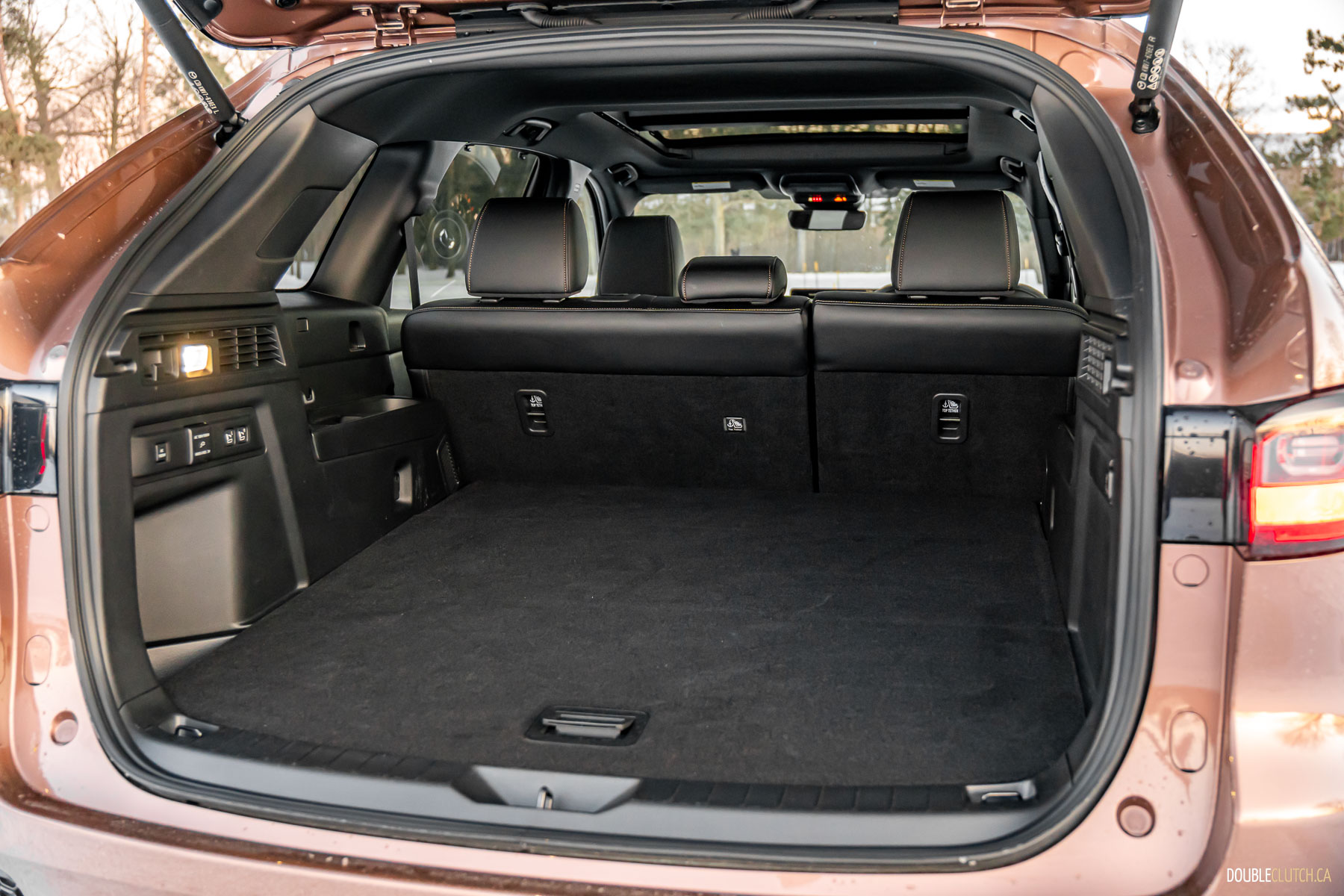
Even cargo space remains almost identical, which is a little surprising.

Cargo capacity |
CX-90 |
CX-70 |
|---|---|---|
Behind front seats |
2,101 L |
2,132 L |
Behind 2nd row |
1,133 L |
1,122 L |
Behind 3rd row |
423 L |
N/A |
There are very slight differences depending on whether you’ve selected captain’s chairs in the second row, and whether you have a panoramic roof or not, but overall the difference between the two is almost negligible.
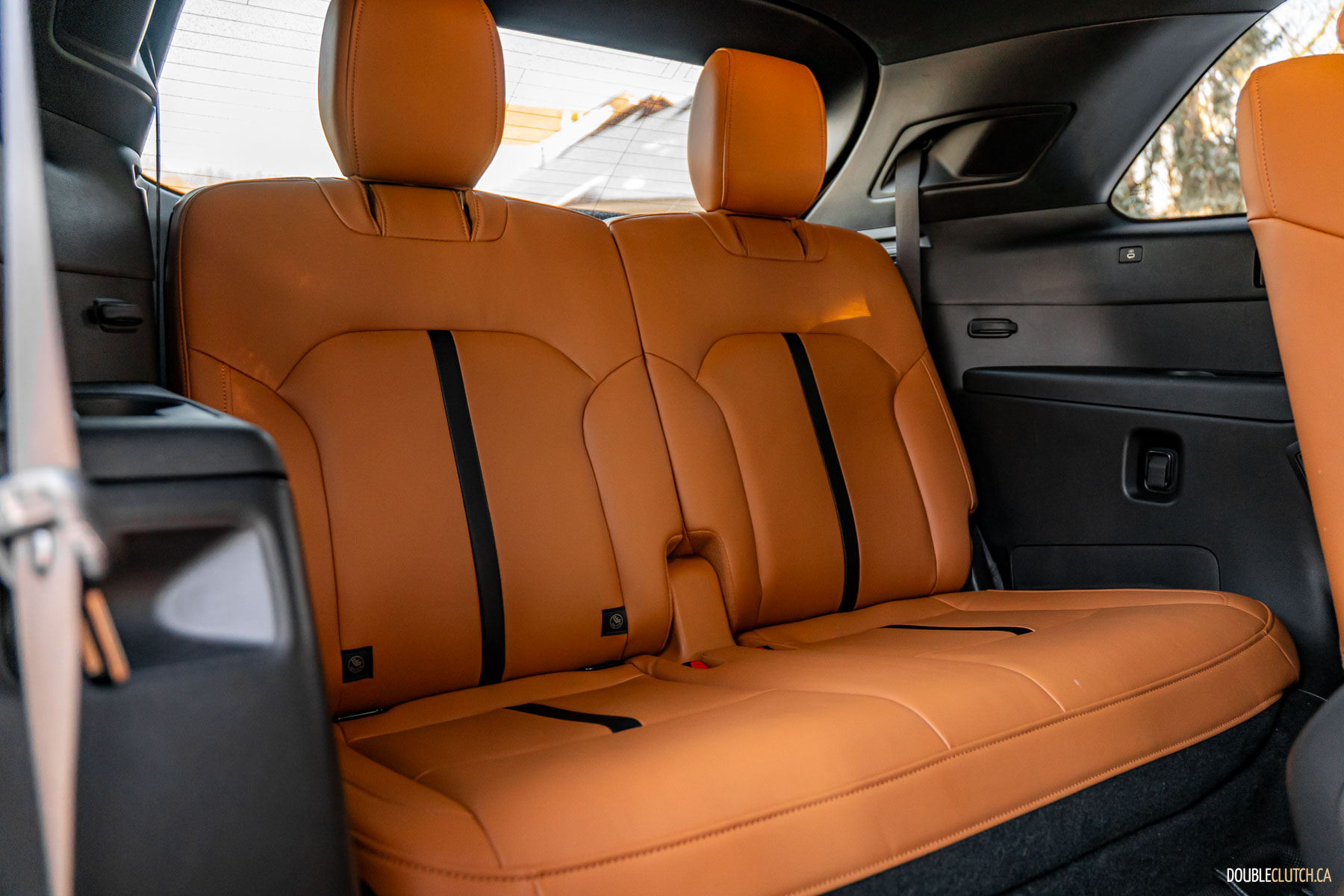
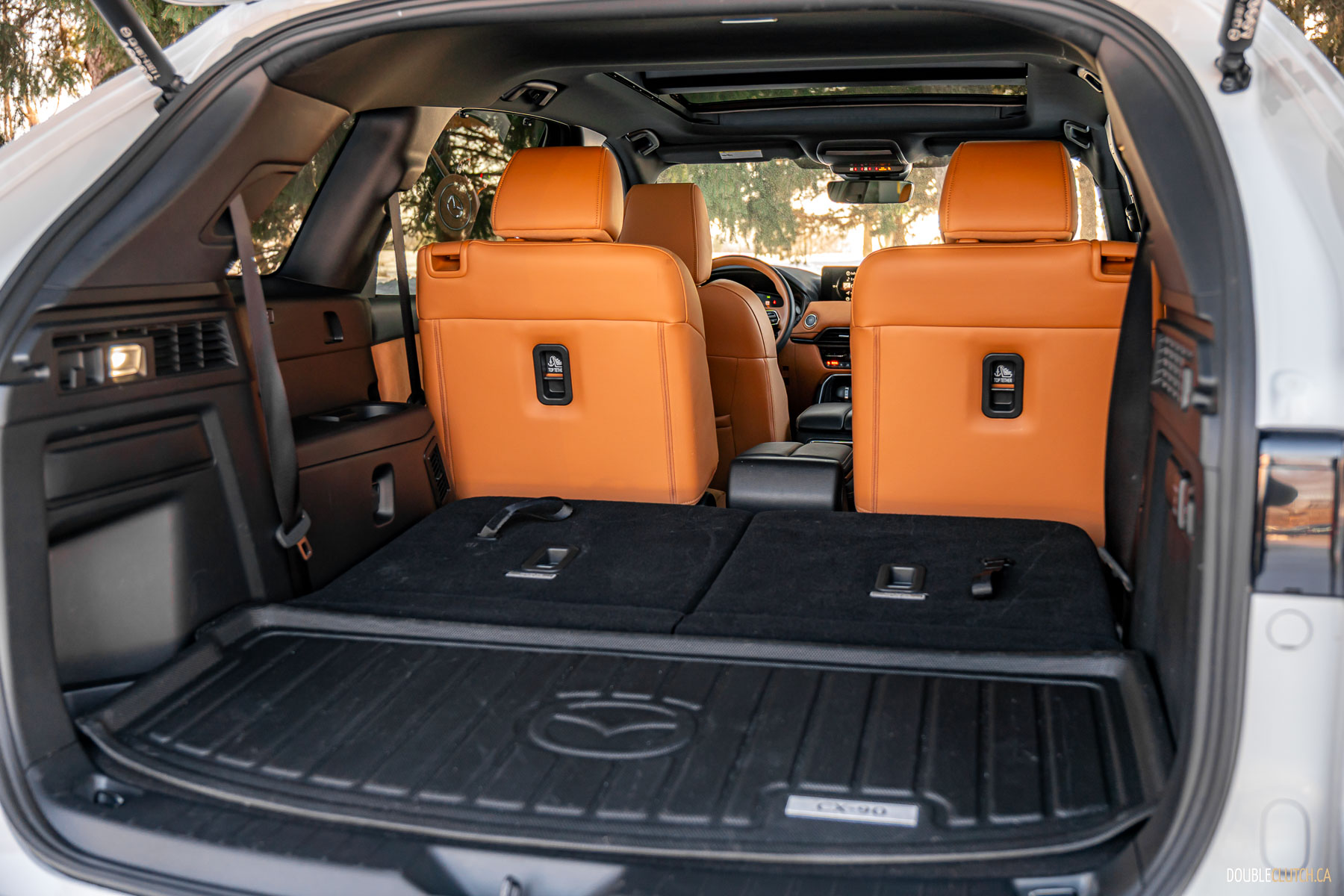
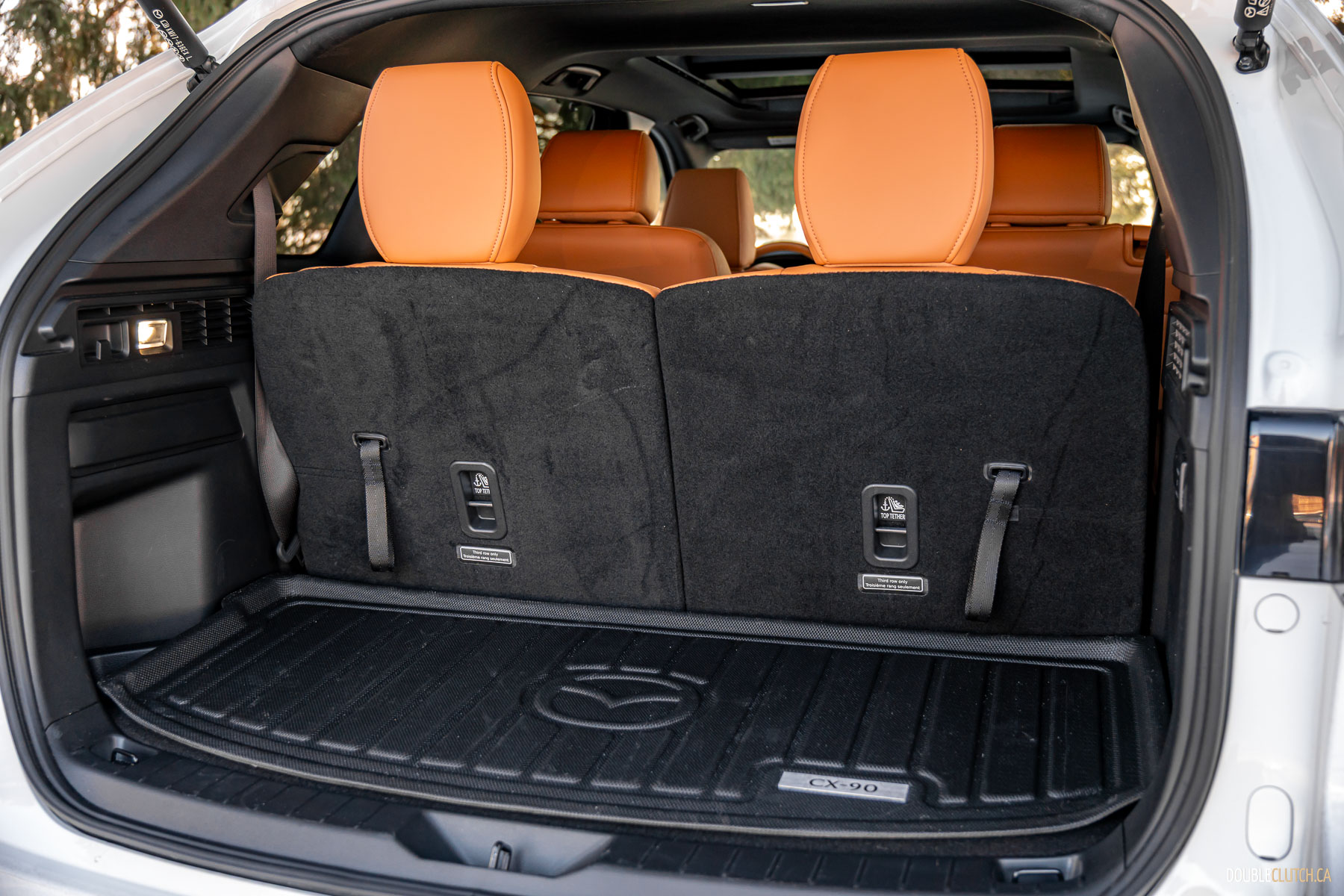
The CX-70’s floor is marginally flatter because it doesn’t have to accommodate a folding third row, but the difference is slight. In fact, with the third row folded, the CX-90’s last bench is remarkably compact and produces an impressively flat load floor. It is also quite compact when raised and is rather tight; better suited for children or short trips.
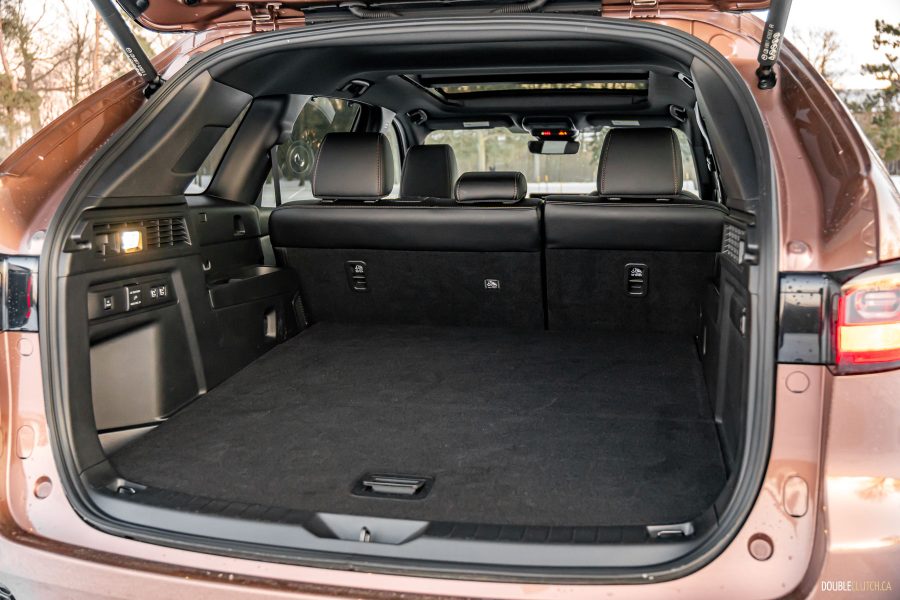
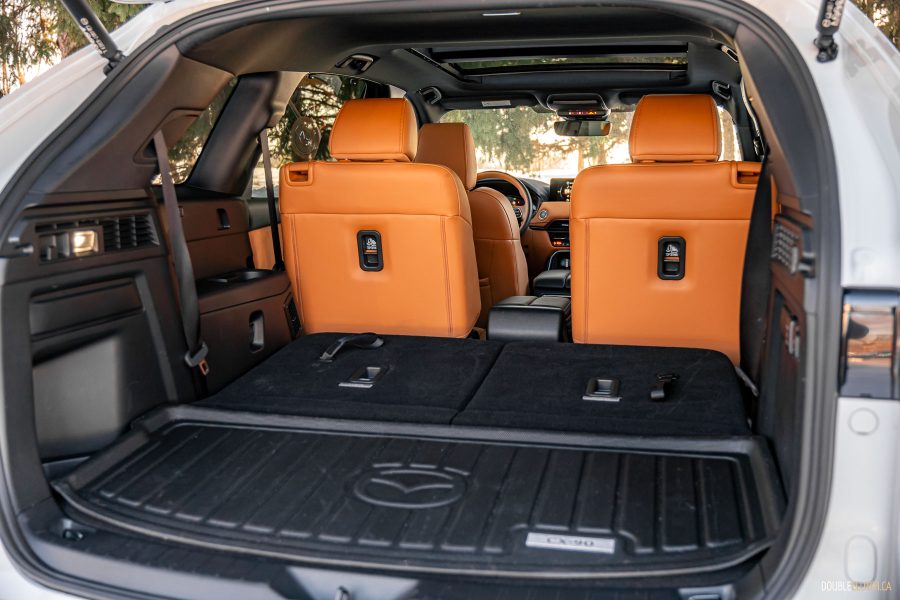
Where the CX-70 distinguishes itself (if slightly) is beneath the rear floor. In place of that third row is expanded underfloor storage, broken into useful compartments. It’s excellent for things that live in the vehicle full time – roadside kits, emergency gear, reusable grocery bags – or for anything you’d rather keep out of sight.
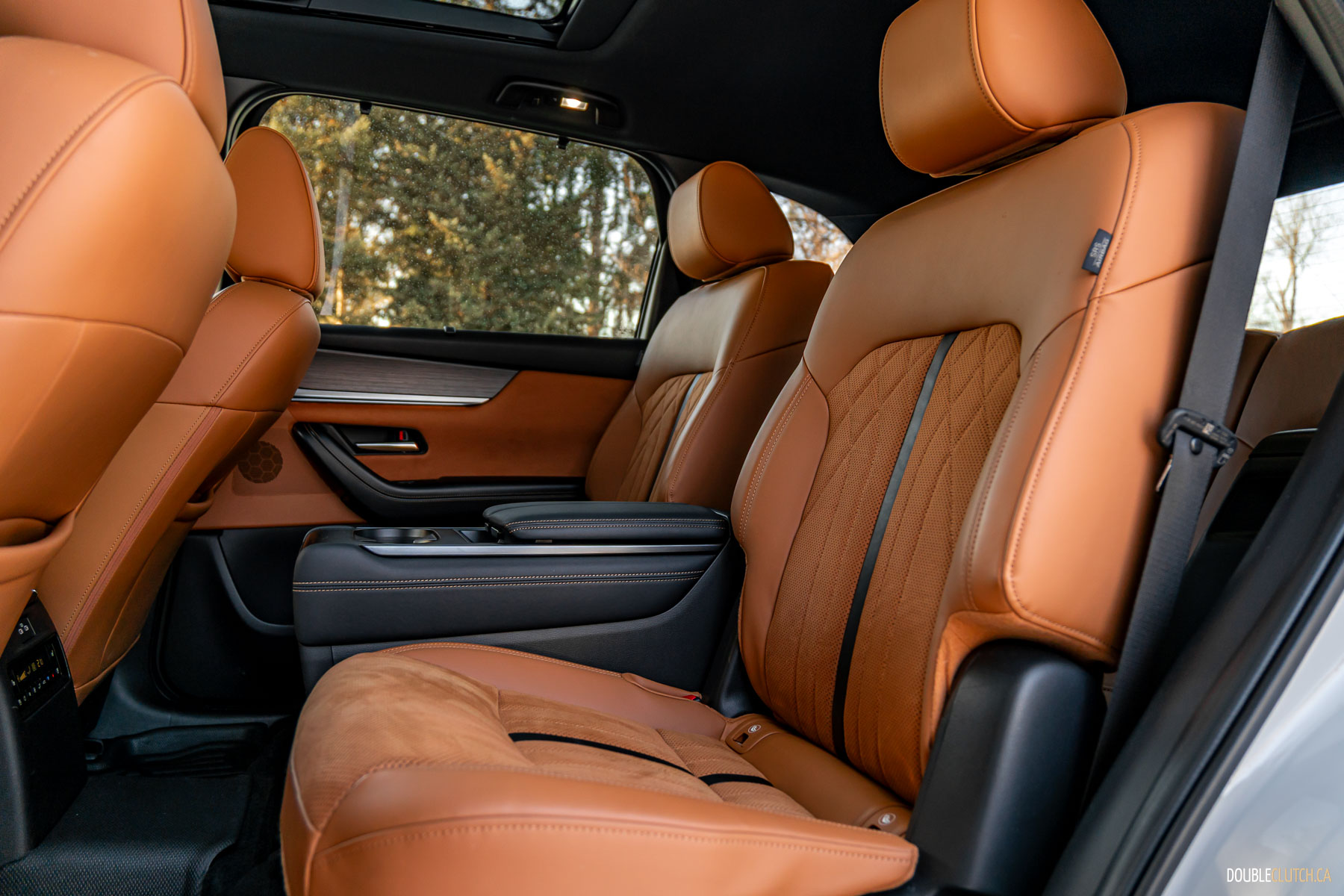
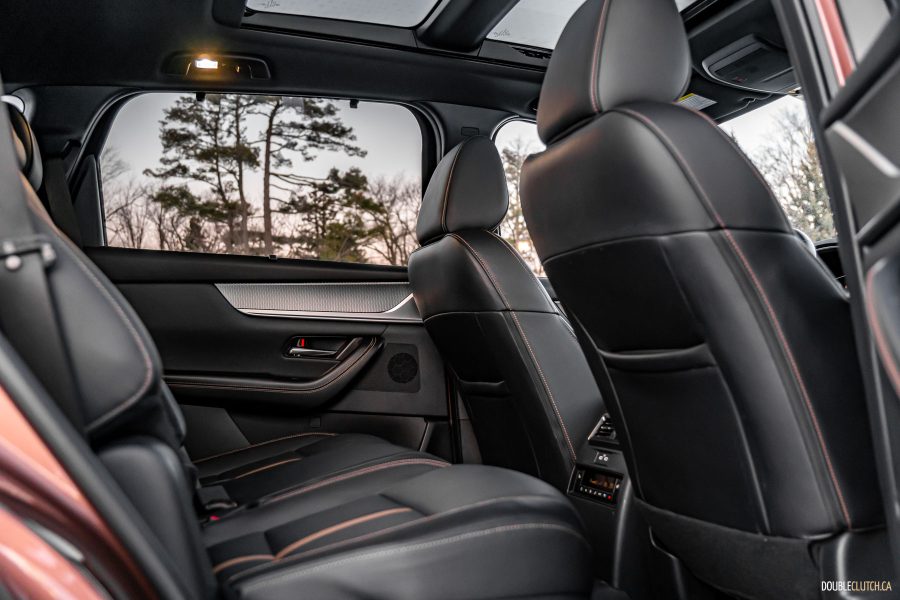
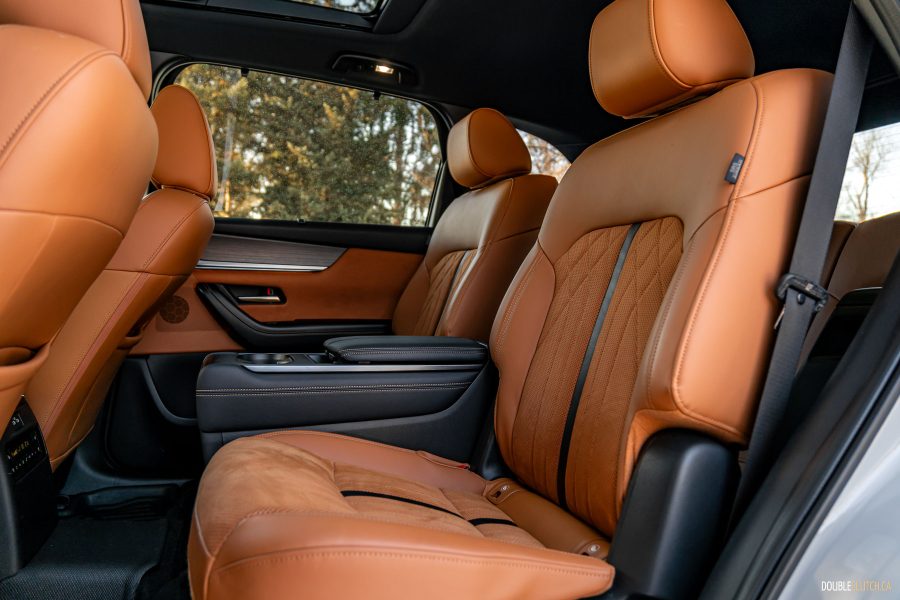
The second-row configuration also differs between the two. The CX-70 comes exclusively with a split-folding bench seat. The CX-90 offers that 2nd row bench, but also the option of captain’s chairs with a centre console.
What matters more to you:
More flexibility for people, or more space for stuff?
For most buyers, the CX-90 probably makes more sense. The cargo penalty is virtually nonexistent, and the flexibility of a third row – even one used sparingly – is meaningful. But if you’re like and seldom carry more than one passenger and value that extra storage, the CX-70 might make more sense. You’ll also save roughly $1,350 with the CX-70 compared to a similar-trim CX-90. On the topic of trim levels, it bears mentioning that the CX-90 has a lower-cost starting point than the CX-70, as the CX-90 offers a base GS model with cloth seats, where the CX-70 starts at the GS-L trim with leather seats.

Powertrains: Mild Hybrid vs Plug-In Hybrid
There are two different families of powertrains available in the CX-70 and CX-90: a turbocharged mild-hybrid inline 6, and a plug-in hybrid four-cylinder. Both are quite new to Mazda and impressive in their own right, and both are hybrids, but the similarities end there – they are quite different and support different lifestyles.
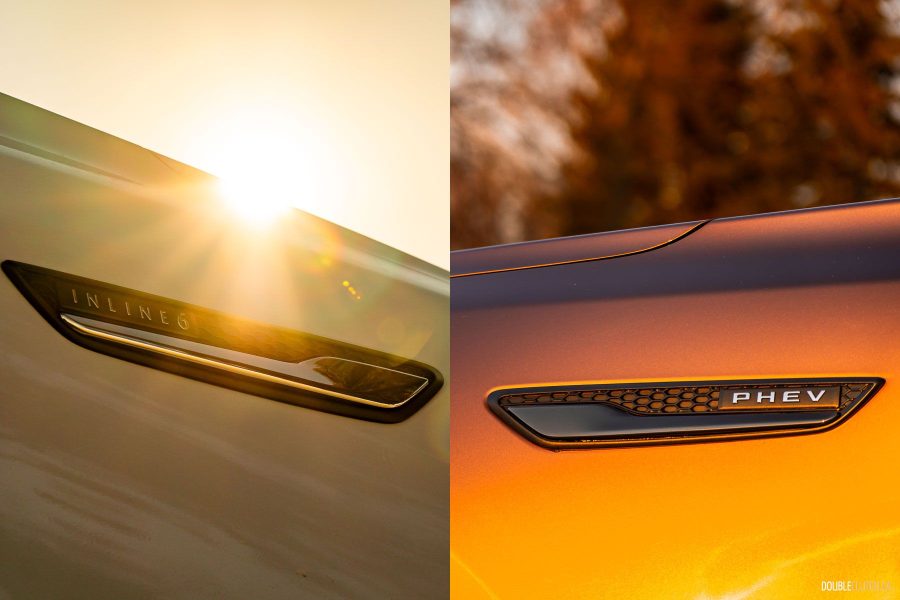
3.3L Inline-6 Turbo Mild Hybrid (MHEV)
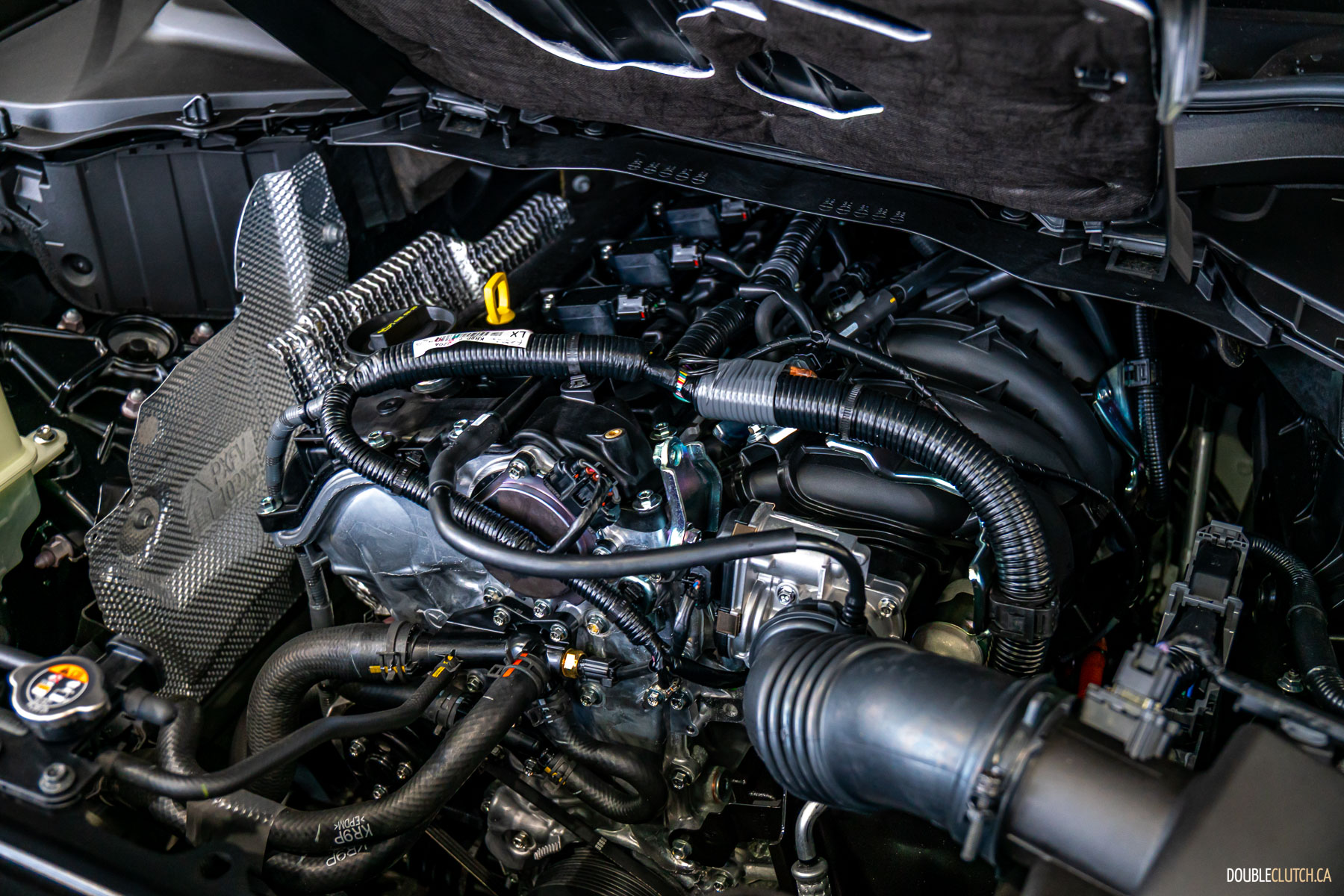
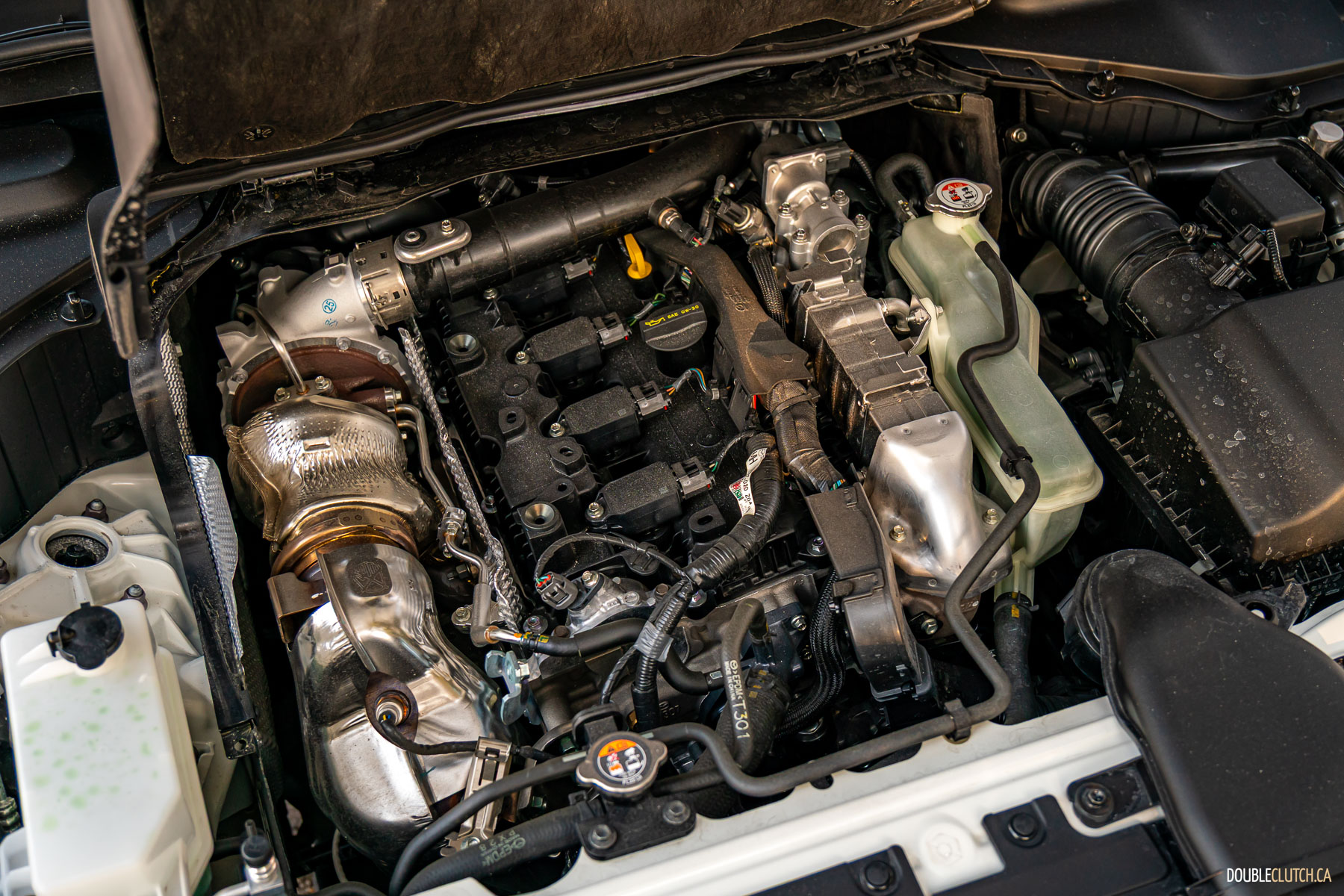
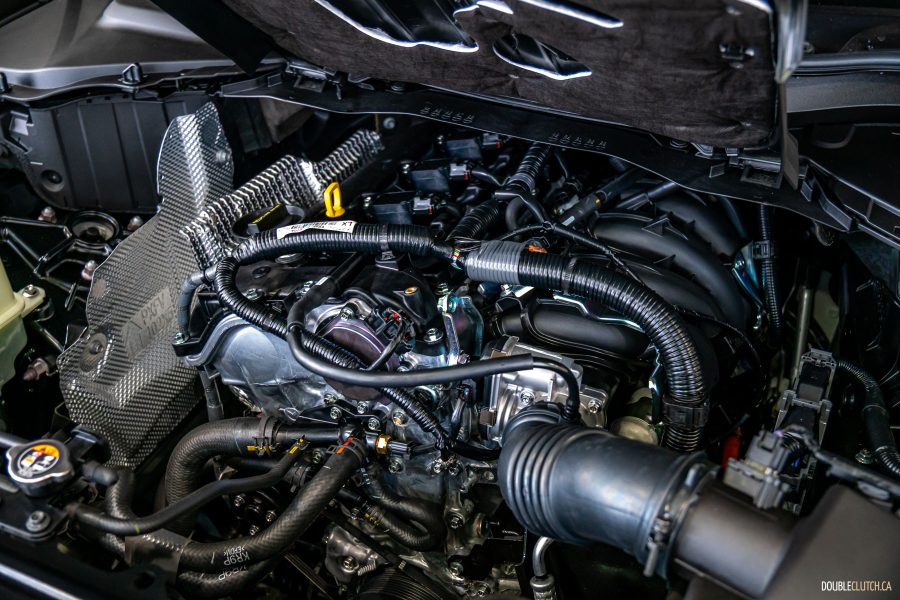
The headline engine is Mazda’s new 3.3-litre turbocharged inline-six with an integrated mild-hybrid system. It’s conceptually similar to what BMW and Mercedes are doing, albeit at a much lower price point. The GS, GS-L, and GT models come with the standard engine, while the GT-P and Signature models get the high output engine.
3.3L Inline-6 Turbo |
Standard |
High Output |
|---|---|---|
Power |
280 hp |
340 hp |
Torque |
332 lb-ft |
369 lb-ft |
Avg. fuel efficiency |
9.3 L/100km |
9.5 L/100km |
The term “mild hybrid” often causes confusion. Mild hybrids are an increasingly common engine setup that’s becoming almost mandatory to help larger engines meet increasingly strict fuel economy and emissions requirements. Unlike a traditional hybrid popularized by Toyota, this system cannot drive on electric power alone. It sounds and feels like a conventional gasoline engine.
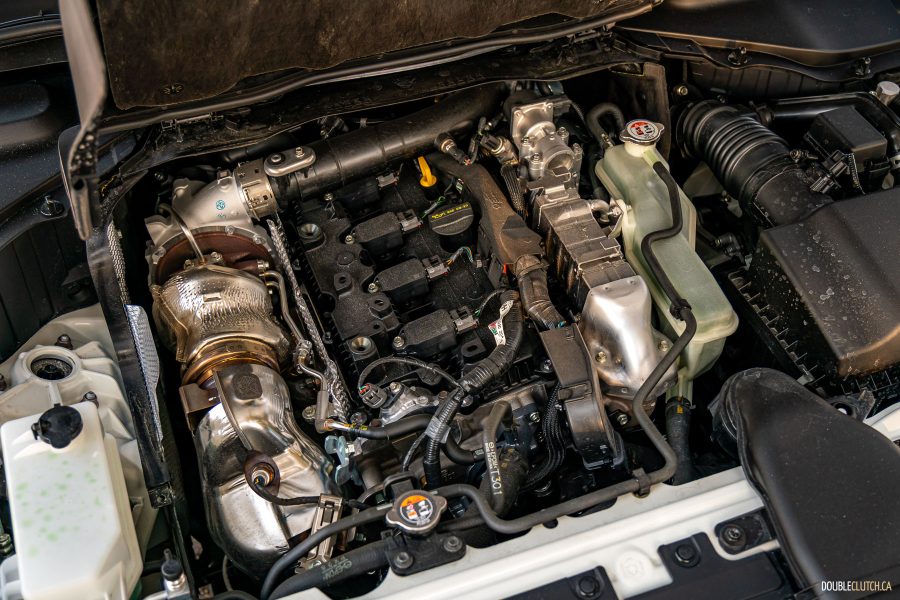
Mechanically, they’re very similar to a conventional engine. It has a small high-voltage battery and a motor-generator sandwiched between the engine and transmission that improves fuel efficiency and stop-start functionality. There is no charge port. It cannot be plugged in. It manages itself entirely.
Under deceleration/braking, it recovers energy into the battery, and shuts the engine off when stopped. When you lift off the brake, the saved energy in the battery triggers the motor-generator to begin moving the vehicle and start the engine at the same time, without the whirring and clattering of a traditional starter. The result is a smoother start-stop experience, better acceleration off the line, and improved efficiency, without changing the character of the powertrain.
If you’ve ever heard a new car just fire to life, like it just magically began running without a typical starter whine, you just heard (or, more to the point, didn’t hear) a mild hybrid motor-generator working.
On the road, the mechanical advantages of an inline-six engine are readily apparent. It’s smooth, quiet when you want it to be, with a satisfying baritone exhaust note, and a linear power band with lots of bottom end torque. It’s a lovely new engine from Mazda that’s good around town, great on the highway, and can be lots of fun if you’re feeling playful. It can be quite efficient too, returning an average fuel use of 9.8L/100km during our last week with it – which is consistent with other times I’ve reviewed these. Note: both versions of this 3.3L engine are fine with 87 octane gas, but 93 octane is recommended to make the most of the high output tune.
2.5L Four-Cylinder Plug-In Hybrid (PHEV)
The plug-in hybrid powertrain is brand new, and just as important for Mazda going forward as the headline-stealing inline-6. The plug-in hybrid pairs Mazda’s familiar 2.5-litre four-cylinder with a much more powerful electric motor and a significantly larger battery than in the MHEV models. This enables it to operate as a pure-electric vehicle in optimal conditions, able to cruise up to 42 kilometers without burning a drop of fuel, or operate as a “regular” hybrid, switching between gas and electric power as needed to save fuel.
2.5L Plug-in Hybrid |
Engine Only |
Engine + Batt. |
|---|---|---|
Horsepower |
189 hp |
332 hp |
Torque |
192 lb-ft |
369 lb-ft |
Avg. fuel efficiency |
9.4L/100km |
6.4-8.5L/100km* |
*It’s hard to get a realistic average measurement on plug-in hybrid fuel efficiency, as it is SO dependant on driving conditions and how consistently the battery is kept charged. The average figure for engine-only fuel use is an official estimate from Mazda and NRCan when driven with no extra charge stored in hybrid battery, whereas the figure for mixed use comes from our own observations over multiple occasions where we’ve made a habit of keeping the battery charged. Mazda does offer an official estimate of 4.2 MPGe, but none of us around here think MPGe makes any sense in reality.
On the road, it’s performance is very nearly in line with the high output six cylinder engine, and it’s generally fairly smooth and quiet under most normal conditions, with good performance and confident passing power. It is worth noting that Mazda recommends premium gasoline for the PHEV, and while you can use regular gas, we have noticed it does have a noticeable effect on refinement and efficiency.
It may seem like a best of both worlds, offering great power and better fuel economy and it is quite an effective option for some, but there are caveats to this. It is not quite as refined as the inline-six, with a little more vibration and harshness under high load and in certain conditions. It does tend to suffer particularly in extreme cold, where the engine needs to run regardless of how much charge is left in the battery, and you may not always have full power available until the battery has some warmth in it. In these rare, harsh conditions, the tax of the engine driving the car and trying to charge/warm the battery can be worse than the inline-6. This can be avoided by keeping it plugged in so the battery can stay topped up and warm.

These plug-in vehicles are, as per the owner’s manual, designed to be plugged in. They’re designed to live on a charger when not in use, and in cold conditions, they really need it. If you are unable or unwilling to plug it in at home, do not buy one. The benefit of the technology is wasted. It’s that simple.
You don’t need to install a dedicated EV charger at your home or beg your boss to install them at work, they’re perfectly fine to operate on regular 110-volt electrical outlet. On a standard outlet, the battery needs 11-12 hours to charge from 0 to 100 percent, which is enough for keeping it topped up overnight and ready to go in the morning. On a dedicated level 2 charger, that time drops to about 2 hours. If you’re particularly good about this, or maybe have a level 2 charger and a fairly short daily commute, you could potentially go for quite a long time without the gas engine firing at all. It’s always there if you need it, but it really is best to make a habit of plugging in your plug-in hybrid.

A note about transmissions:
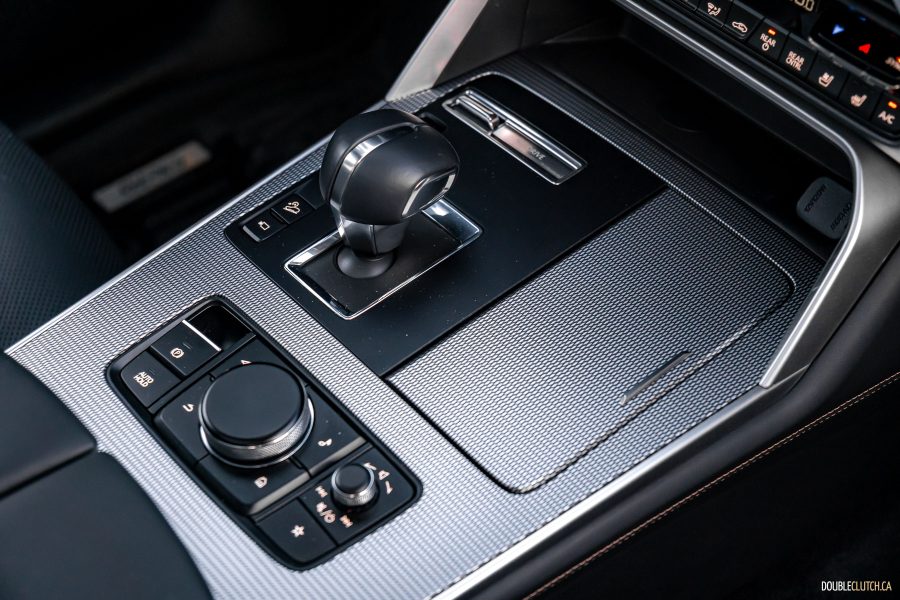
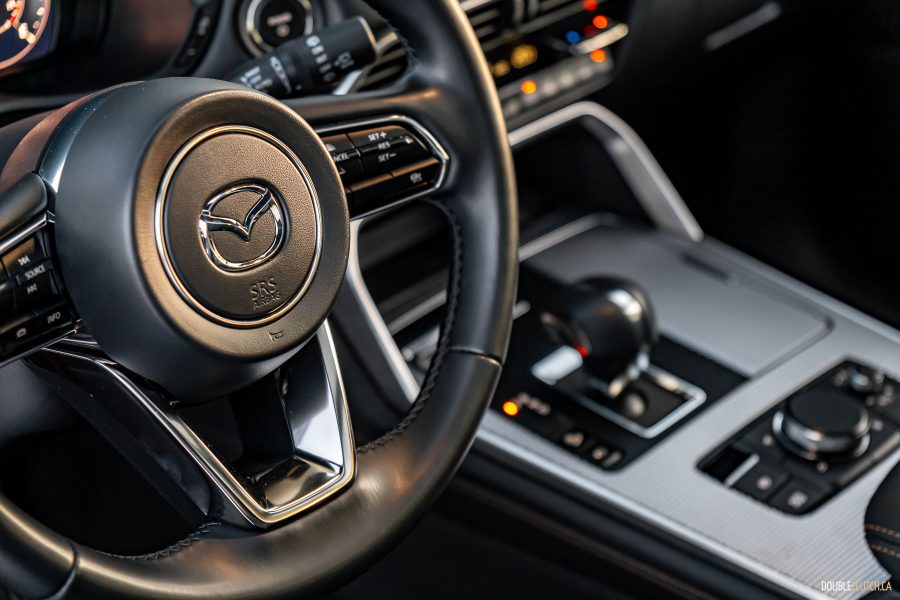
Both powertrains come with standard all-wheel-drive, and make use of a new 8-speed automatic transmission, developed in-house by Mazda. Rather than using a fluid torque converter to connect the engine and gearbox, it uses a multi-plate wet clutch, similar to the Mercedes-AMG speedshift 9-speed transmission. This system is compact, lightweight, more mechanically efficient and, more direct in its power delivery, and can feel more engaging to drive. The inclusion of electric motors helps smooth out the action of this gearbox.
Initially there were widespread complaints of awkward, jerky shift behaviour at low speeds. Mazda has since issued an update to recalibrate the transmission’s shifting habits and it is much improved, to a point where you likely wouldn’t notice it working. The Inline-6 seemed pretty well dialled in, but the PHEV still can be a little awkward, but mostly only when very cold and in electric mode. It’s fine once it’s warmed up a bit.
Which One Should You Buy?
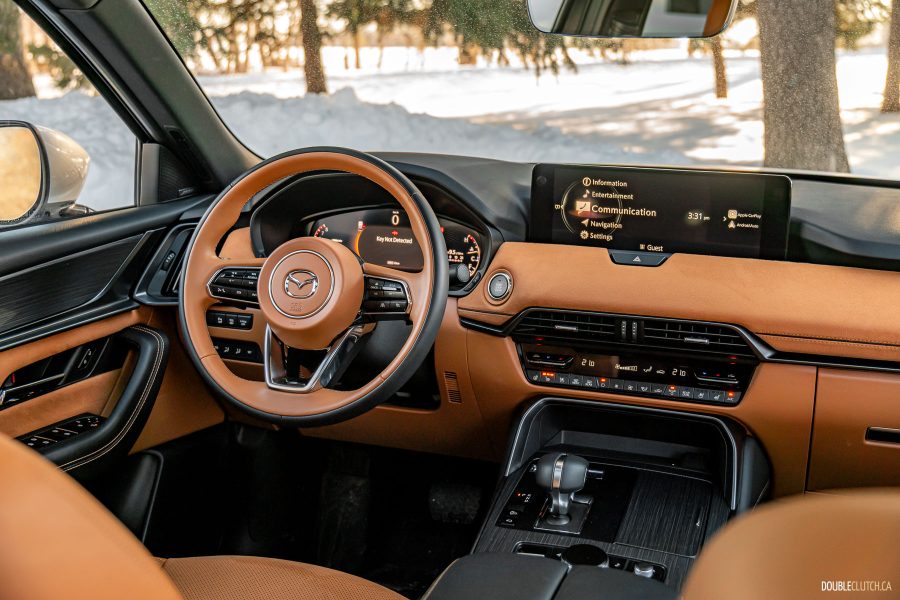
We really like the Mazda CX-70 and CX-90 for a reason. They’re great vehicles that suit a lot of people and a lot of lifestyles, and with their handsome styling and lovely interiors, they feel like an excellent value. They’re good at being normal, nice cars for normal, nice people, and can also scratch that deeper itch for those you that really care about cars and driving.

If you…
- rarely have more than one passenger, go for the CX-70, as it carries a slight cost savings and has a smidgen more space.
- are not sure, or you think you might like having the option of third row of seating, get the CX-90; it there’s hardly any space lost.
- don’t have a means to charge your vehicle at home or the office (or know you’re going to be lazy about it), skip the plug-in. It’s in the name for a reason.
- have a short daily commute that’s stays (mostly) within the PHEV 42 km electric range, there’s a potential for huge fuel savings that should be considered.
- lean more towards a more traditional driving feel and/or more athletic performance, get the inline-6 turbo.
- have a long highway commute, you might be better served by the inline-6 turbo.
There is no wrong answer, but some answers may be more right depending on your wants, needs, and circumstance. Either way, in the Mazda CX-70 and CX-90, you’re getting some of the best of what the industry has to offer.
–