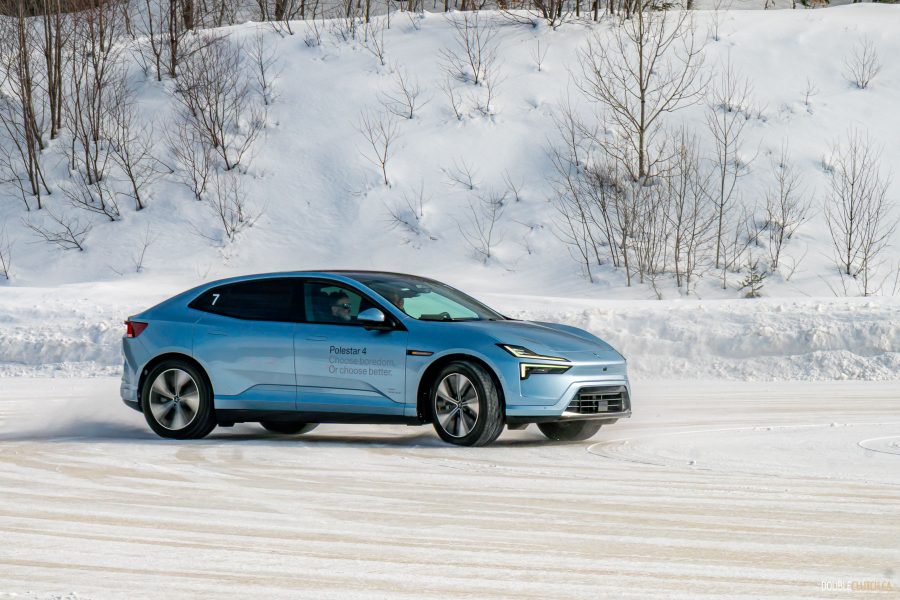
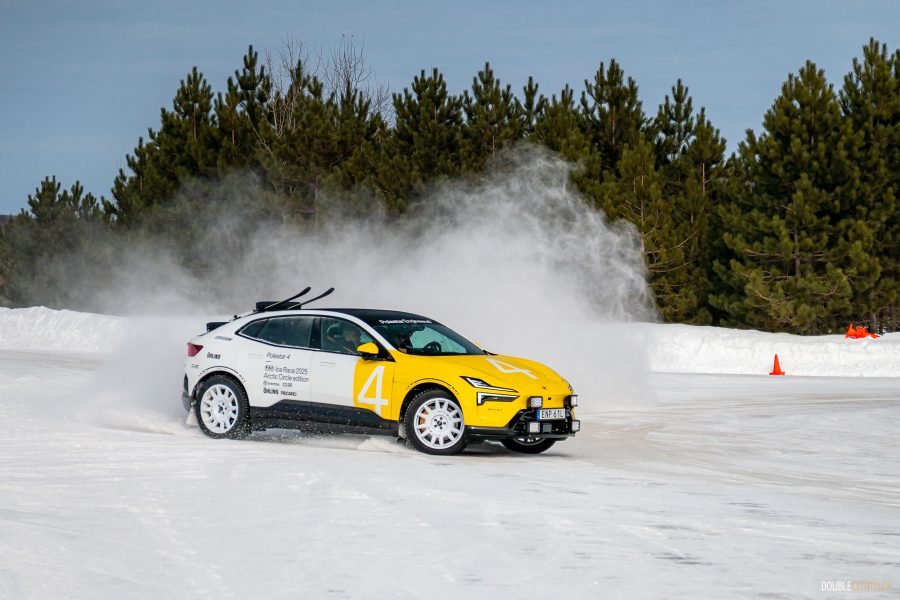
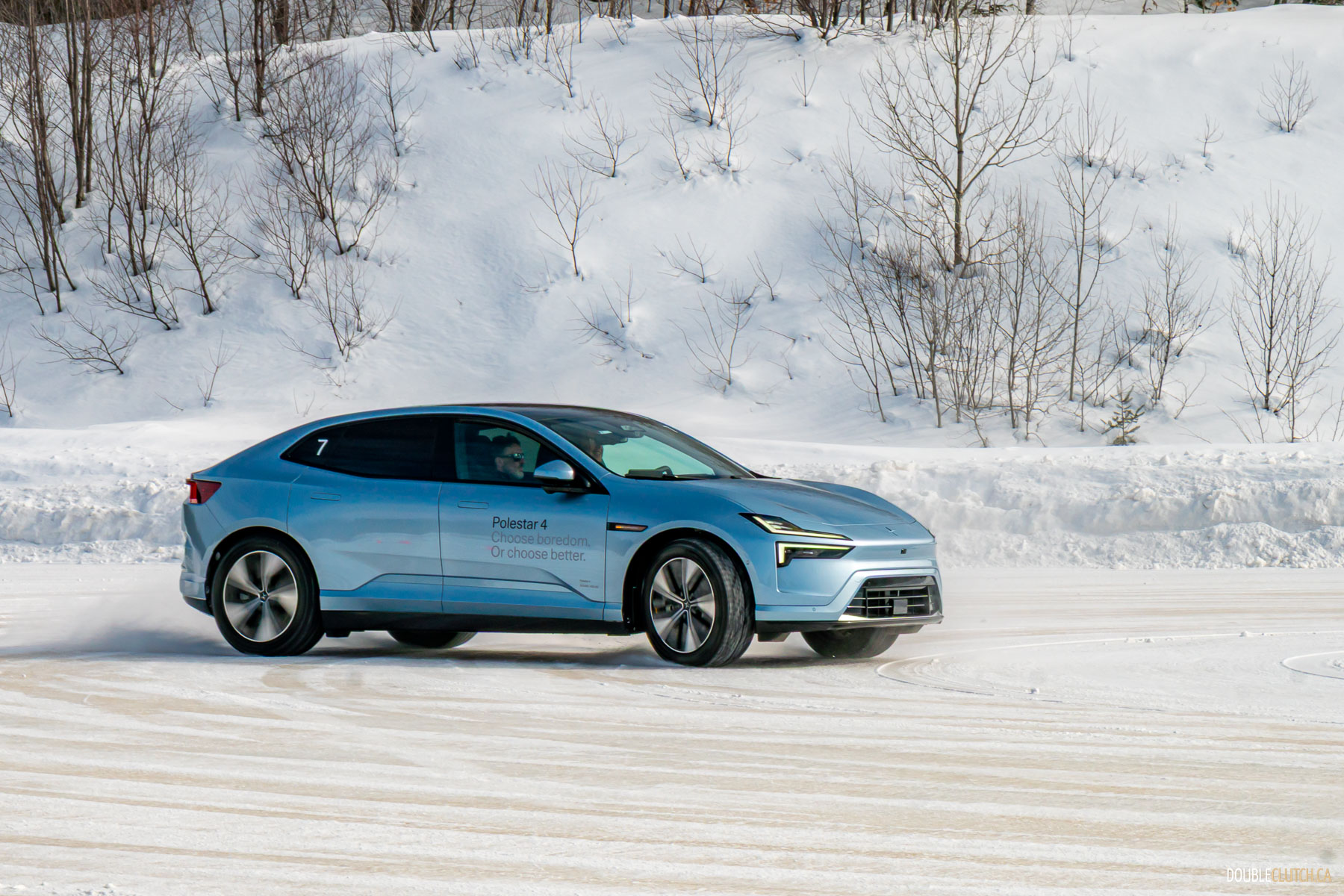
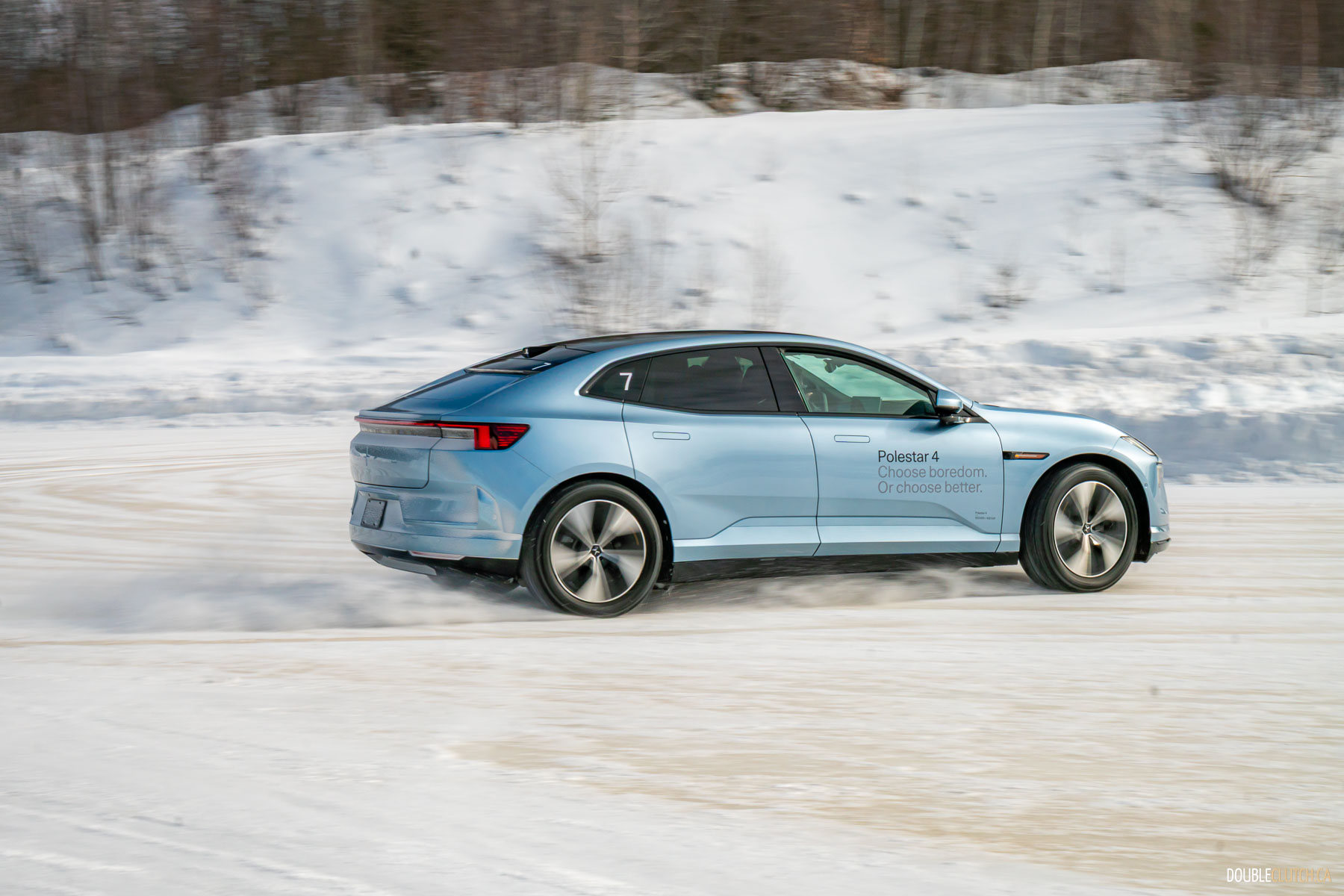
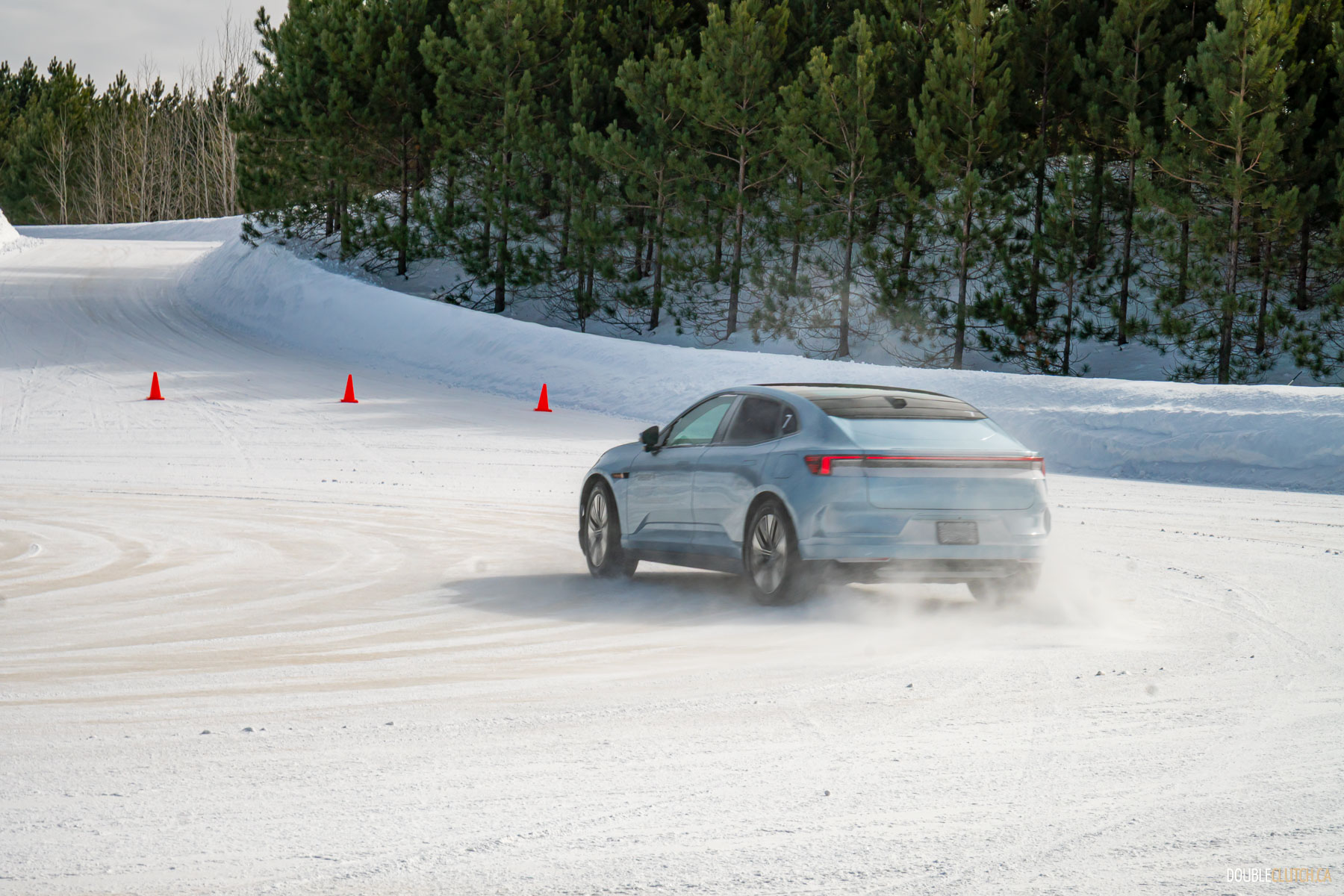
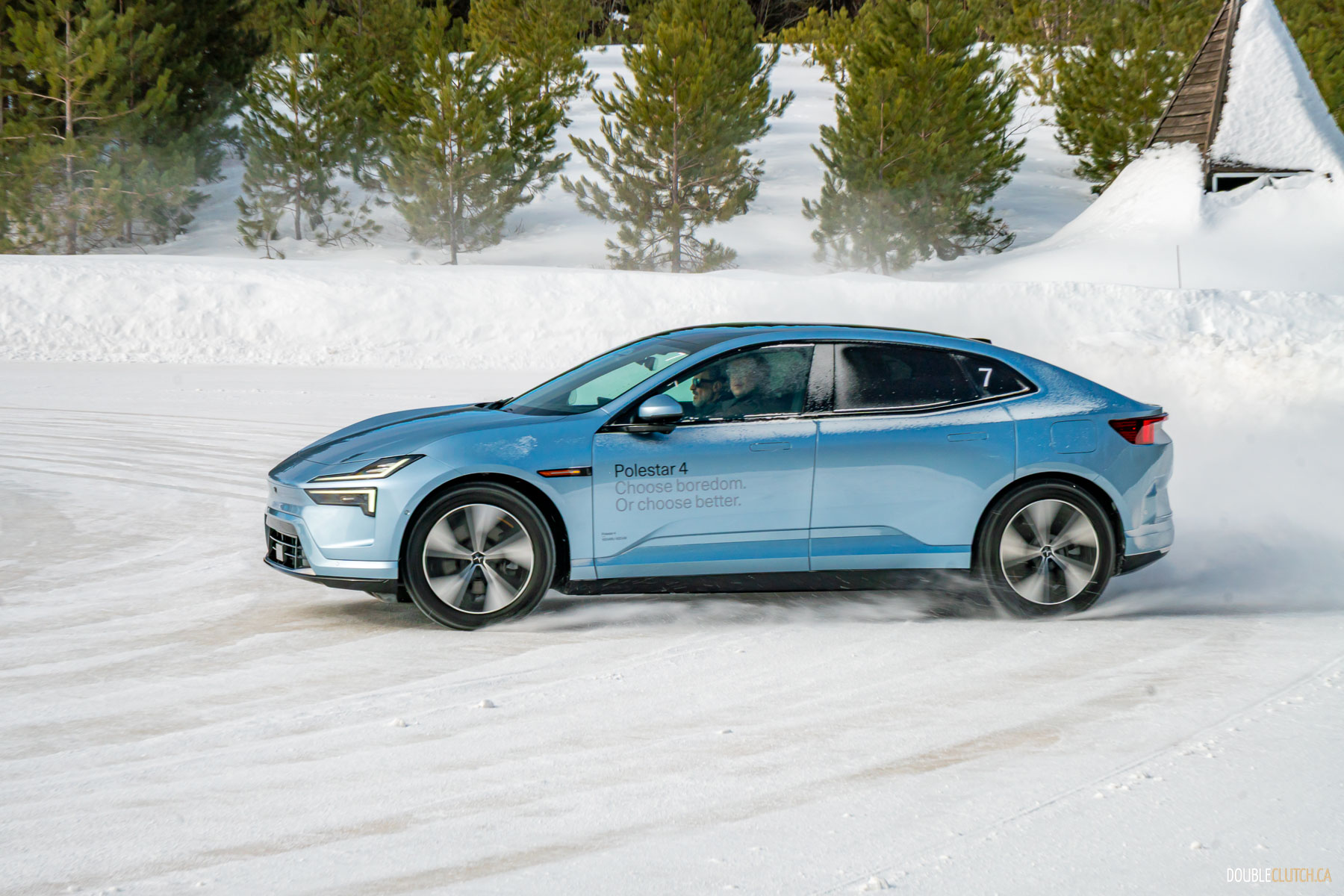
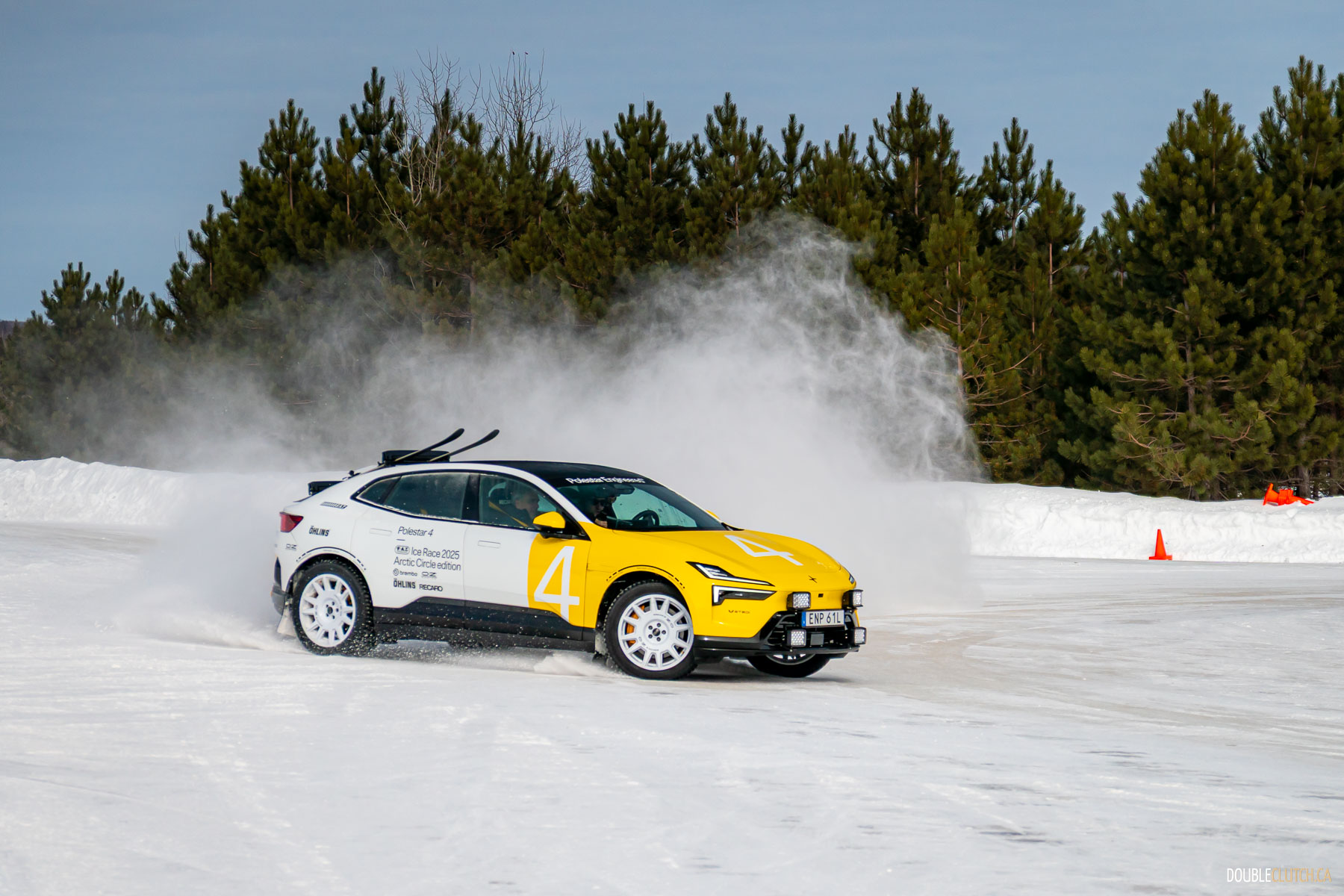
Saint-Sauveur, QC – One of the activities of this Polestar 4 Arctic Circle Drive event was being taught how to do a proper “Scandinavian Flick,” a classic rally racing technique where you turn the car in the wrong direction prior to entering a corner, and then using a pendulum effect to throw the car through the corner in a big, heroic slide. Teaching a bunch of hapless keyboard clappers like me how to execute a daring maneuver like this speaks volumes to Polestar’s confidence in their cars.
About the Polestar 4
“We calibrate it as a good sports car first, then dial it back a notch to make it suitable for everyday driving. The sports car feel is always in there, underneath.”
That’s from Christian Samson, who signs off on how every Polestar car drives and feels, and has been with the brand since they made “noisy blue cars,” before breaking off into making their own “silent white cars.” The Polestar 4 is meant to slot between the smaller 2 and the larger 3, and is designed to be “more mature, but still nippy.”
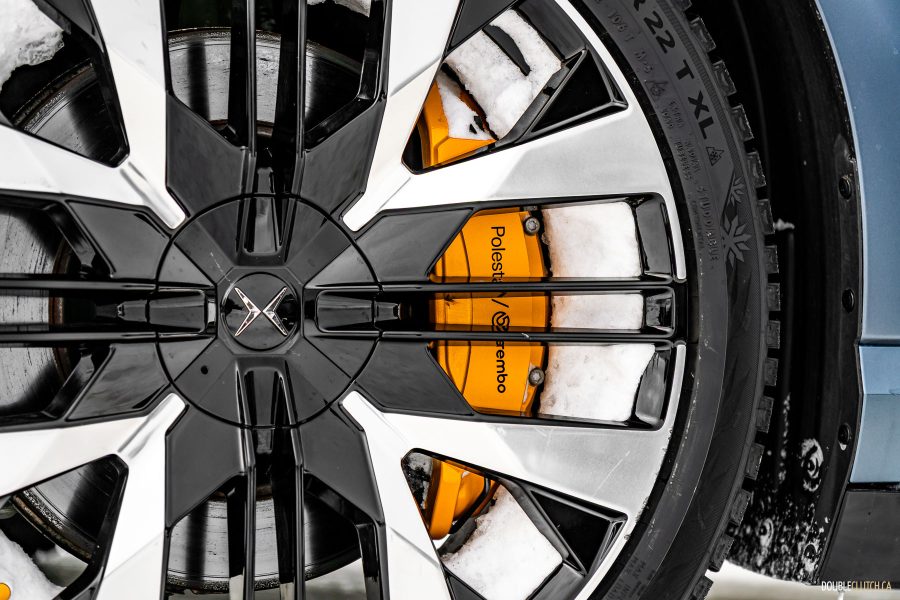
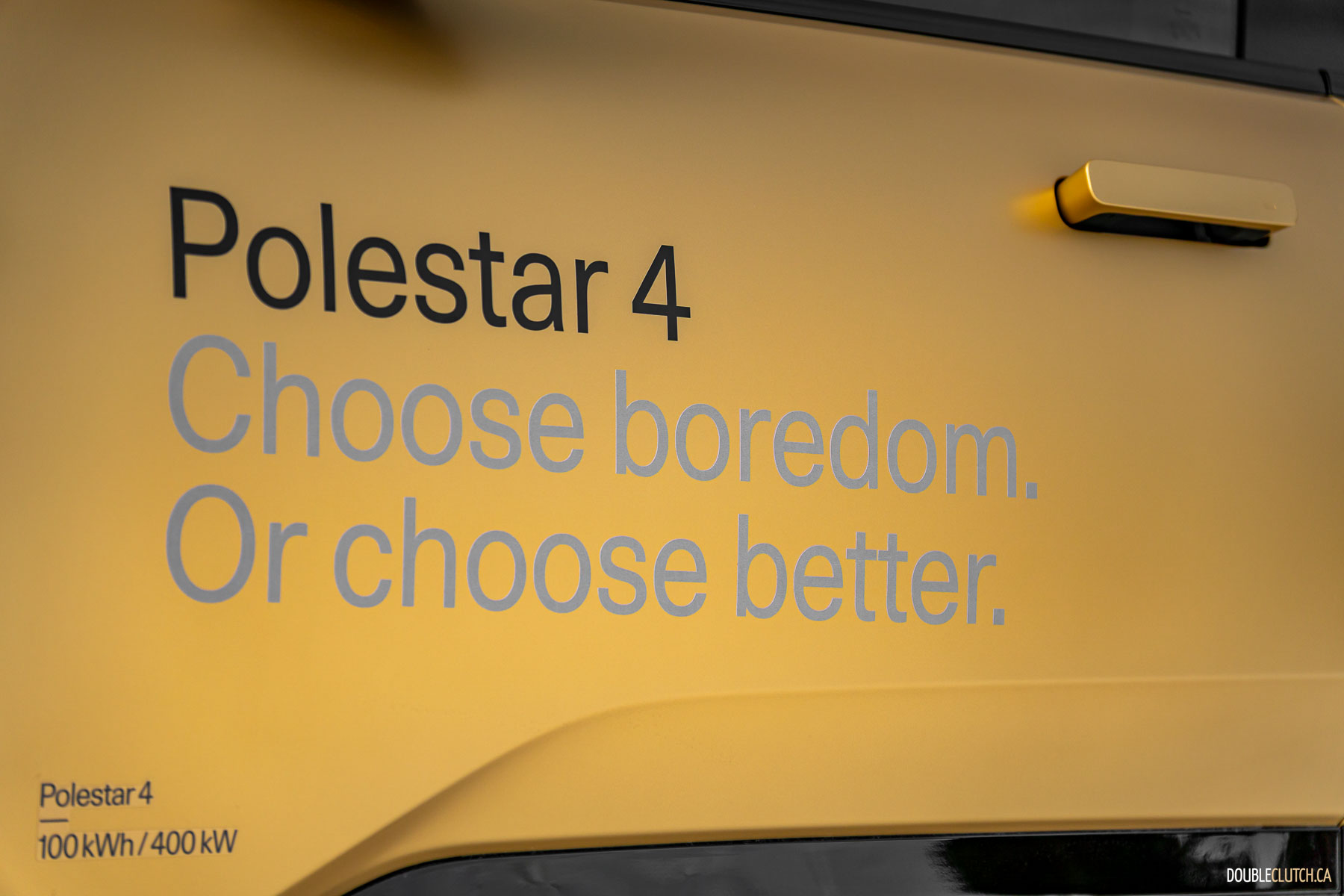
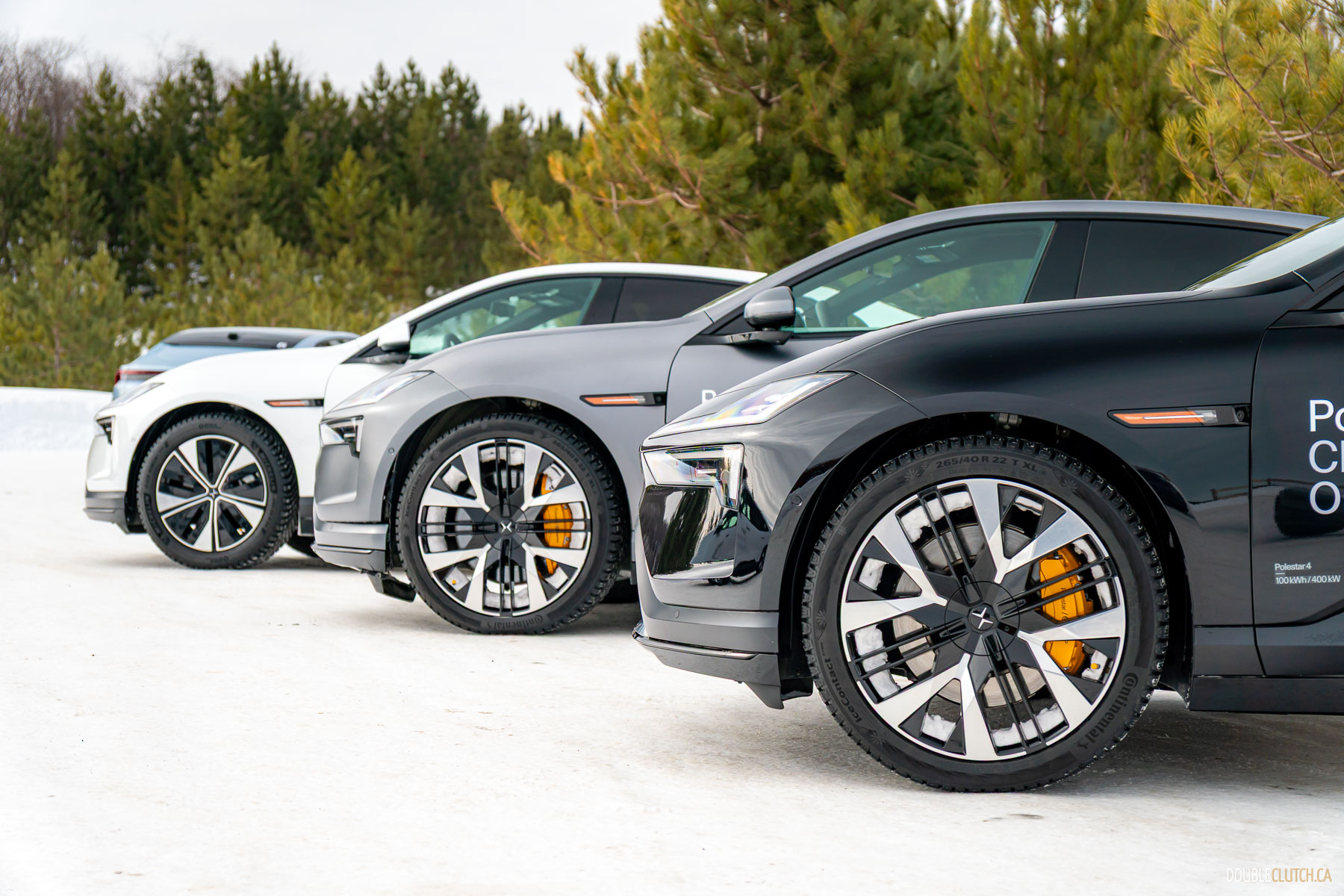
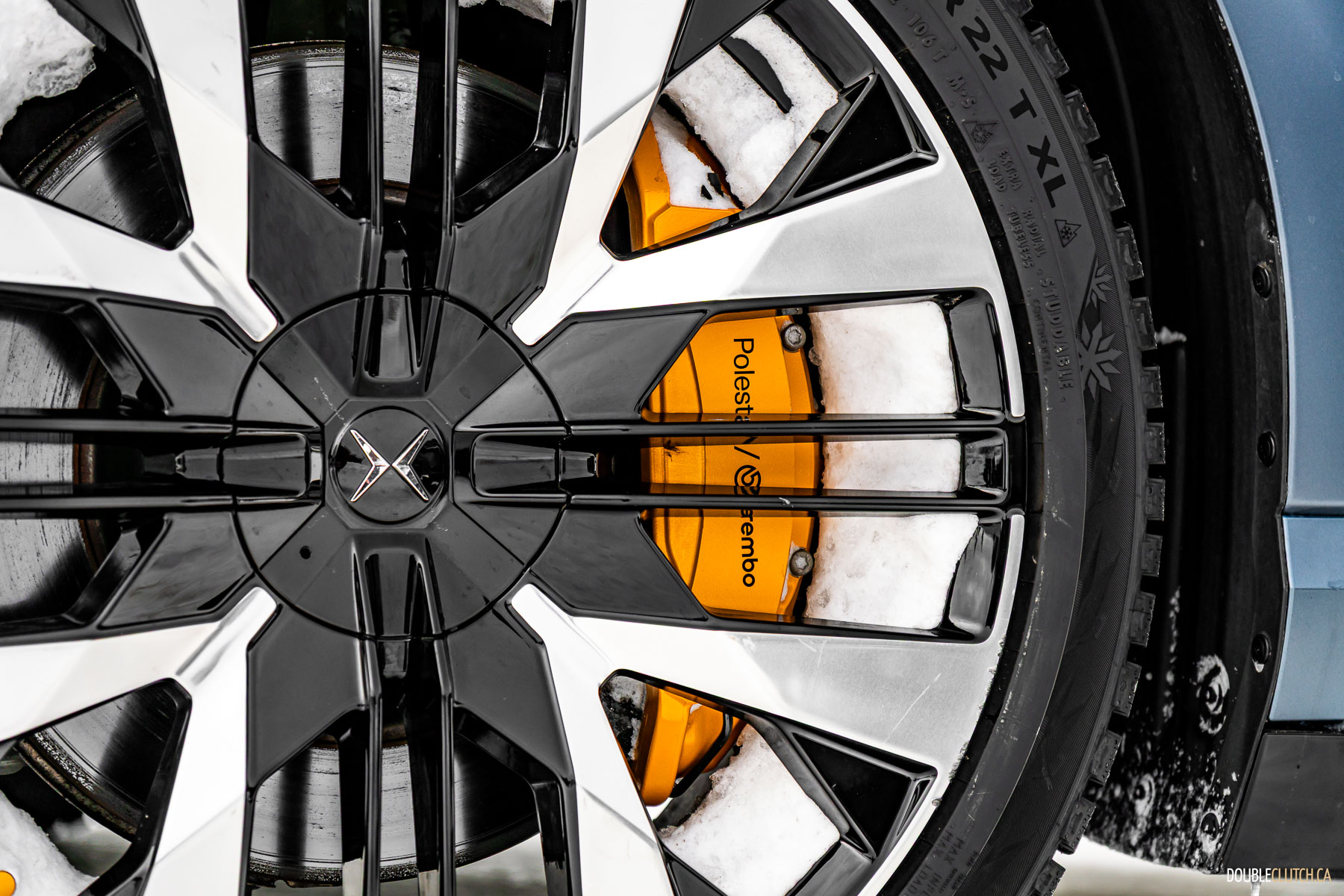
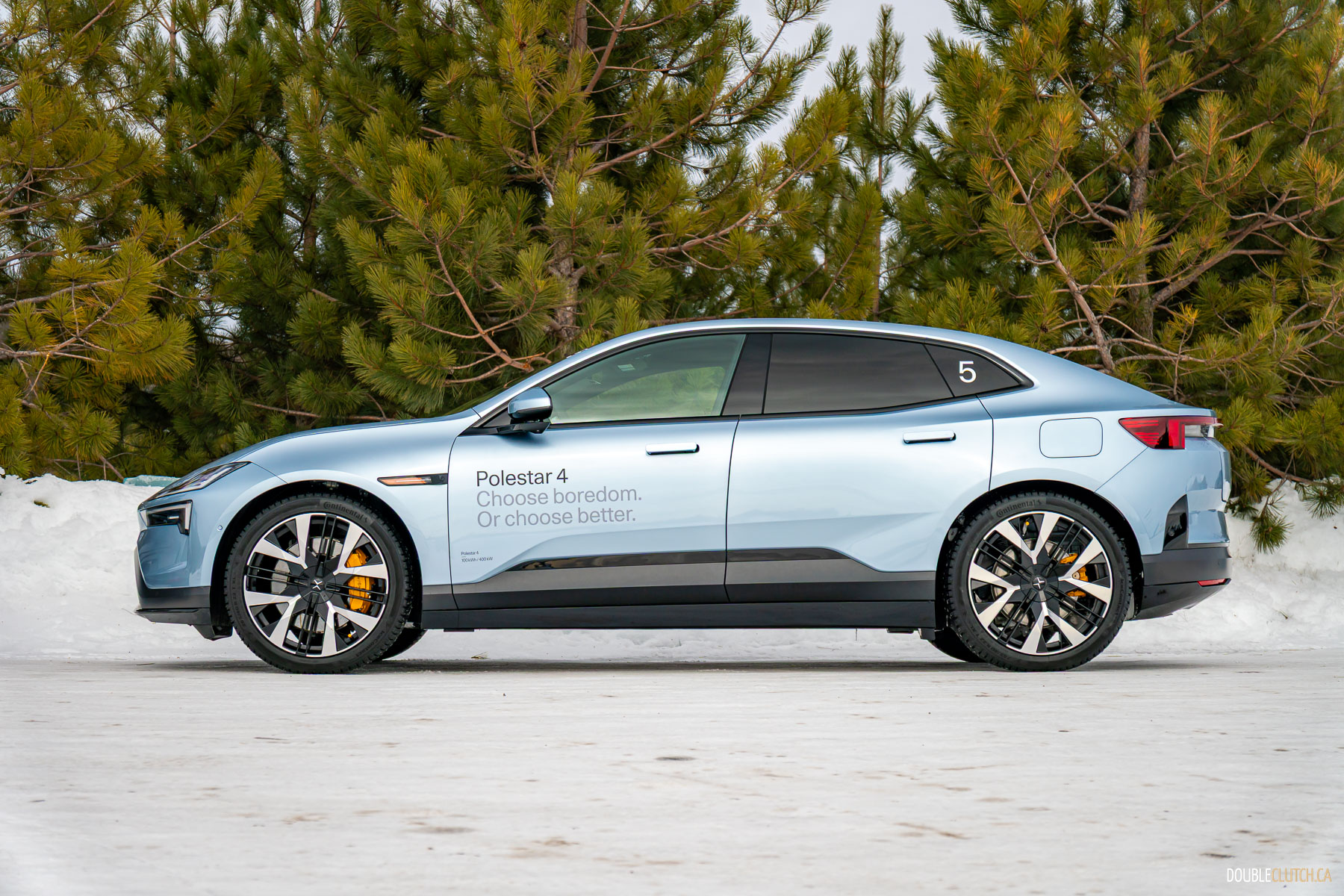
The cars we drove were all dual-motor models, with 102kWh batteries and 544 horsepower, or a nice round 400 kilowatts in European parlance (single-motor cars get a similar, satisfyingly symmetrical 200 kW). Some cars were Performance models with bigger wheels and Brembo brakes, but somehow I doubt that made much difference on the sheer ice surfaces of Circuit Mecaglisse.
Elephant in the room – the rear window, or lack thereof
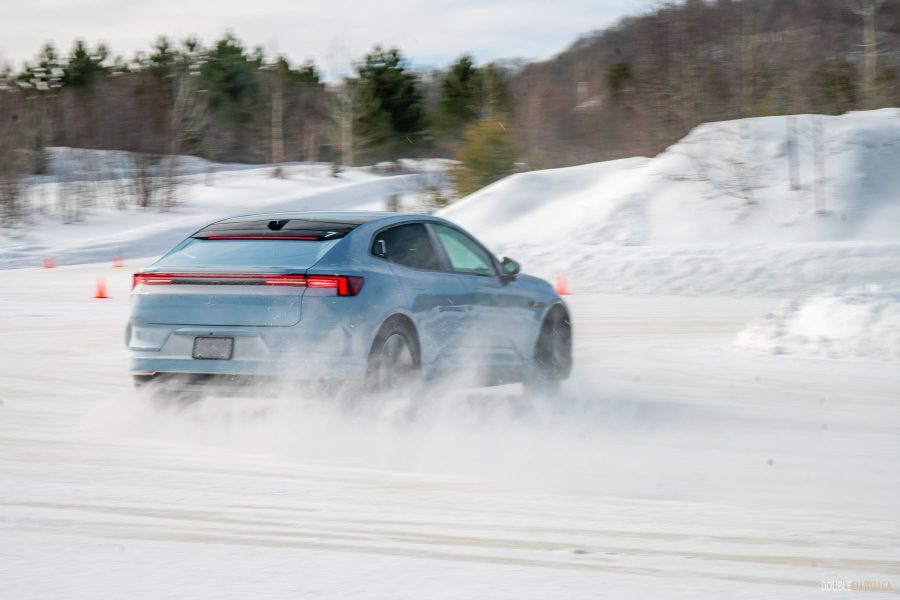
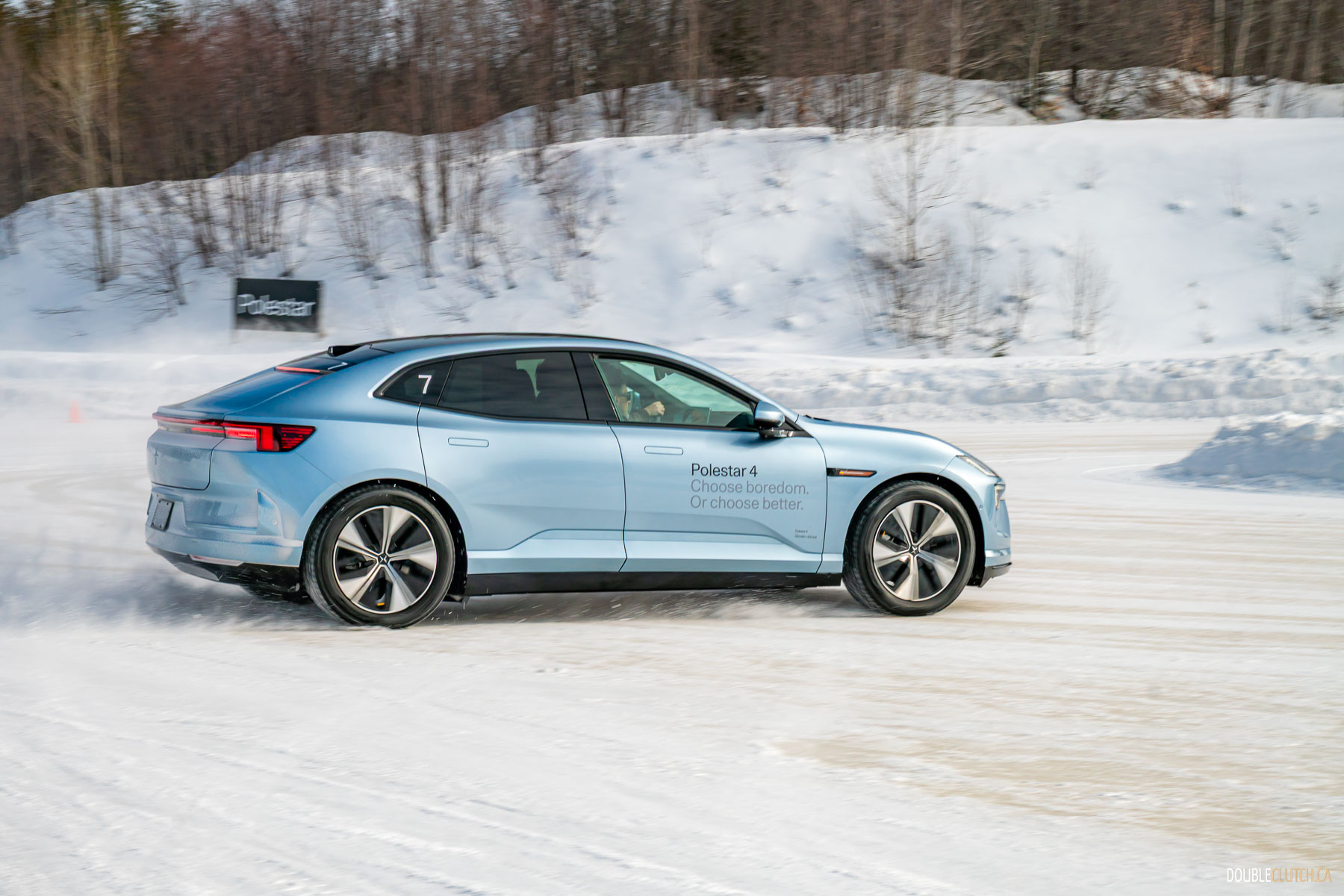
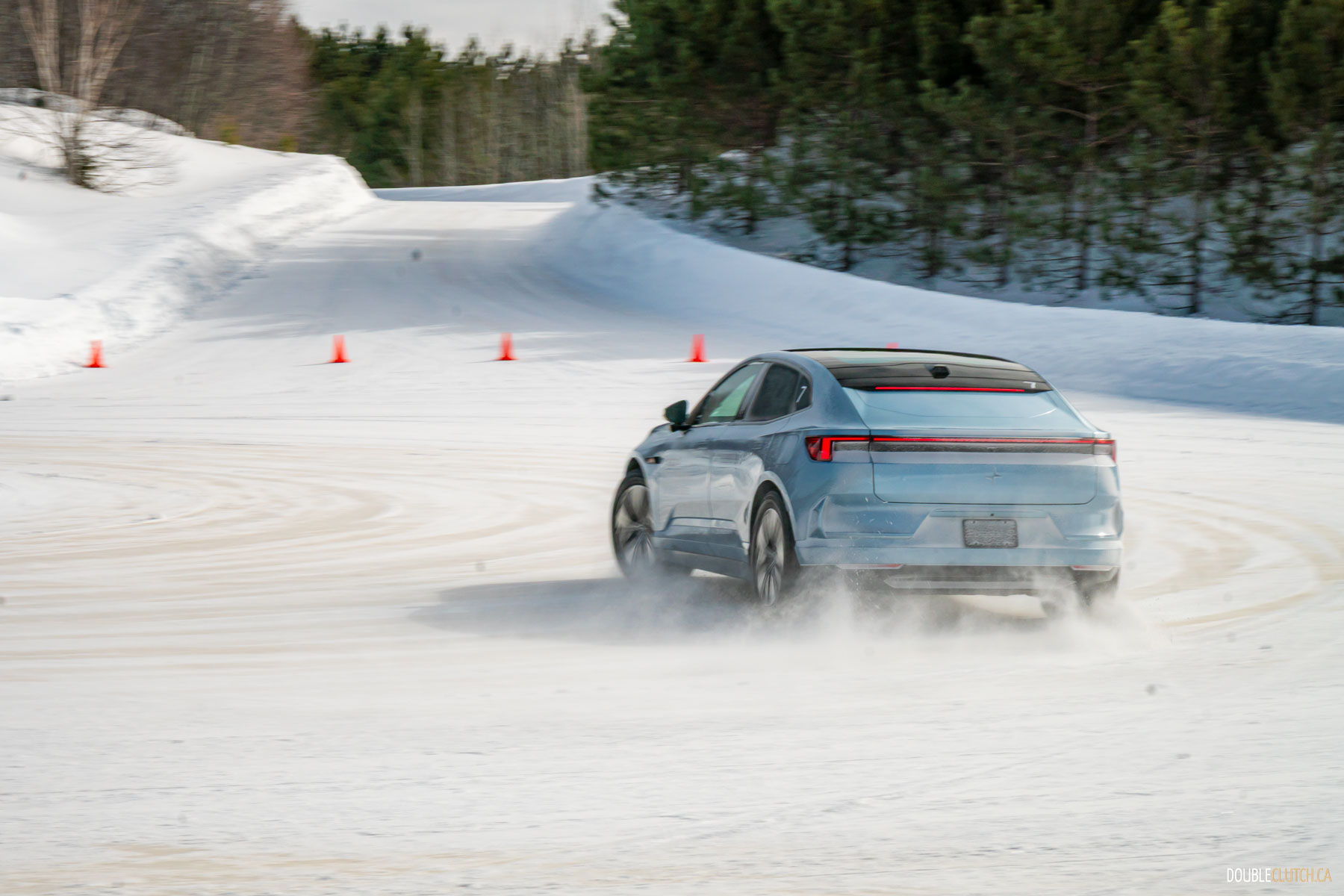
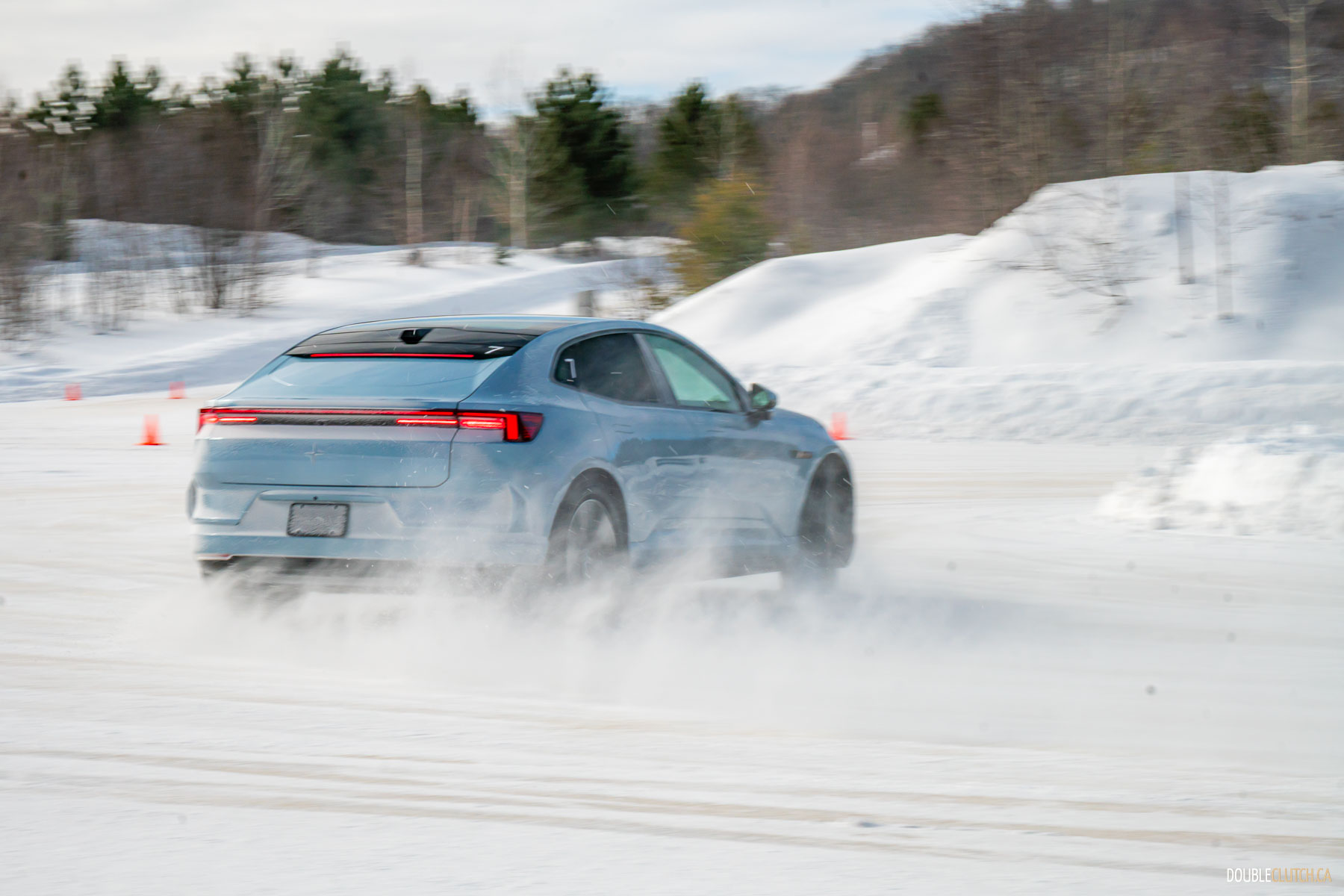
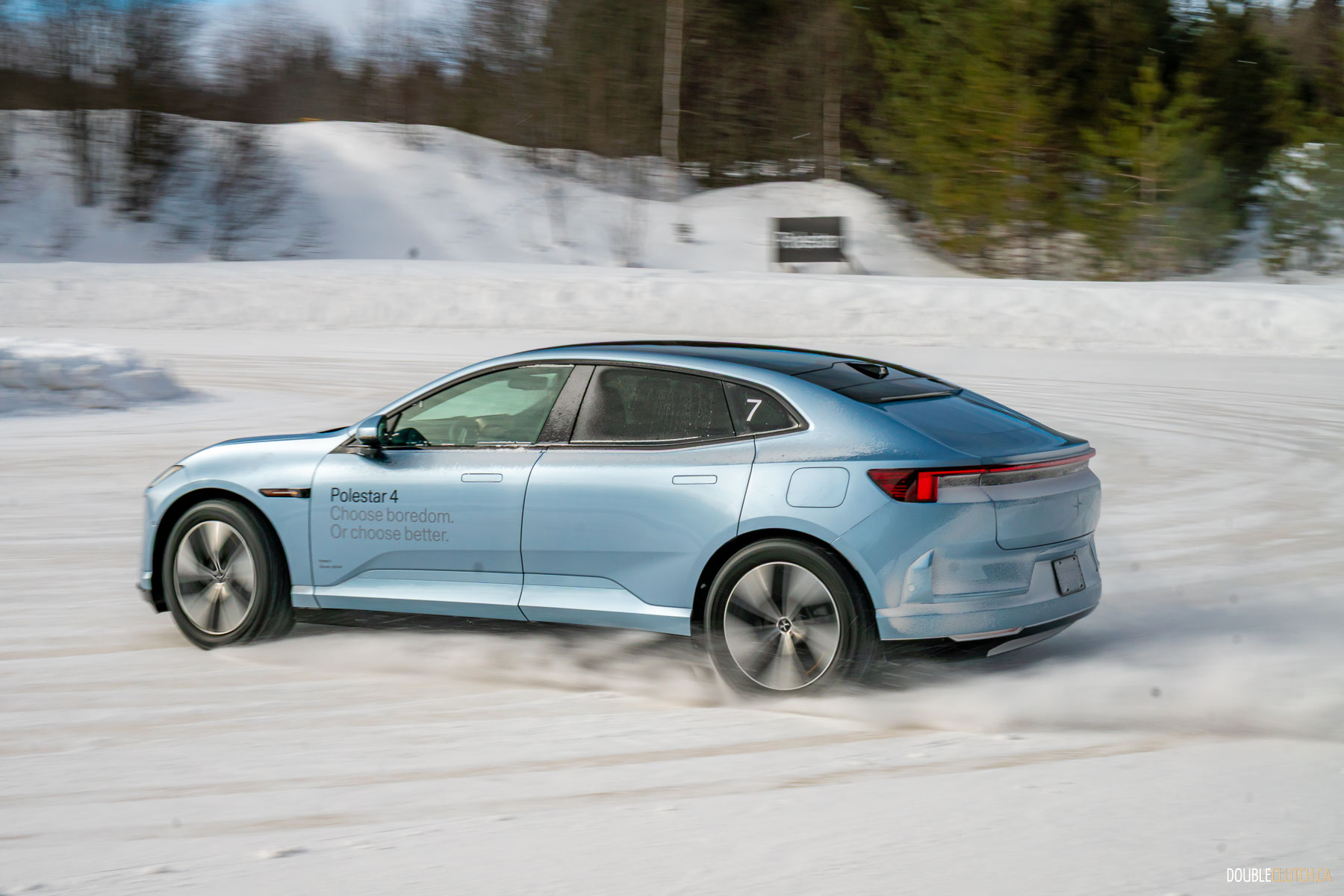
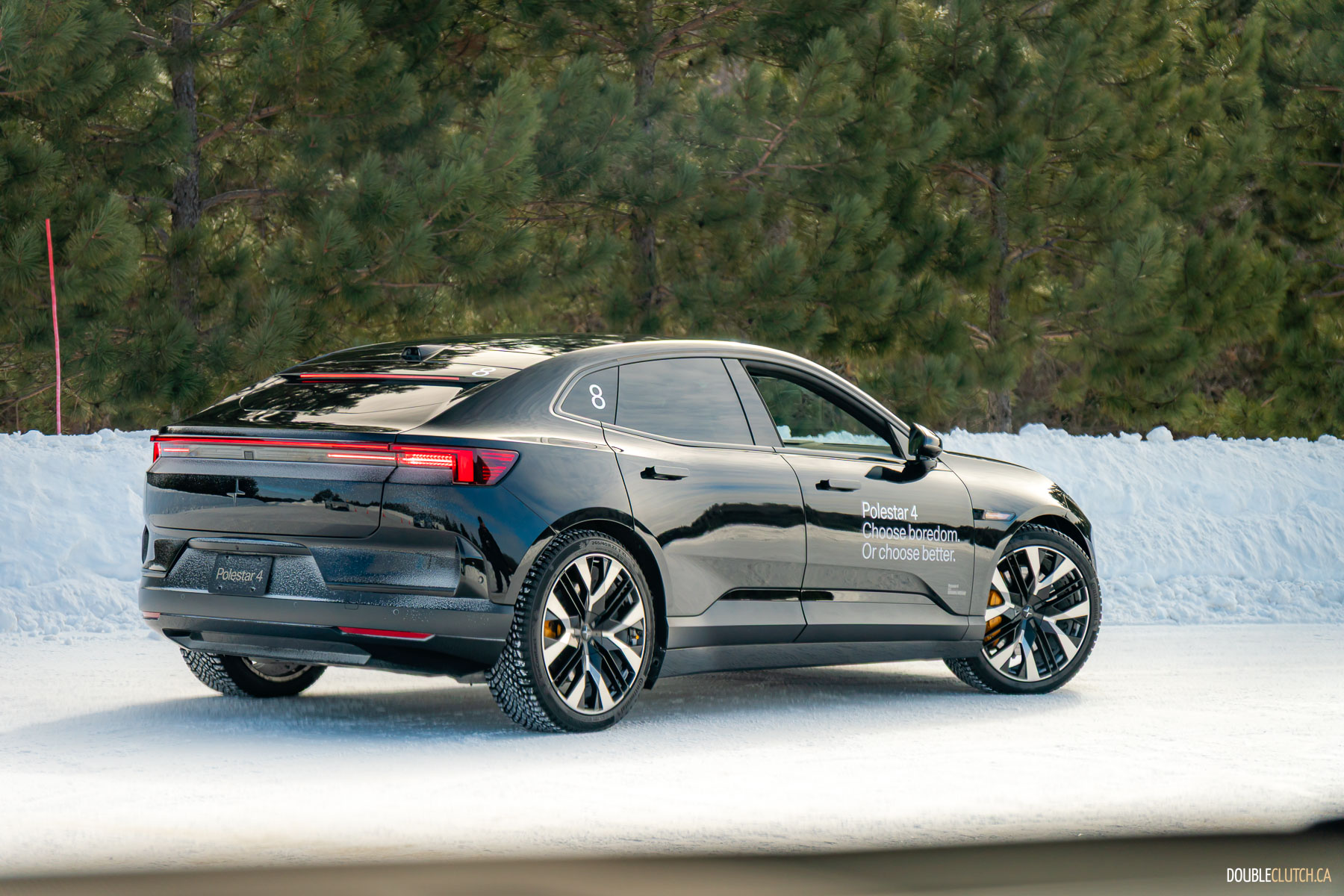
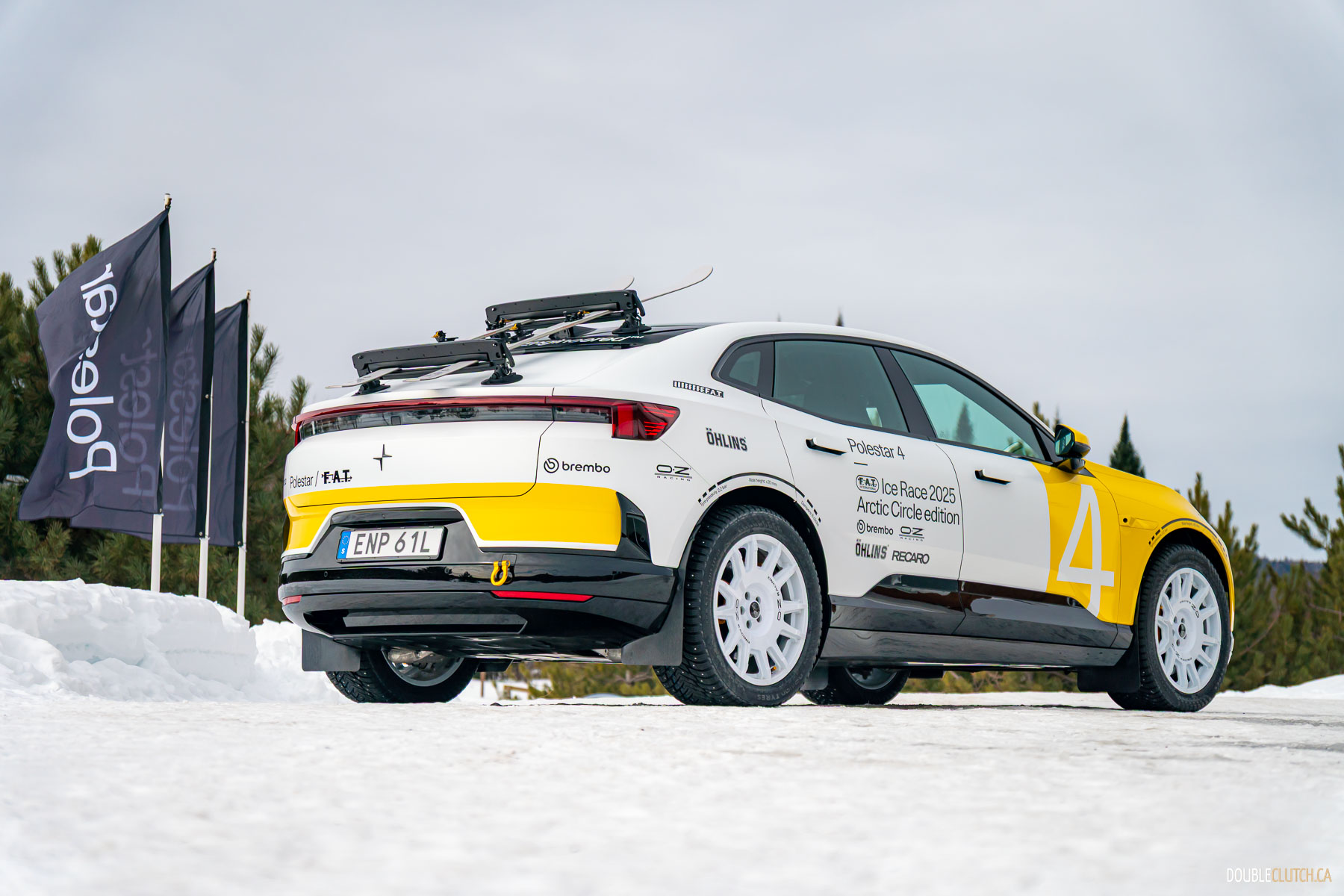
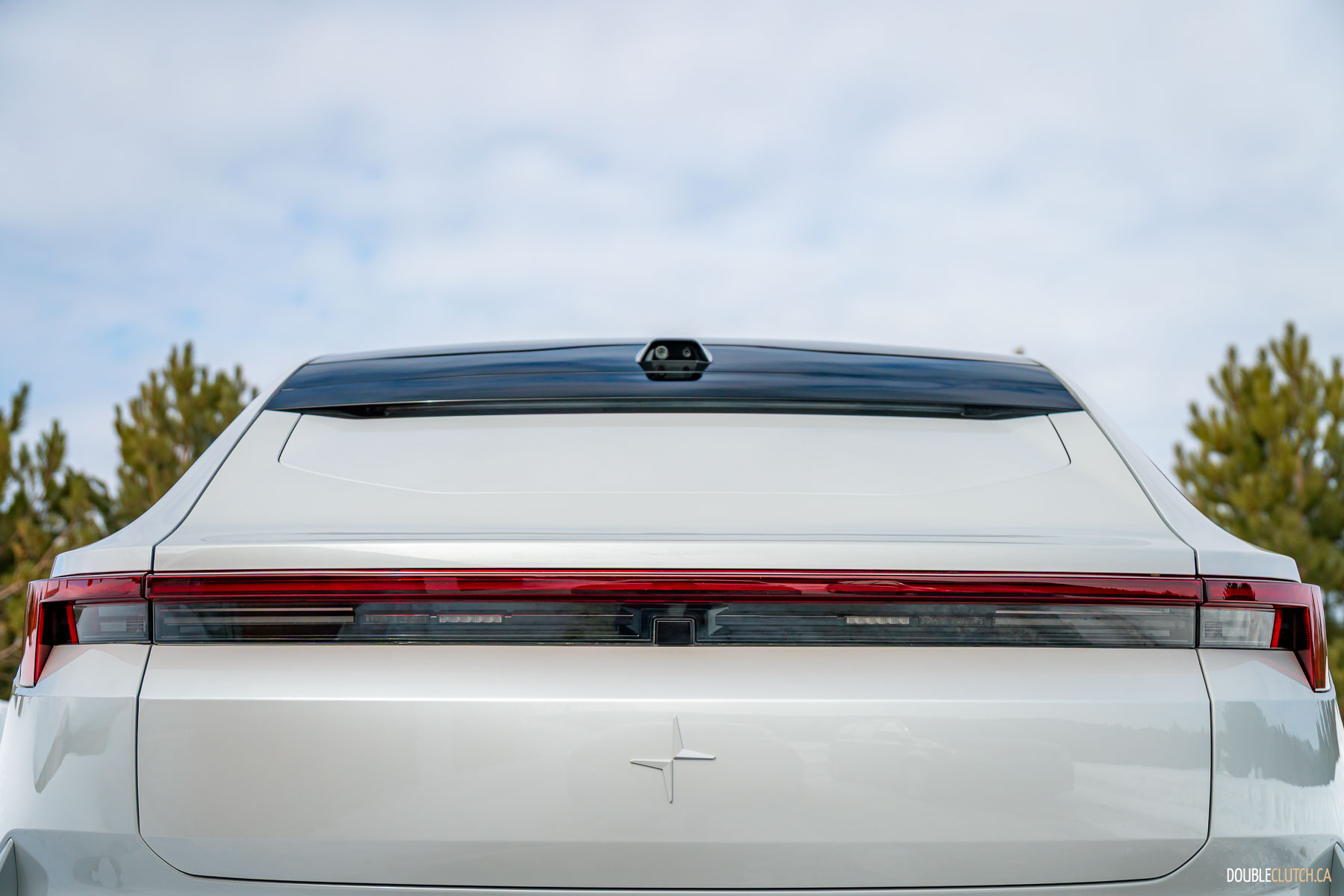
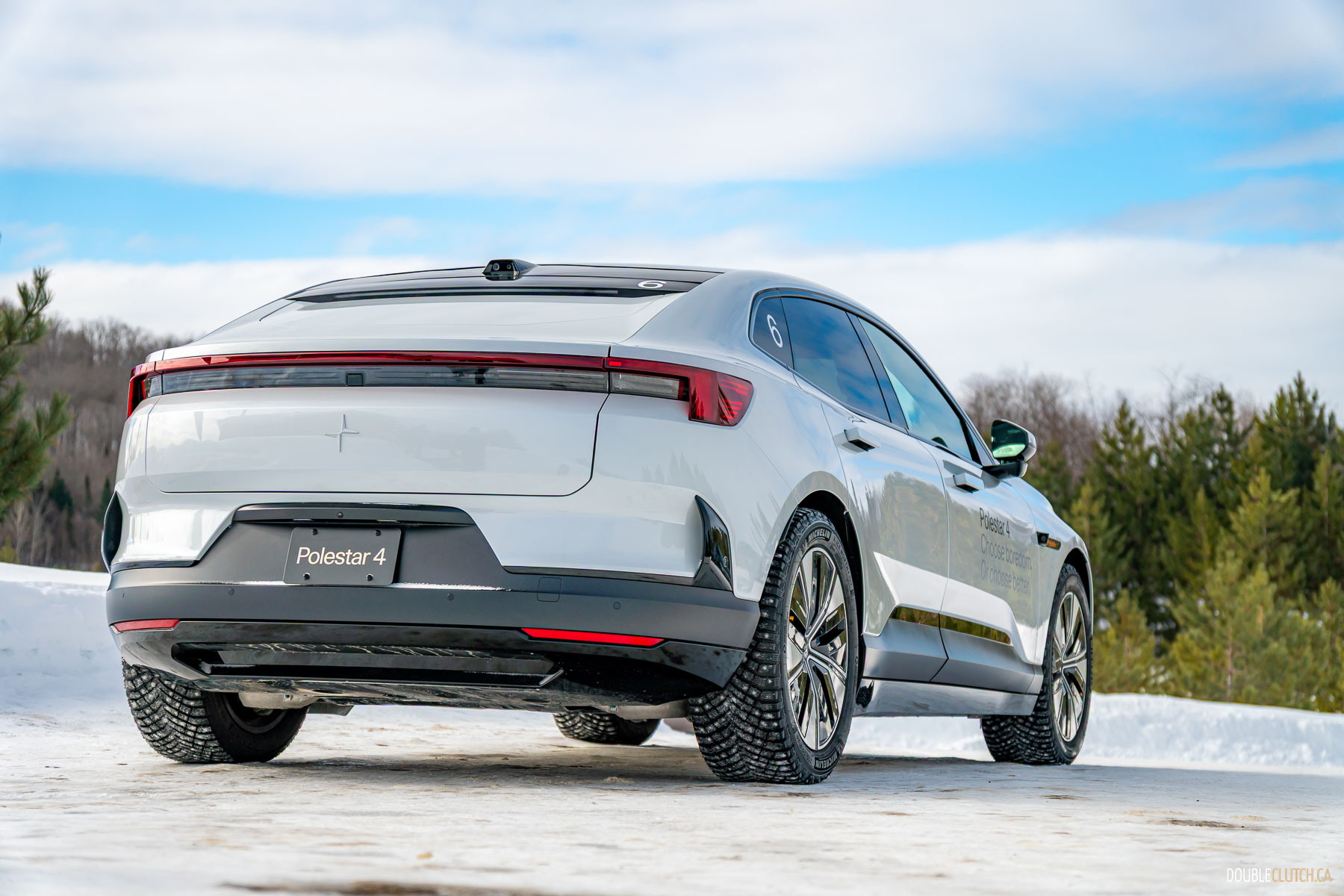
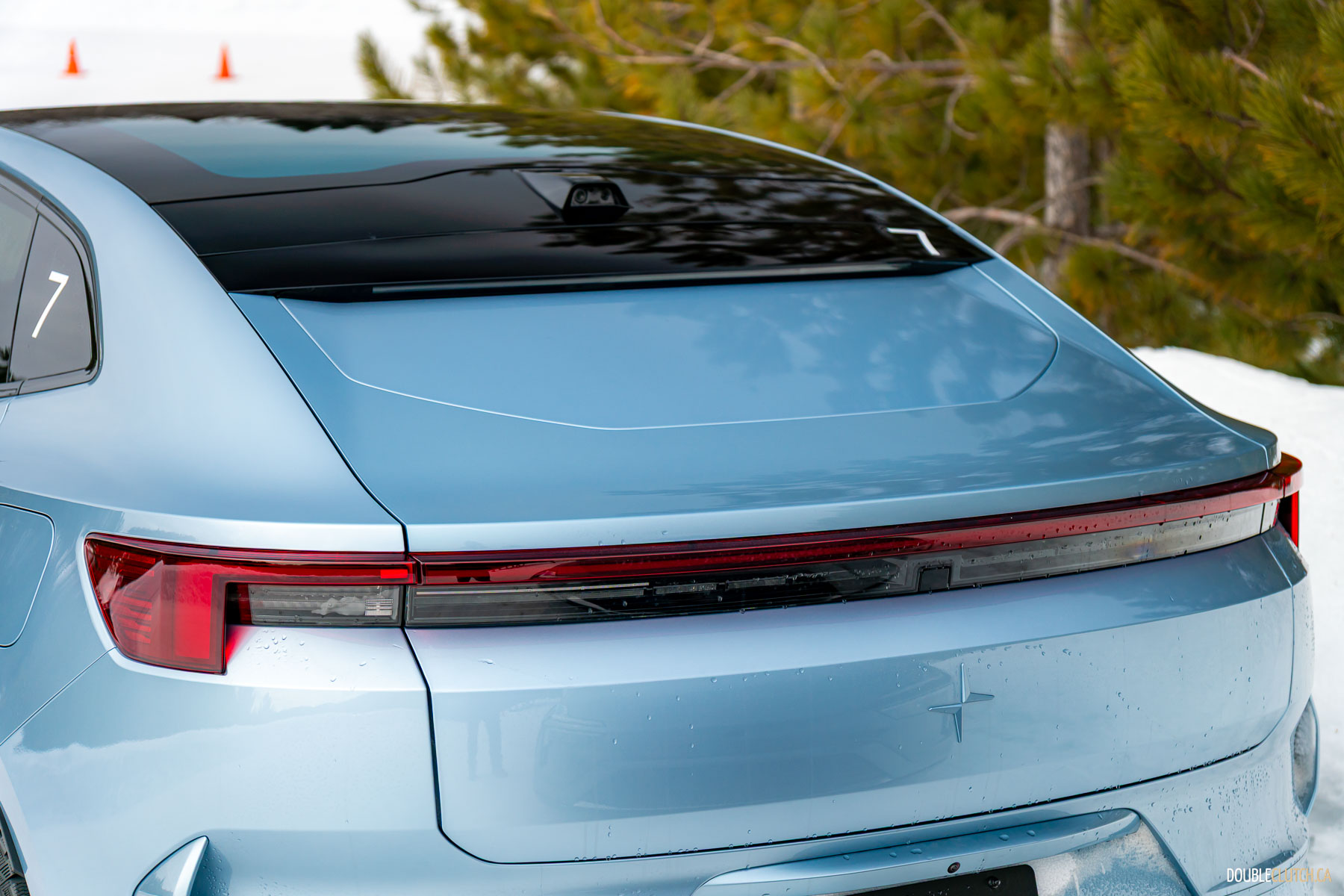
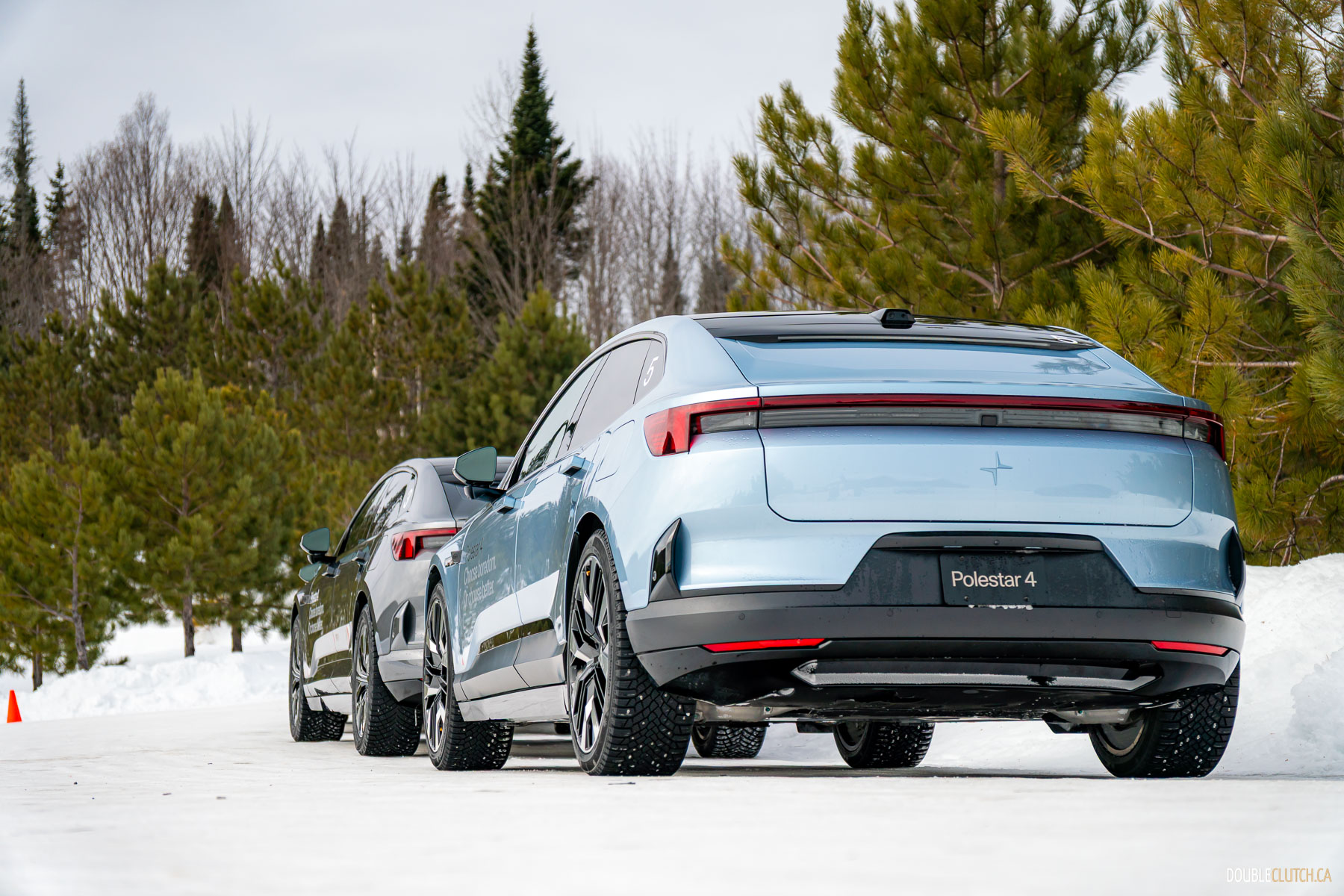
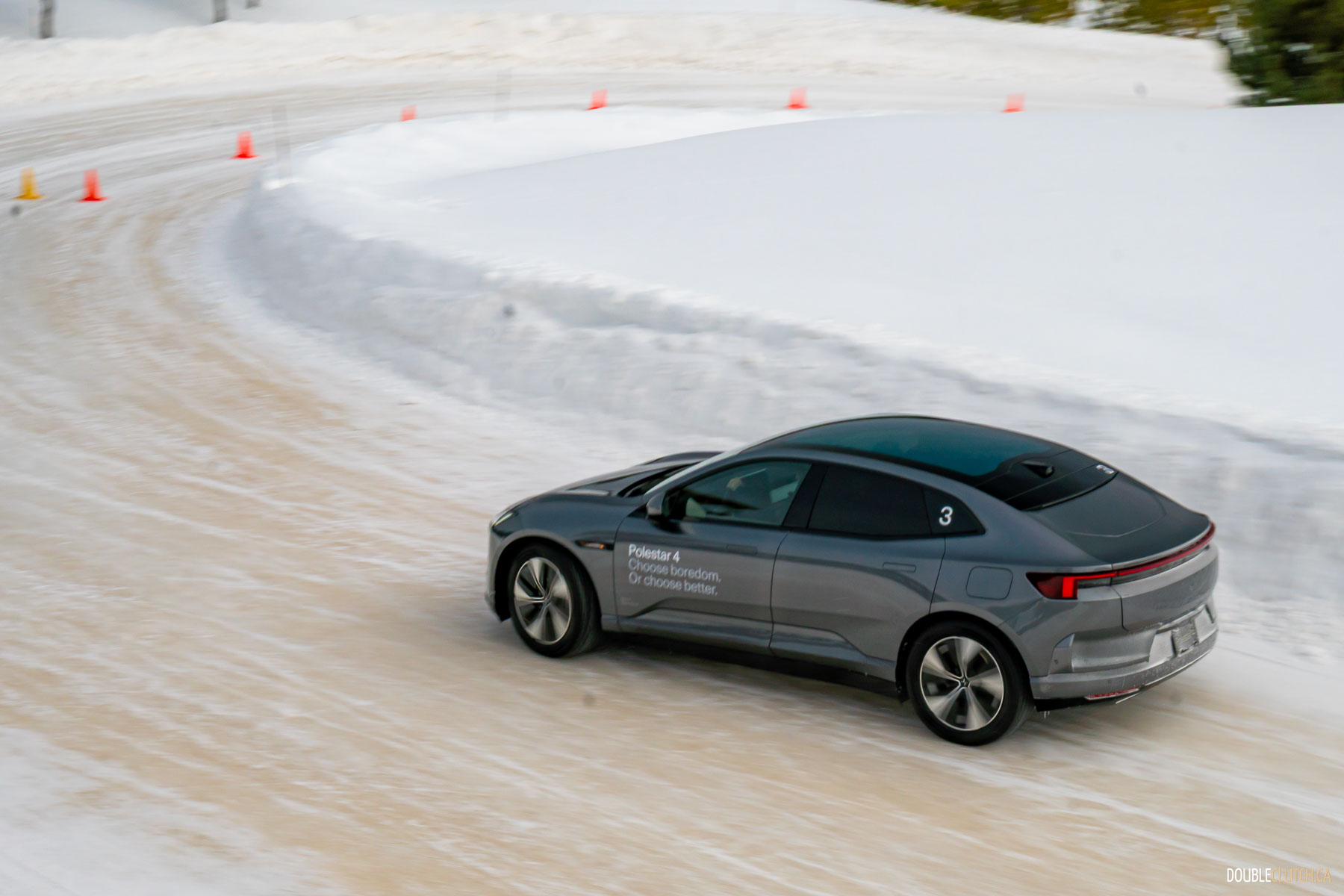
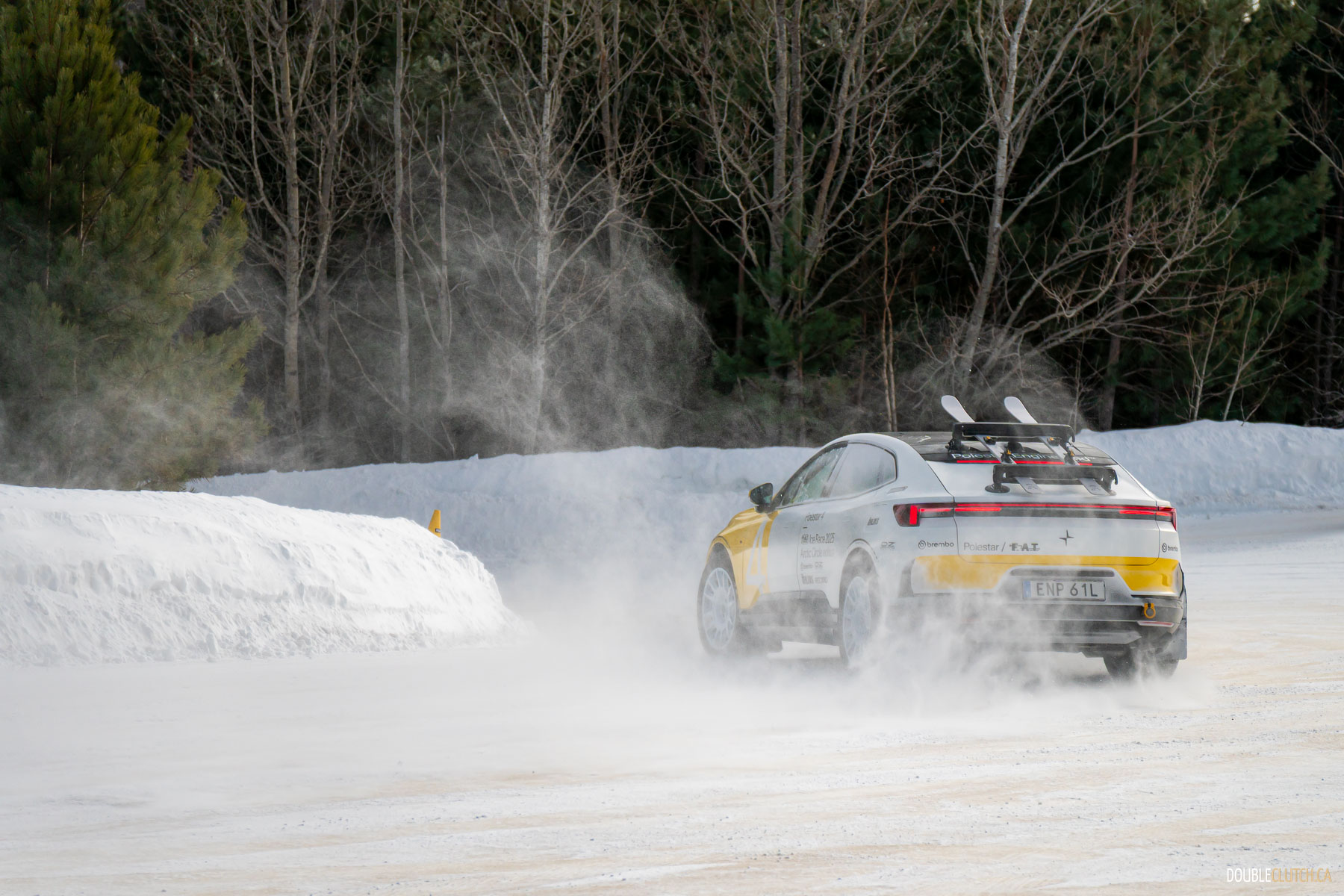
The Polestar 4 – famously or infamously – does not have a rear window. I’m more than a little surprised it made it to production without any glass in the back, but I suppose it’s no different than all the cargo vans running around without windows. They haven’t done this just for the sake of being different; in typical Swedish fashion, there is a very sensible explanation for what might seem so strange.
“We wanted it to have a very fast silhouette… with lightness in the design, no overhanging of the wheels… and a fast A-post and rear window.”
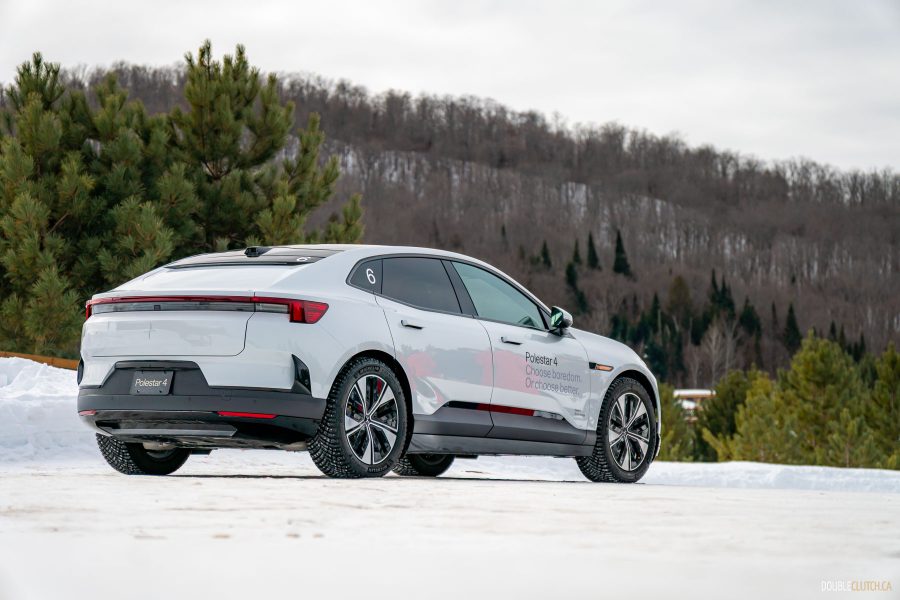
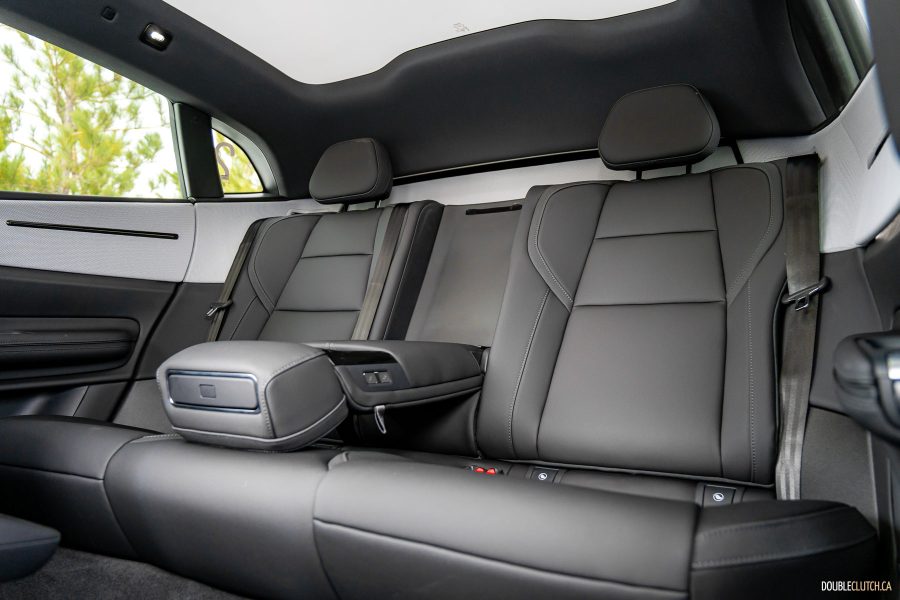
Christian went on to explain that with any coupe-shaped SUV-ish vehicle, the steeply raked rear glass results in the very small usable window and poor visibility. There’s also the more tangible concern of the rear header bar, a crash structure meant to reinforce the cabin in the event of a rollover, which in most conventional shaped SUVs, is positioned between the C-pillars, right behind the rear passengers’ heads. In the case of a coupe-shape, that header bar moves forward, intruding (often significantly) into rear-seat headroom, and hindering rear visibility.
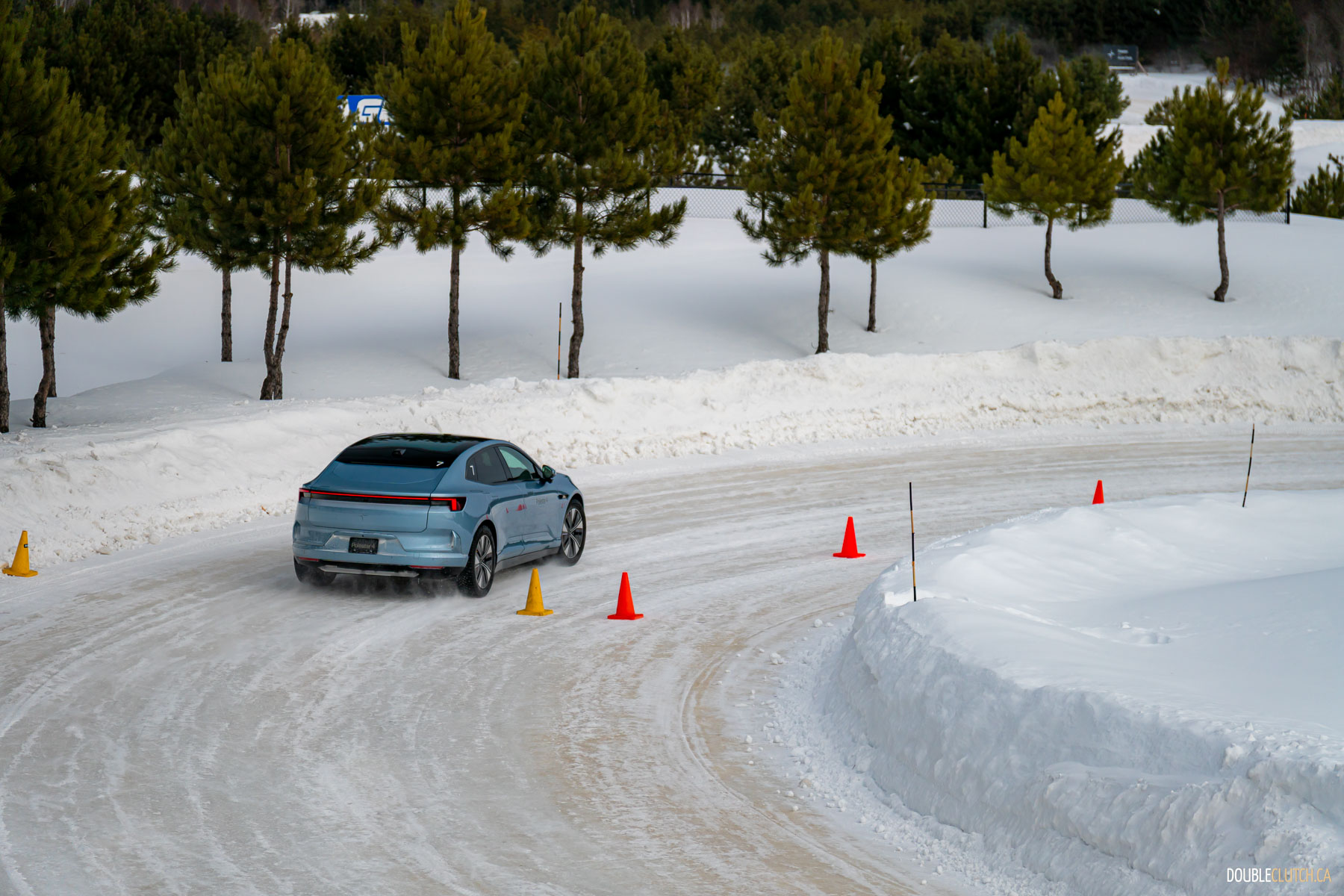
The very simple solution is to eliminate the rear glass altogether; it’s useless anyway. Without having to accommodate for a window, the crash structure can stay rearward, stay intact, and maintain a dramatic, sultry shape. The camera on the rear of the car provides not only a better field of view, but also much better visibility at night (and indeed, the camera and digital mirror combo are so high-resolution as to not be immediately noticeable), and they’ve taken care to ensure the focal length chosen roughly mimics what the human eye would see, so it’s not unnatural.
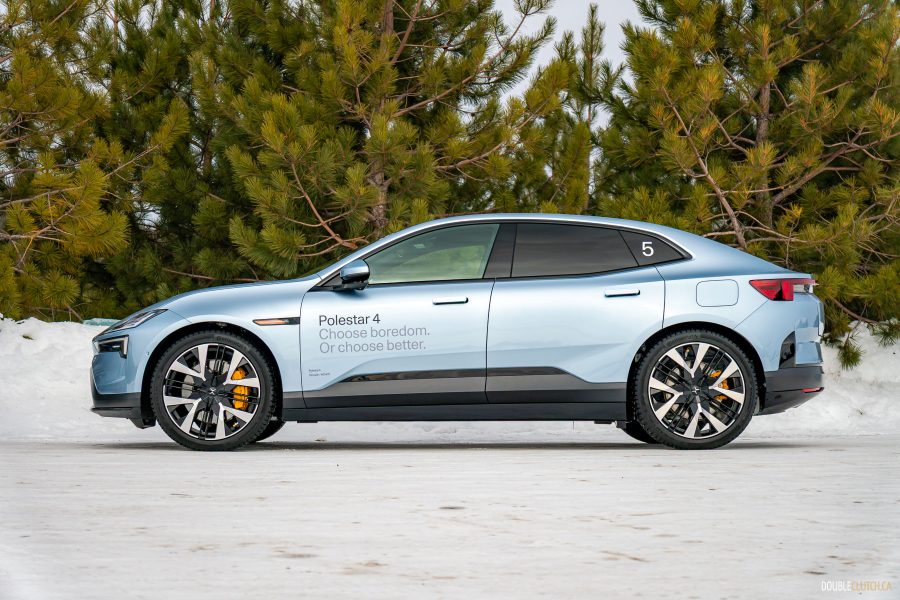
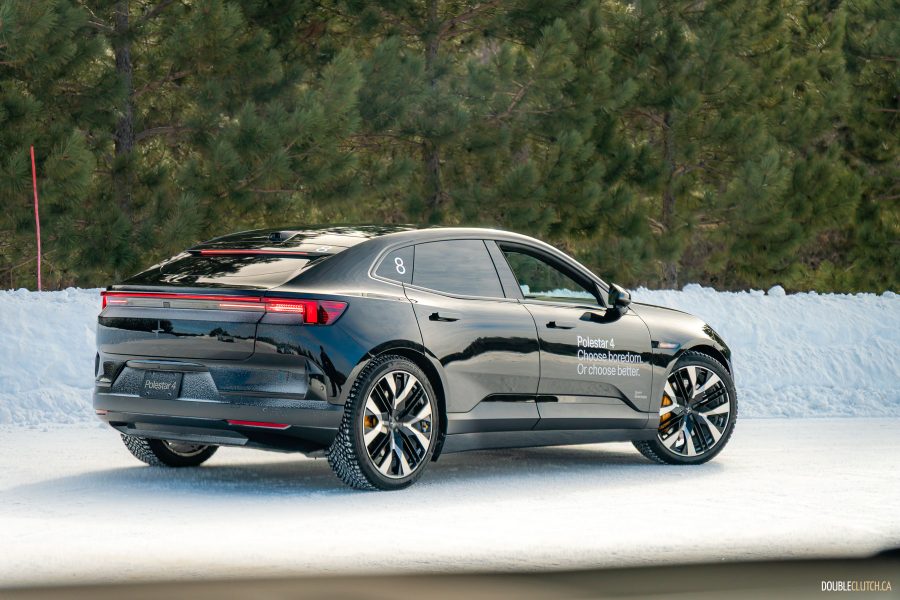
It’s a logic that’s hard to argue with. The upcoming station-wagon variant of the Polestar 4 will have a glass rear window, with the same camera setup, that can be switched between a digital mirror and a real one, and Christian seemed genuinely excited to see “the percentage of how much people use the camera instead of the glass.” There’s a humbleness to it, he recognizes people might stick with what they know, but as an engineer, he’s keen to see real data.
It bears mentioning, the rear camera is ensconced in a shroud, high on the back of the car. In all of Polestar’s testing, keeping the camera clear hasn’t been an issue, and in a whole day of drifting on snow and ice, where the backs of the cars got progressively whiter over the course of the day, the rear cameras stayed clear.
The other elephant – cold weather, range and charging
It wasn’t quite Arctic Circle frigid, but it was well below freezing for this event. Electric vehicles are known to struggle in cold weather. Electric vehicles are also known to struggle under sustained high load, like towing, or doing fast donuts for minutes at a time to learn controlled drifting. These Polestar 4 cars, with an estimated 451 kilometers of range, did not struggle. My car started the day with just under eighty percent, and wrapped up just over fifty.
Polestar did not use a drop of fuel for this whole event. The shuttles to and from the airport, hotel, and track were Polestar 3s and 4s, which also didn’t struggle with the long jaunts. They even used a Polestar 3 on a Montreal-based dcbel charger to power the final night’s festivities.
The Drive
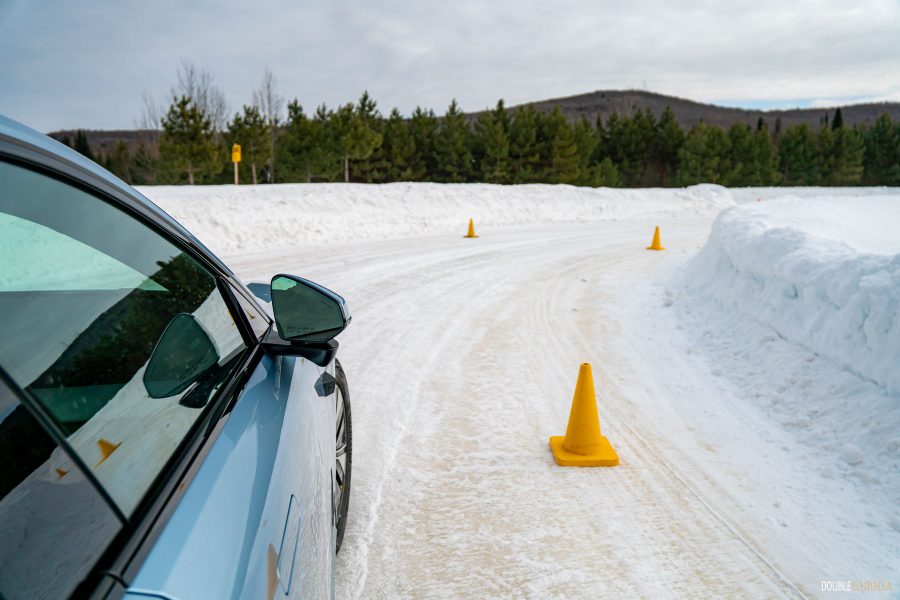
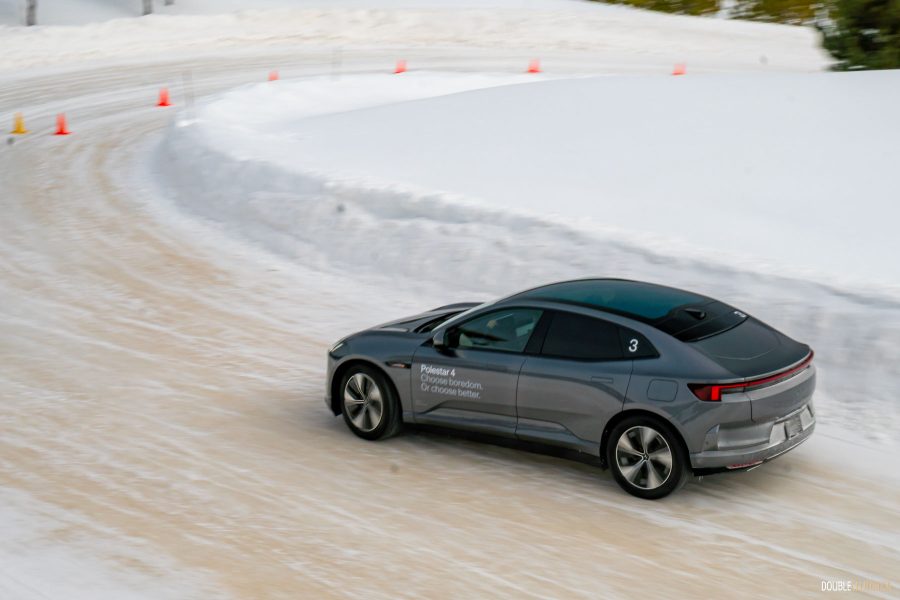
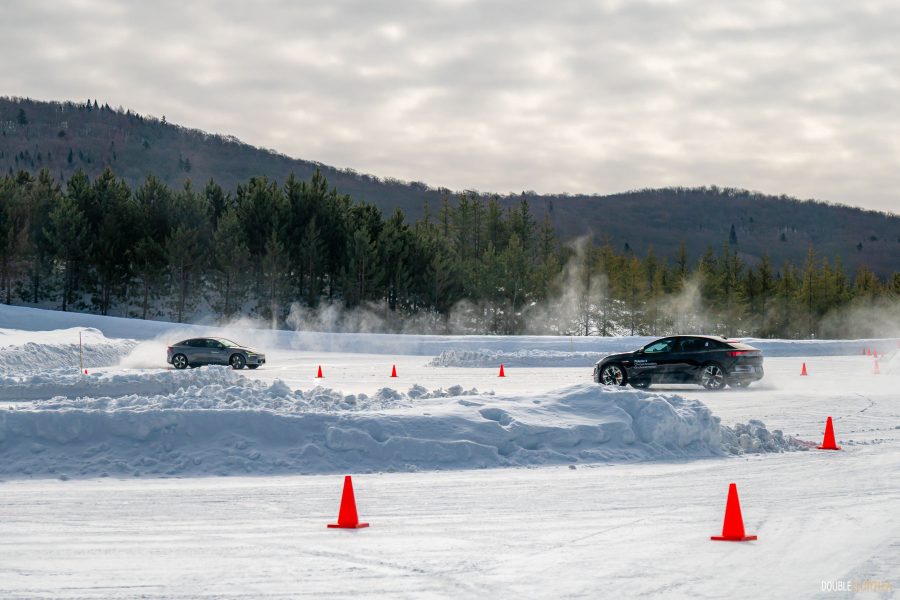
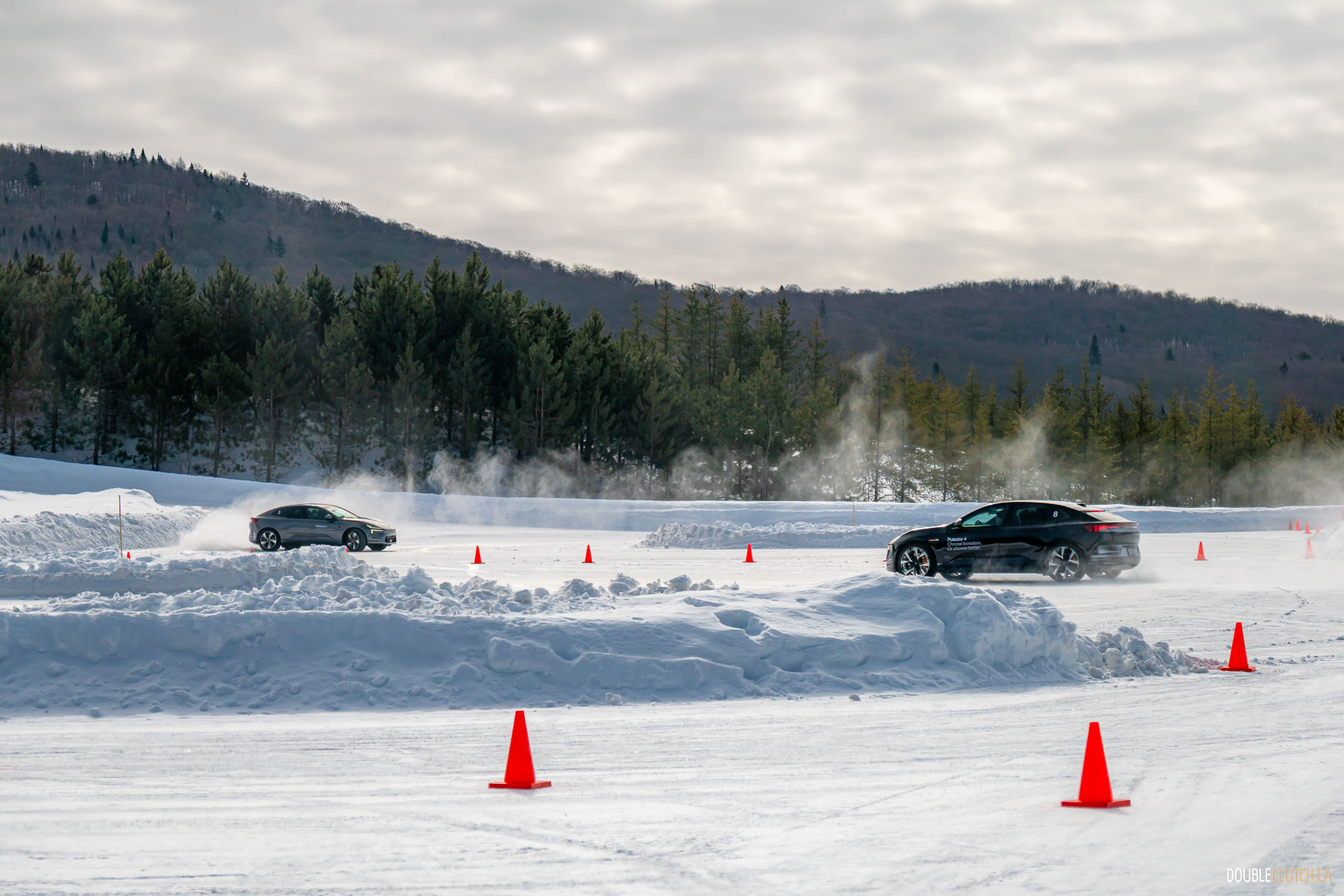
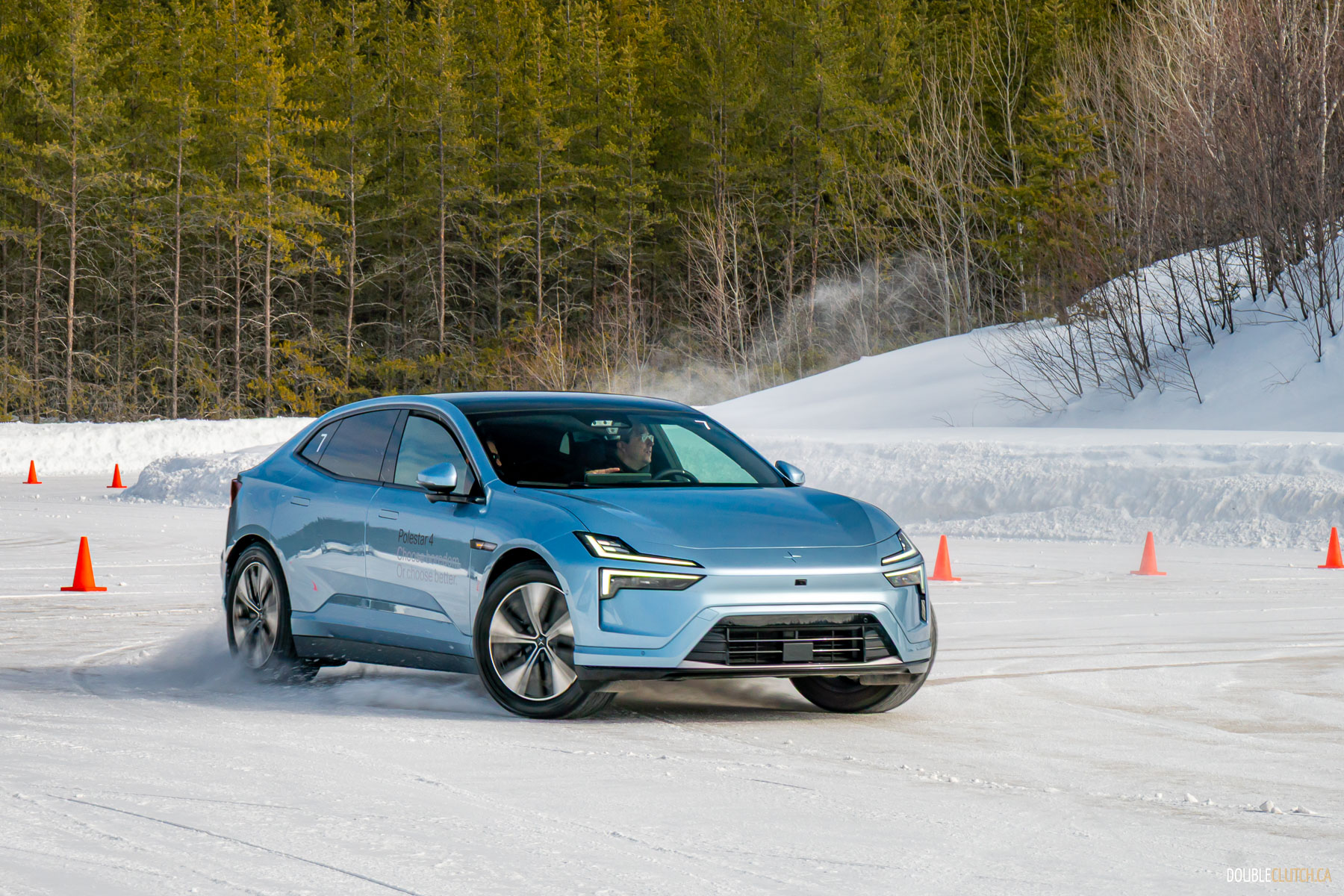
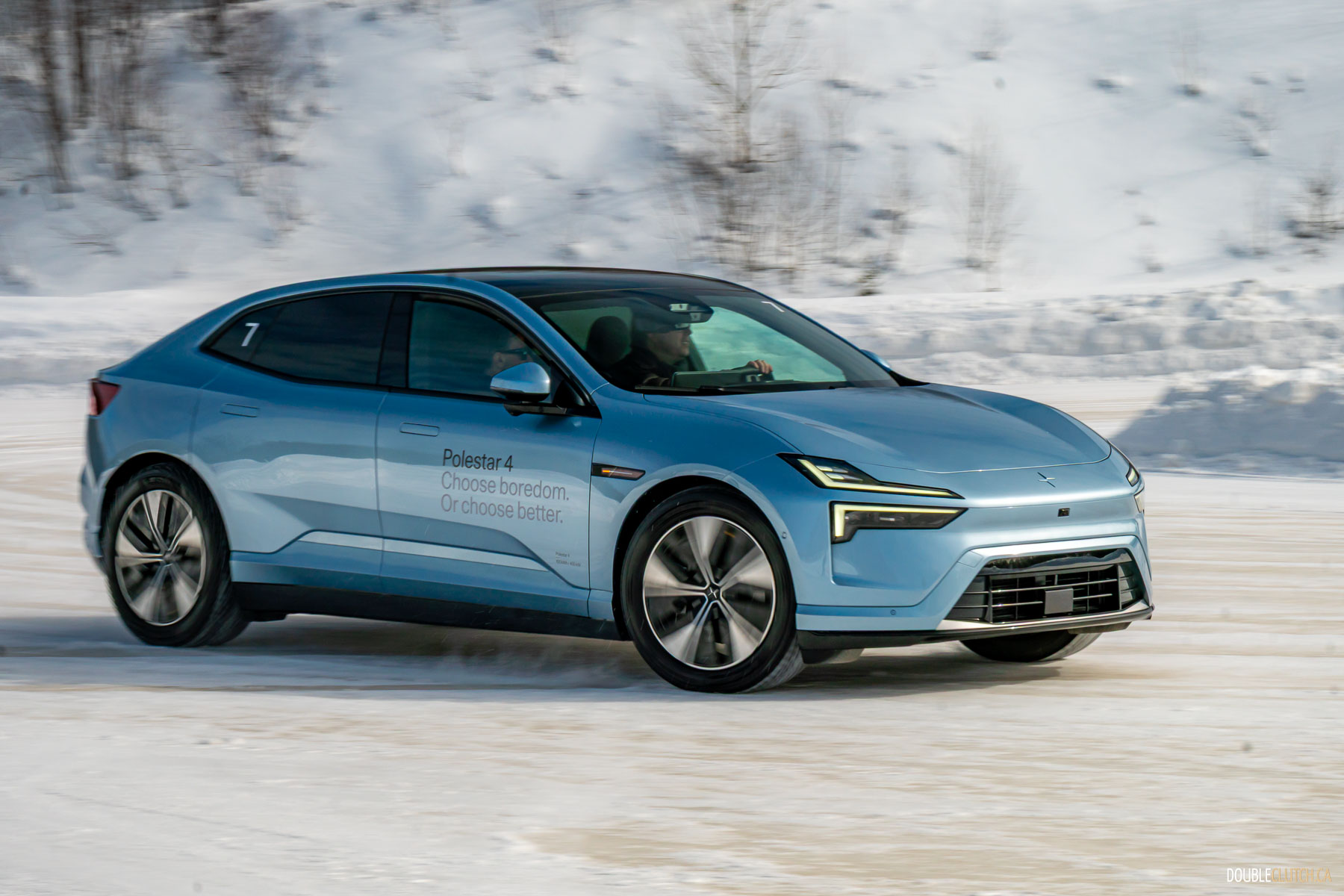
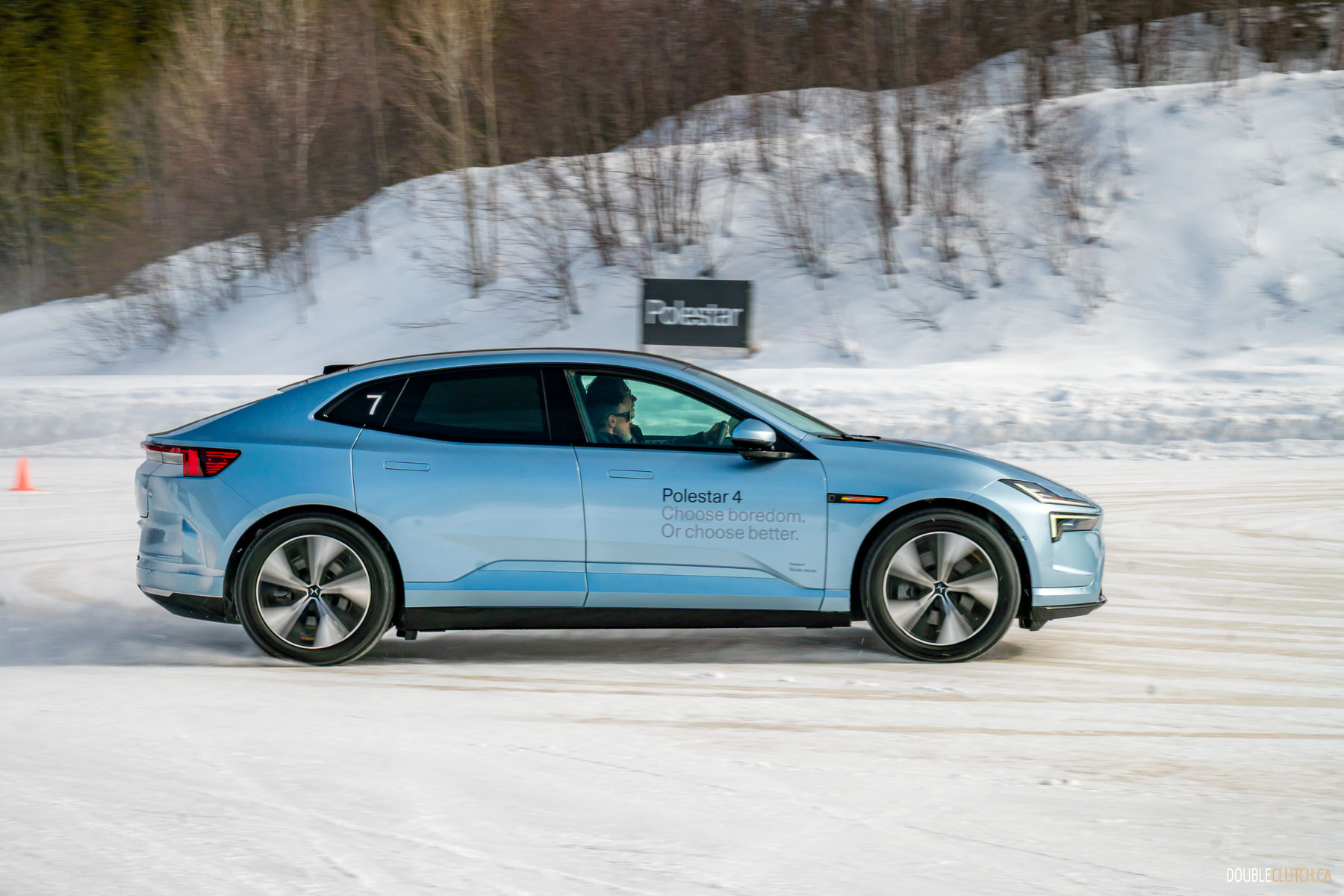
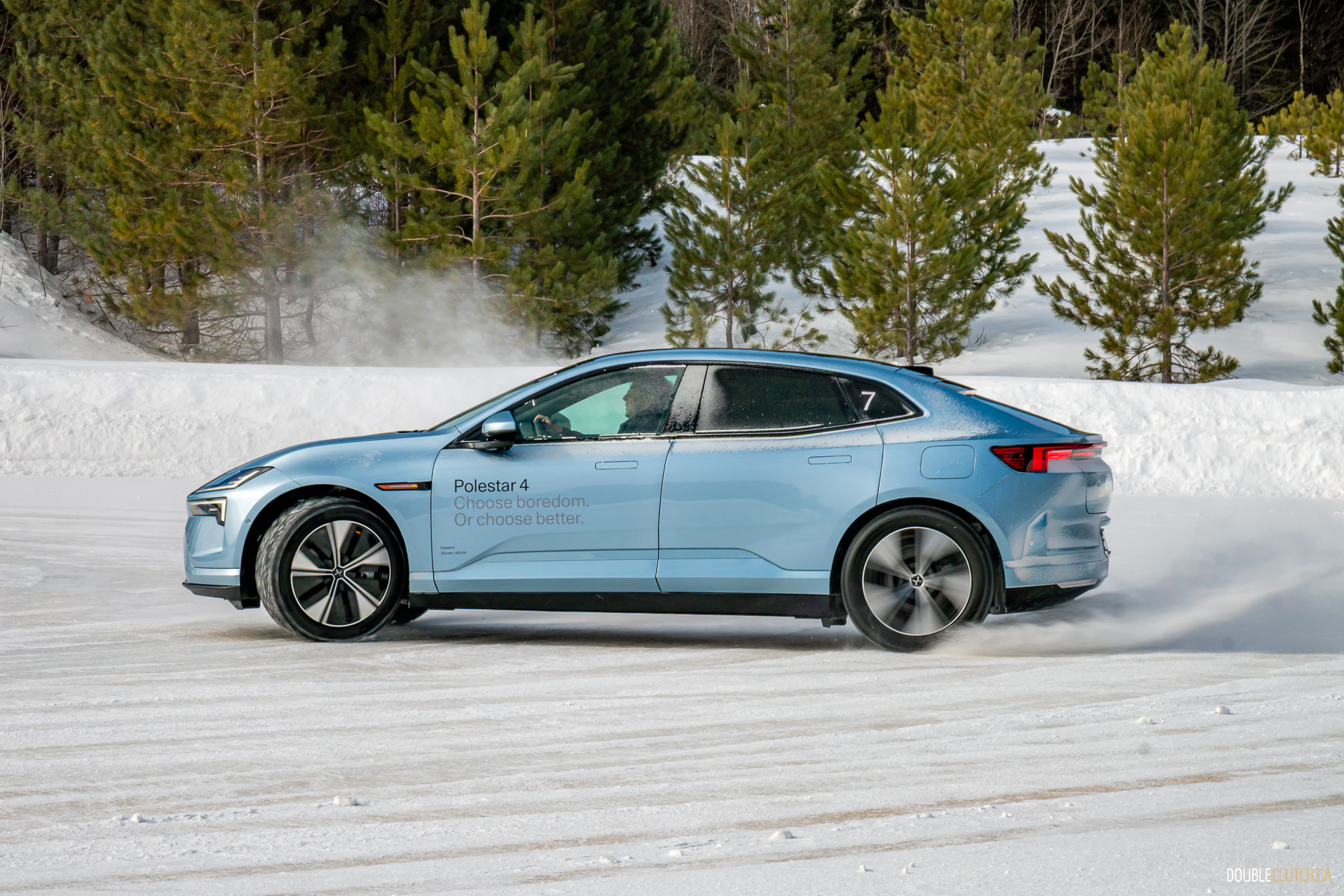
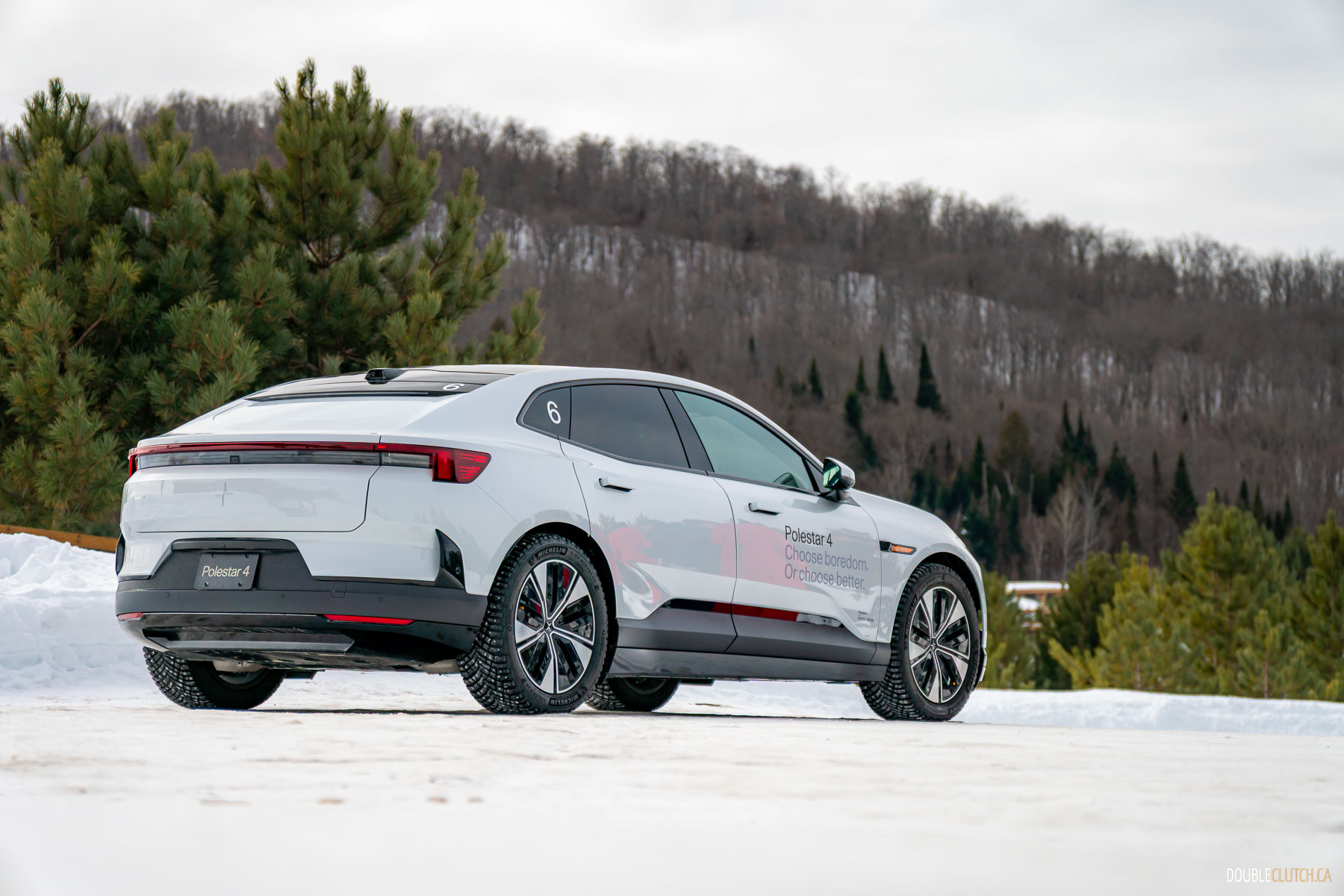
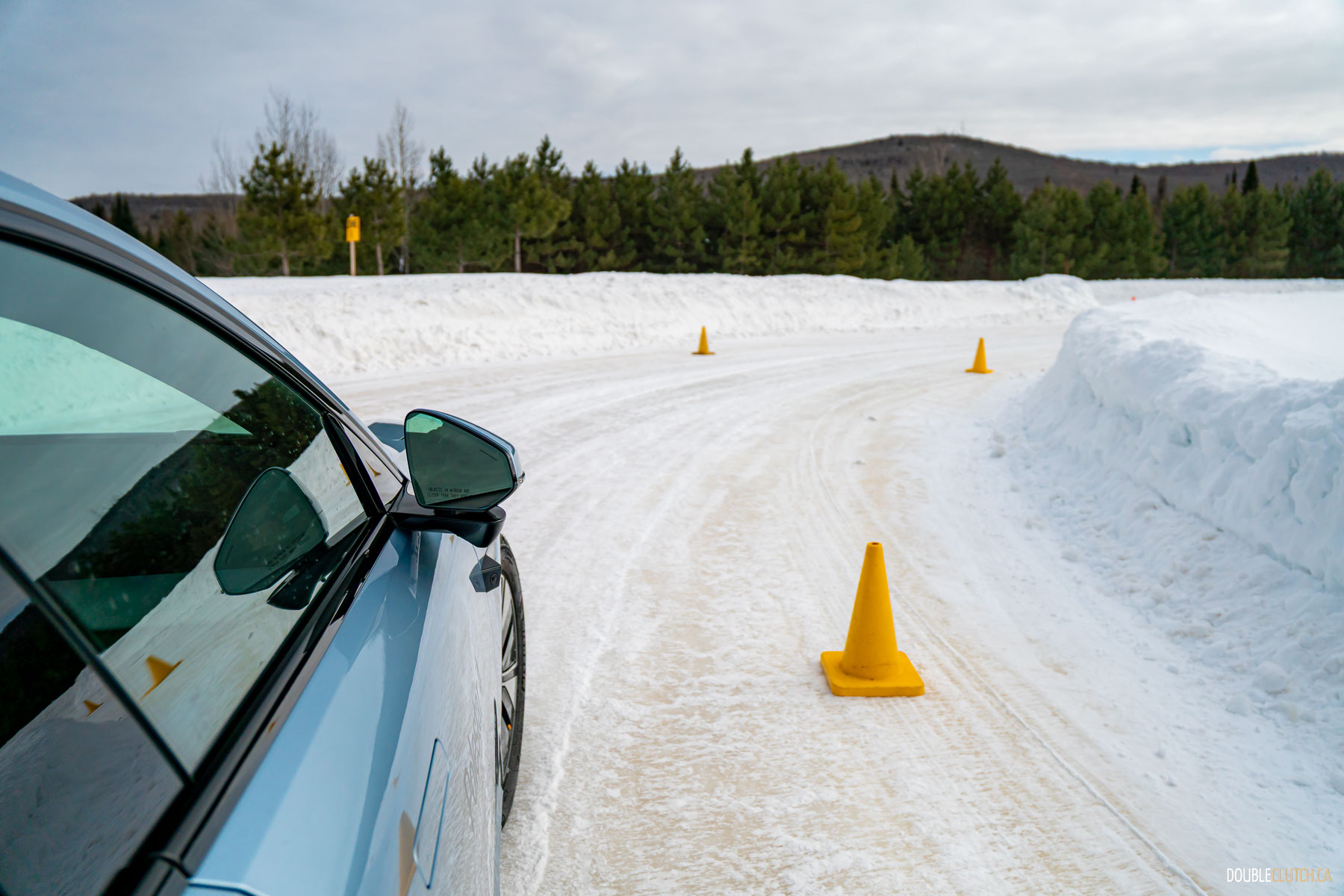
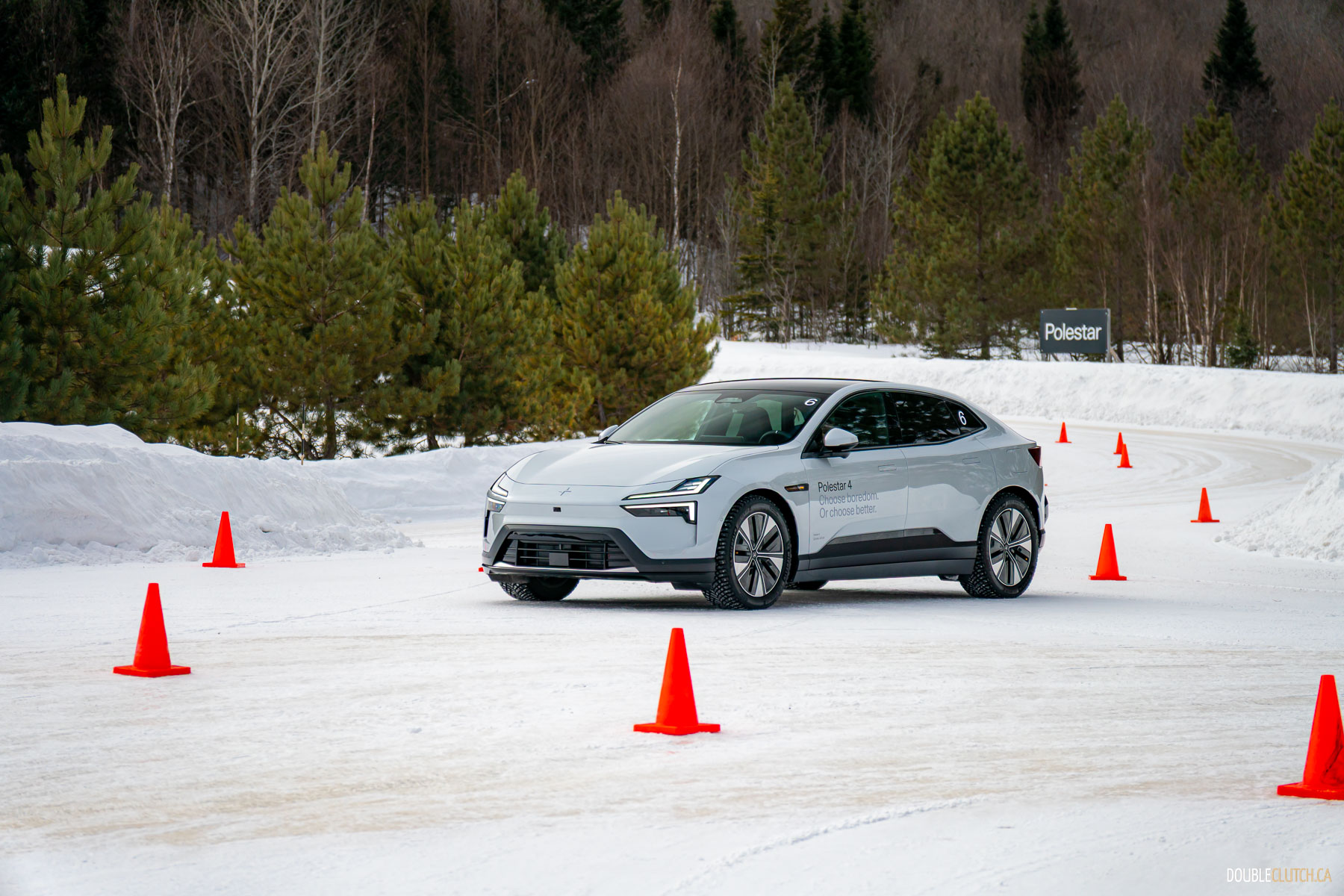
There were a number of different modules set up over the course of the day, like the aforementioned Scandinavian Flick course, and the ice skidpads, along with slalom courses and undulating “road courses” of polished ice. All of our cars were fitted with studded tires, so they could really rip into the ice, creating a unique feeling of strong lateral grip, but soft transitionary traction, as it was still almost entirely ice. The Polestar 4 cars felt right at home.
It was a curious sensation that threw almost all of us off at first, to be hustling a car, often sideways, in silence. Without the auditory feedback of an engine to rev out, you’re left operating almost entirely by feel alone, which seems unnatural at first, but ends up coming off as a very holistic way of experiencing the extremes of car control, left to rely on only the tactile feel that everyone bemoans is lost these days. The only auditory feedback came from cracking a window and listening to the studded tires tear into the slick surface.
“The transition between having grip and not having grip is very important, so that normal people can enjoy it… it won’t bite you.”
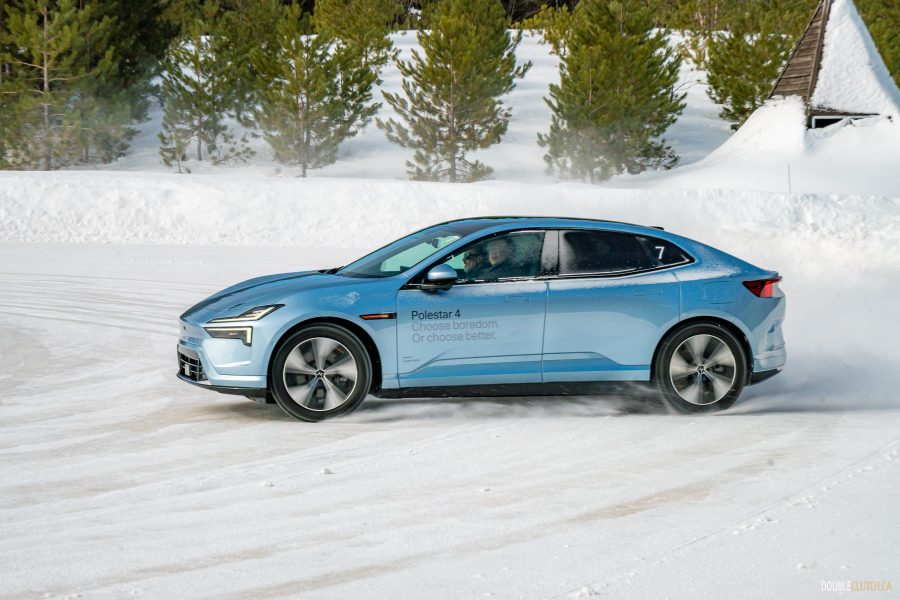
This was perhaps the most striking thing about the Polestar 4 – is that it became easy to forget that we were driving on polished ice. It was easy to feel when the front and/or rear ends were losing traction, and it quickly became second nature to trust the cars’ all-wheel-drive and traction management to maintain the reigns without being overbearing or awkward.
There is no way to fully defeat the traction and stability control on these cars, but they will allow a lot of leeway before intervening, and it’s not obvious when they do, unless you’re really overcooking it – even then, it won’t cut off anything you’re trying to do. The “flick” maneuver and skidpads excercises wouldn’t have worked otherwise. It’s well balanced, nimble, and easy to explore. It’s almost like there’s a sports car underneath all this sensibility.
But what about that rally car?
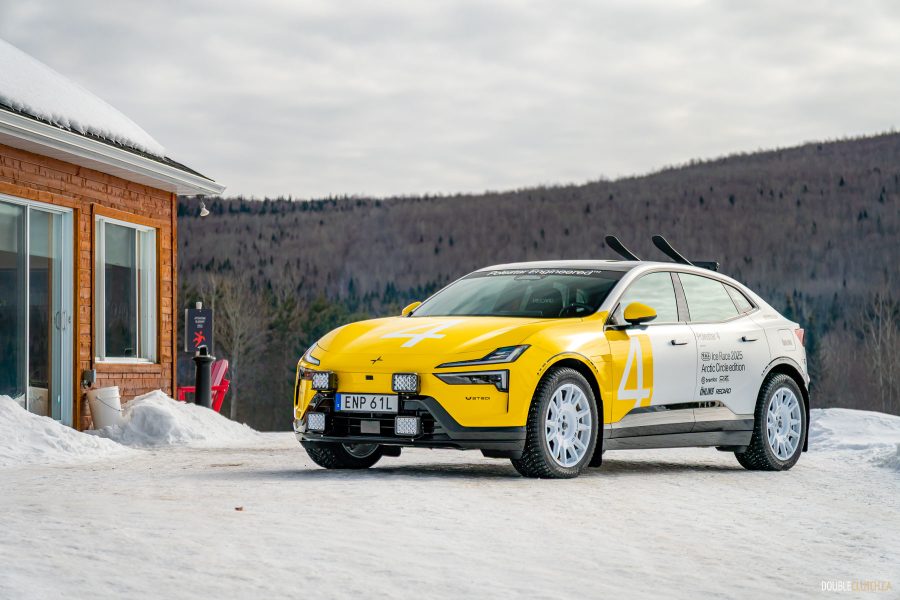
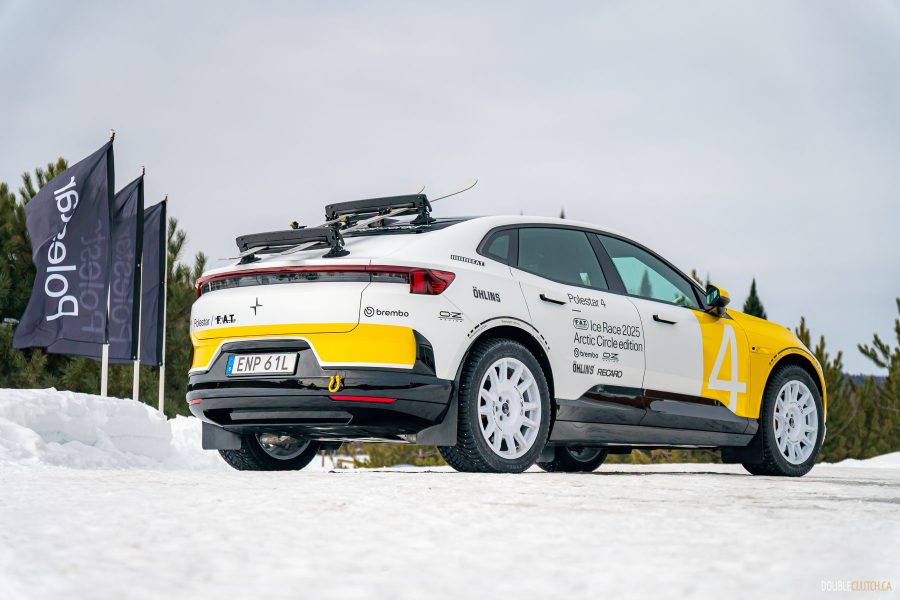
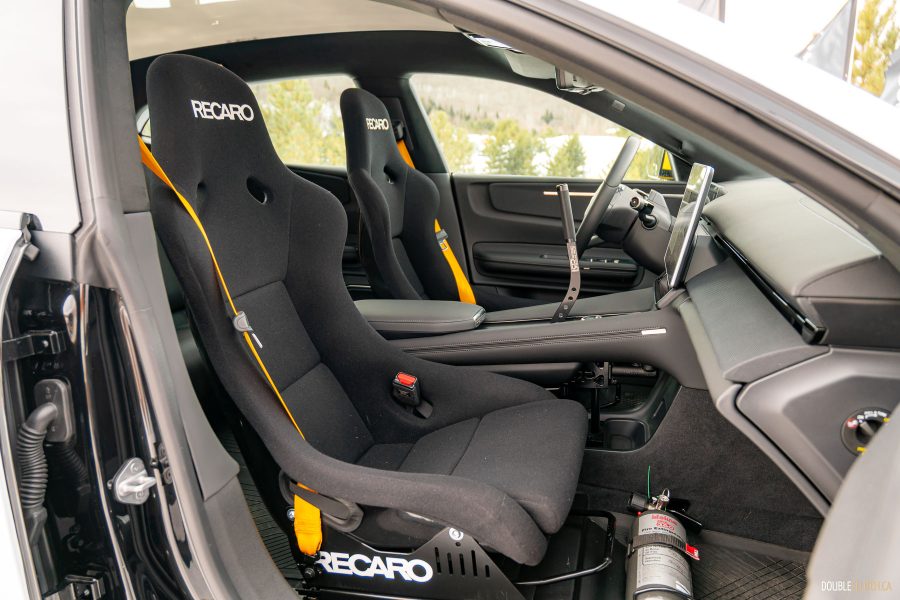
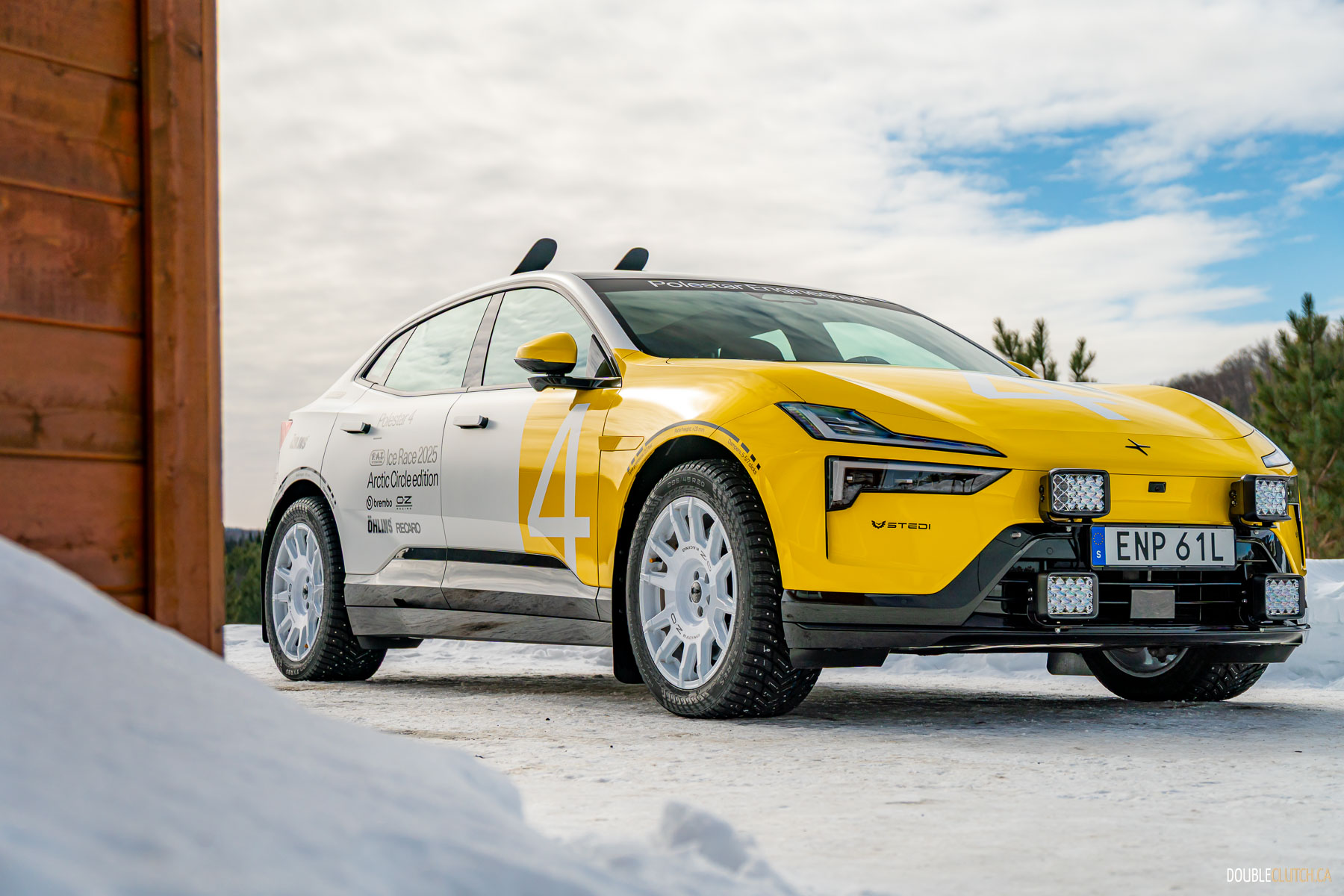
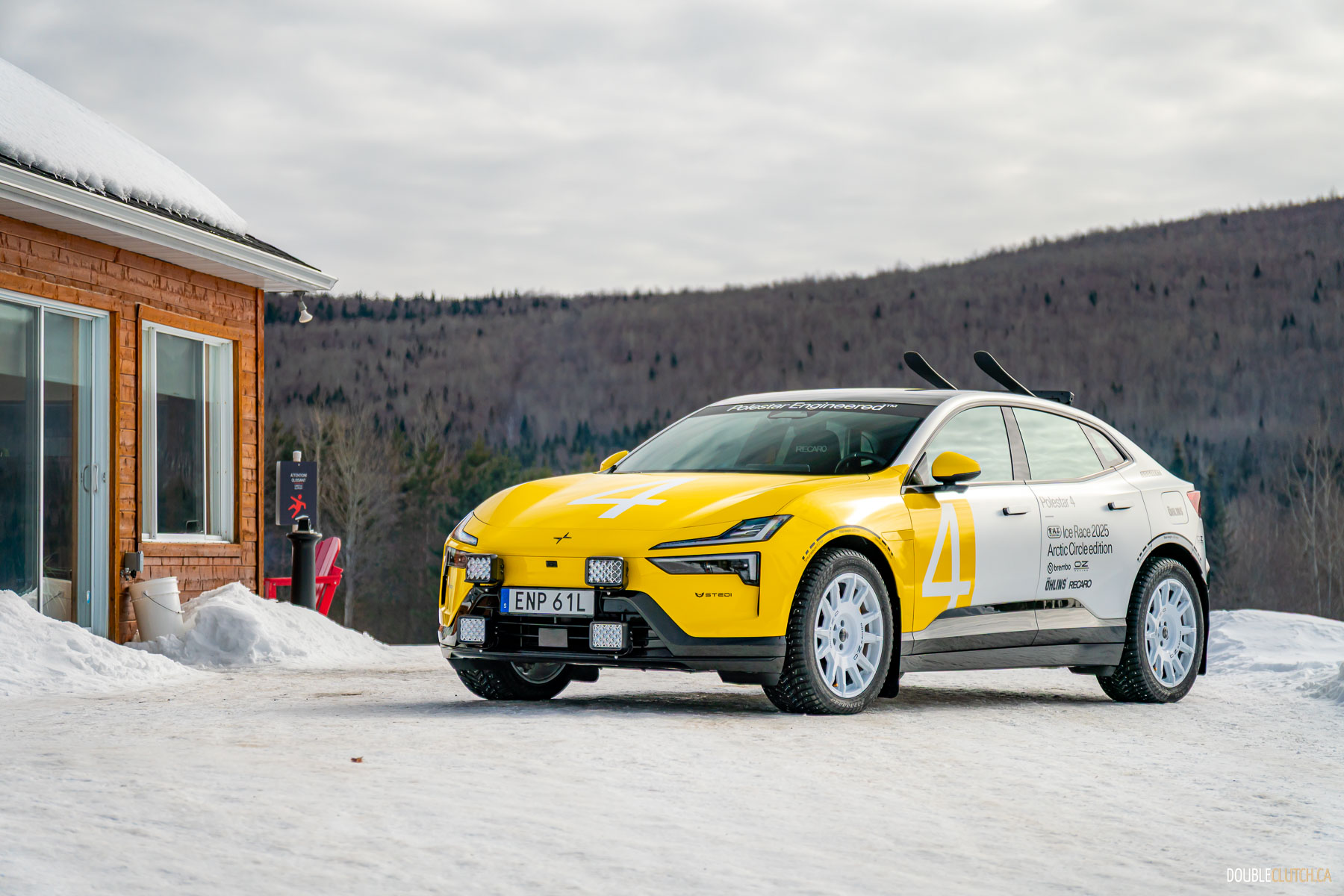
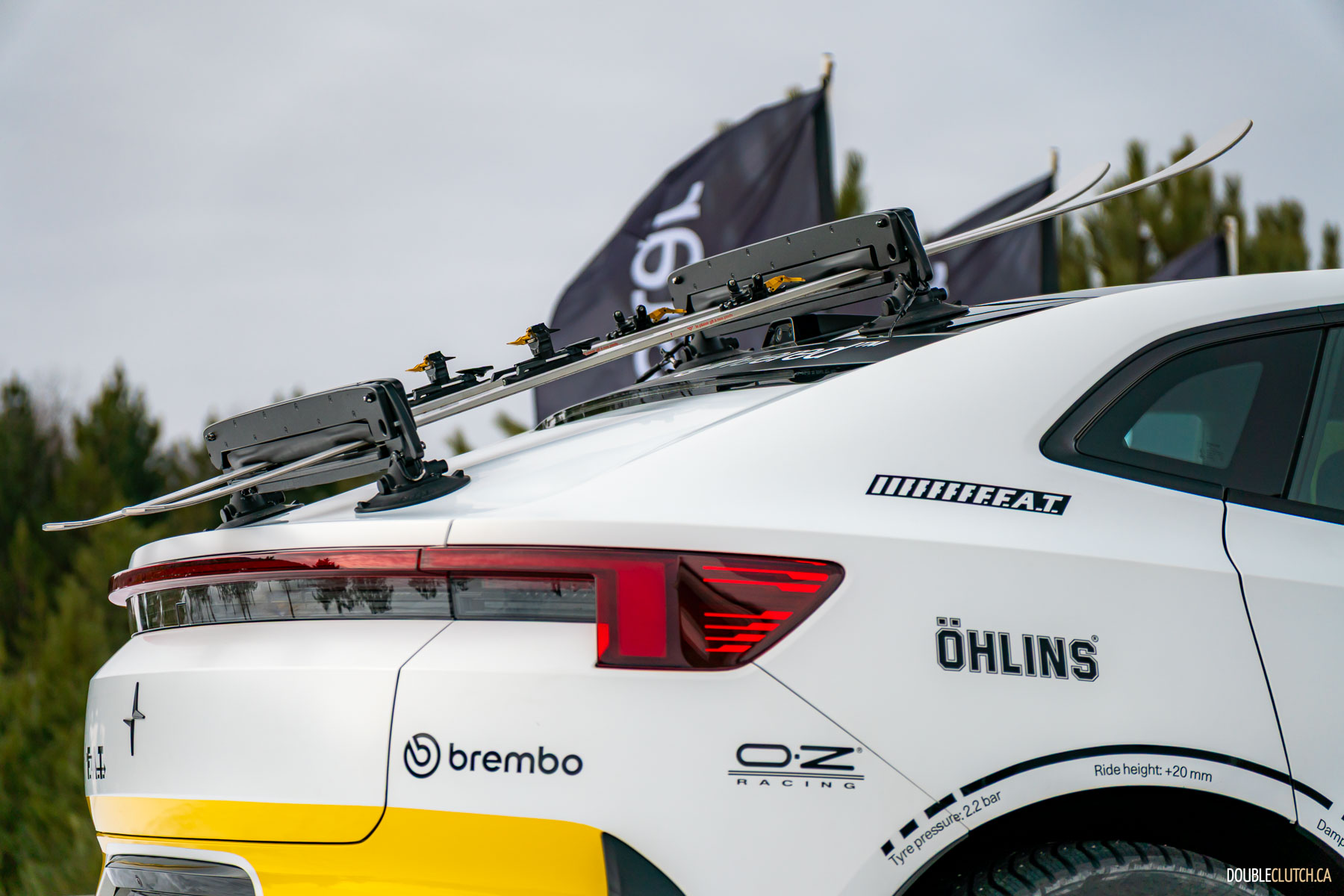
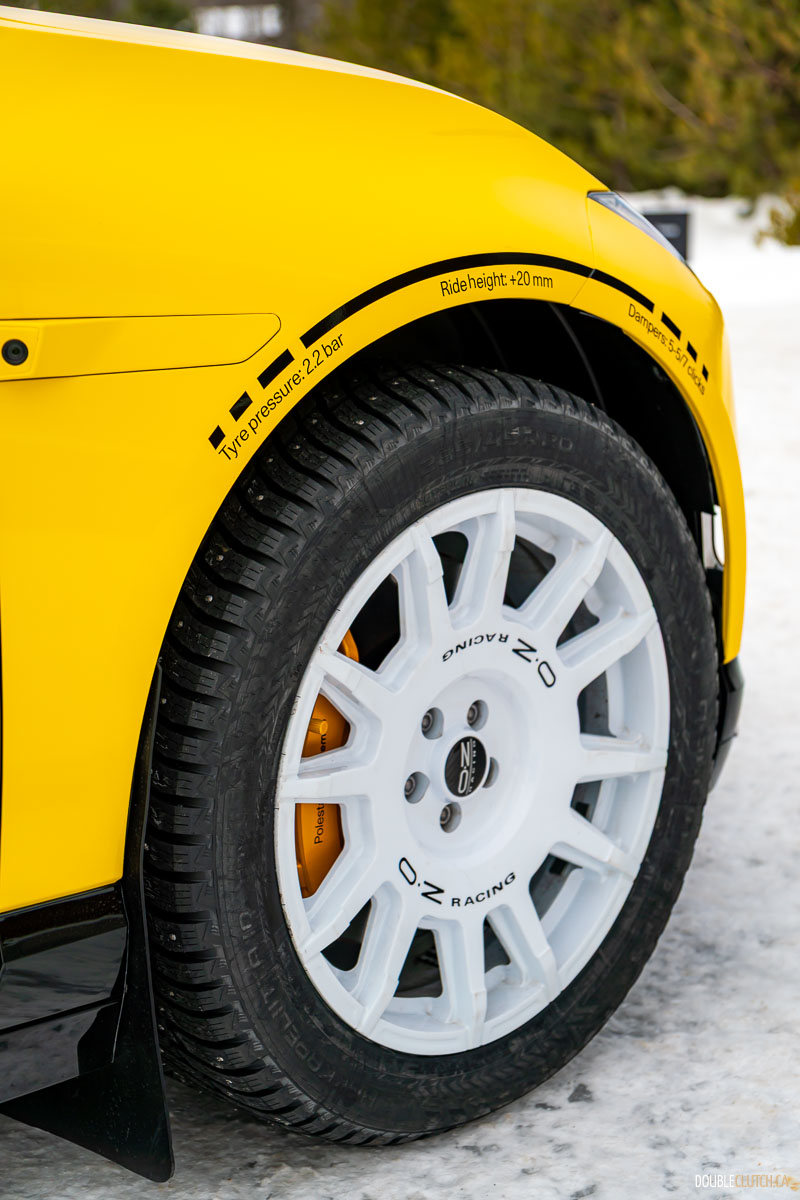
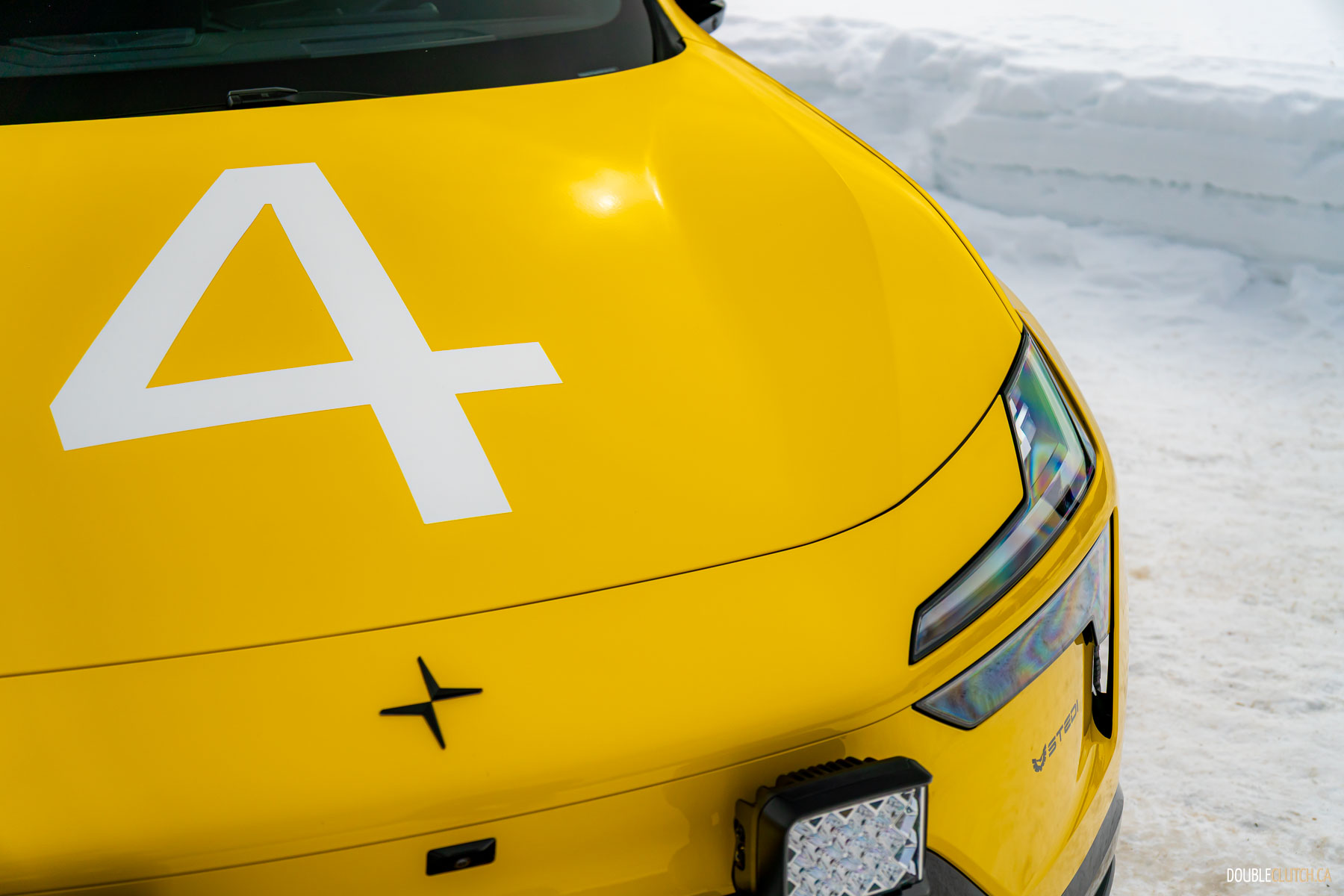
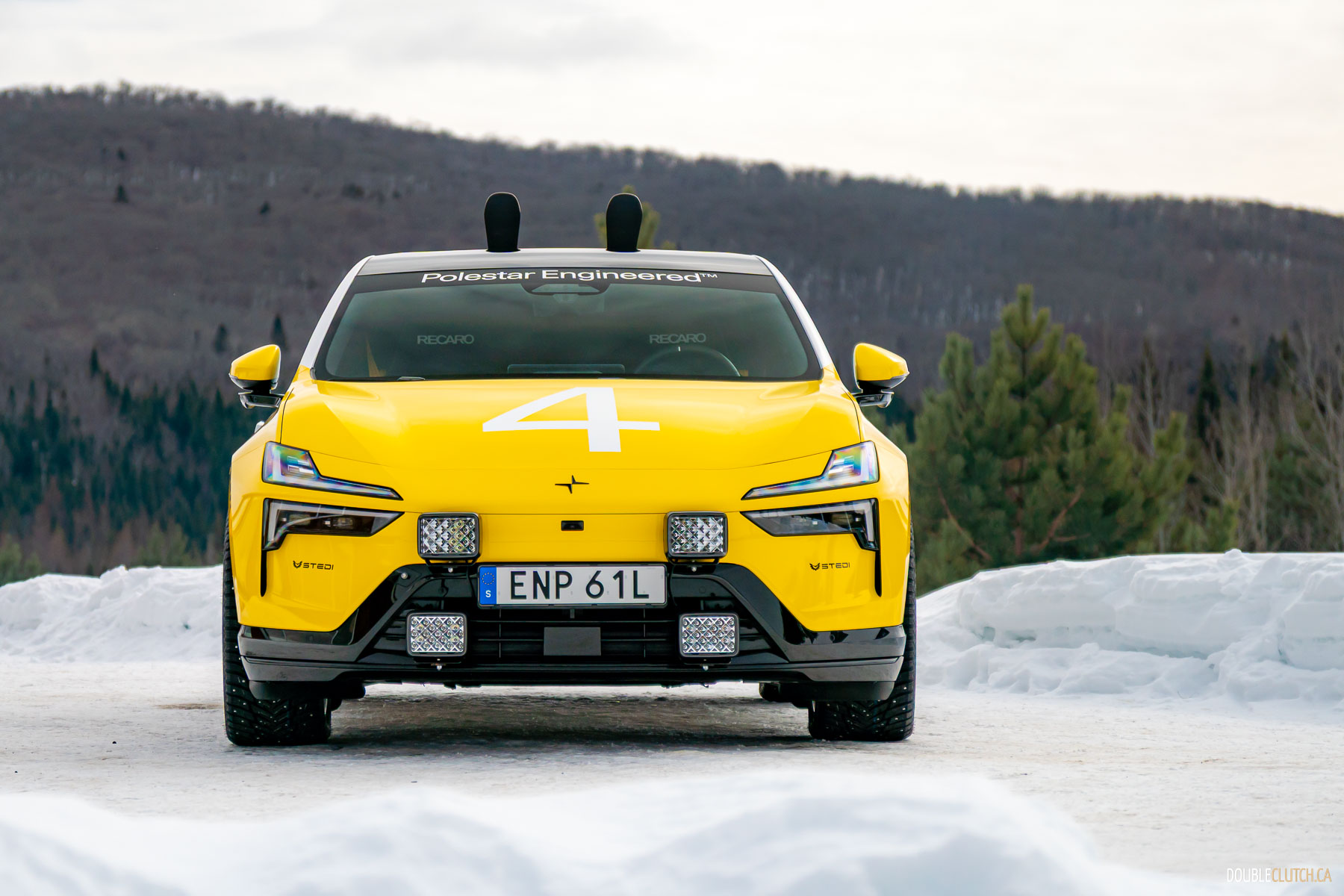
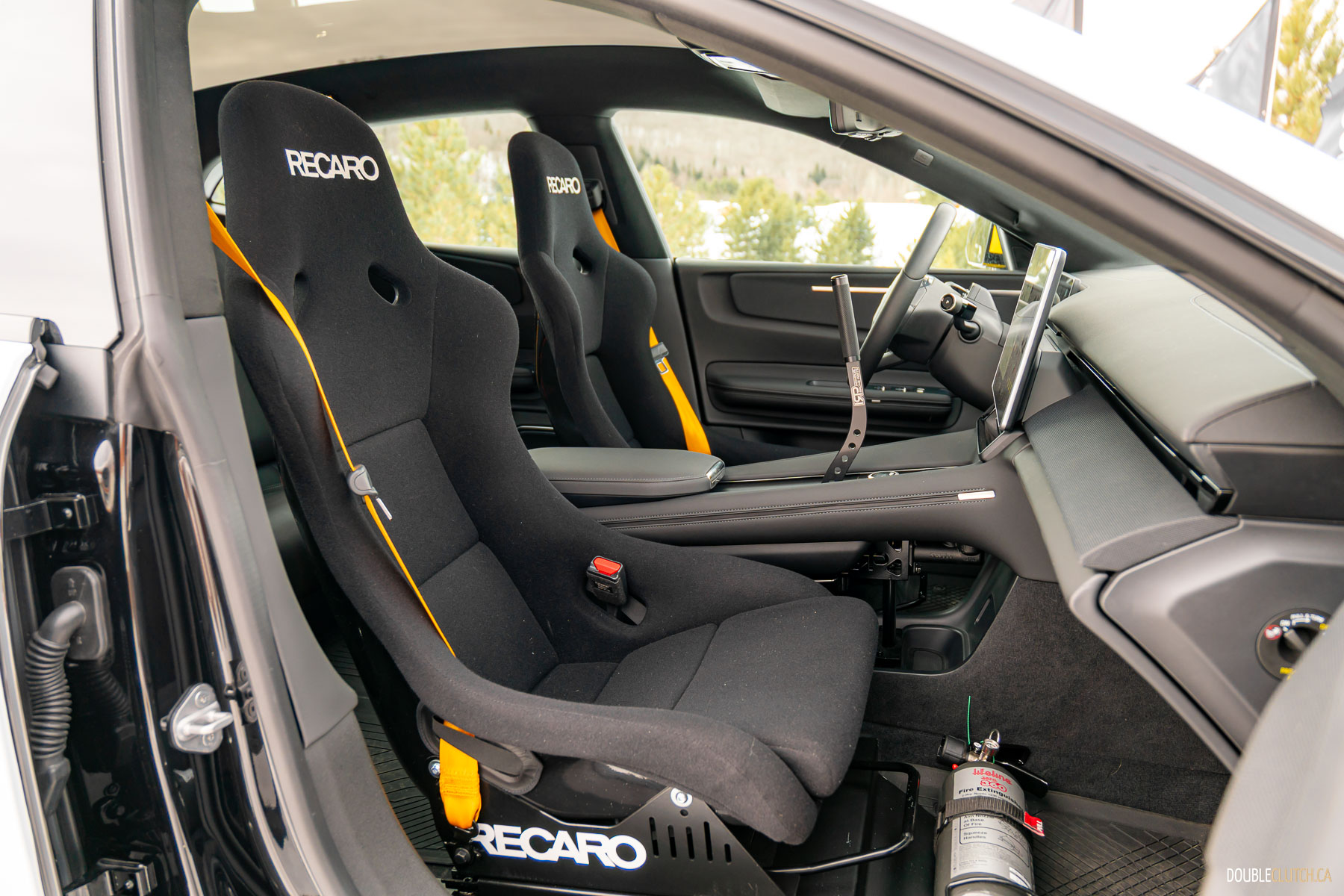
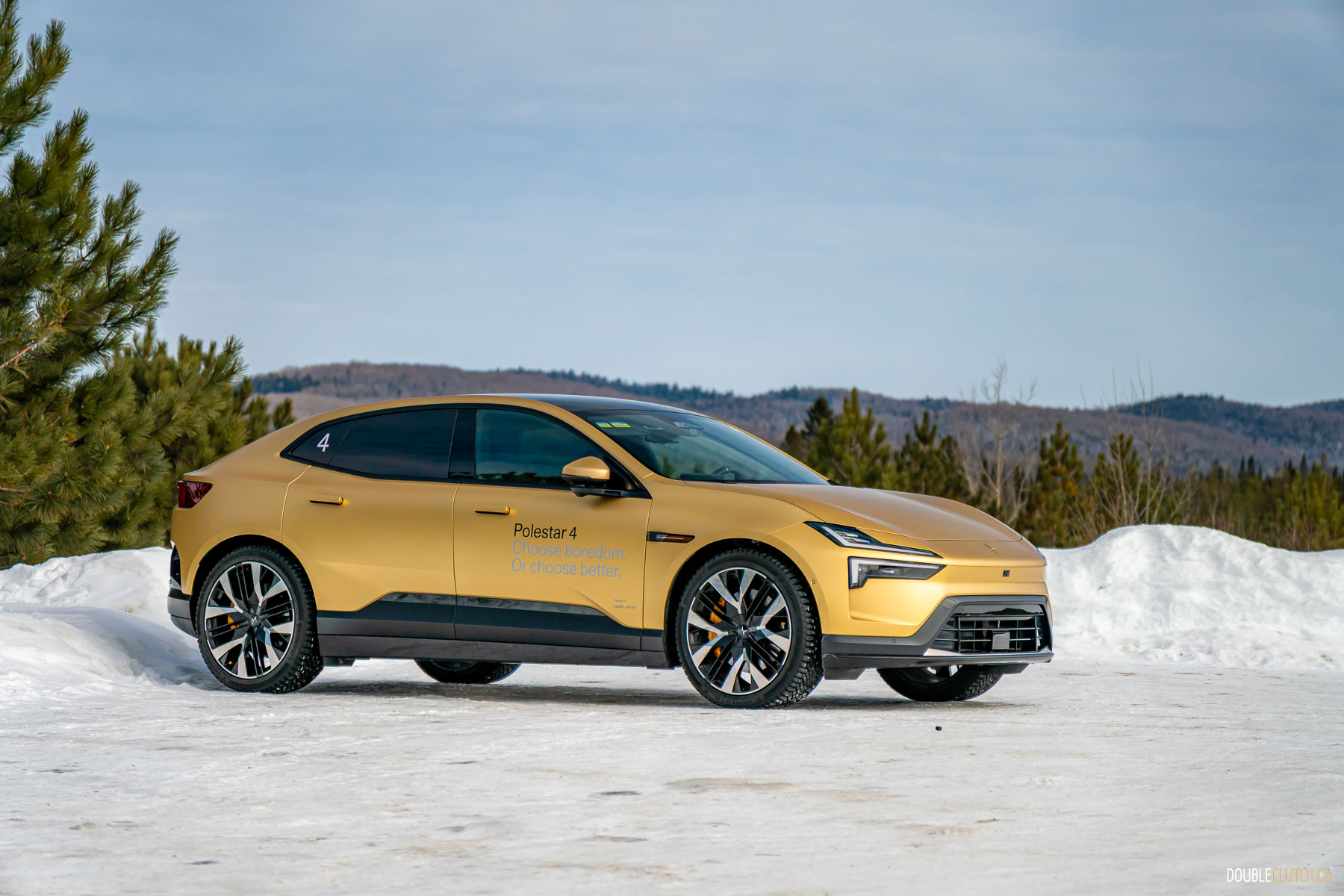
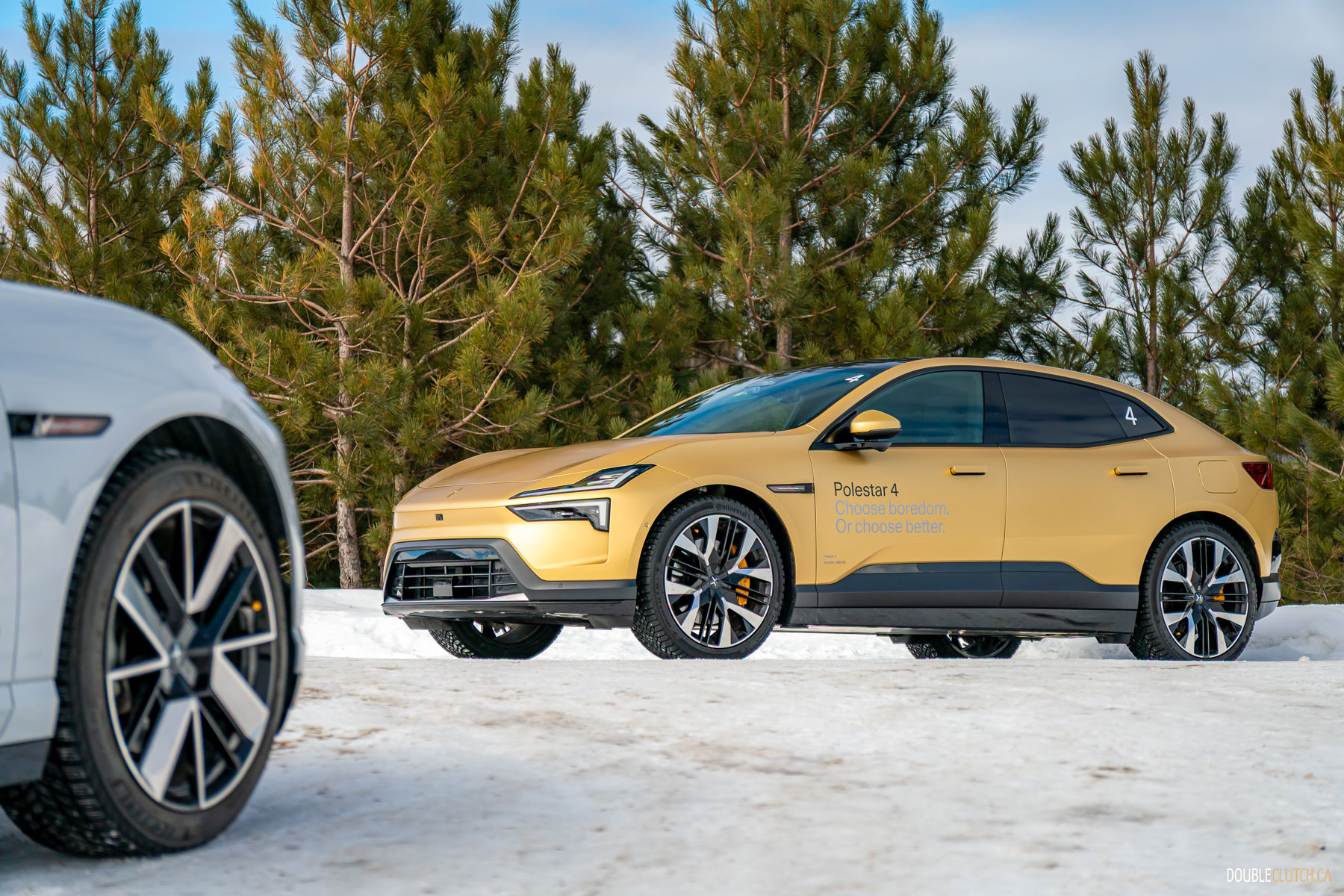
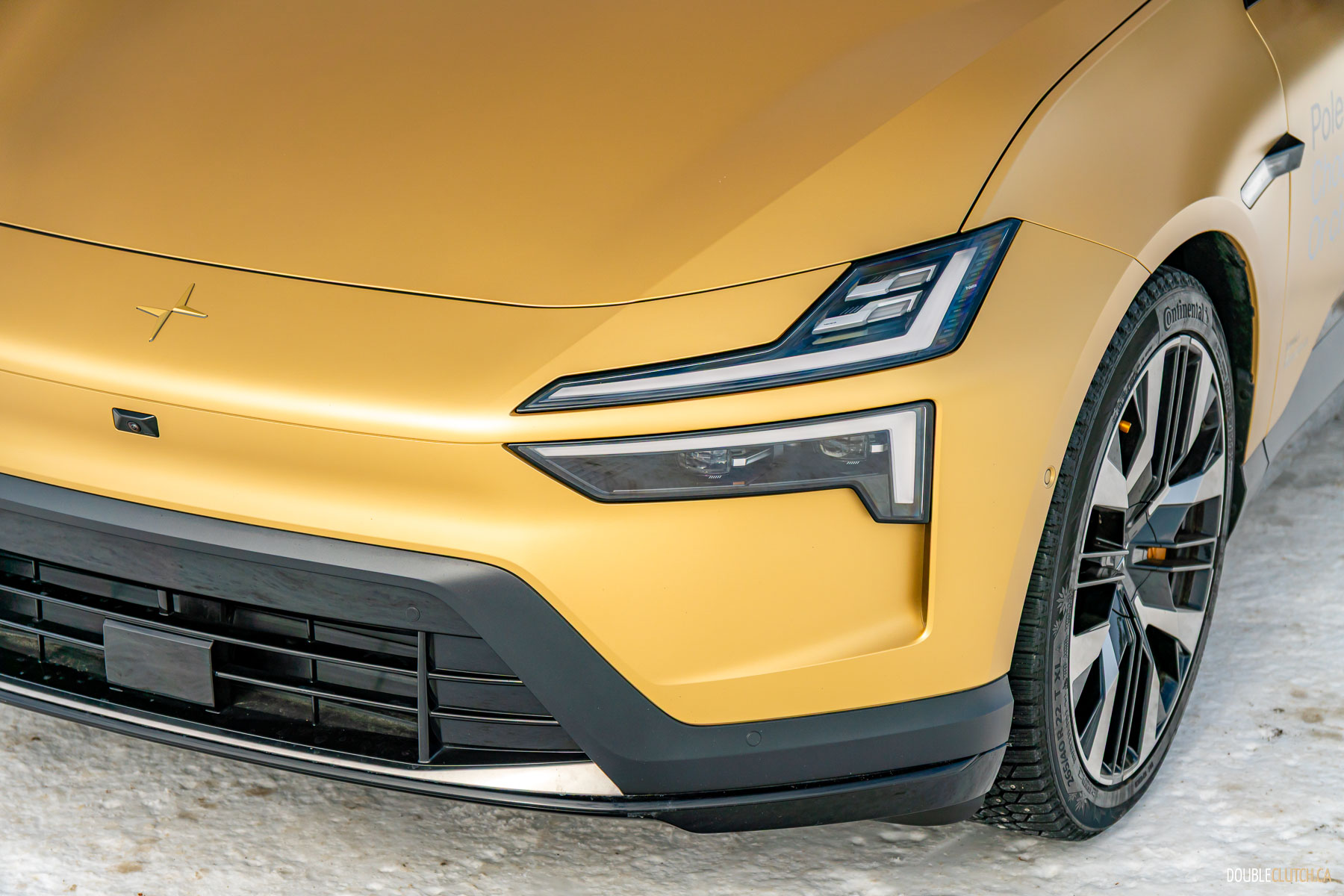
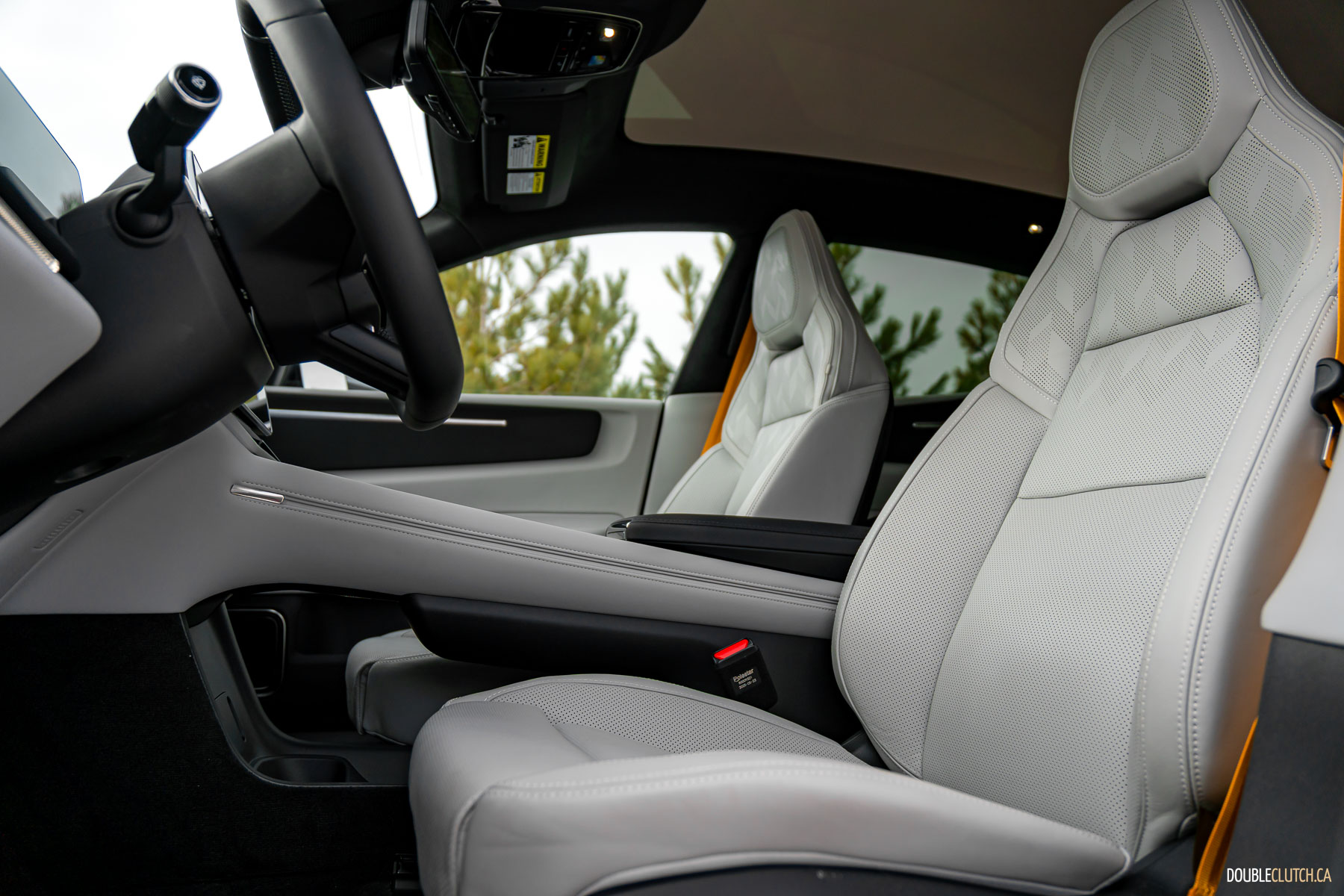
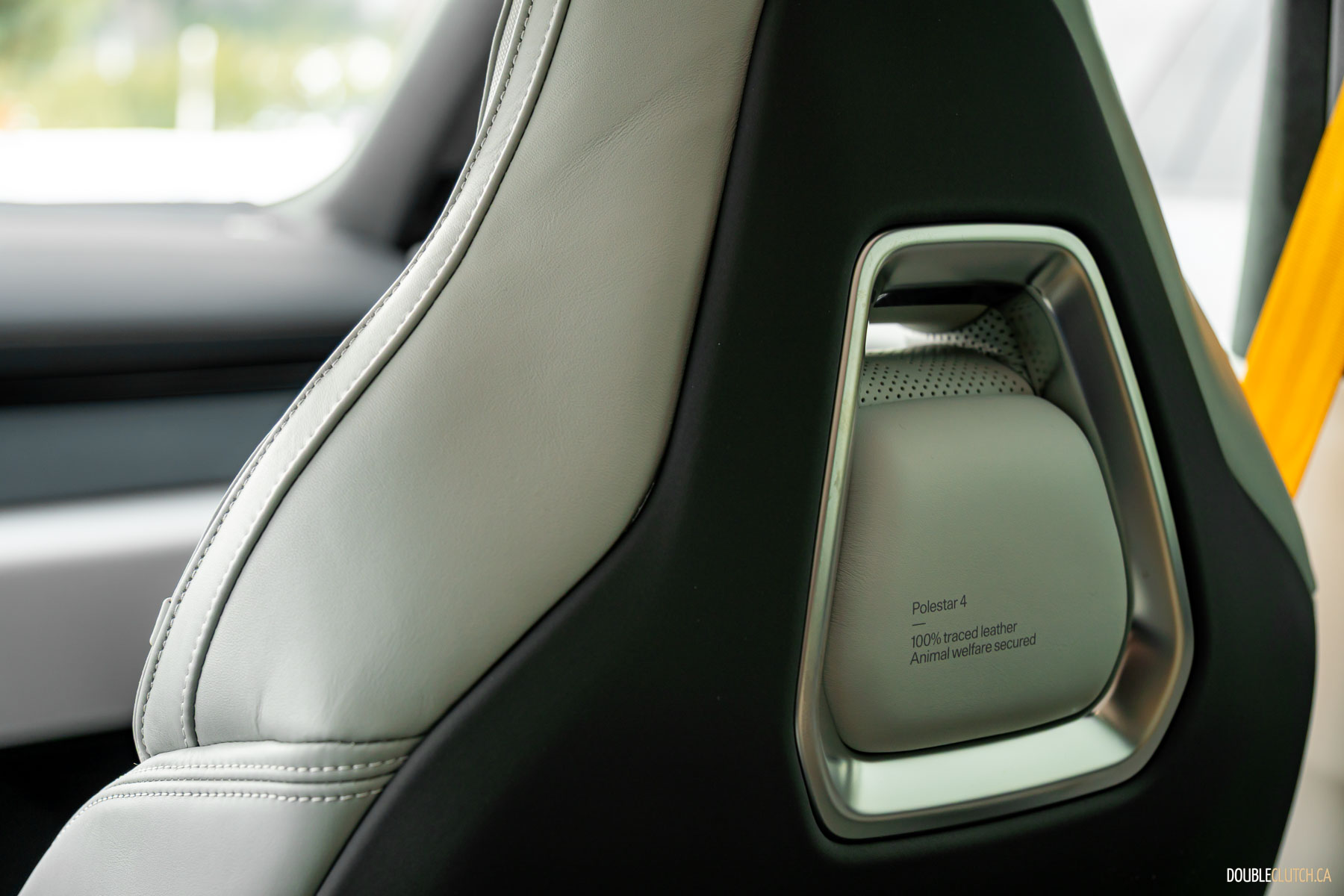
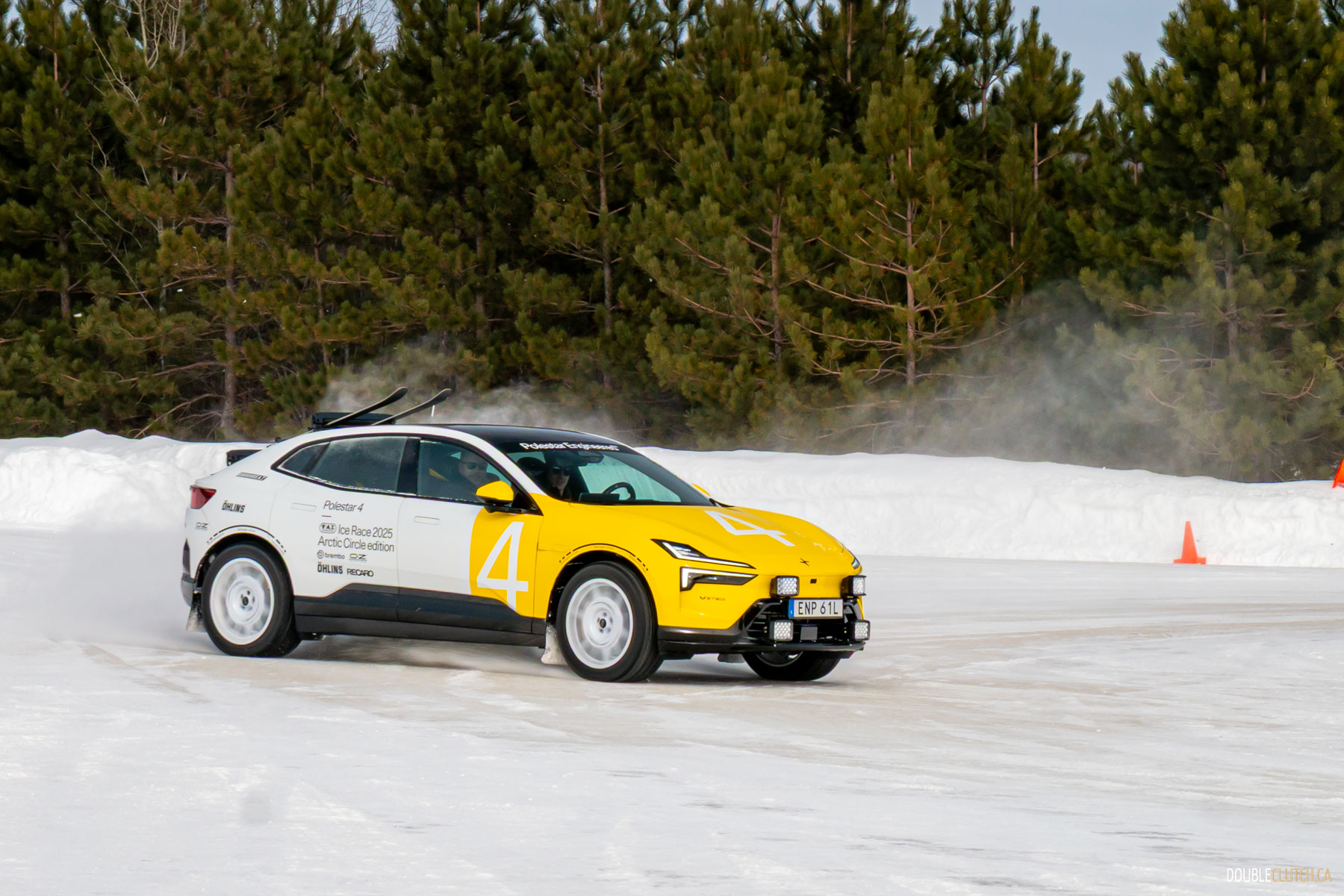
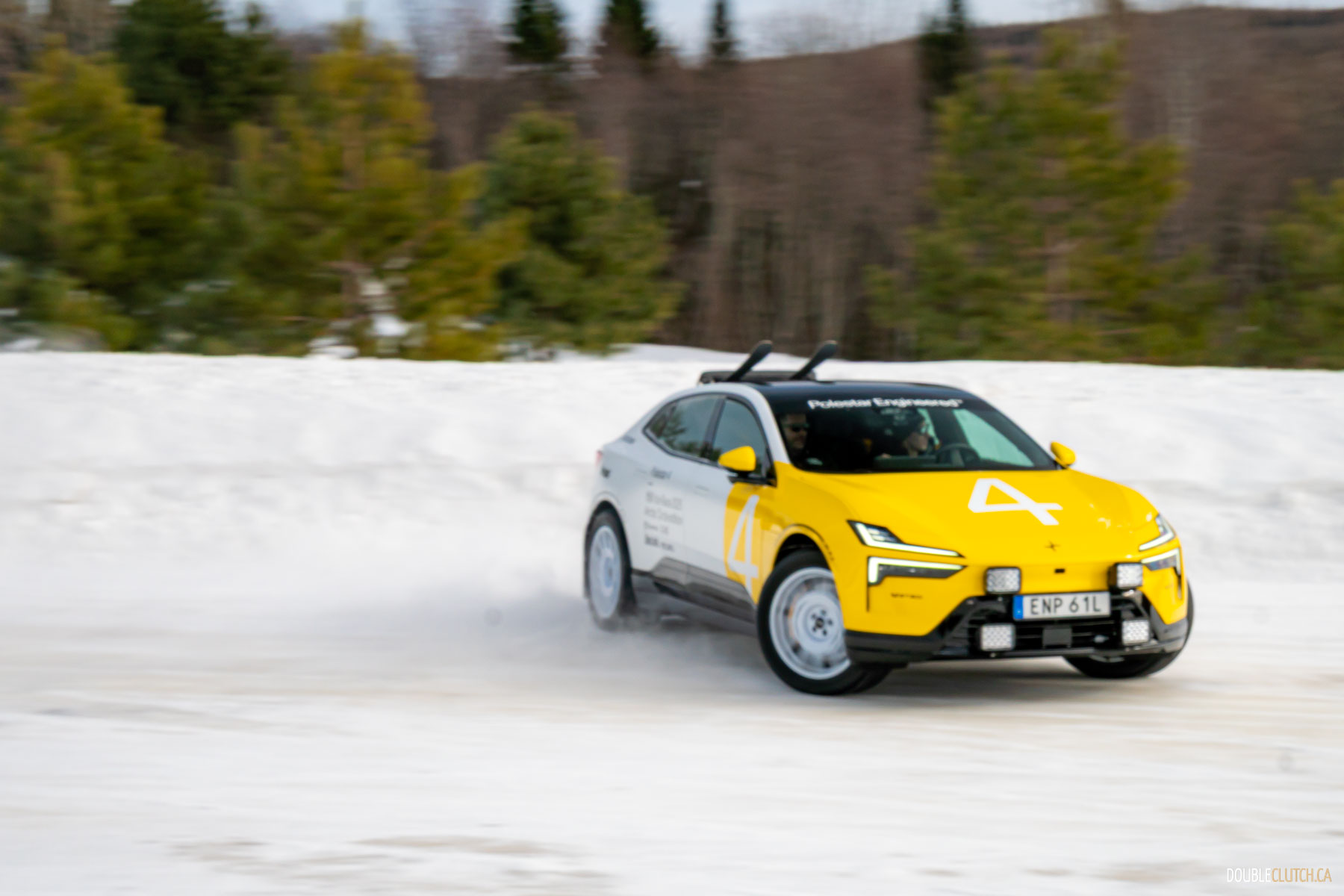
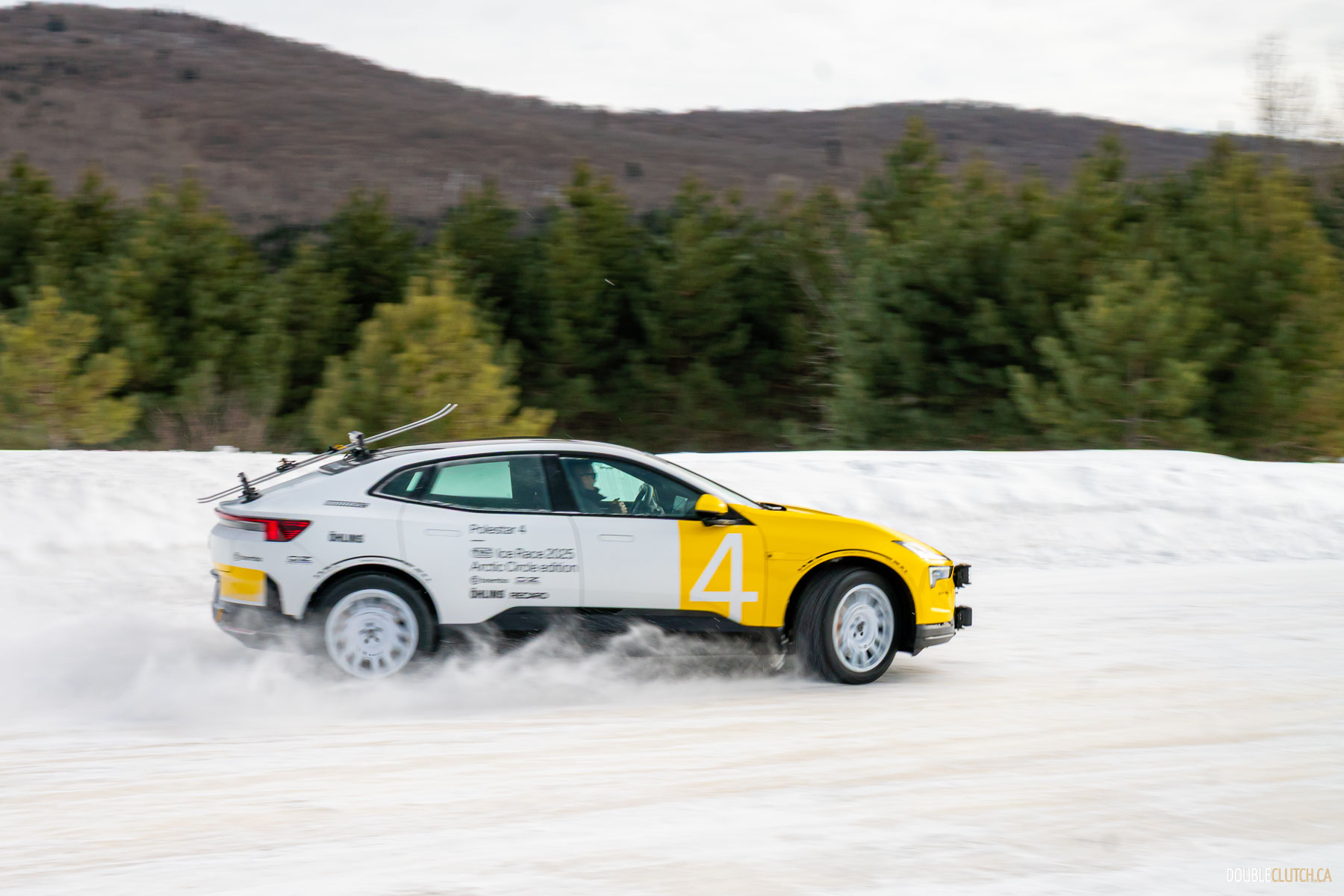
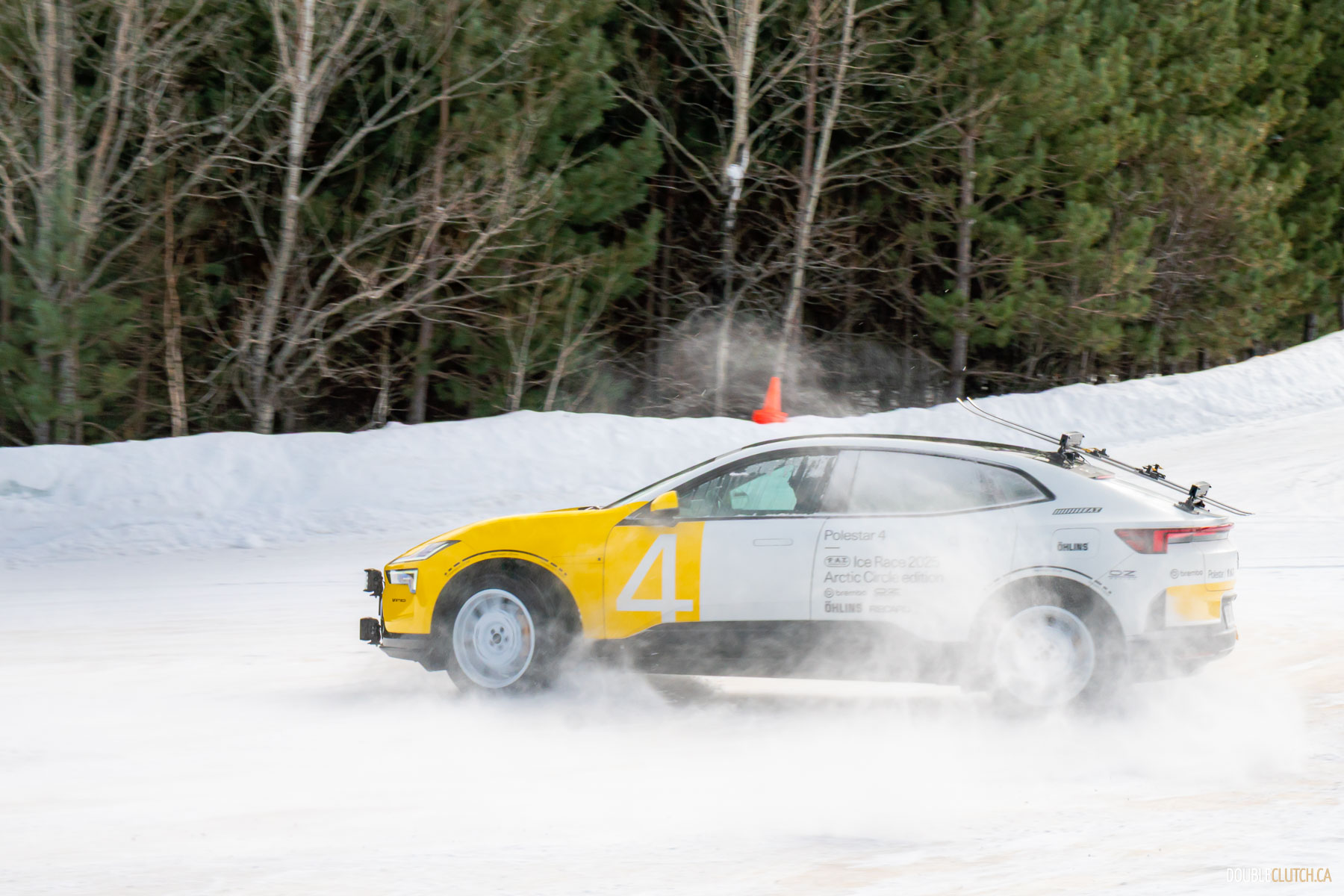
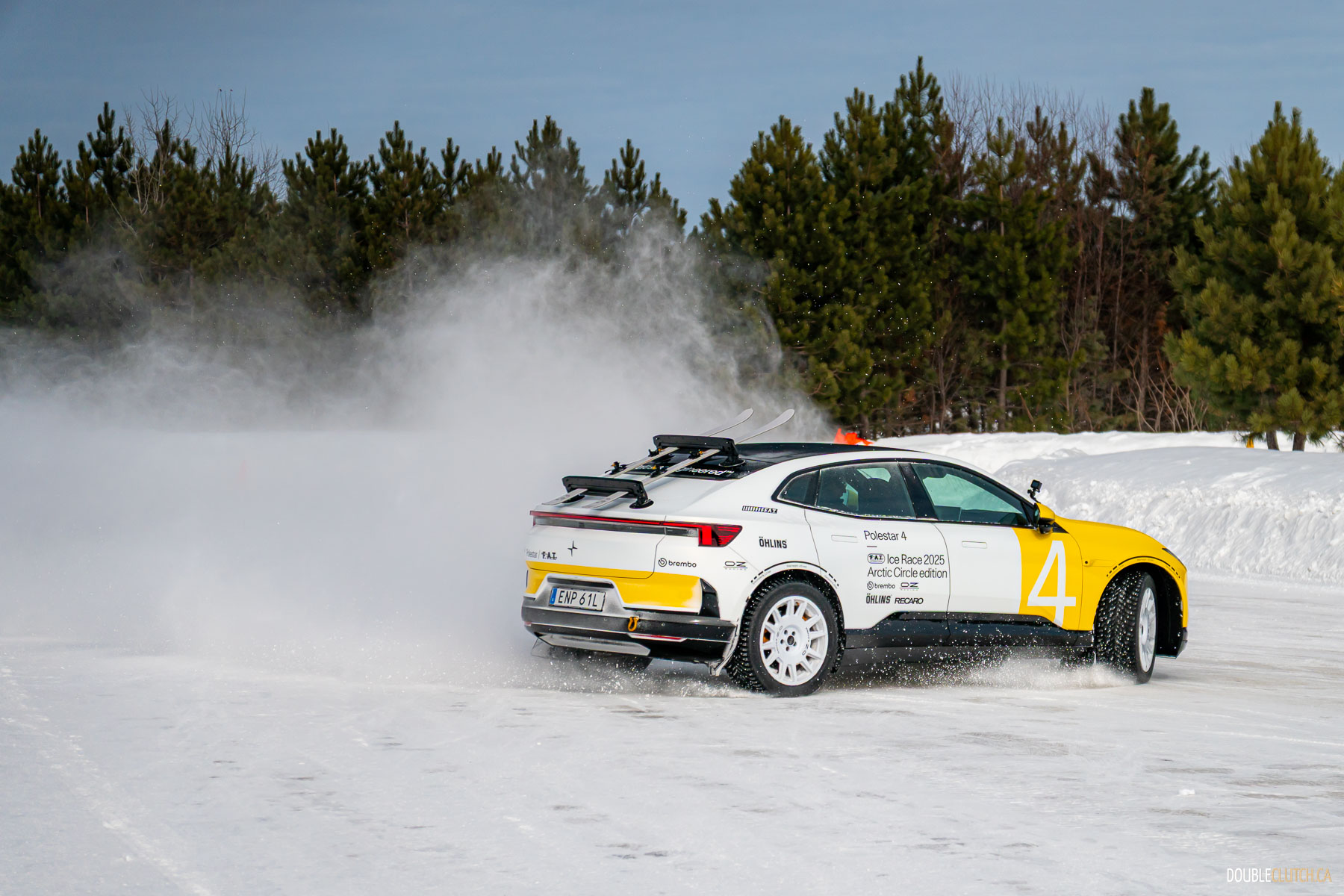
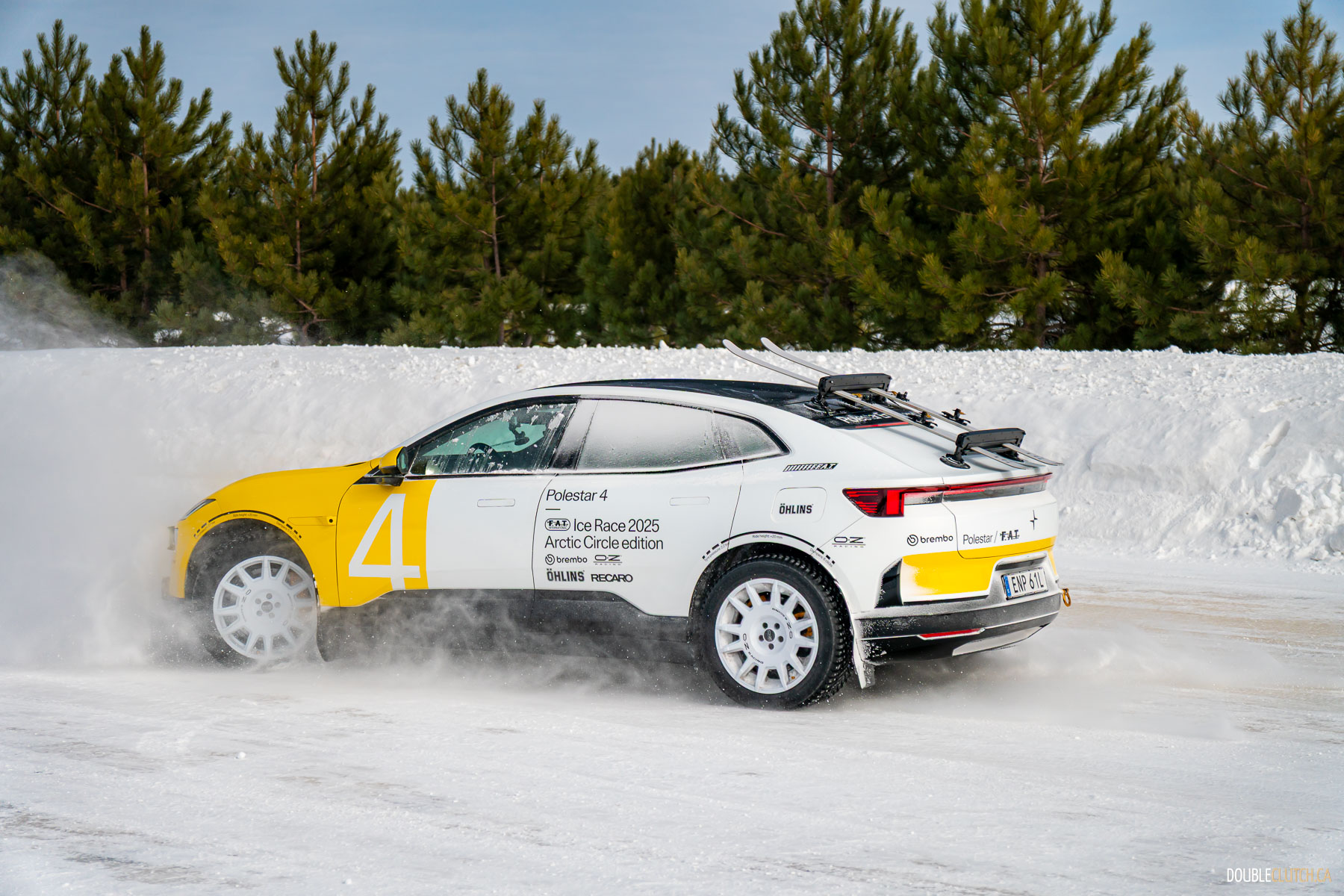
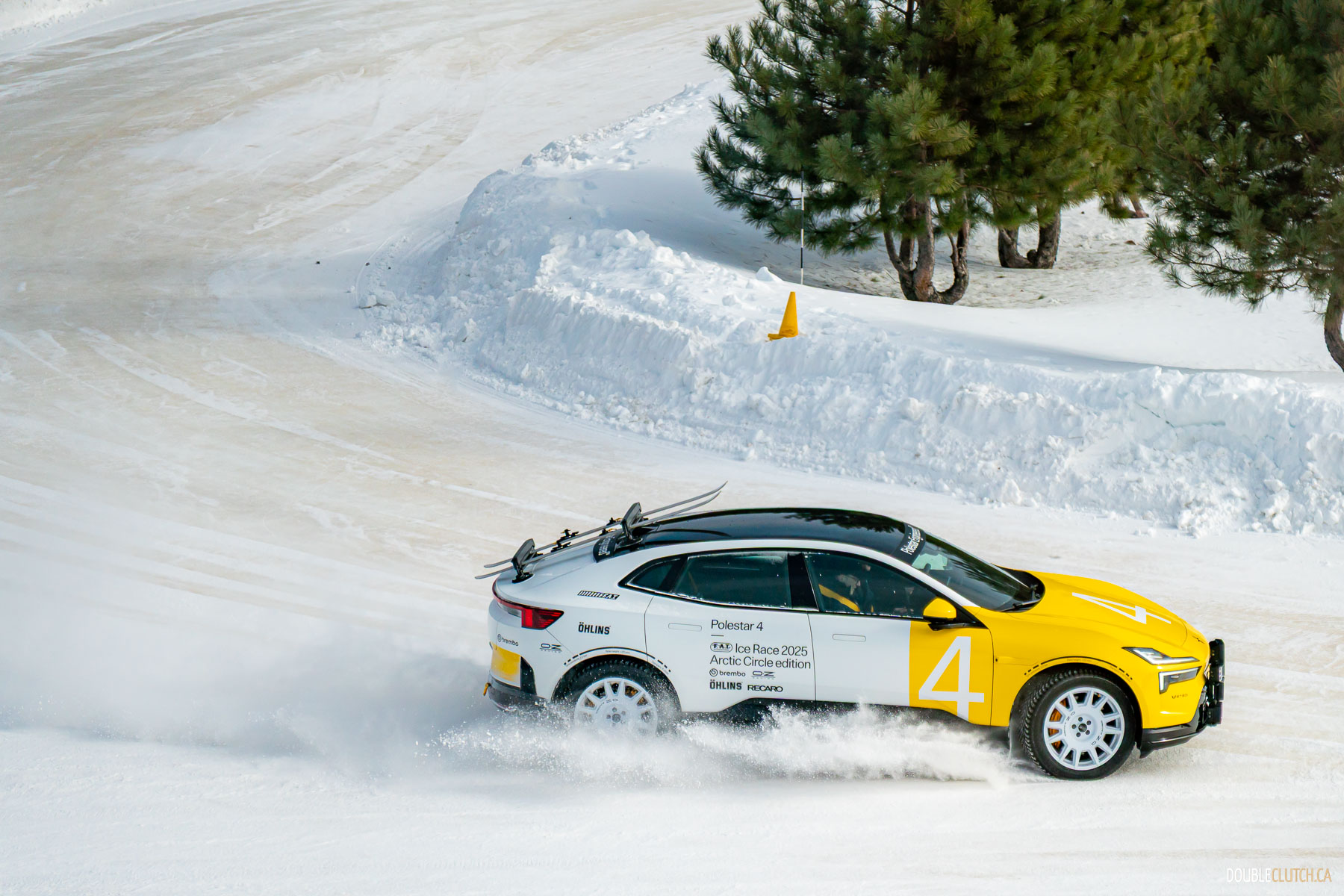
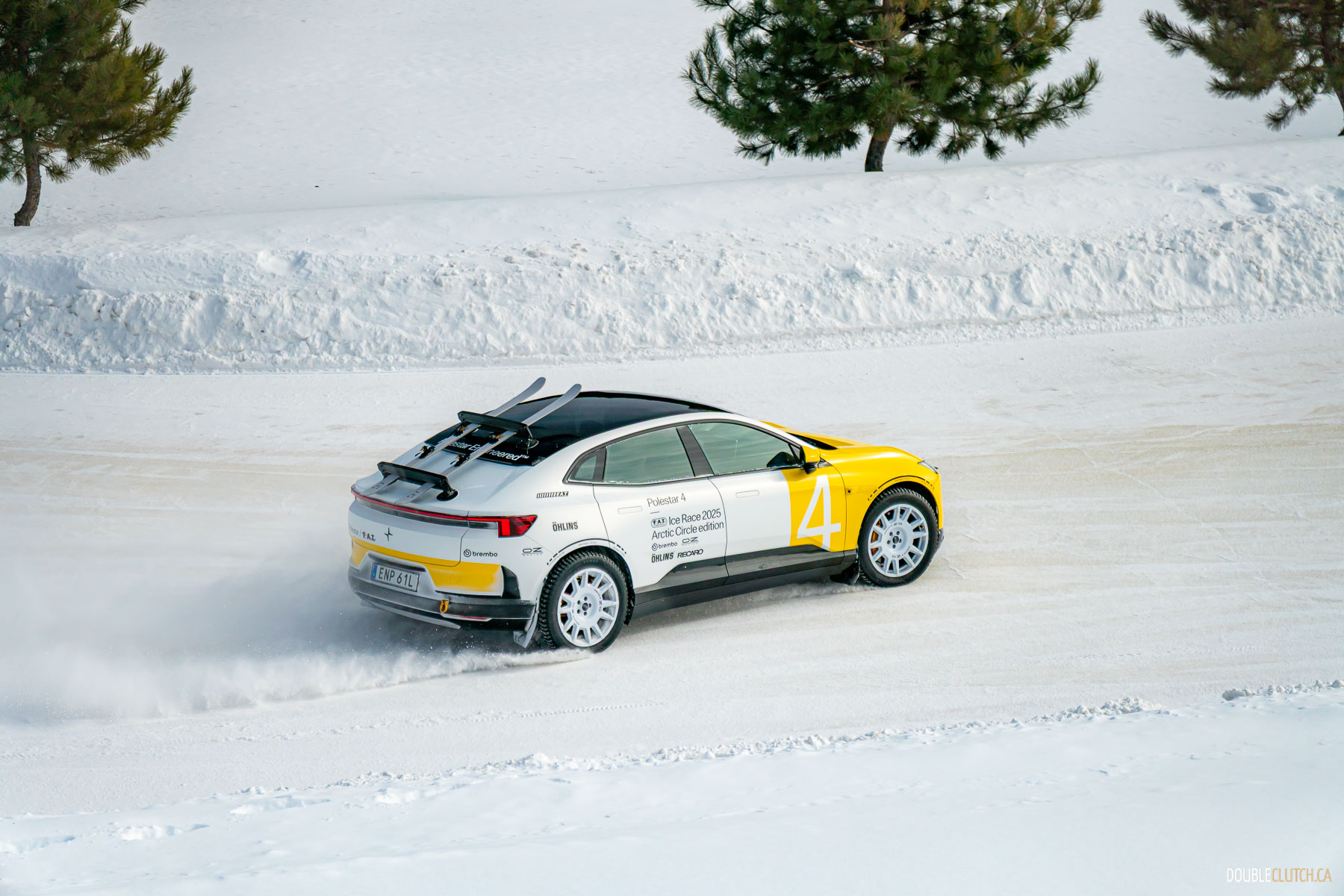
The Polestar 4 Arctic Circle Edition is a one-off prototype designed to compete in ice racing, similar to the same treatment that the Polestar 2 and 3 have received. This one needed less work than those, as along with the raft of visual tweaks that really look badass, it only received slightly taller springs, bespoke anti-roll bars, Recaro bucket seats, and a hydraulic handbrake.
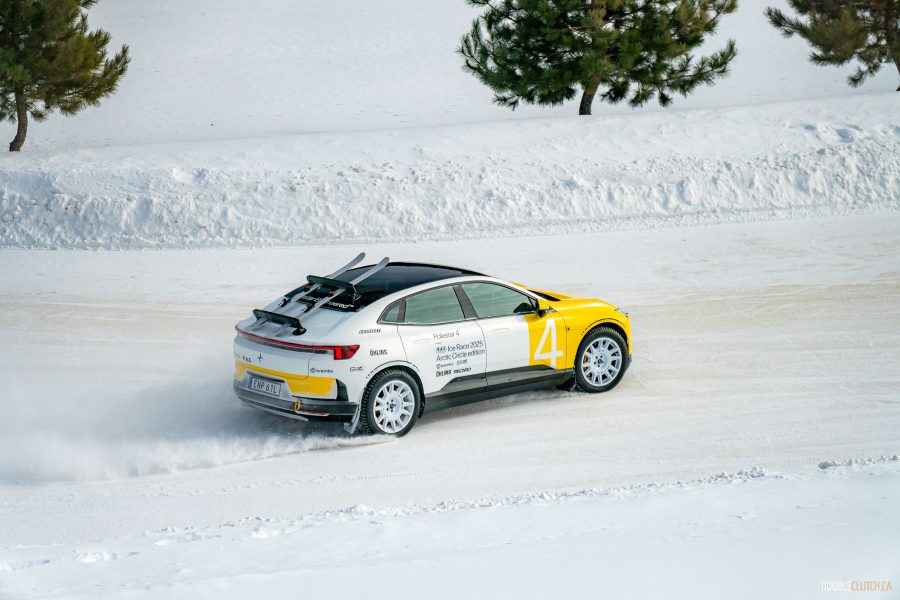
That handbrake was put to very good use by Formula Drift Champion Tommy Lemaire, who was on hand to give us all hot laps of the frozen circuit. I don’t think the car ever actually went straight, and half the corners saw him enter with so much rotation that he might as well have driven in backwards. It was pretty surreal to be thrown around in such an extreme way while having a casual conversation – because despite all this silliness, it’s still silent.
Wrap it up
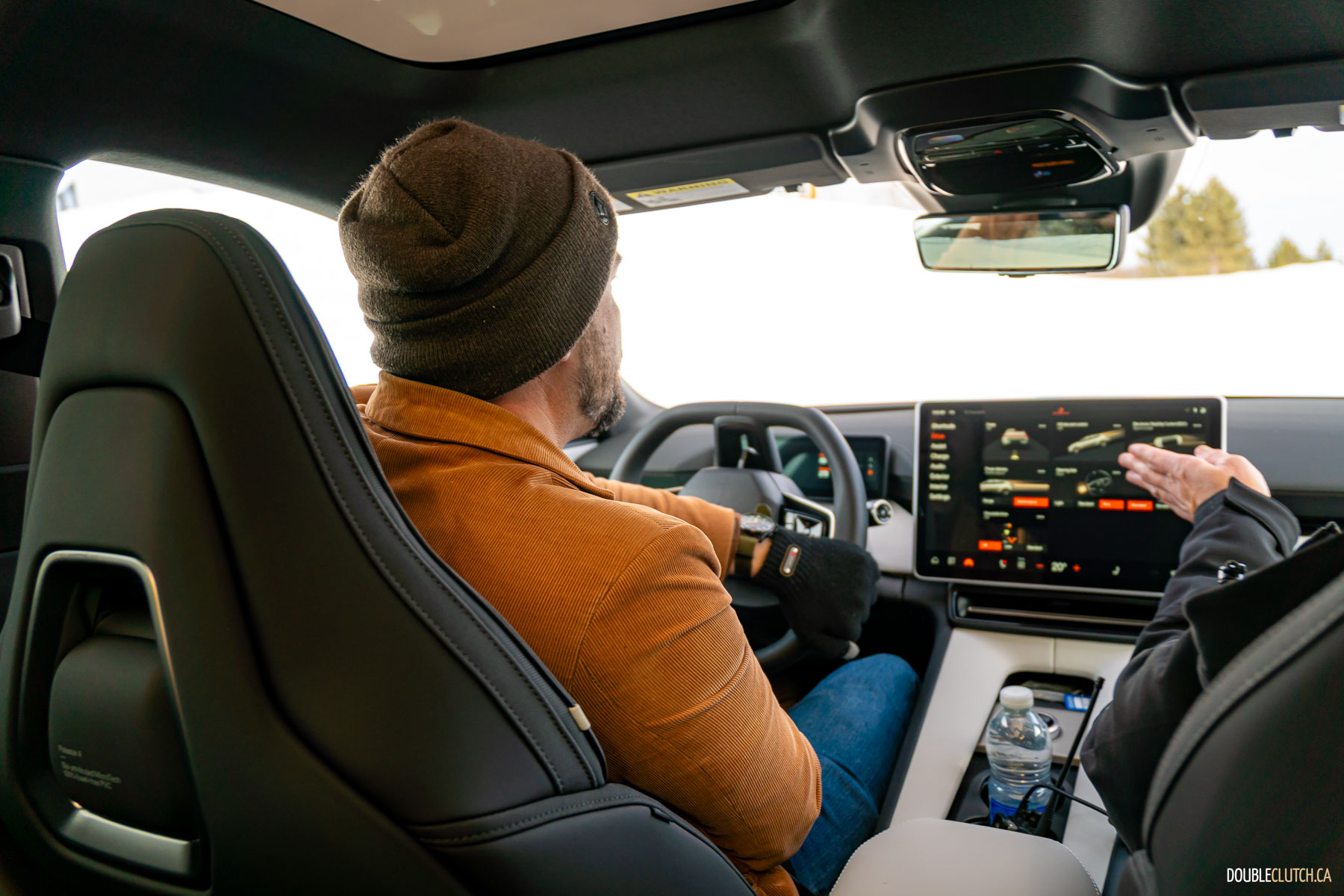
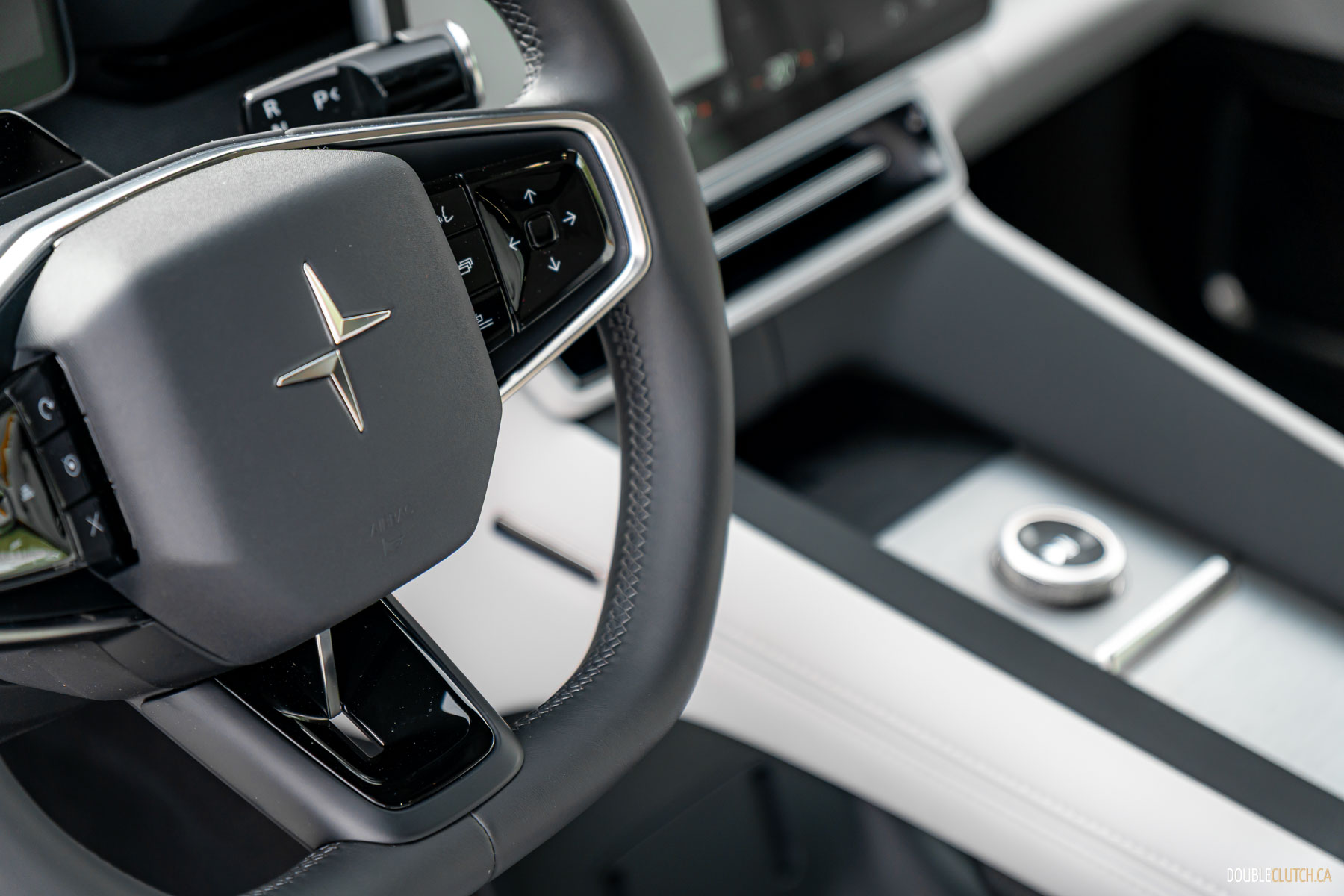
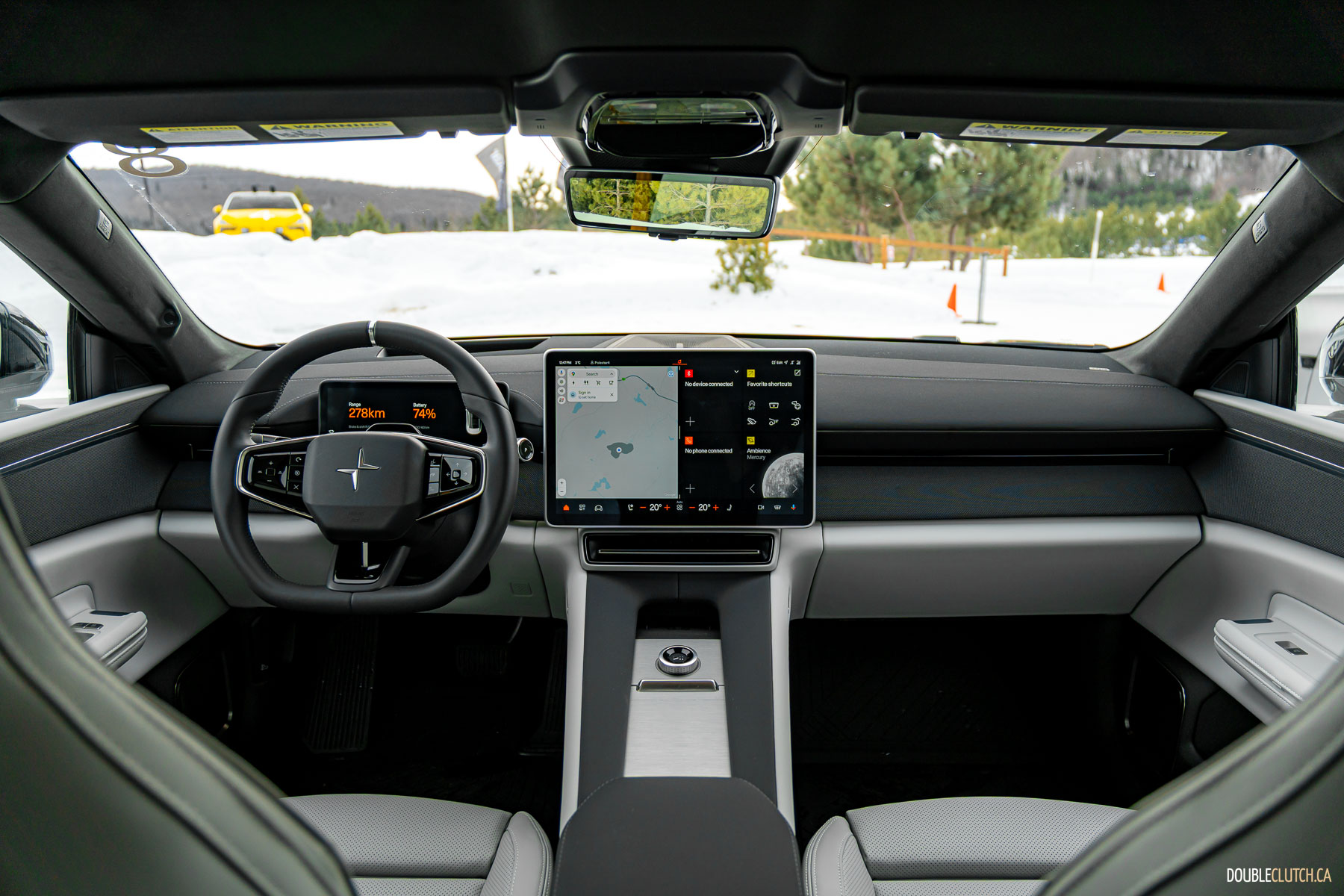
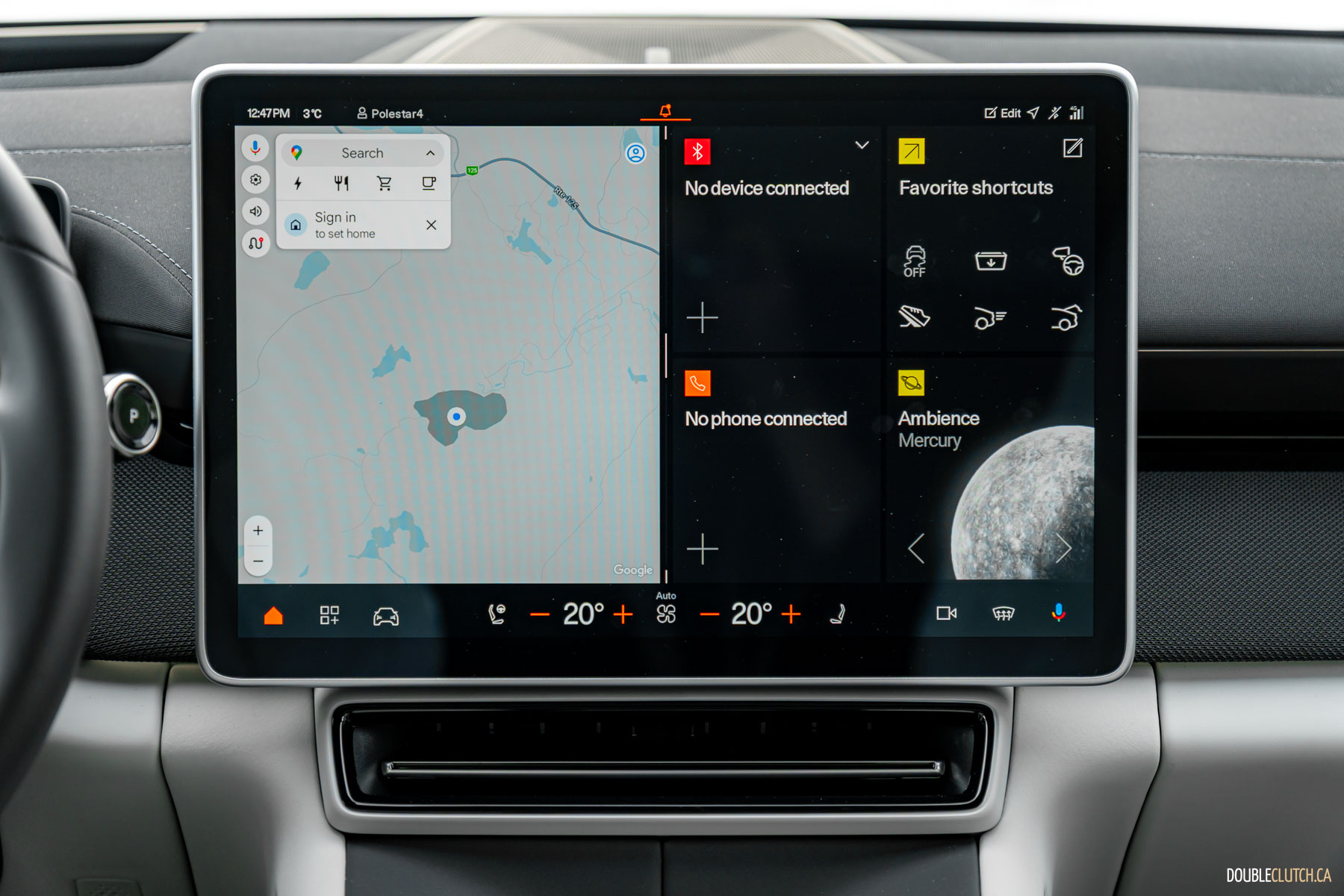
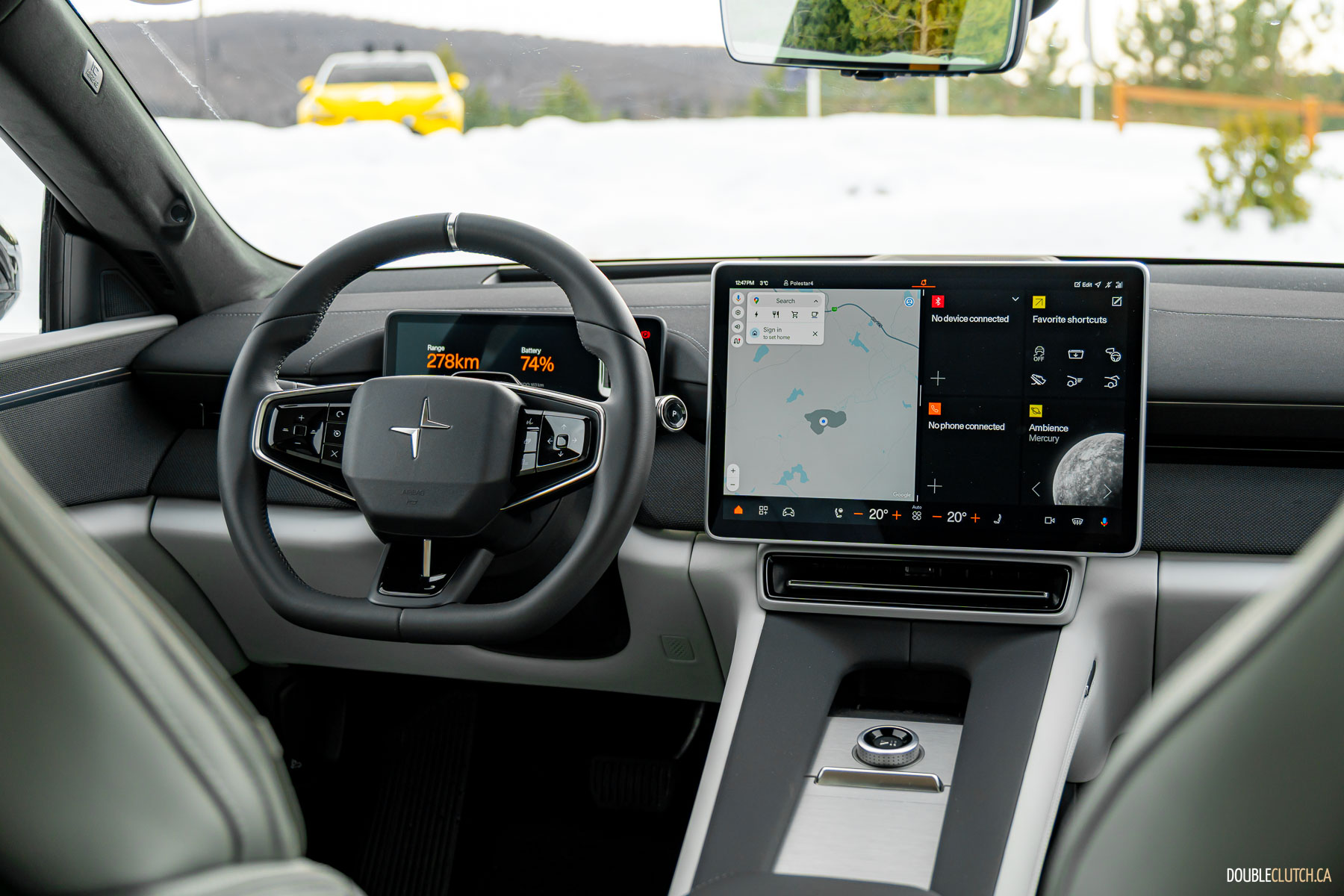
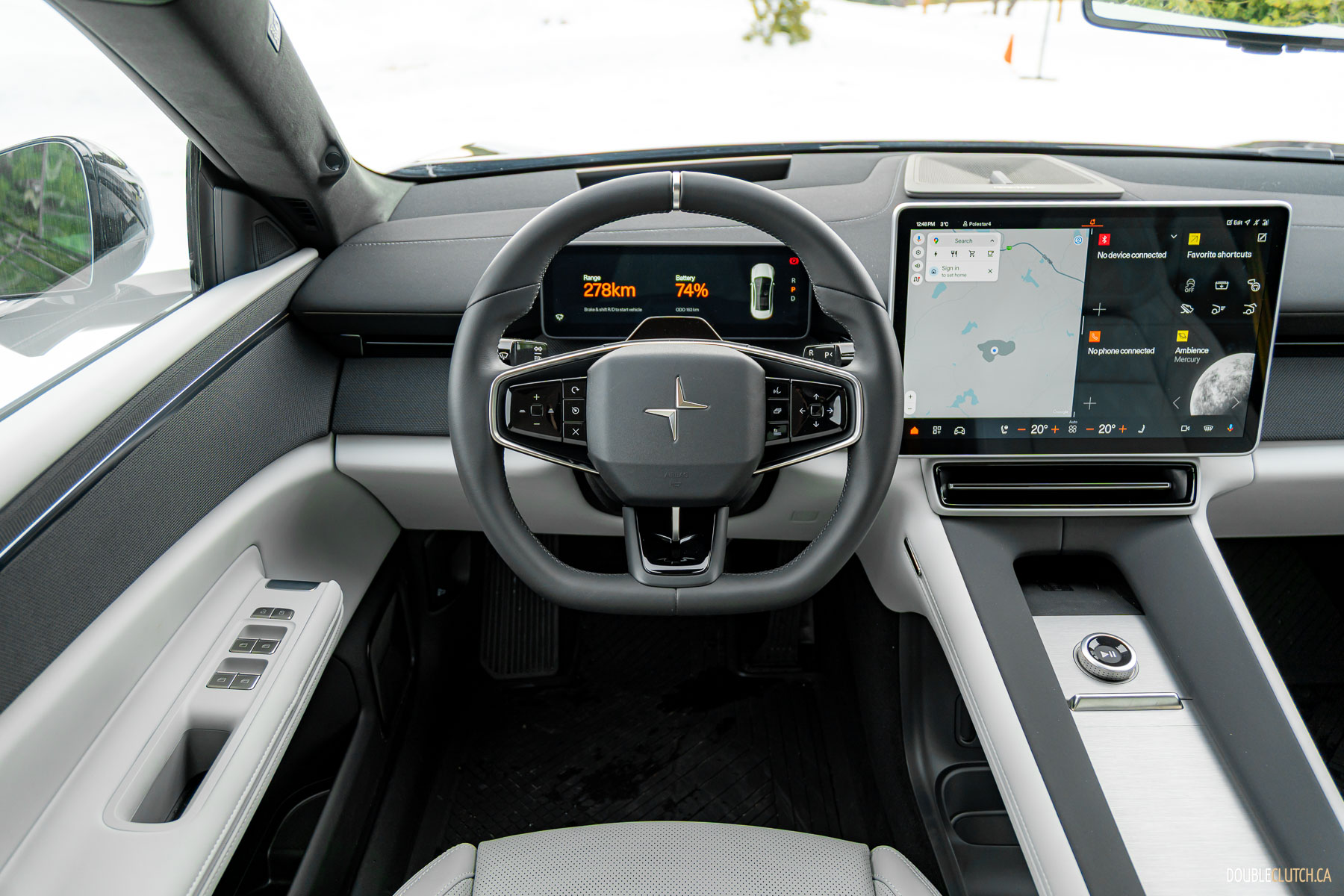
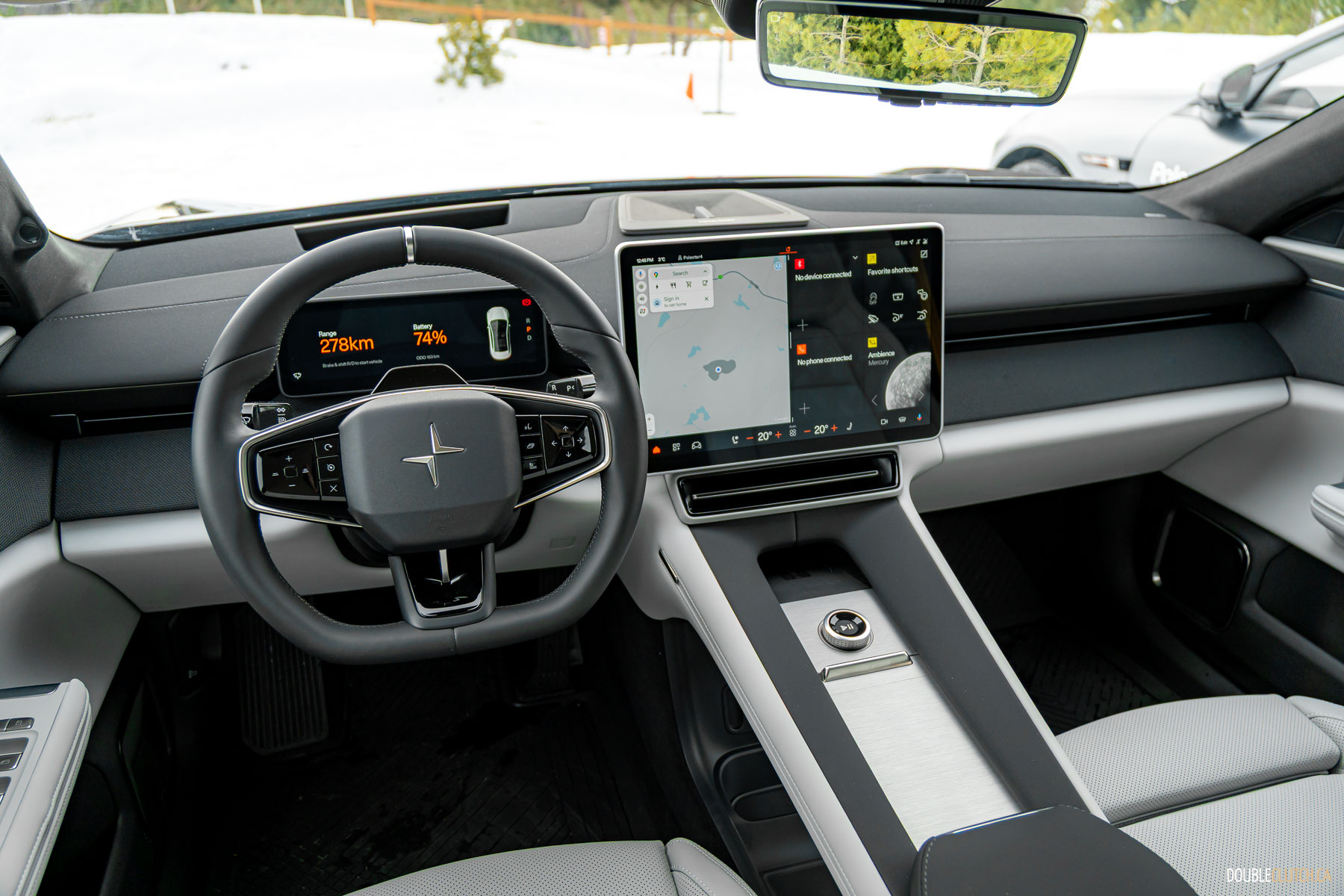
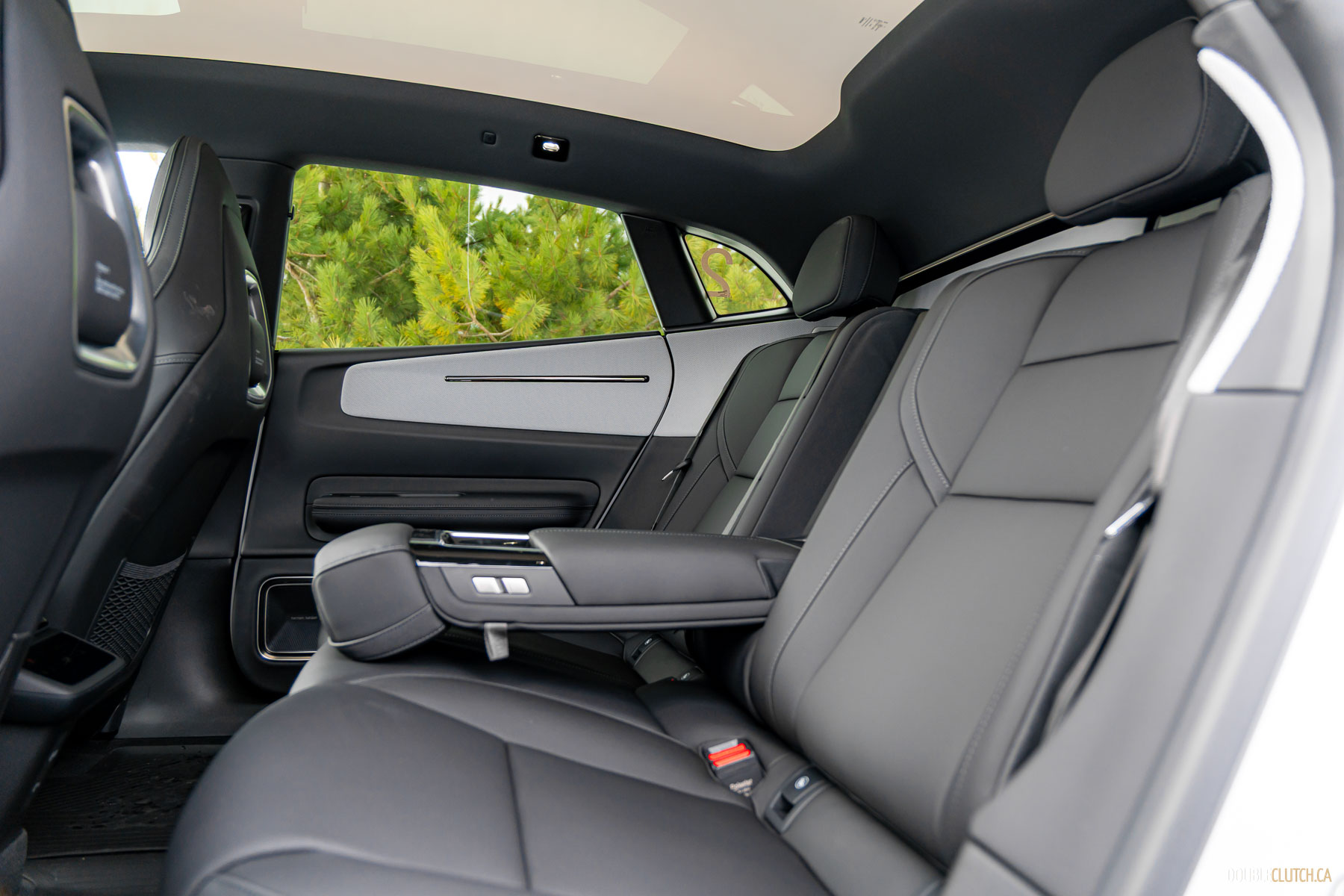
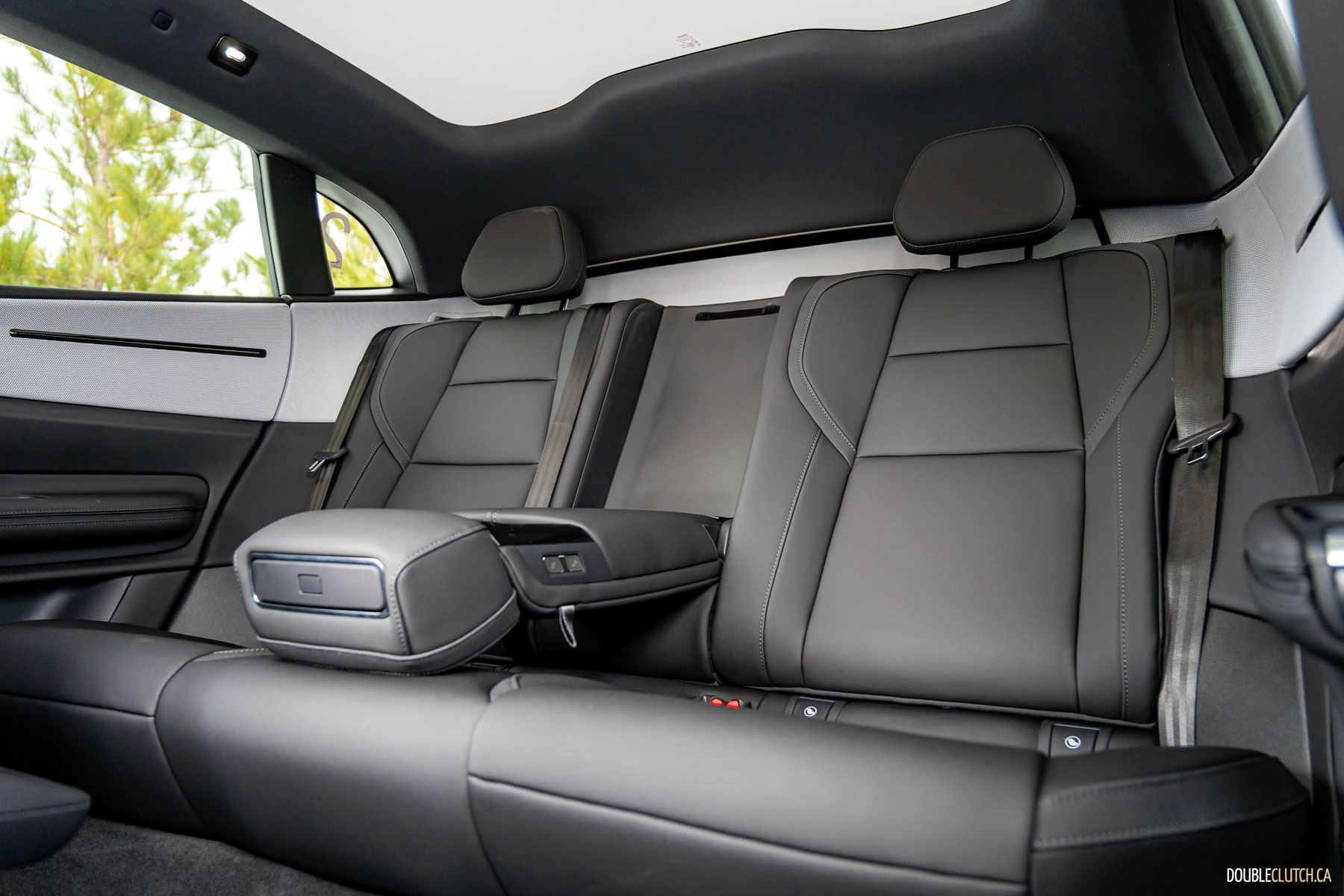
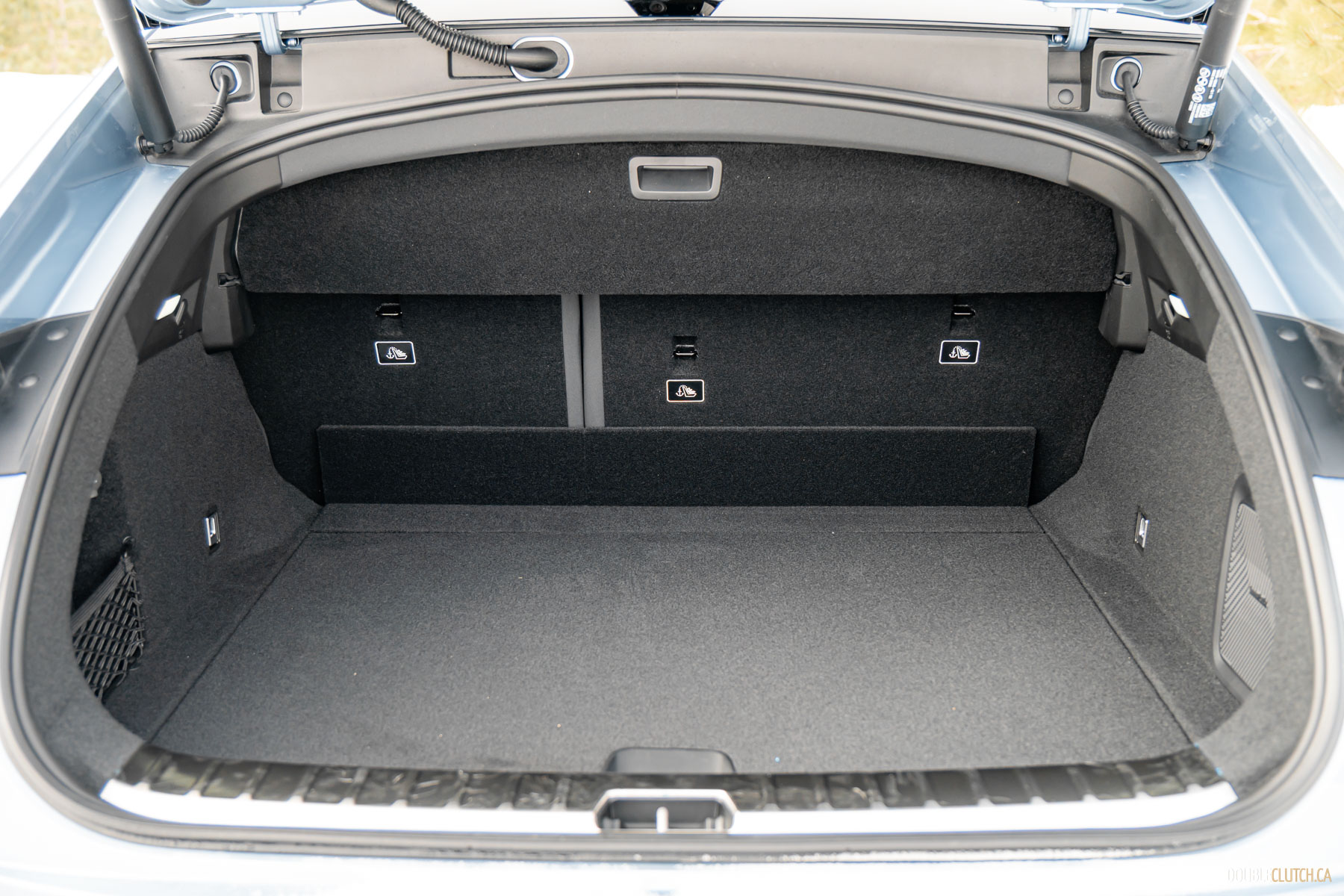
I can’t comment so much on the ins and outs of the Polestar 4 itself, as I only drove them on an ice track. Much more detailed accounts will come in a few weeks time when these cars become available on home turf. But what I can say is that it looks great, their updates to the cabin are lovely, the rear seats are far more airy than you’d expect, and they handle beautifully.
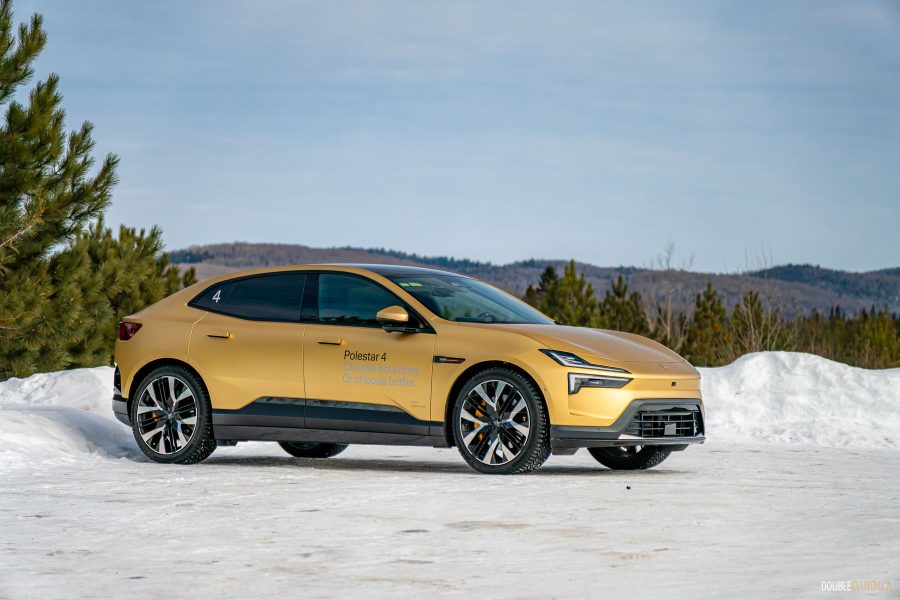
It’s one thing to build a fast car with lots of power and grip, but it’s an art form to construct a car that can balance itself and work with you in those rare moments of transient traction, and the Polestar 4 Arctic Circle Drive experience was designed to make us spend almost a whole day in that rare zone and make the most of it. There’s a lot of quiet confidence in that.

Editor-in-Chief
Nathan is an eccentric car enthusiast who likes driver-focused cars and thoughtful design. He can't stand listening to people reminisce about the "good ole days" of cars because he started doing it before it was cool, and is also definitely not a hipster doofus.