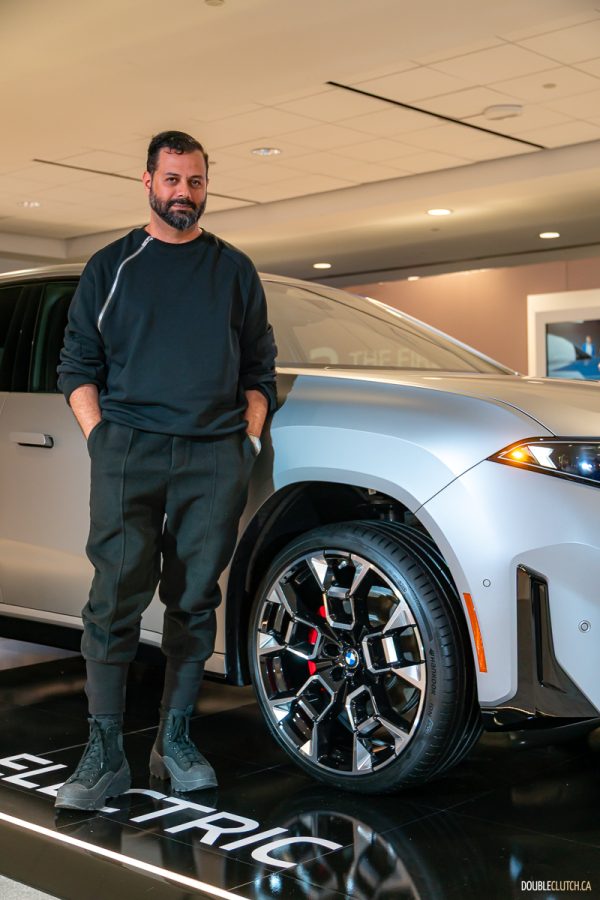
I recently got to have a conversation with Hussein Al Attar, a director at DesignWorks in Los Angeles, a subsidiary of BMW Group. Like I assume a lot you reading this must feel, I’ve always had an interest in automotive design, how a vehicle begins life as something as rudimentary as a sketch and evolves into a finished, viable vehicle and able to carry forward the original designer’s vision years later, despite the challenges of reality, and the tapestry of mass production.
Our conversation ran long, and while he was principally there to talk about the new BMW iX3, I couldn’t help but spend most of the time picking his brain about the ins and outs of bringing a sketch to reality.
“I haven’t worked for any other company in the car business other than BMW so I can’t speak to it exactly, but I understand BMW handles designs quite differently from any other company.”
BMW Group has three DesignWorks studios: in Munich, Shanghai, Los Angeles. Not entirely unlike Pininfarina’s (former) relationship with Ferrari, DesignWorks primarily serves BMW, but is not strictly beholden to them; they’ve done work for Hewlett-Packard and North Face, among other notable clients. He started with BMW AG at their HQ in Munich in 2012, rising to Lead Exterior Designer before moving to DesignWorks LA in 2019, and has been Director of Automotive Design at DesignWorks LA since 2023, suffice to say he knows what he’s talking about.
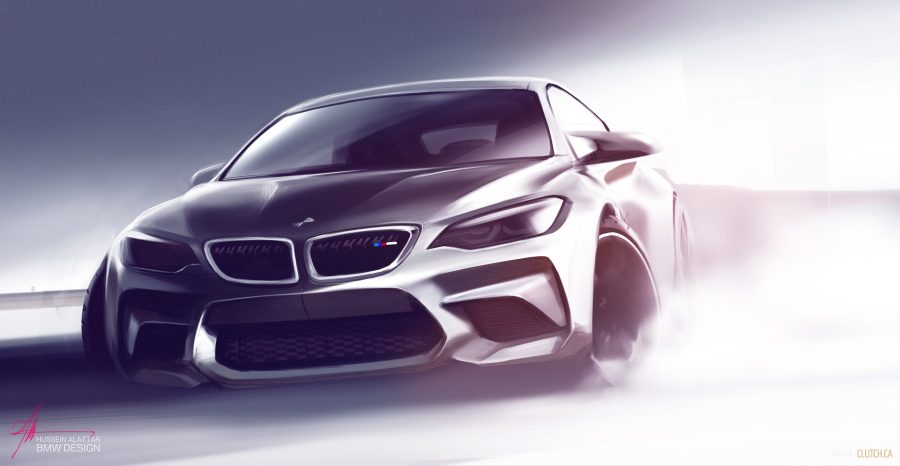
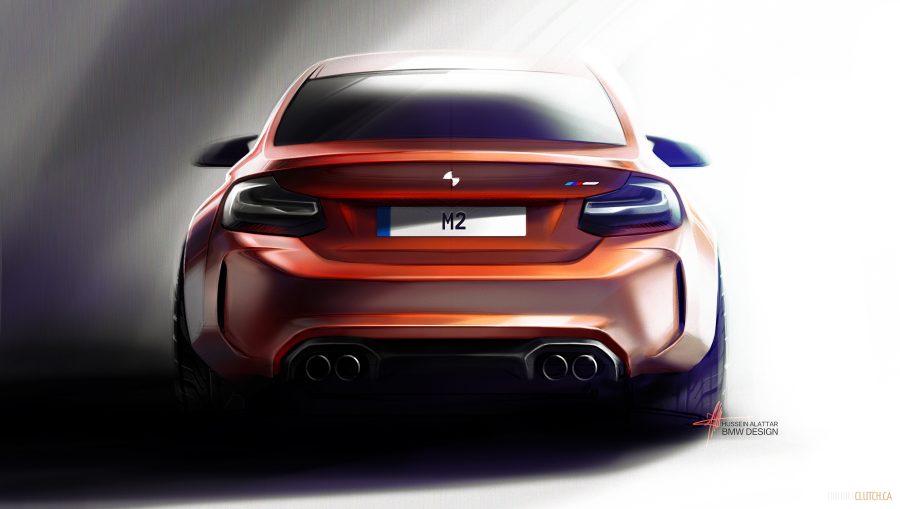
It also bears mentioning: I am well aware that BMW design has been, perhaps, a little contentious as of late. I didn’t badger him about that. This guy is responsible for the F87 (2016-2021) BMW M2, and while we’ve come around to the new M2 and other initially-challenging designs, I think it’s a safe bet to say we can all agree the previous car was far prettier, and far more traditionally BMW. He penned that little gem while he was a Junior Designer in Munich.
“At BMW, you bid for a design, competing with other designers and other studios. If your design is selected, you see it through to the end, even if you’re just a Junior Designer like I was at the time… BMW is quite aware of the importance of a singular vision in producing a successful, cohesive design, just like in any art form.”
Art doesn’t happen by committee. No focus group has ever produced long lasting beauty. The overwhelming majority of all of mankind’s greatest works are the result of a single man or woman’s inspiration. However, that doesn’t mean that singular vision is free from the reality of stamping a vehicle into production.
“I remember one of the projects I worked on, I had a crease in the bumper, I think it was a rear bumper on the side, and they told me to make sure that crease runs out before it goes into the next part, because if it goes into that part, that would mean one extra stamping, which will also mean that at the end of the day, you’ll have fewer cars because that extra stamping cost half a second per car, which means like three fewer cars per day.”
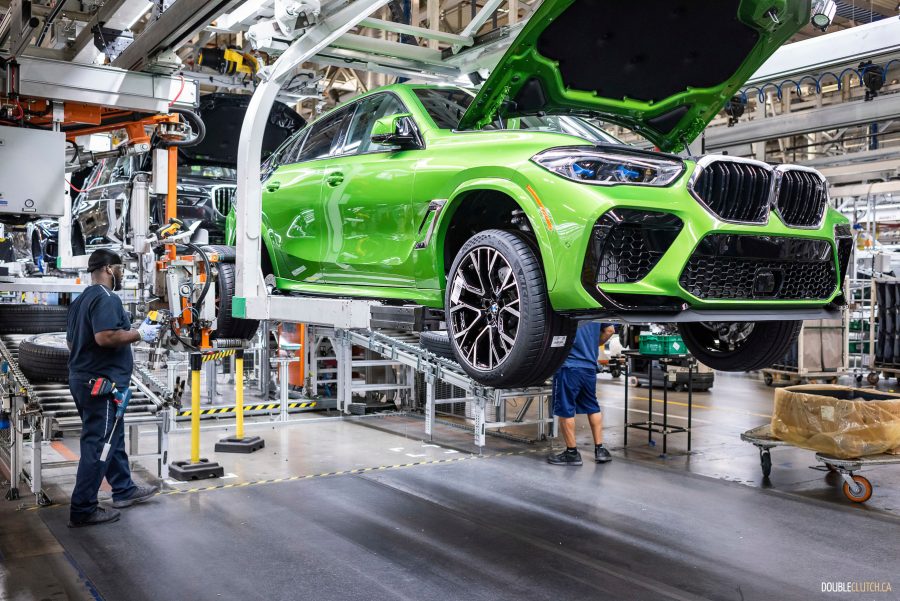
“As a young designer, I thought that cannot be that big of a deal. And they broke it down to me and I’m like oh, okay, yeah I see it now… there are definitely things like that are super interesting for a young designer to learn about, and that’s not something you learn at design school or anything, it’s just experience you have to develop when you’re actually working… three fewer cars a day adds up.”
The importance of viability is imperative in design, which Hussein was keen to make clear is very different from styling. While initial design proposals are very open, with HQ only supplying a very rough (car or crossover shaped) silhouette, BMW’s designer are free to do more or less whatever they please, so long as it incorporates the established BMW design elements, like the dual kidney grilles and the Hoffmeister kink. How they are interpreted and incorporated is up to the designer, but that designer has to be mindful of the cost and feasibility of what they’re proposing.
“We have to tailor or design towards a production site… we don’t really have issues with it because we kind of know what each site can do and we design to that, but it’s the final details that create a lot of challenges, like what draft angle are you gonna use here or there, or how are you gonna handle the hood, the fender, the light cluster, and the bumper all coming together in a very complex area?”
In the beginning, designs are just sketches, rough ideas. But as BMW’s competitive process narrows down candidates, and those sketches become clay models, which become real prototypes, the unsexy elements of actually constructing a product become more and more important. Any company is beholden to the same realities as BMW, but their interest in maintaining a singular vision is a key part of what sets them apart.
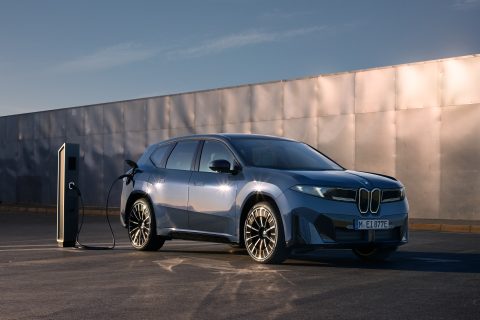
The BMW iX3 is the first production model of a new generation of BMW, called “der Neue Klasse,” which translates simply to “the New Class.” It’s a name that hasn’t been trotted out since the early sixties, and in that era, they used that name as a means a launching a whole new paradigm of car that began with the revolutionary BMW 1500, which became the famous 2002 coupe that helped popularize BMW around the world, and went on to become the 3-Series and spawn the modern compact sport sedan as we know it today. It’s a huge deal for the company, and it’s interesting to note how humbly Hussein addresses this.
“It was and is very exciting because it was mandated that it be distinctly different from everything that came before it, and it was an all-new architecture, so we were freed from some of the previous constraints that dictated our designs. This was a new product that had to look new and was going to be built on a new line, so we were even more free than usual to really experiment with how to bring BMW design into a new era. It was important that it had to look very obviously like a new generation of BMW… but it still had to be a BMW.”
Hussein Al Attar was brought to the Toronto Auto Show to talk about the BMW iX3, and he was keen to go over design elements of it, like the balance of light and shadow, the aggressively sculpted fenders that are subtly concave to draw attention to the relationship of the wheels to the body. BMW’s display with the iX3 is carefully lit to highly the interplay of light and shadow he’s referring to, and it’s one of those designs that far more complex than it might seem initially; it reveals itself to you over time, under different light, in different scenarios. It was cool to see him so excited about what he seemed to very genuinely feel was an exciting design, even if it wasn’t his own.
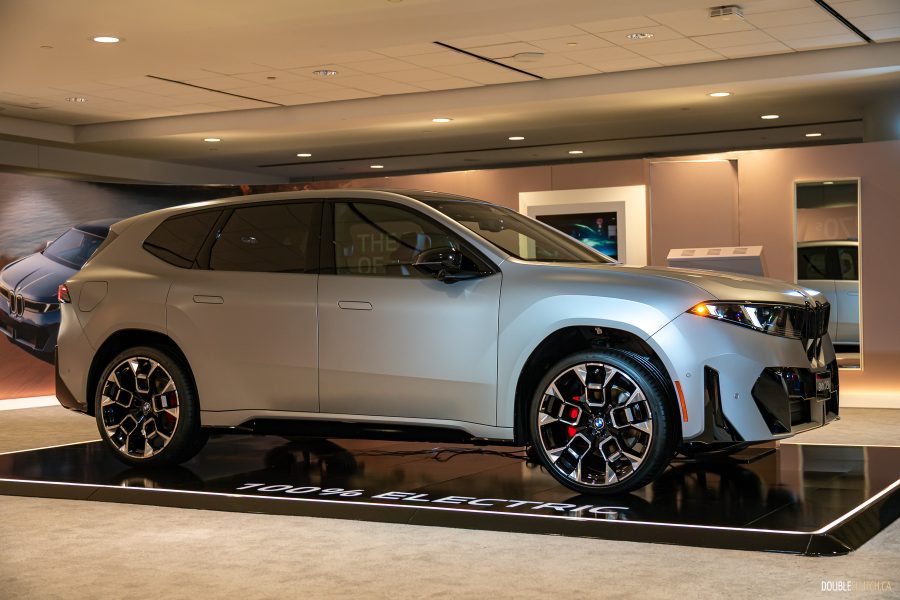
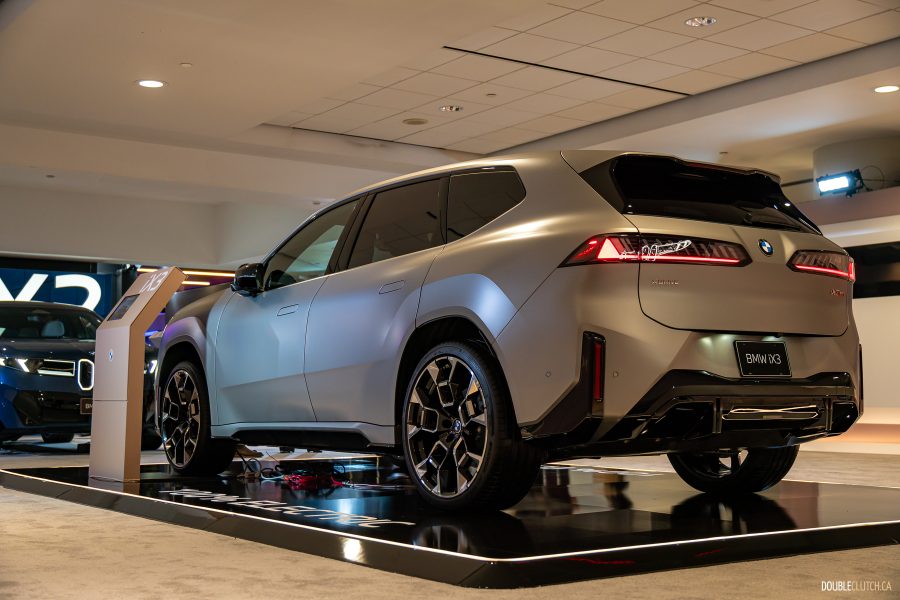
“…the Neue Klasse, this iX3, wasn’t from LA, it came from Munich… and I see now that it was the right decision.”
Hussein was there to discuss the iX3, but I wasn’t terribly interested in that. This isn’t for any lack of curiosity about the iX3, but because, frankly, I already attended a tech demo, I knew it was going extremely impressive, and my short time with the finished product on the show floor only confirmed that. The BMW iX3 is so, so far ahead of what anyone else is doing (save for Lucid, maybe) that it doesn’t need spelling out again until we get our hands on one later this year; I was more interested in what Hussein had to say about the finer points of design, what he’s proud of, and where his inspirations come from.
“We do a lot of work that doesn’t get to see light of day for the public. We do a lot that works internally and adds value to the products at the end… We also work on stuff that comes out, so like one thing I personally worked on that I’m proud of is our Le Mans race car, the M Hybrid V8. It was my first race car that was a prototype, I worked on the M4 GT3 before it, and that was really cool; race cars are cool because of the austerity of the design… but with this class, it was actually a requirement for the manufacturers to integrate their brand identity, which is something that you don’t really see.”
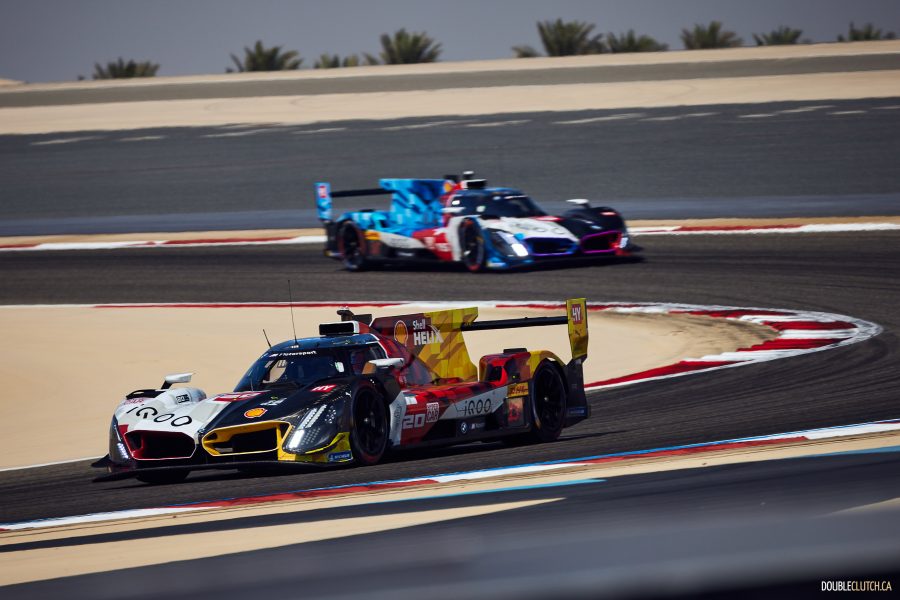
“Like the thing is there are different rules when you’re designing a race car… obviously there are regulations and aerodynamics to consider, and all of that, but the thing is, there are things I would maybe never do on a normal car like this, because, you know, they wouldn’t look cool. Race cars can get away with a lot of that, because you can explain every corner of the car, you can say this is like this because if it’s not, we’ll lose half a second of lap time here, or we won’t have enough cooling there… everything is 100% needed for a certain function. It’s a very different experience.”
He was also keen to point out that the car had just picked up a podium finish at Daytona, and has multiple wins. He even cheekily pointed out that in its maiden voyage, it was running fast before it retired with a mechanical failure – a failure that came from the series-provided hybrid unit, and not anything BMW had done. He is, naturally, quite proud of seeing his baby thriving.
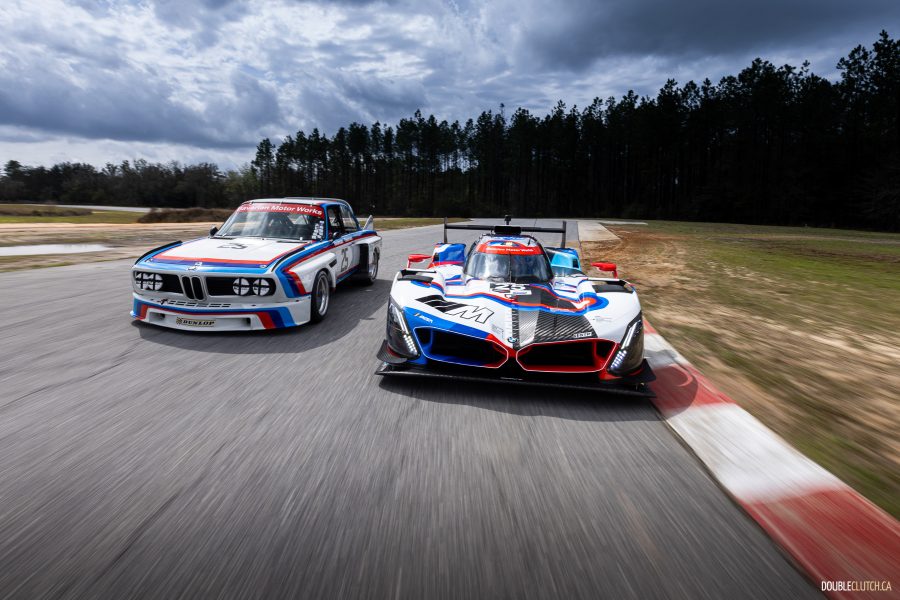
That duality of style and performance has a distinct through-line to his influences growing up, as when I asked him what the poster car on his bedroom wall growing up was, he didn’t even blink before saying the BMW E9, and specifically, the famed “batmobile” from Group A racing in the seventies.
“It’s the fact that it was so elegant and sporty at the same time. What’s great is that you could see something like the 3.0 CS, as this beautiful coupe, and then you have the race version and it’s this brutal machine, and it’s the same car, it’s the same design… that balance was very influential to me.”
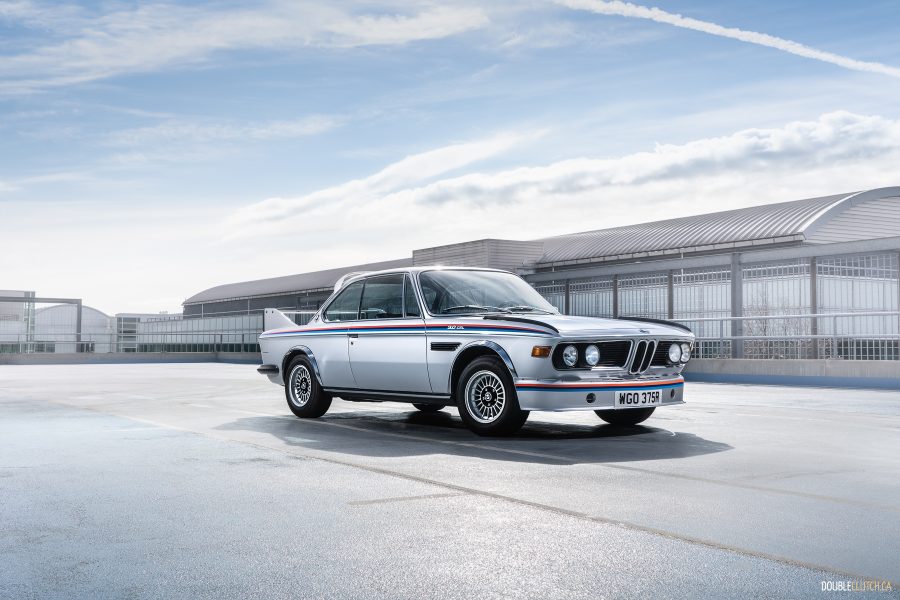
That duality, that seamless melding of contrasting qualities has been a hallmark of BMW since the beginning, and it’s what’s always set the brands’ cars apart. Think about something like the M5, which is, was, and has always been one of the fastest cars in the world, and a practical, comfortable sedan. Or the entire lineage of the 3-Series, which started has a humble little economy car that also happened to make for an unbeatable race car, and a fabulous driver’s car in any trim.
Even BMW’s new vehicles like the iX3 (which we will have plenty more coverage of; there’s a lot to be said) have to handle this duality, balancing performance, excitement and efficiency, it’s design has to blend new and old, and it has to still look and feel like a BMW, even if it’s a BMW for a new world. It’s hardly any surprise that this balance is what drew someone like Hussein Al Attar to BMW, and why he’s done so well moving design forward for the famed Roundel.