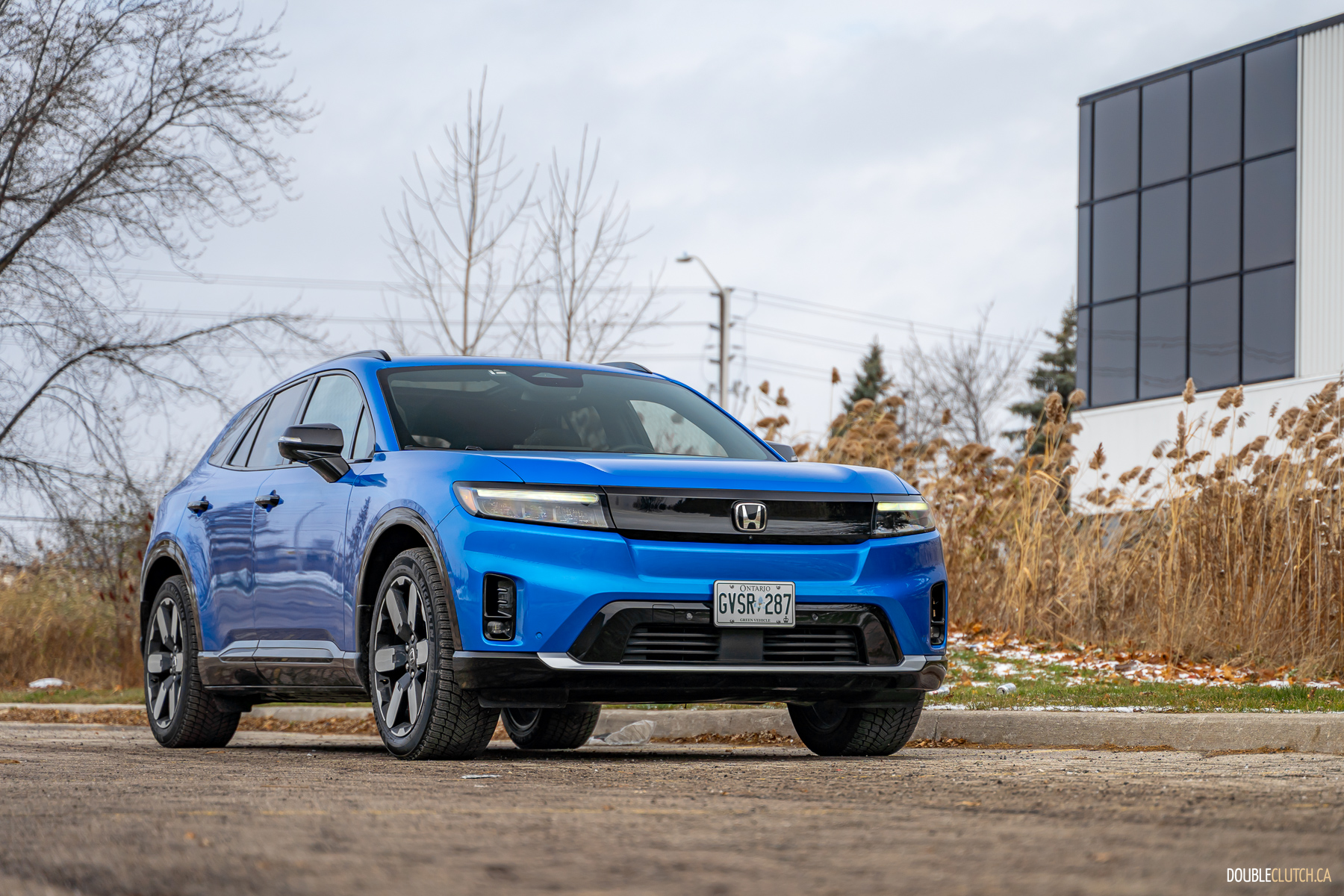
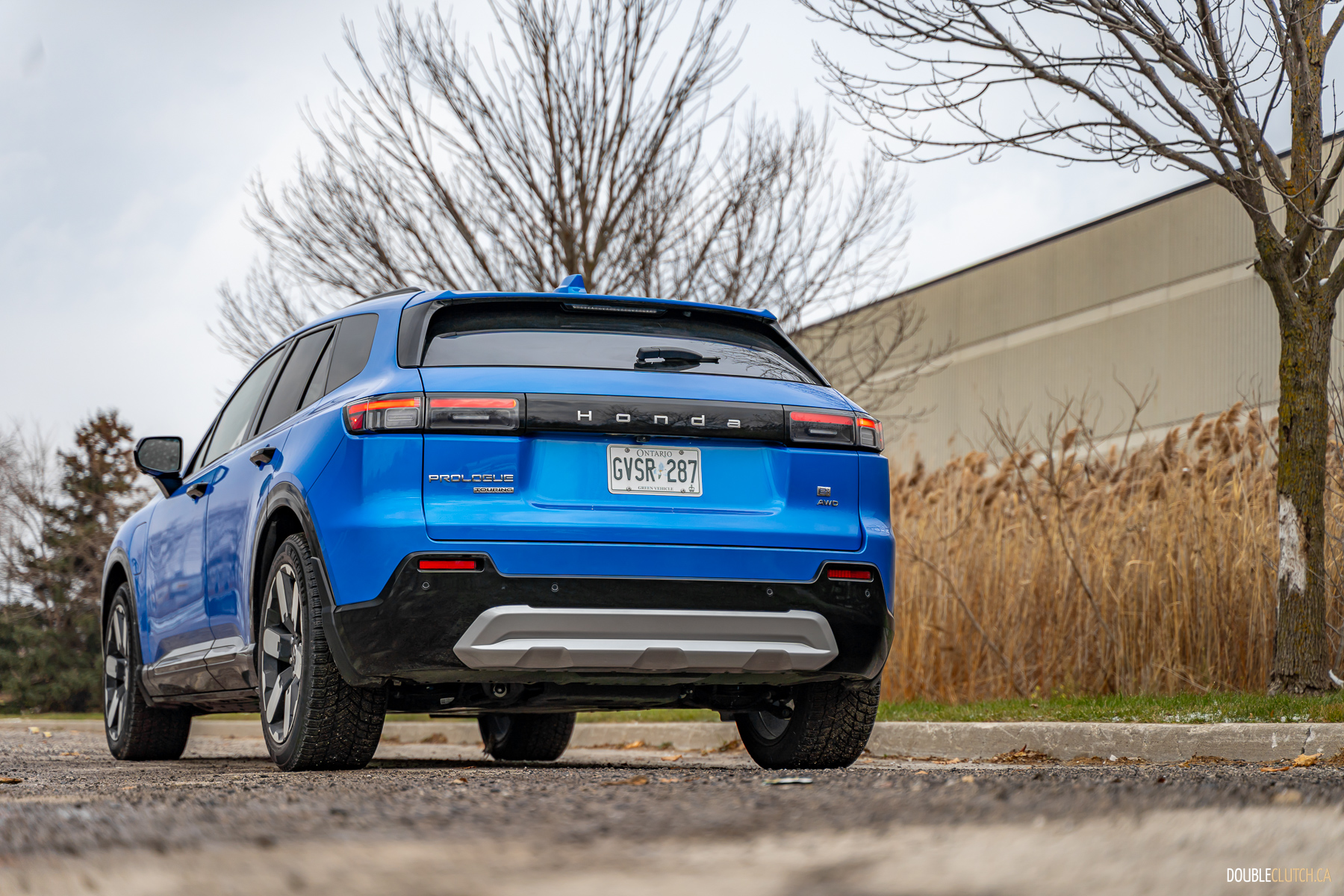
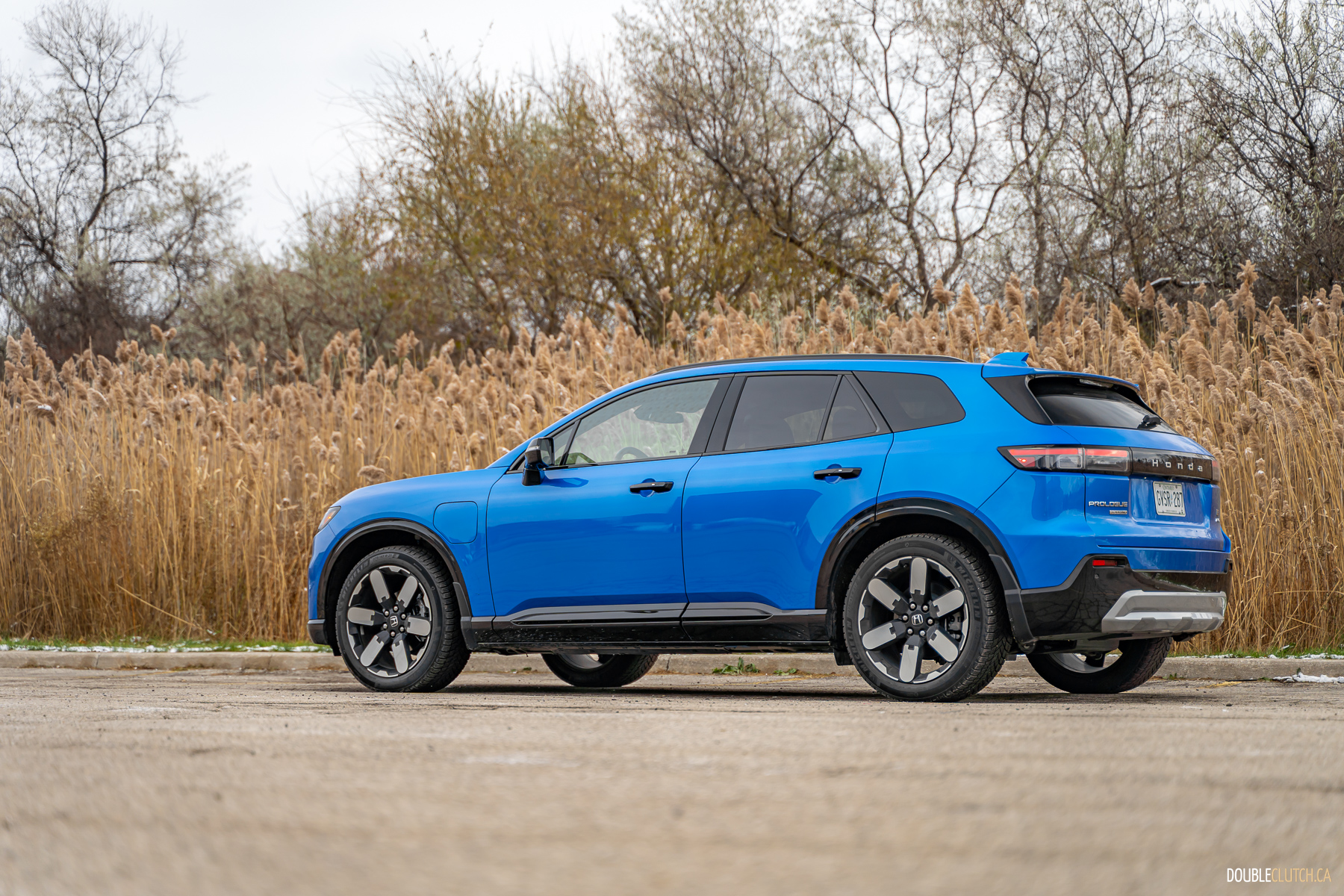
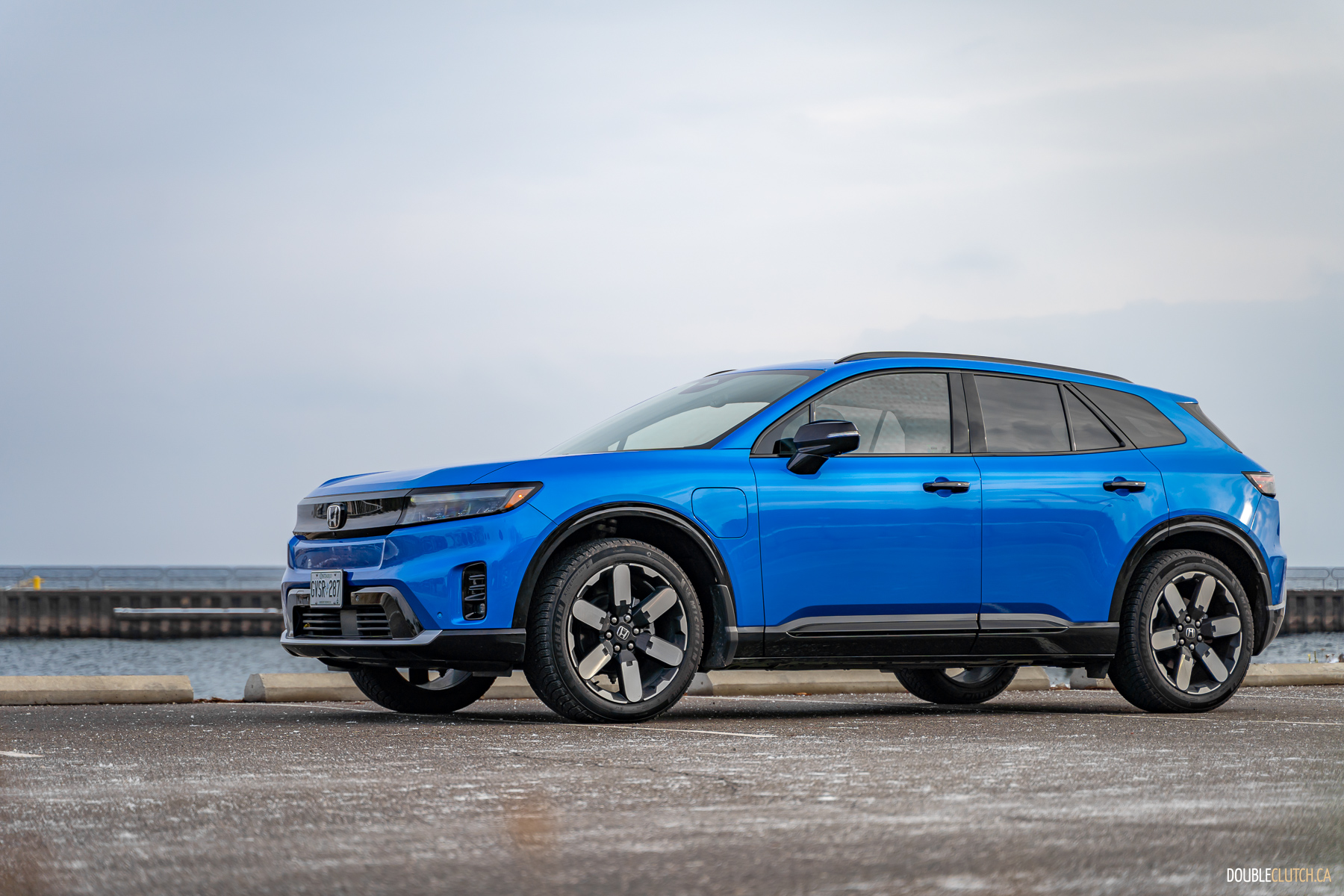
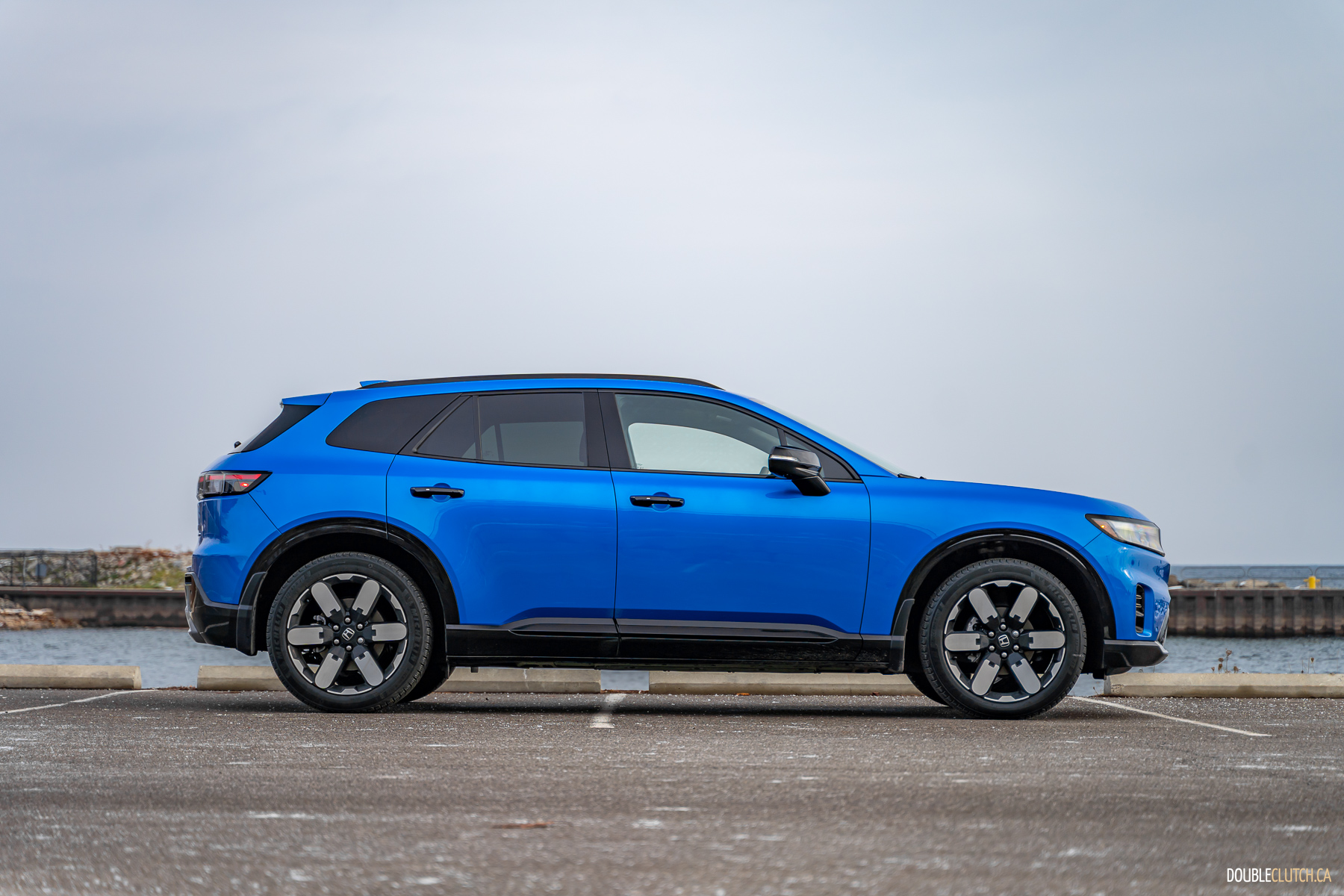
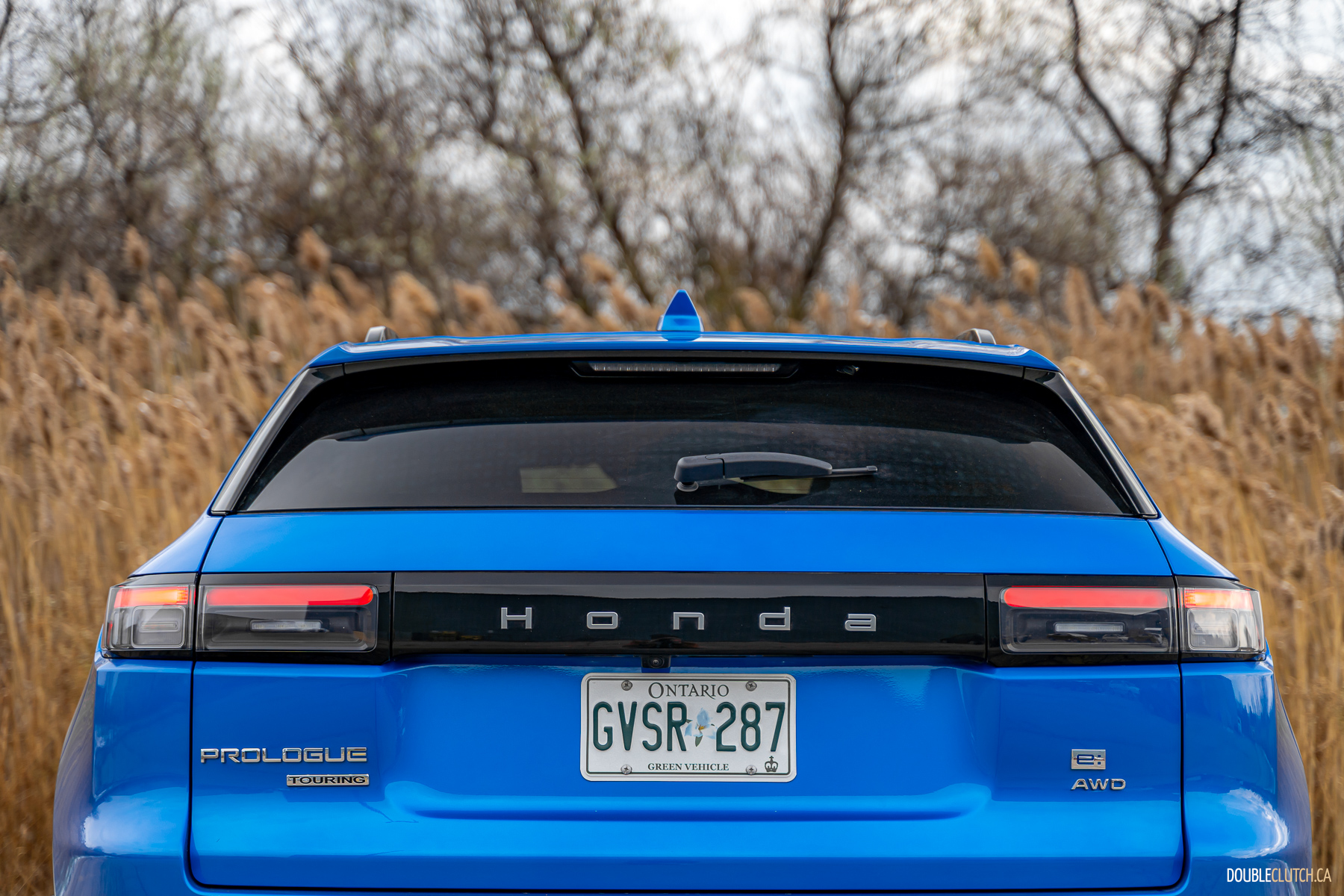
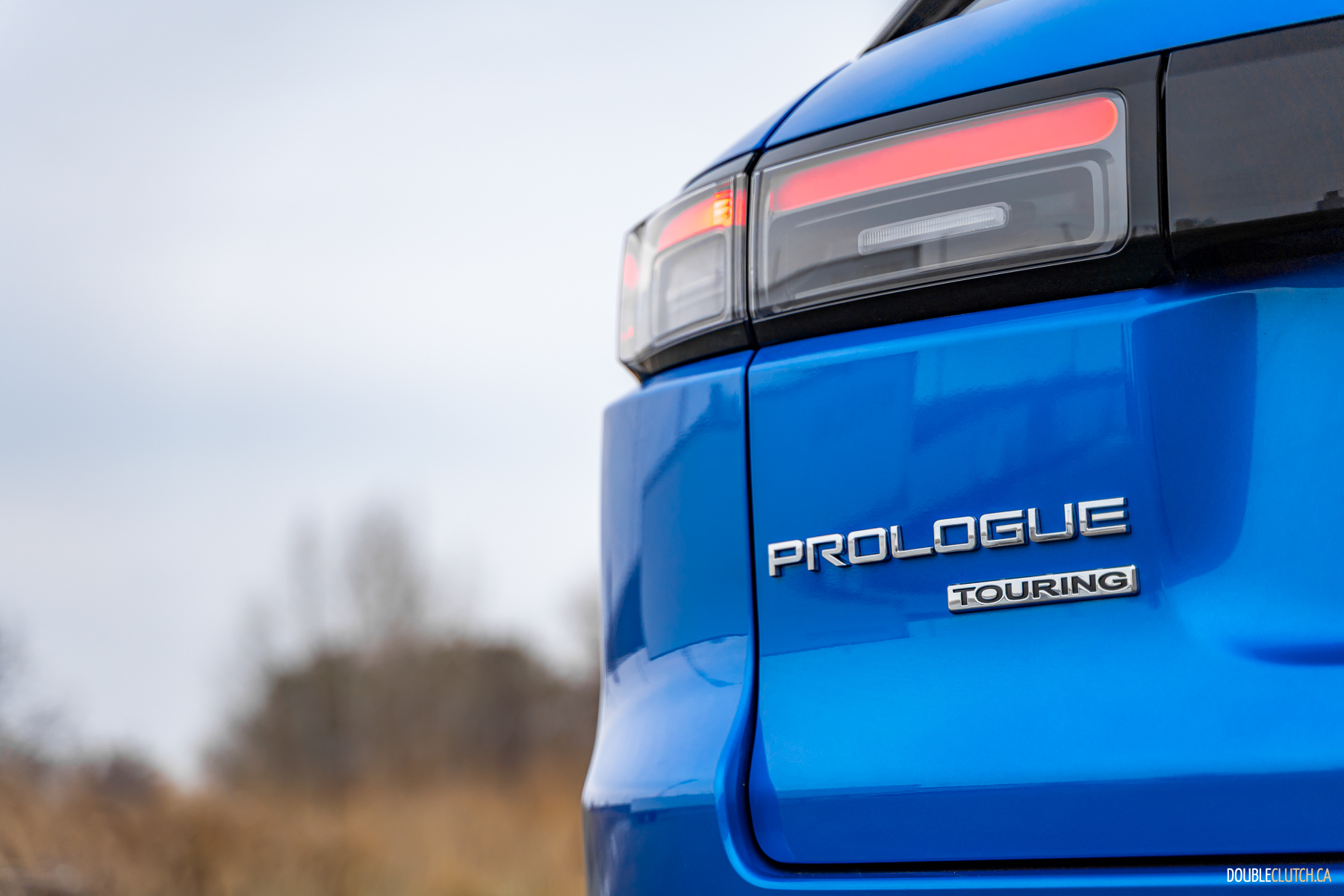
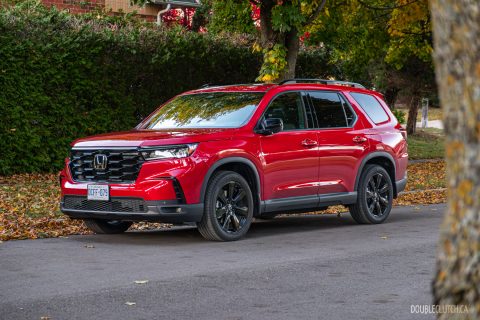
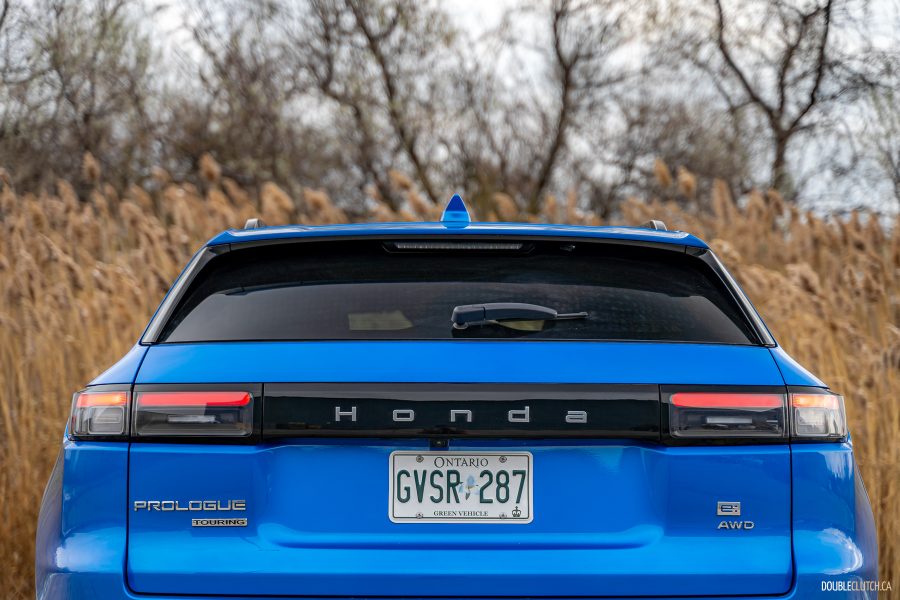
Honda’s choosing of the name Prologue is very apt, as very much like the prologue or foreword of a novel, it has very little to do with the rest of the story. The 2025 Honda Prologue is hardly a Honda at all, but instead a General Motors EV that’s been superficially Honda-fied. This only exists as part of a shrewd business decision to solve two immediate problems: they didn’t have an EV and customers were asking, and they needed a zero emissions vehicle to avoid having to purchase carbon credits from Tesla. It’s a tidy win-win for Honda themselves, and a decent deal for everyone else because it’s actually a competent best-of-both worlds product.
Notes on style, in and out
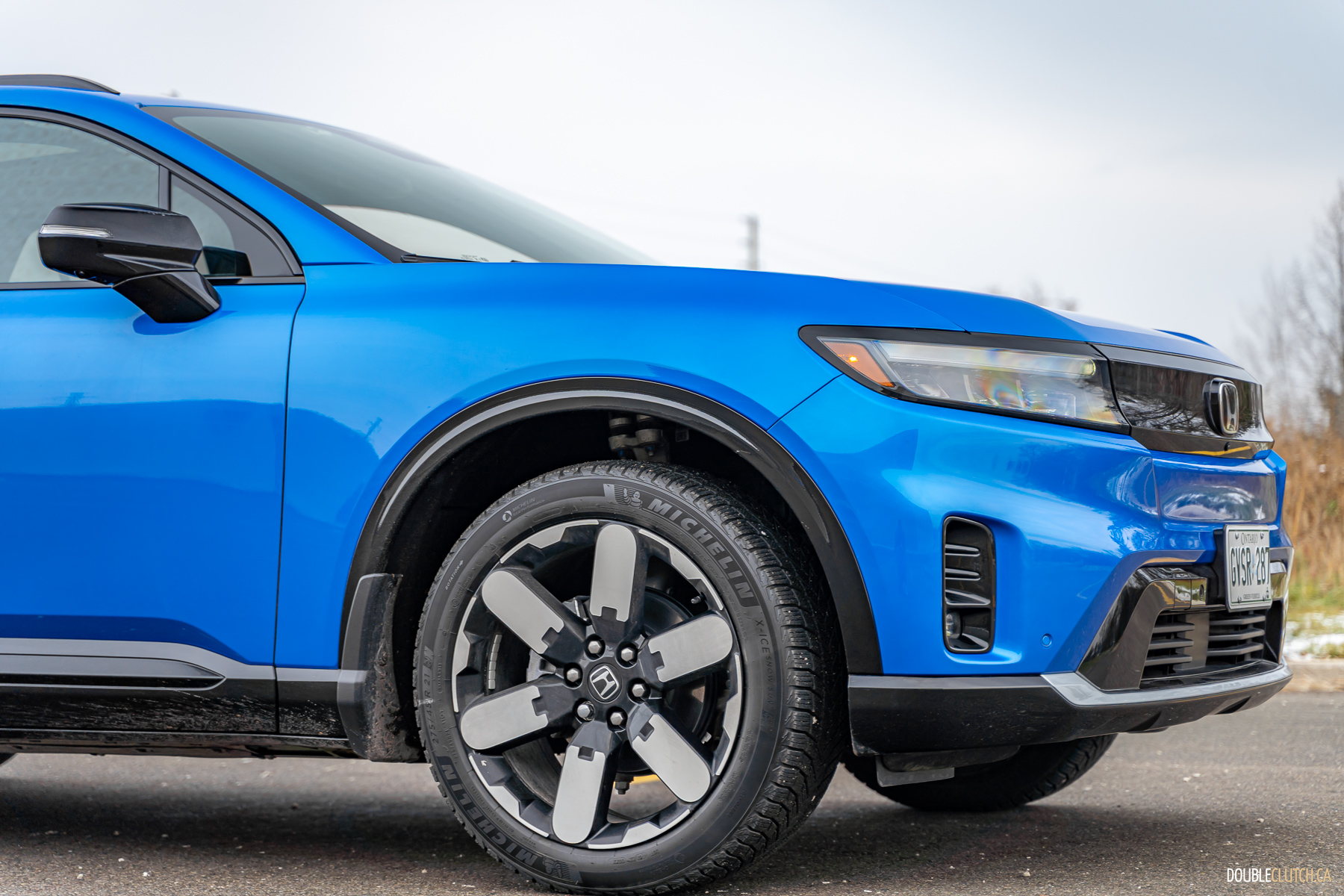
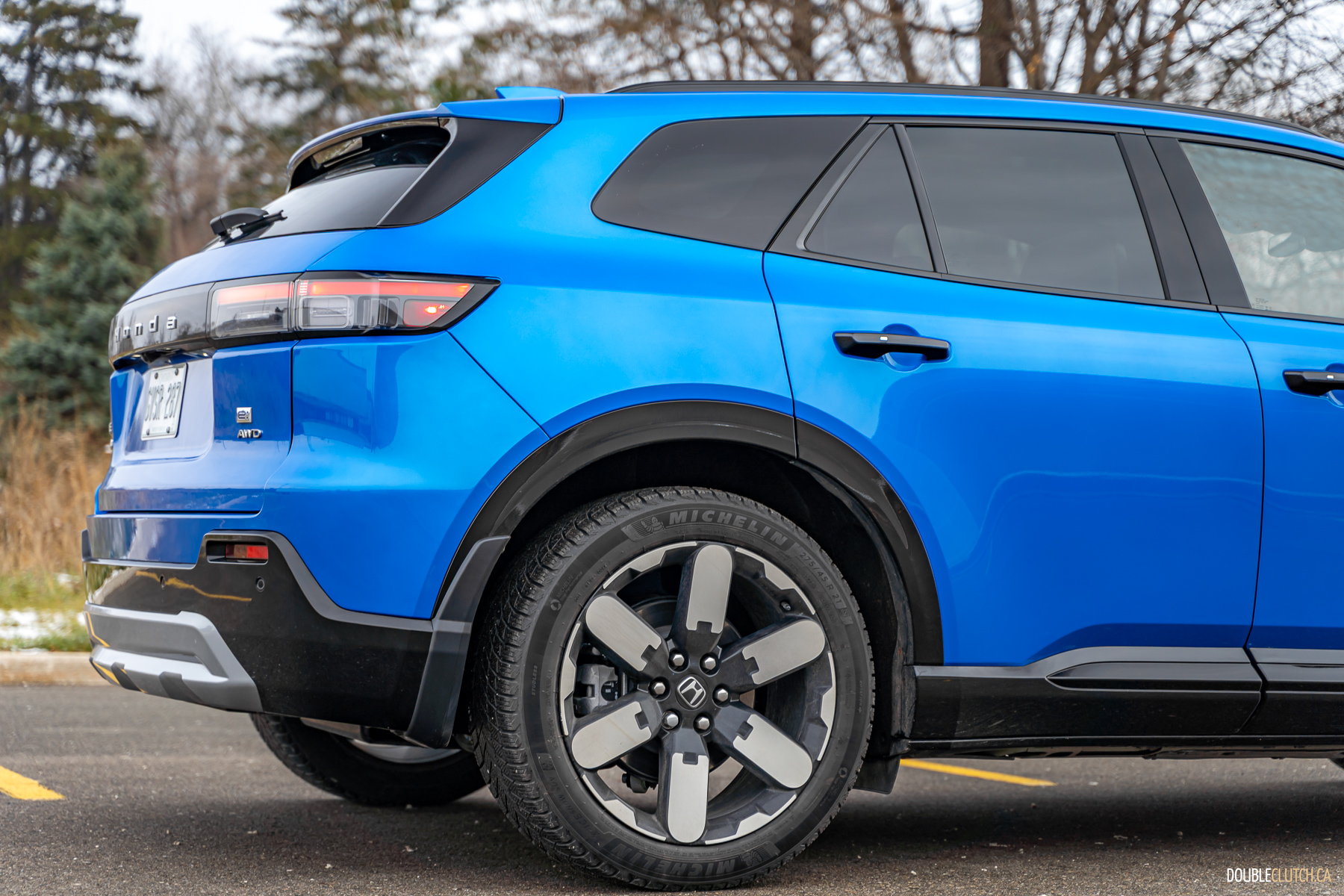
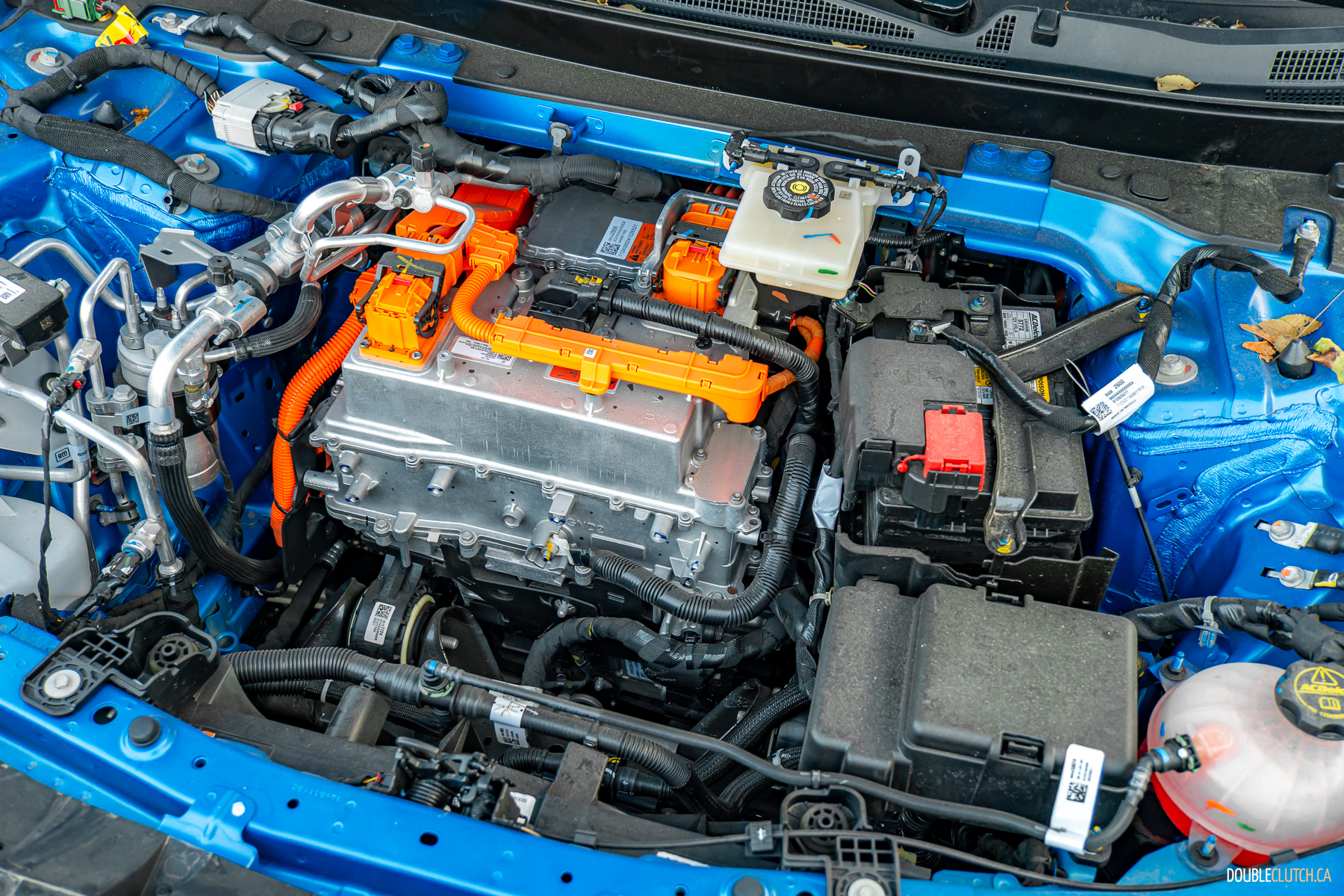
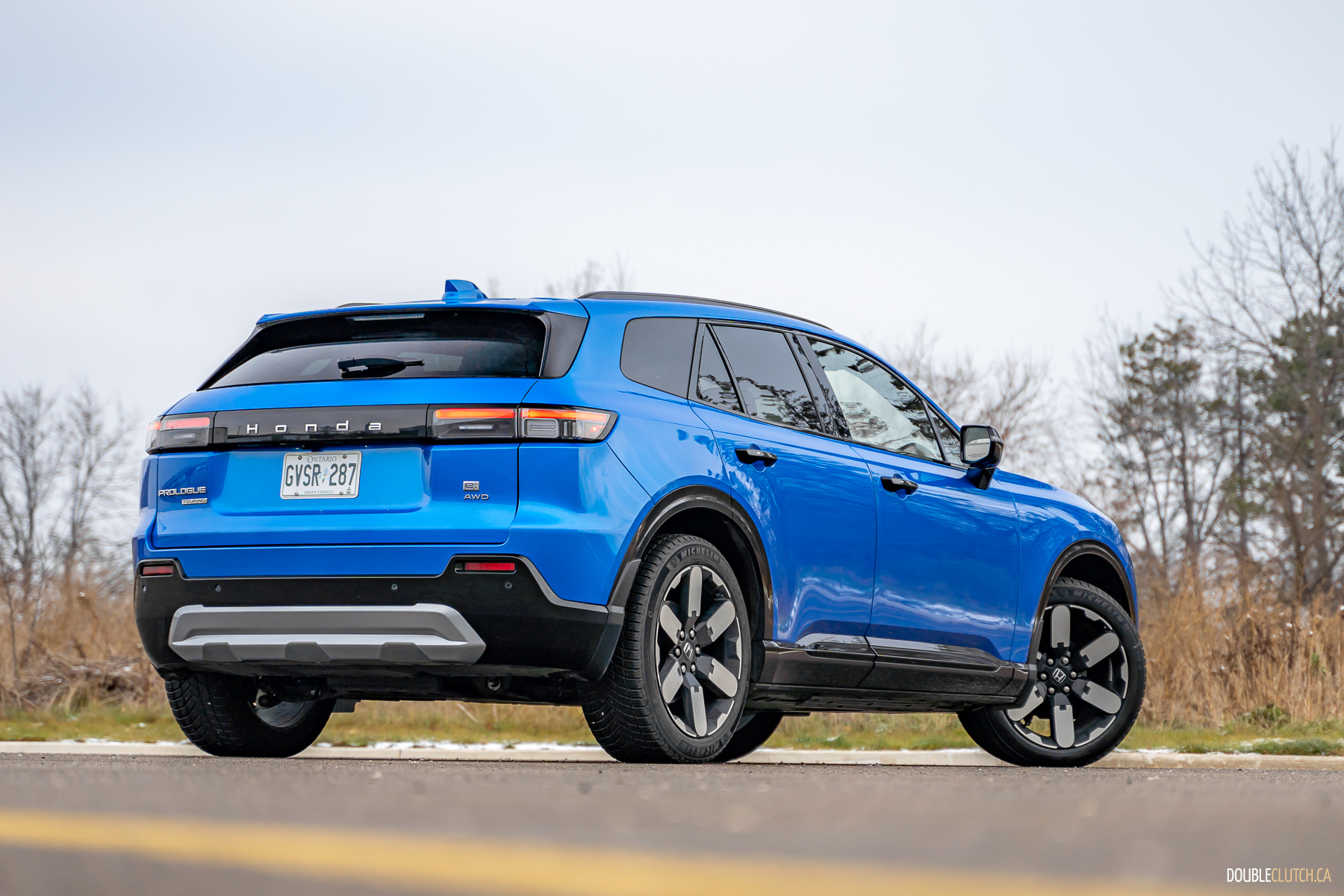
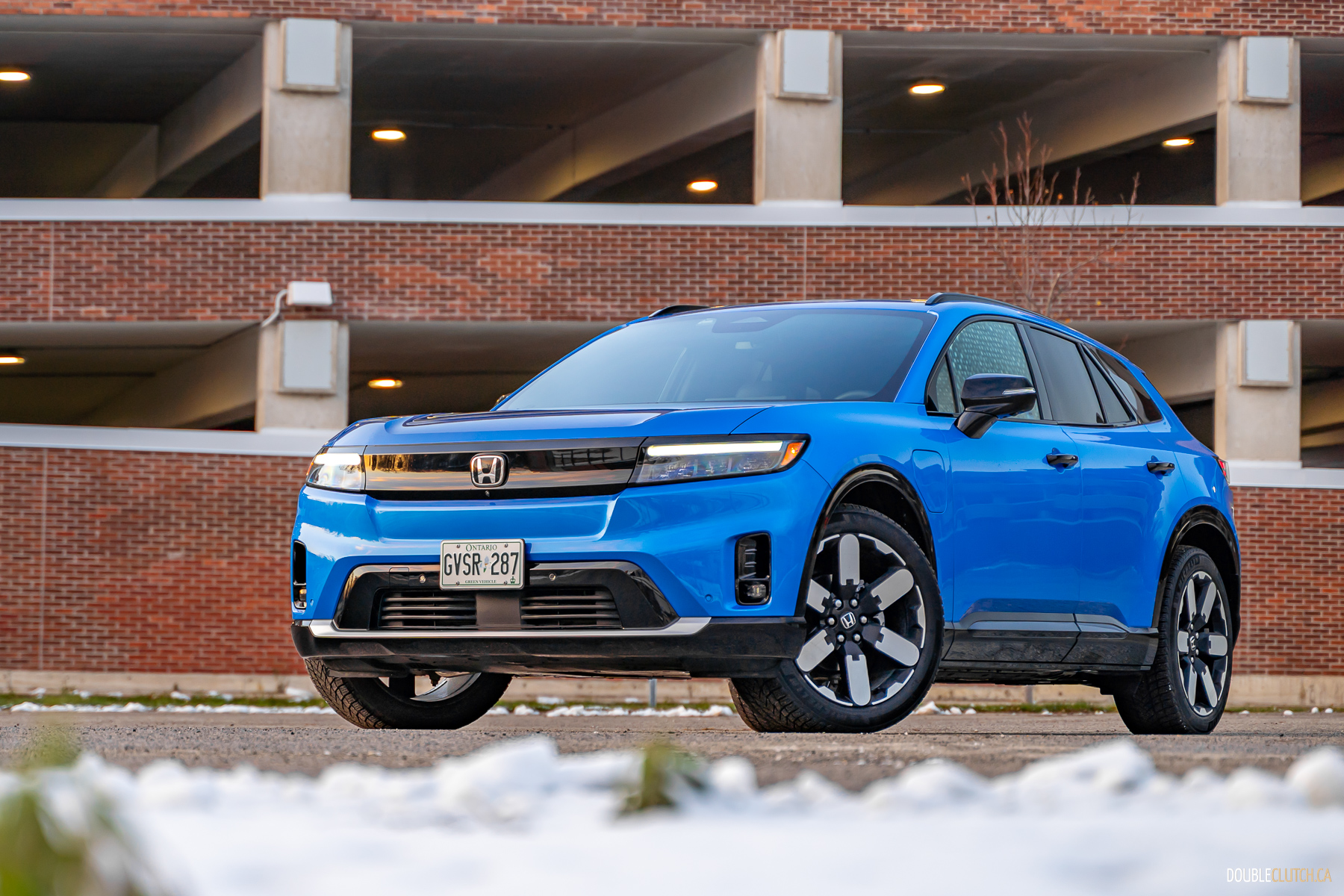
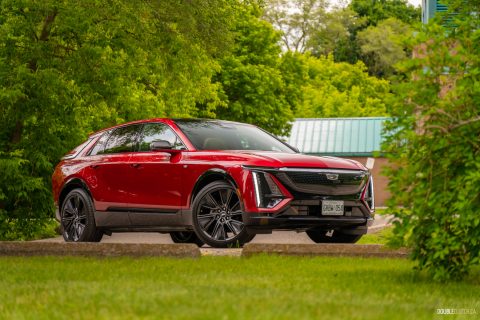
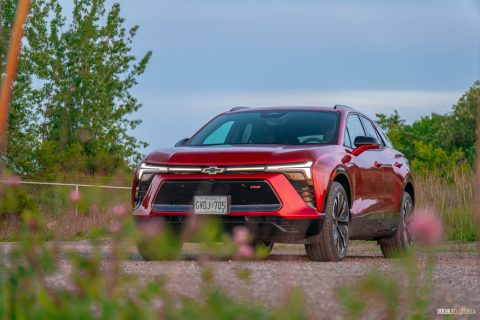
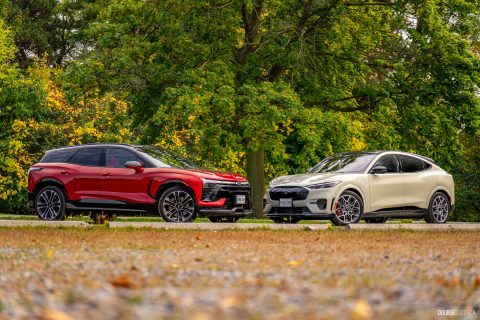
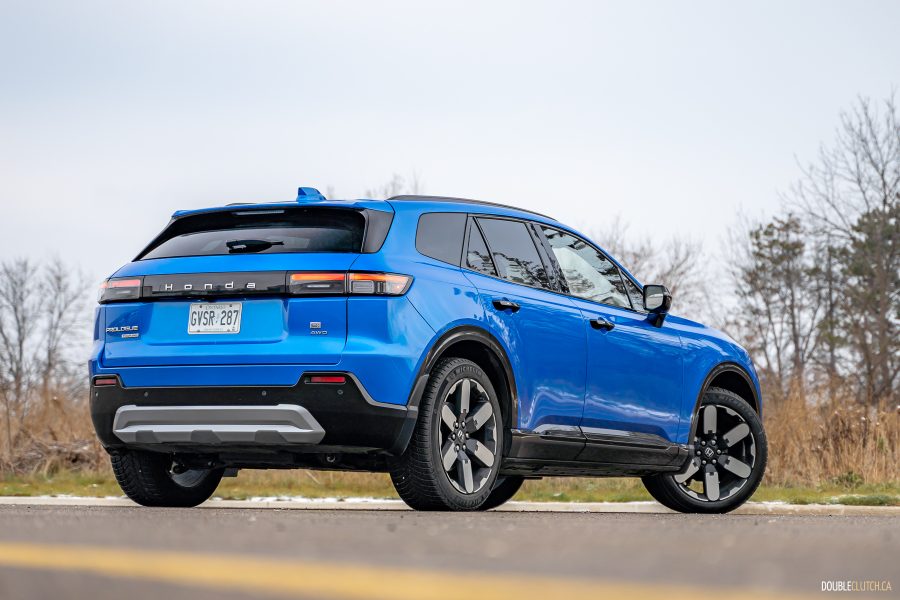
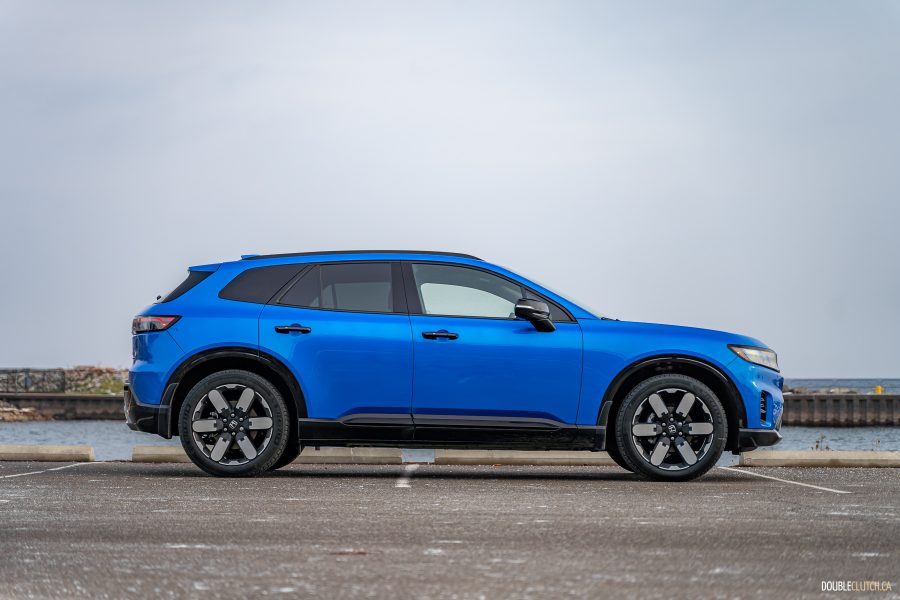
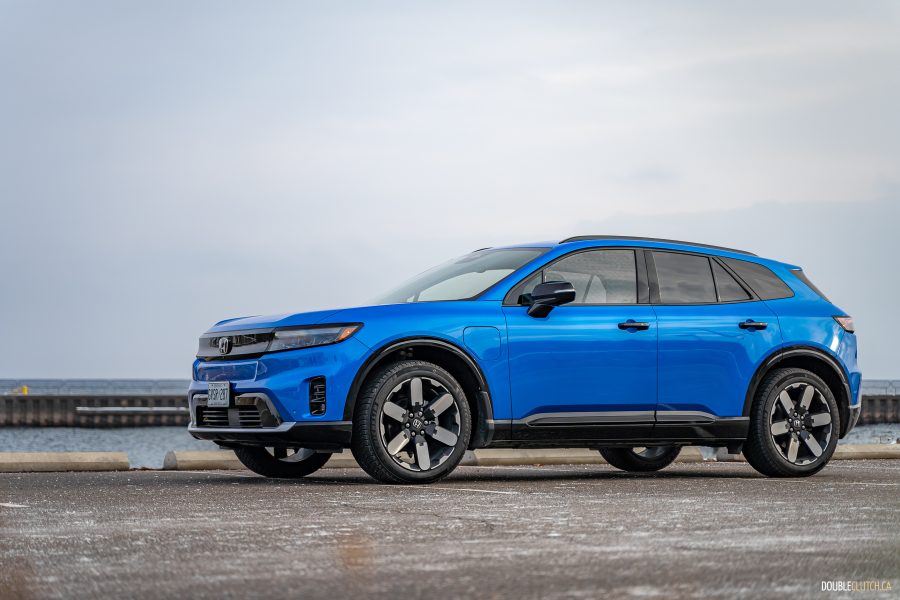
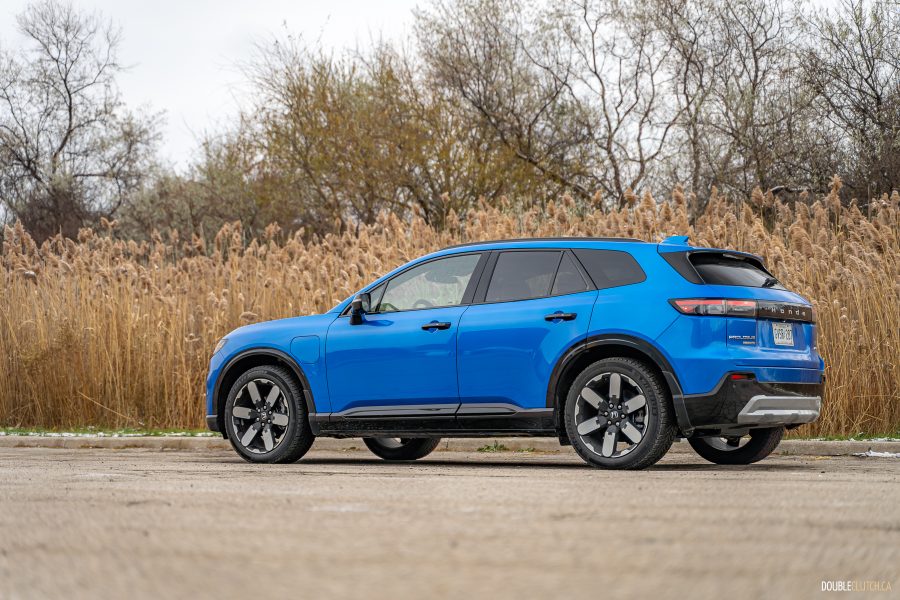
The Honda Prologue shares its underpinnings with the original trio of General Motors Ultium electric vehicles, the Cadillac Lyriq and the Chevrolet Blazer EV, which means it shares the same dramatic, wide stance that immediately gives it away as a GM. Fortunately, that same stance tends to make anything look good, and stretching a tidy, unfussy Honda skin over those hulking haunches makes it decidedly handsome. It’s comfortably my favorite of the three, but I also think Chevy’s design is typically overwrought; your mileage may vary.
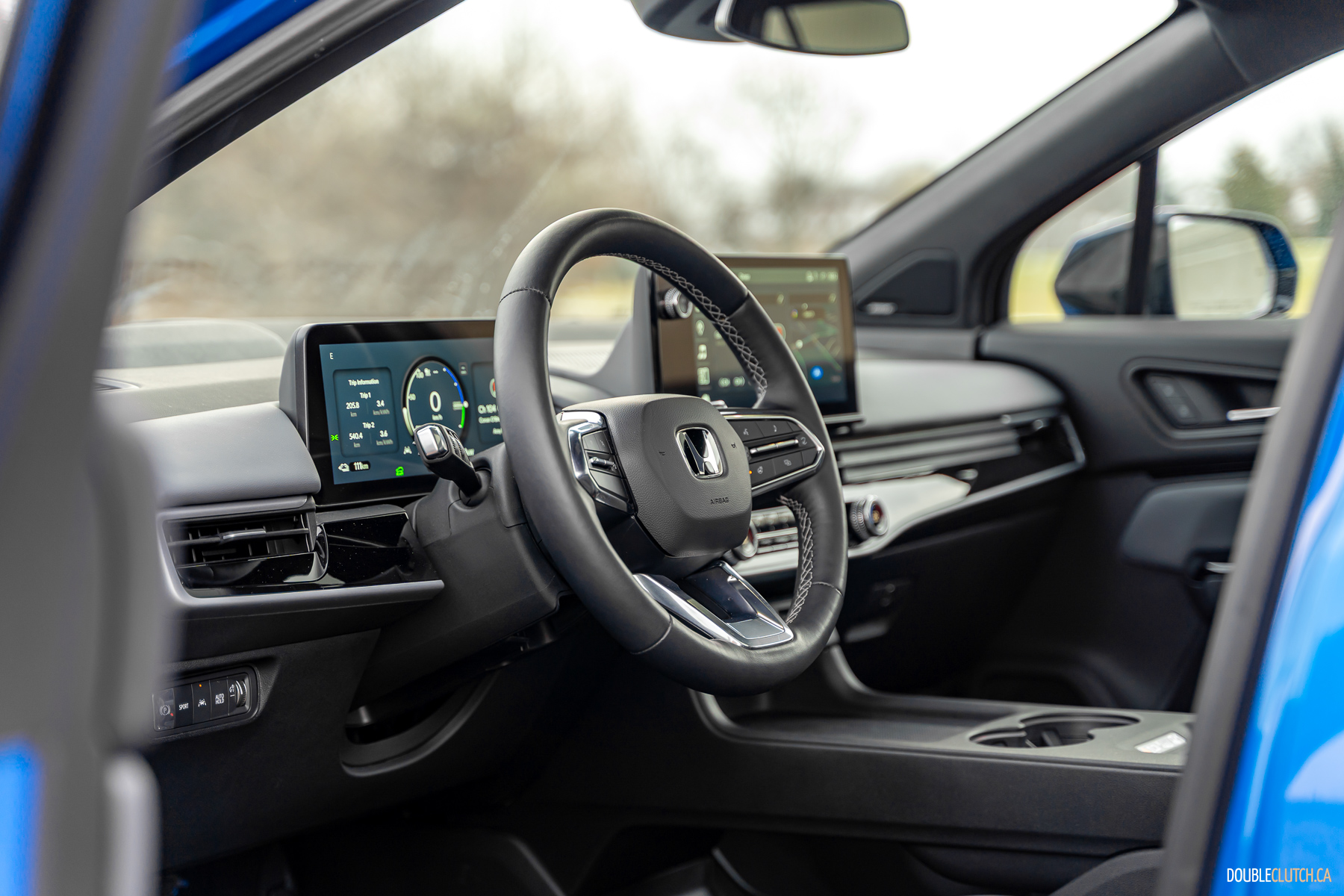
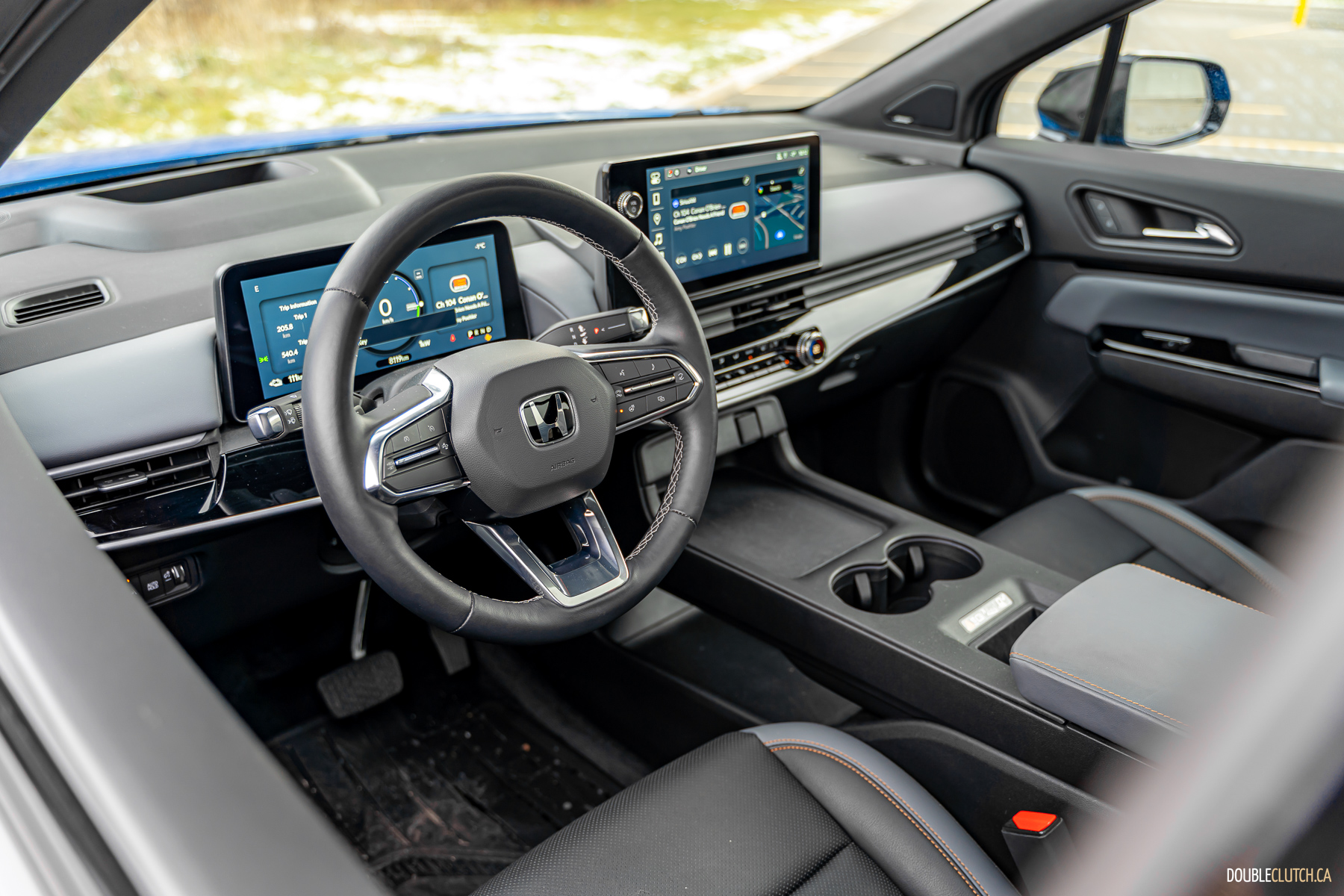
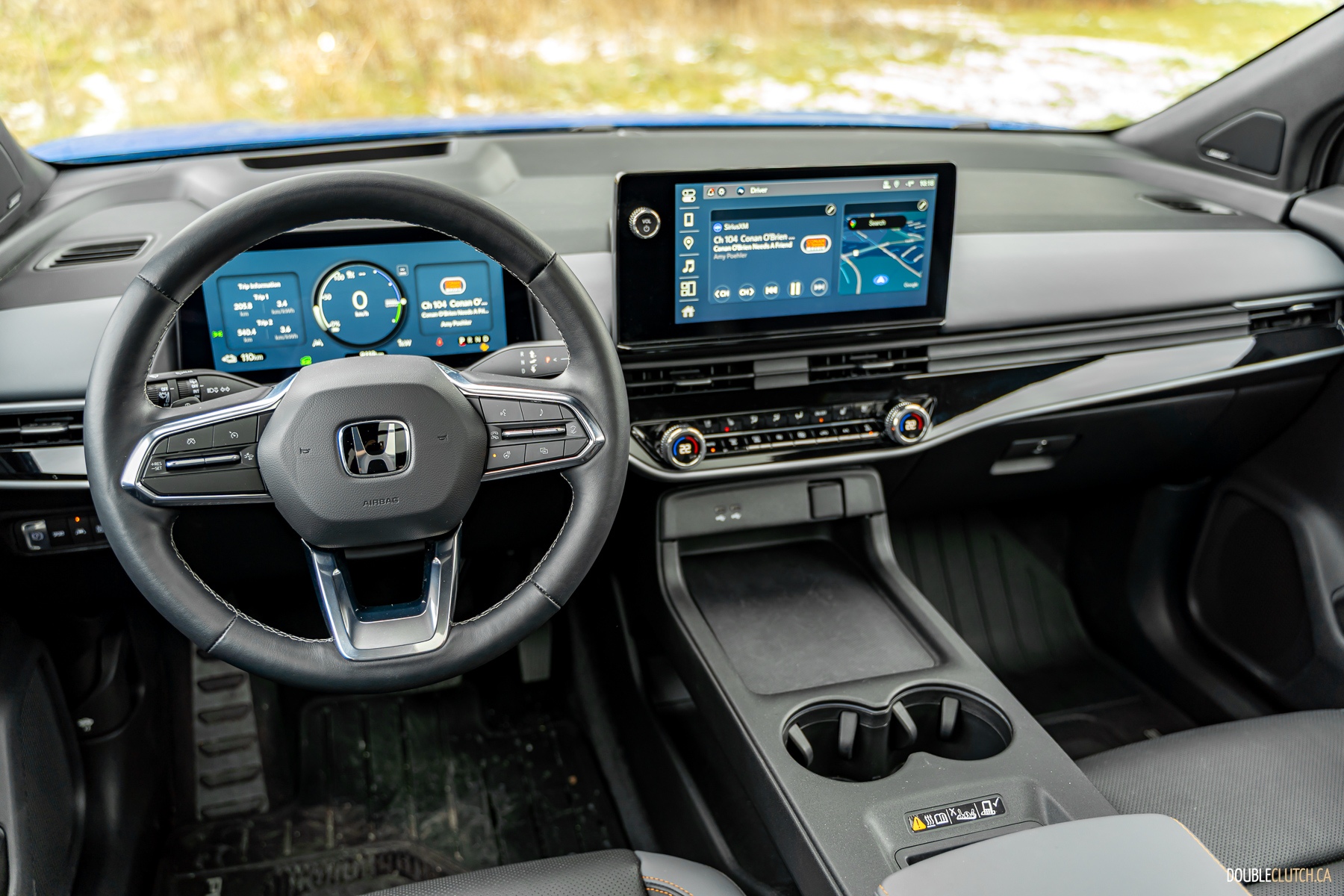
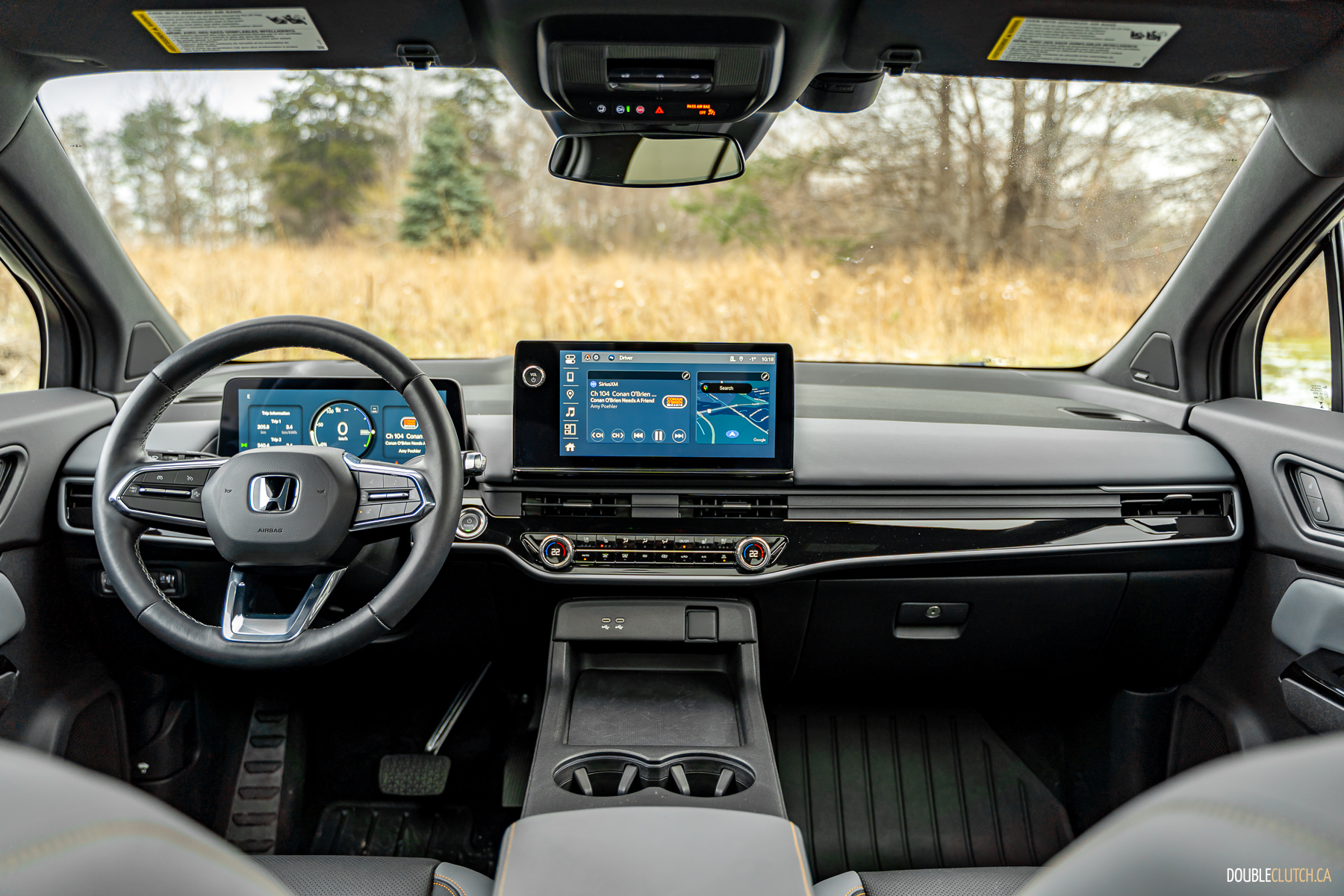
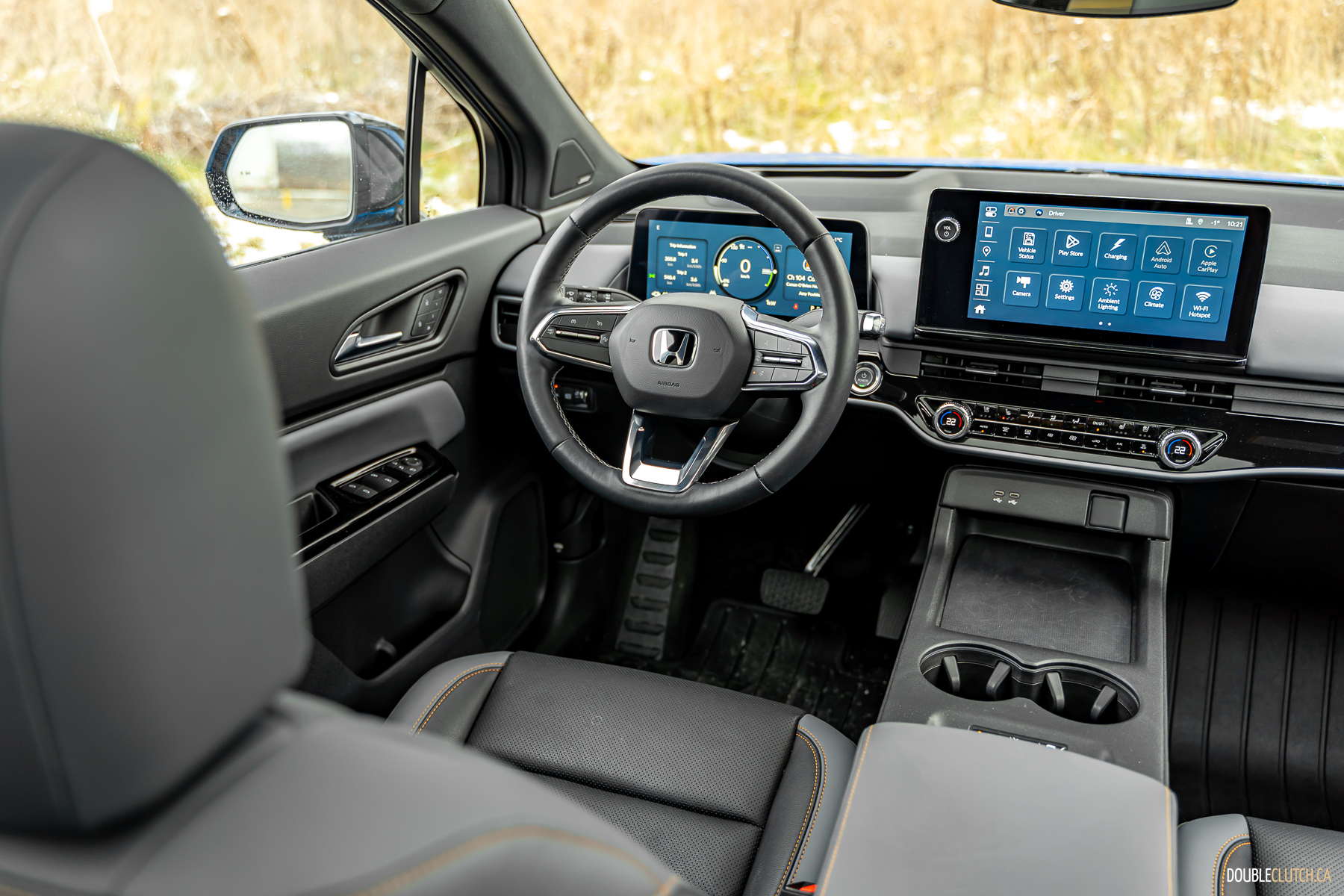
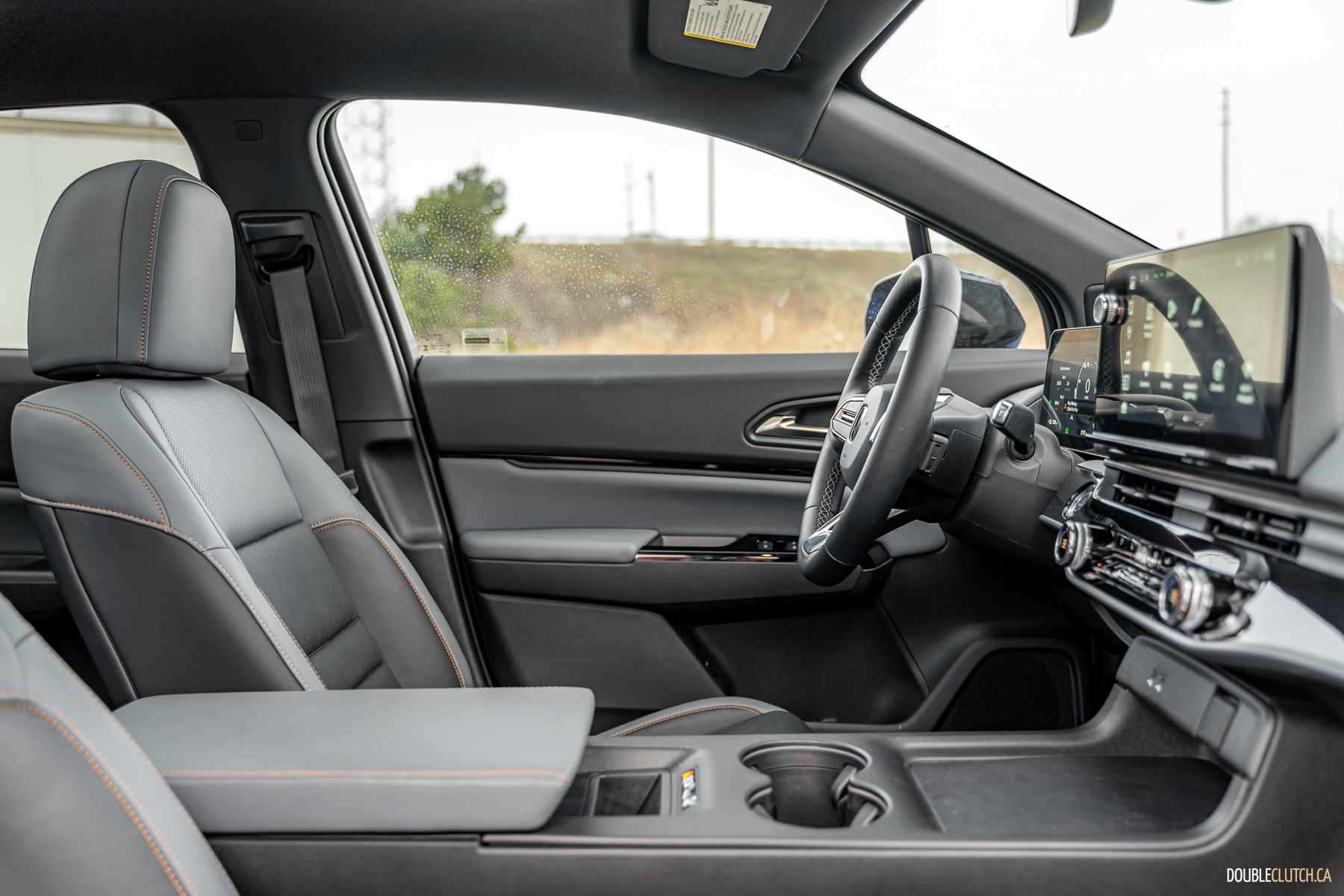
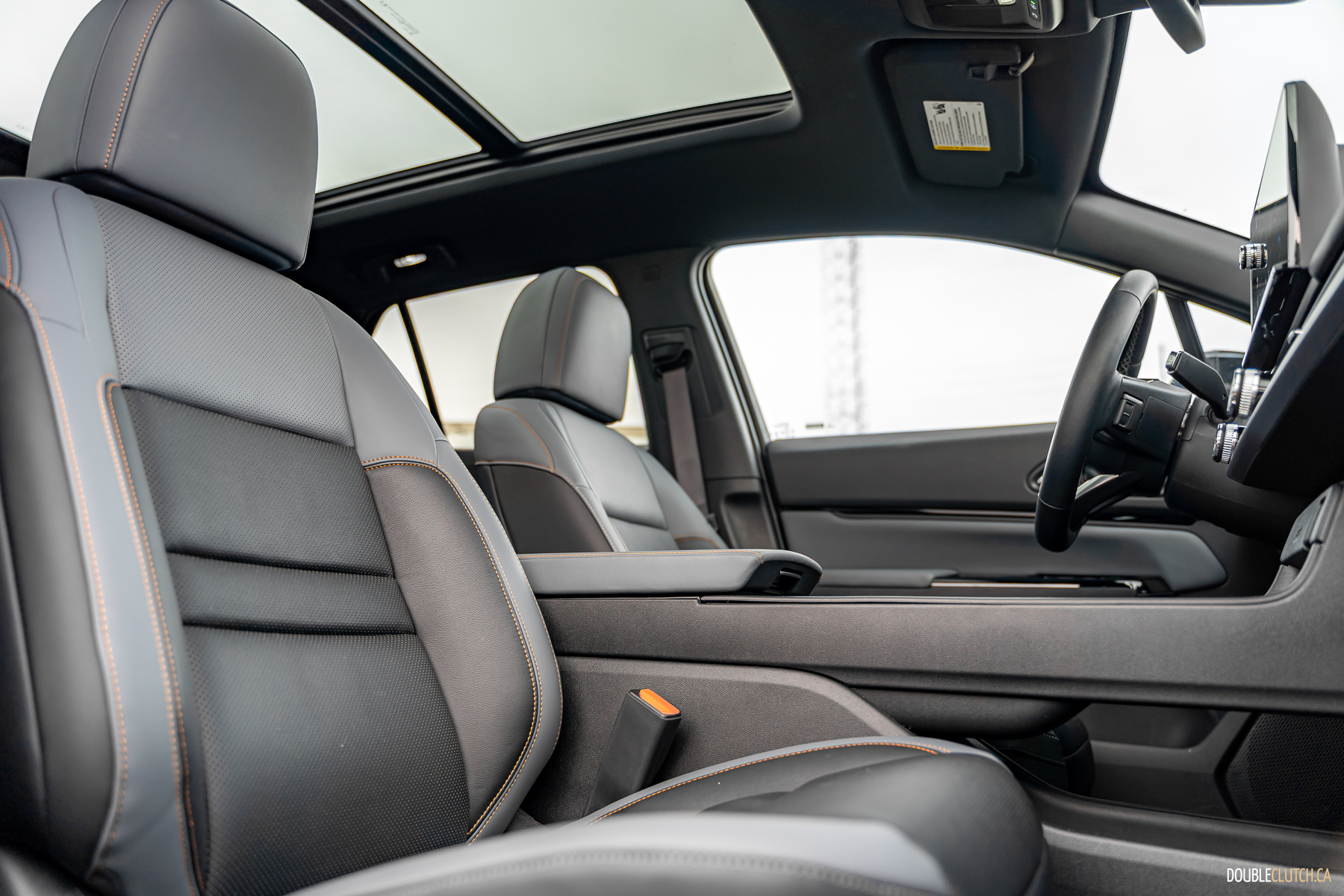
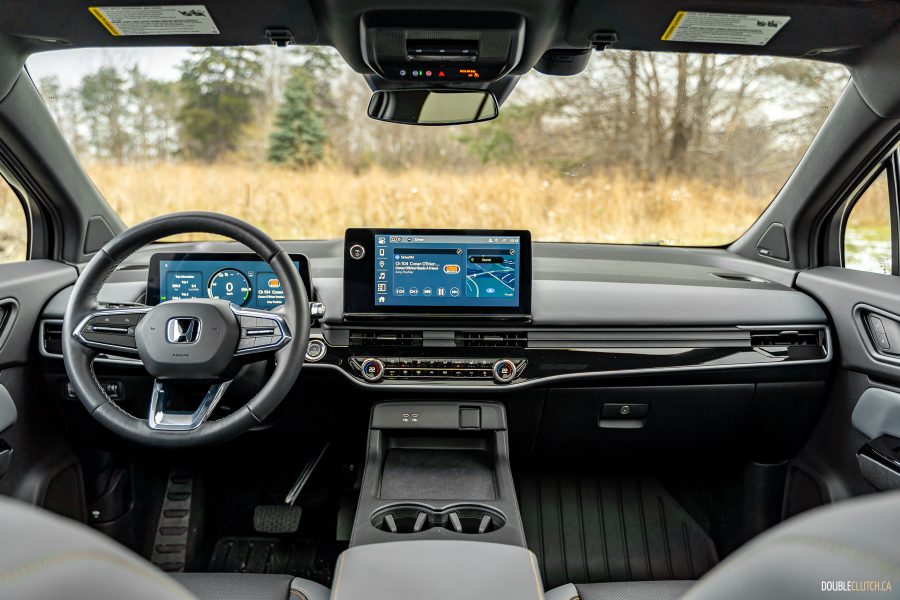
Honda’s wallpapering over Chevy sketches continues paying dividends in the cabin. I admire that the Blazer EV RS I drove looks like a designer’s concept sketch, but it’s a little bit much in reality. The Prologue is much simpler, trading curves and colors for straight lines and subdued, cohesive material choices, much like the rest of their vehicles. Our top-trim Touring adds a hint of visual flare in the form of tasteful two-tone black and grey leather, with orange stitching for a little visual pop. Chevrolet window switches, selector stalks, and climate controls give away the disguise, but it looks the part and all works well.
Melding of technologies
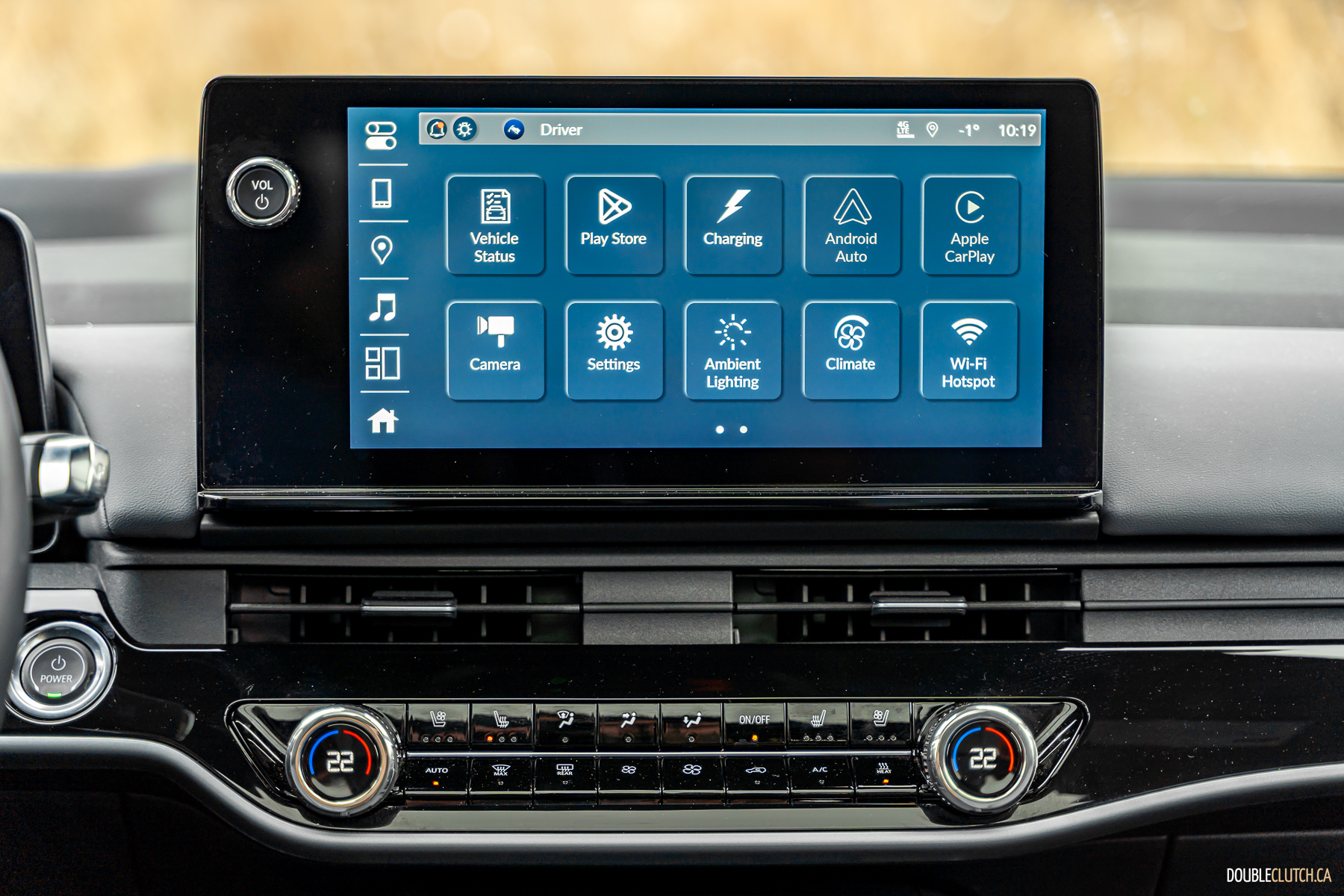
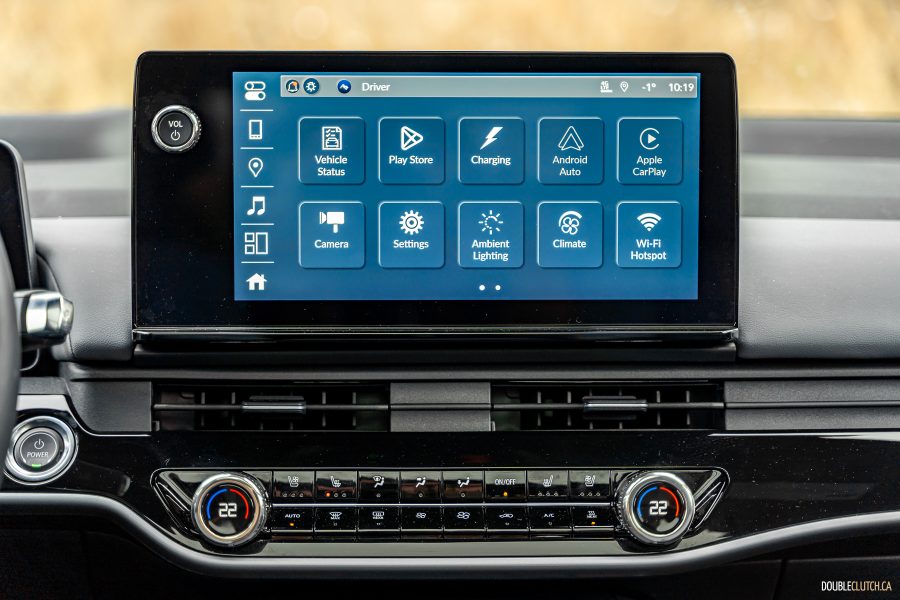
The best-of-both-worlds motif keeps rolling with the user interface, as the Prologue’s infotainment system is arguably one of its strongest assets. It uses GM’s Android Automotive software base but is styled to look and feel Honda-specific. This means it has a huge amount of computational horsepower for super snappy operation of a delightfully simple interface.
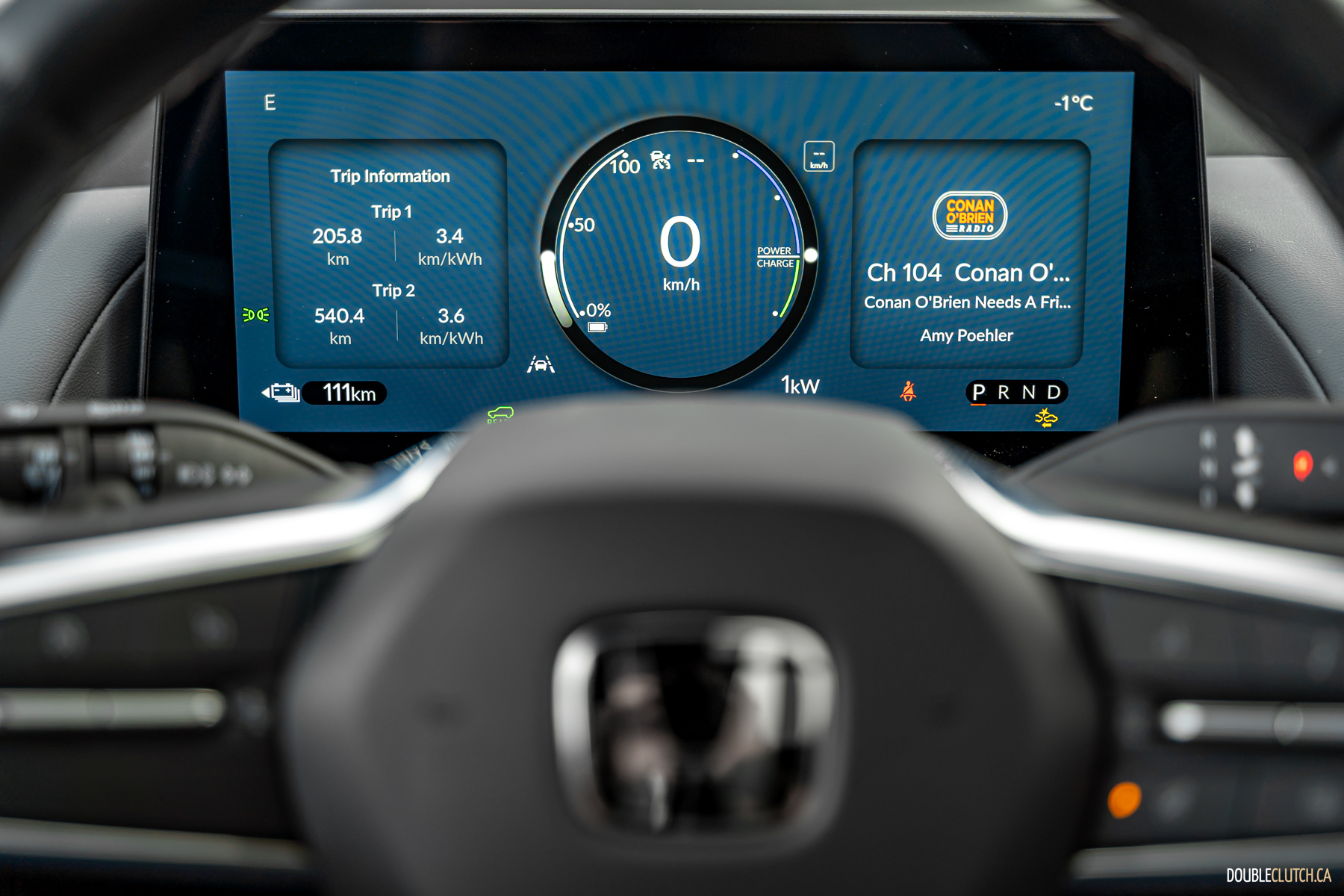
Helping simplicity and performance is Honda’s decision to eschew GM’s colossal curved display, in favor of a separated 11.3-inch center display and an 11-inch digital cluster (with a very un-GM smooth refresh rate), which I personally feel is more than enough screen. Our Touring tester includes a large heads up display, too, to seal the deal. More importantly for many, it retains wireless Apple CarPlay and Android Auto, which is a big win as GM is eschewing this must-have feature in more and more of their own products – including its twin in the Blazer EV.
It uses the Blazer’s technology suite to mirror the Honda Sensing safety suite that’s standard on their vehicles, and includes automatic collision detection and advanced braking, lane guidance, adaptive cruise control, and more. In practice it works roughly as well as Honda’s own tech, save for the lane guidance, which really is more of a last-ditch safety measure than an active assistant that we’ve gotten used to in other Hondas. And no, you can’t have GM’s Supercruise system.

Space and Comfort
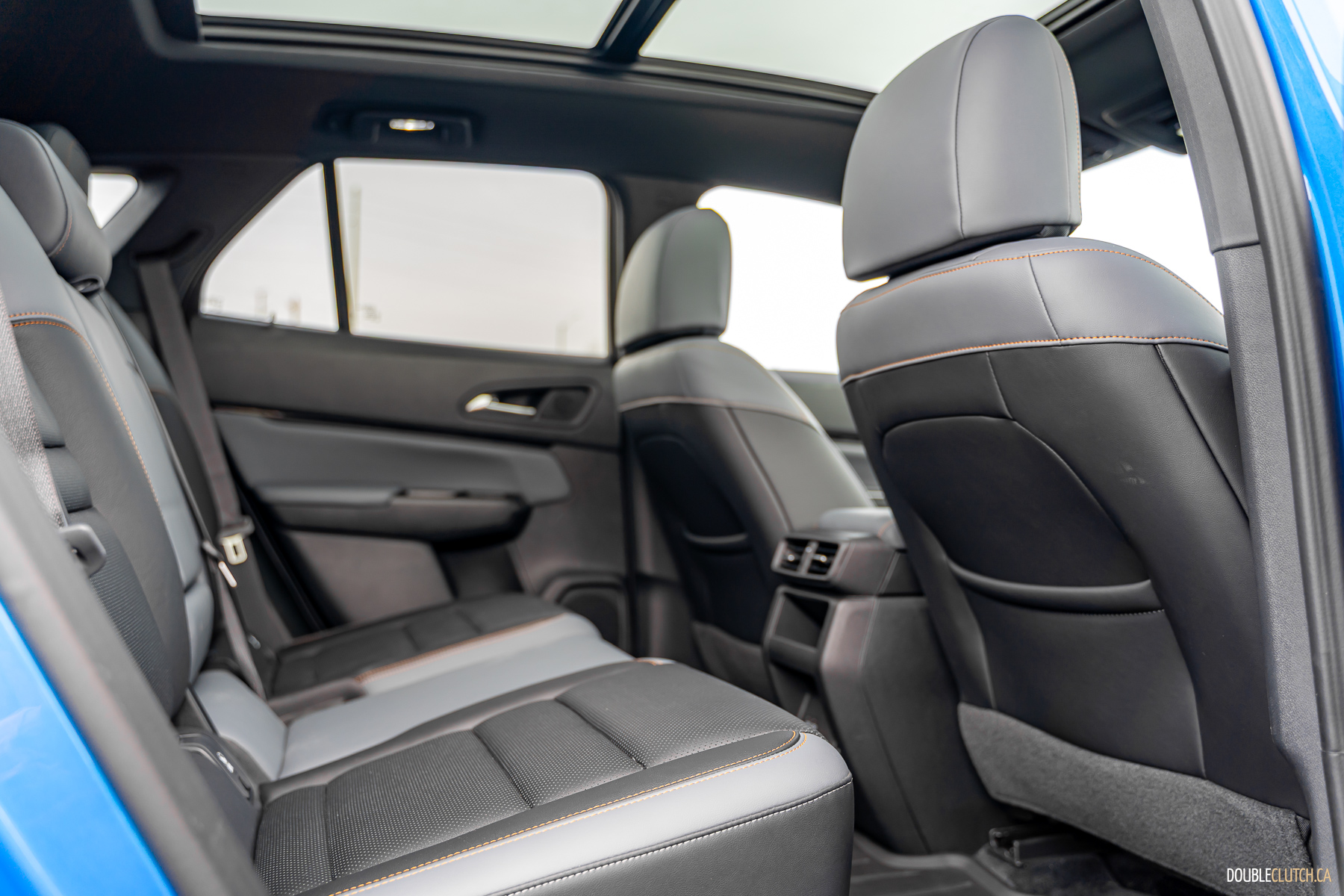
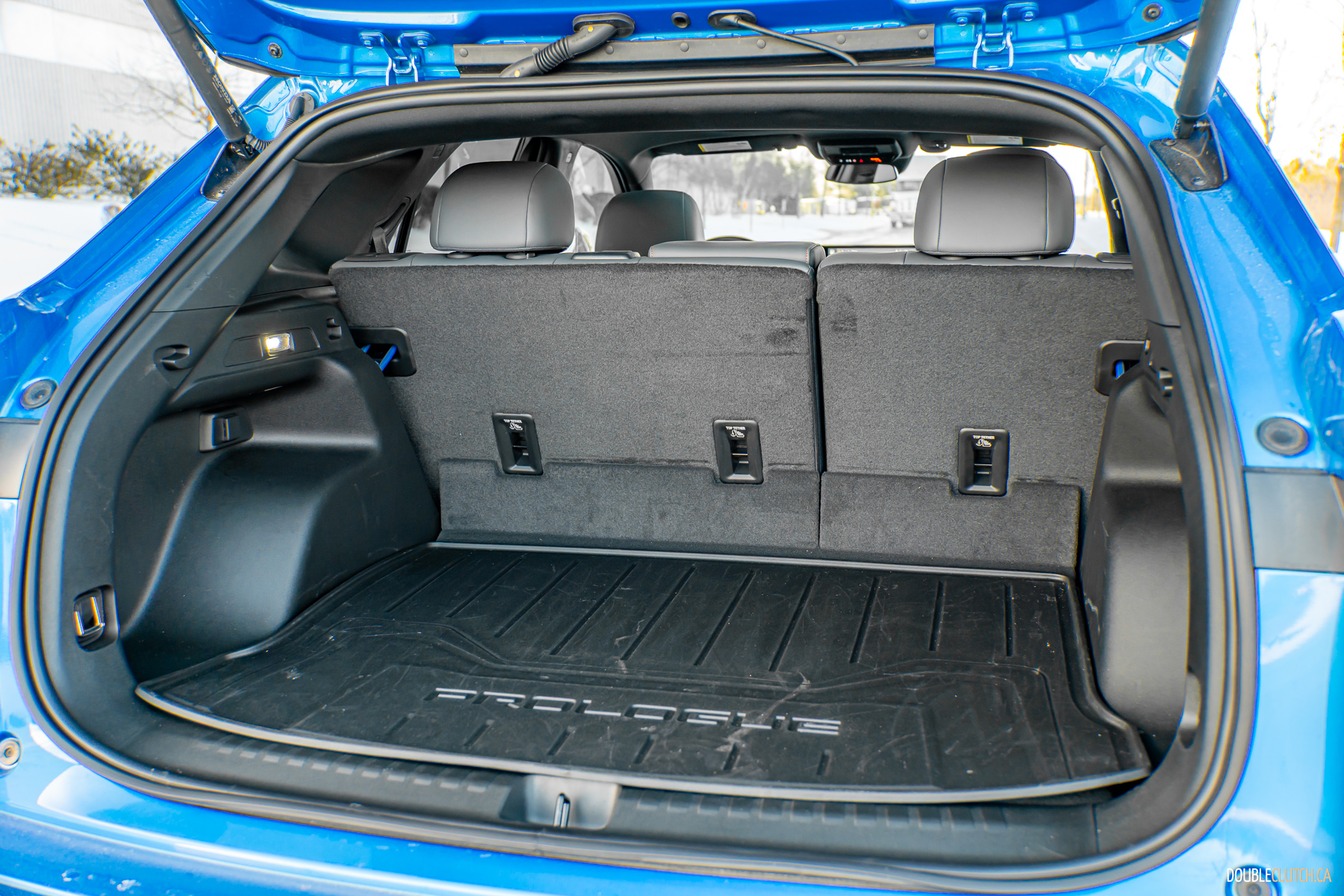
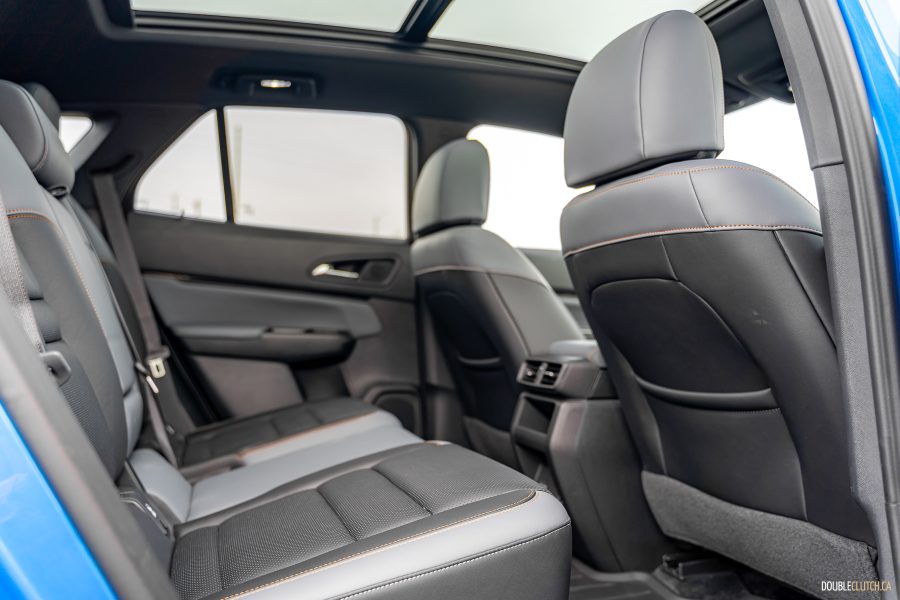
Space is a big of a mixed bag. It is a large vehicle, and as such, there is a lot of space for passengers and their stuff. Hondas are quietly renowned for their unbelievably efficient use of space, and because this vehicle is not actually a Honda, it’s not as spacious as a serial Honda buyer might expect for something this size. Despite its husky footprint, usable interior measures at about the same as the subcompact Honda HR-V, and the similarly sized Honda Pilot dwarfs the Prologue.
In typical fashion for both Chevrolet and Honda, the seats are unremarkable. They’re comfortable enough for everyday driving, but a bit flat and lacking support on longer journeys. Despite these minor misgivings, is a rather comfortable vehicle, it is exceptionally quiet, plenty spacious, and it rides well.
Driving impressions
For the existing clients that Honda is looking to tide-over with the Prologue will be quite pleased with the Prologue’s performance. Its twin electric motors produce a combined 300 horsepower and 355 foot-pounds of torque. There are plenty of much quicker EVs out there, but it’s adequate for the overwhelming majority of people, able to zip away from a light in a hurry and merge confidently, and indeed it is the quickest Honda you can buy at the moment, save for the purpose-built Civic Type R.
It drives similarly well, and similarly unremarkably. GM’s calibration of throttle response and (configurable) regenerative braking feels natural and shouldn’t be too alien to someone coming from a Honda SUV. As mentioned before, it is exceptionally quiet, and its ride quality is a well-judged blend of comfort and control. If hustled, it handles itself admirably, but it’s not particularly lively. This is another area where Honda and GM feel fairly well aligned, at least in this instance. It’s a refined experience that thoroughly insulates you from driving, but doesn’t completely remove you from the act.
Range and Charging
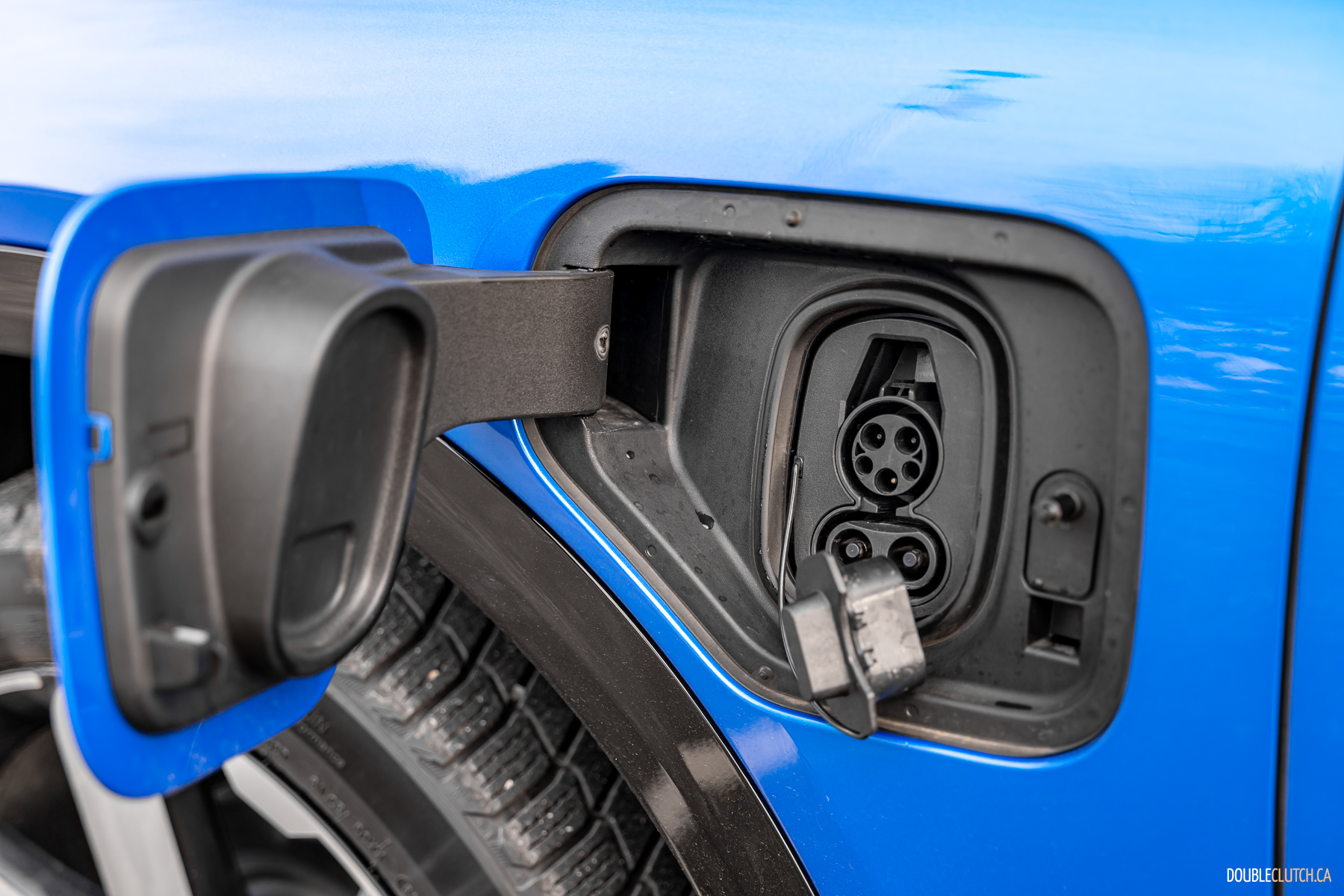
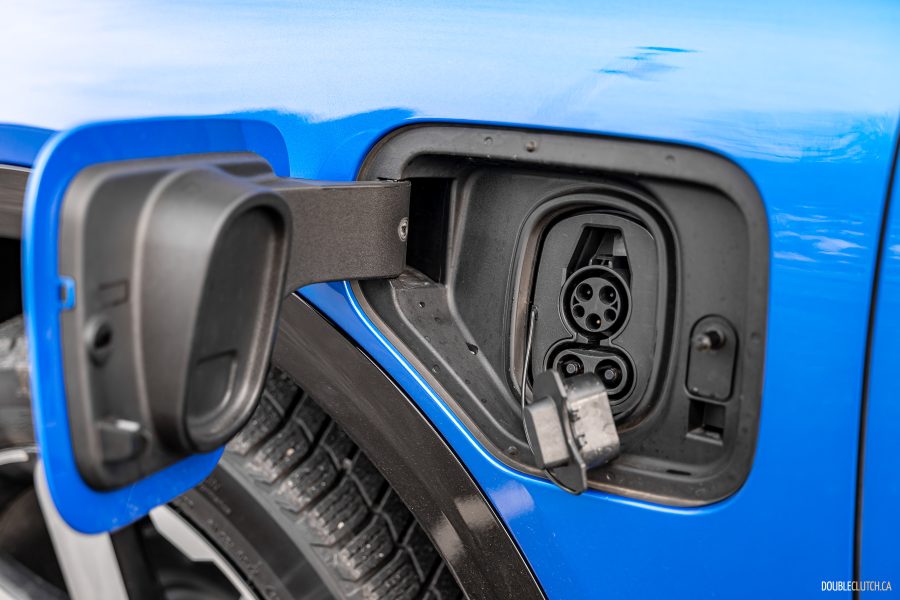
The Prologue uses an 85-kWh battery pack, delivering an estimated range of 473 kilometers, and can charge at a max rate of 155kW. Neither are class leading, but the range is healthy enough and the recharge rate is still more than the healthiest public charger I’ve ever found.
The only thing really of note here is that this makes the first occasion I’ve had one of these mid-size Ultium vehicles in the winter, and its built-in range calculator is seemingly unable to properly account for the cold. The fact that EV performance drops off like a stone at and below freezing temps is what it is, but you’ll need to be mindful that the indicated range is gonna be way off; an indicated 454 km of range only ended up being about 275 by the time I was down to ten percent of charge.
Wrap it up
The 2025 Honda Prologue is a tricky thing because I can’t not see it for what it is: a necessary evil. Much like a number of General Motors’ products, Honda is almost counting on the fact that you’re not paying much attention to industry at large, and stopped cross-shopping a long time ago. Unfortunately, because it is my entire job to pay attention to the industry, I know that this vehicle is actually a General Motors product, dressed up to look like a Honda to those who aren’t familiar with Chevy switchgear. All that said: it’s kind of a best-of-both-worlds. And, like a lot of GMs, there’s a pile of cash on the hood, so our tester’s $69,900 sticker is sure to be much more palatable in practice.