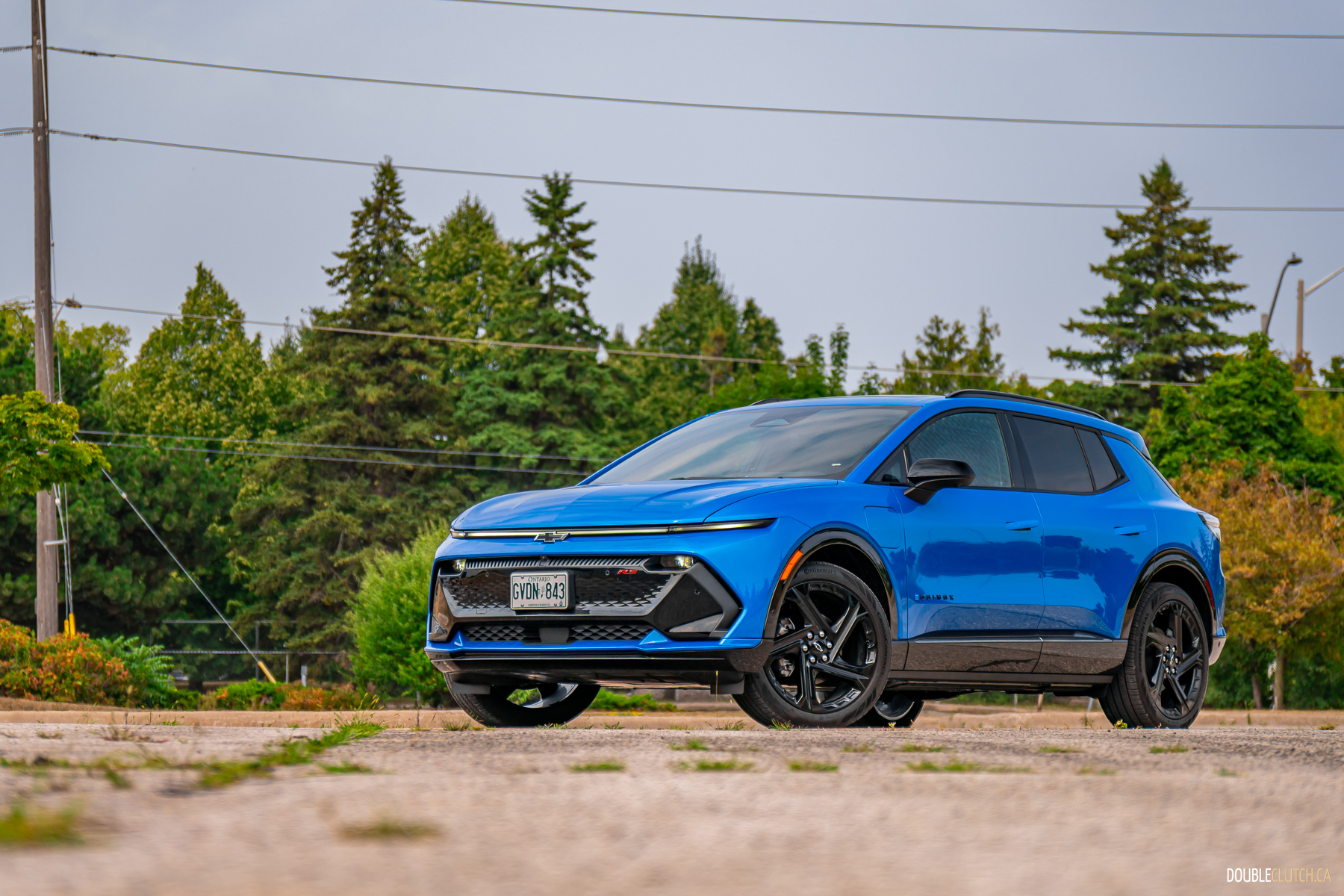
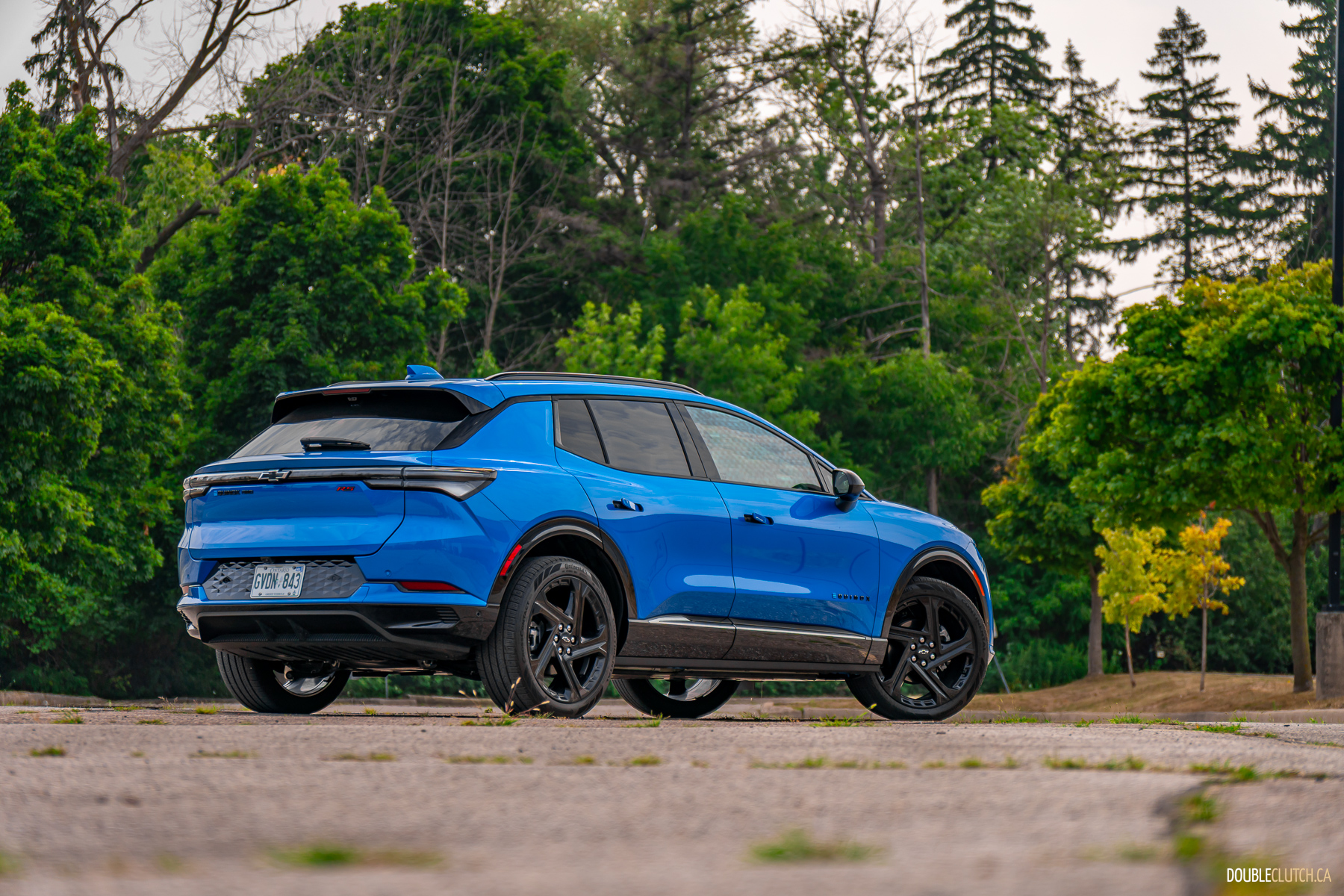
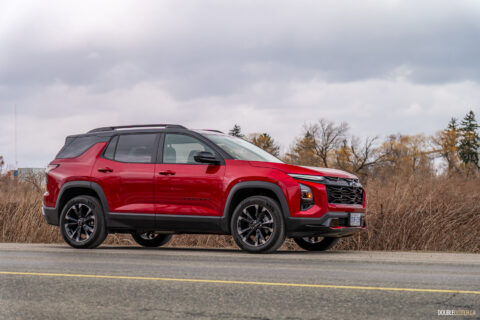
Who could’ve imagined the 2025 Chevrolet Equinox EV RS would become the best-selling electric vehicle in Canada during the second quarter of 2025? It’s easy to see why; consumers moving away from Tesla over Elon Musk’s divisive politics just as GM gets into their groove with EV production seems to have created this perfect wave for Chevrolet to ride up the sales charts. But as easy as it is to see why the Equinox EV has become such a sales darling, spending a week with it reveals some issues that need to be addressed.
First impressions
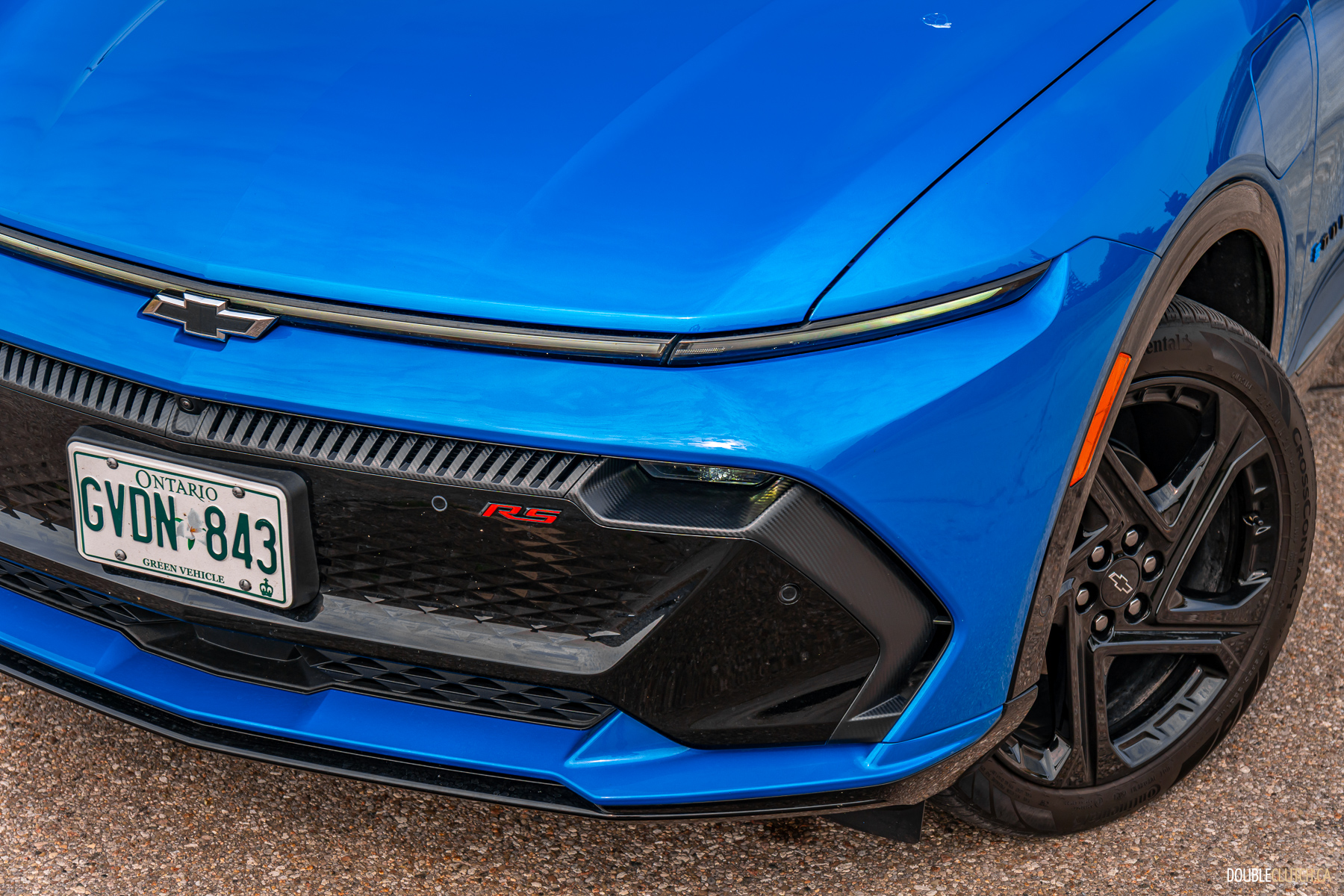
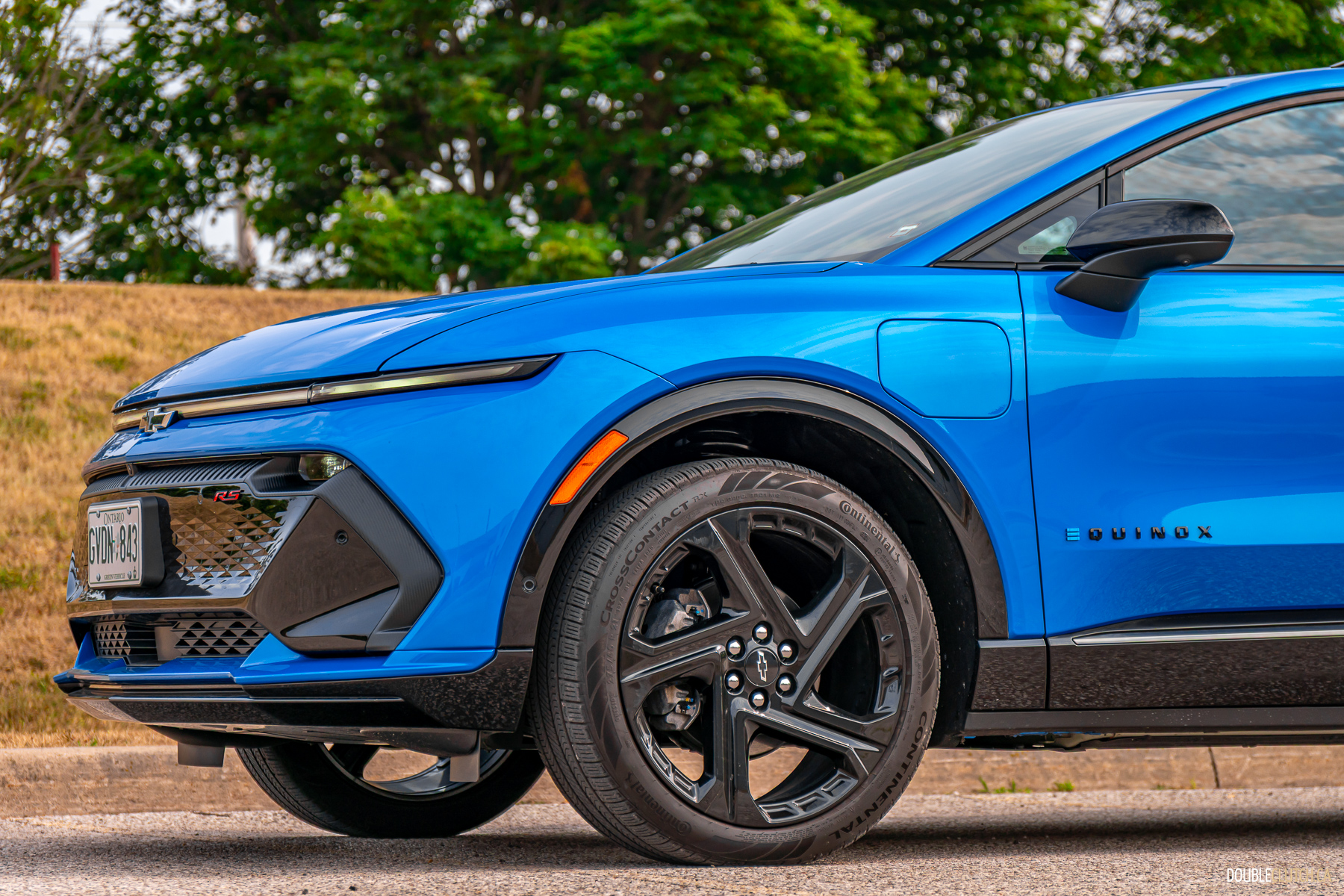
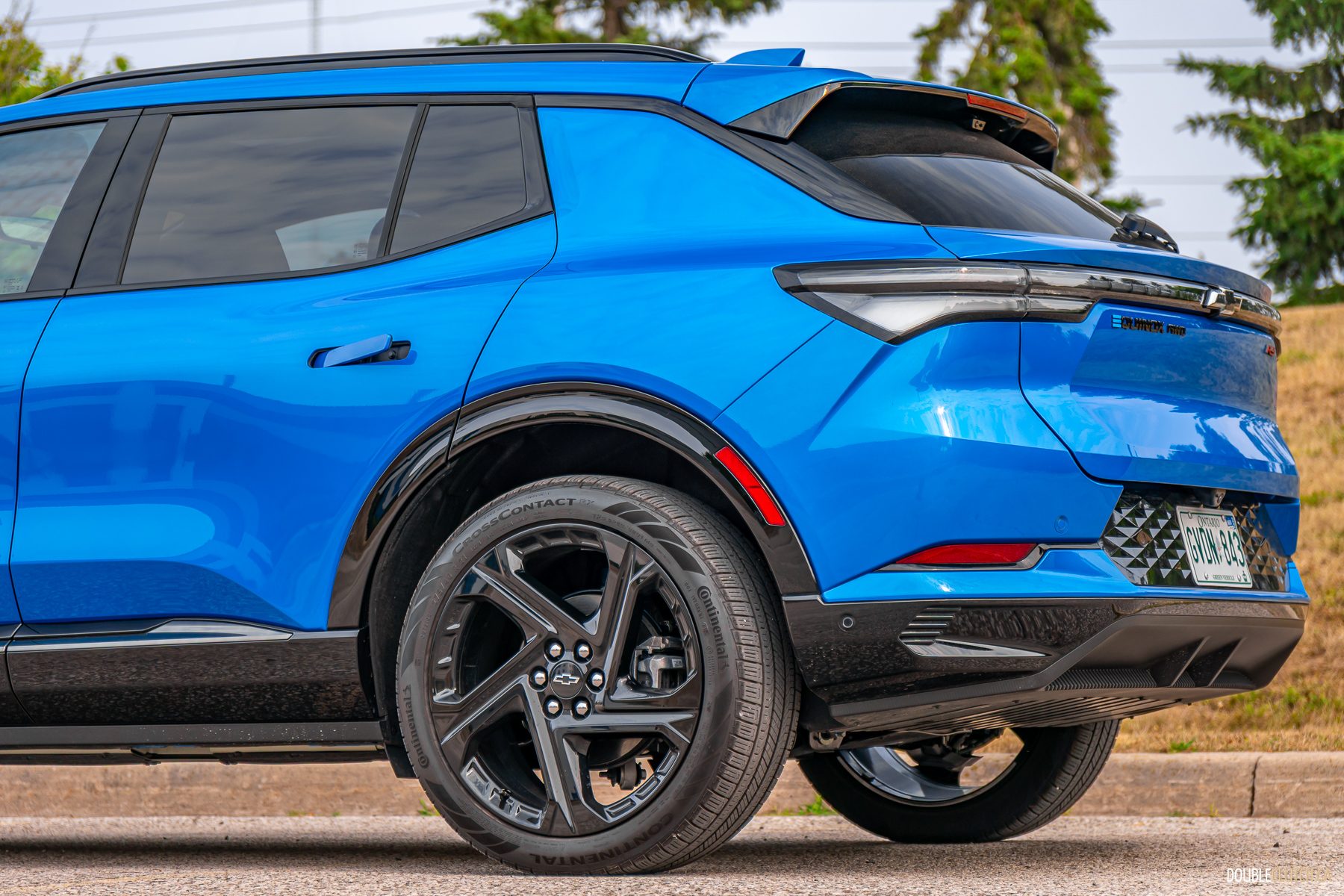
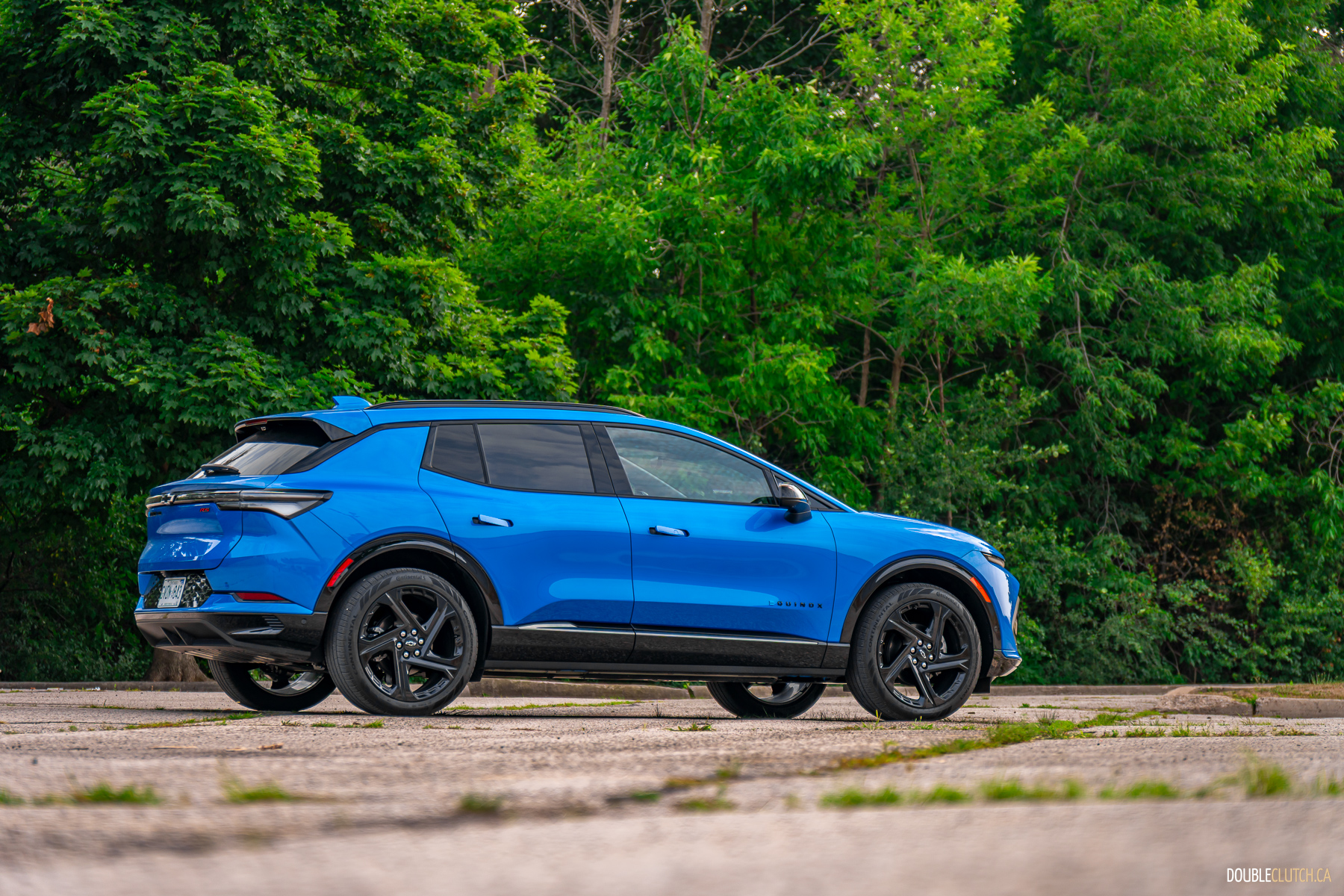
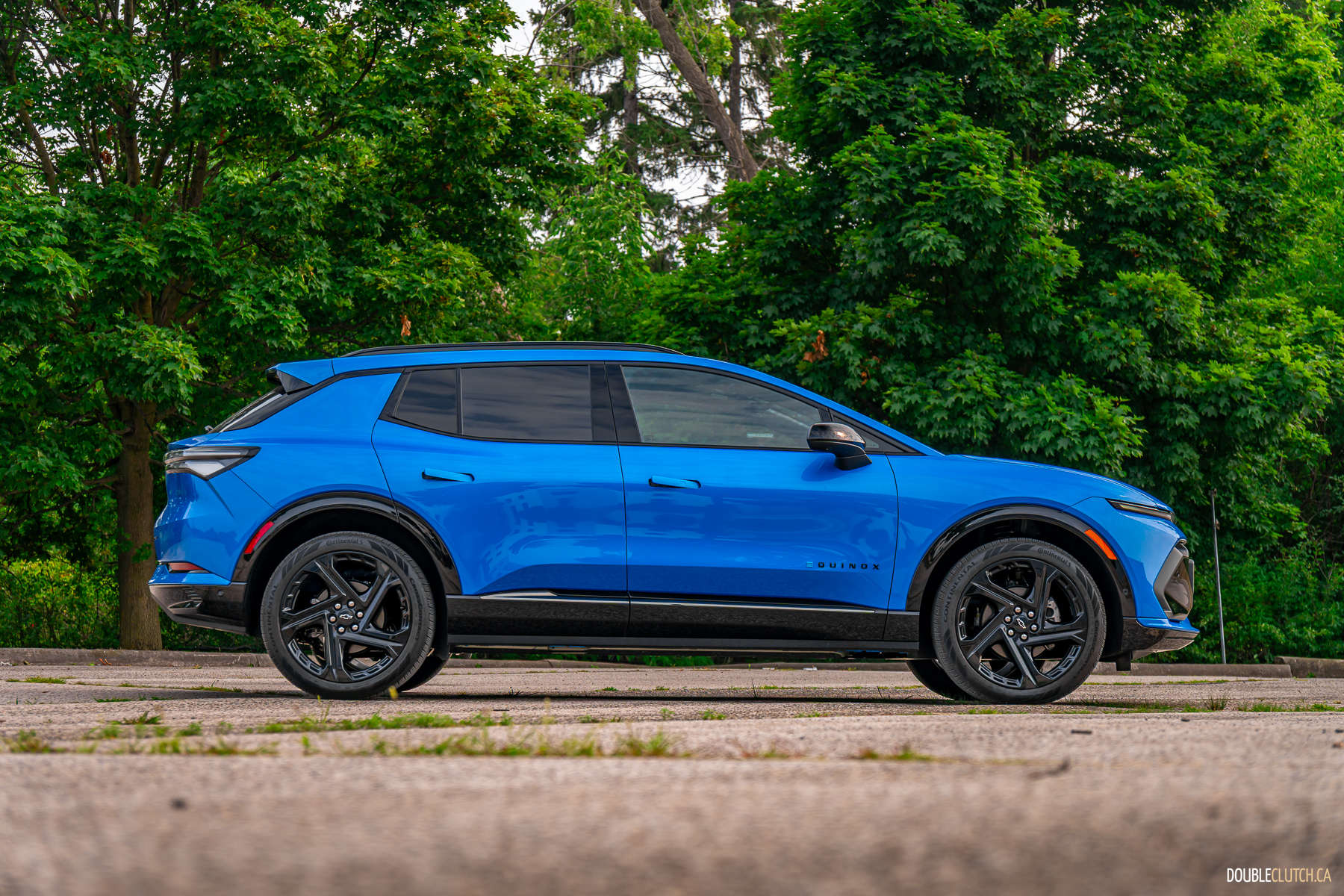
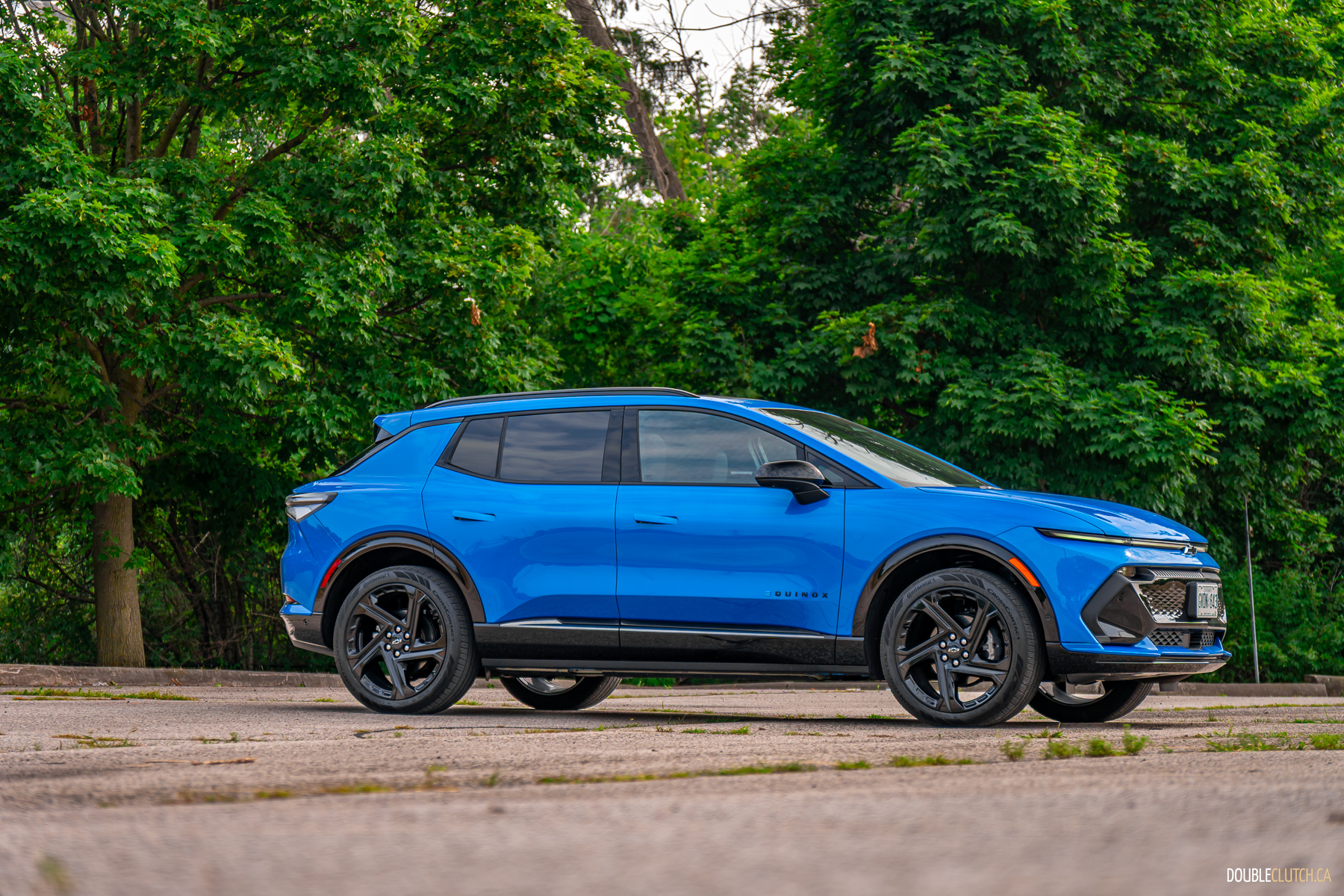
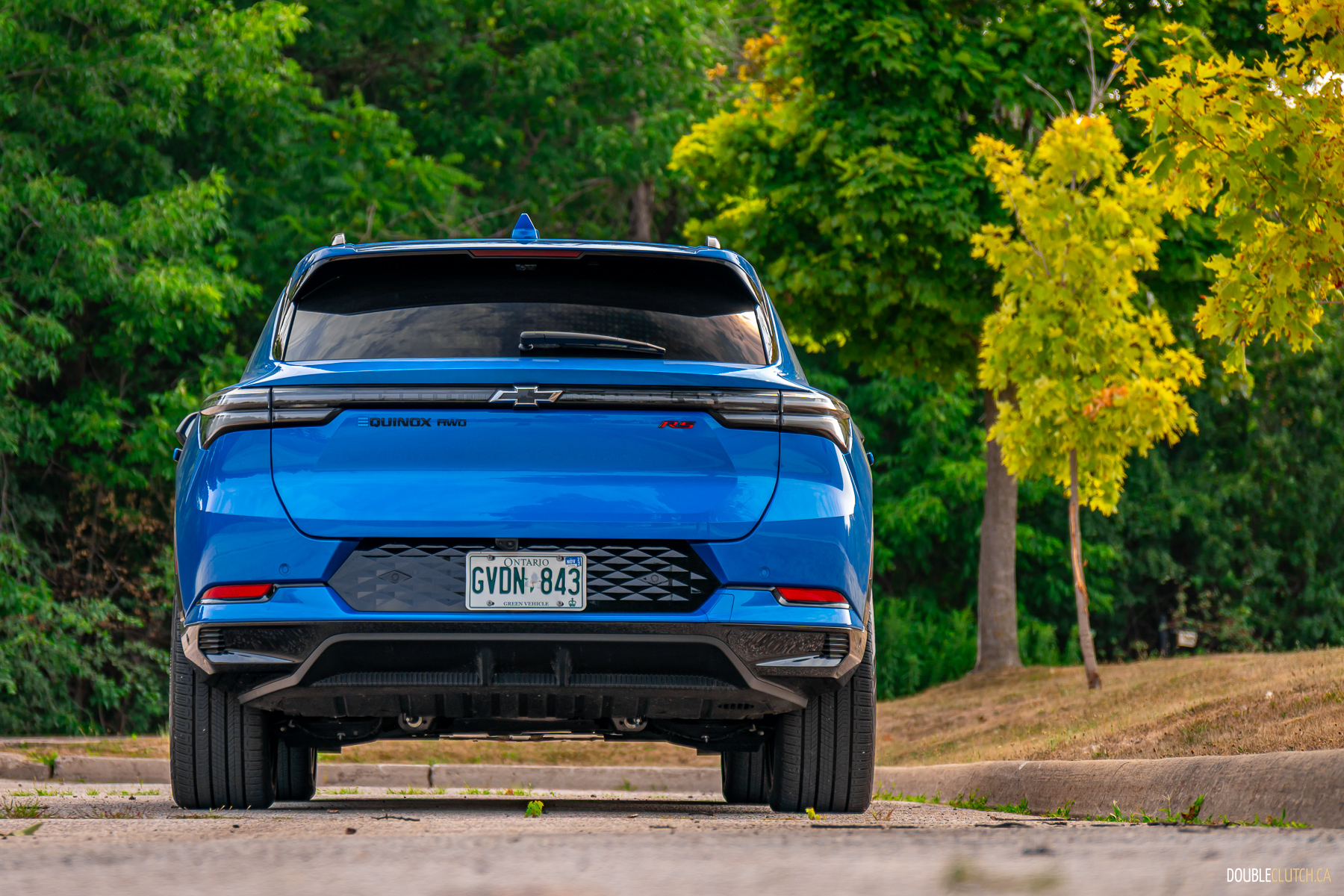
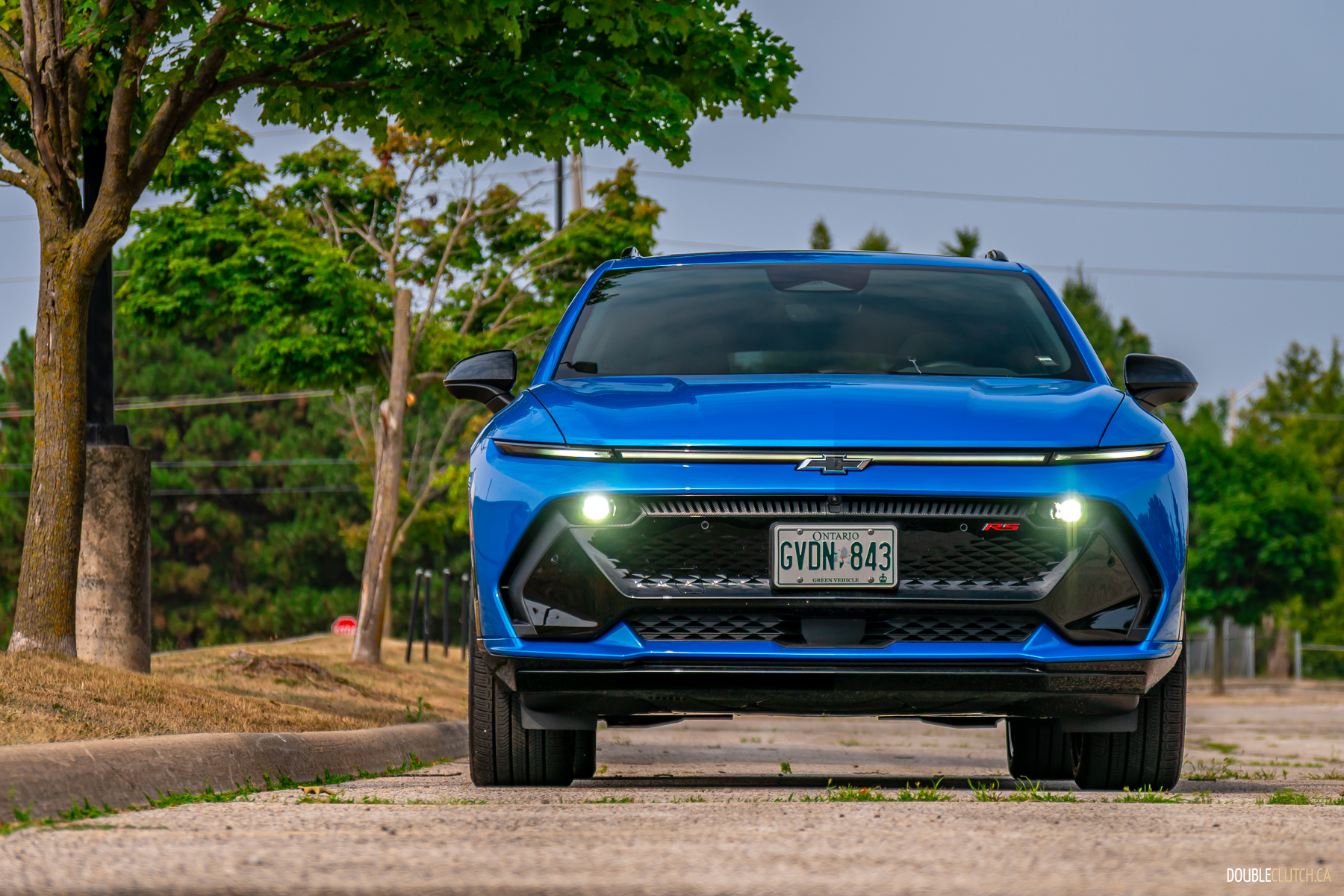
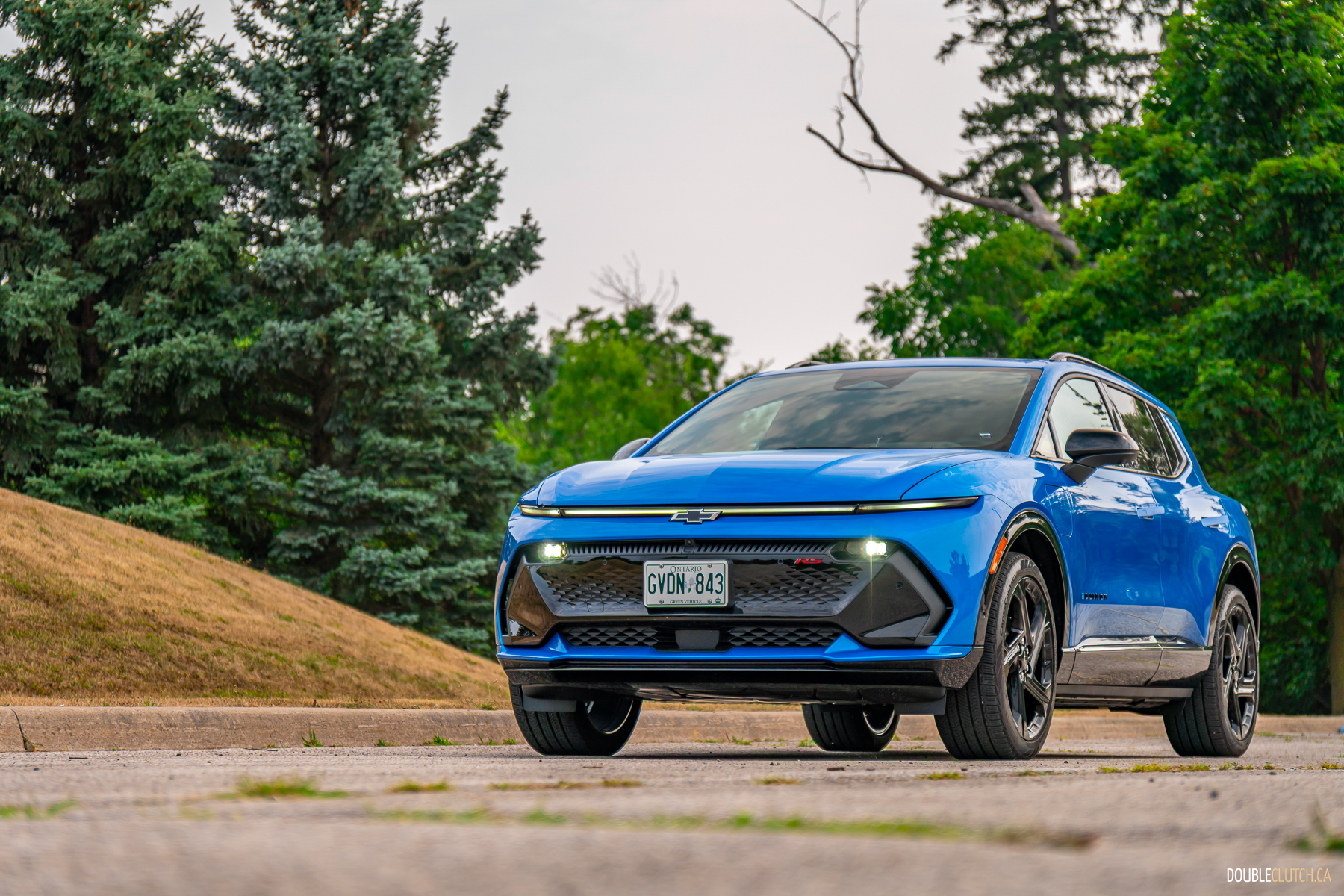
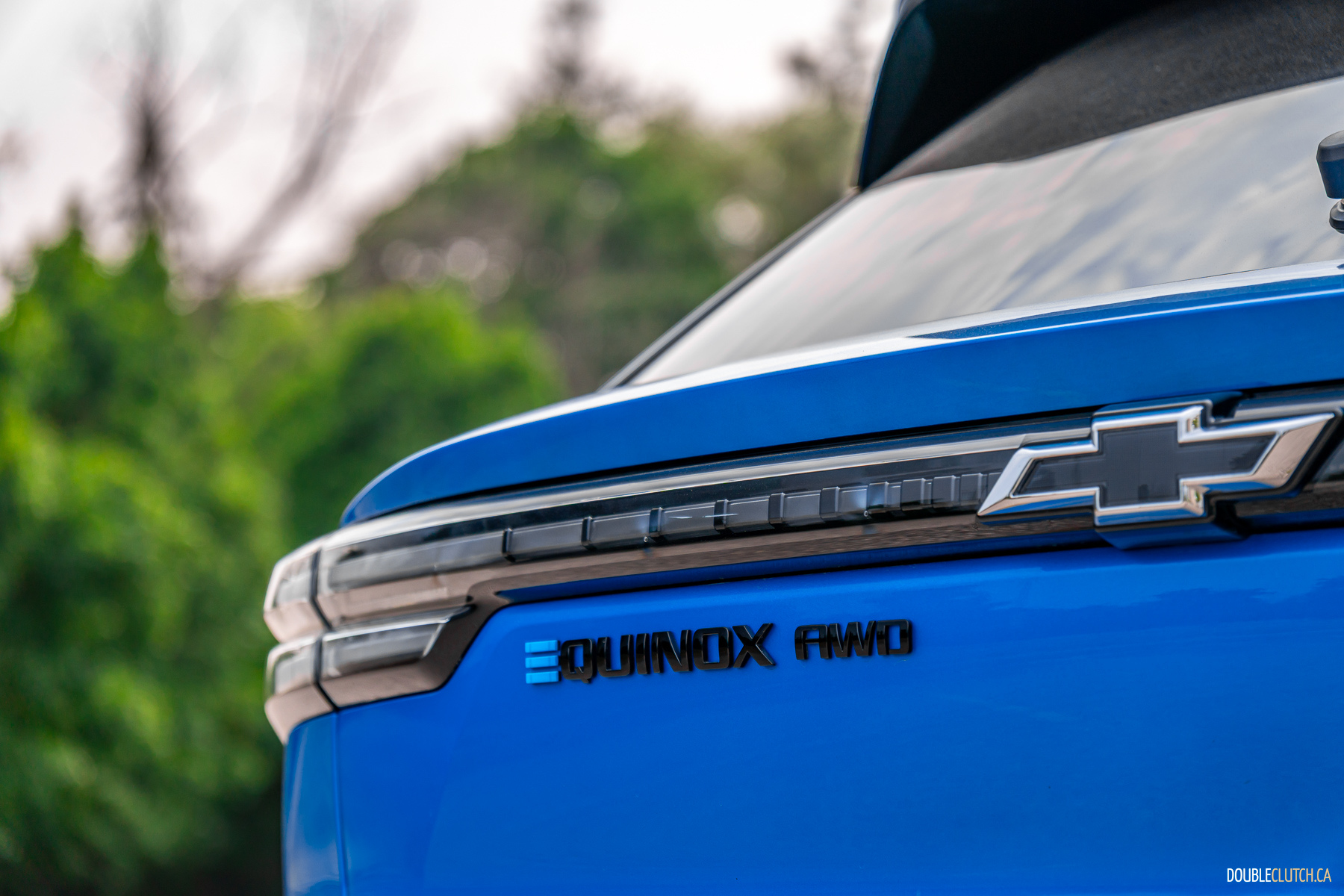
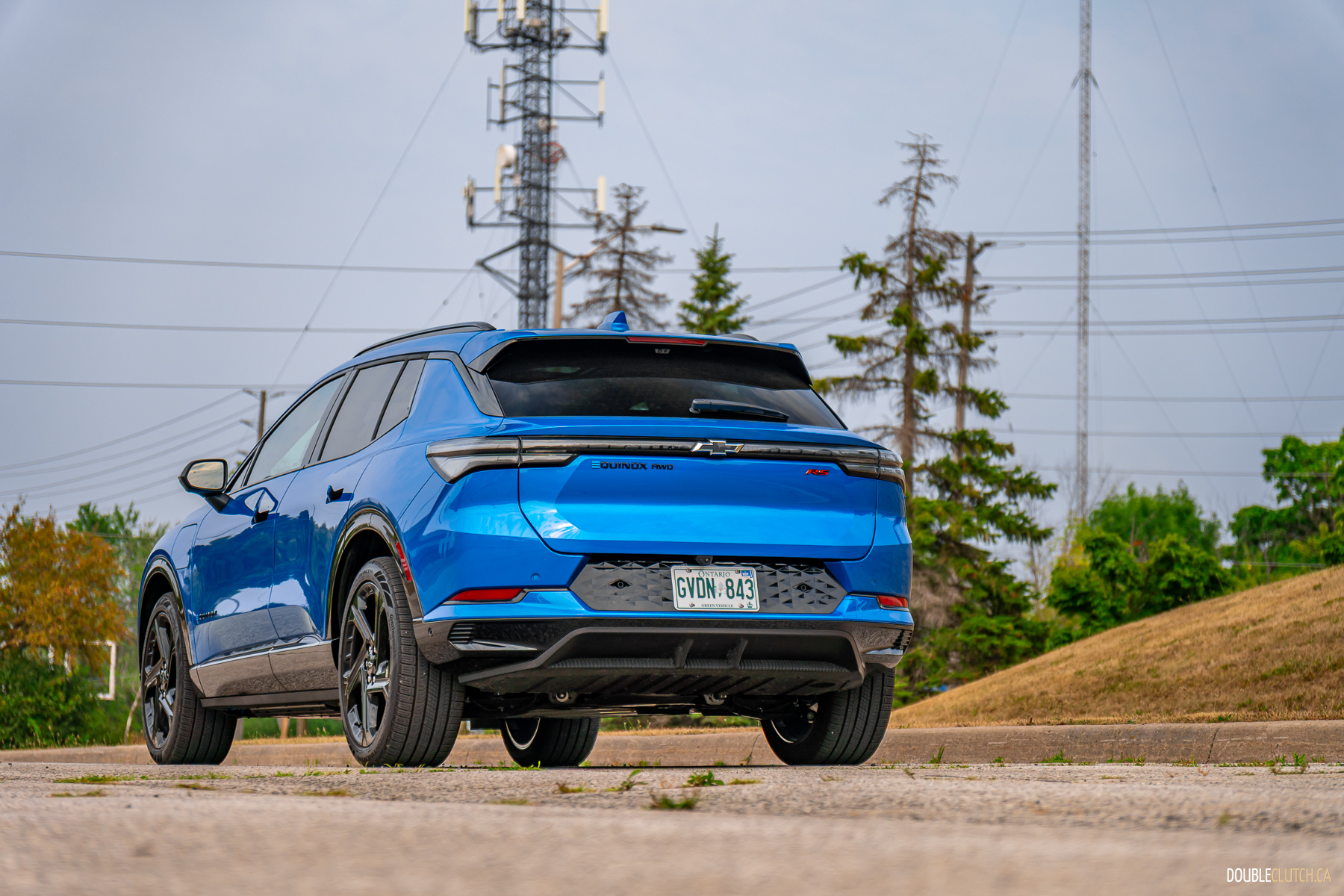
Changes in the Equinox EV over last year’s model include a power bump, subtle changes to the exterior design, and a simplified lineup of trim levels to choose from. It competes with the Kia EV6, Hyundai Ioniq 5, Tesla Model Y, and the Ford Mustang Mach-E — and I think they all look more unique and exciting than the Equinox EV. It’s not that I find it unattractive; the Equinox EV looks good but takes very few risks, even if it does have a completely different body and platform than the gas-powered version. Our tester is the range-topping RS trim, offering a more aggressive-looking front end and other exterior touches that make it look sportier, but the Equinox EV simply looks like just another crossover on the road.
What’s the Equinox EV like inside?
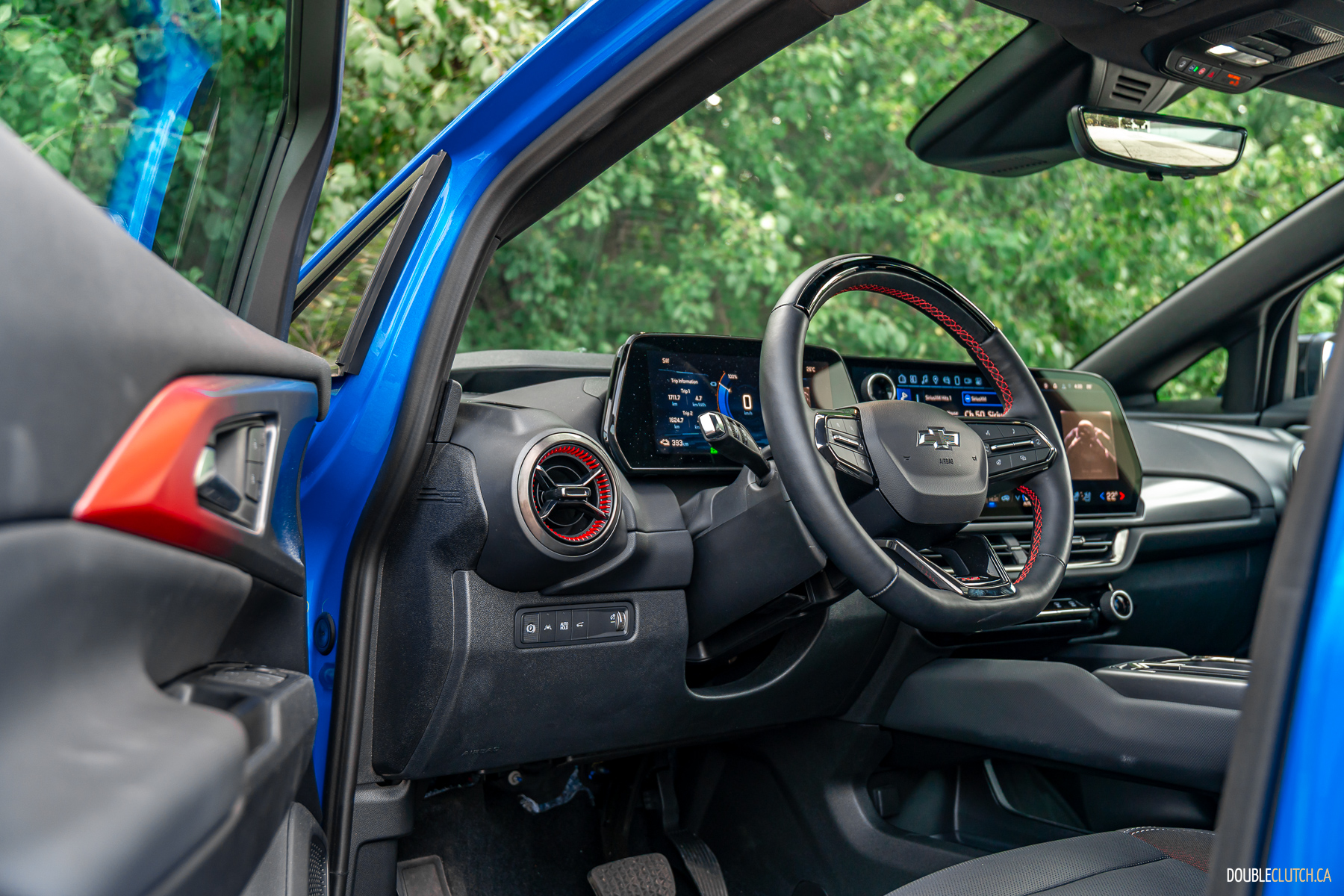
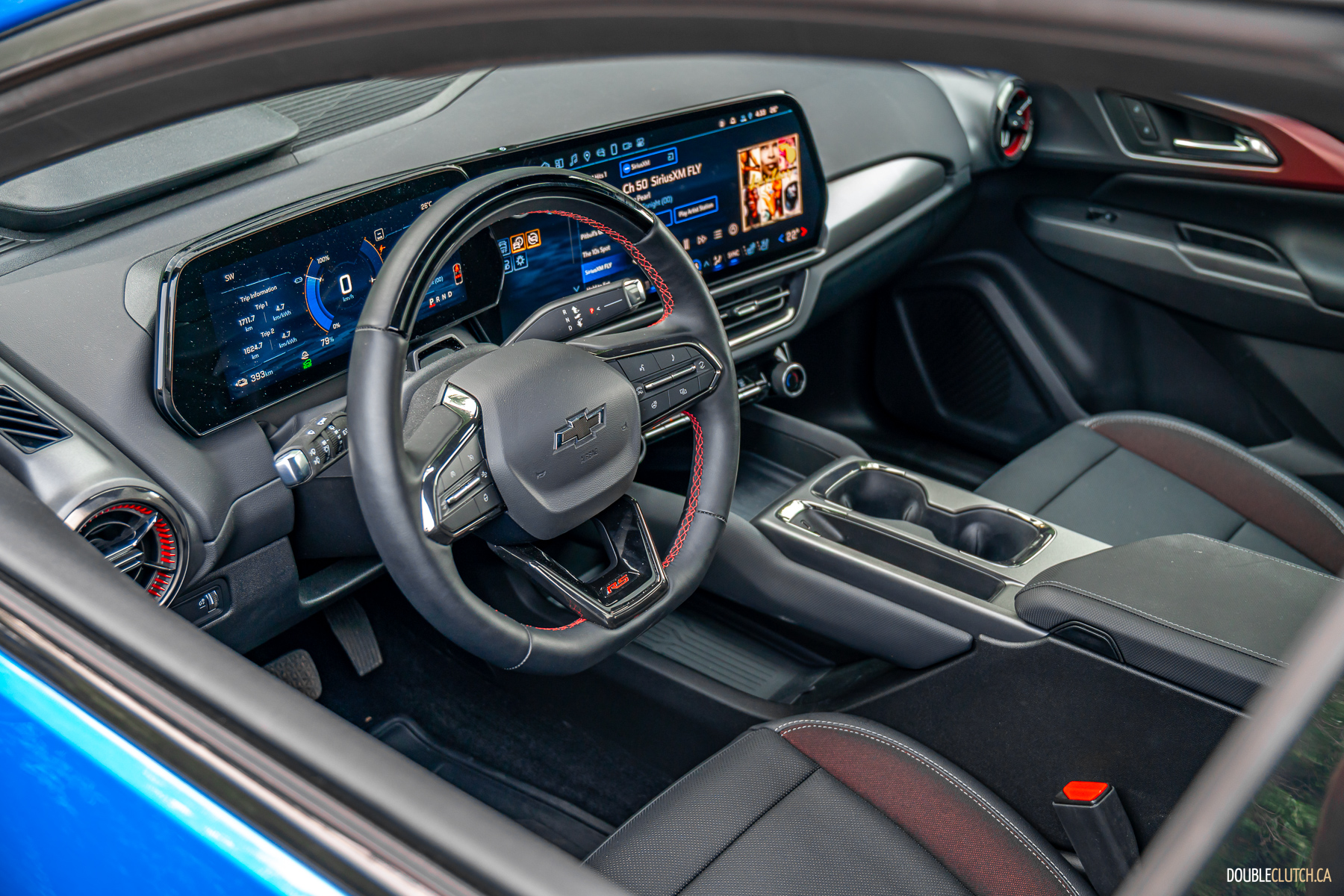
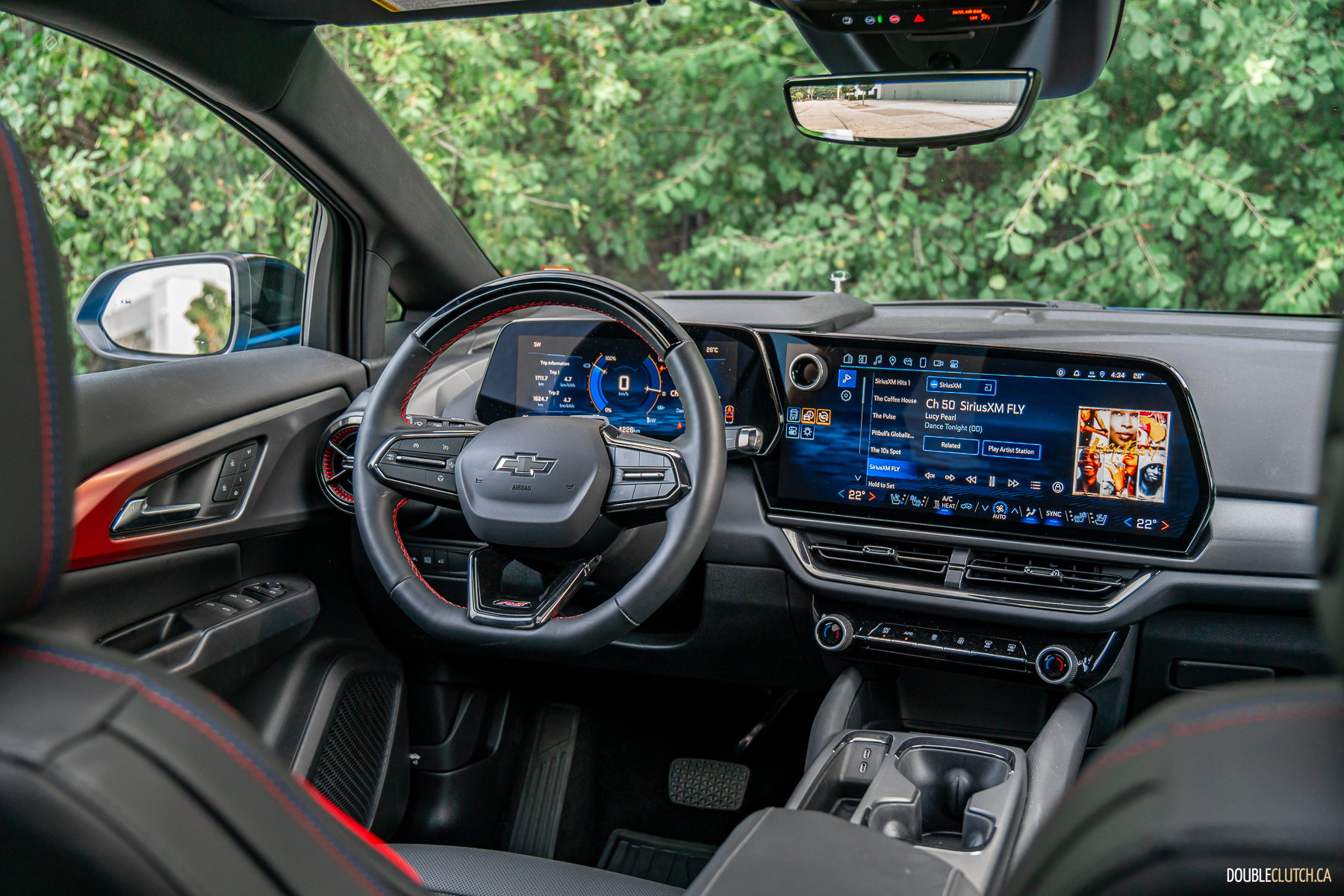
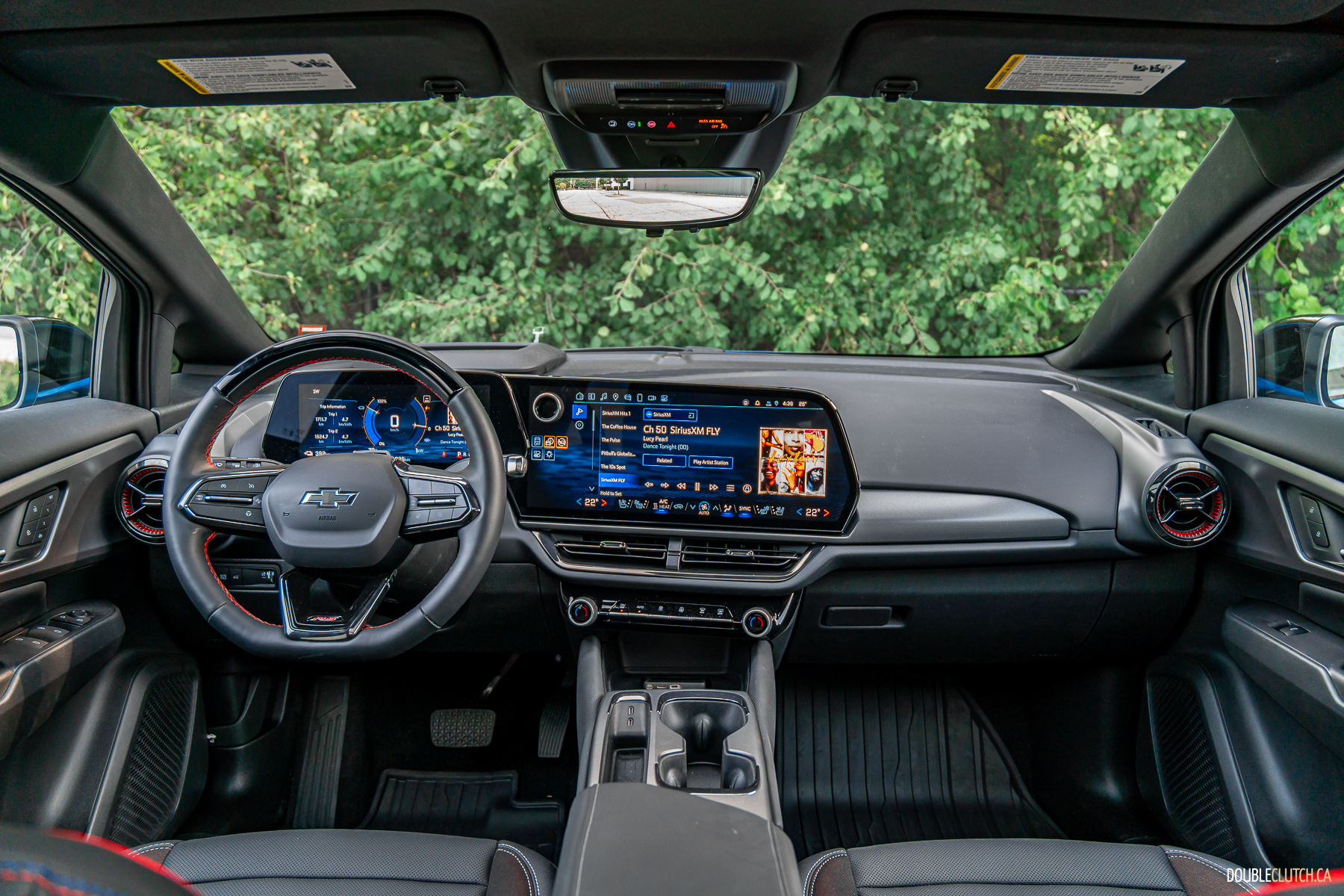
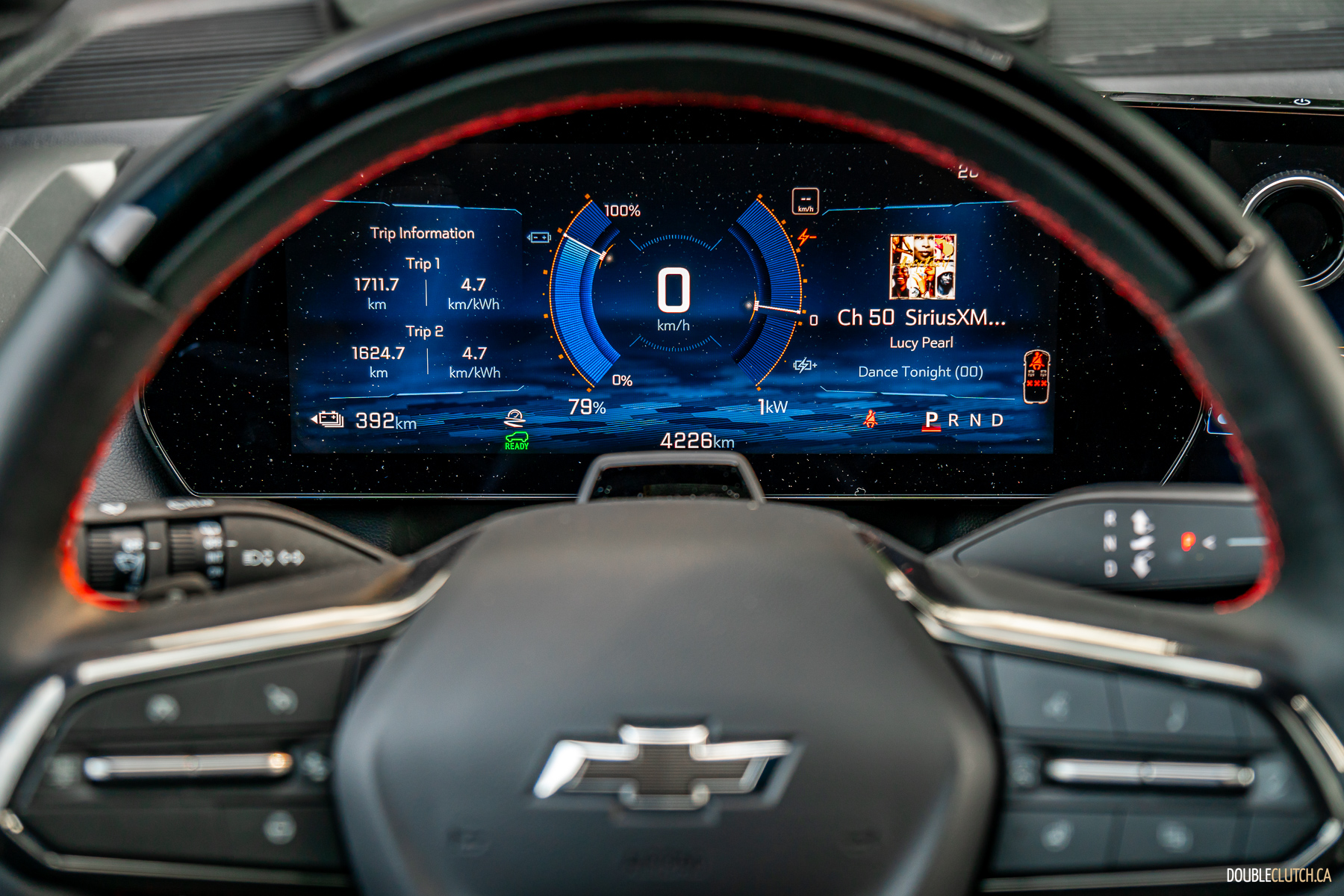
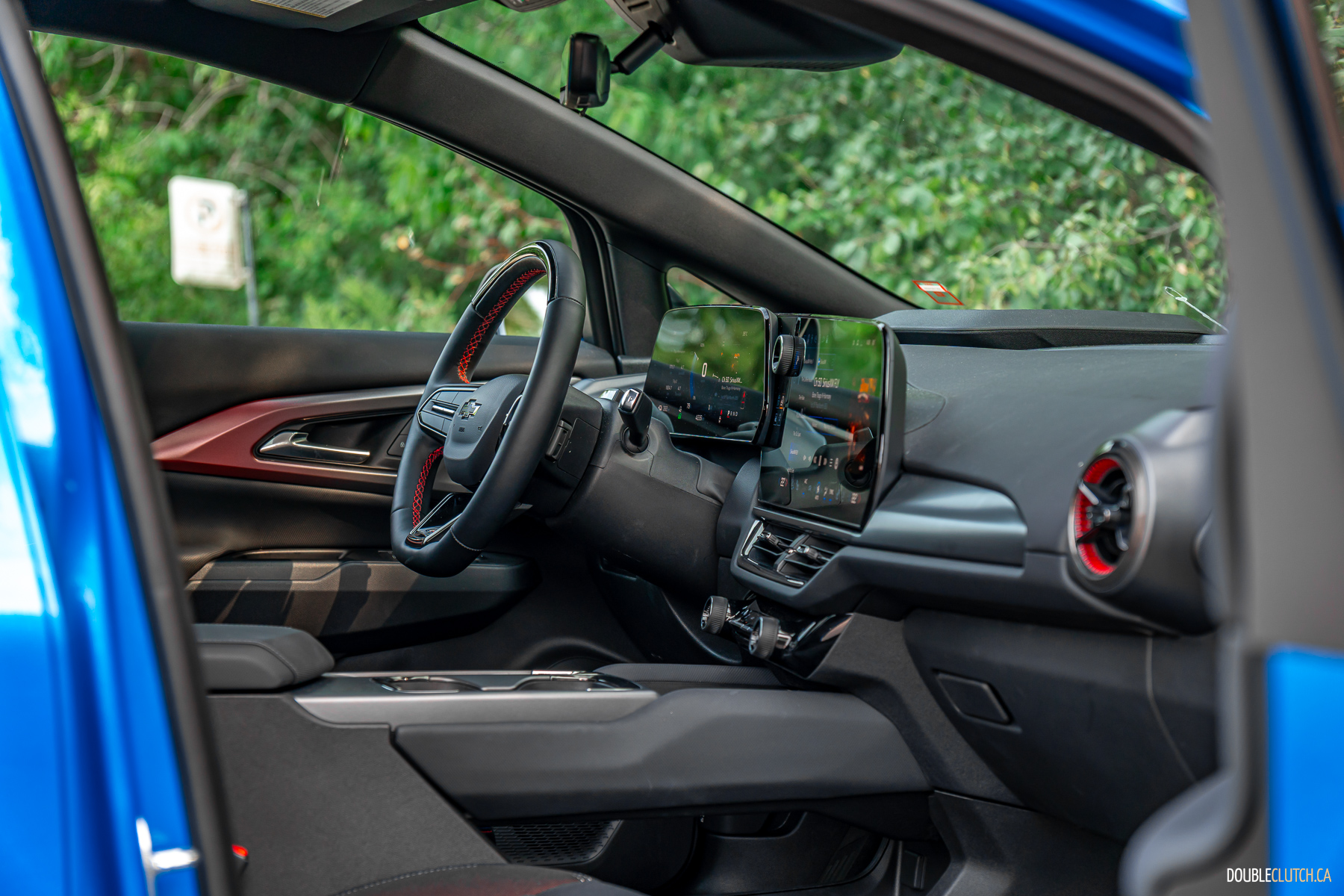
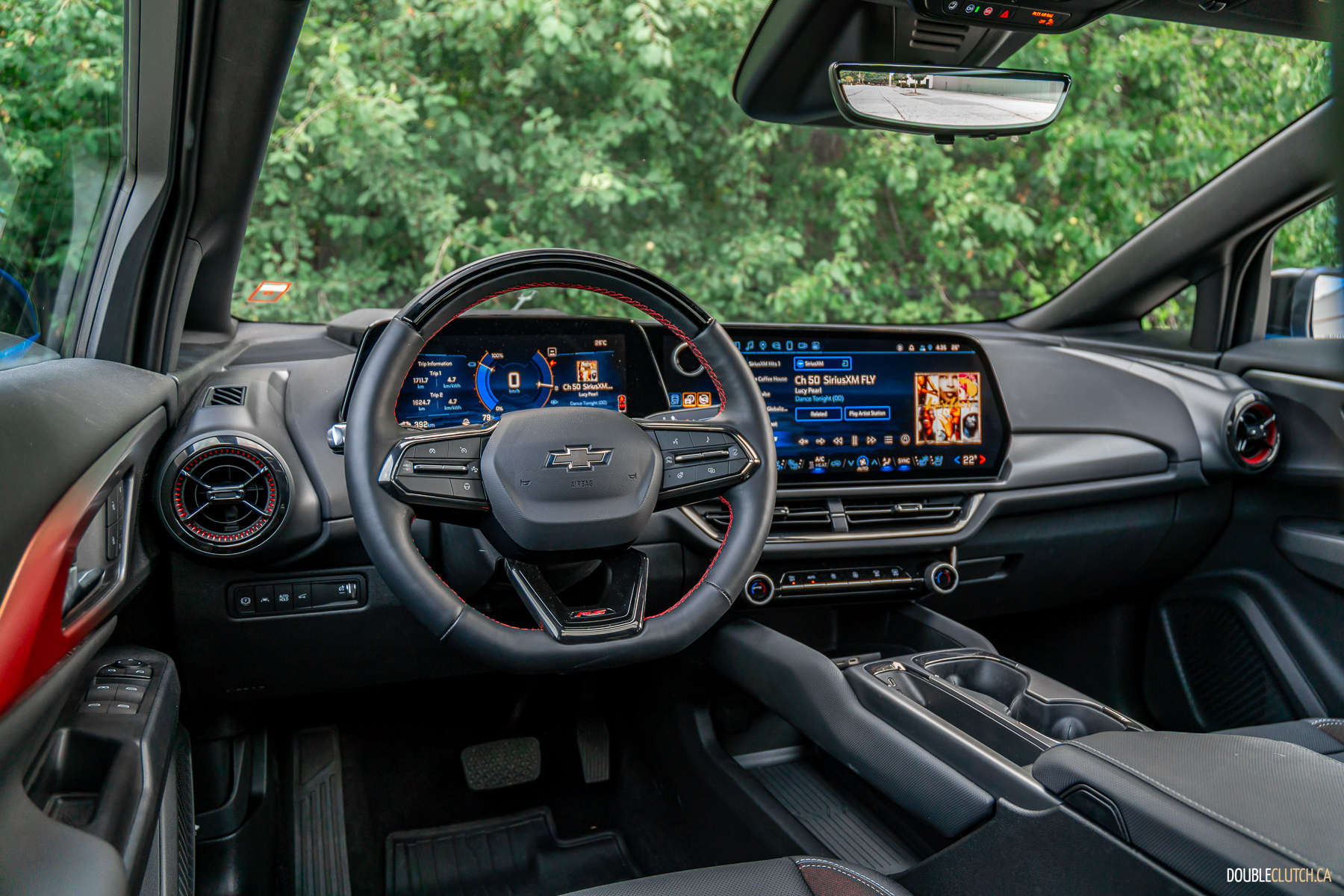
Inside, the Equinox EV is well-laid-out, but once again isn’t to fancy or eye-catching. Unlike the exterior, the Equinox EV’s looks mostly similar to the gas version, the biggest differences being the dash design in some areas and the infotainment. It uses a large 17.7-inch touchscreen running Google-based software, along with an 11.1-inch digital gauge cluster to take up a lot of digital real estate on the dash.
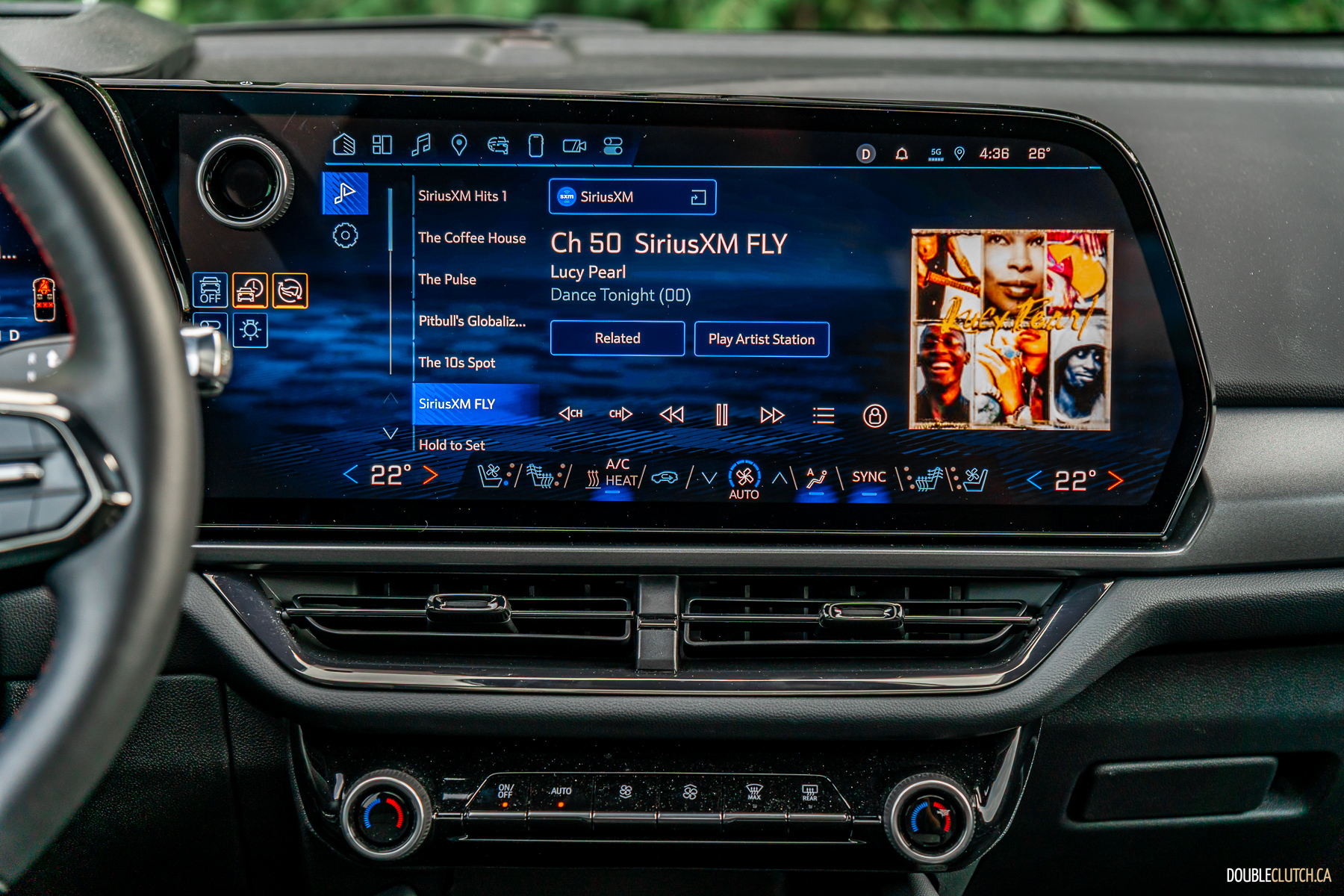
Sadly, Chevrolet doesn’t offer Apple CarPlay and Android Auto here, which is a major miss from my perspective. You can get around this by using their built-in apps or streaming over Bluetooth, but it feels like a step back. In addition, the placement of the one-pedal-driving button is obstructed by the steering wheel and you need to go through the infotainment to adjust its level of sensitivity. Jump into pretty much any other EV and not only would it have CarPlay and Android Auto, but also readily accessible physical controls for regenerative braking.
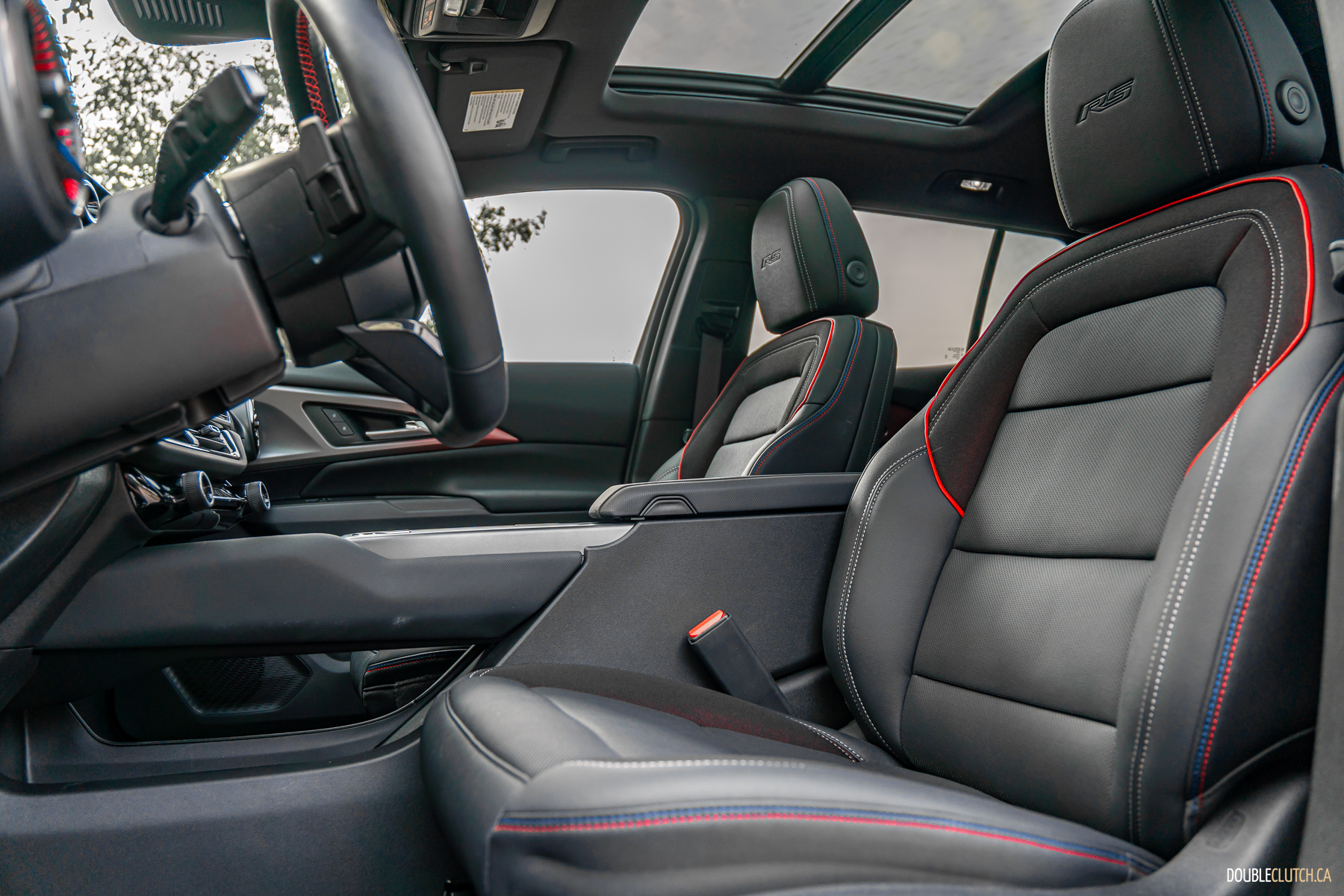
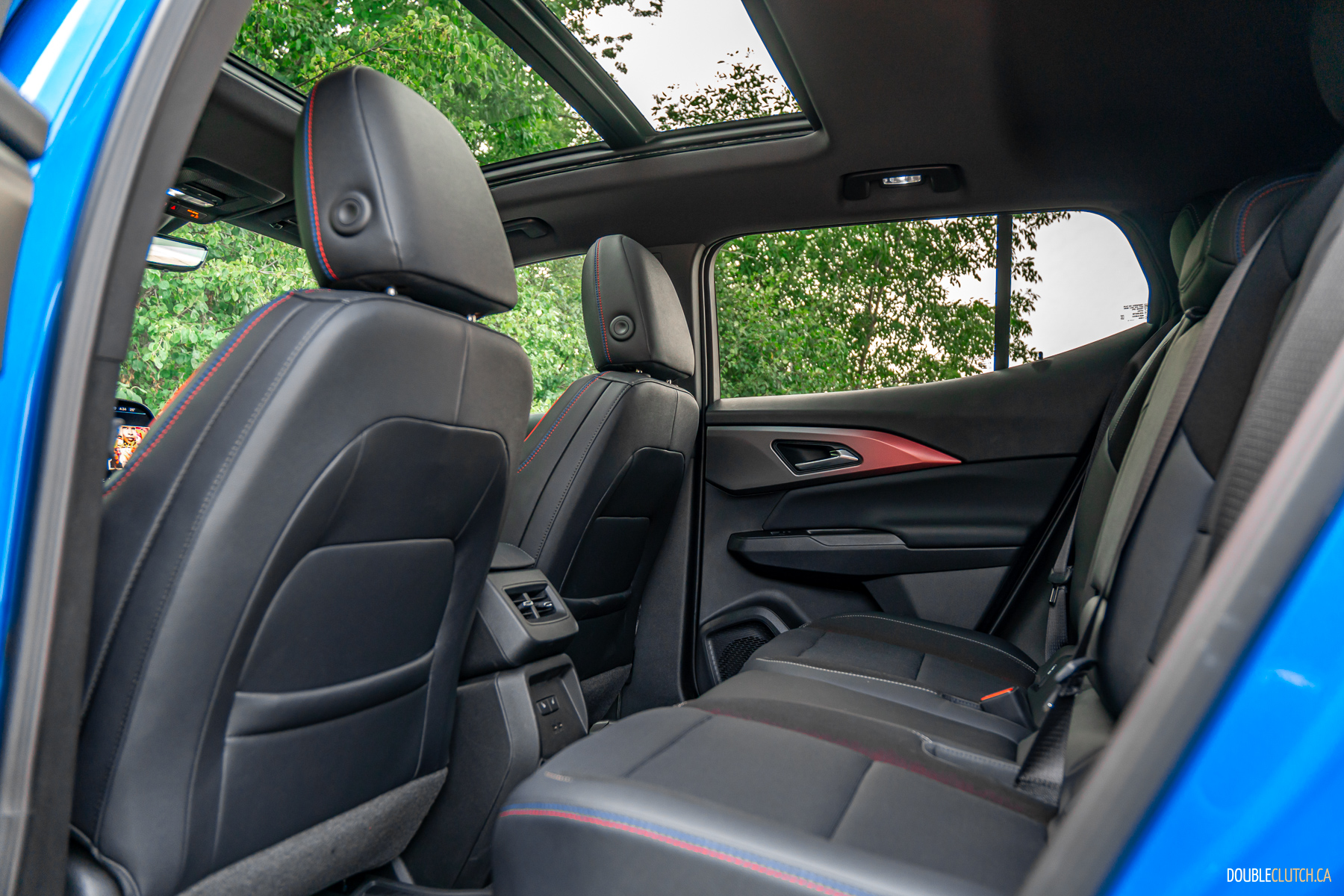
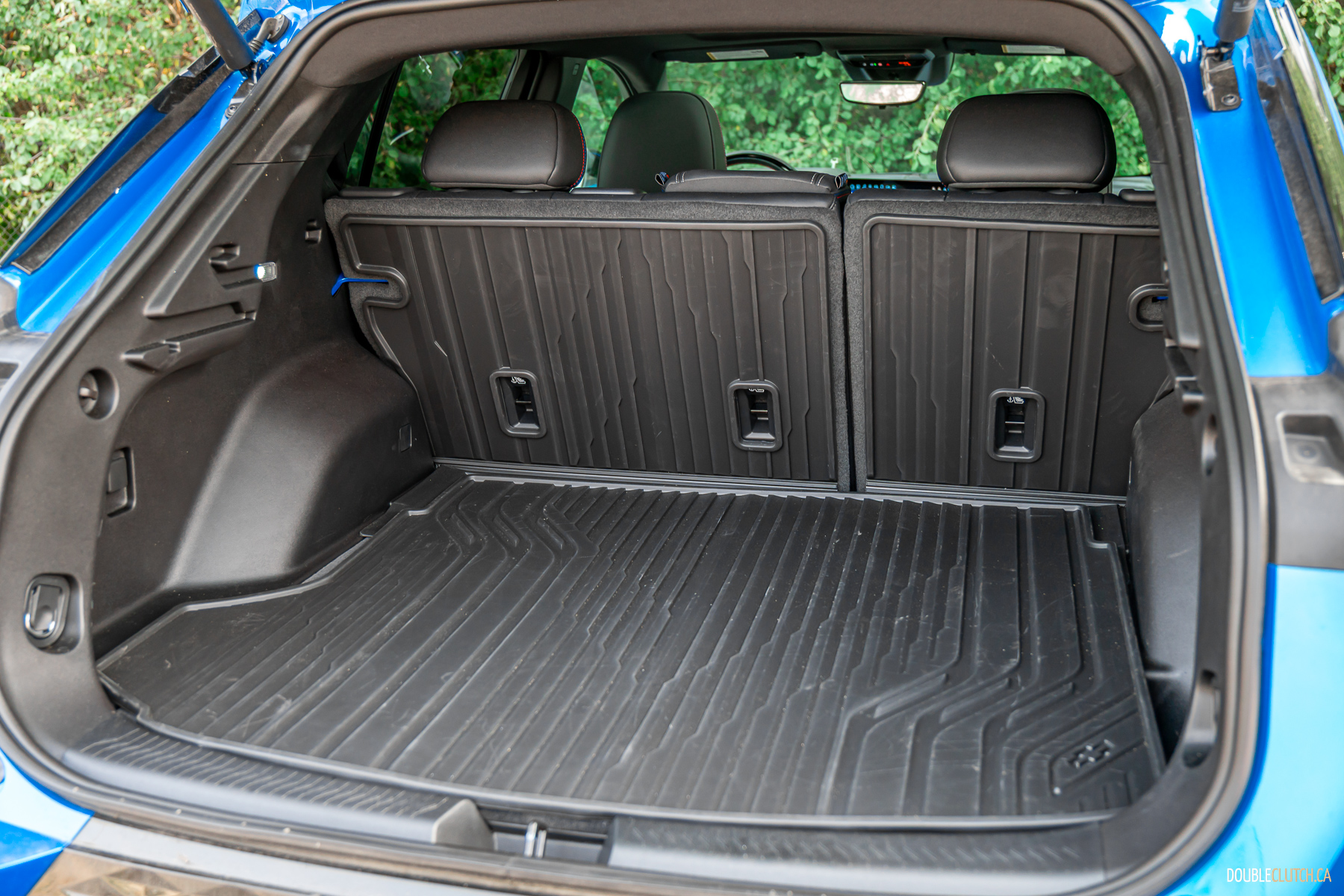
Moreover, the Equinox EV feels average at best in terms of materials and fit-and-finish. There are many more hard-touch surfaces than I would expect for the money, and more squeaks and rattles than I would expect from a car with under 10,000 kilometres on the odometer. The seats are flat and unsupportive, but at least the first and second rows accomodate even six-foot-plus adults relatively easily. Cargo space measures 748 litres with the rear seats use, jumping to 1,620 litres when folded. Compared to the EV6, the Equinox EV is much roomier, but the Kia feels more solid and has better tech interface.
Powertrain, performance, and driving impressions
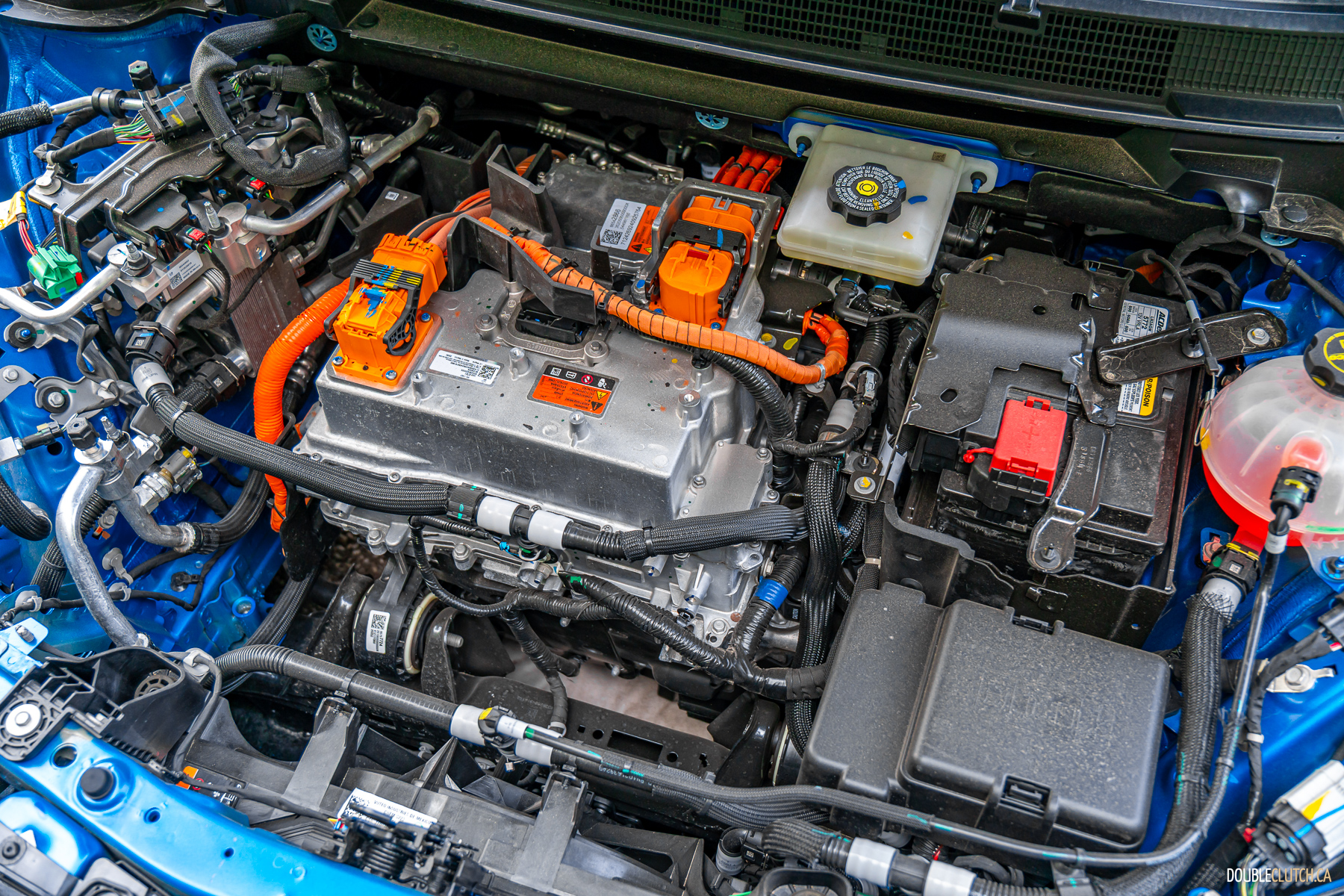
Our Equinox EV RS tester is powered by two electric motors and an 85 kWh battery pack, giving it all-wheel-drive. Output jumps to 300 horsepower — up from 288 compared to last year — and 355 pound-feet of torque. This configuration allows the Equinox EV to sprint from zero to 100 km/h in six seconds; it lags behind the EV6 and Ioniq 5’s brisk 4.5-second runs, but it feels more than quick enough in the real world, and much more bearable compared to the FWD version.
Beyond the interior, my other big complaint with the Equinox EV was its chassis and suspension tuning. It rode harsh and I even picked out more than a few creaks and clunks coming from the front suspension over uneven roads. The EV6, by comparison, felt more refined and better-isolated. Make sure you drive them as close to back-to-back as you can.
Equinox EV range and charging
Compared to its key competitors, the Equinox EV takes a quite a bit more time to charge. Where the Ioniq 5 is capable of up to 300 kW and can replenish its battery from 10 to 80 per cent in as little as 18 minutes, as long as you can find a Level 3 charger that’s fast enough, the Equinox EV is only capable of up to 150 kW. It needs 40 minutes to accomplish the same 10-to-80 charge, but it makes up for that with range, with this RS model rated at 459 kilometres. It’s also worth noting the Equinox EV hasn’t yet moved to a Tesla-style NACS charge port.
Final thoughts
By now, after all my qualms with the Equinox EV, you’re probably wondering why it’s been the best-selling EV in Canada this summer. Well, it comes down to price: the Equinox EV is the cheapest way to get 400-plus kilometres of range. The base, front-drive Equinox EV LT starts at just over $48,000. Our tester tops out at $61,228 as-tested, but skip a few of the bells and whistles, and you can bring that down to under $60,000. A similarly equipped EV6 will run you well over that.
While the 2025 Chevrolet Equinox EV RS won’t set your pants on fire, it offers more than enough to value-conscious buyers. With great range, plenty of cargo space, and stellar pricing, Chevrolet has a winning combination that has buyers — who probably don’t care much about fit-and-finish, and probably don’t mind spending a couple extra minutes charging — hooked. With strong sales numbers to back this up, the future looks bright not just for the Equinox EV, but for the rest of GM’s electric offerings.