Remember those “That’s a Buick?!” commercials that were all over the place years ago? It was always the same cheesy set up; the one I remember the most is some guy asking a valet to retrieve his Buick, and the valet gets lost before landing, bewildered, on a handsome sedan that isn’t a beige conveyance to God’s waiting room. He utters to himself, “that’s a Buick?!” and then seems mighty pleased at the privilege of returning the car to its owner, whose friends are equally taken aback about this expectation-defying Buick pulling up in front of them. For my whole week with the 2025 Harley Davidson CVO Pan America, I felt like I had been cast in one of those commercials. Except I was vastly cooler, obviously.
That’s a Harley?!
Everywhere I went, it was the same thing: That’s a Harley?! It doesn’t look anything like a Harley! I would have heard a Harley pulling up! Since when does Harley make bikes like that?! And so on, ad infinitum. To be fair, I myself am just as guilty. I had no idea Harley Davidson was building this, or anything even vaguely like it. It’s so not what you’d expect of a Harley, vaguely akin to Ferrari announcing a new half-ton pickup. Even more surprising is when that fictional Ferrari F-150, or this very real Harley Davidson Pan America, ends up being really good.
I’m not speaking in a vacuum, either. I spent the week prior with the new BMW R 1300 GS Adventure, the de-facto king of the ever-expanding adventure segment. BMW’s been doing this longer than anyone and they’re very good at it. The fact that I was able to drop off that Bimmer and swing a leg over the Pan-Am less than hour later gave a direct point of comparison that should have been harsh on the newcomer Harley. But I liked it instantly, and I still liked it at the end of week, having held its own against the established Bavarian battle tank.
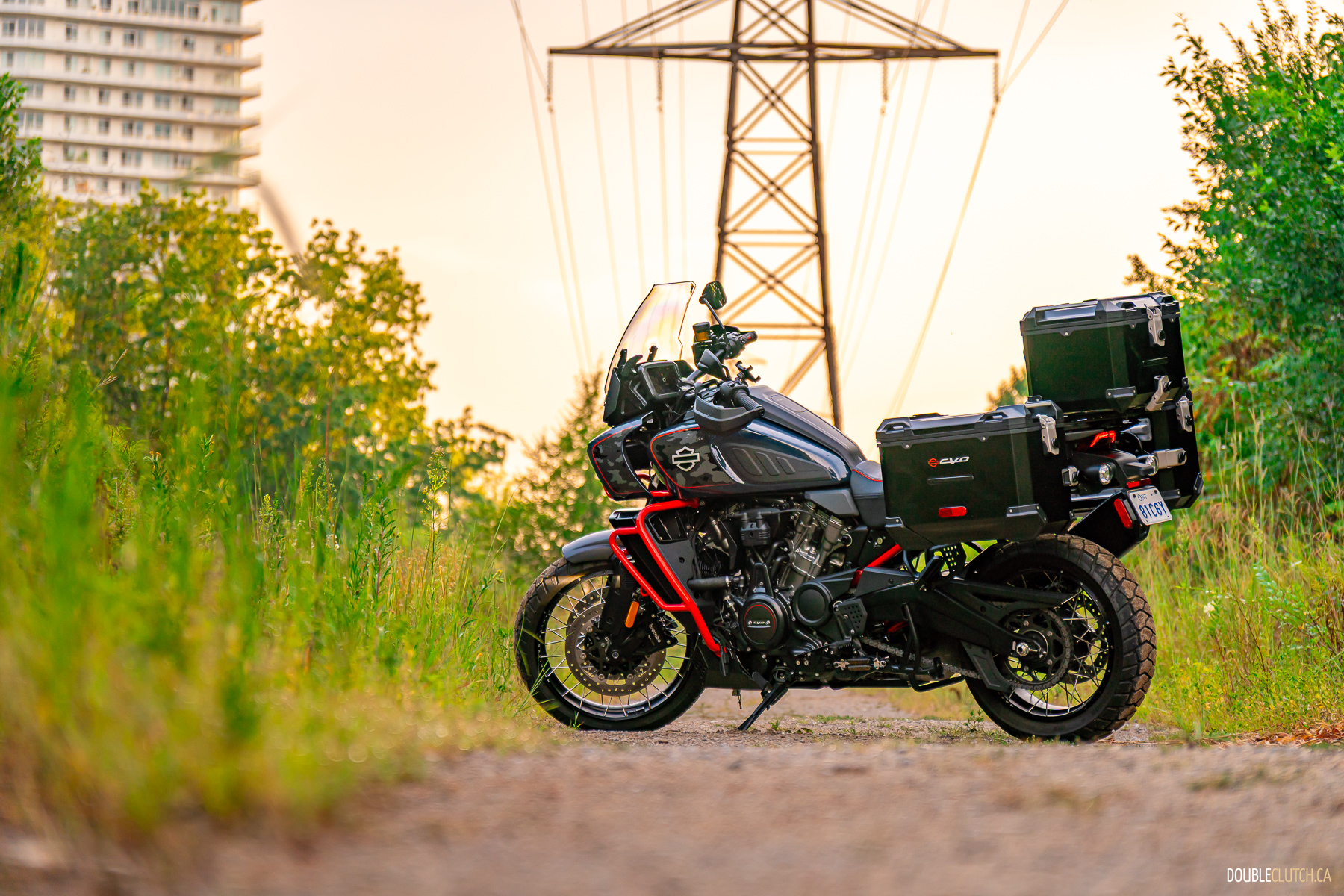
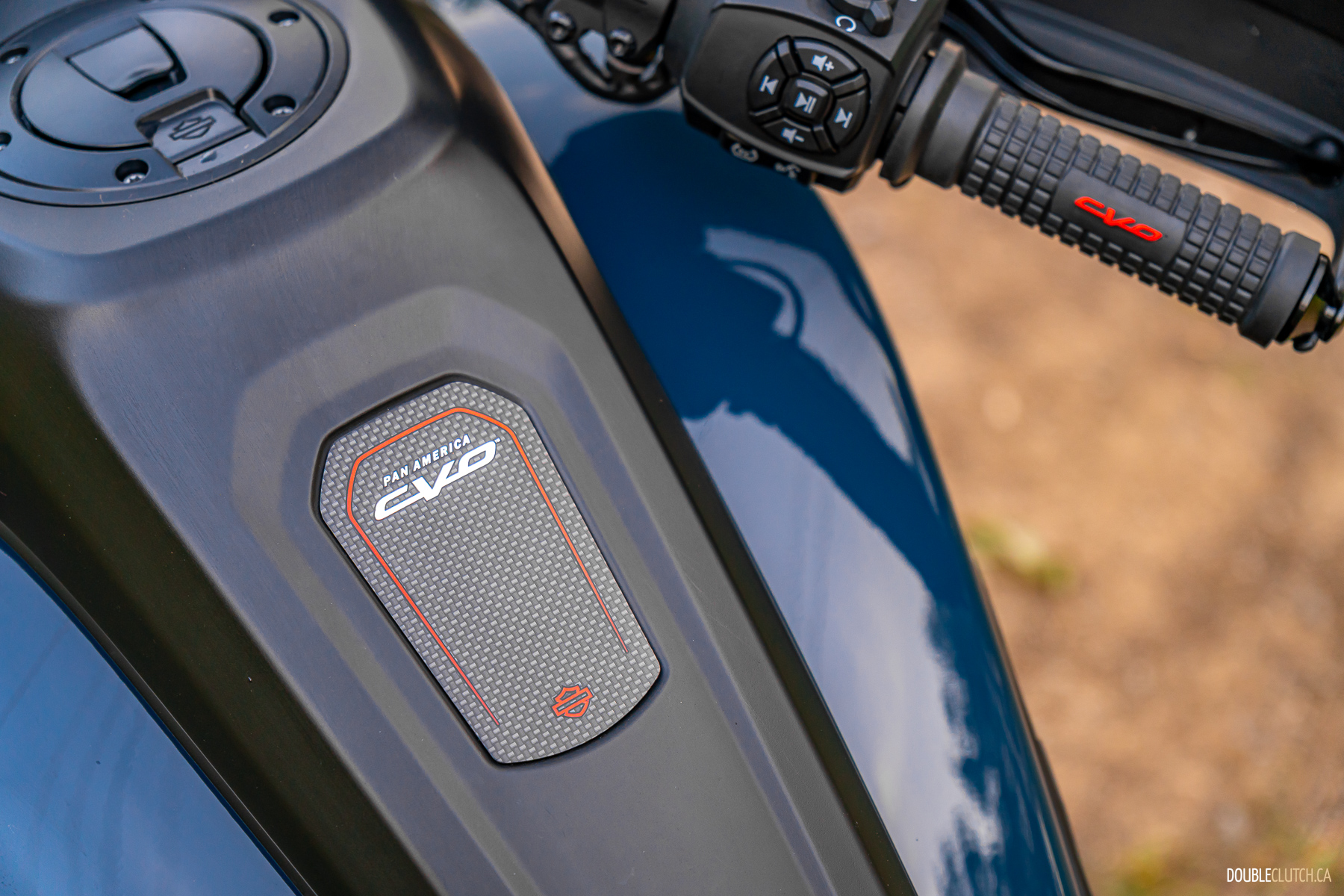
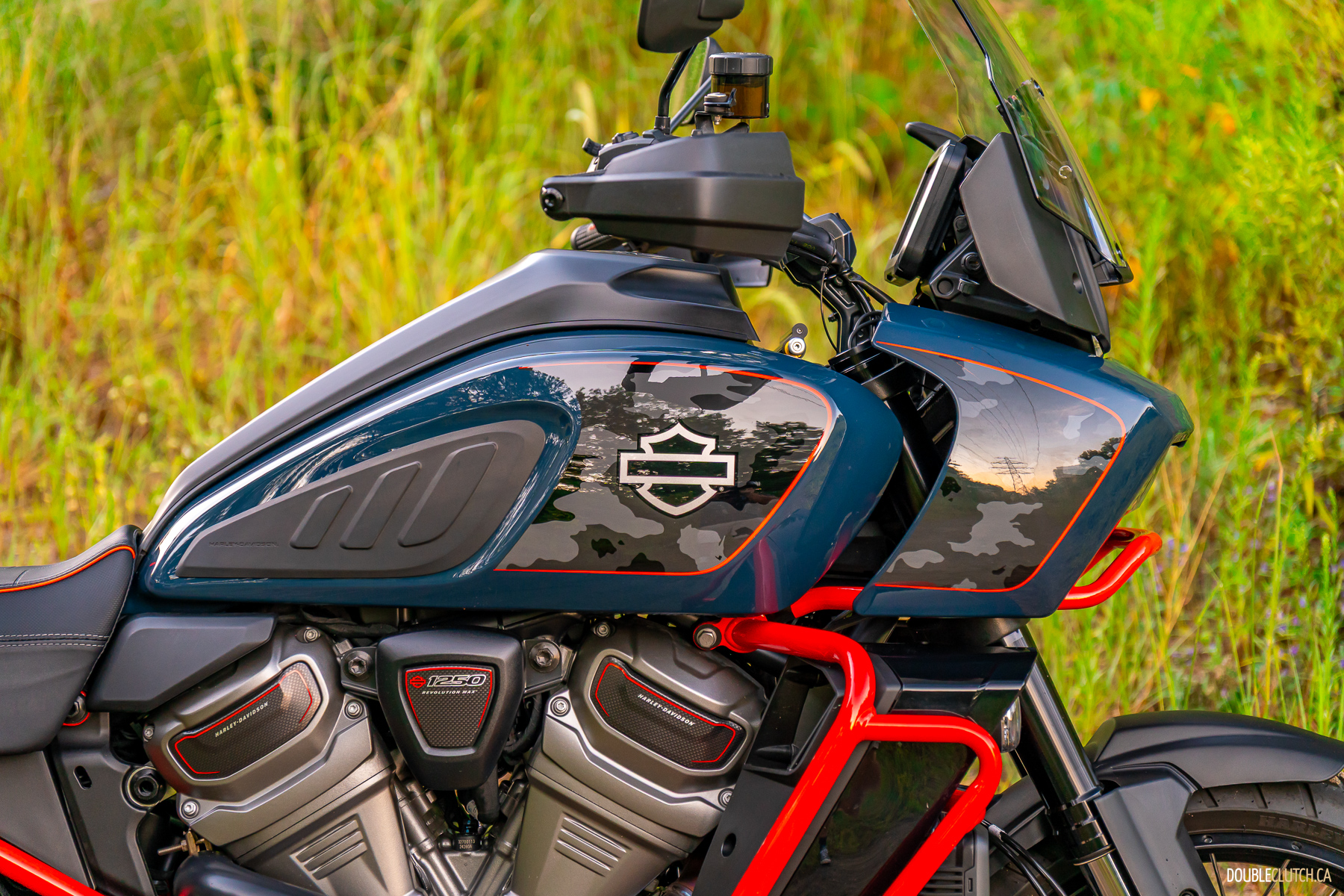
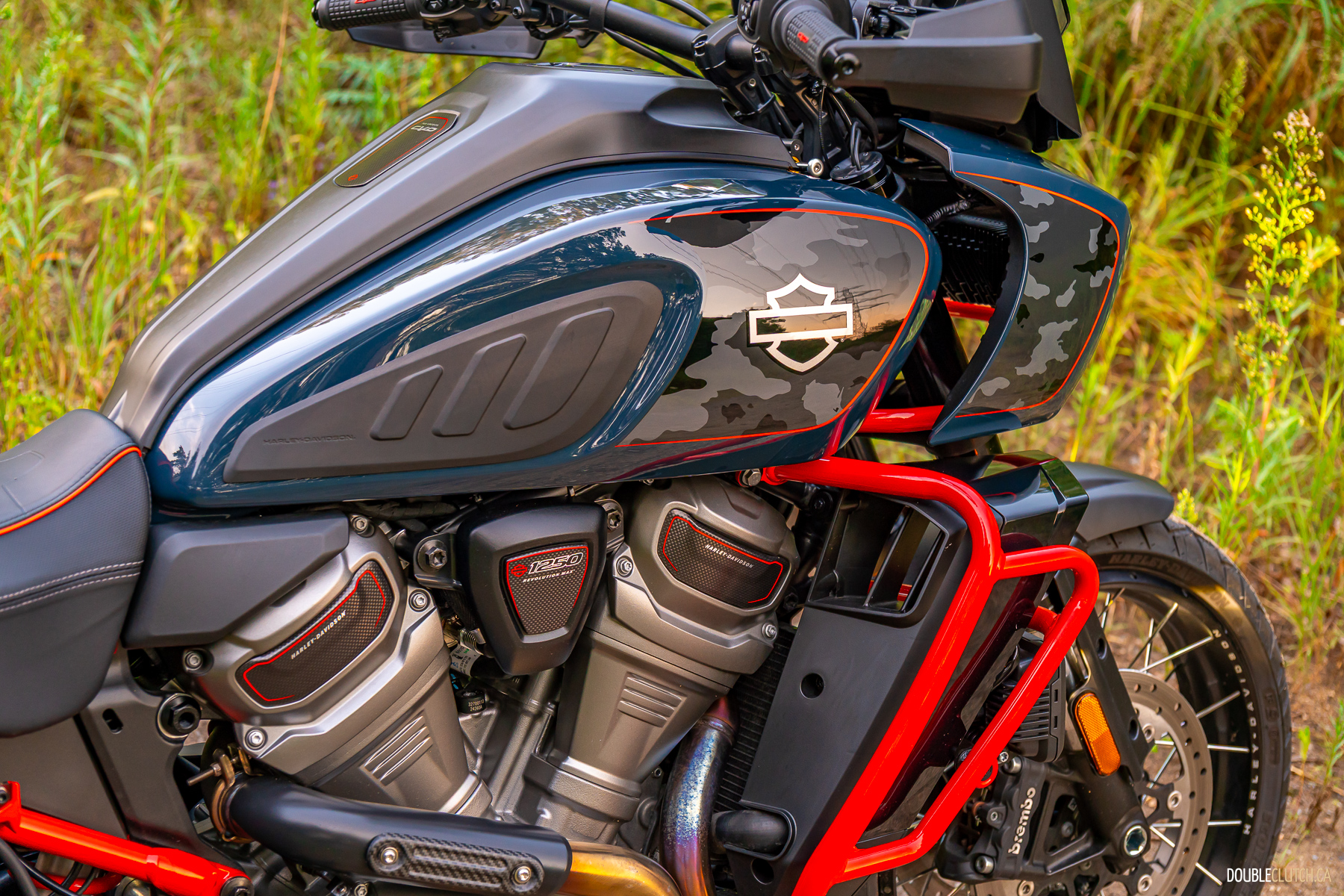
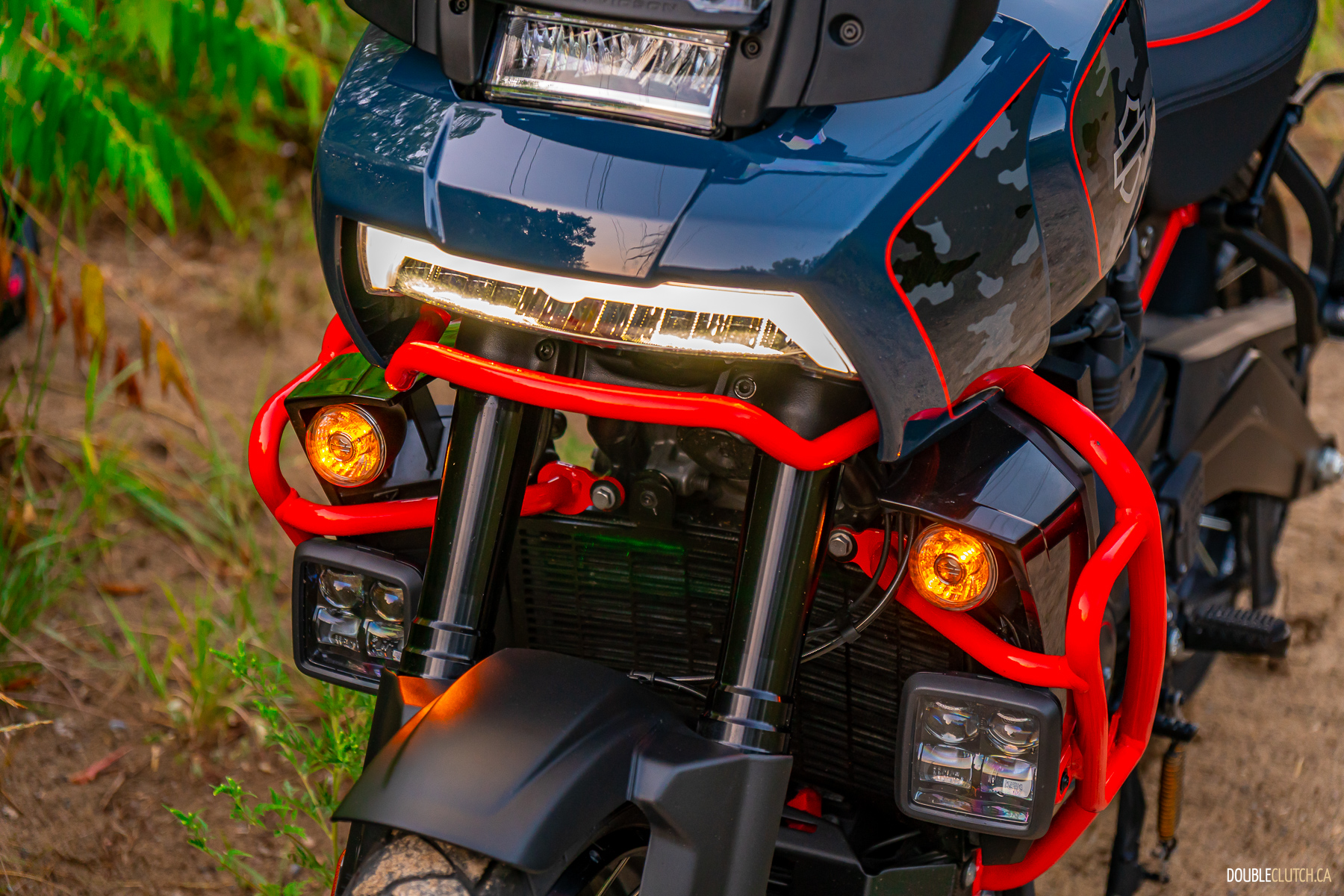
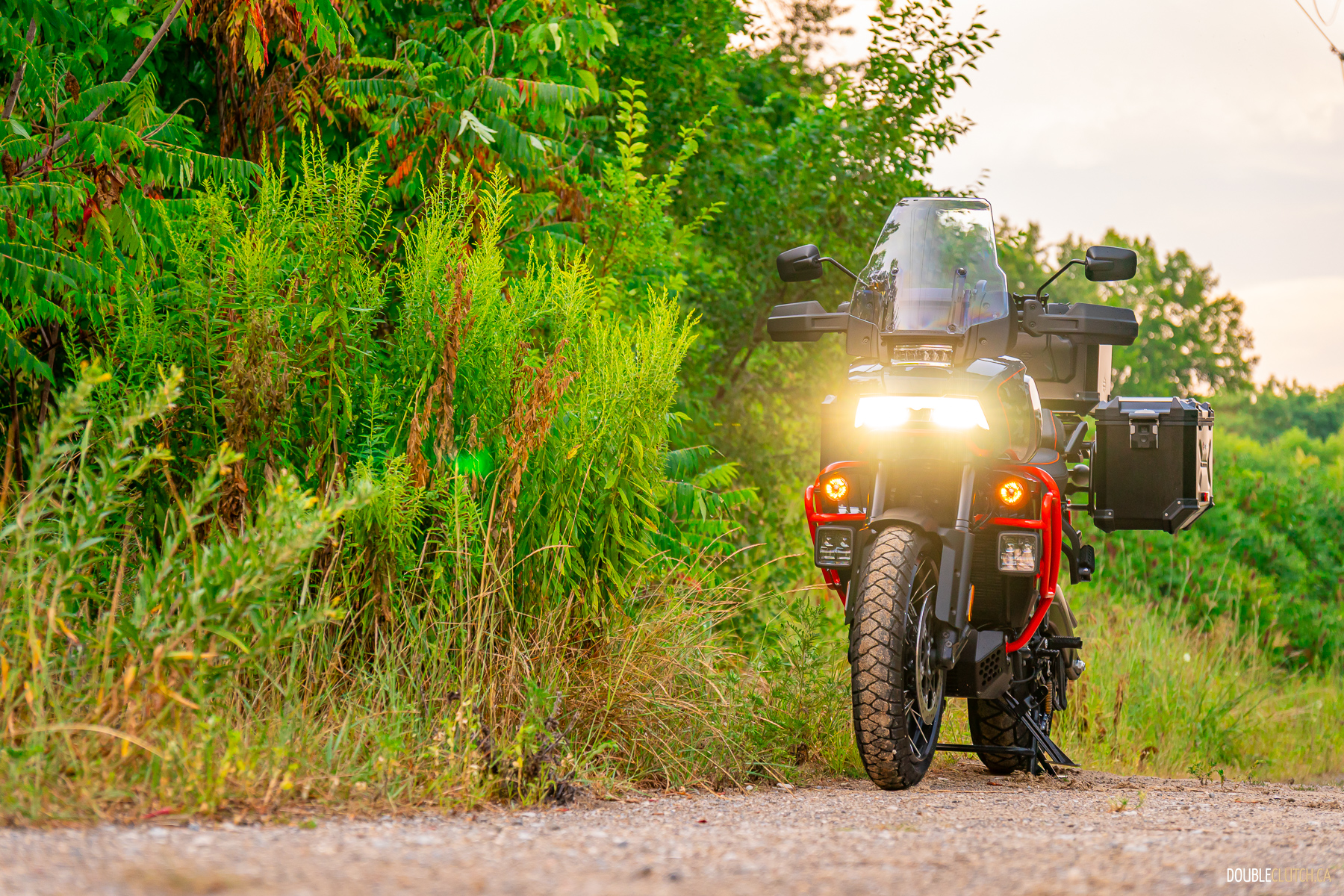
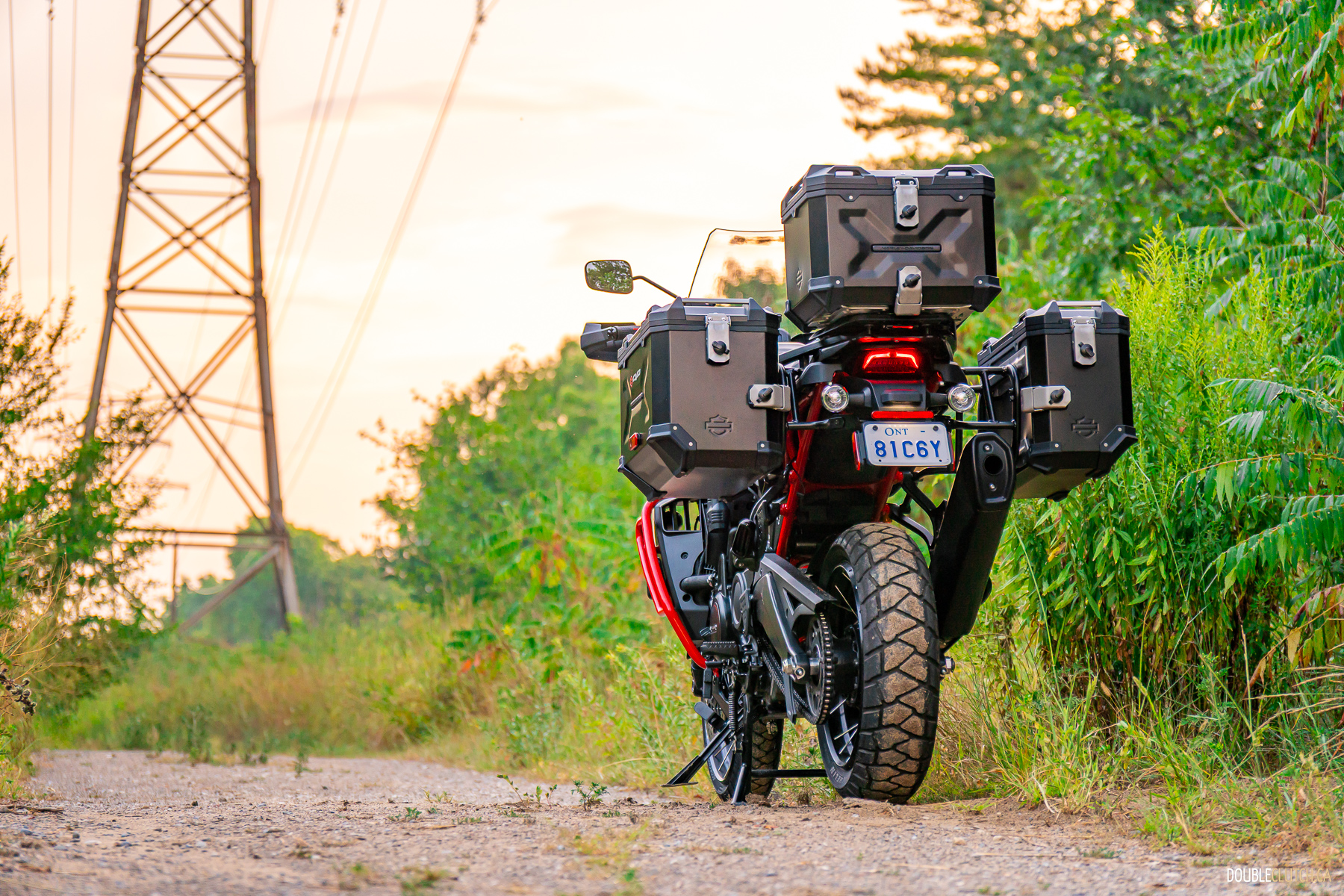
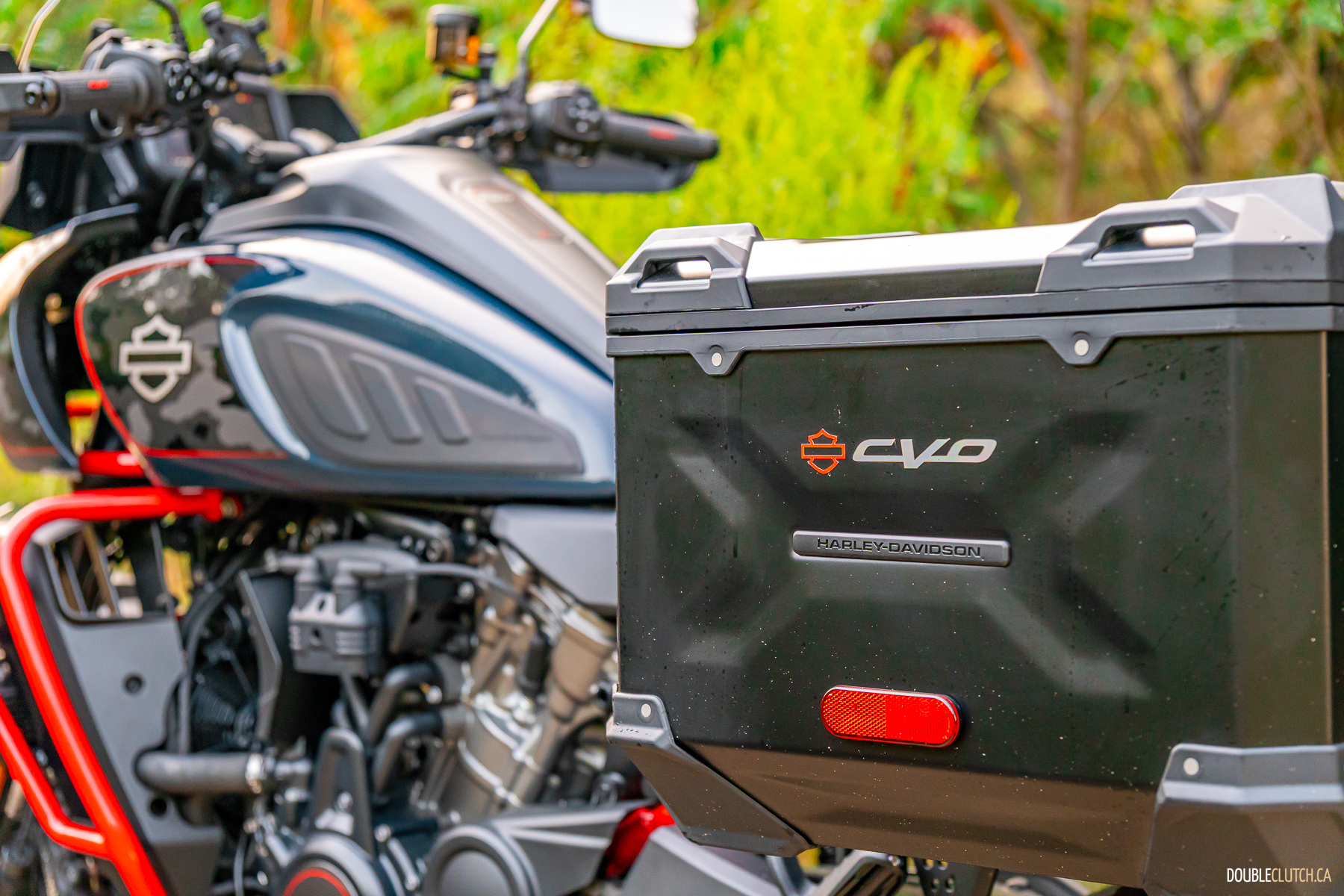
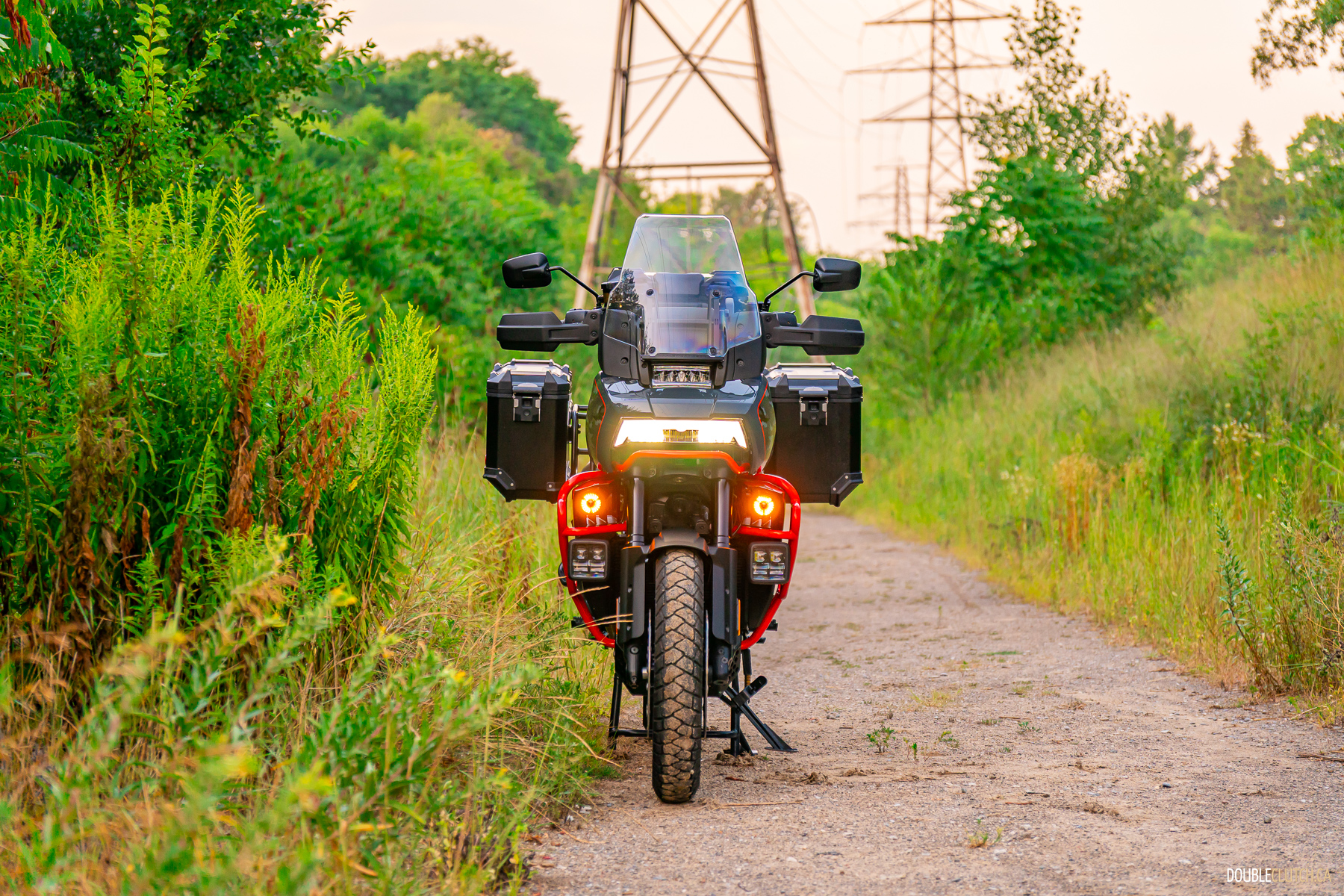
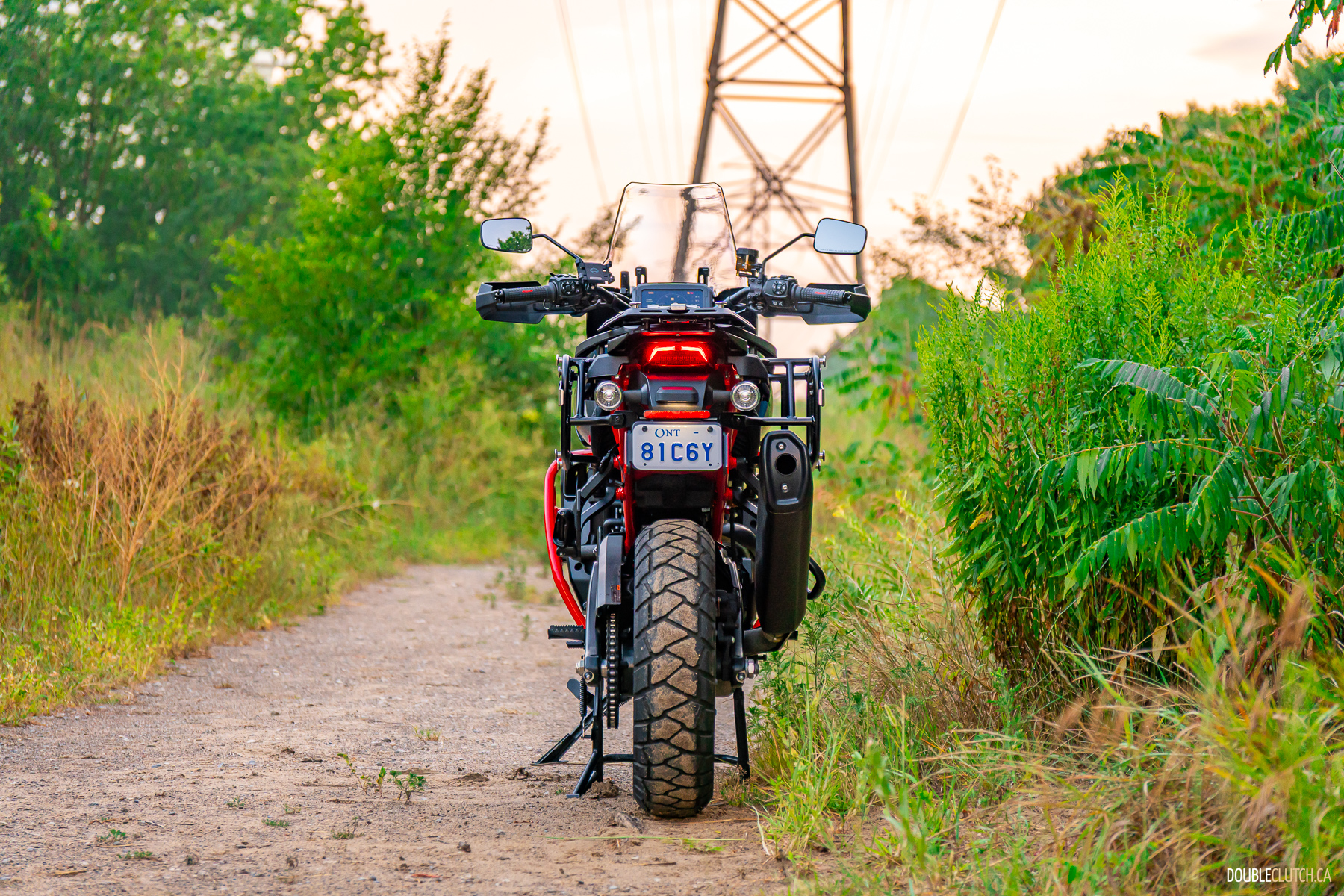
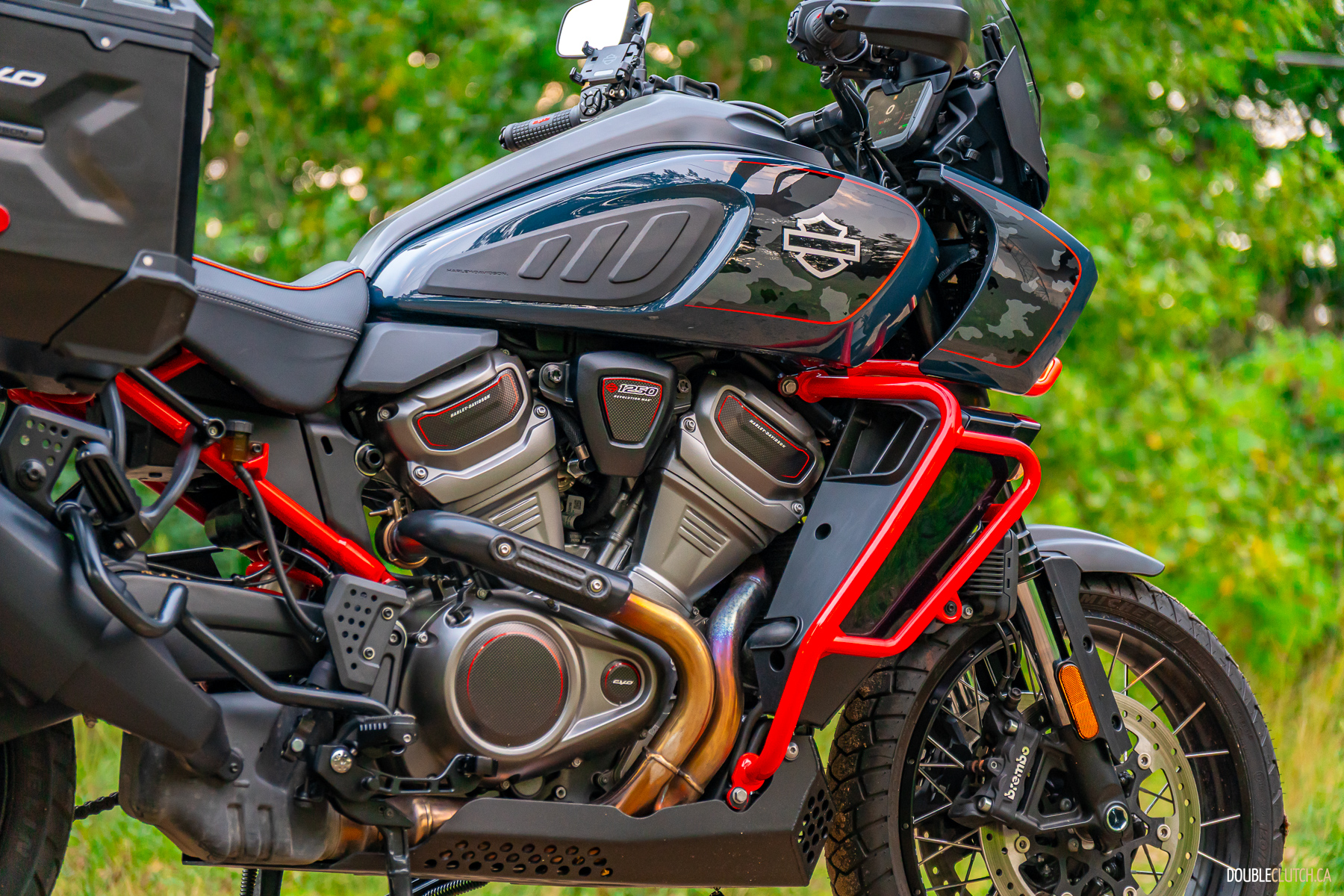
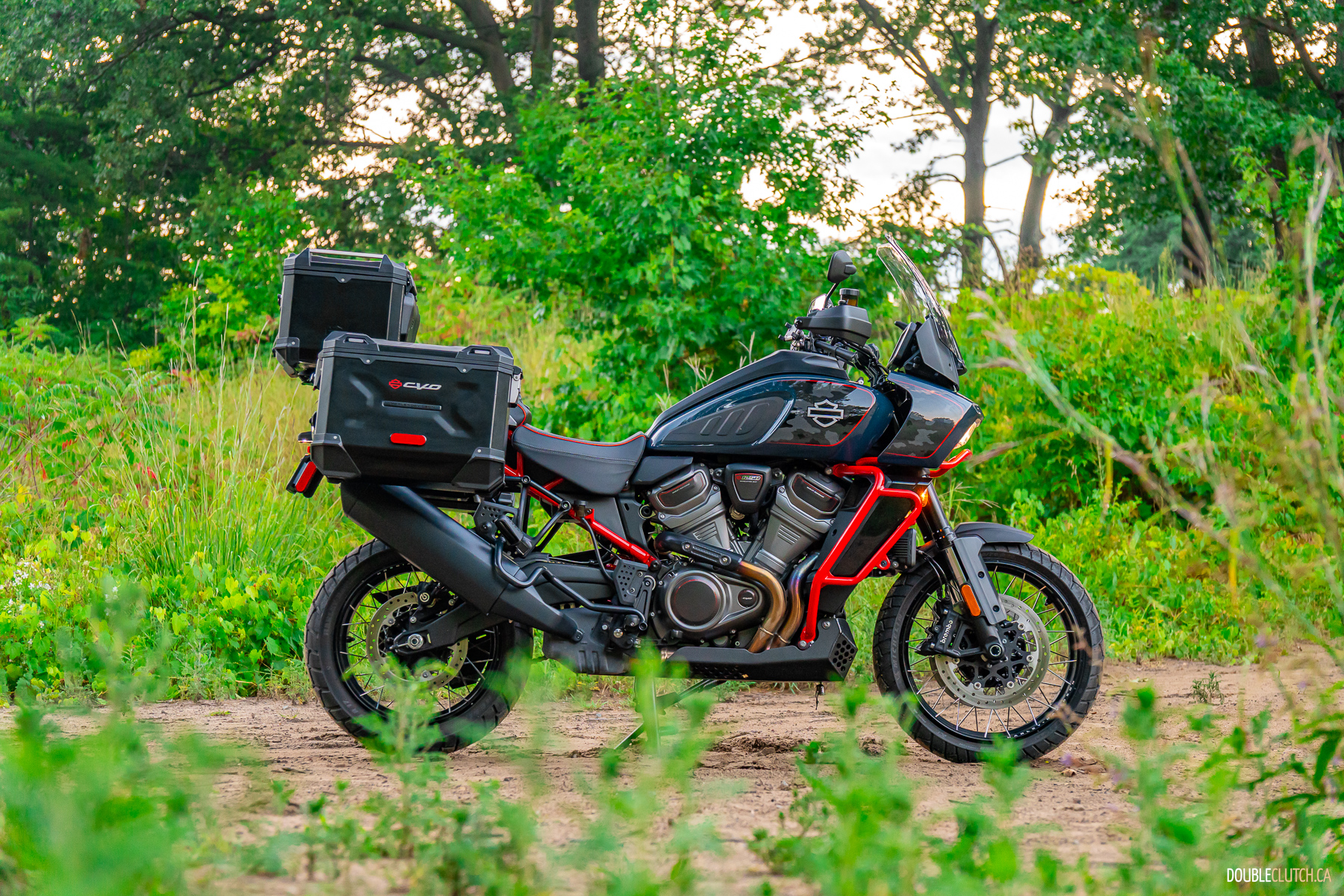
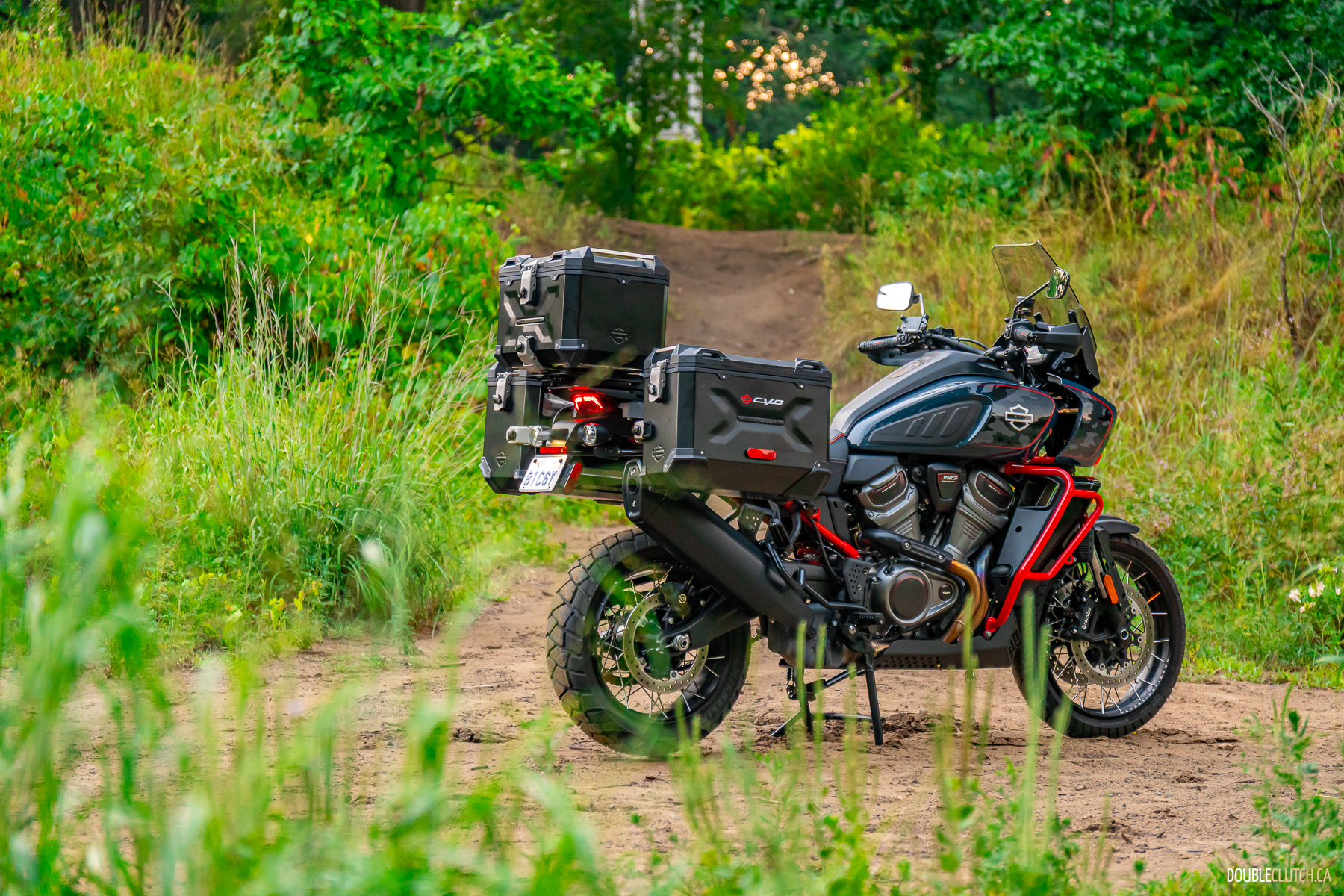
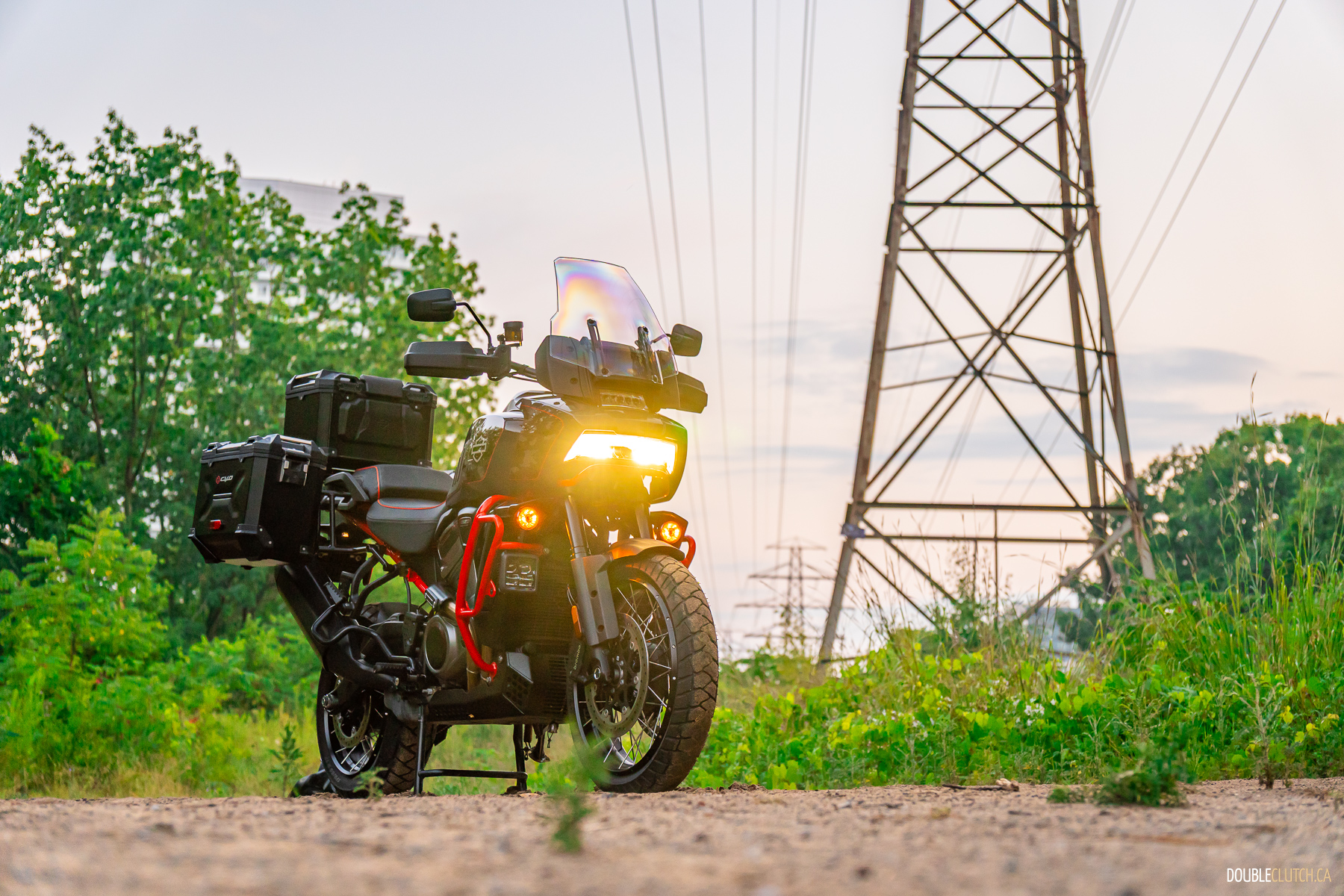
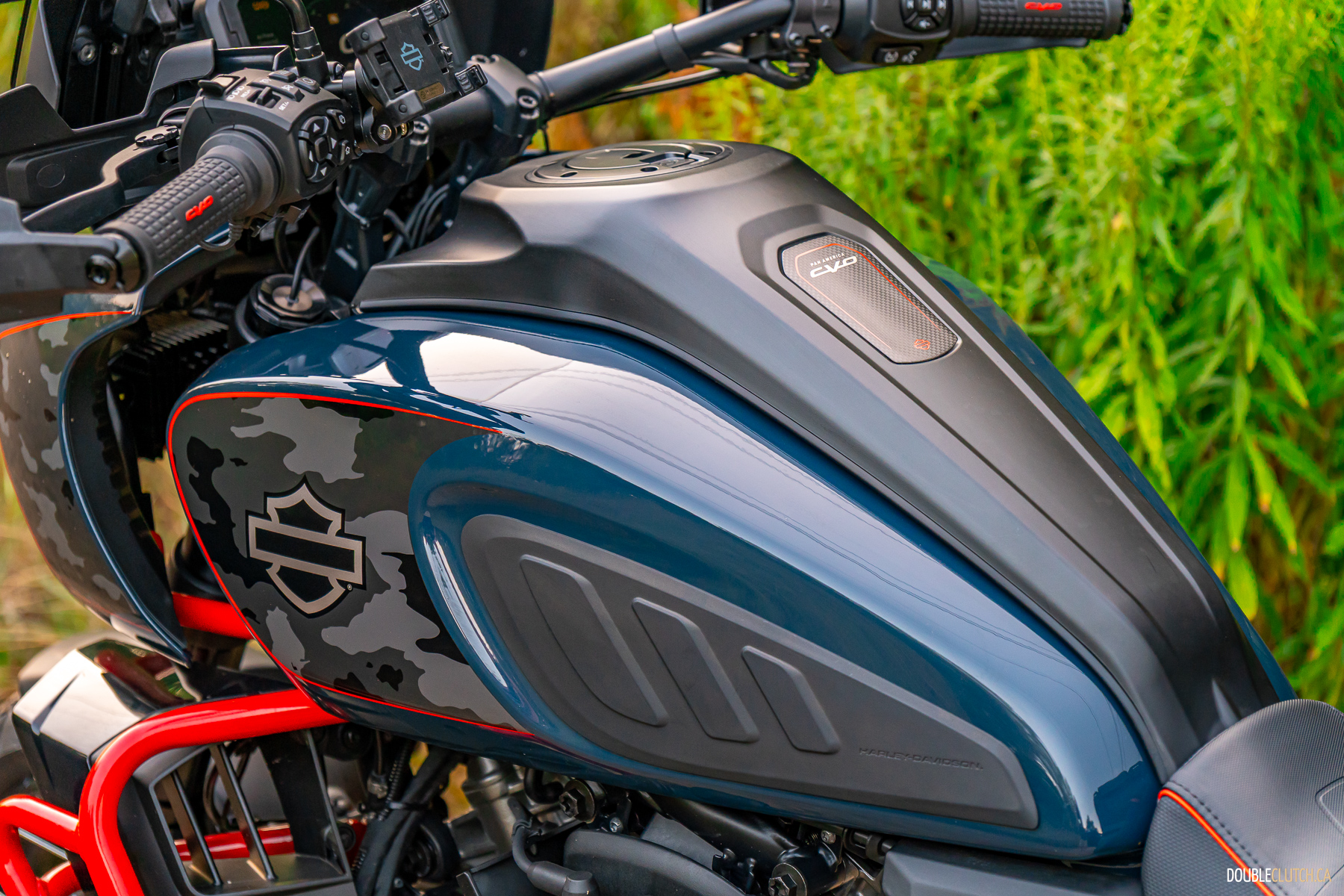
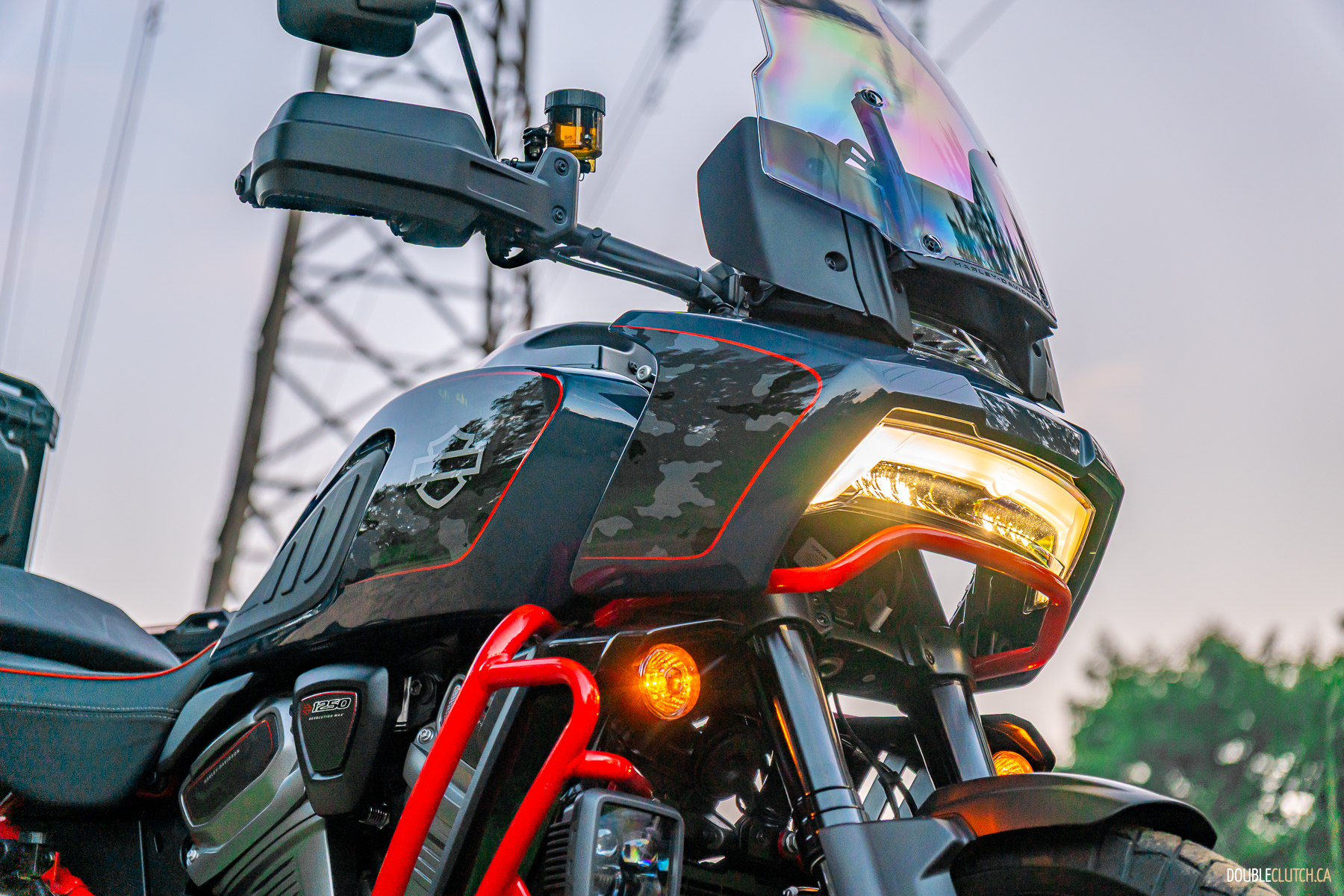
The first thing that helps the Harley stick the landing is the style. As an adventure bike, this thing is hot. All these CVO Pan Ams come one way, with the entire Harley accessory catalogue thrown at them, finished in metallic carbon blue paint with bright pylon highlights, and it looks bad-to-the-ass. It looks purposeful and properly tough, but still finds space to ooze Harley style albeit in a very modern wa. The headlight and fairing look particularly evil, and it’s vaguely reminiscent of the flagship Road Glide. Despite being so far removed from Harley’s usual MO, it doesn’t look entirely out of place on an H-D showroom floor.
What powers the CVO Pan Am?
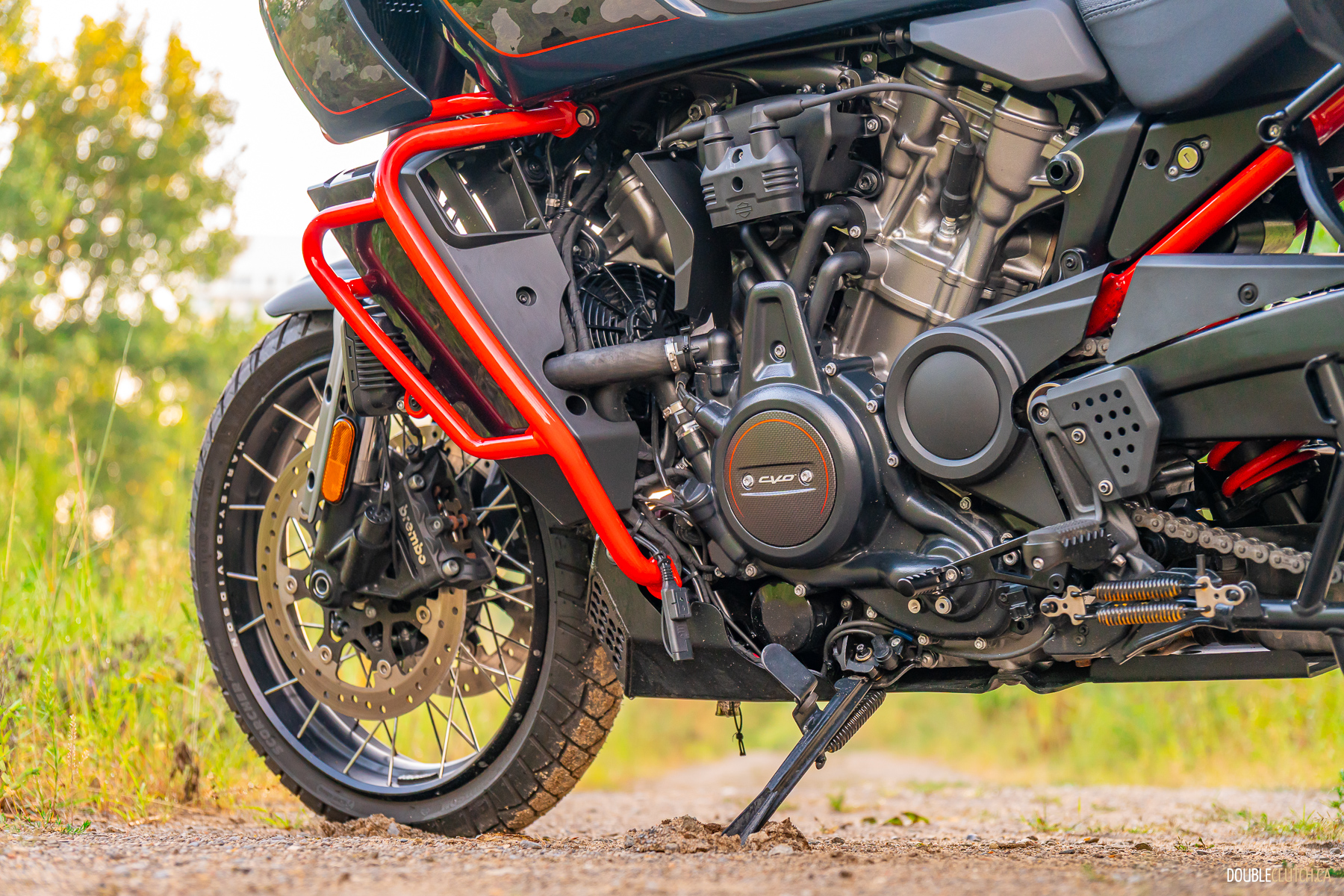
The engine, however, is a completely foreign entity. The Max Revolution 1250 powering the Pan Am uses space-age engineering wizardry like aluminum construction, liquid cooling, overhead camshafts, variable valve timing, and a V-angle and crankshaft that allow for—gasp—genuine harmonic balance! It doesn’t do the potato-potato-potato thing, and it revs out to over 9,000 rpm more than once!
Sarcasm aside, while it doesn’t do anything groundbreaking, it is a pretty excellent and very modern engine from the last company you’d expect to build such a thing, just like the rest of the bike. It produces 150 horsepower and 94 pound-feet of torque, and its clever valve timing tech means it makes great torque everywhere in the rev range—but it definitely likes to scream up top. Its power delivery is downright ravenous.
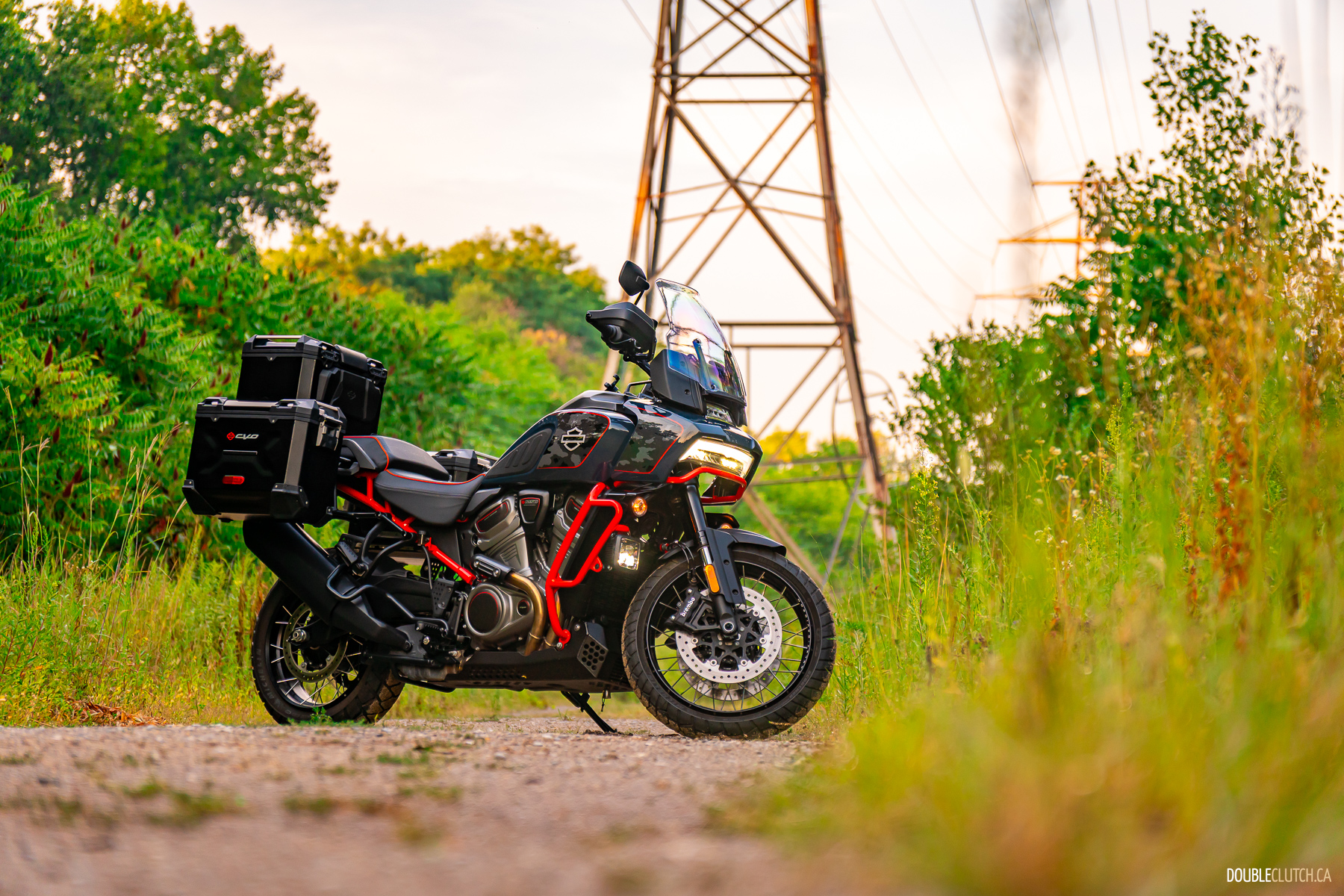
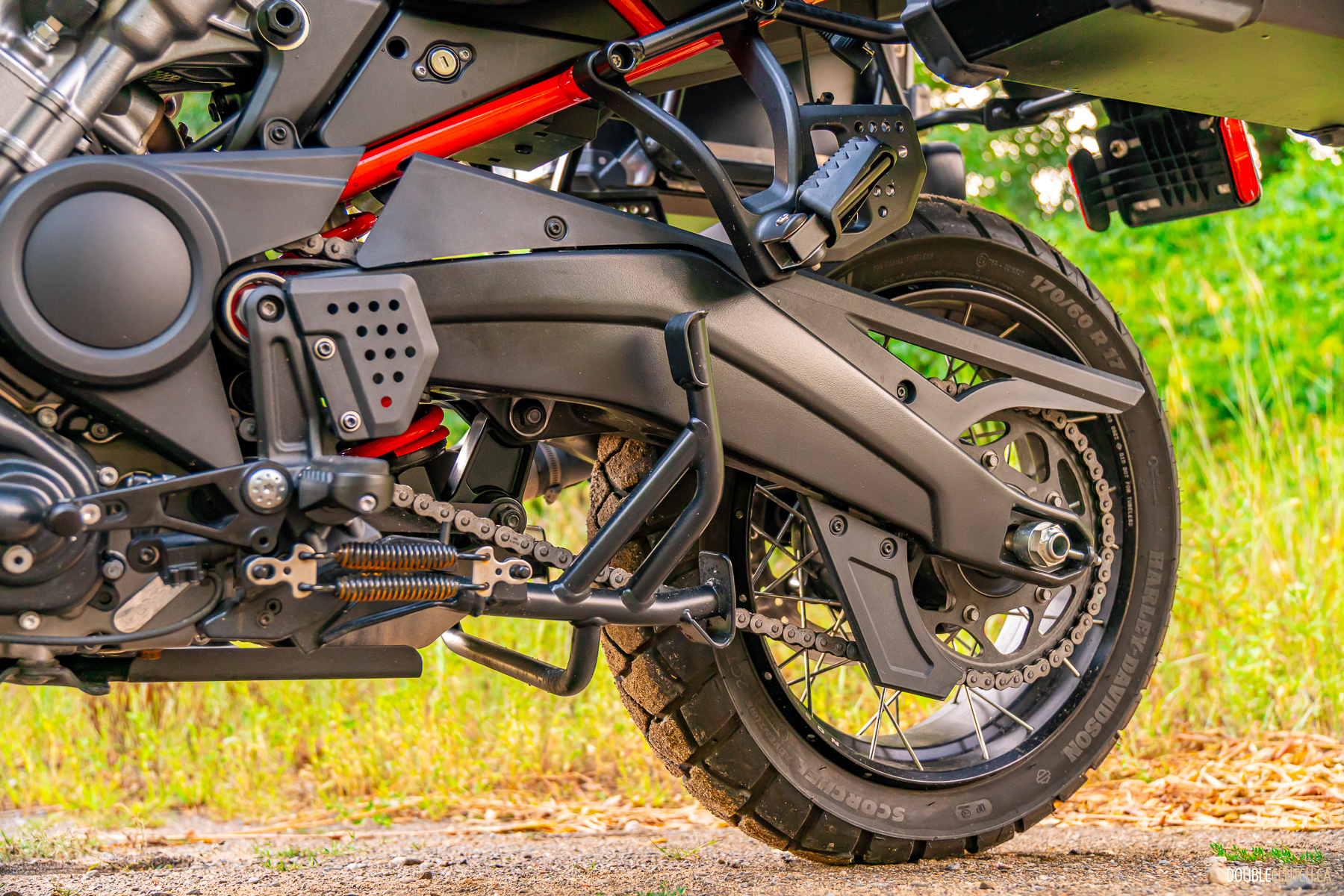
It’s got some pretty clever additional engineering up its sleeves, too. The engine is a stressed member of the bike, helping to trim some a lot of weight off this decked out and armored up CVO Pan Am, which rings in at 659 pounds ready-to-ride. It is a little heavy among big ADV bikes, but not by a fat margin, and it carries its mass very sneakily. It didn’t feel any more cumbersome than the lighter R 1300 GSA, despite it also having the advantage of a lower center of gravity.
I had someone on a Road Glide say they couldn’t imagine riding a bike “that big,” despite the fact that his bike weighed an entire adult male more than this loaded Pan Am—and that’s before his adult male self sits on the Road Glide. Next to the Street Glide I rode a couple weeks prior, the Pan Am feels like a featherweight GP bike. It’s very obvious Harley-Davidson put in serious effort to makeit feel nimble and properly balanced, which sounds like an oxymoron on a 600-pound machine, but it’s the sort of thing that really matters when you’re wheeling over loose sand, or whatever else you find with the Pan Am.
How does it ride?
On the road, the CVO Pan Am is built like any other adventure bike, or any traditional Harley. It’s stable and naturally reassuring, even in sharp crosswinds. Unlike a traditional Harley, it’s very maneuverable and happy to take a deep lean—I’m talking, like, 40 degrees—in corners. It exhibits fabulous balance, great feedback from the front and rear, and an overall demeanour that’s more friendly than frenetic, and very approachable. It’s almost Honda-esque; the CVO Pan Am is fun to flick around and play with, and doesn’t feel compromised on the road despite its height and heft – especially compared to more traditional Harleys.
Off road, it’s a treat. When in its (configurable) off-road mode, the CVO Pan Am allows for a very healthy degree of slip and wheelspin if you’re feeling exuberant. During slow manoeuvres, its industry-first active suspension drops the bike by 190 millimeters to help place your feet on the ground, and the engine’s strong bottom end and very forgiving clutch making tricky stuff a cinch. I actually found it noticeably easier to handle than the BMW on this front.
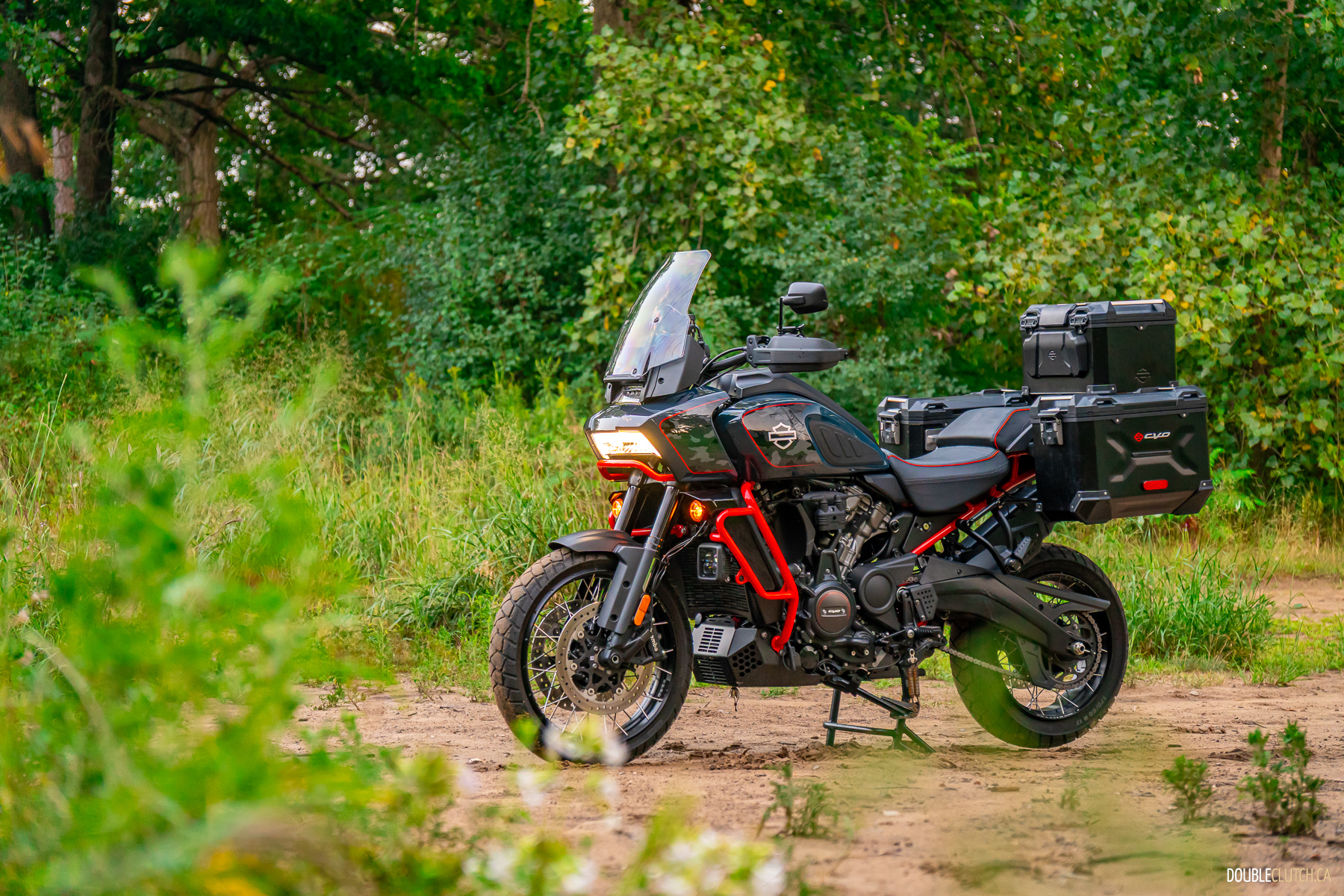
On that note, the riding position is about as perfect as is possible. The CVO Pan Am doesn’t need handlebar risers to be comfortable on long hauls; you sit upright with a slight forward lean to be in command, but there’s no strain on your body, specifically on your wrists, which I find some adventure bikes consistently struggle with. Ride comfort is excellent regardless of the surface, and wind turbulence is fairly well controlled. In an ideal world, the adjustable windscreen would shake a little less.
Heat is another minor foible of the CVO Pan Am. It doesn’t overheat like Harleys of old, but it gets steaming hot, and there are times—like when highway traffic slows down—when you will feel that radiating from a couple of hotspots on your right leg. [Sounds like by old NB Miata. —Ed.] There’s another minor thing that shouldn’t be a concern, but it inevitably will be for some: as of 2025, all Pan America bikes are built in Thailand, not Milwaukee. Build quality on this tester was, as far as I could tell, pretty impeccable, but I just know that’s going to bother some people.
Is the Harley-Davidson CVO Pan America worth it?
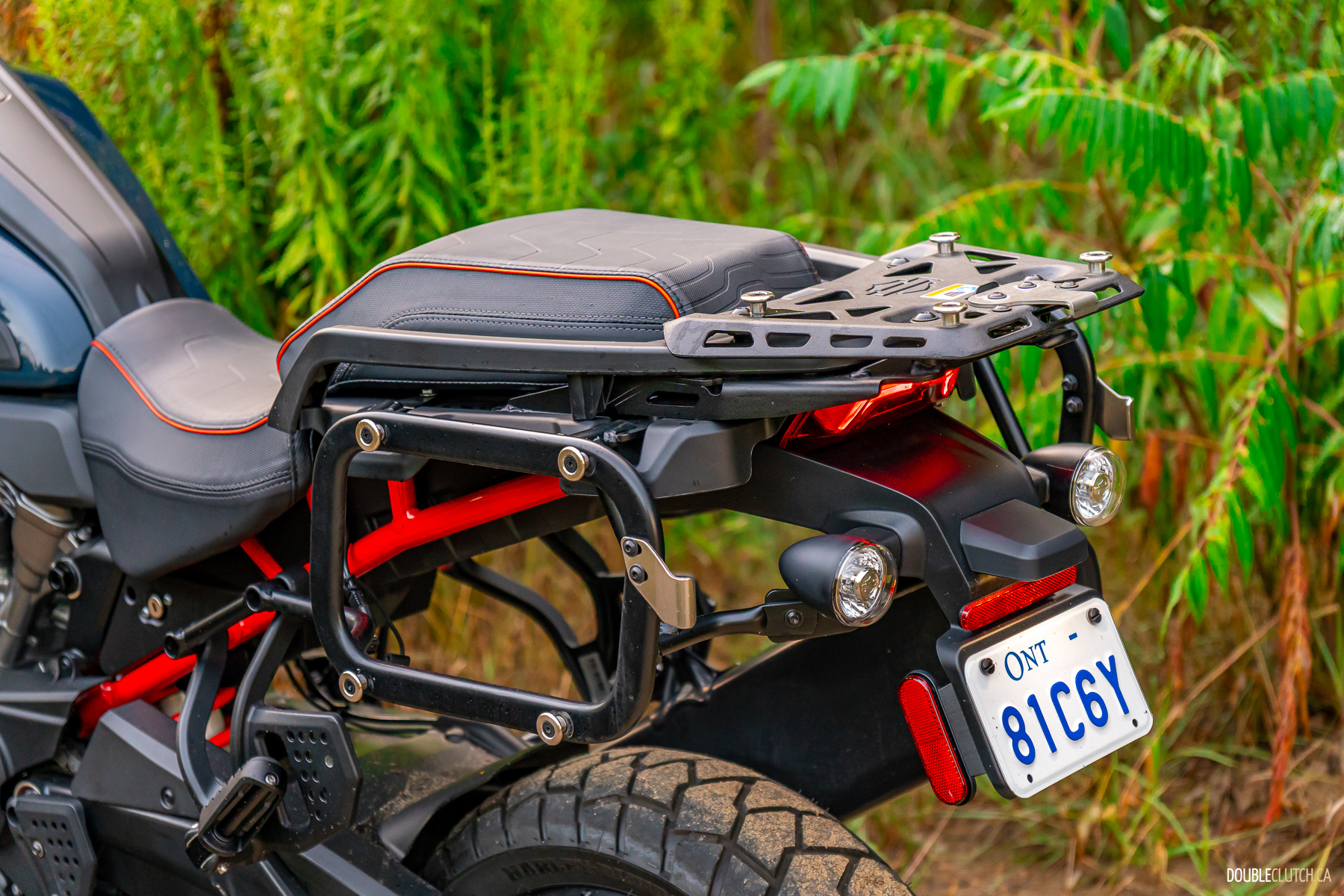
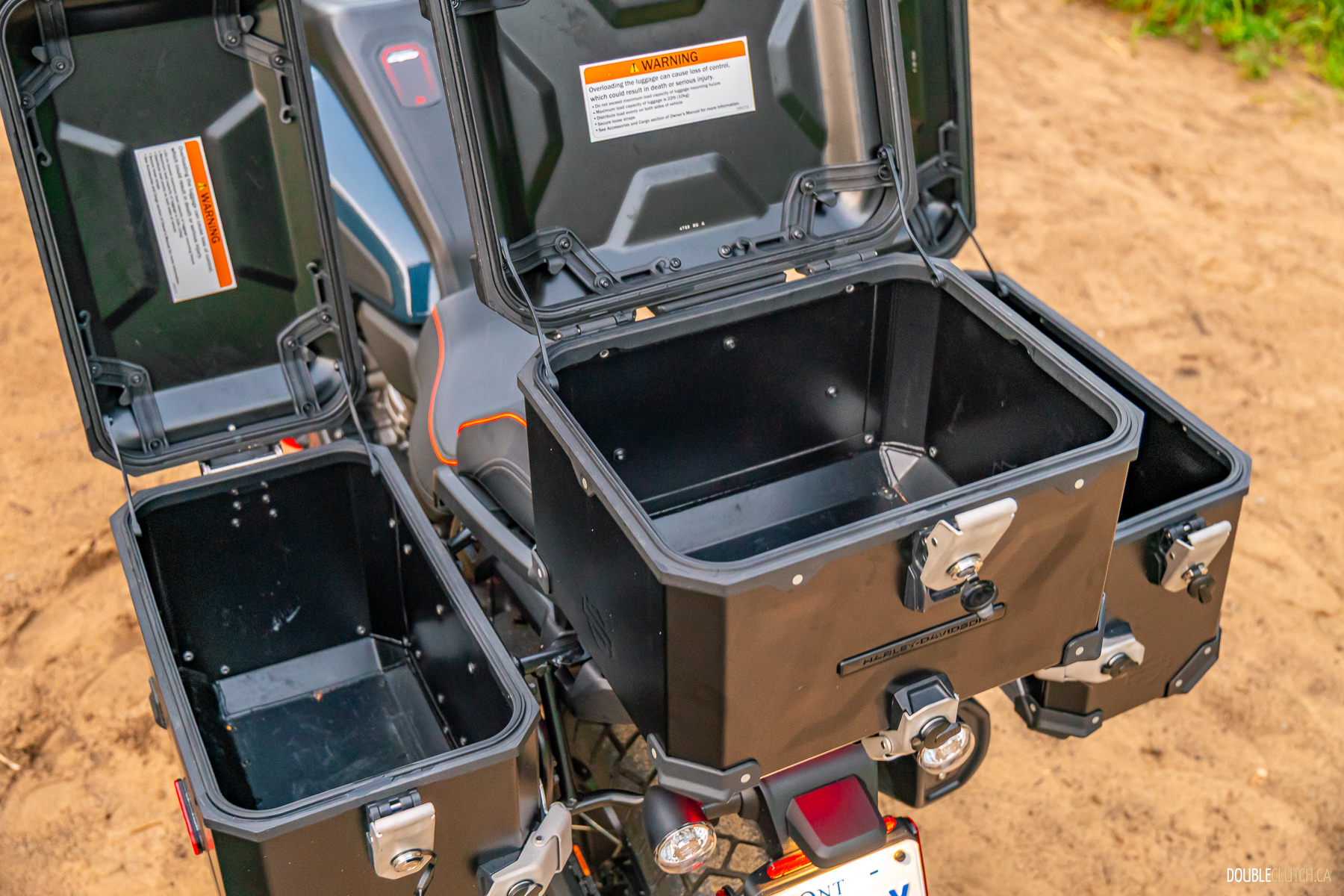
The last “here’s the rub” is pricing. This bike, decked to the gills, is $35,599 as-tested. That puts it right about in-line with a comparably loaded BMW with storage boxes, but the BMW has more trick tech, and more importantly, is an established player in the ADV space. Harley-Davidson isn’t exactly a newcomer to bikes, but in this segment, they’re battling uphill and have something to prove, both to existing clientele and cross-shopping newcomers. The CVO Pan America is by all accounts a fantastic bike, but that doesn’t change that in the Harley world, an adventure bike is a hard sell.
Harley-Davidson put themselves in a difficult spot with this bike. In a vacuum, in every measure, the CVO Pan am is a soaring success and an incredible achievement from an entrenched cruiser company that has no business being this good at doing the adventure bike thing. It looks awesome, rides beautifully, hits all the right notes, and does all the right stuff. In the intangible ways that really matter, the 2025 Harley-Davidson CVO Pan America carefully straddles the boundary of attracting new customers without alienating their existing ones. I sincerely hope all the talk of Harley abandoning this platform is false, because they’ve seemingly ironed out all the teething issues to create something really special. Yeah, that’s a Harley. And it kicks ass.