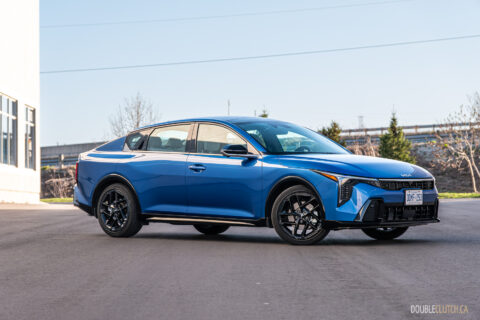
Hyundai continues to deliver plenty of value in any class in which their vehicles compete, and the 2025 Hyundai Santa Fe Hybrid embodies that philosophy. The Santa Fe has been around since 2000, now onto its fifth generation. Debuting last year, this latest generation is the Santa Fe’s most daring redesign, throwing out the prior four generations to create something completely new and rather surprising, even for Hyundai.
Style cranked to 11
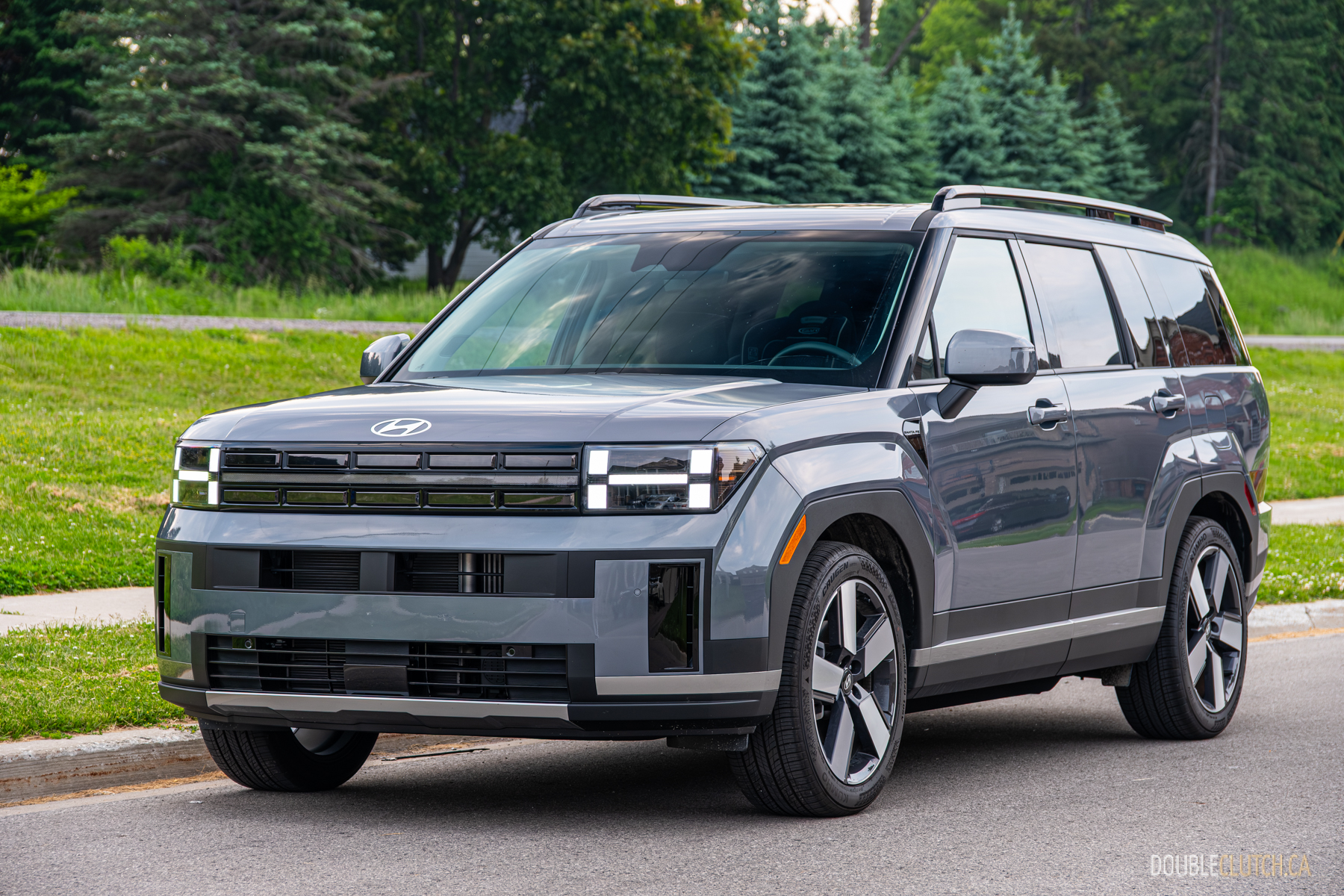
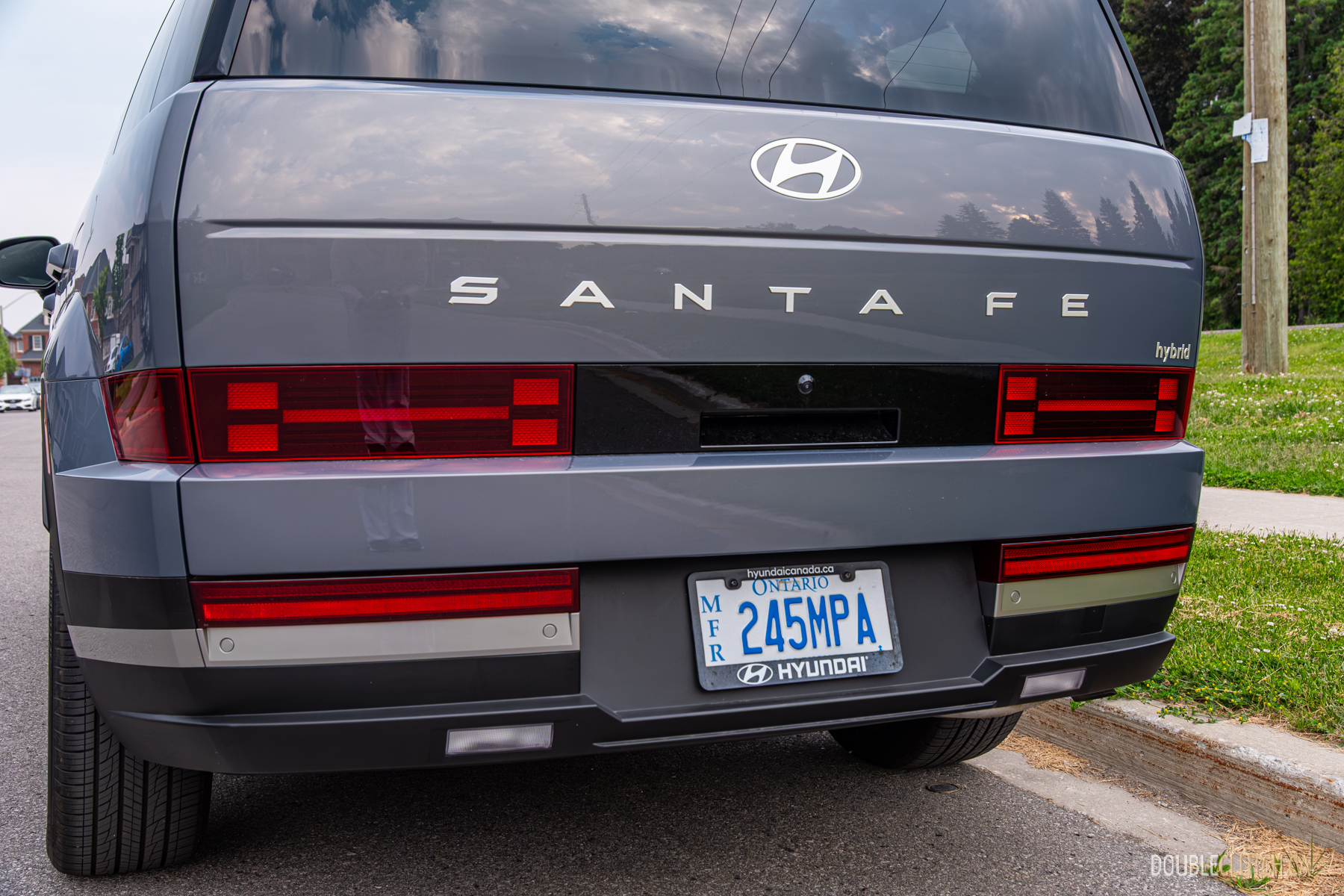
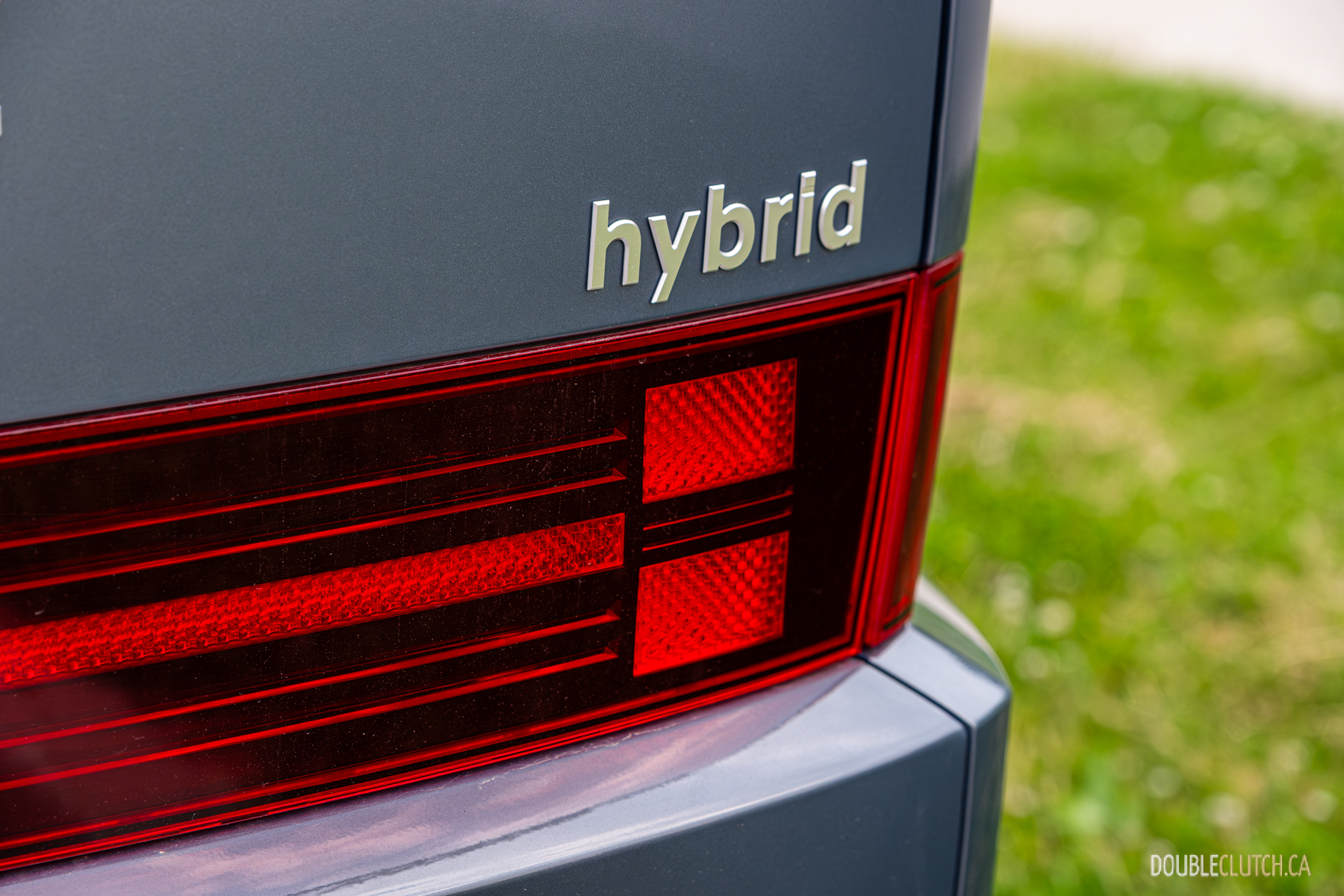
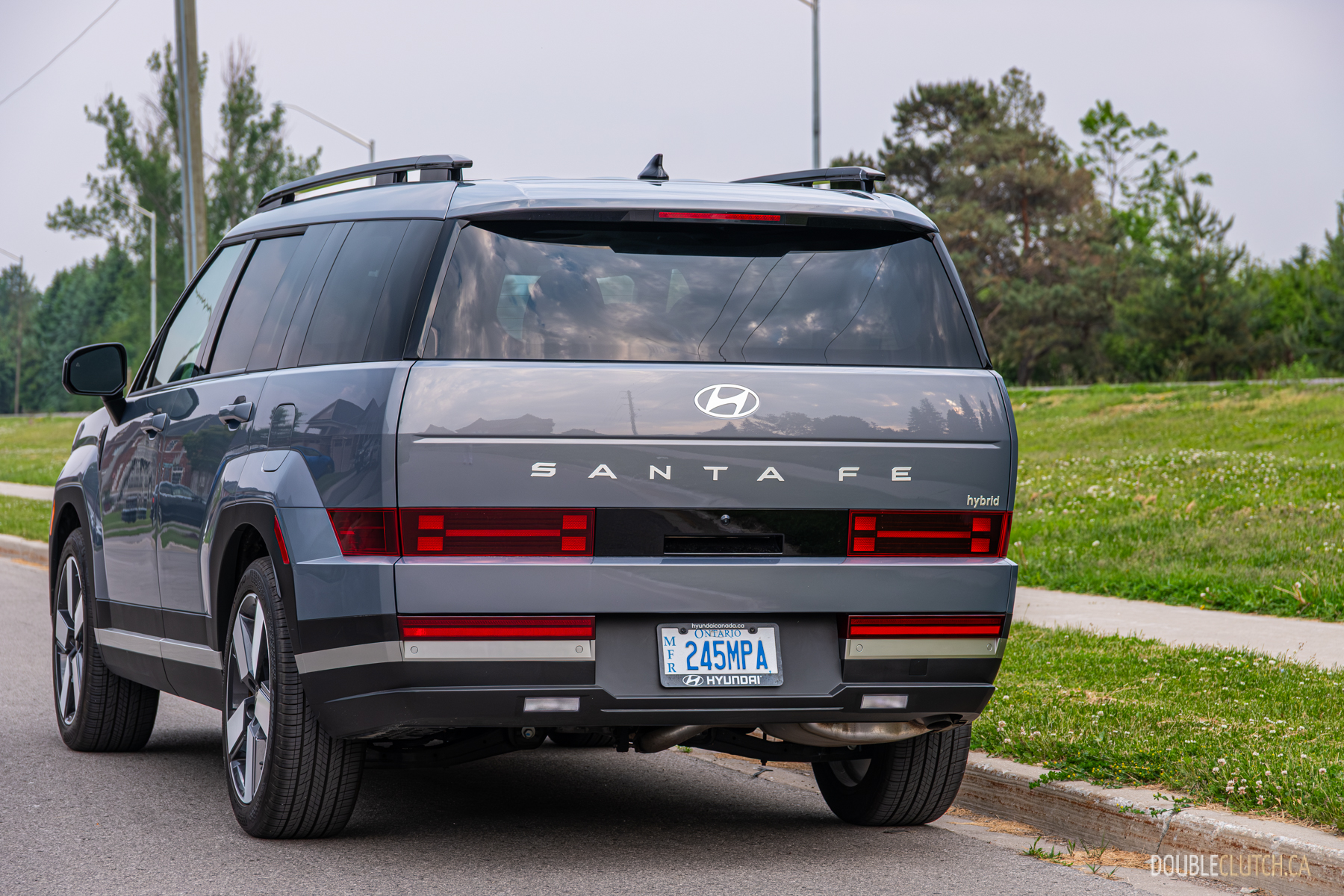
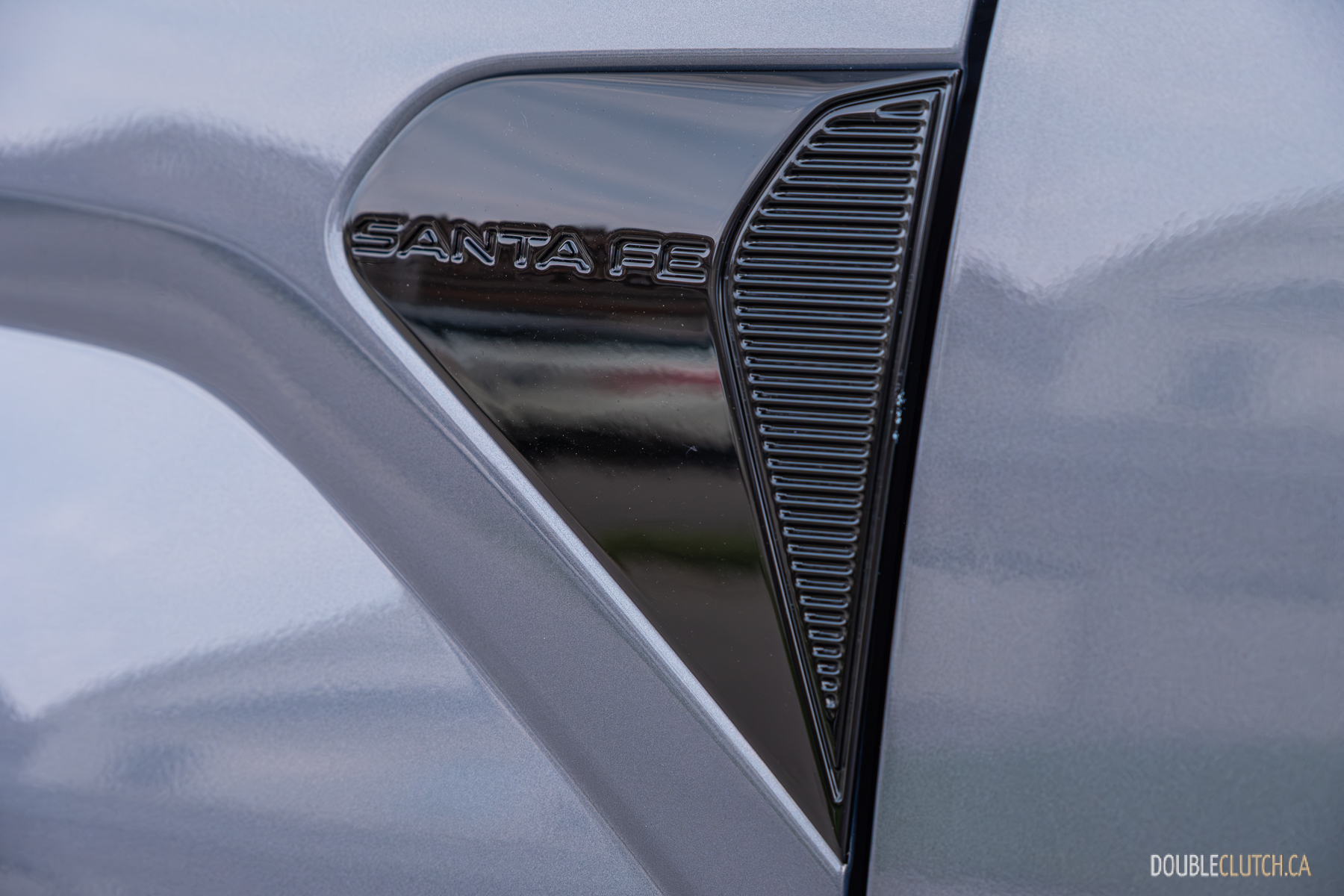
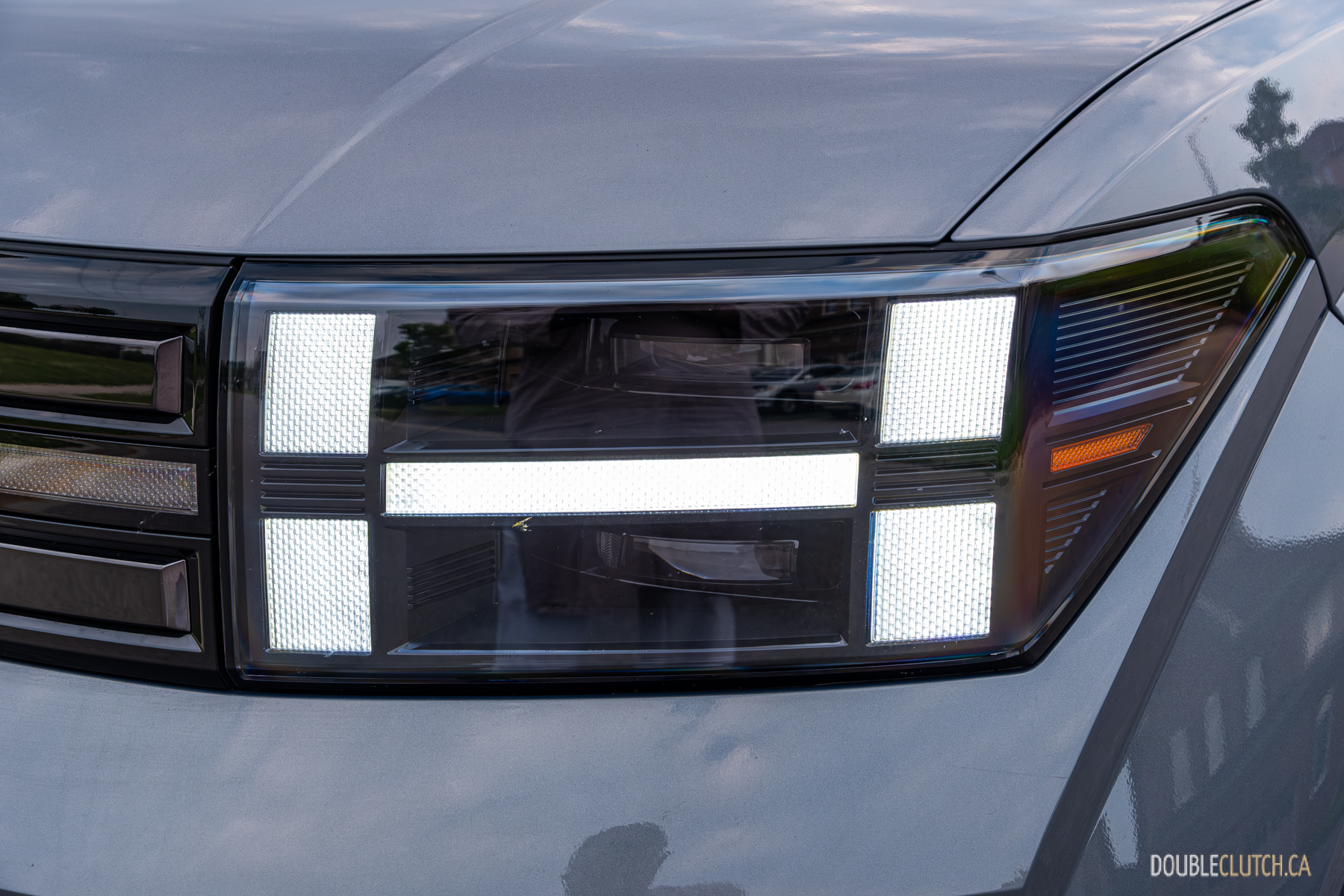
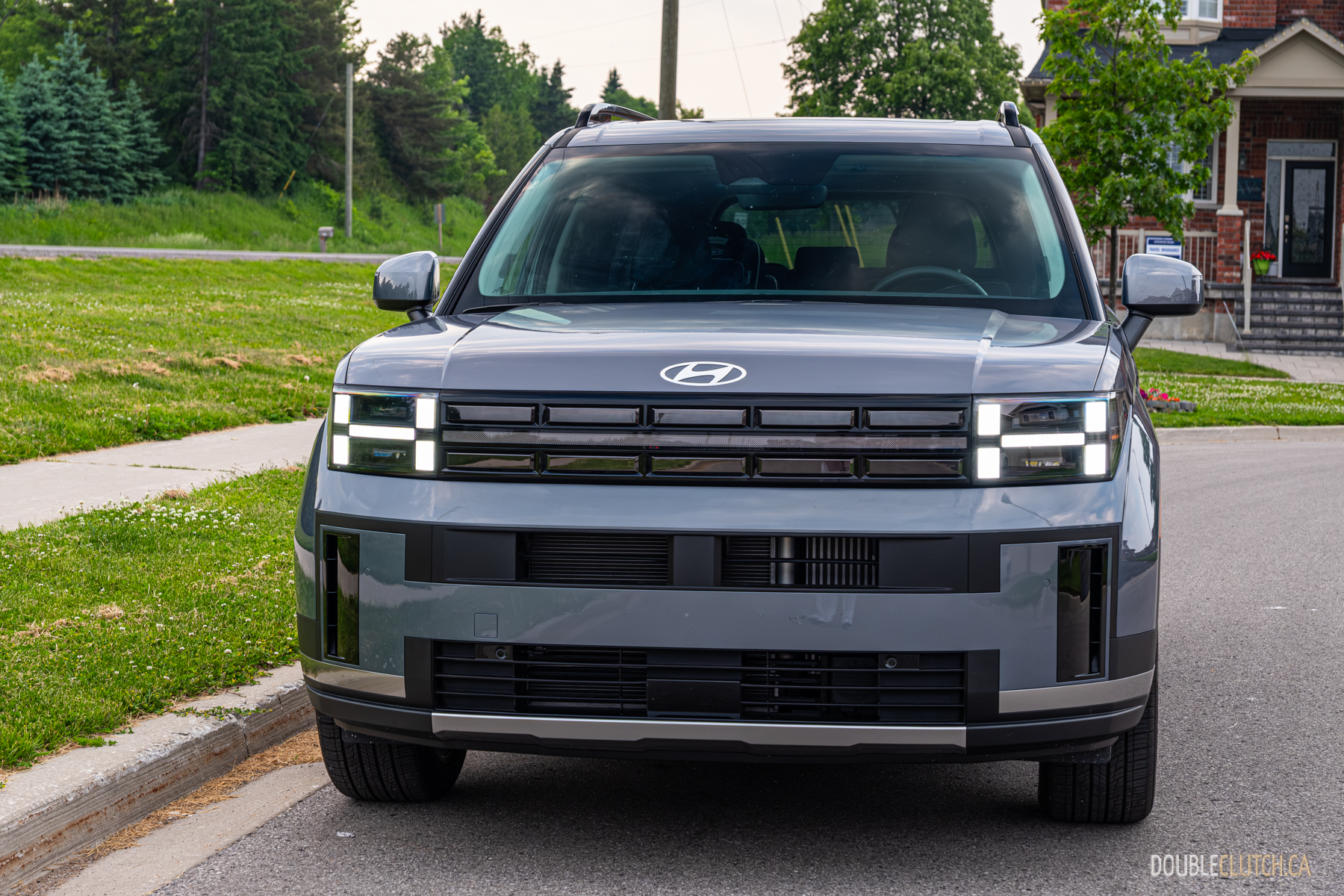
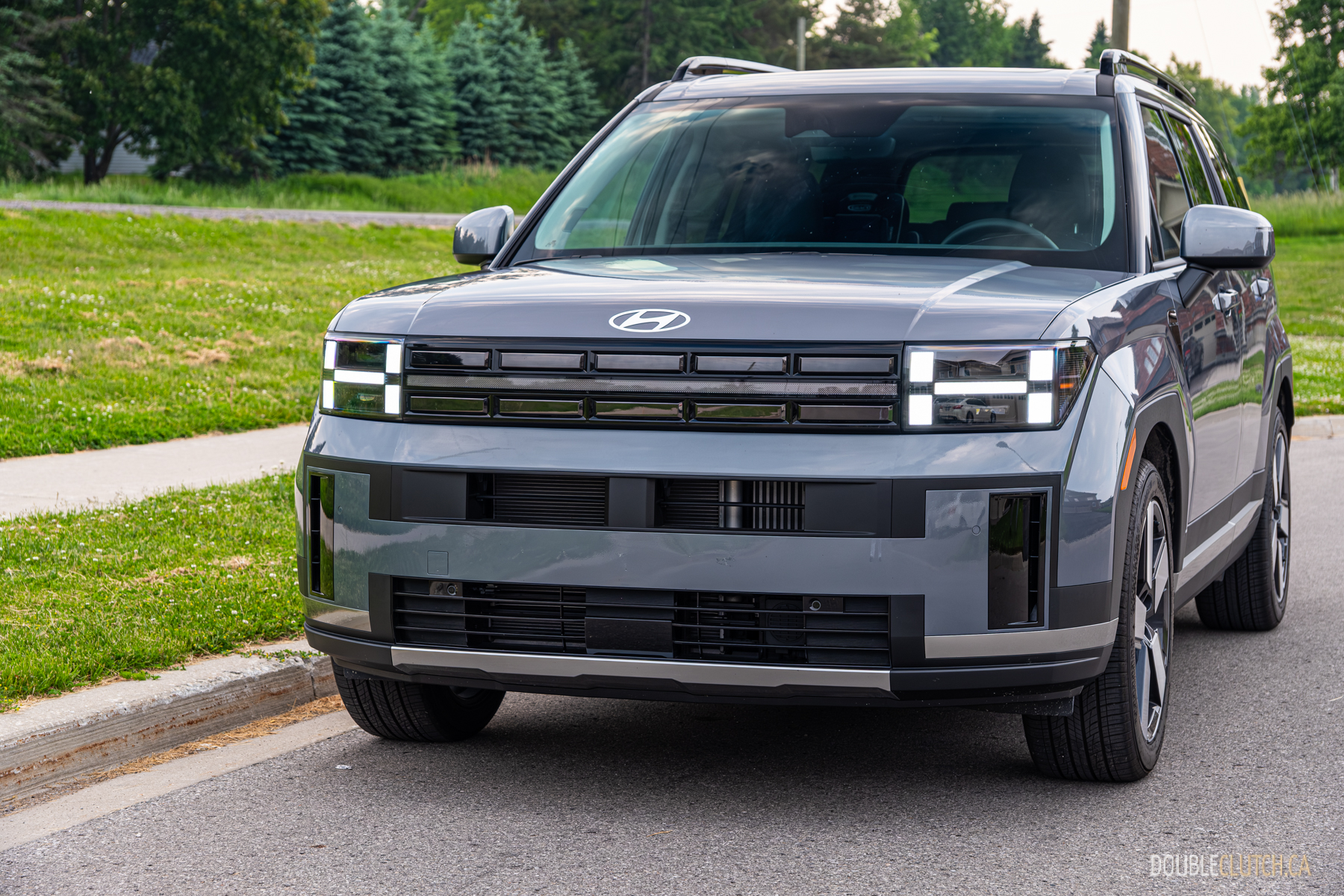
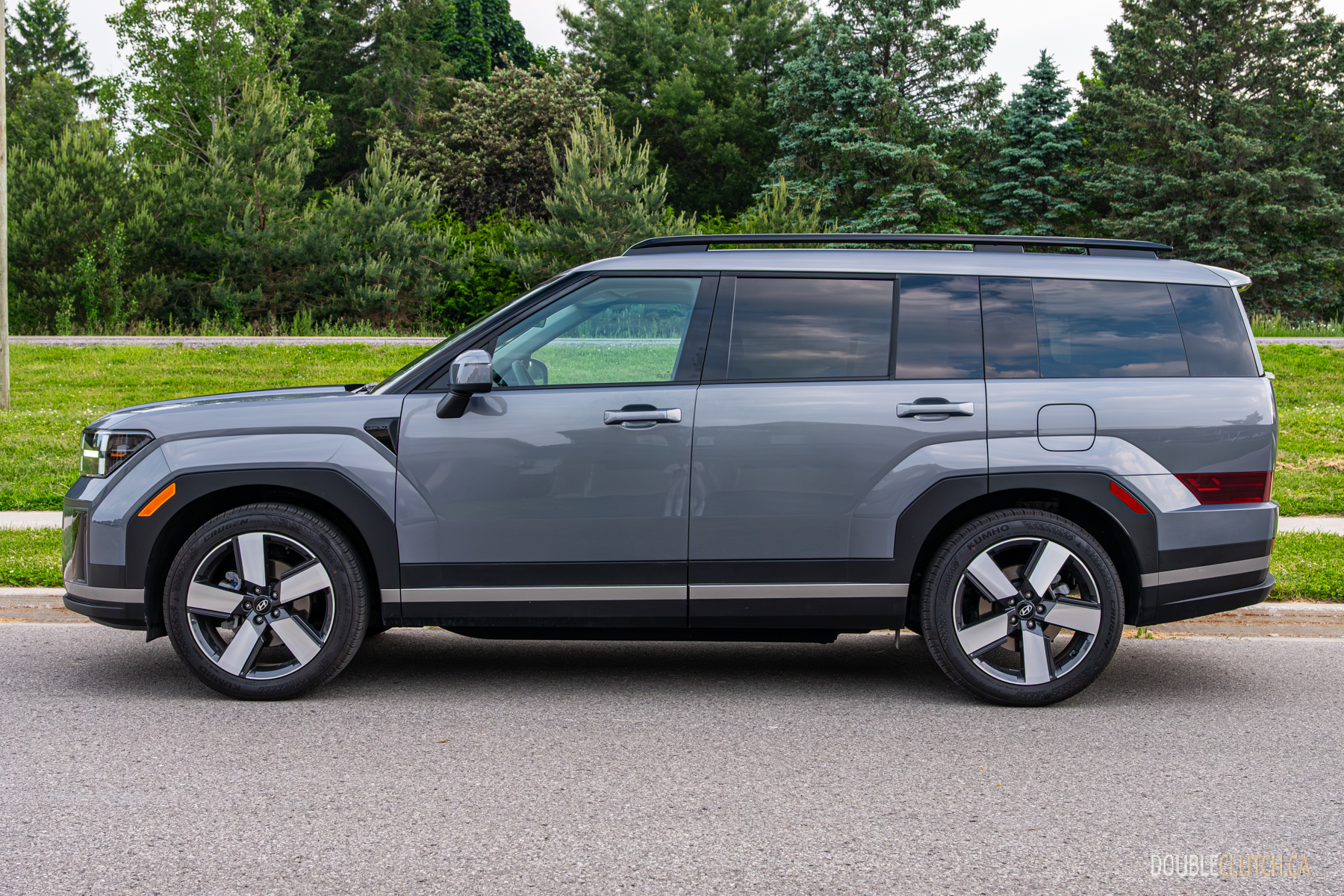
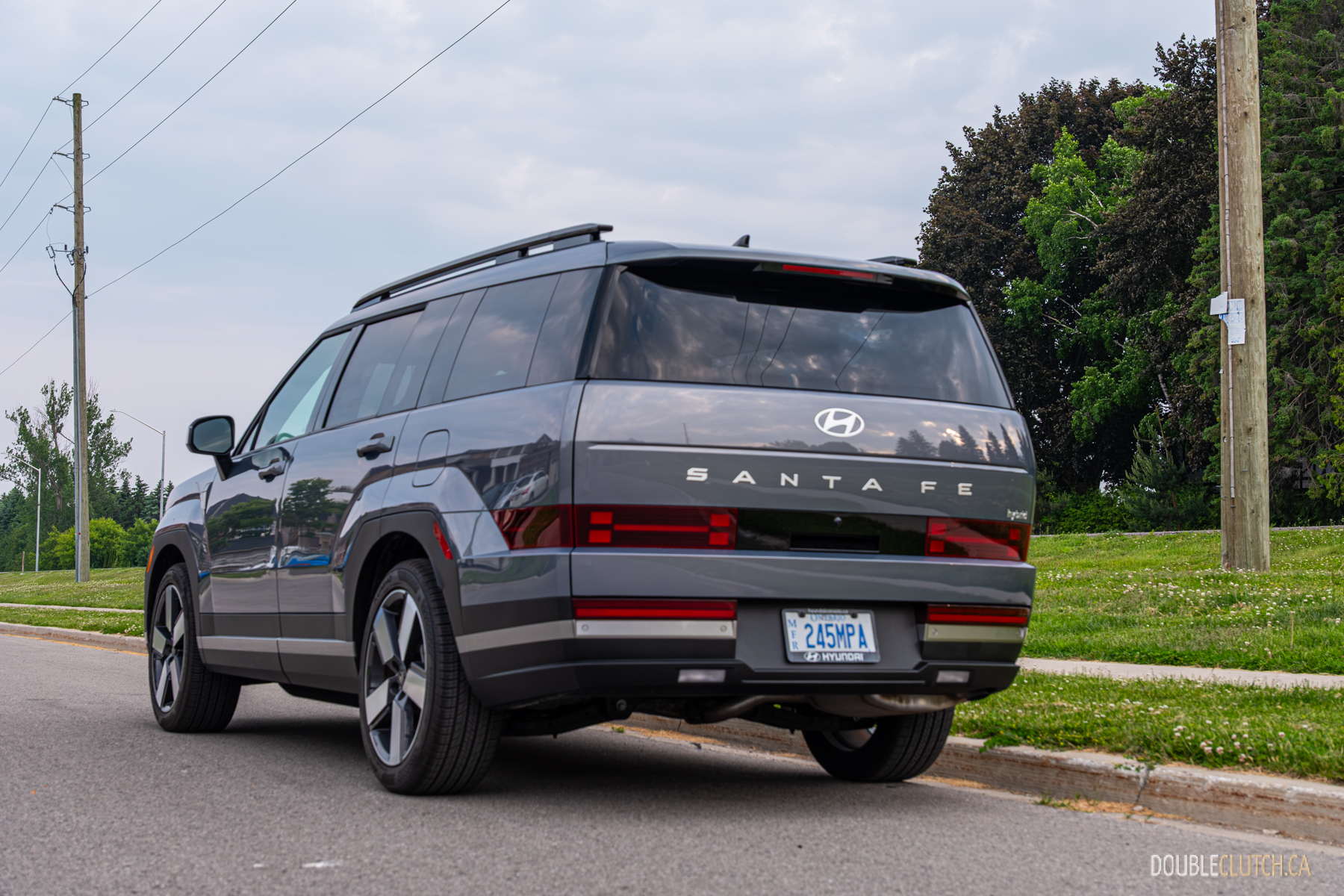
The new Santa Fe is striking, eschewing the bulbous and soft features of the previous generations for a boxy and chiselled look reminiscent of a Land Rover, but unique all the same among mainstream SUVs. The squared-off shape is almost old-school-SUV, with a flat hood and flatter face featuring a rectangular grille and squared-off headlights that illuminate in a clever H pattern — get it?! The Santa Fe’s rear end is probably my least favourite view; I think the rectangular tail lights are too low for my liking, making it look somewhat disproportionate. It’s not offensive, just a tiny blemish on an otherwise slam dunk of a design; the tail lights also illuminate in an H pattern to match the front.
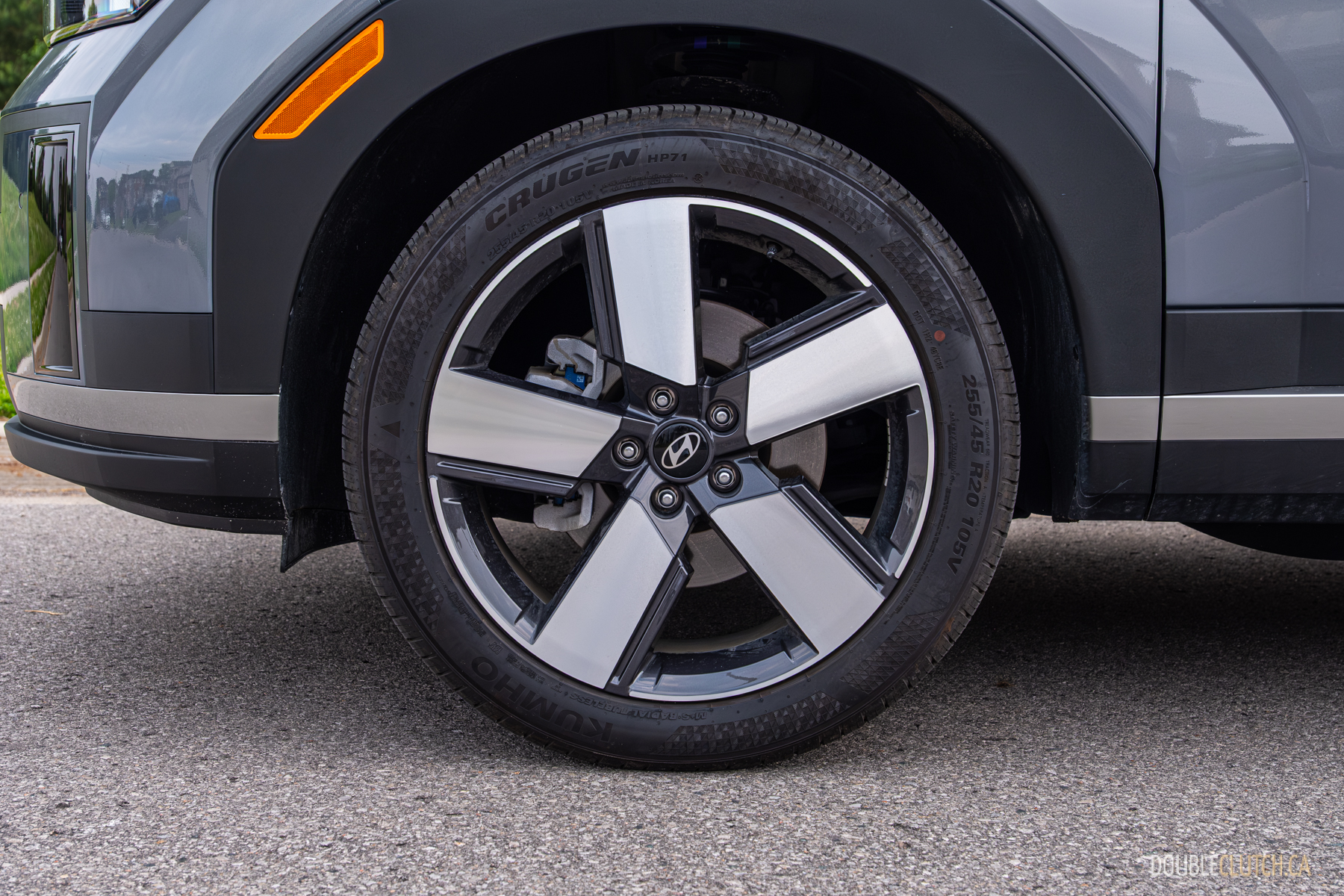
This Preferred-trim tester is the base model, and as such foregoes the attractive 21-inch wheels of the range-topping Calligraphy in favour of 18-inchers — unless you opt for the $4,000 Trend package like our tester, which splits the difference with 20s. There’s also less blacked-out trim, and the unique roof assist handle between the second- and third-row windows is missing. Other than that, there aren’t any significant visual differences between the trim levels. The Santa Fe looks unique compared to most of its peers, and also happens to look unique compared to other Hyundai products.
Style isn’t just skin deep
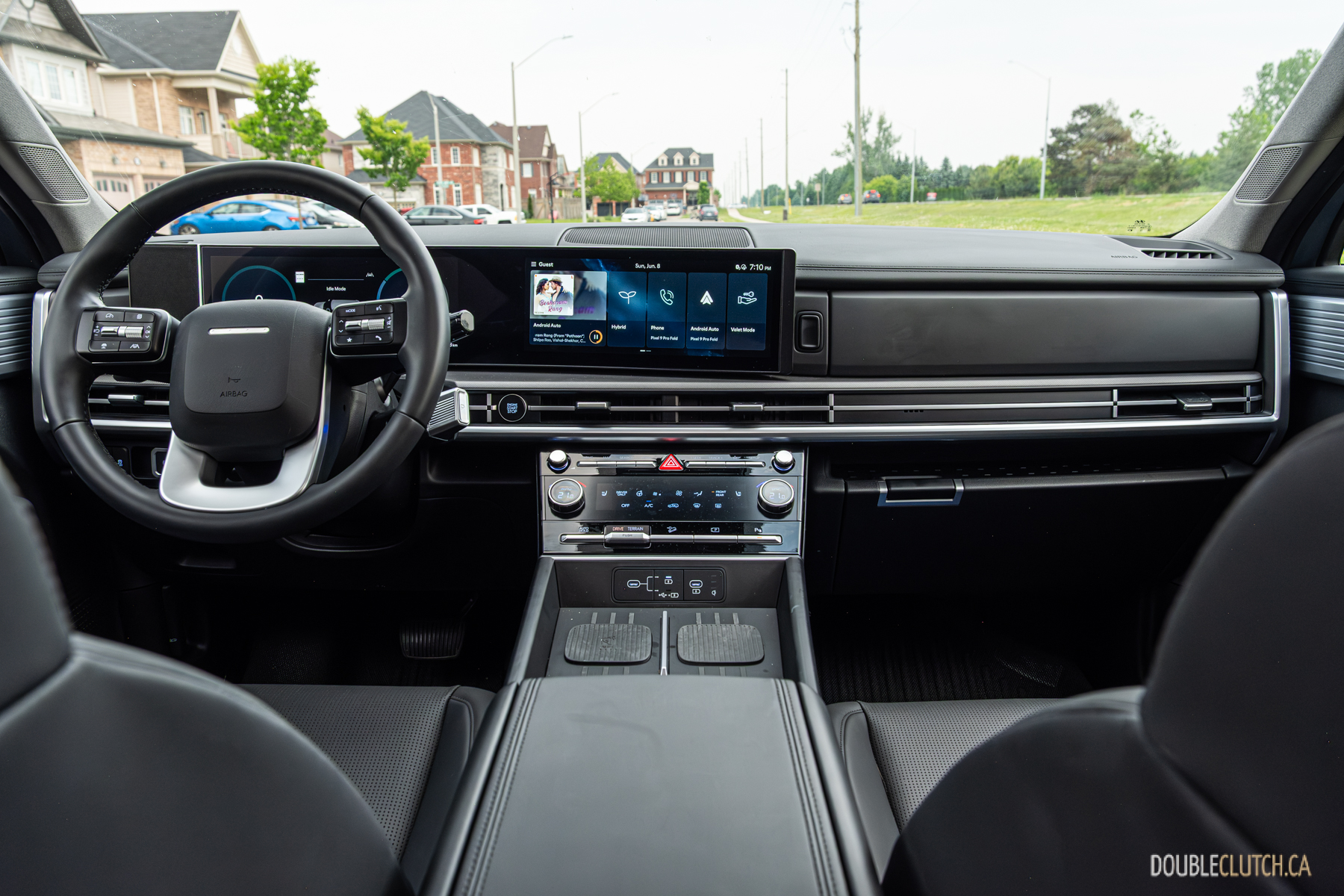
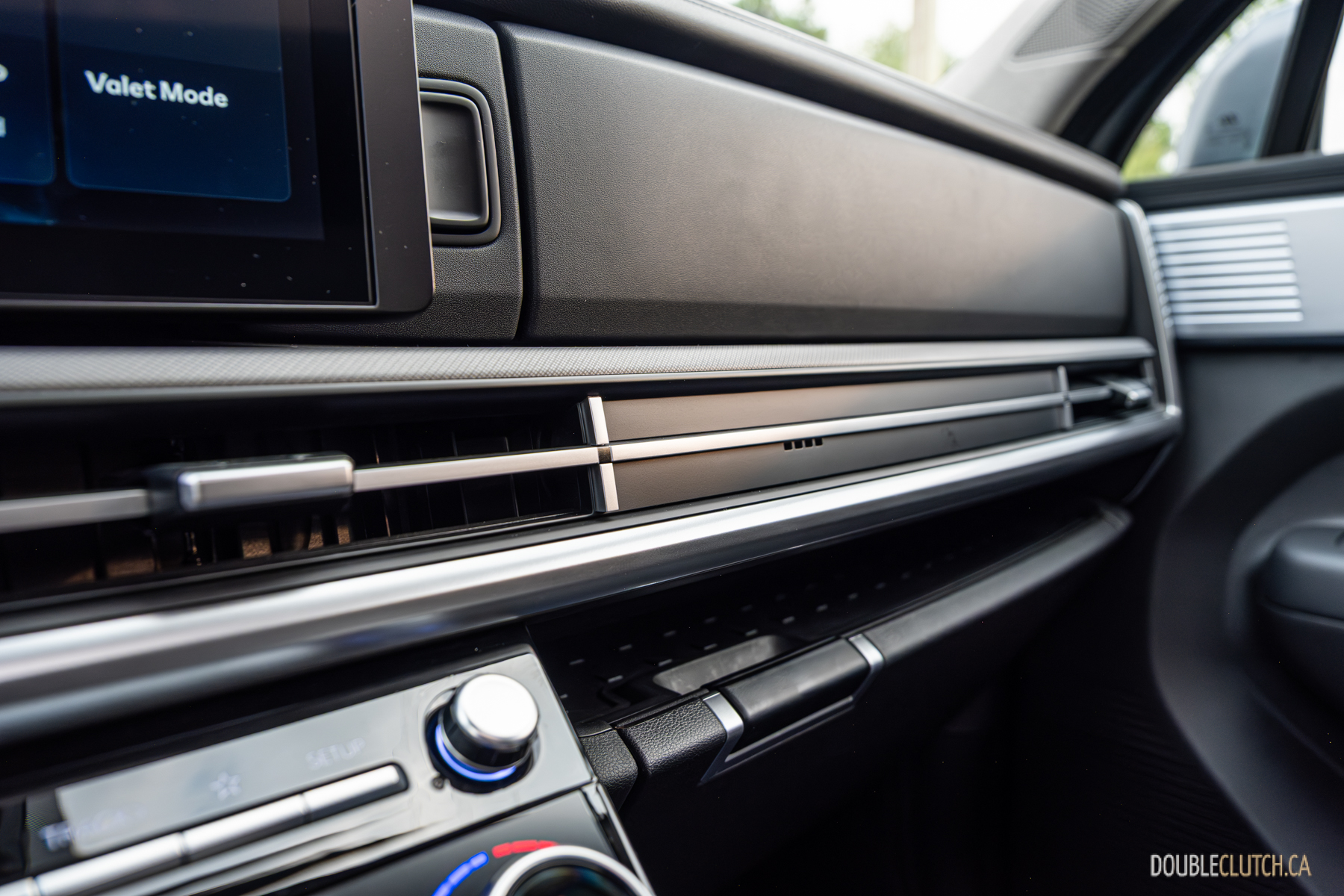
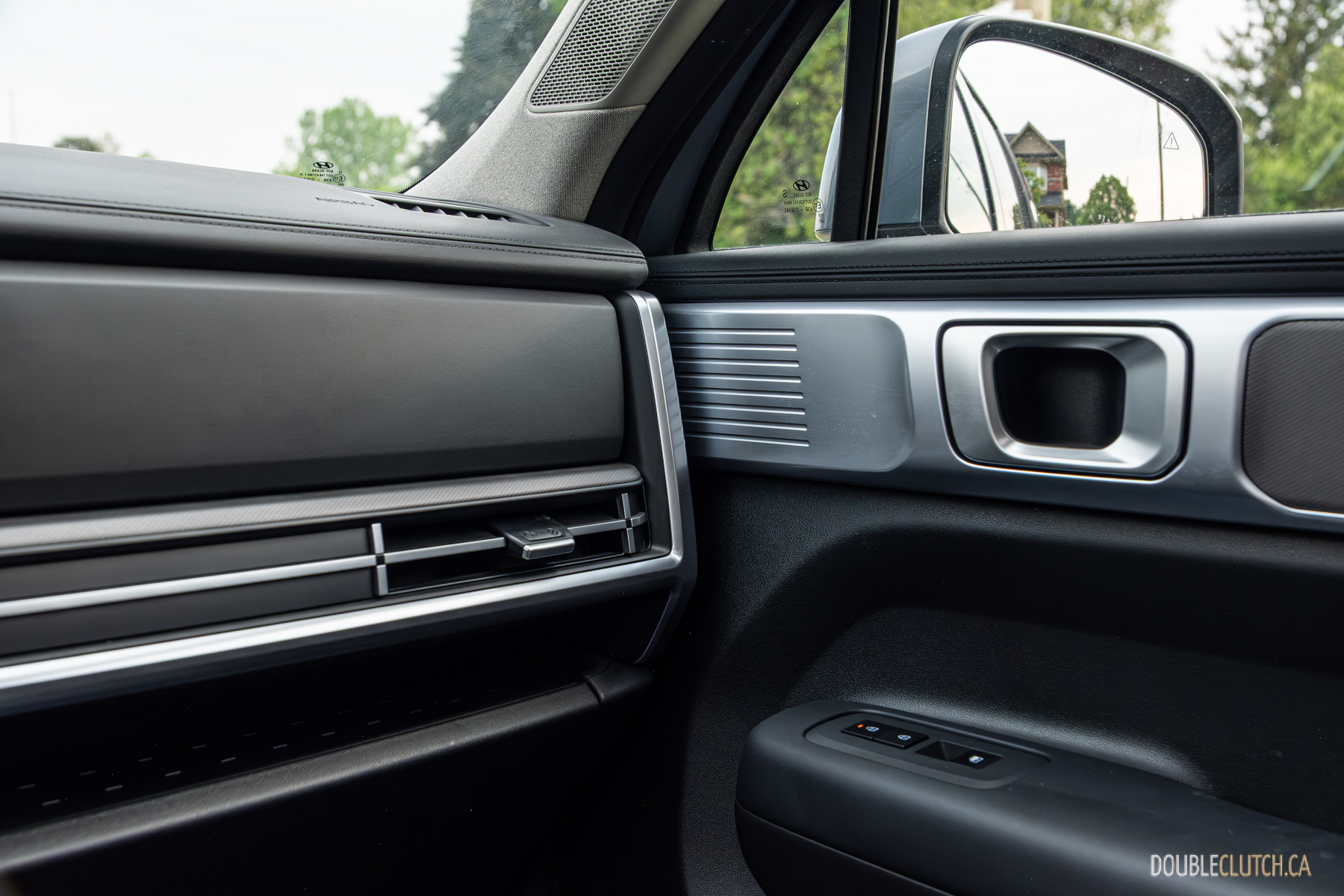
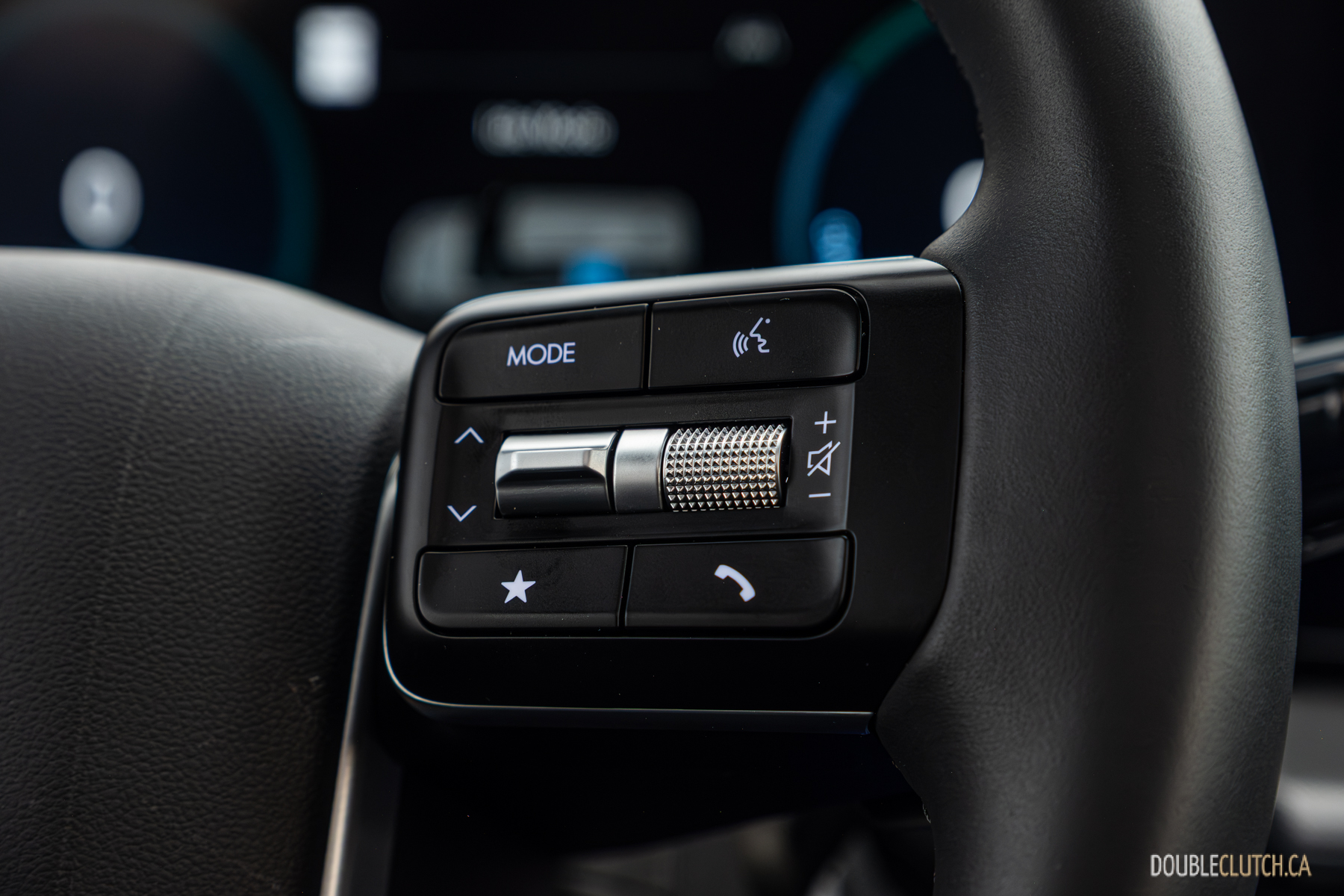
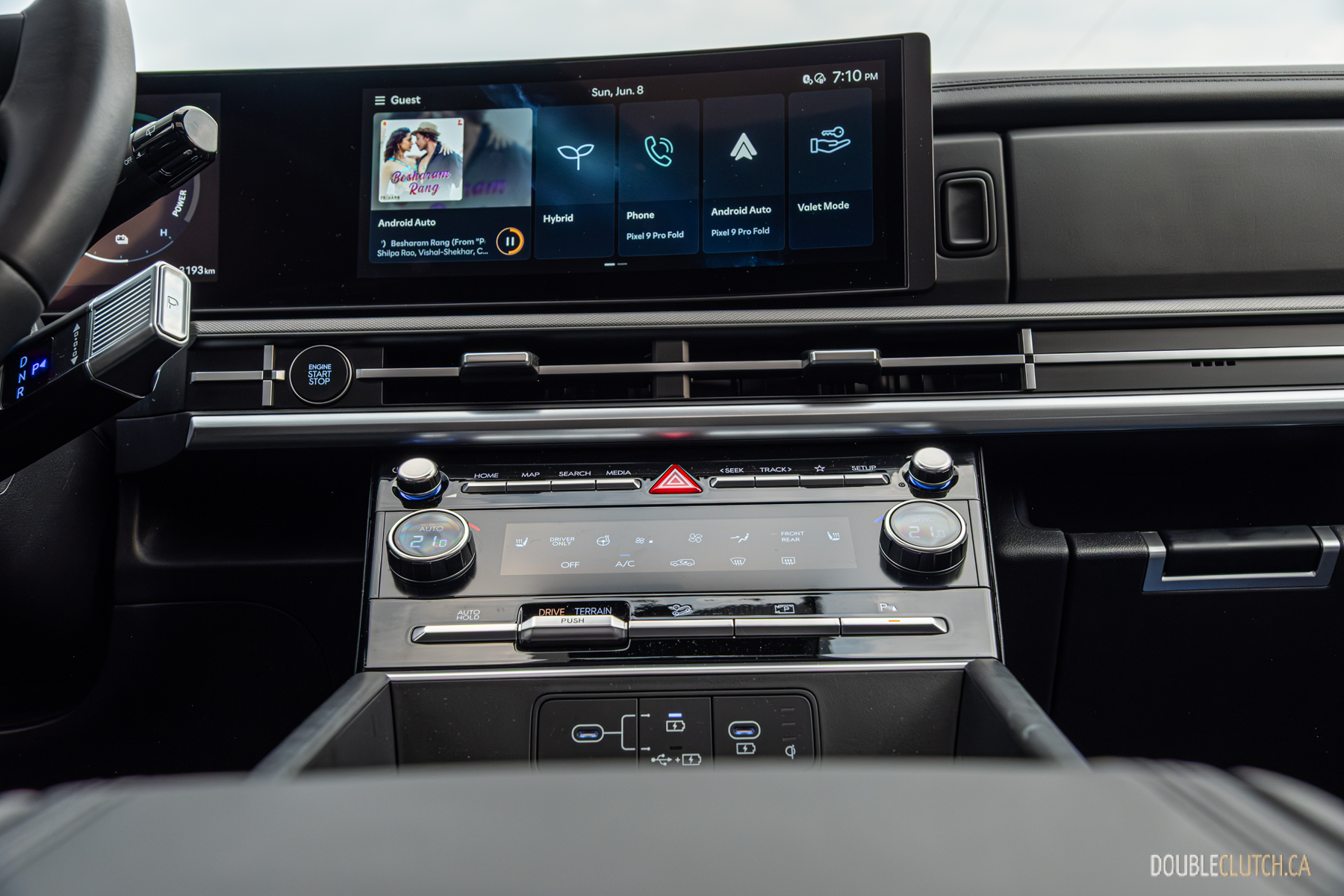
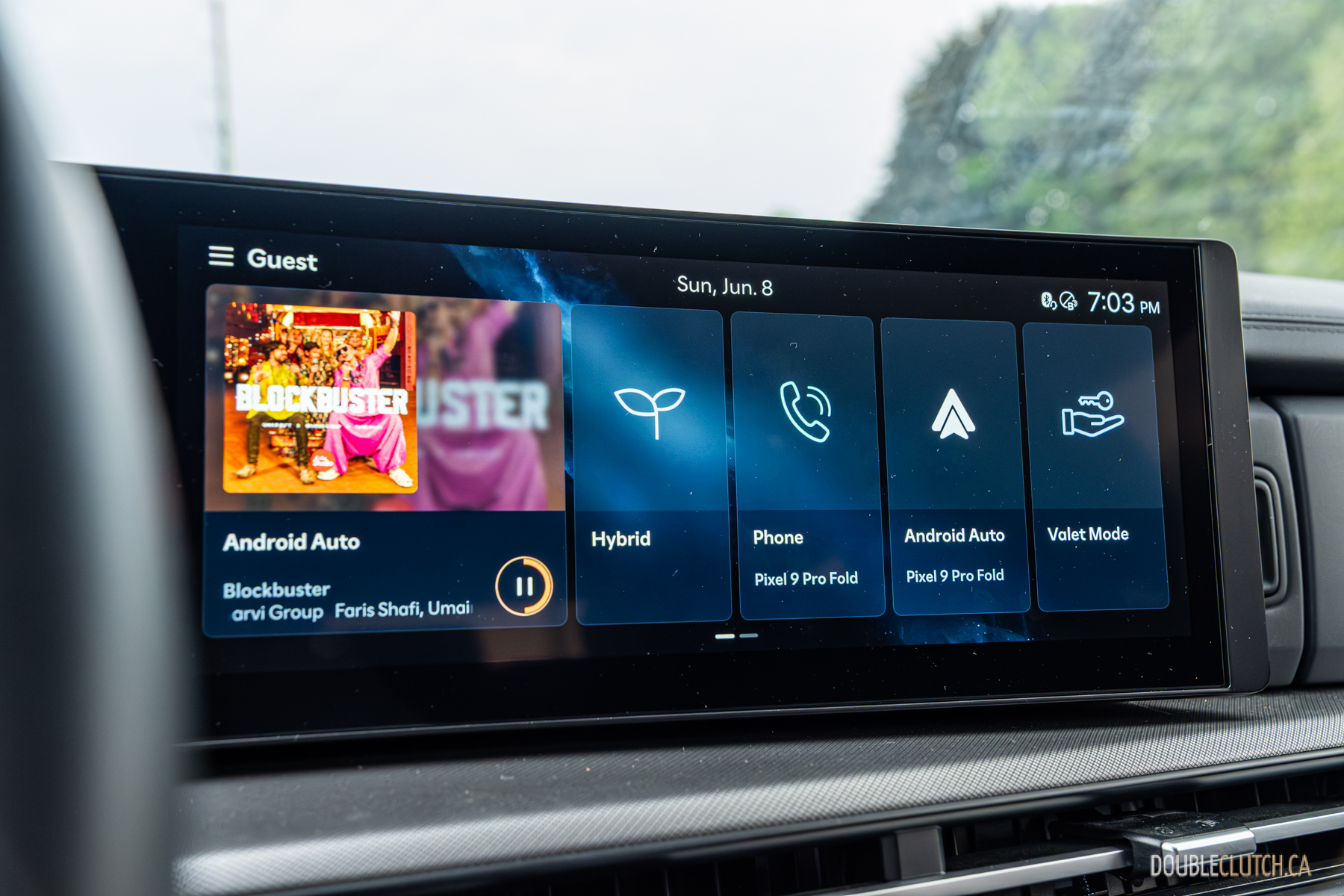
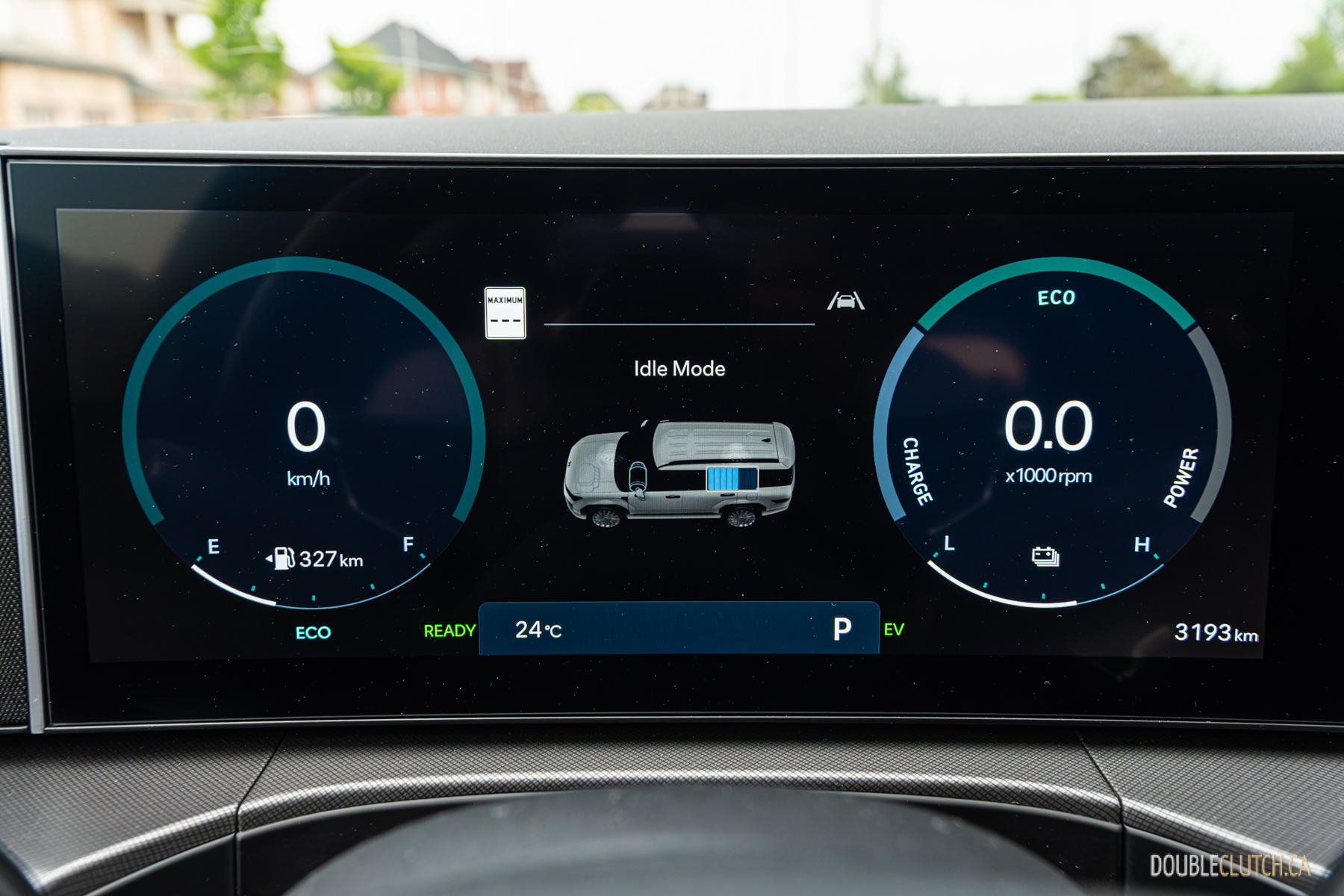
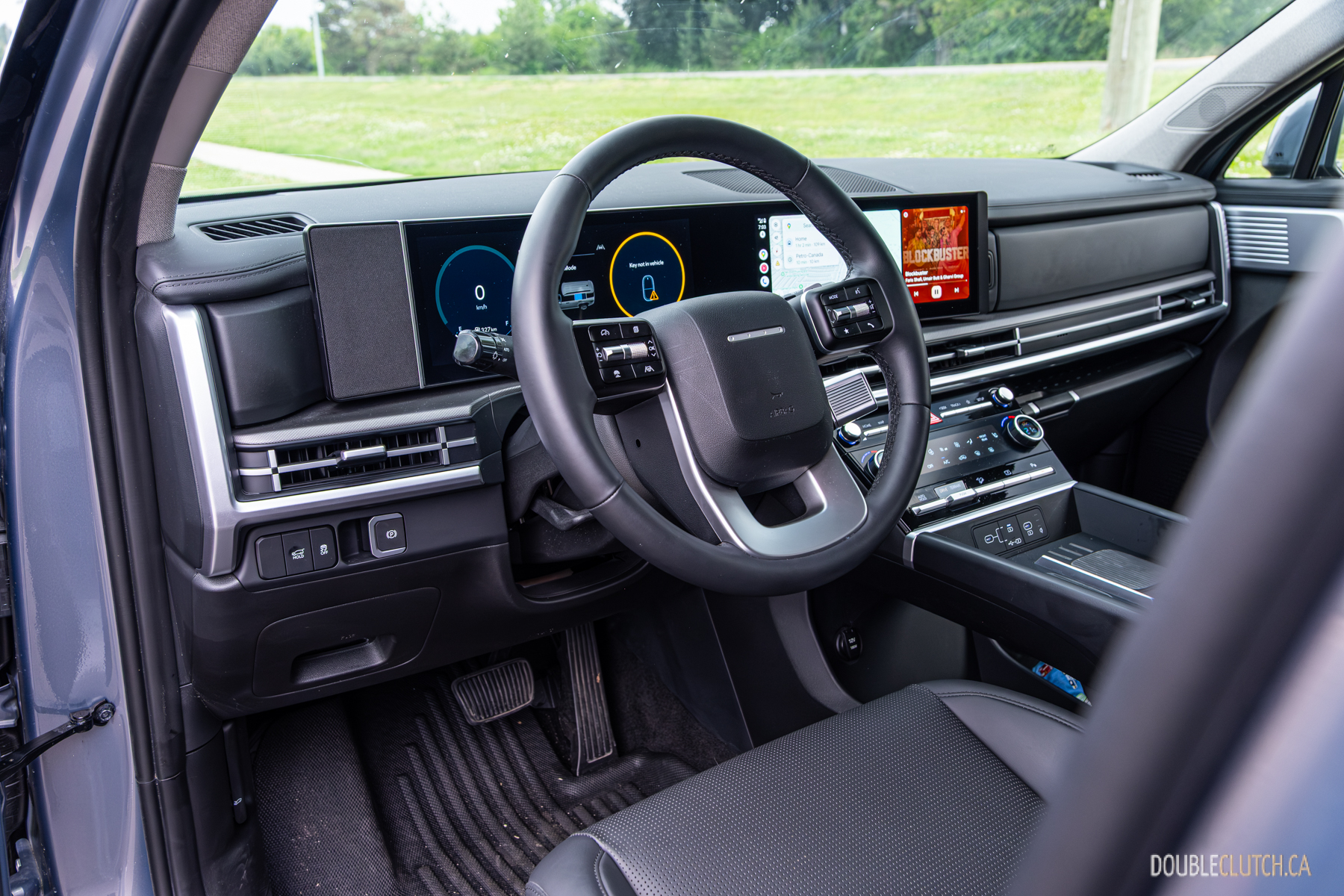
The Santa Fe’s interior is another design win, although not as groundbreaking as the exterior. Again, we see some Land Rover inspiration in the steering wheel design, and even some sections of the centre console if you squint hard enough. Like most new vehicles these days, there’s a dual-screen setup making up the gauge cluster and infotainment screen, but it doesn’t feel very inspired because Hyundai uses it in everything else they make. Still, Hyundai continues to create an easy-to-use and snappy UI presented on high-resolution screens with great contrast.
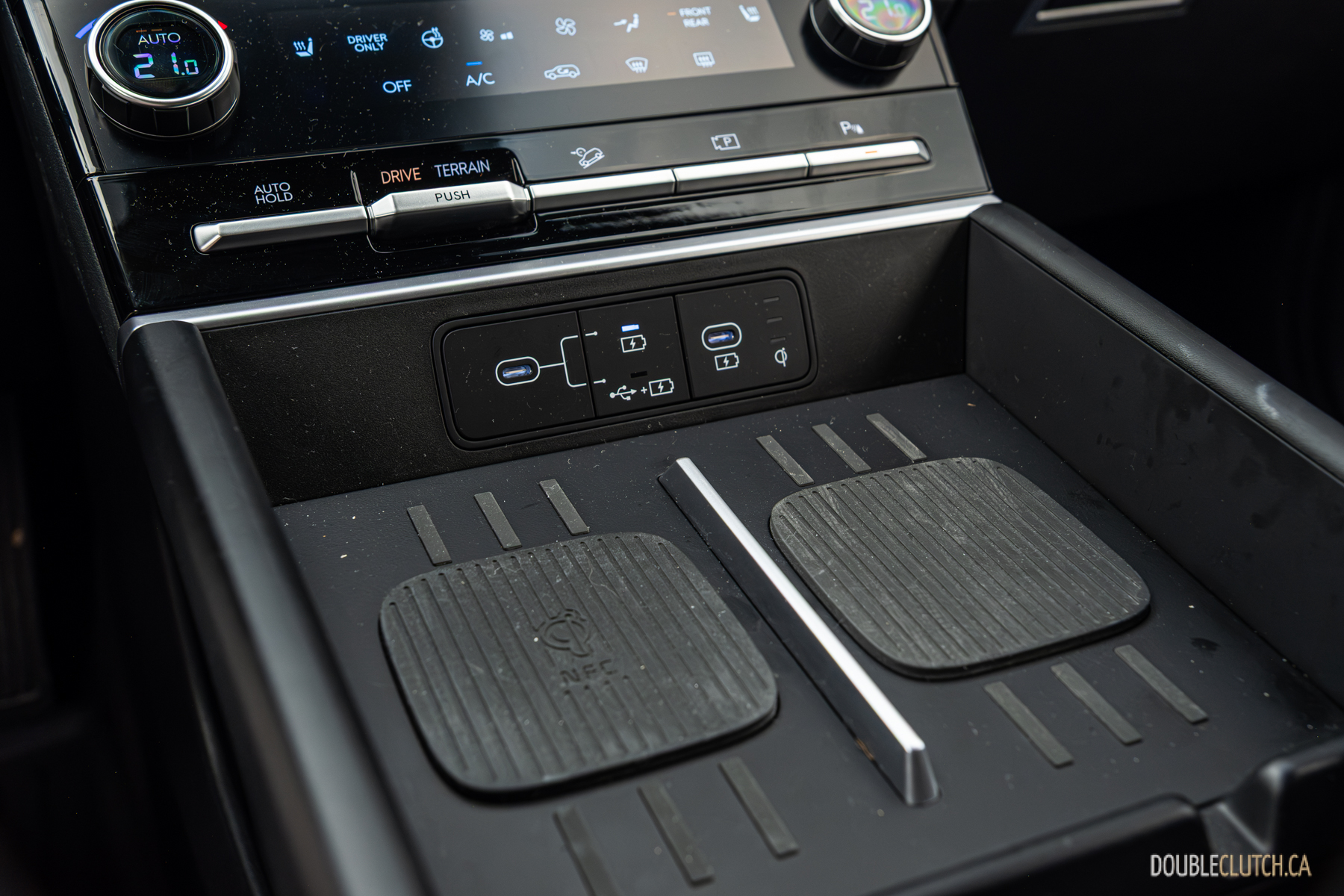
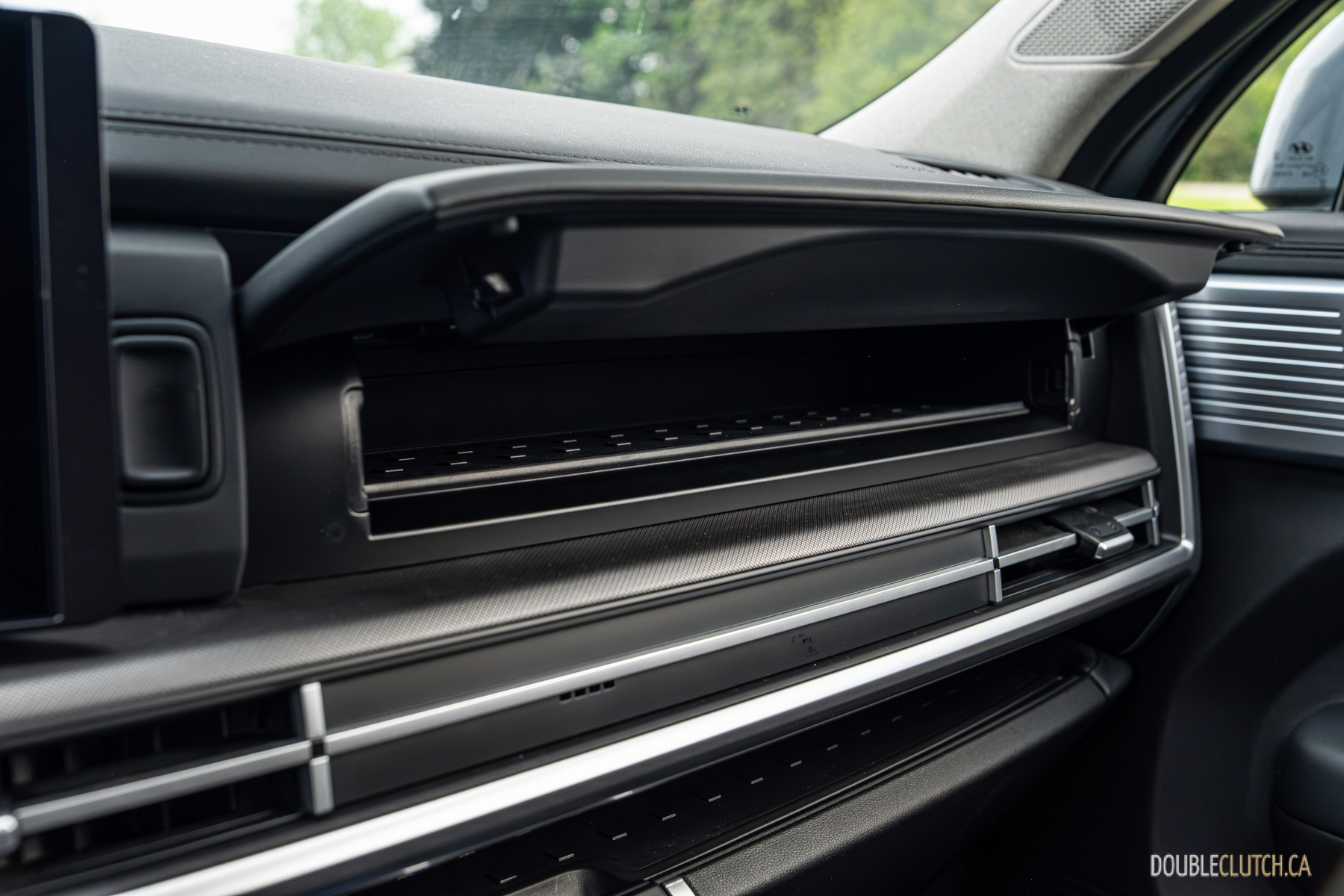
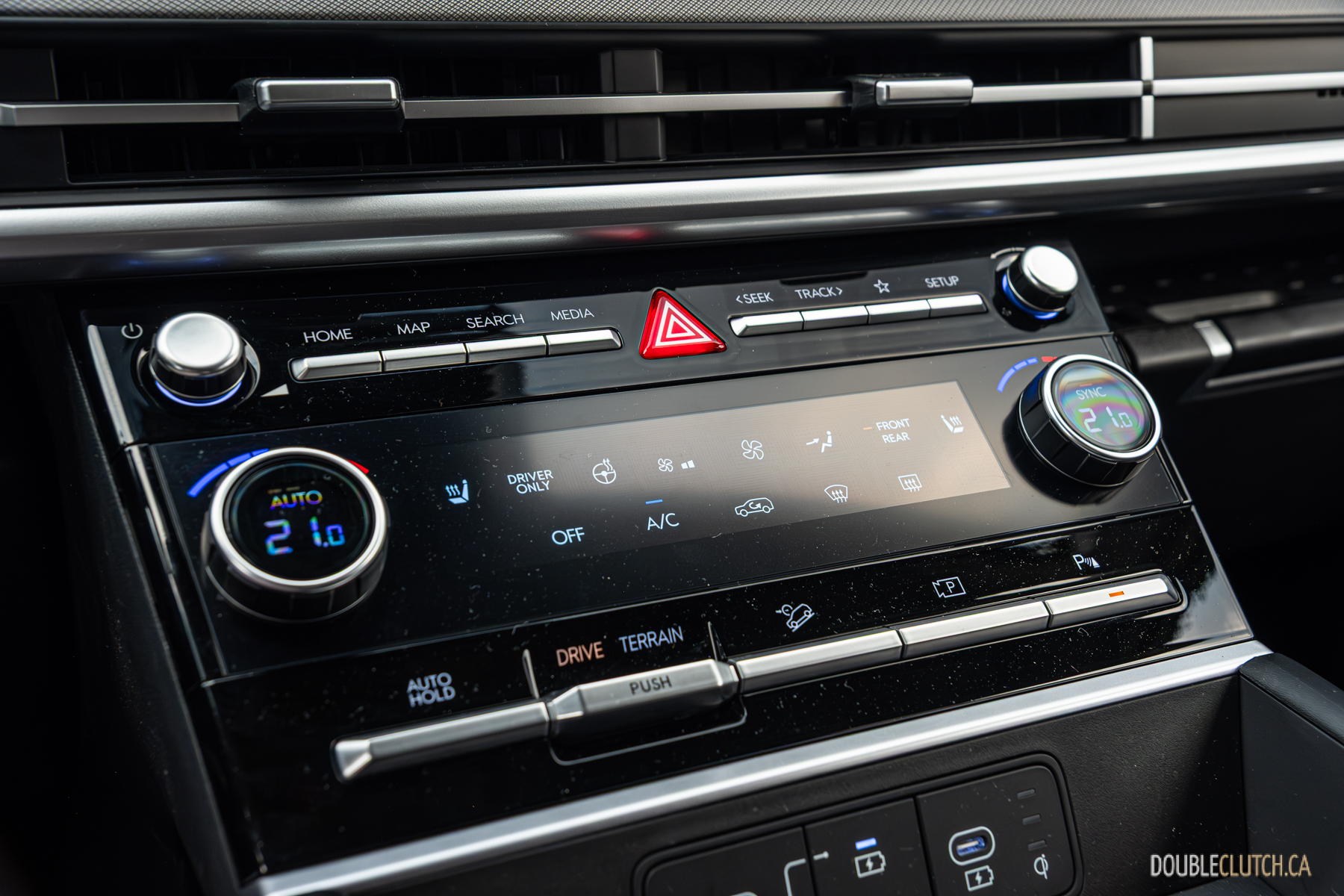
Thankfully, the centre console features redundant physical controls beneath the 12.3-inch infotainment touchscreen. Further down the center console is a place to drop your cell phone on a grippy rubberized wireless charger. On the passenger side you have quite a bit of storage space in the form of a high-mounted glove box which doubles as a UV-C sanitizer, and an open parcel shelf for all those receipts you swear you’ll need later. There’s also a conventional glove box where you expect it to be, along with a large storage area under the centre console. There’s even some innovation to the centre console storage box; it opens one of two ways, so front-seat and second-row passengers can access it easily.
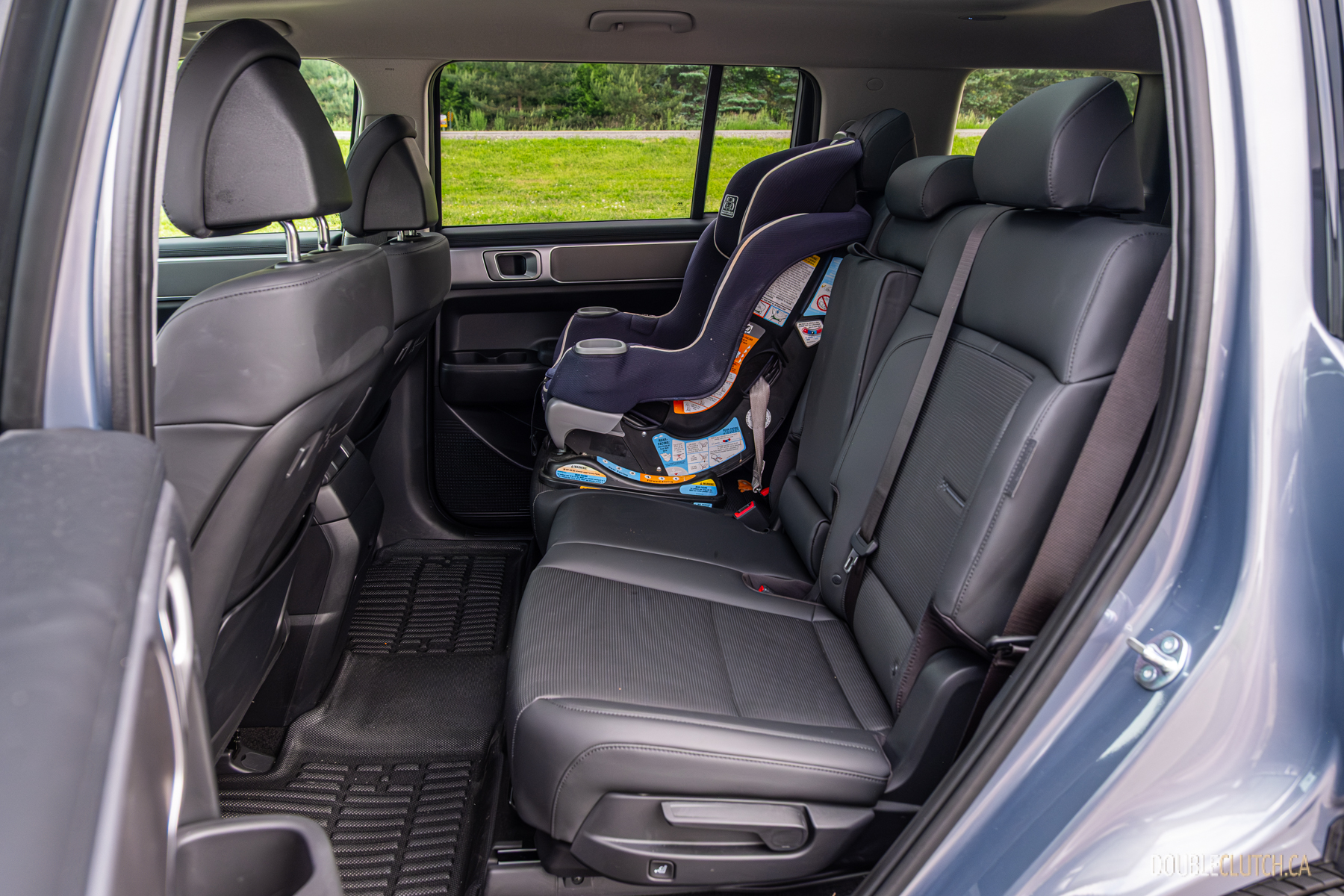
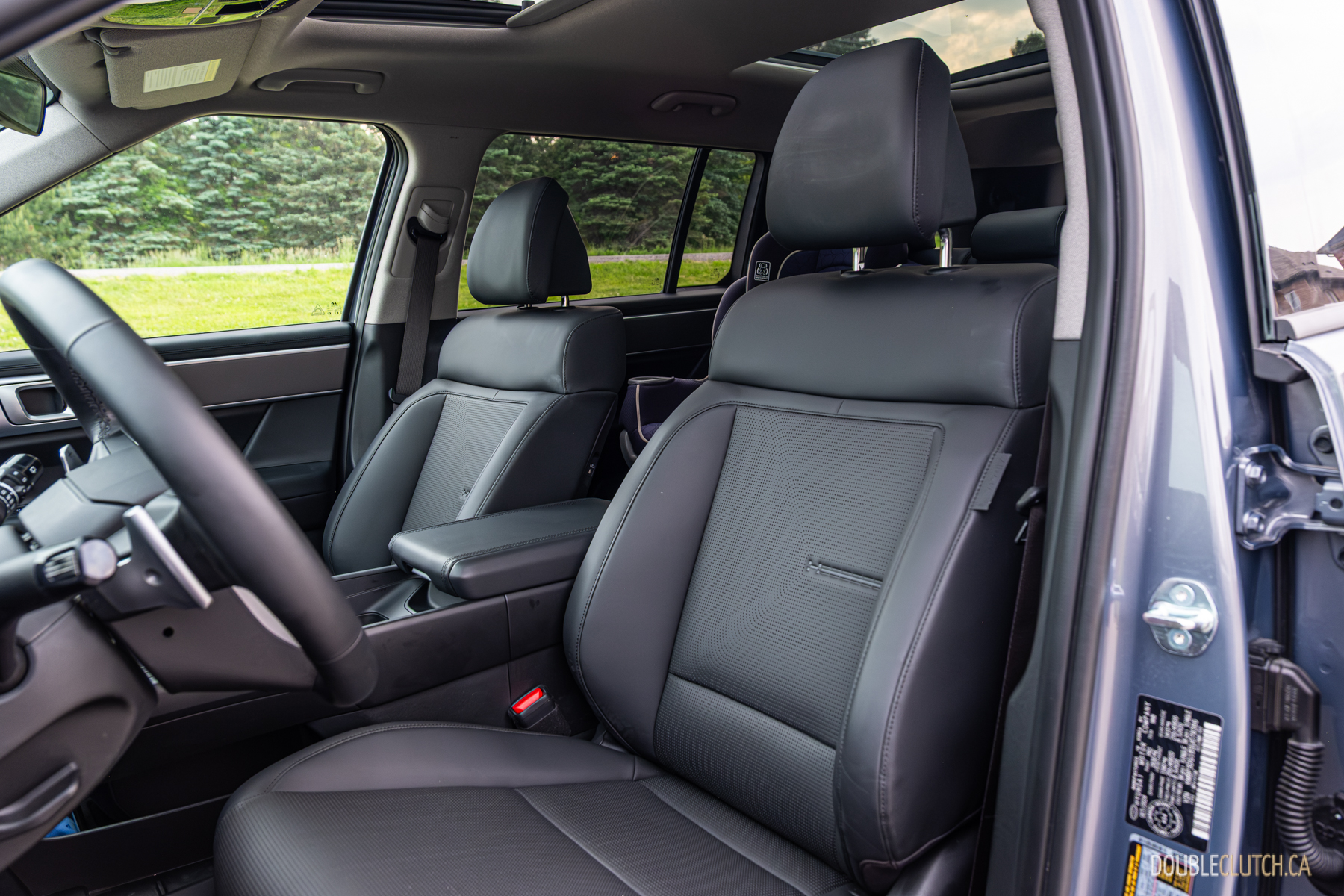
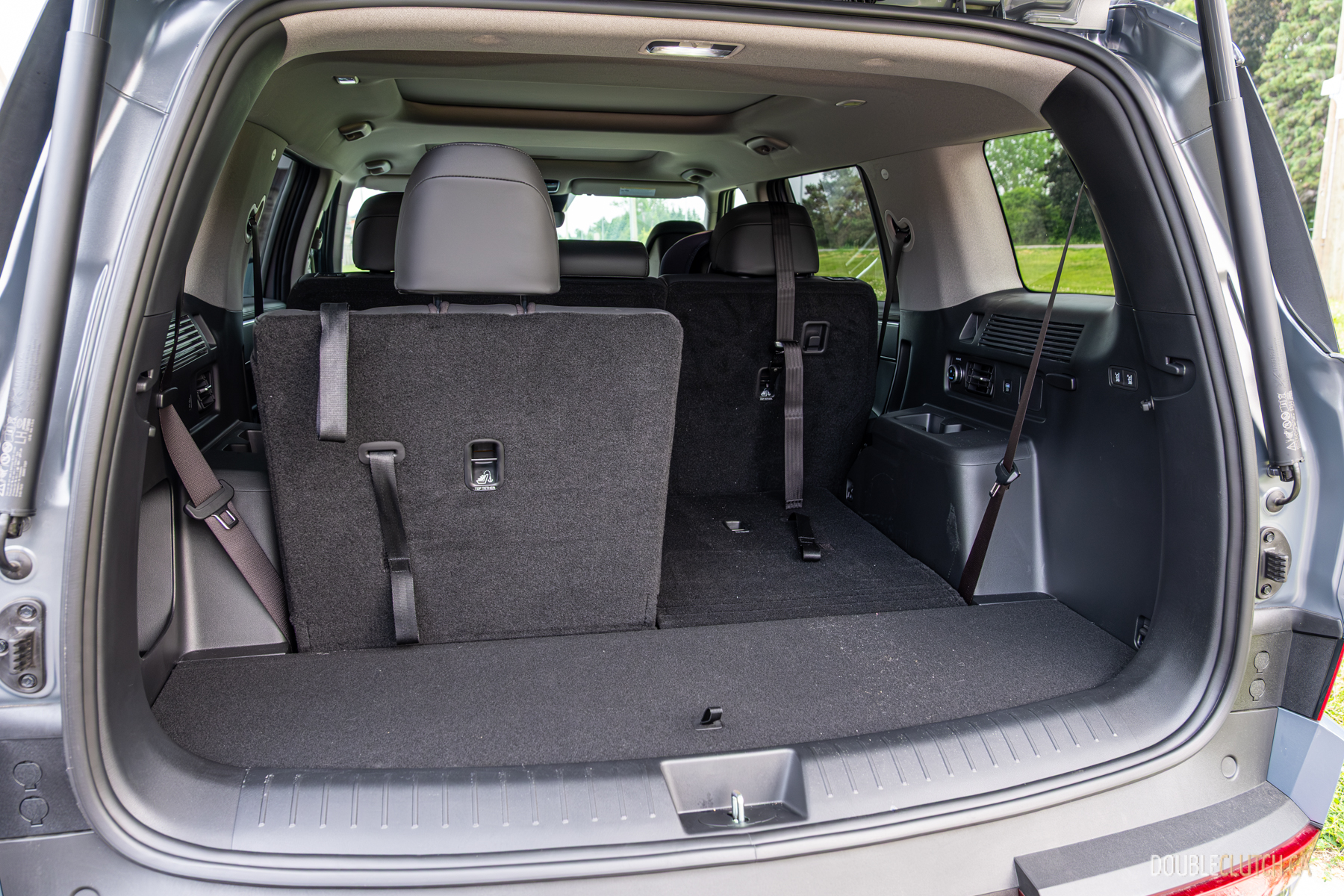
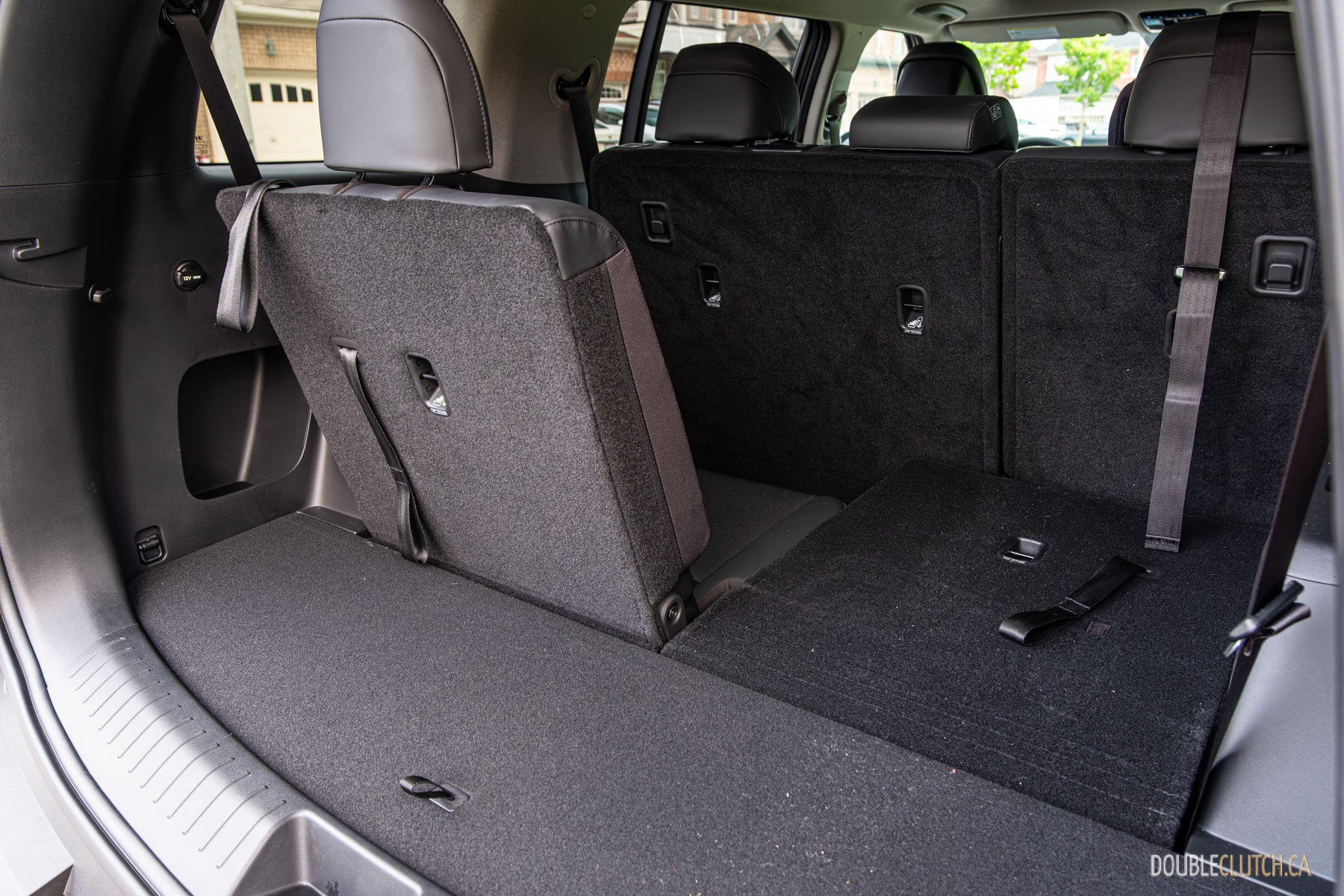
First- and second-row seating is comfortable, but it’s a sliding scale. The first row is the comfiest, follow by the second, and the third row is a distant third. The bench back there feels very flat and thin, but at least they fold completely flat into the floor, making for a rather cavernous cargo hold behind the second row. Of all the colour combinations and upholstery options Hyundai offers, our tester gets the least-exciting black leatherette seats and interior trim to match. The Calligraphy, on the other hand, can be had with Nappa leather with some downright sexy colours, like cognac or even dark green.
What is this, an engine for ants?
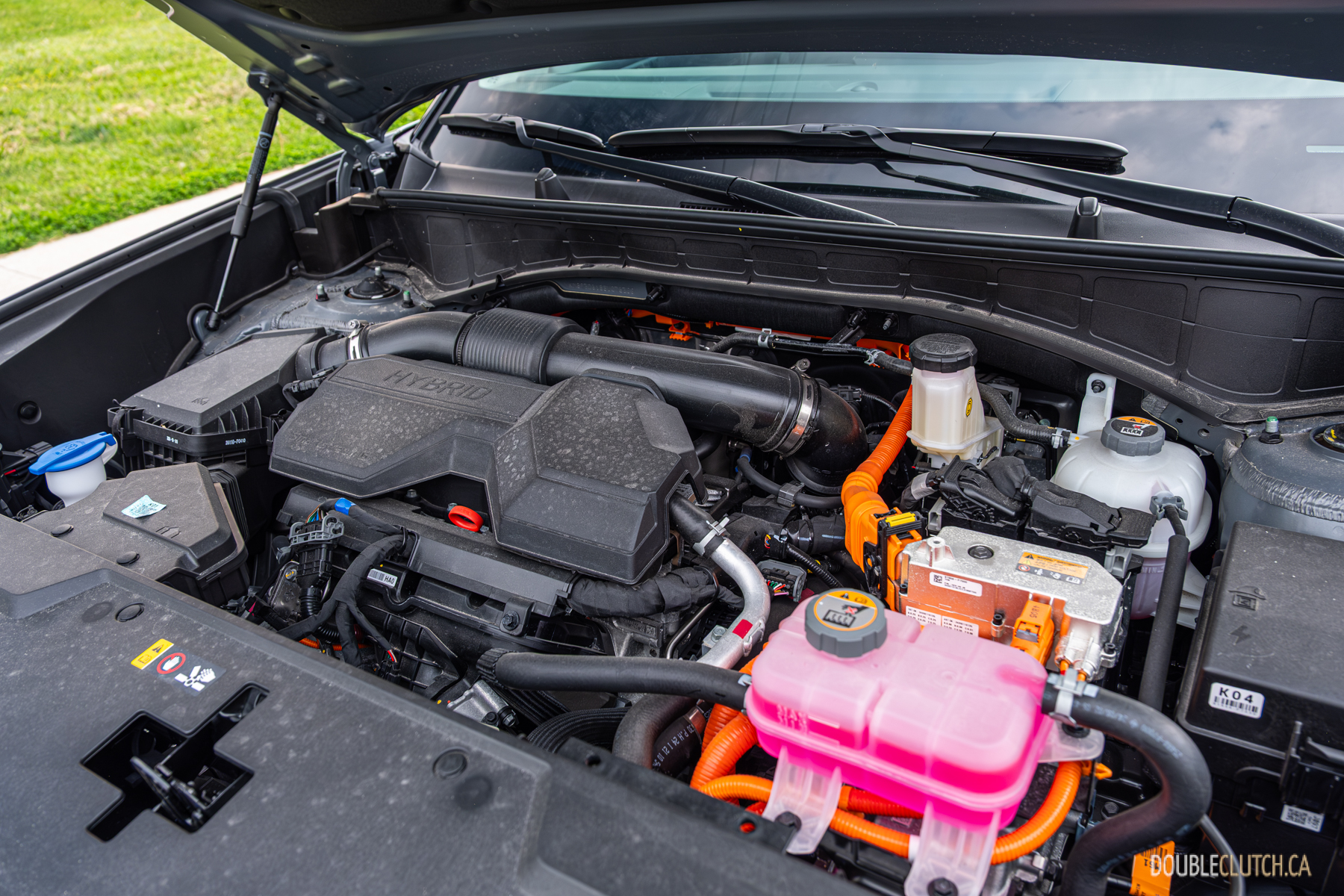
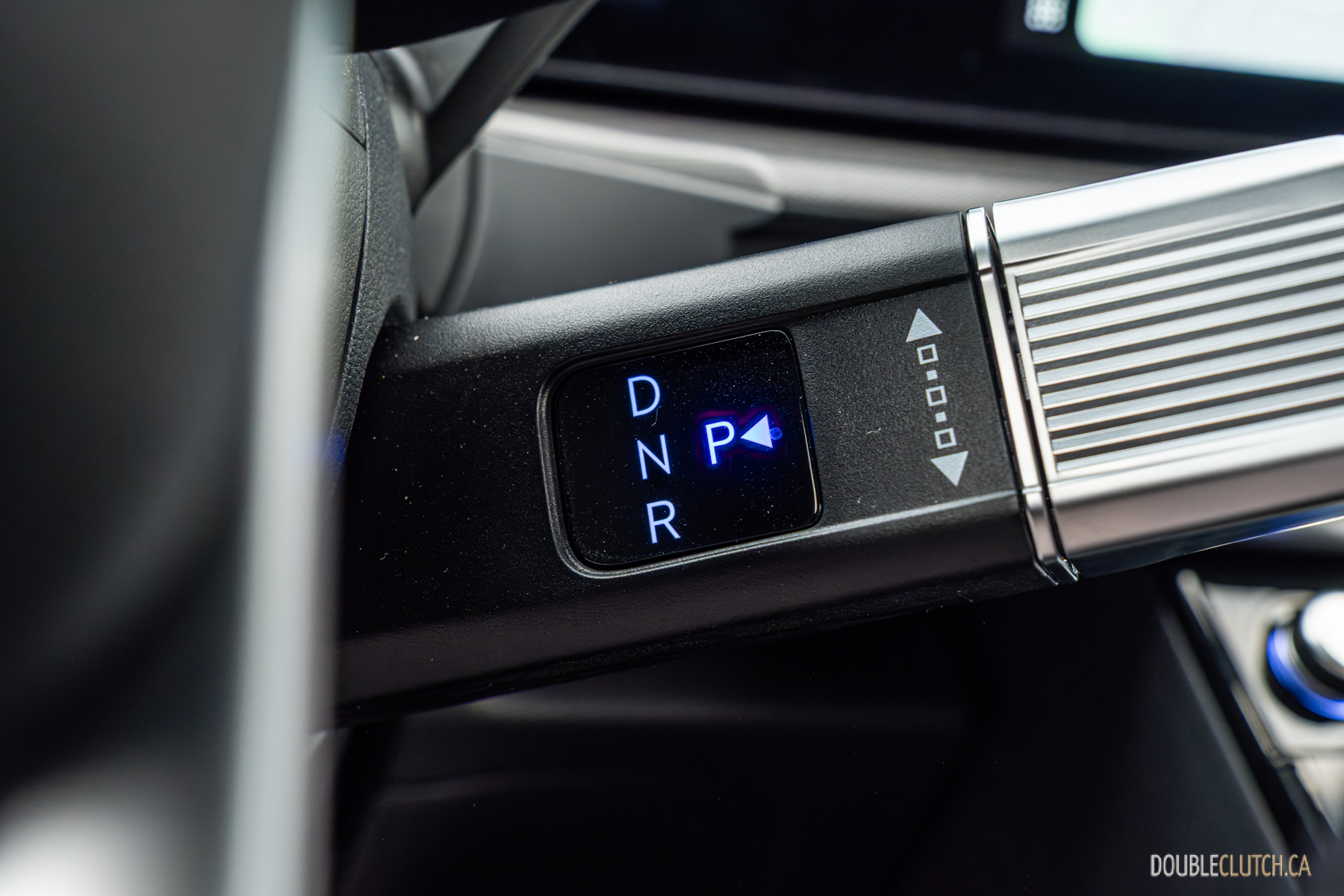
How times have changed: this new Santa Fe is a seven-passenger SUV with a 1.6-litre four-cylinder engine. But don’t fret, because this little gas engine is turbocharged, and it’s a hybrid. Total output is 231 horsepower and 271 pound-feet of torque, fed to all four wheels via a six-speed automatic and Hyundai’s HTRAC all-wheel-drive system. It’s a familiar powertrain used in other Hyundai and Kia models; power feels wholly adequate with enough get-up-and-go, and it remains mostly quiet as well. It’s also one of the smoothest hybrids I’ve ever driven when it comes to switching between gas and electric as it sees fit. Don’t let the numbers fool you, this is one slick powerplant.
Handling is as expected for a midsize family hauler. The Santa Fe leans towards the softer side, but avoids the boaty feeling of many vehicles in this segment. Bigger bumps tended to feel a little too crashy for my liking, but otherwise, the Santa Fe remains well-mannered for both driver and passengers.
Is this the one?
Among its competition, the 2025 Hyundai Santa Fe Hybrid definitely one to consider, with top-tier styling and competitive interior space for up to seven passengers. Hyundai’s reputation as a value leader is still intact, with the base Preferred trim offering many standard features like Hyundai’s suite of active safety technologies, modern USB-C ports throughout, and wireless Apple CarPlay and Android Auto. Although the Calligraphy trim really does up the Santa Fe’s premium feel, this Preferred-trim with the Trend package might just be the sweet spot of the lineup. You get the efficient and smooth hybrid powertrain, stylish 20-inch wheels, the dual-screen setup, and other niceties like wireless phone charging. Although the Santa Fe sees a price jump for 2025, at $46,499 as-tested for our tester, it still undercuts options from Toyota and Honda, and offers a compelling alternative to its larger Hyundai Palisade sibling or a step up from the smaller Tucson.