In this business, you’re always bombarded with the question, “what car should I buy?” It’s novel at first, feeling as though someone is actually listening to your advice. How exciting, I used to think. I’m making a positive difference in this person’s life!
By the millionth time you’re hit with that question, you pull up one of your default answers; in the cutthroat compact crossover segment, that default answer is always Miat—I mean, the 2026 Toyota RAV4.
What’s new for 2026?
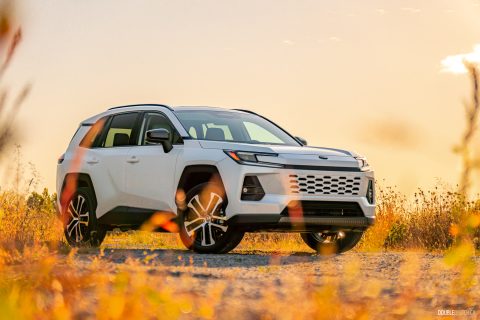
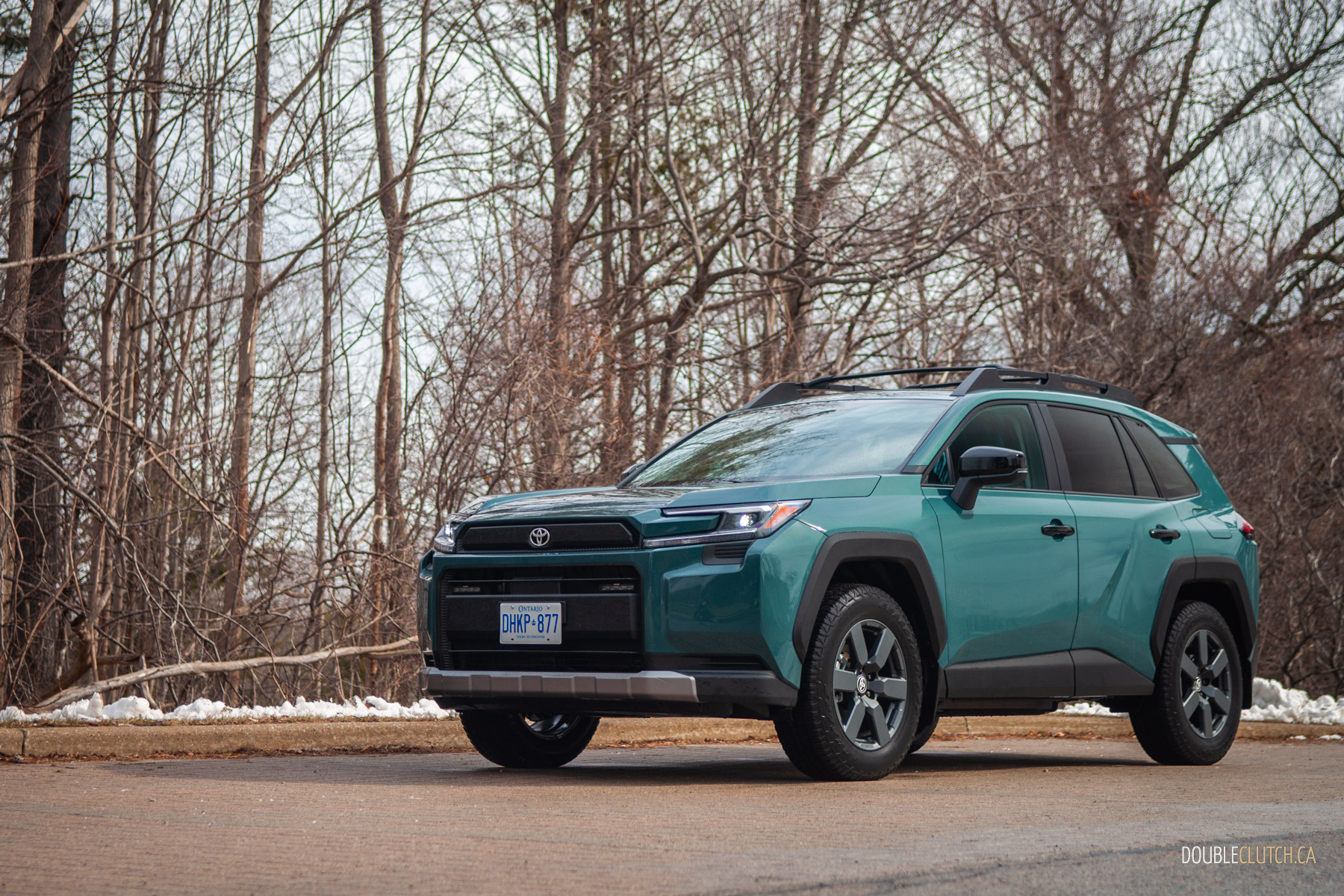
Literally everything. The RAV4 is all-new for 2026, heading into its sixth generation with a whole new look inside and out. The lineup is now split into three main flavours: Core, Outdoor Adventure, and Sport. Most of the lineup will be done up in the Core look, characterized by Toyota’s “Hammerhead” lighting arrangement and a body-colour mesh grille. The Sport is an unexpected addition to the lineup, playing up the connection to Toyota’s GR sub-brand with more aggressive bodywork and lots of red stitching. This look is only offered on the range-topping (and coincidentally, at 324 hp, most powerful) RAV4 PHEV.
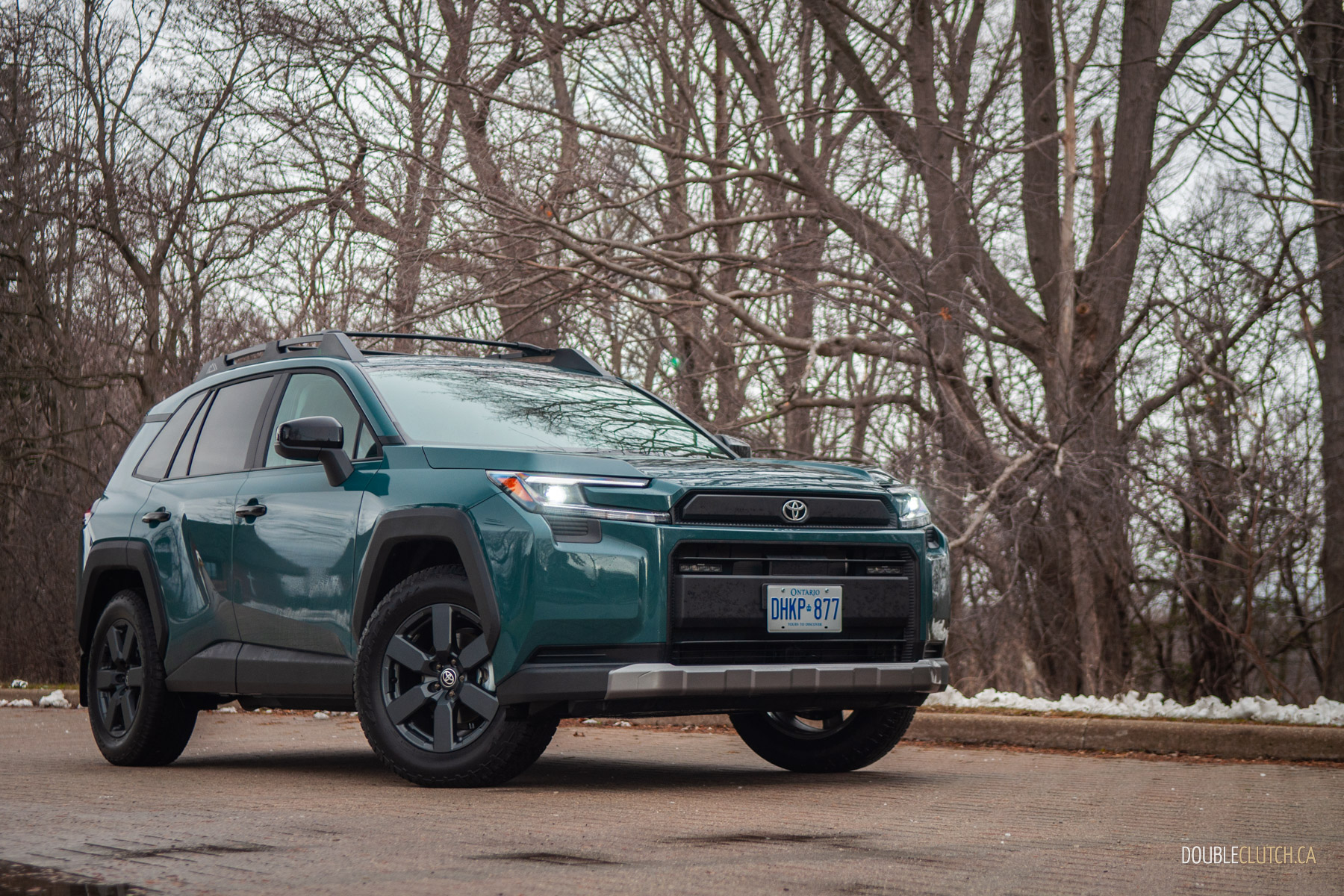
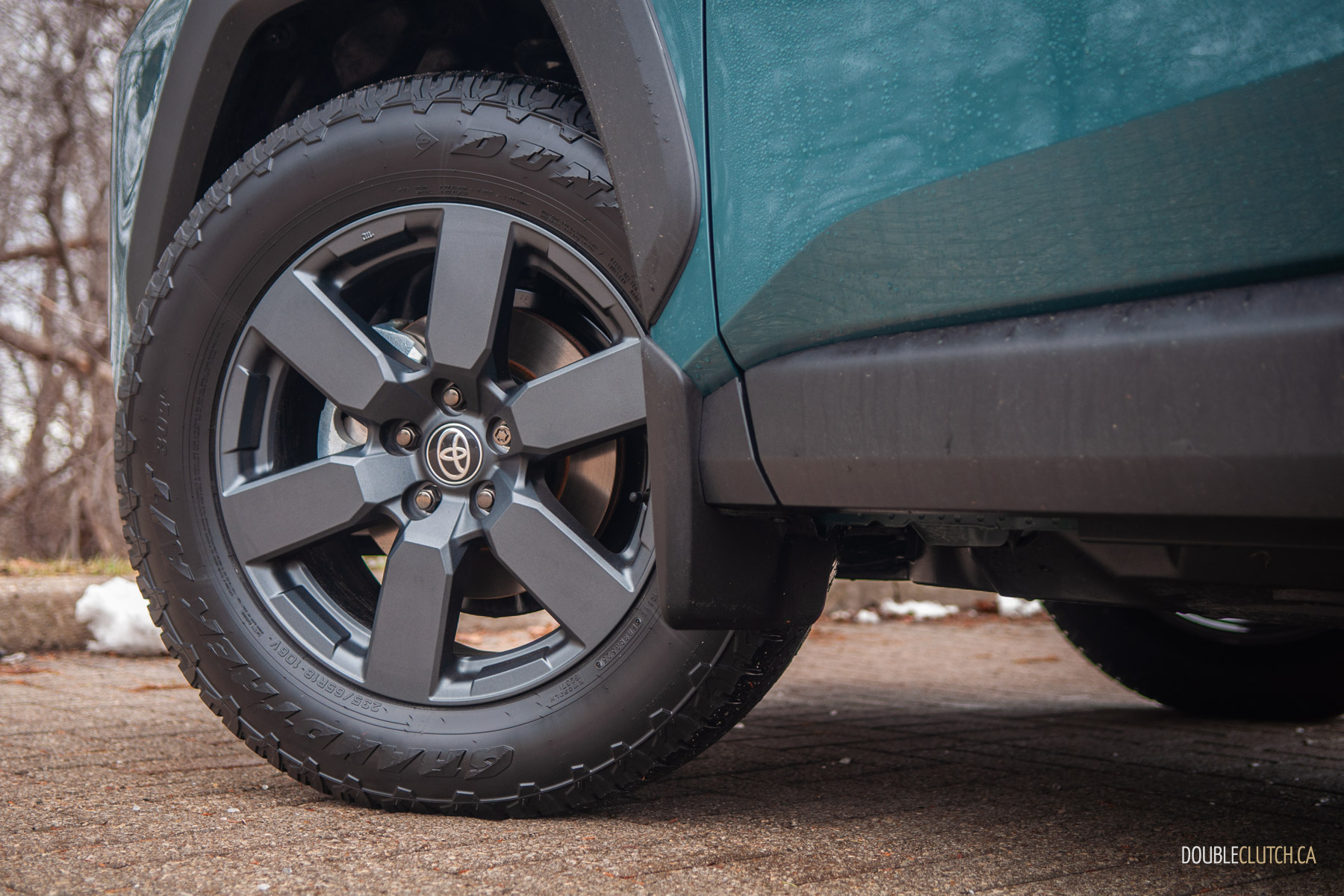
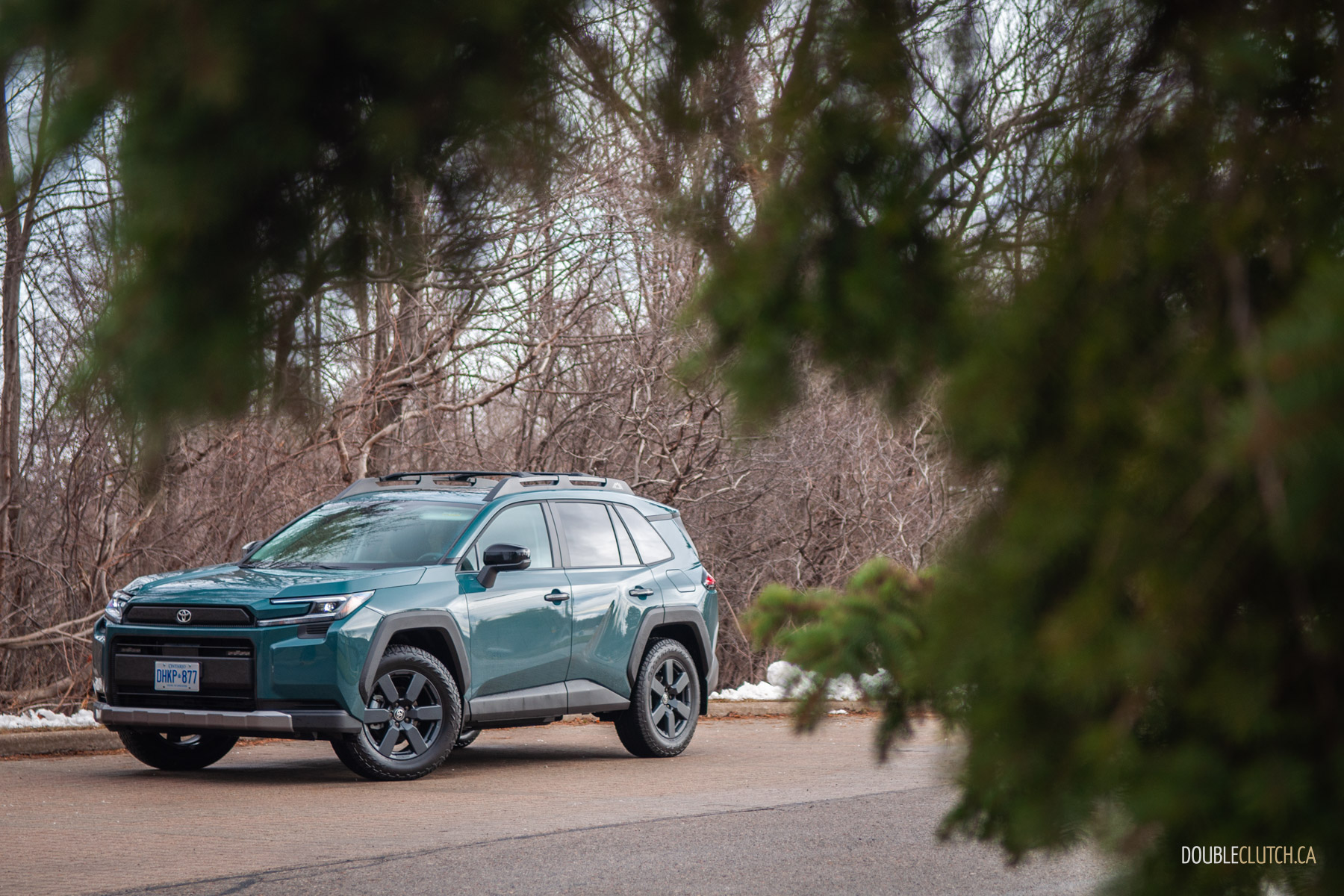
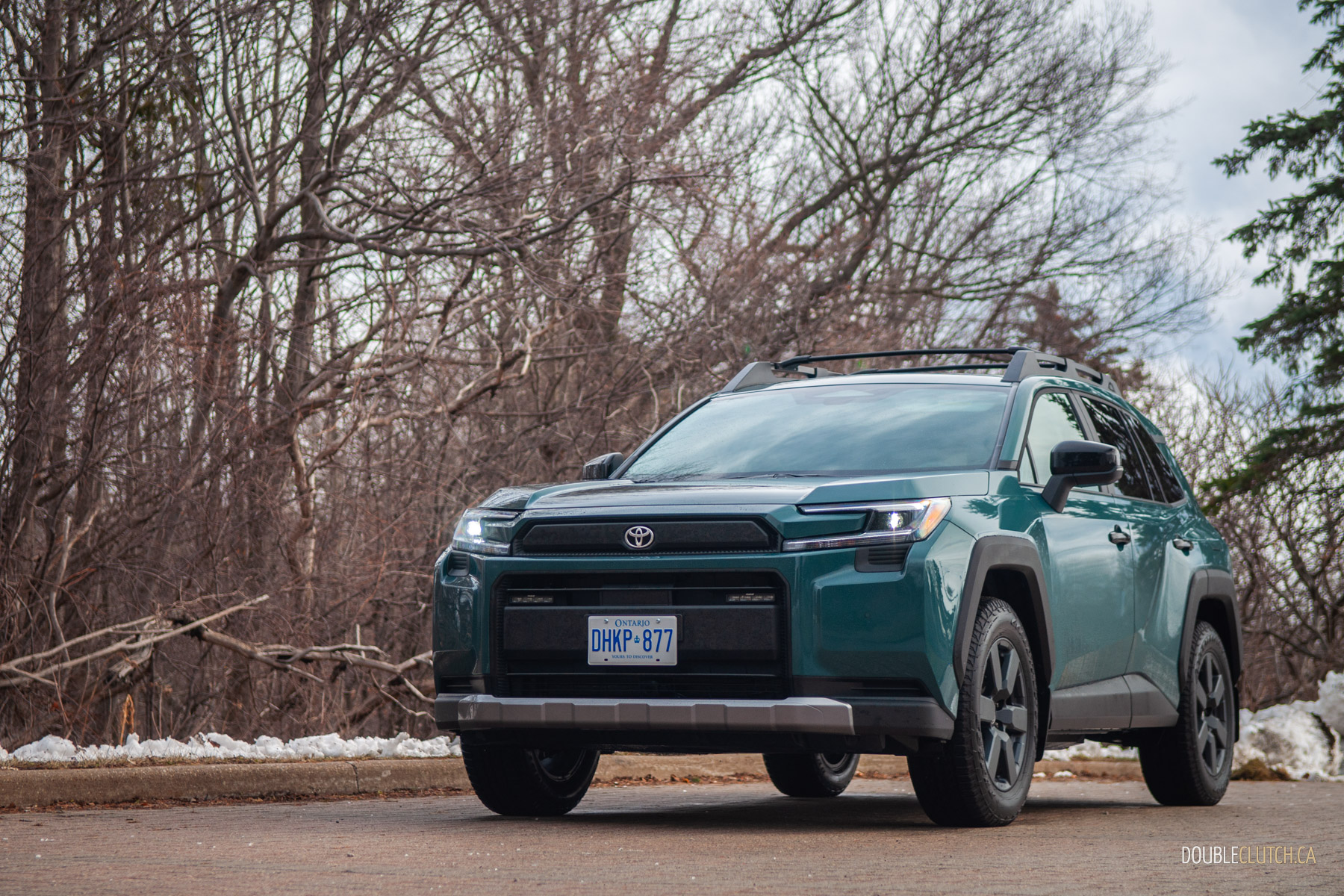
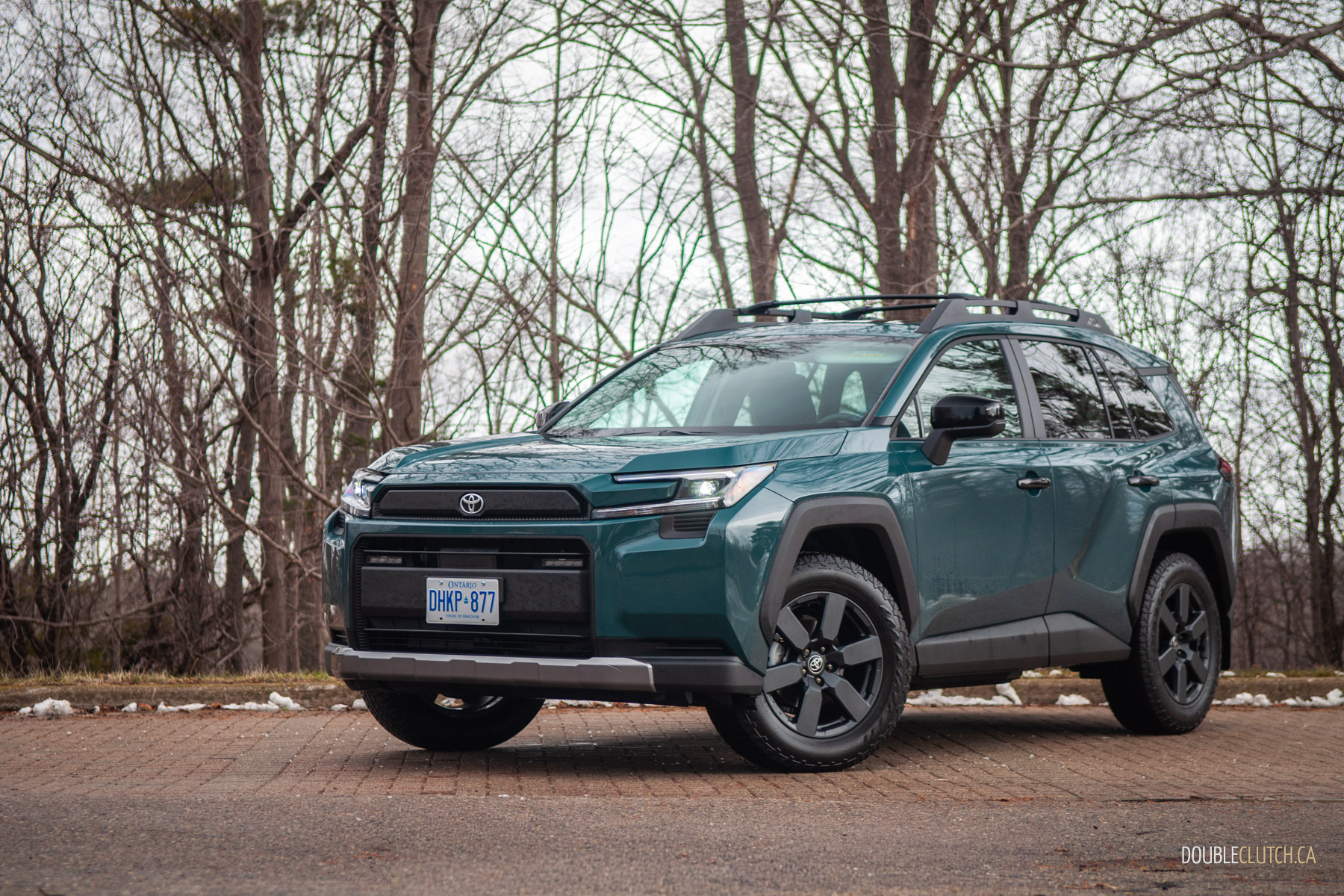
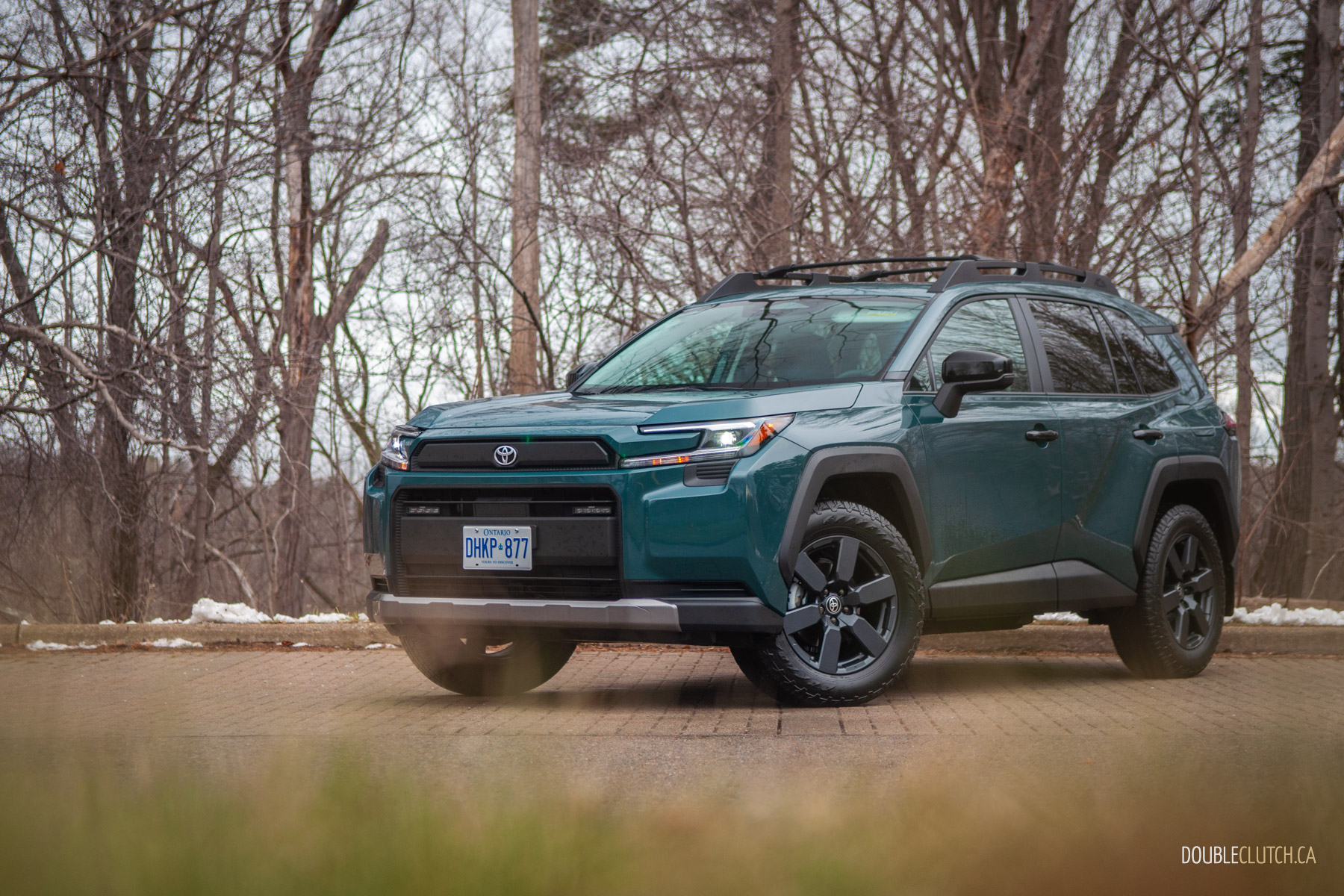
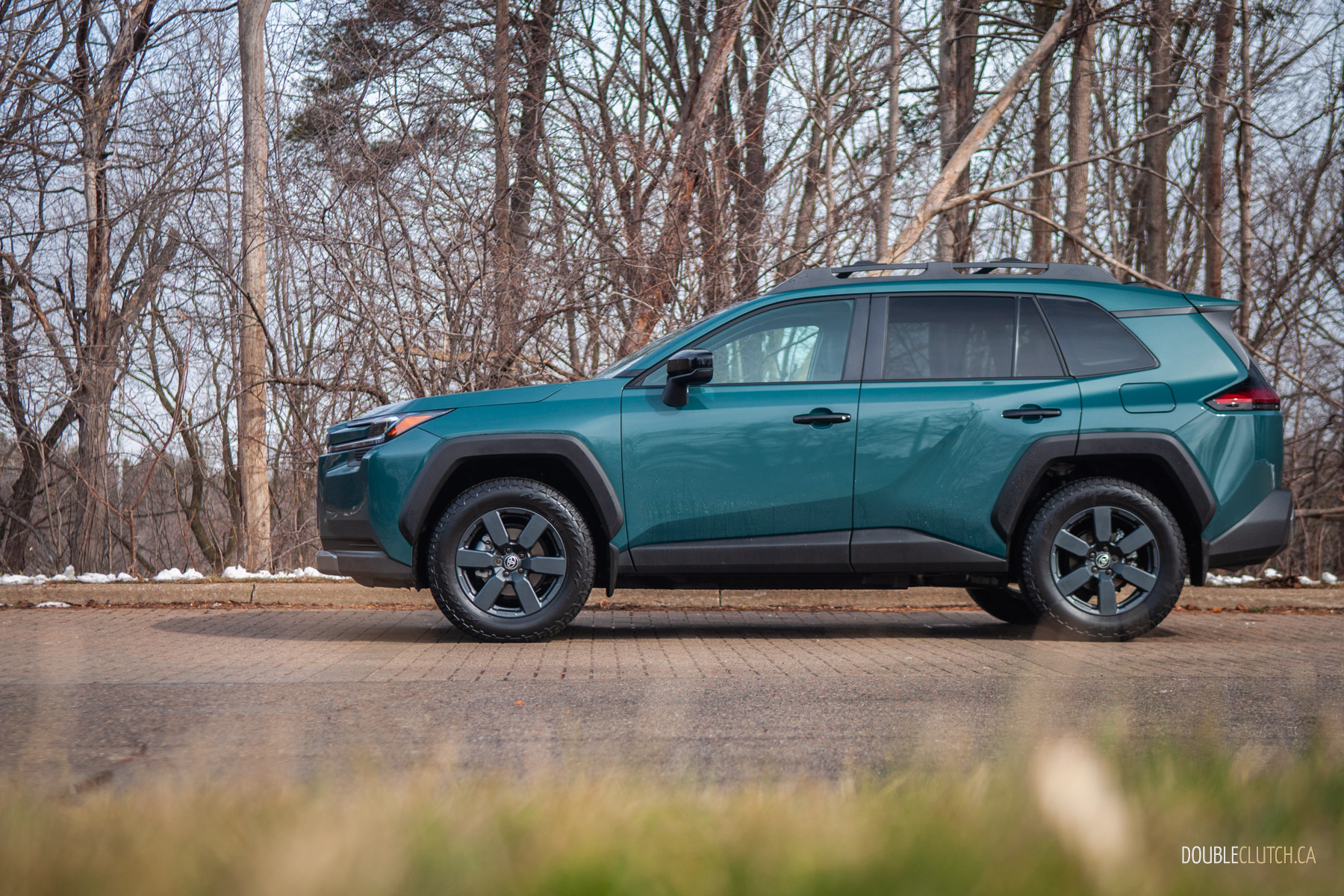
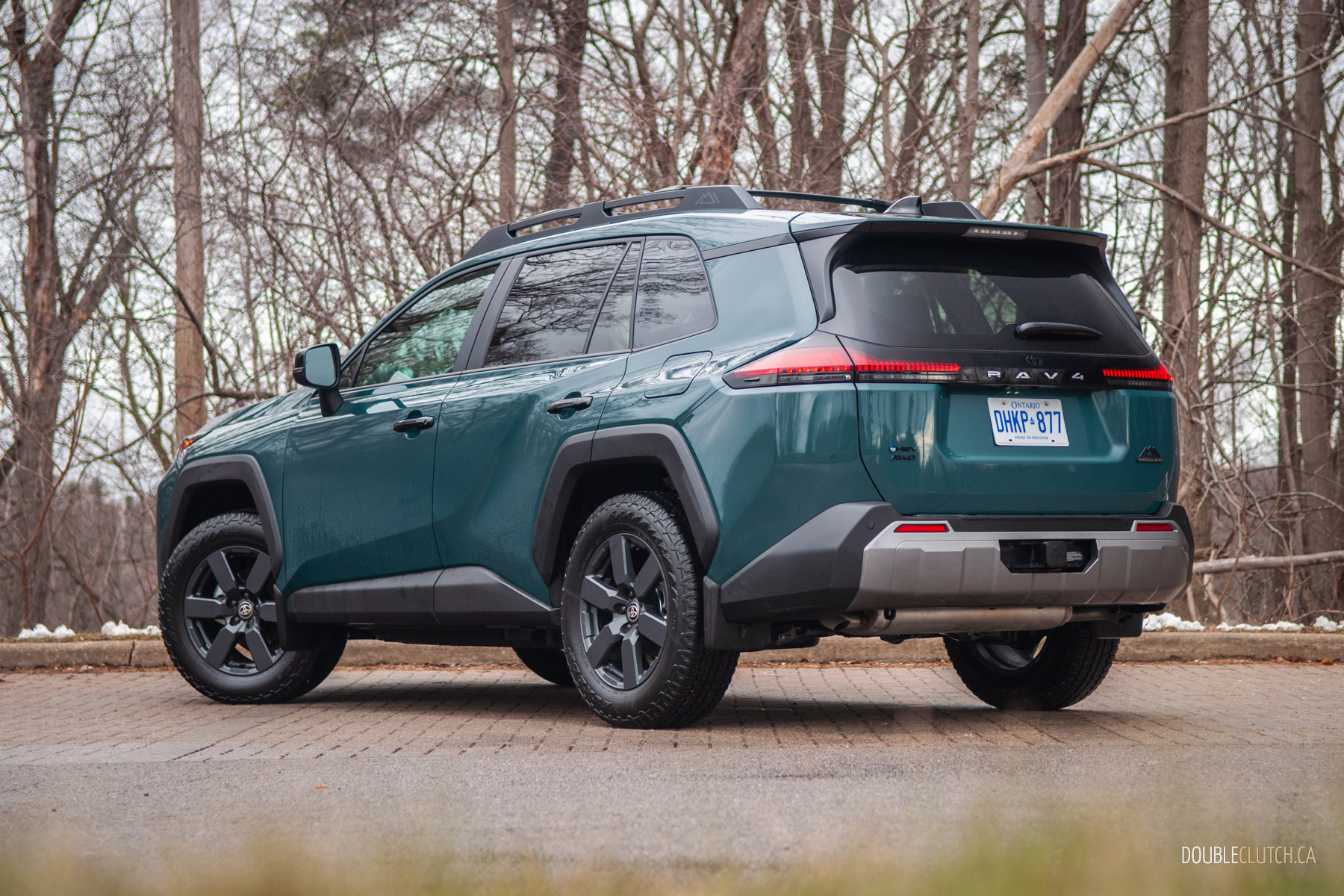
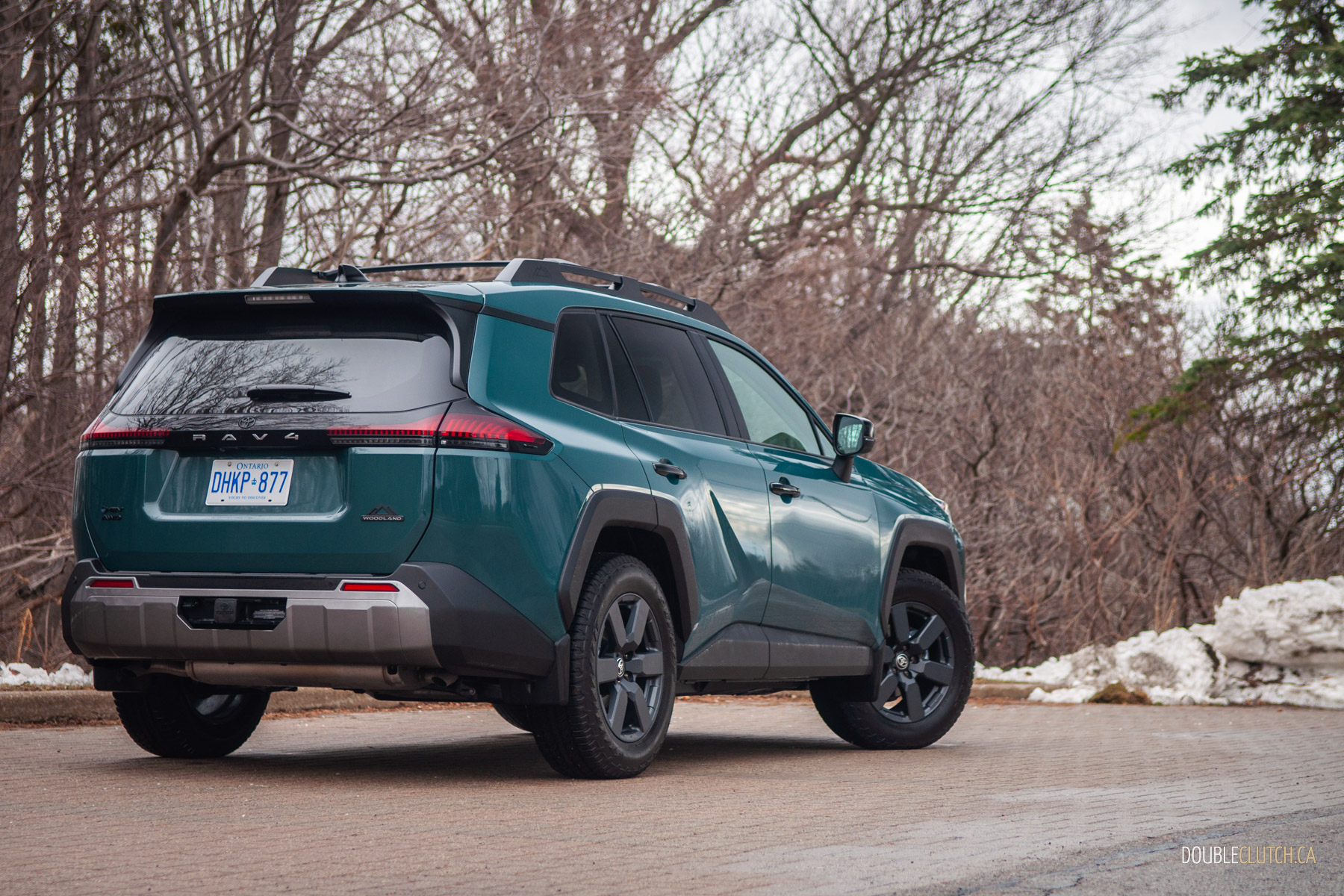
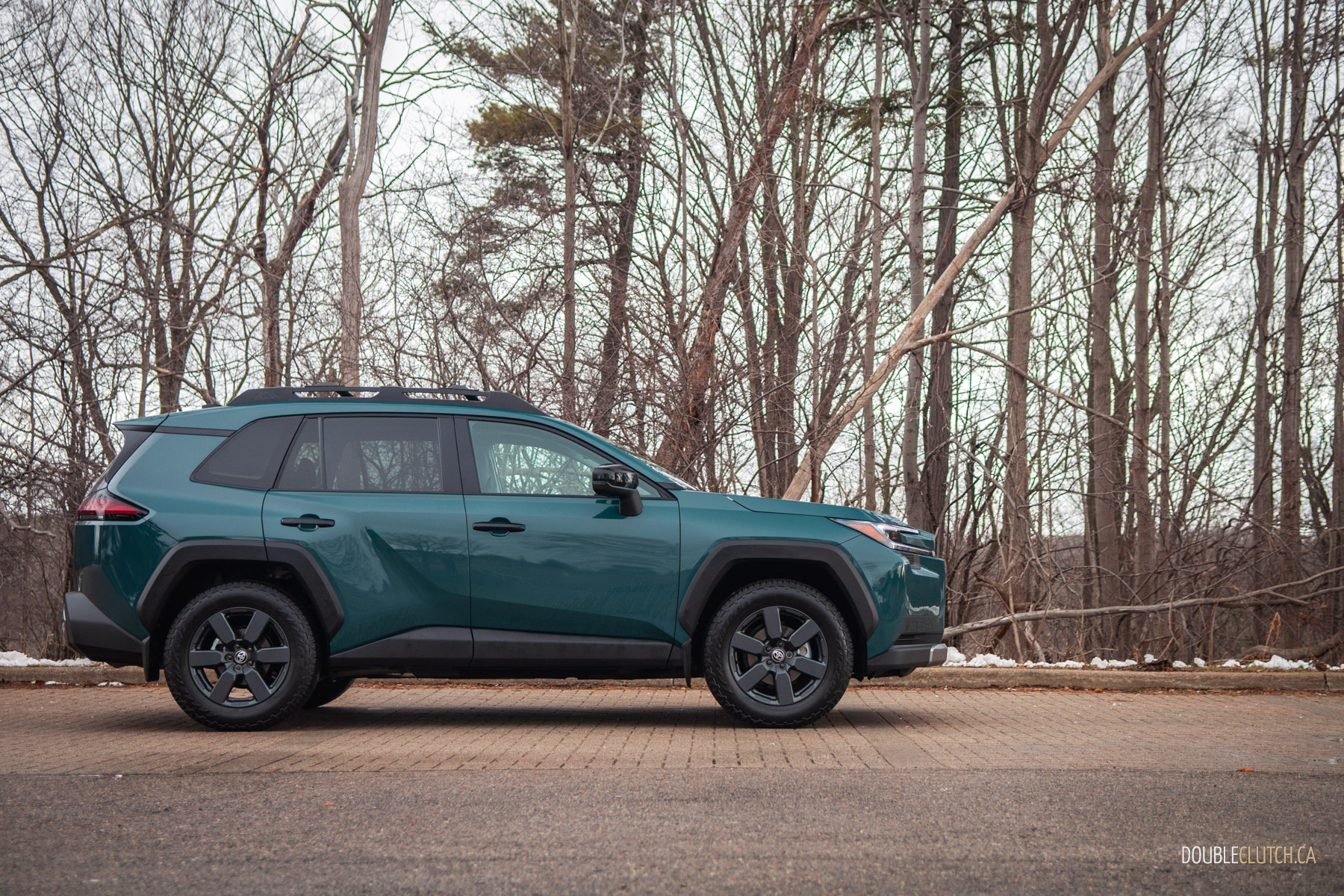
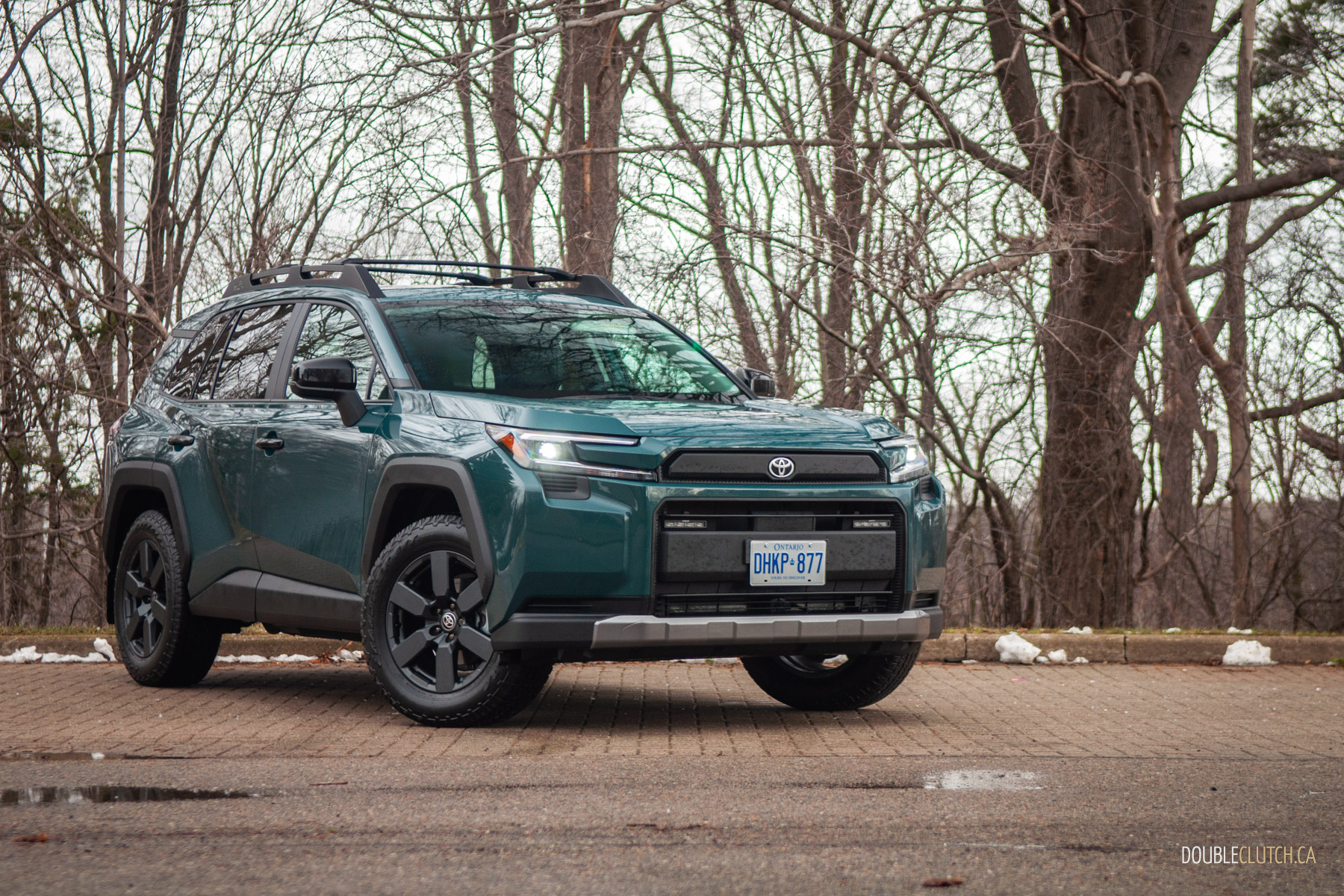
Our middle-of-the-road Woodland tester is done up in the Outdoor Adventure fit. The new colour, Everest, looks appropriately outdoorsy and is exclusive to the Woodland trim. It also wears a more squared-off fascia, bearing more than a passing resemblance to the likes of the 4Runner, Sequoia, and their trucky siblings, as well as different wheels with all-terrain tires, a very slight lift, a different roof rack design, and a few other touches unique to the Woodland.
How does the new RAV4 drive?
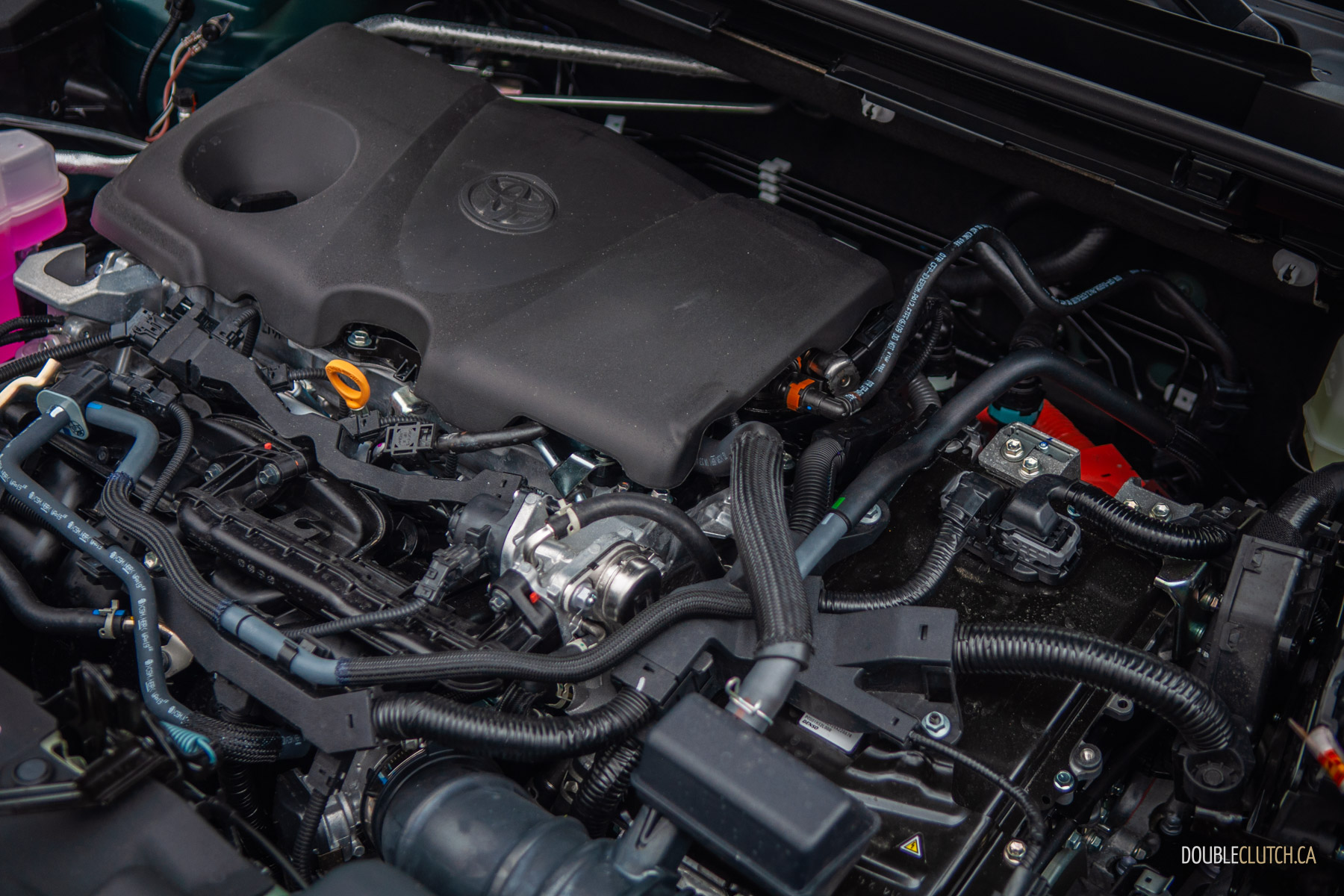
The other mic drop is that the RAV4 is all-hybrid now. The gas-only version is gone, leaving your only choices between a conventional hybrid — HEV, in Toyota’s lingo — or a plug-in hybrid, which is now called PHEV after Toyota sadly dropped the ‘Prime’ name. Both are upgraded for 2026; a 2.5-litre normally aspirated inline-four still makes up the gas end, but Toyota swapped in more powerful electric motors, giving it a decent power bump. This Woodland tester is good for 236 horsepower all-in — a healthy bump over the 219 horses in the last one. Toyota sells a front-wheel-drive RAV4 Hybrid in the U.S., but Canadian RAVs are AWD-only.
We clocked its massively improved road manners right away; the new RAV4 is much quieter than before, muffling the groaning-and-droning from the gas engine quite well. The Woodland’s all-terrain tires and roof rack design don’t impinge on wind and road noise compared to the non-outdoorsy trims. The new RAV4 continues to ride on the TNGA-K platform, but Toyota found ways to stiffen and rework the chassis here and there for an even better ride over bumps, potholes, and whatever other havoc winter wreaks on our roads. Steering is perfectly fine for what the RAV4 is — it’s numb and lifeless, but also quick and easy for squeezing through tight spots.
Fuel economy remains a highlight with the 2026 RAV4. It’s as frugal as 5.1 L/100 kilometres in the city, 6 on the highway, and 5.5 combined, but the RAV4 Woodland sees a slight penalty on account of its off-road athleisure. On paper, it puts down 5.7 L/100 km city, 6.7 highway, and 6.2 combined; in our week of mostly highway commuting during a surprise cold snap, we averaged 7.2 L/100 km. Not bad at all.
Interior impressions
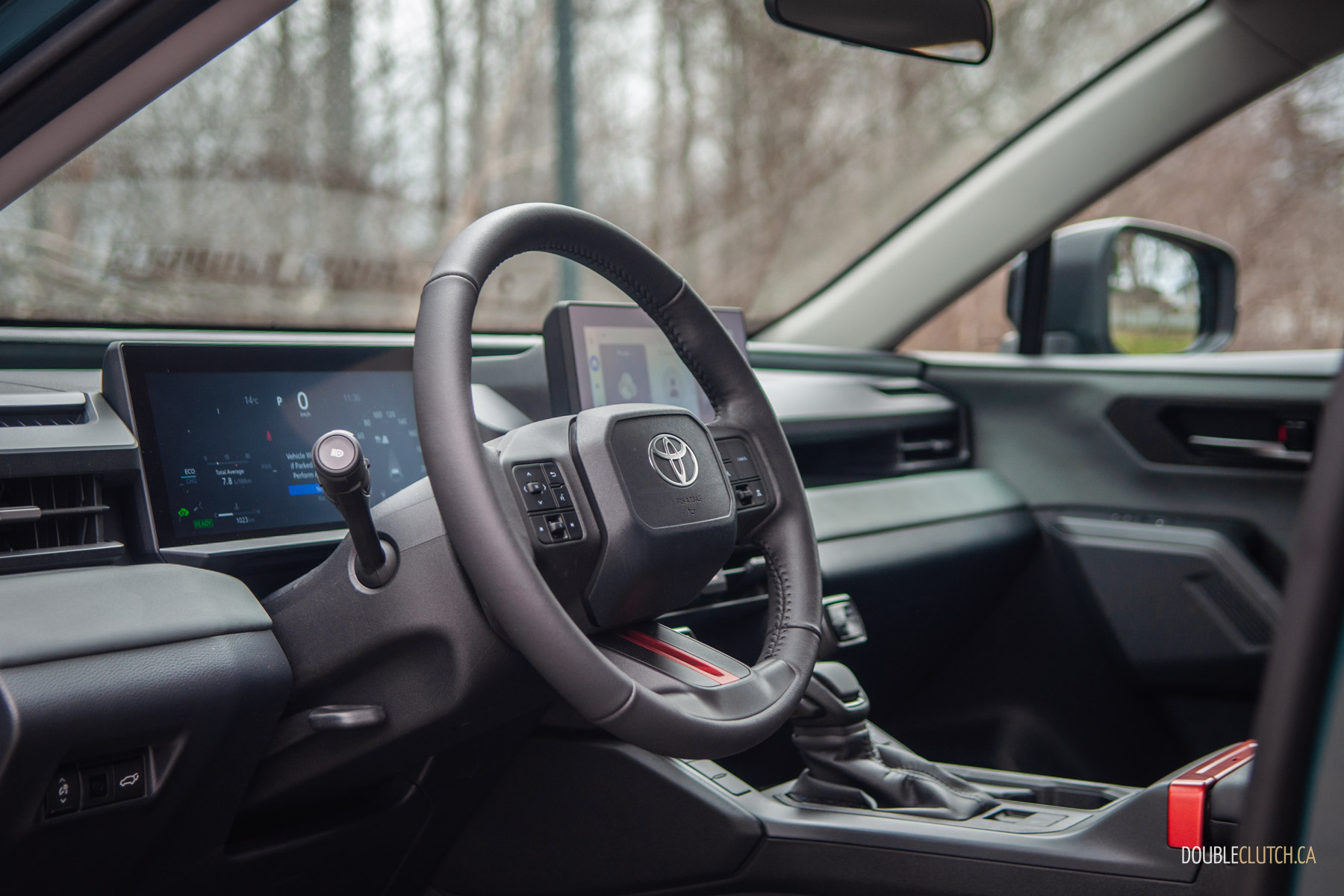
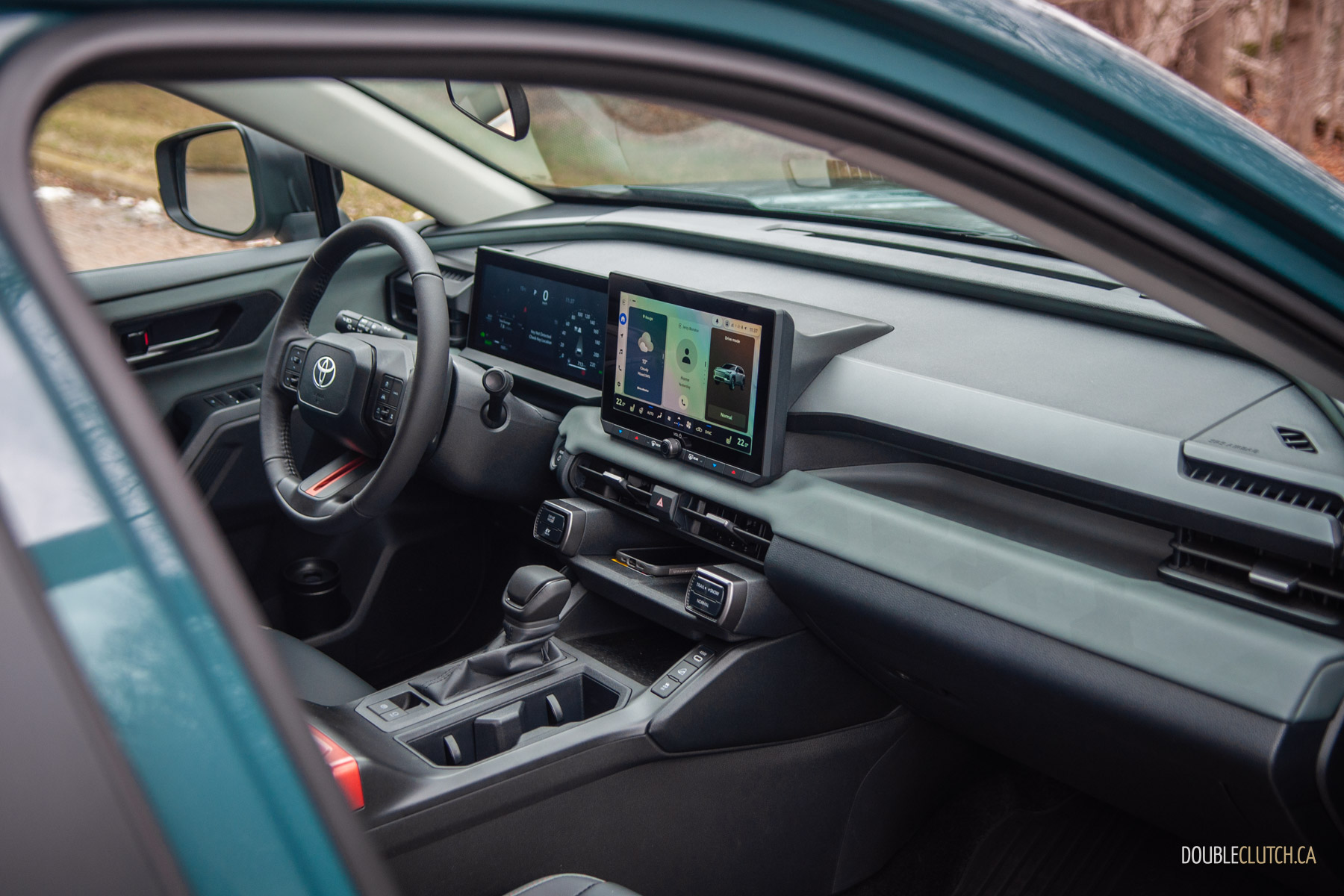
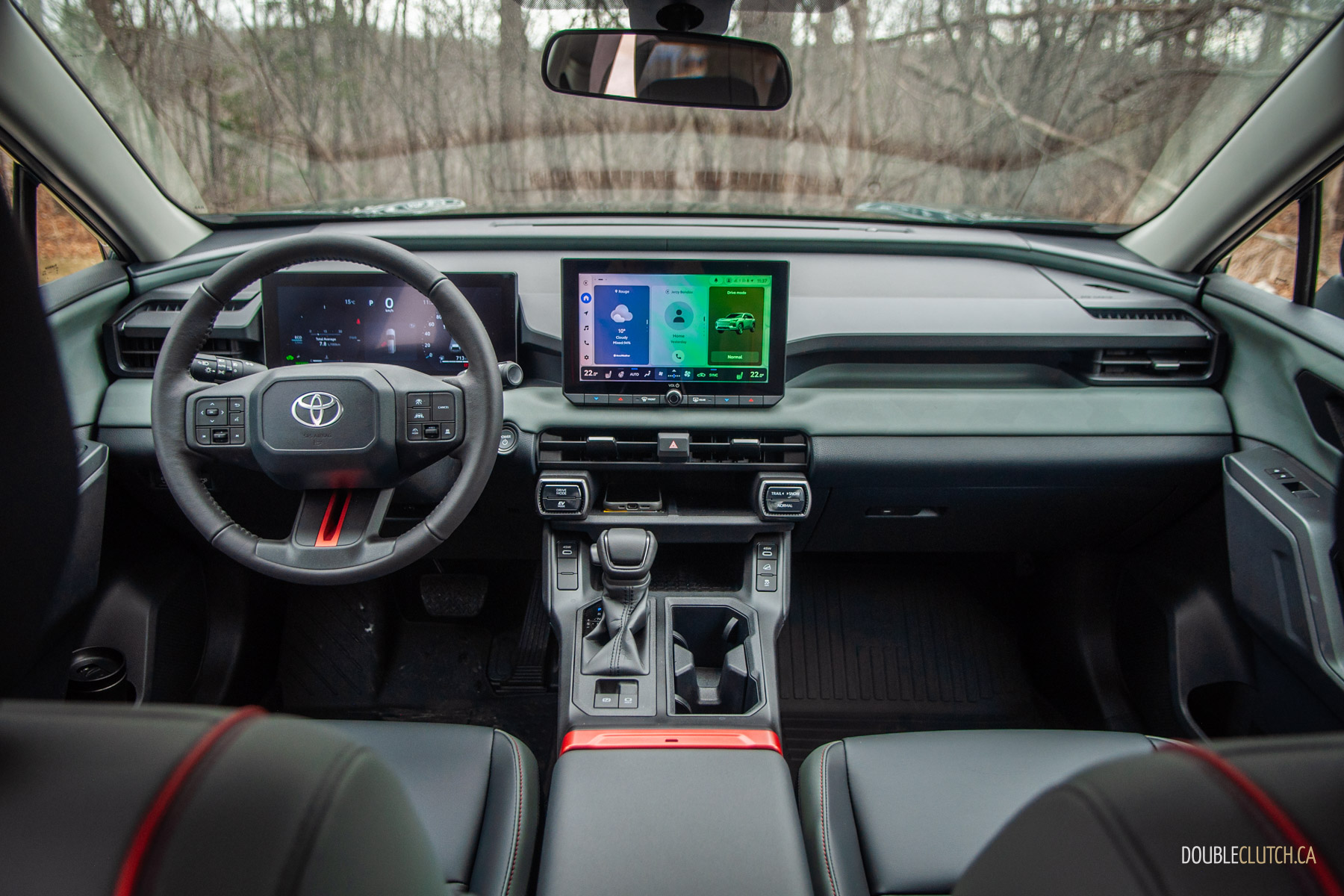
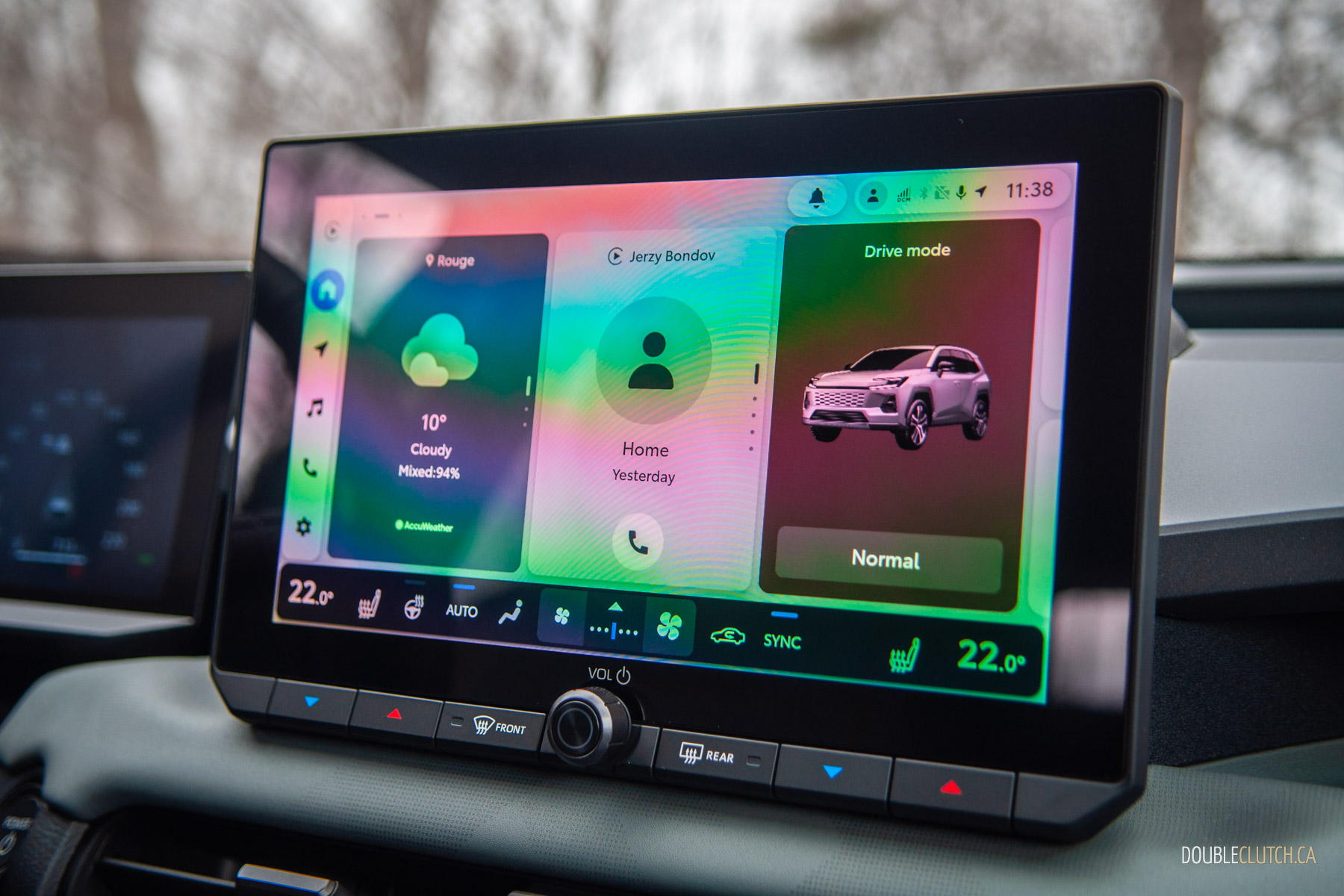
Admittedly, I’m not so jazzed on the 2026 RAV4’s interior, at least in mid-pack Woodland flavour. Again, it’s an improvement over the old one, with a new layout, new colour and upholstery options, and revamped tech. The centrepoint is a new infotainment system anchored by a bigger touchscreen sticking out of the dashboard; our Woodland tester uses a 10.5-inch display, but upper-trim RAV4s use a 12.9-inch touchscreen.
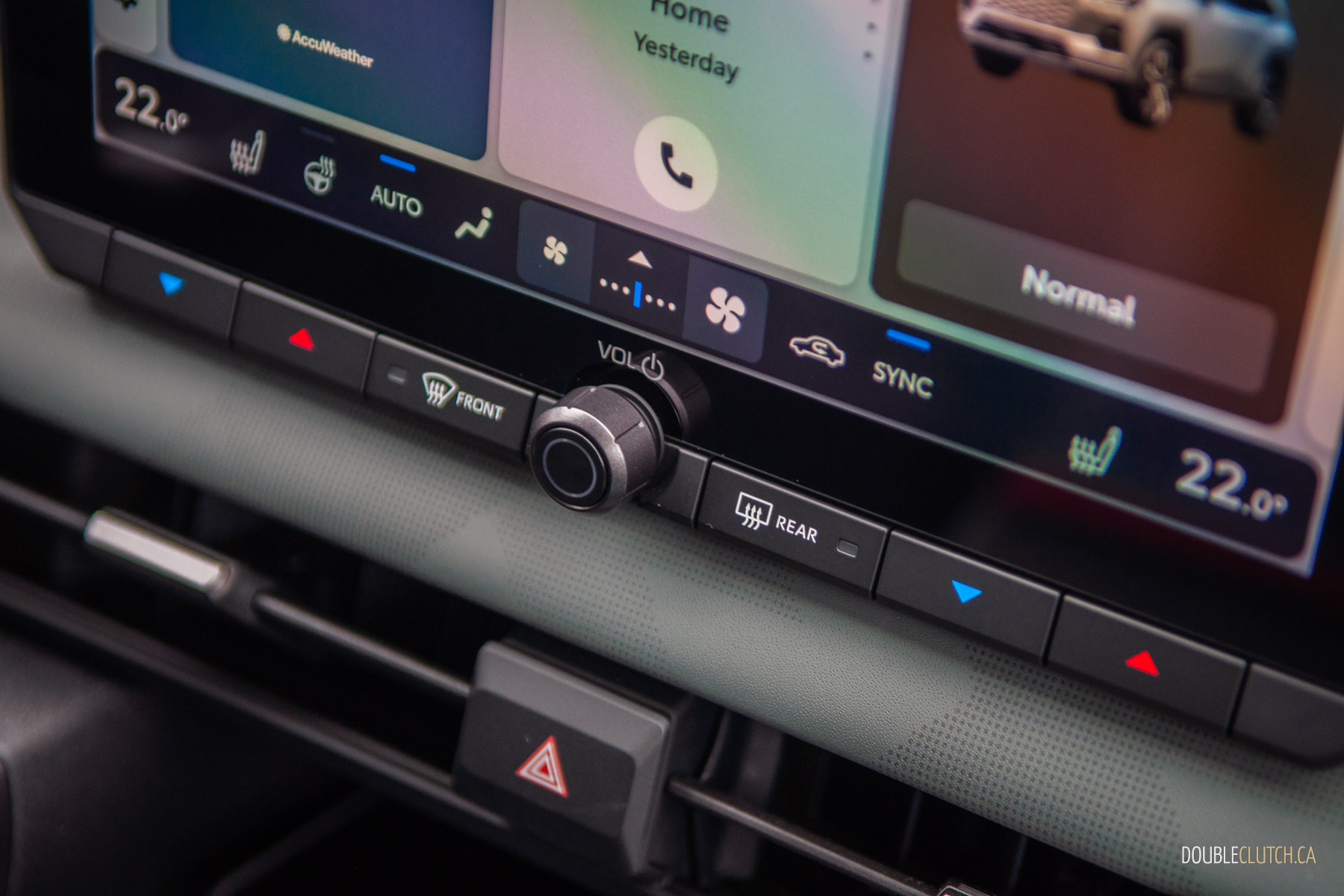
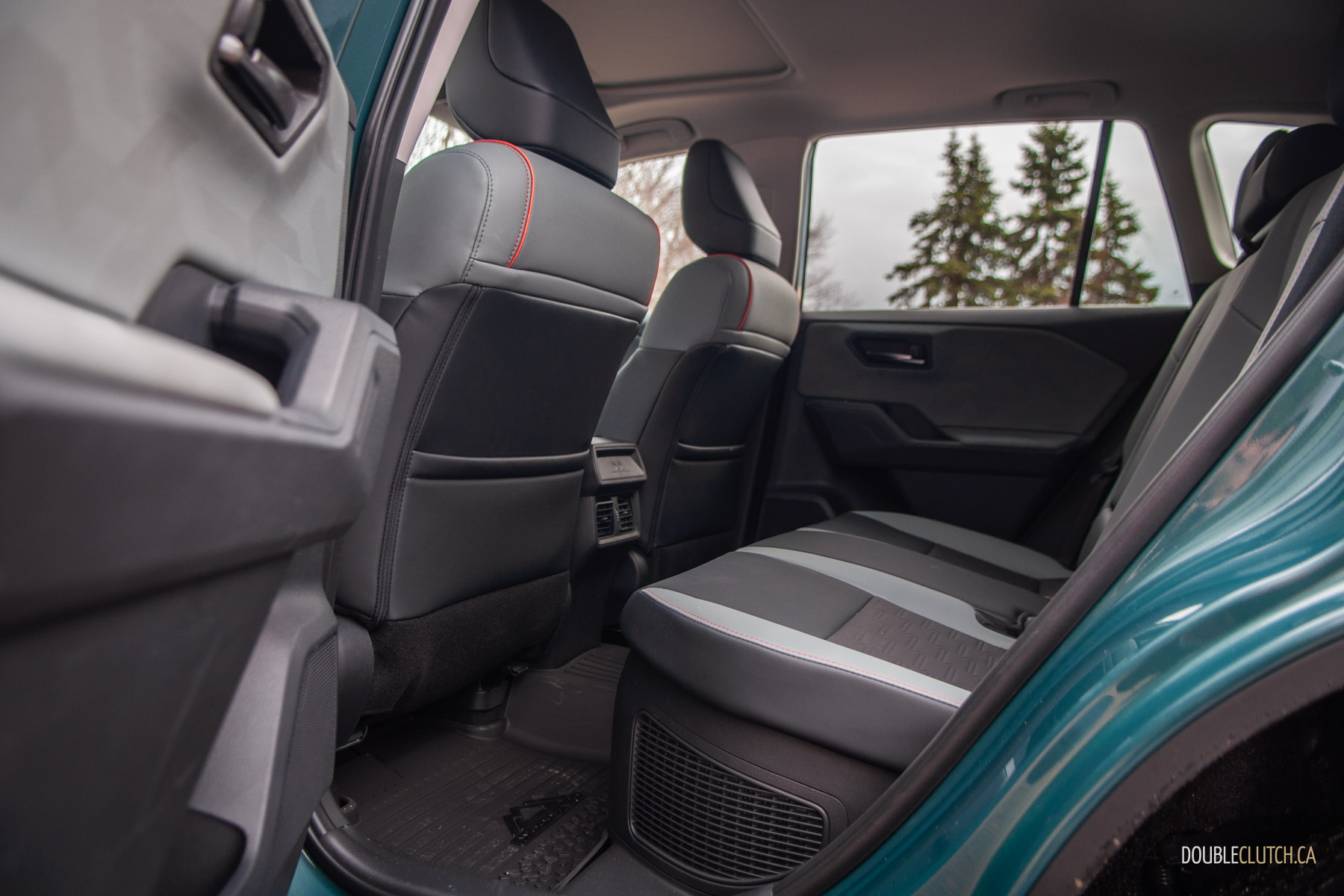
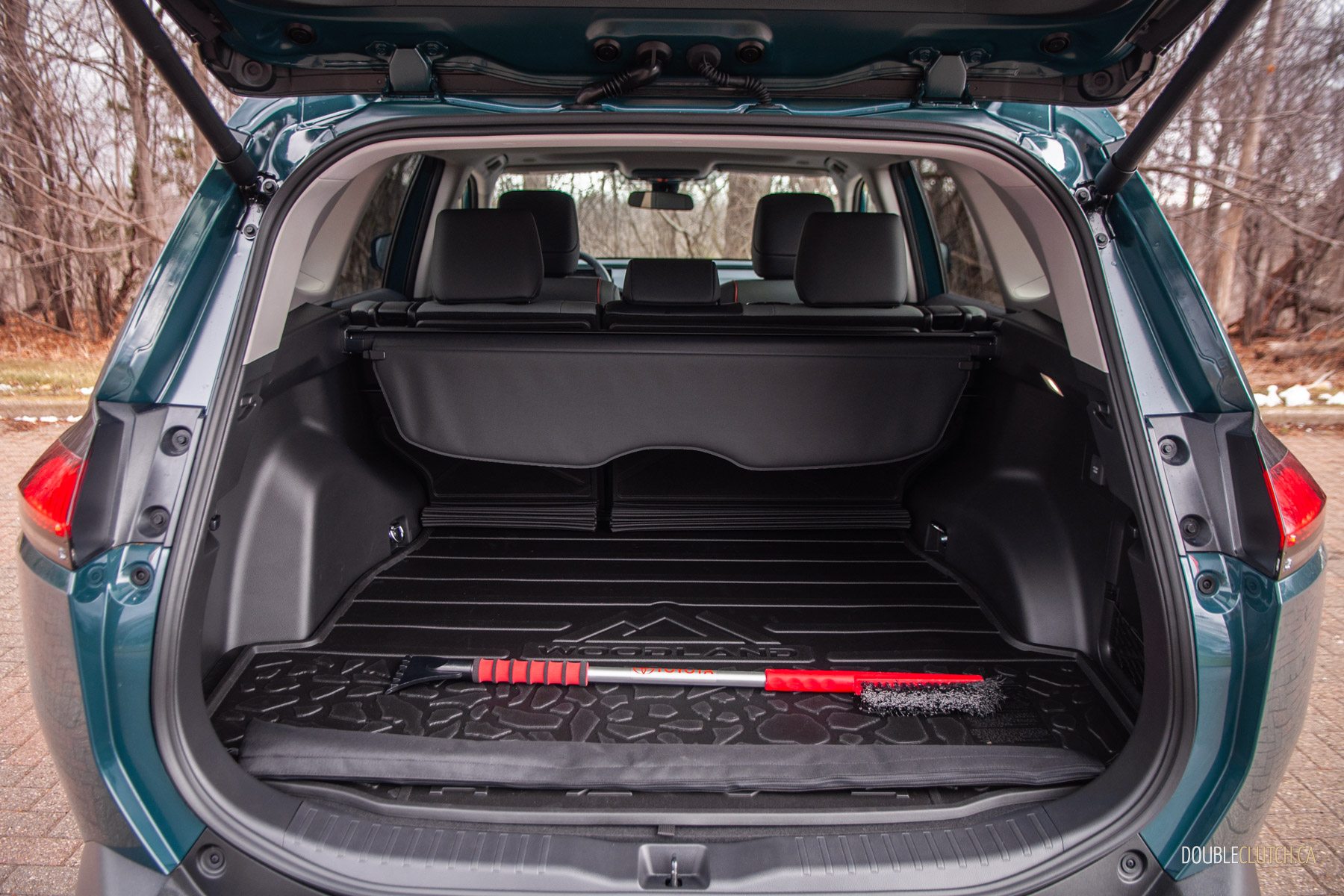
The new infotainment looks similar to the previous version, but there’s now a proper home screen with customizable widgets, and some functions, like tuning to a specific radio station, is easier than before. The graphics look sharper, the screen is more responsive, and you still get a decent amount of physical switchgear, including a slim row of buttons for temperature and defrost, plus a volume knob along the bottom bezel of the screen. The new RAV4 also receives a bit more rear-seat and cargo space than before; the slimmer battery pack lowers the RAV4’s rear floor a bit, and on PHEV models, the charging components are now up front.
This being 2026, wireless CarPlay, Android Auto, and wireless charging are all standard, as is Toyota’s full suite of active safety and driver assists. It all worked mostly well; Toyota’s adaptive cruise control is imperceptibly smooth and the lane-departure system now gently tugs you back into your lane if you’re changing lanes and another car is coming up fast. Or, you know, use the skinny pedal. One point of contention with the outgoing RAV4 was the backup camera resolution; we’re happy to report it’s much clearer and actually usable at night. Sadly, stepping up to a 360-degree camera system requires stepping up to a pricier trim.
Not quite a home run
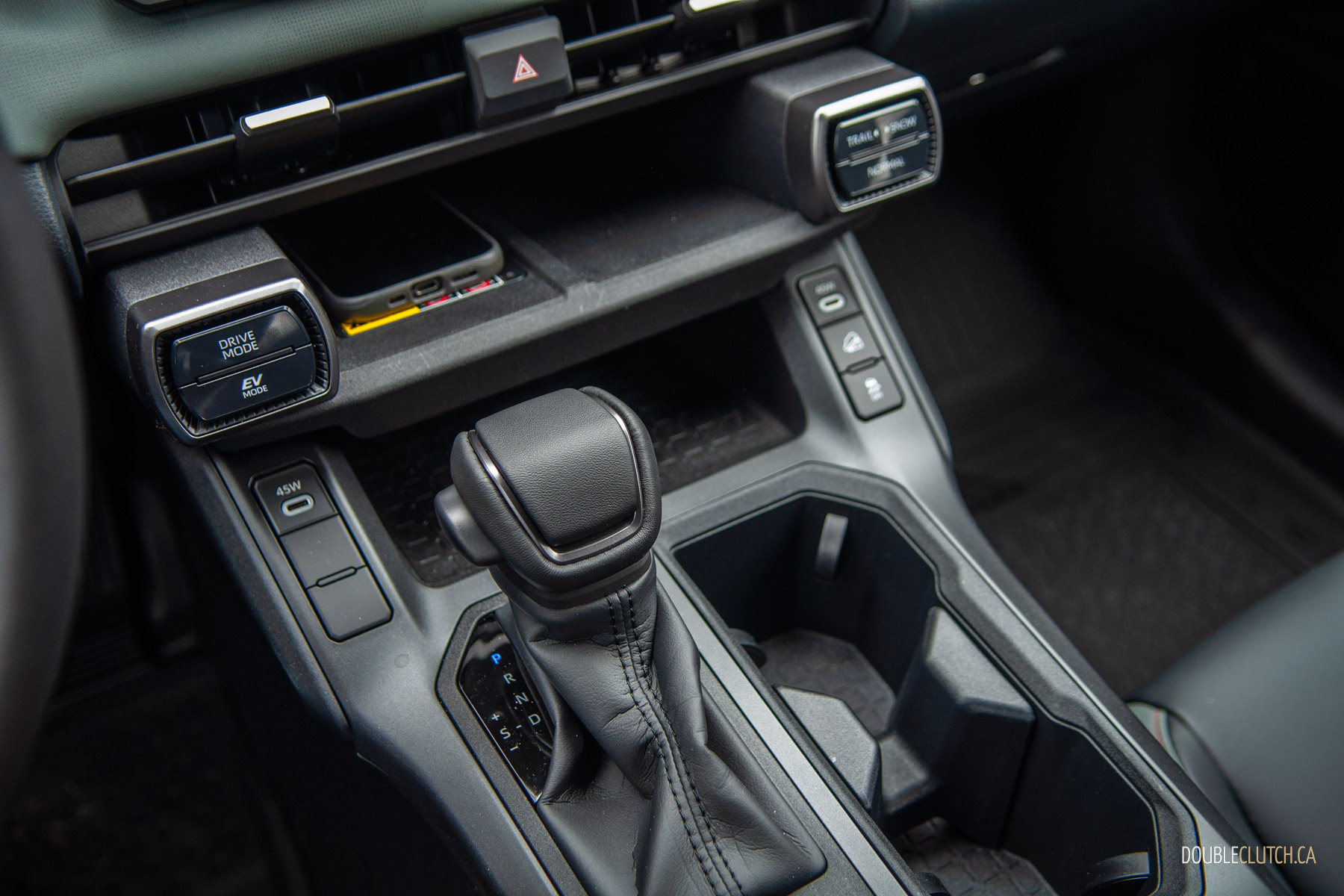
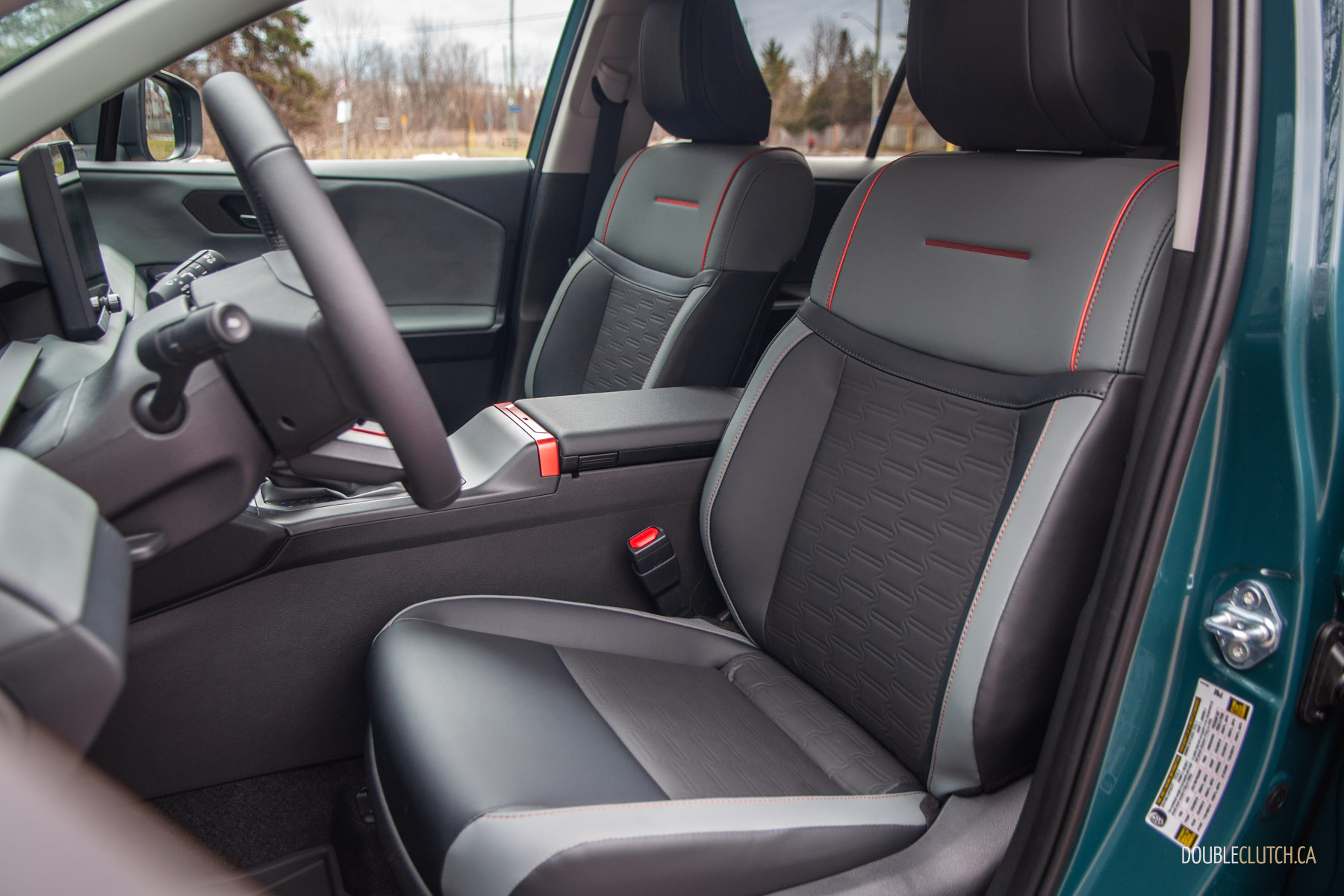
I do have a couple of nits to pick with the 2026 RAV4’s interior. First, Toyota’s material choices — perhaps it’s because of the Woodland’s more rough-and-tumble intentions, but the finish along the upper dash and upper doors feels like 3,000-grit sandpaper. You might want to think of a new driving position of you regularly rest your elbow on the door panel. The Woodland’s orange accents don’t do much to brighten up the otherwise mostly grey-and-black cabin, either. The flippable centre console is kind of cool, though, and the Woodland gets props for still having a traditional P-R-N-D lever.
I’m also not entirely convinced the new-for-2026 layout is an improvement. Before, the climate controls were pretty much front-and-centre with two very prominent temperature knobs; now that the climate controls (and volume knob) have been located to a slim trim piece that you’ll likely miss the first few times, Toyota relocated the drive mode controls to those two spots — controls that I didn’t touch all week, despite their prominent location. New isn’t always better.
Should you buy a 2026 RAV4?
That’s the $50,000 question, innit? Well, technically, the all-hybrid 2026 RAV4 now starts at $37,500 — or about $40,000 when you factor in destination — for the base LE trim. The Woodland sits roughly in the middle at just over $50,000 with destination but before taxes, whereas a RAV4 PHEV with all the bells, whistles, and GR Sport bits touches $60,000. Suffice it to say, the RAV4 lineup covers a broad price range.
For most buyers, the XLE trim is the sweet spot, working out to about $45,000 with destination; niceties like a big sunroof and fog lights are part of a $2,500 package. For some, the $50,000-plus outlay for the Woodland may be worth the price of admission for the unique teal paint, all-weather tires, and tougher-looking mug. It’s also worth noting the Honda CR-V Trailsport takes up the same price bracket, and arguably still has a nicer interior.
What really matters is that the 2026 Toyota RAV4 still nails the basics. It’s roomier and more practical; quieter and more refined; more powerful yet just as efficient as before. Plus, with Toyota resale value being what it is, it’s a no-brainer the RAV4 remains the other default answer.

Managing Editor
Nick has more than a decade of experience shooting and writing about cars, and as a journalism grad, he's a staunch believer of the Oxford Comma despite what the Canadian Press says. He’s a passionate photographer and loves exploring the open road in anything he gets his hands on.