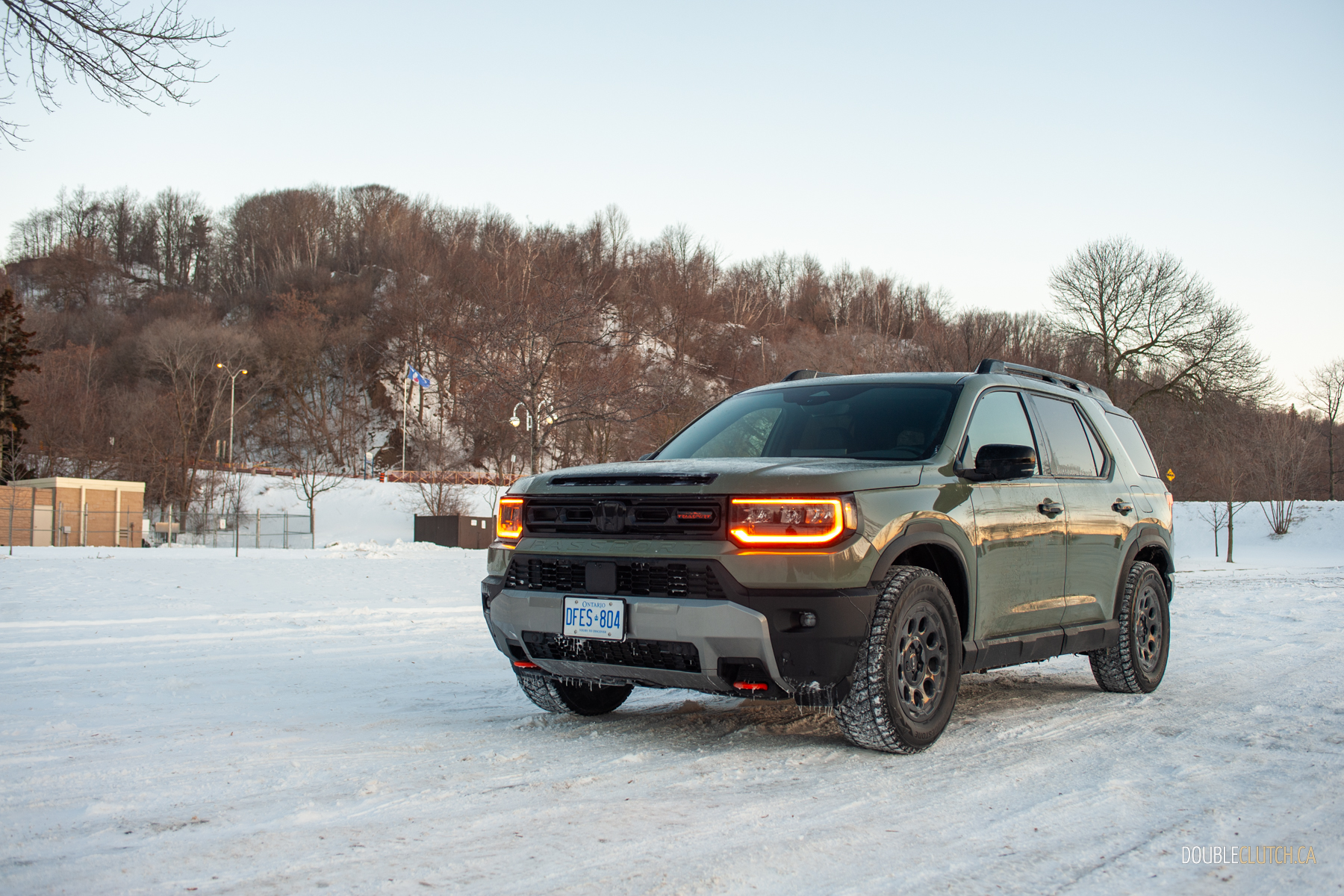
Honda introduced us last year to a redesigned Passport that blended rugged capability, modern convenience, and user-friendliness better than before into one well-styled package. This year, Honda is continuing that push with the 2026 Honda Passport Trailsport Blackout, a new model that reintroduces us to that same freshly redesigned SUV, but now with more bells and whistles to go along with its newfound rugged nature.
What’s new for 2026?
Positioned slightly above the “base” Trailsport trim, this new-for-2026 Touring Blackout variant takes everything that made the Trailsport appealing and adds some luxurious accoutrements. This new top-end trim aims to appeal to buyers seeking not just a bold street presence, but also a feature-rich family hauler without compromising the ability to tackle snowy winters, brutal potholes, gravel-strewn backroads, and long highway hauls alike.
As Honda’s midsize five-seat crossover, the third-generation Passport evolved heavily from the previous model. The Trailsport Touring Blackout continues the off-road motif by adding some aesthetic flair to go along with the luxurious creature comforts. In a class crowded with capable rivals from Toyota, Subaru, Mazda and others, the Passport delivers not just capability, but also a sense of personality without being too ostentatious. In a segment full of vanilla, it’s nice to have a different flavour for once.
First impressions, round two
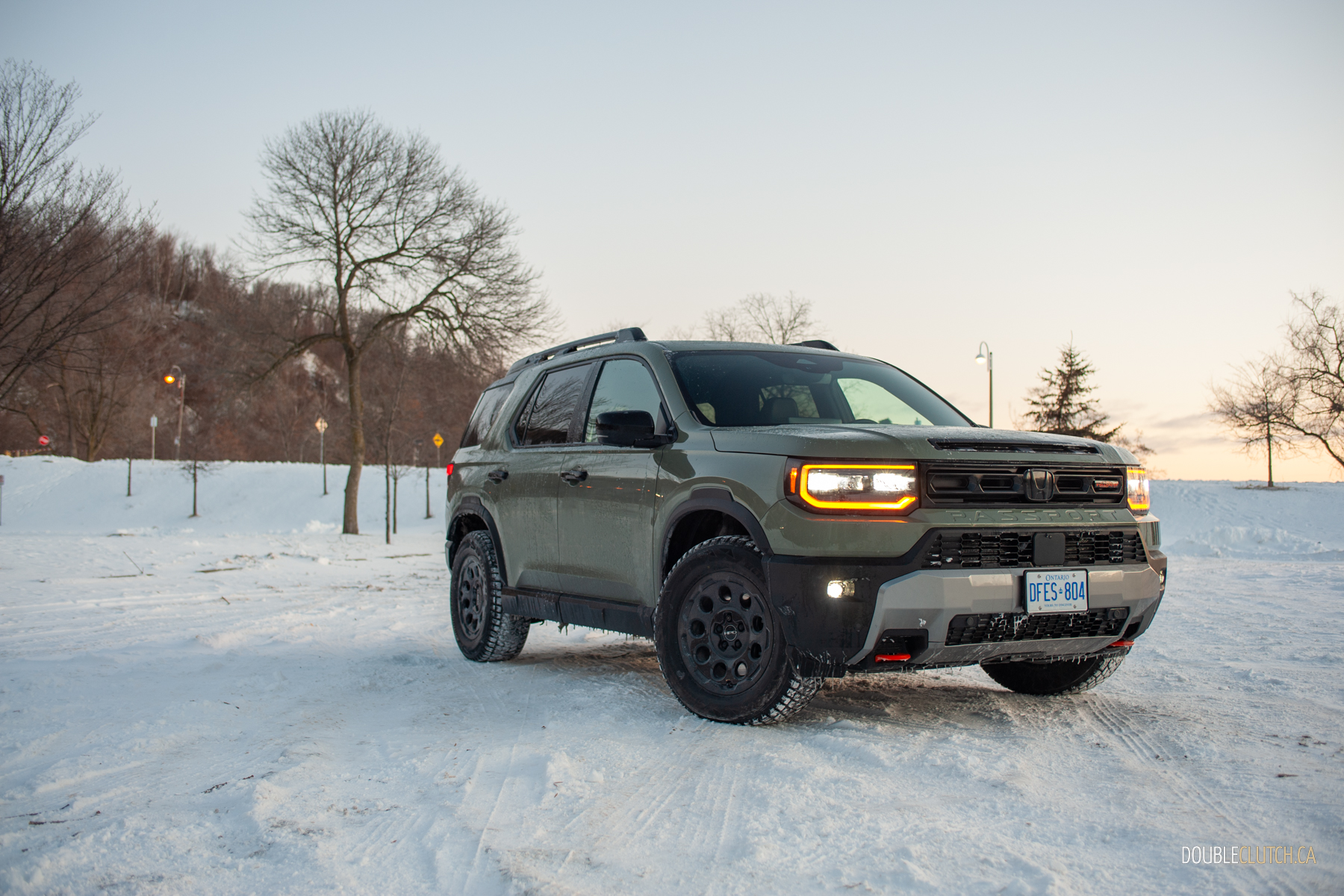
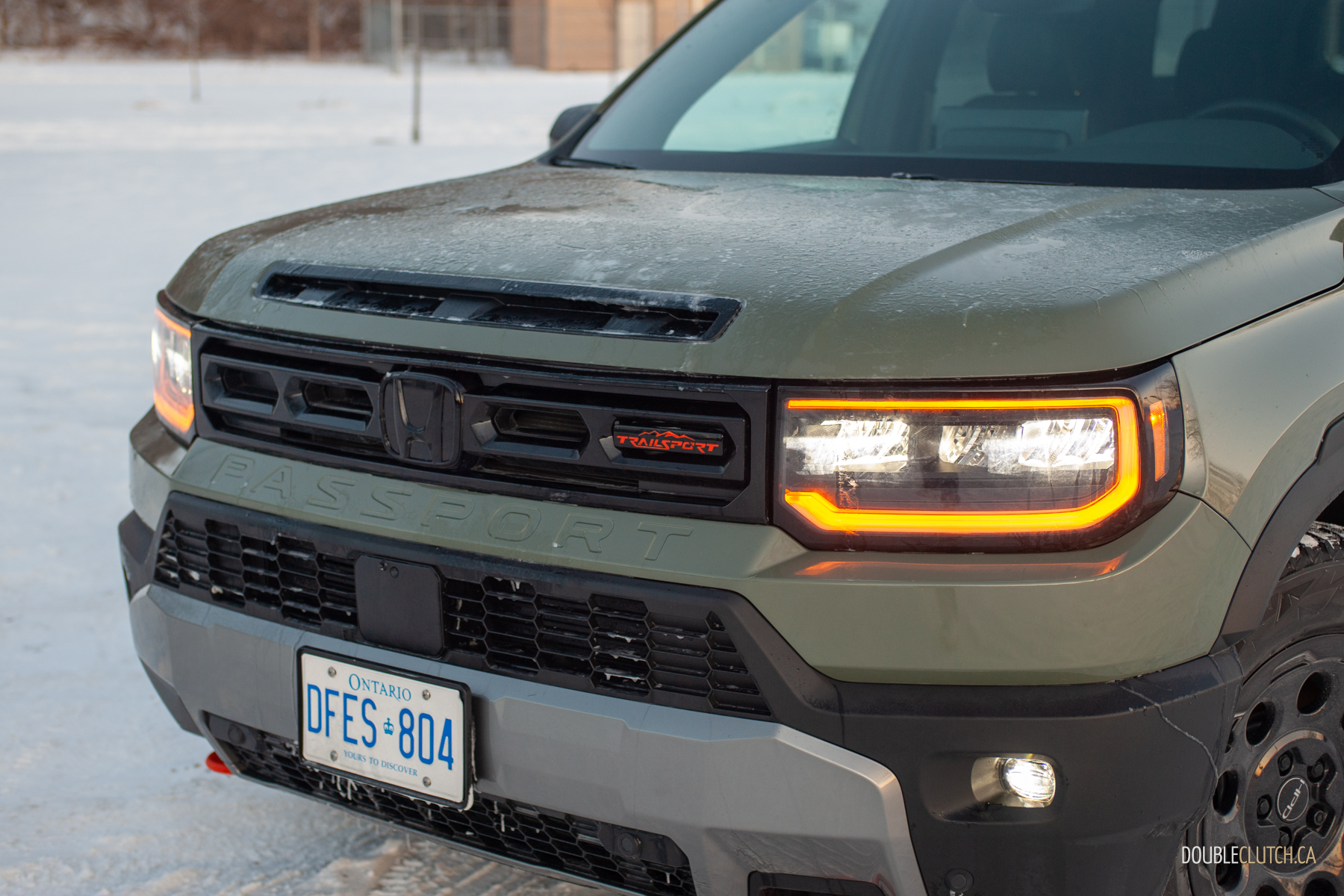
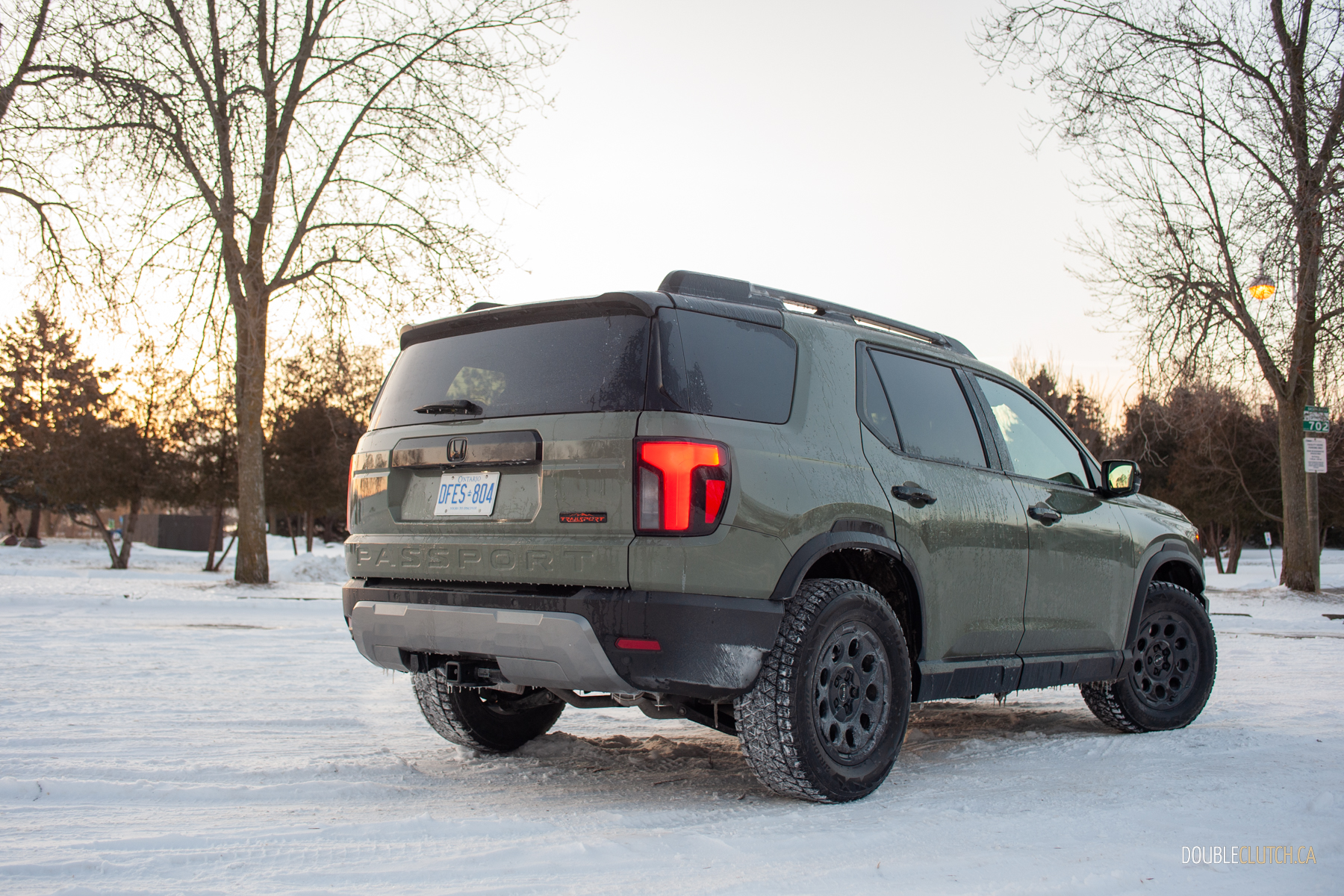
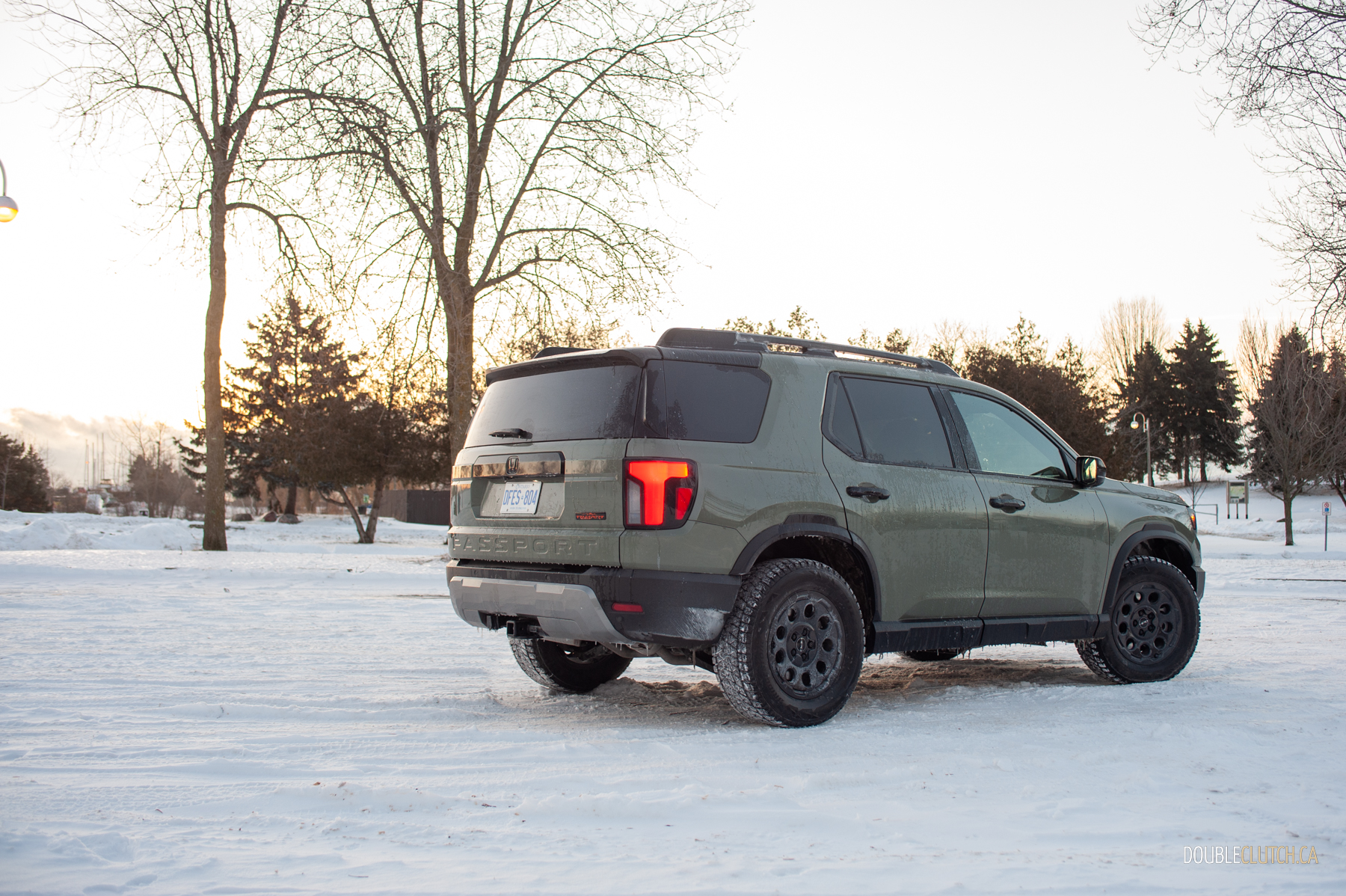
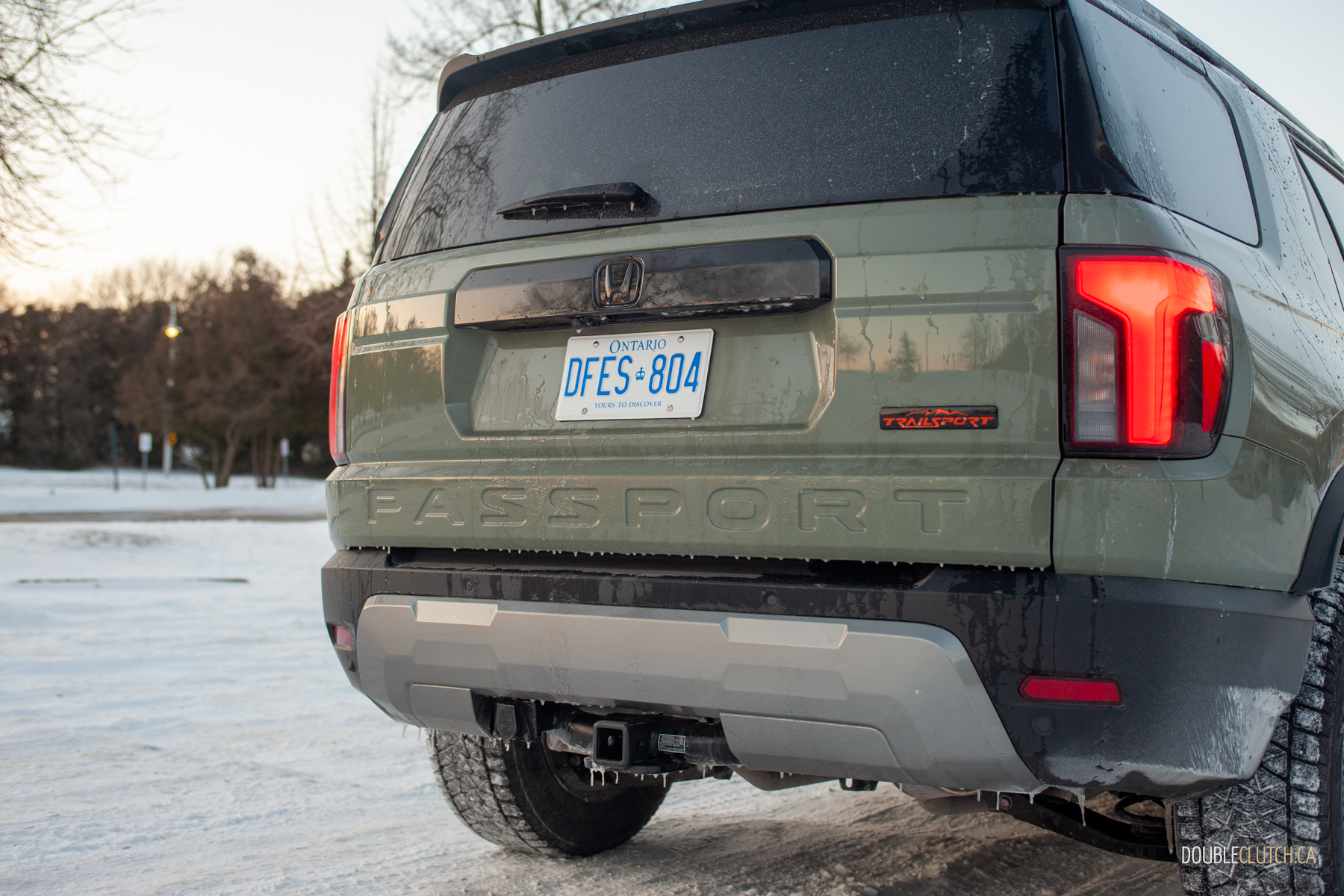
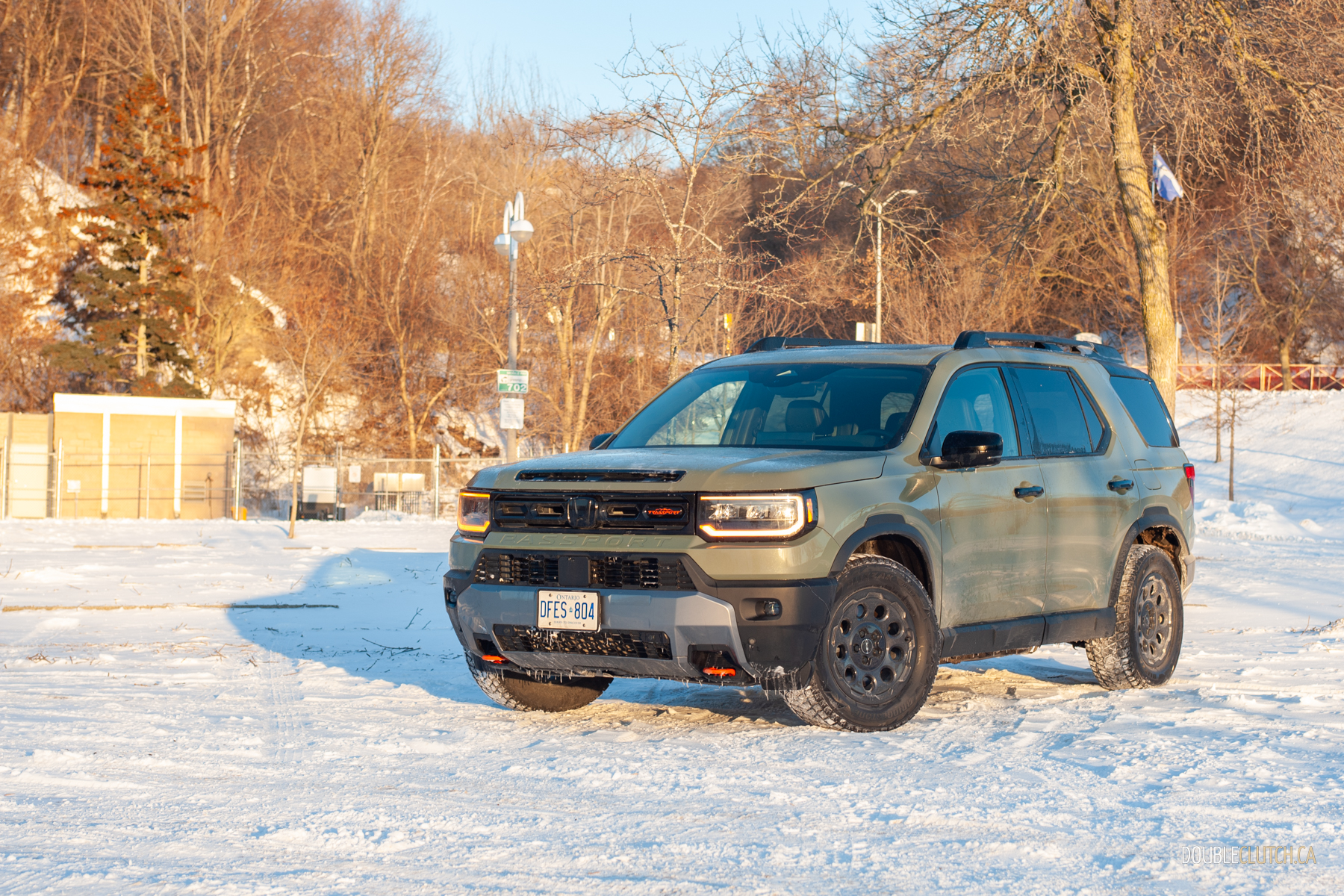
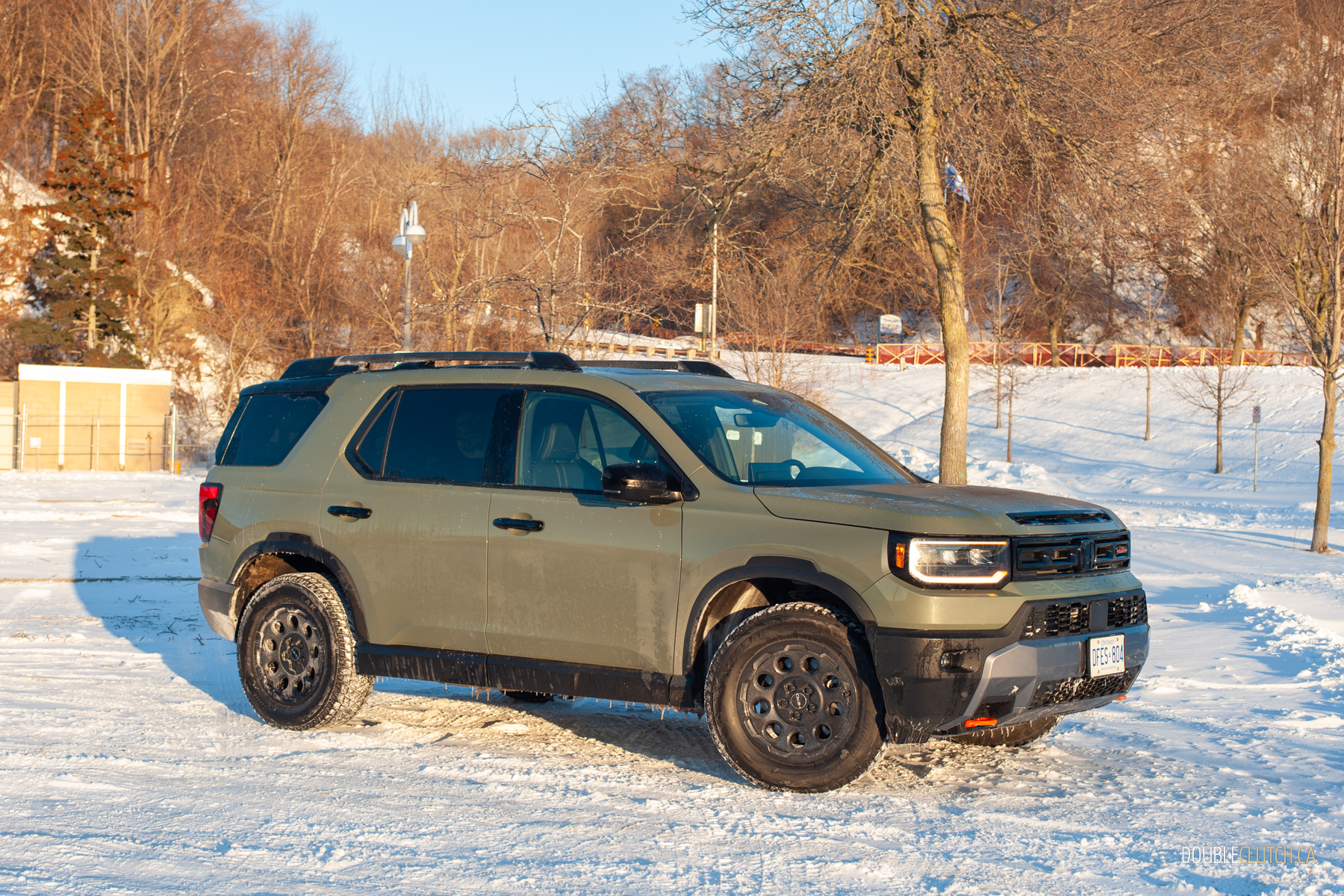
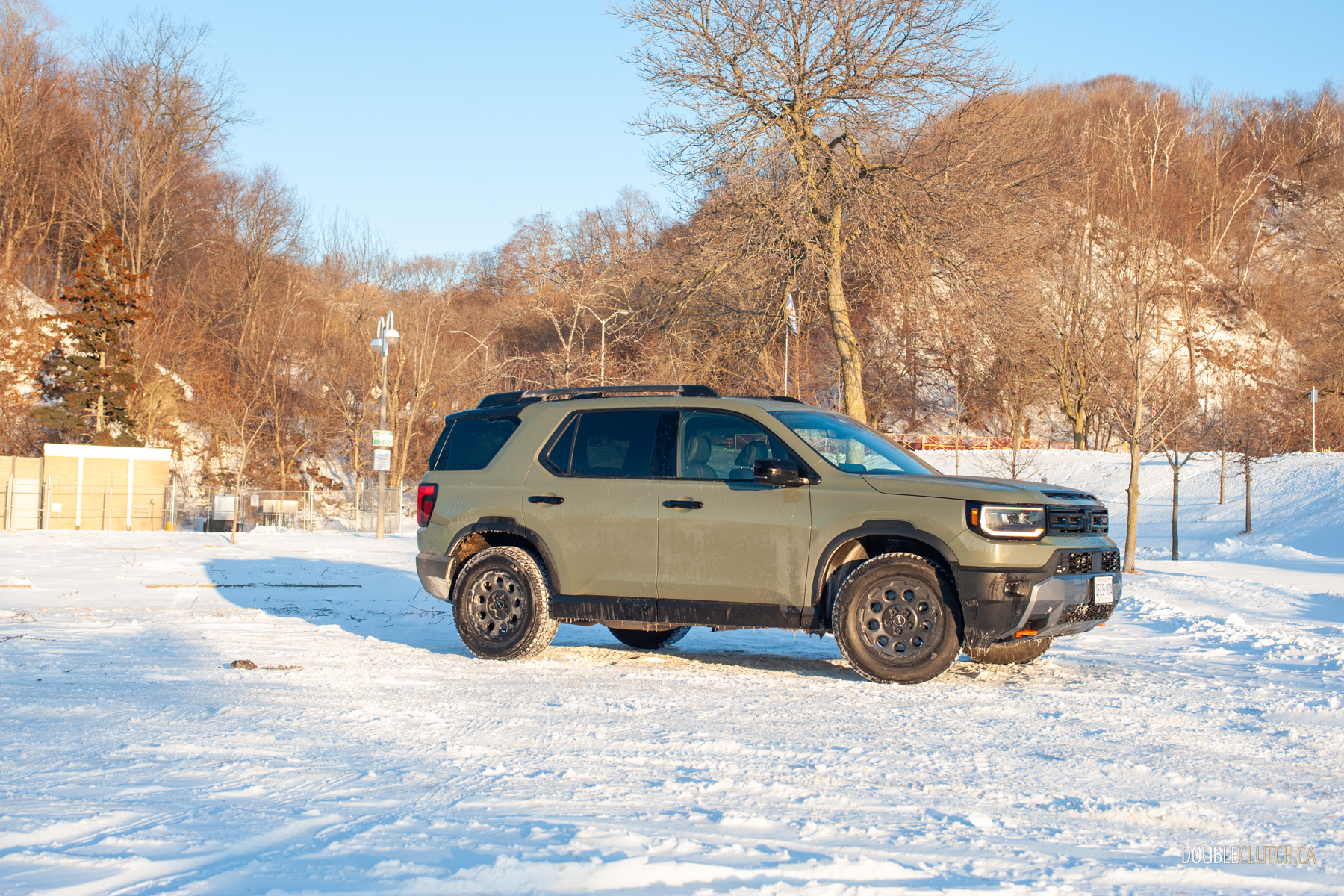
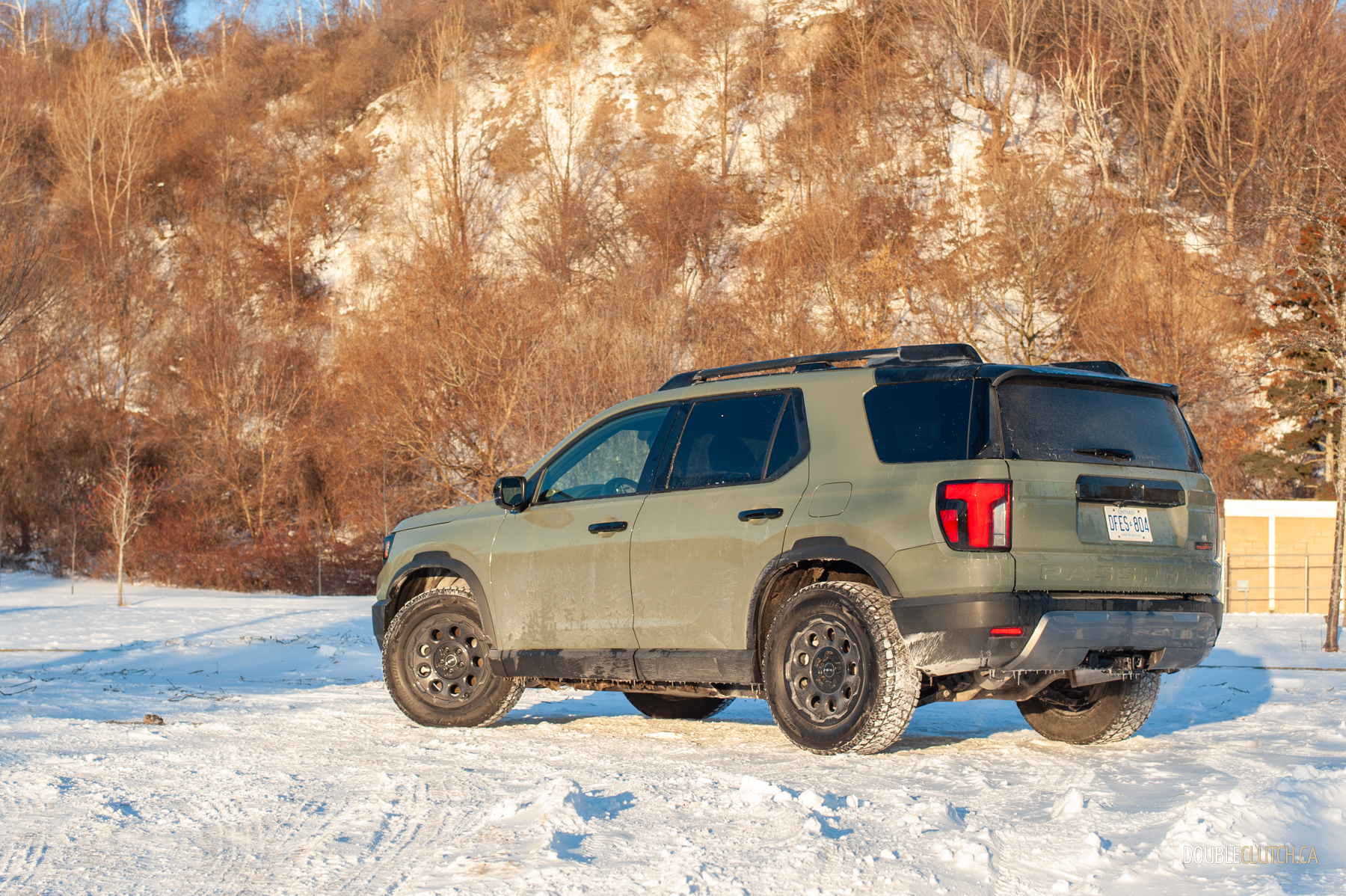
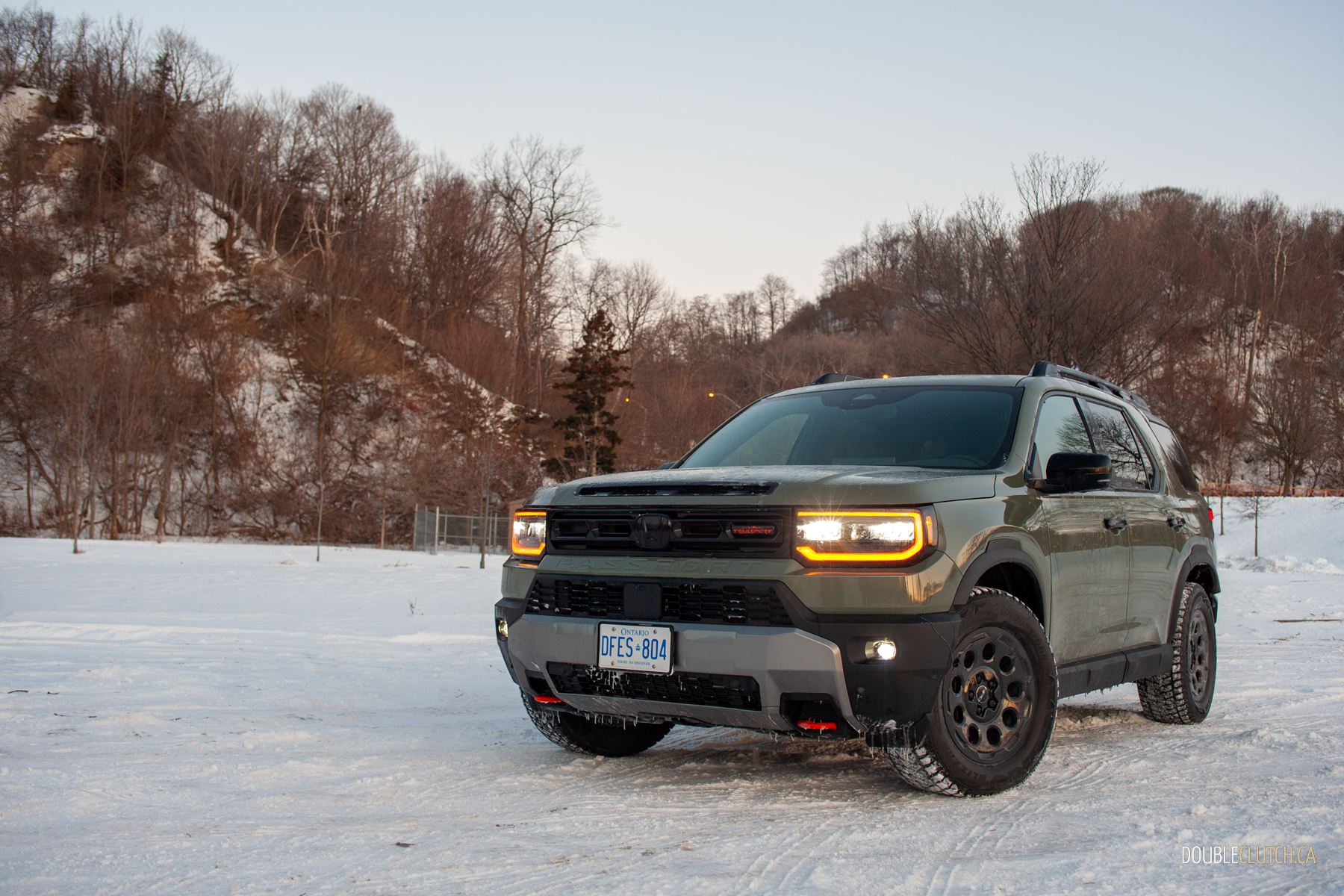
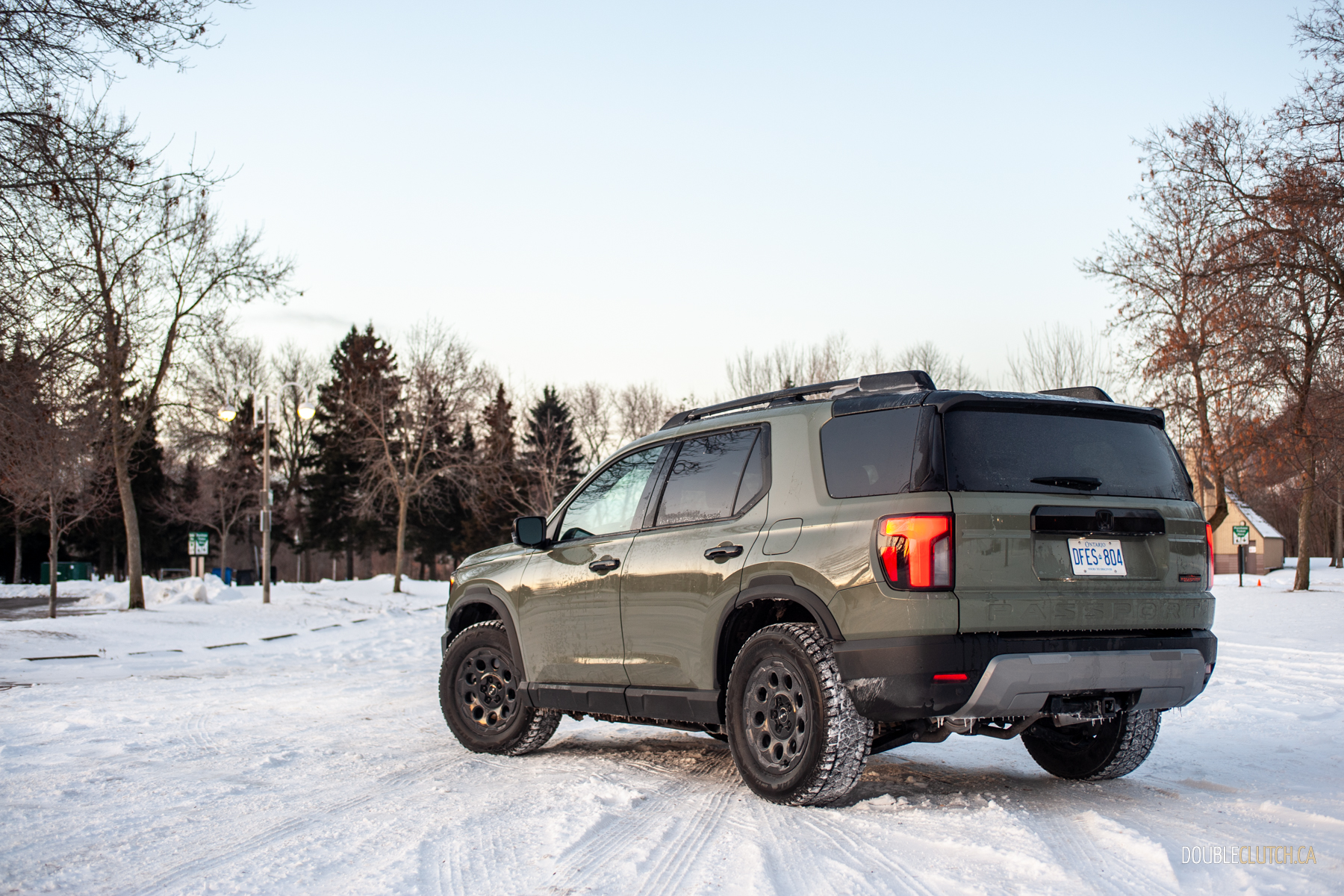
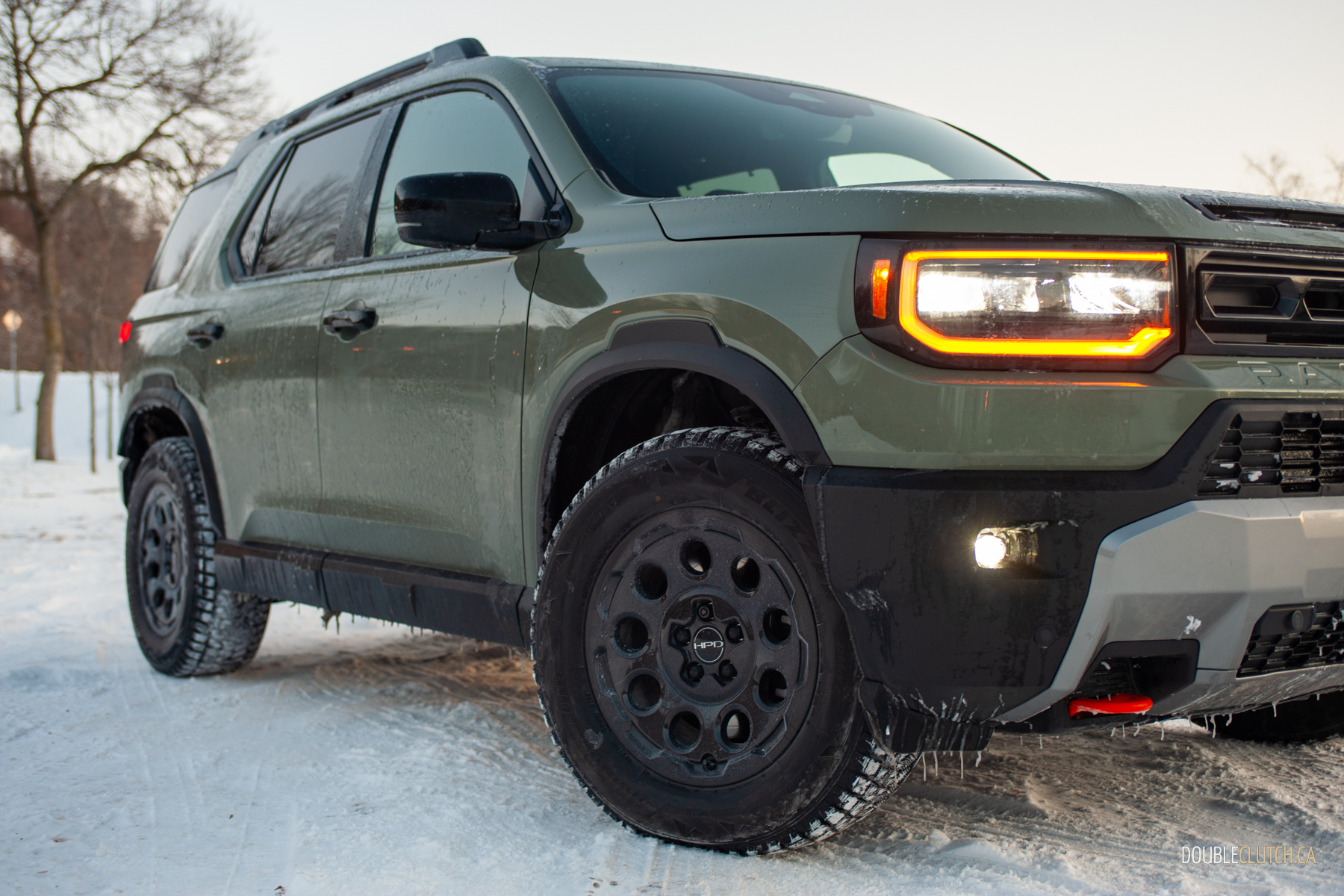
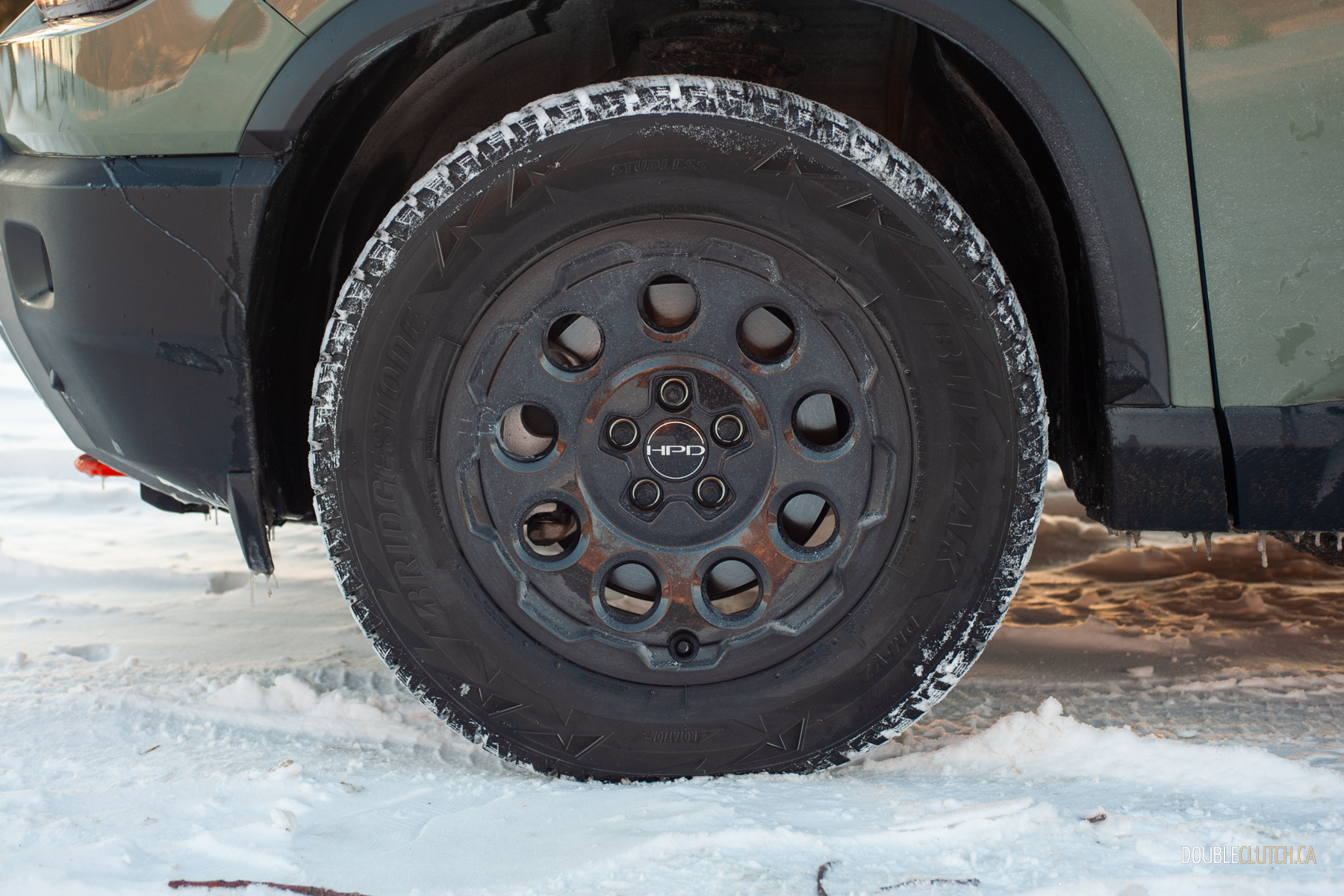
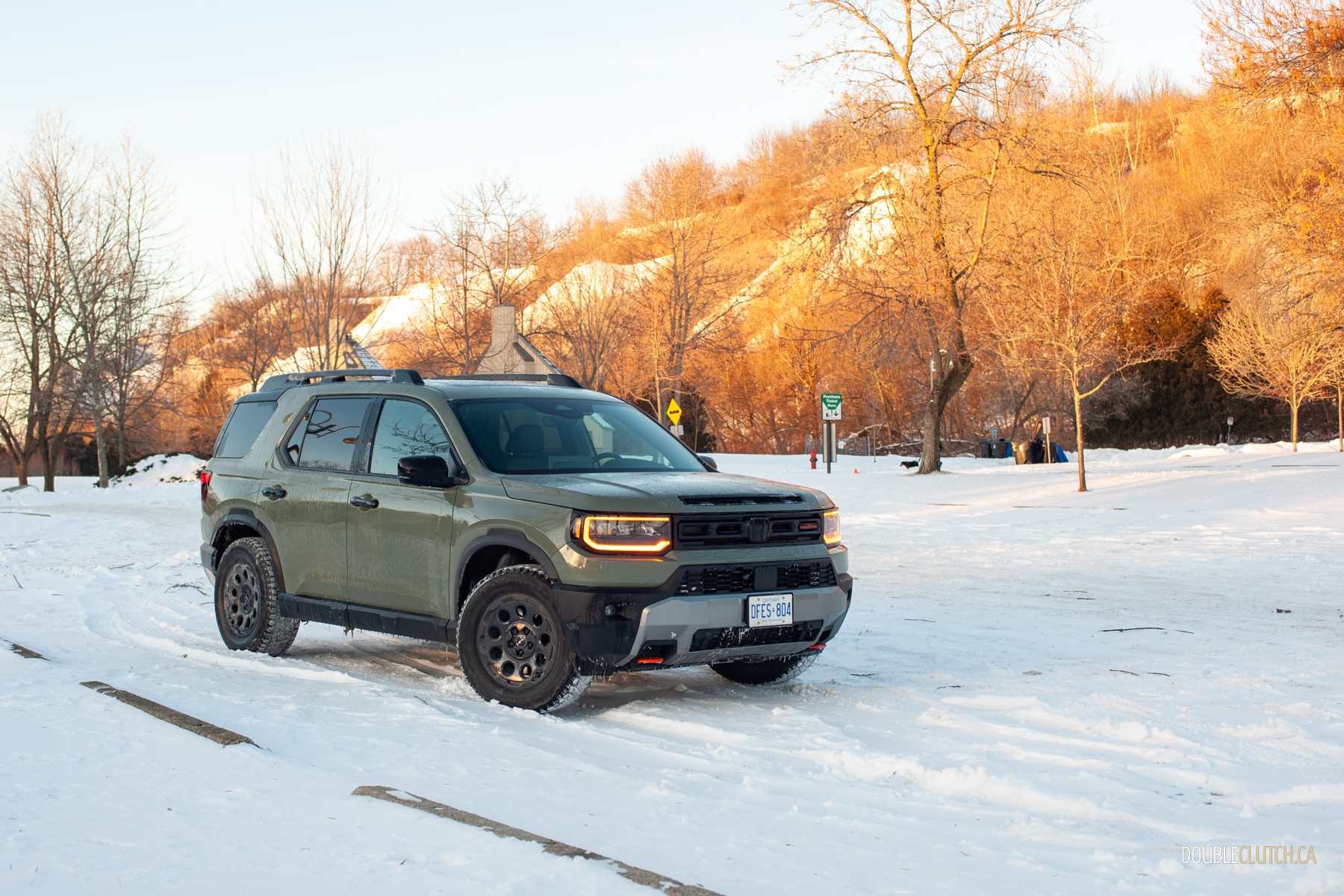
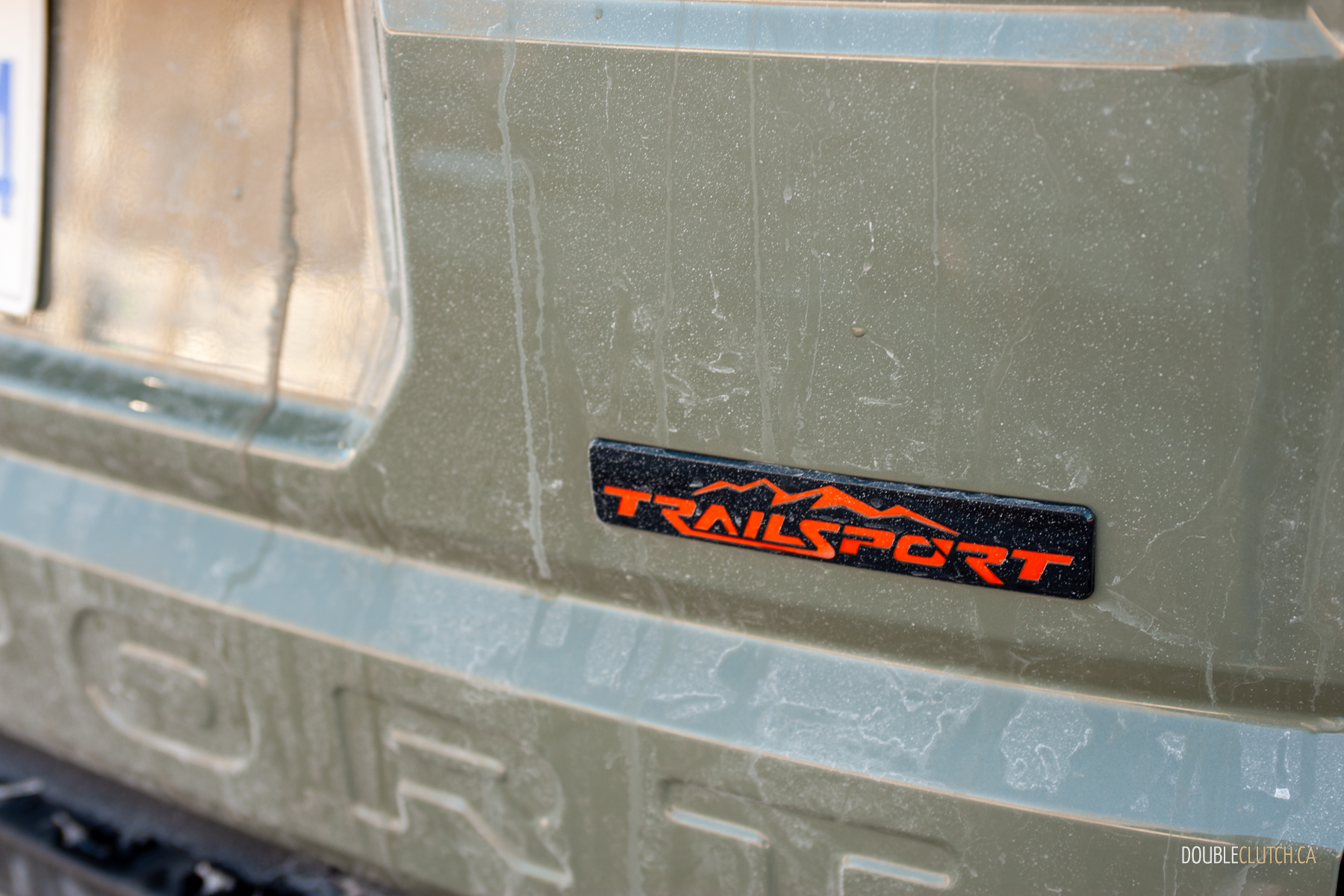
At first glance, the Passport is unmistakable within the Honda SUV lineup, further differentiating itself from the Pilot it’s based on. It’s generally hard to say that when the Mazda CX-70 and CX-90 are pretty much identical twins, but Honda pulled it off. The Blackout version appropriately wears some blacked-out exterior elements, including badges and trim pieces. The 18-inch HPD wheels are also finished in black, providing a visual anchor that gives it even more of a “rugged stealth” look. In Canada, all Passports come standard in Trailsport guise; the truly entry-level RTL trim — without key features such as the sunroof, skid plates, recovery hooks, and all-terrain tires — is currently only available in the United States.
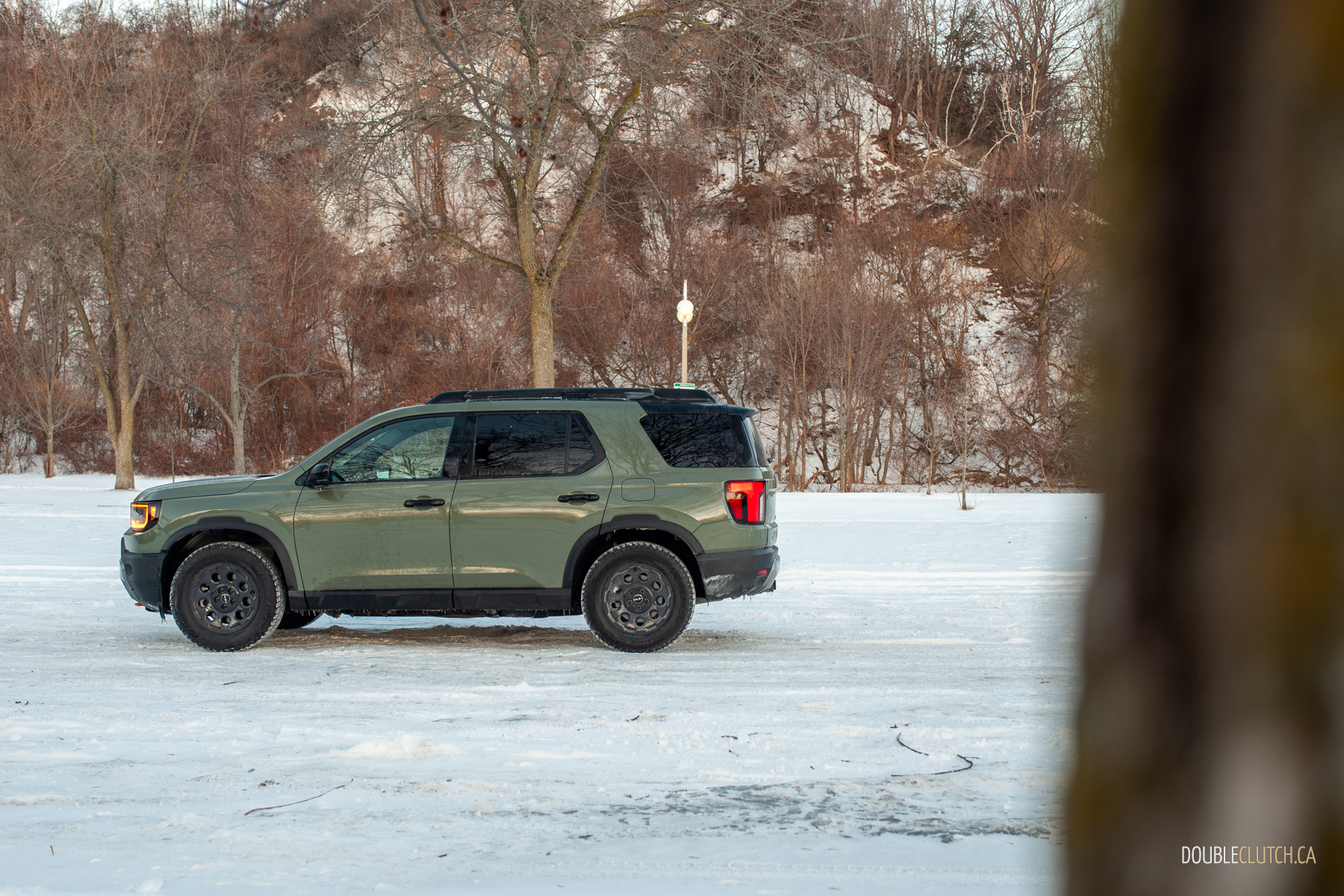
From the front fascia to the rear bumper, there’s a confidence in the design language that suggests a sense of adventure. This current-gen Passport was designed to be a Trailsport from the get-go; I’m being honest, it looks like a Ford Bronco Sport with a little sprinkle of the old Honda Element. The body lines follow Honda’s current design language, avoiding overly busy details while retaining a sense of practical ruggedness. In cottage country, the Passport’s look immediately communicates that it’s ready to tackle anything, especially with our tester’s Bridgestone Blizzak DM-V2s that handled whatever winter threw at it with relative ease and confidence. It’s a nice contrast to other midsize SUVs that either skew too soft or too utilitarian without an actual sense of style, surely grabbing the attention of anyone seeking added personality and off-road flair compared to most of the other crossover blobs out there.
What’s the Passport like inside?
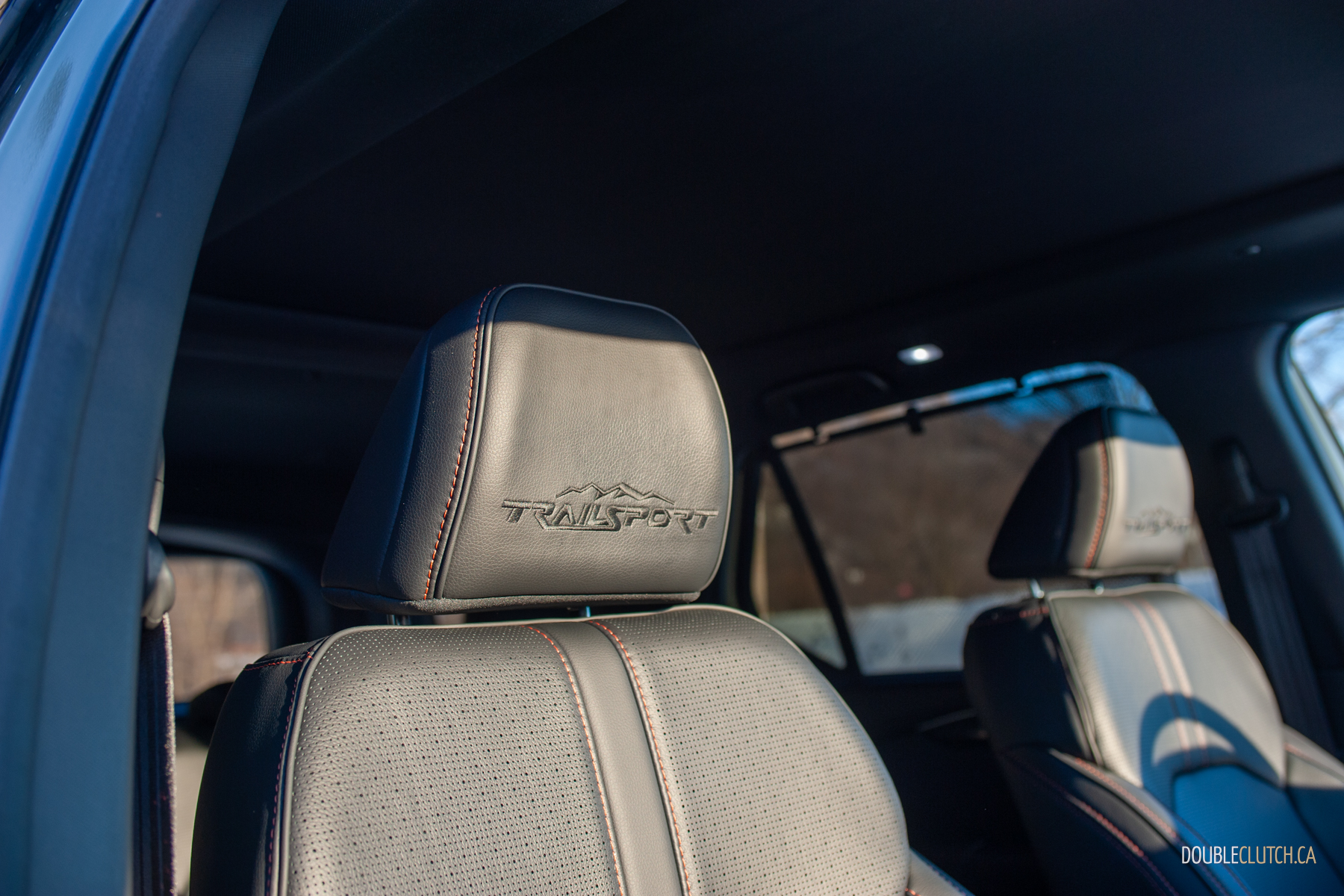
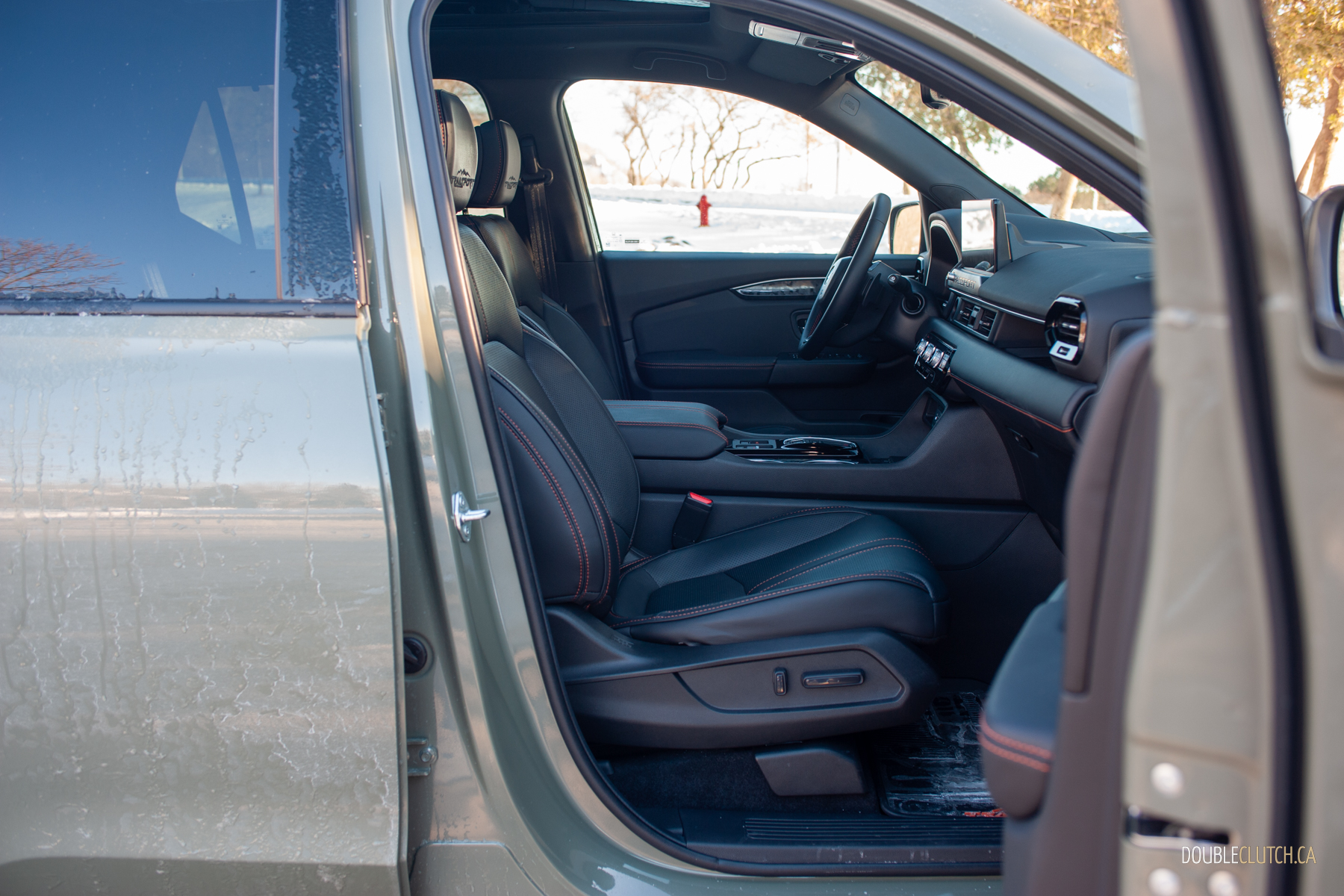
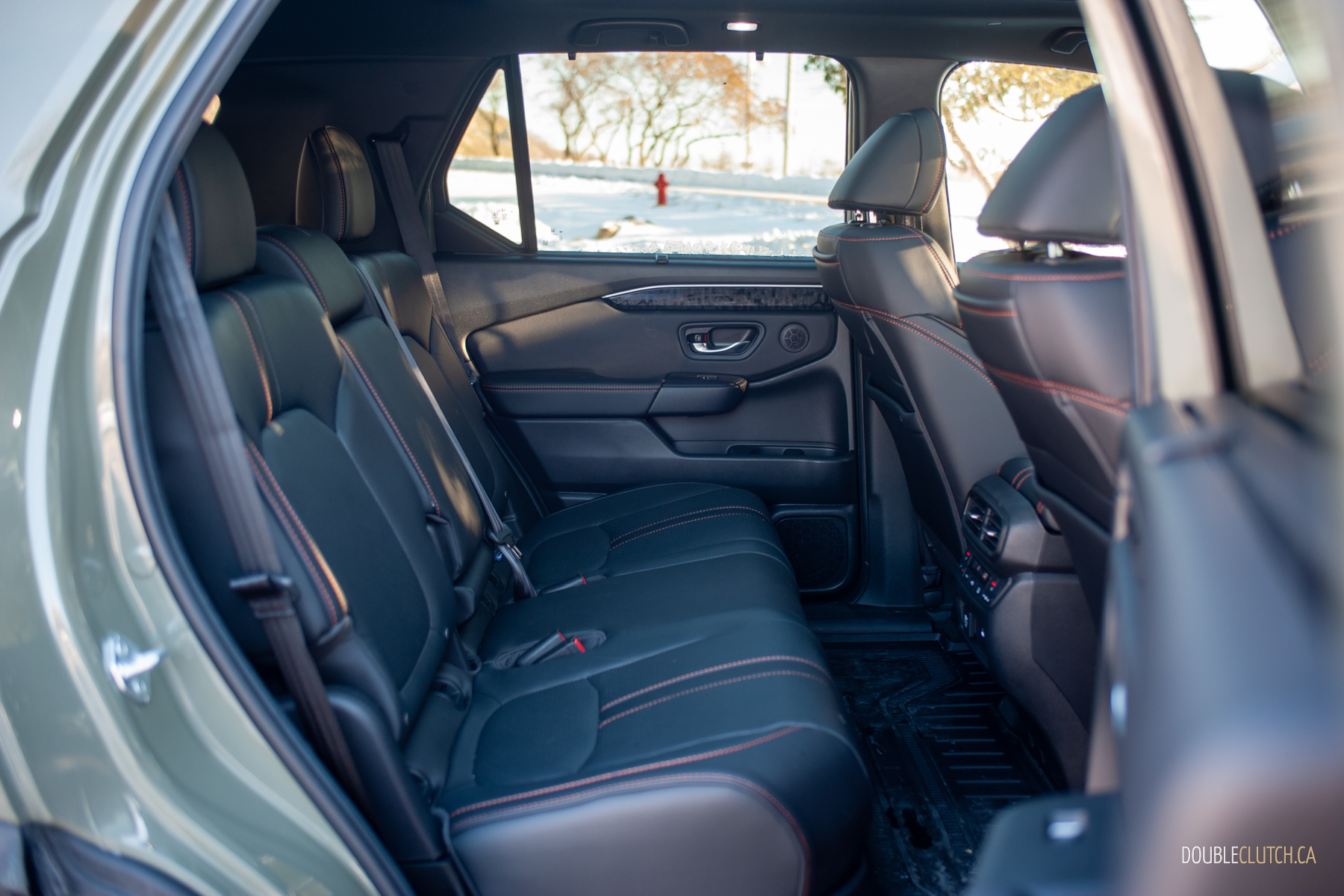
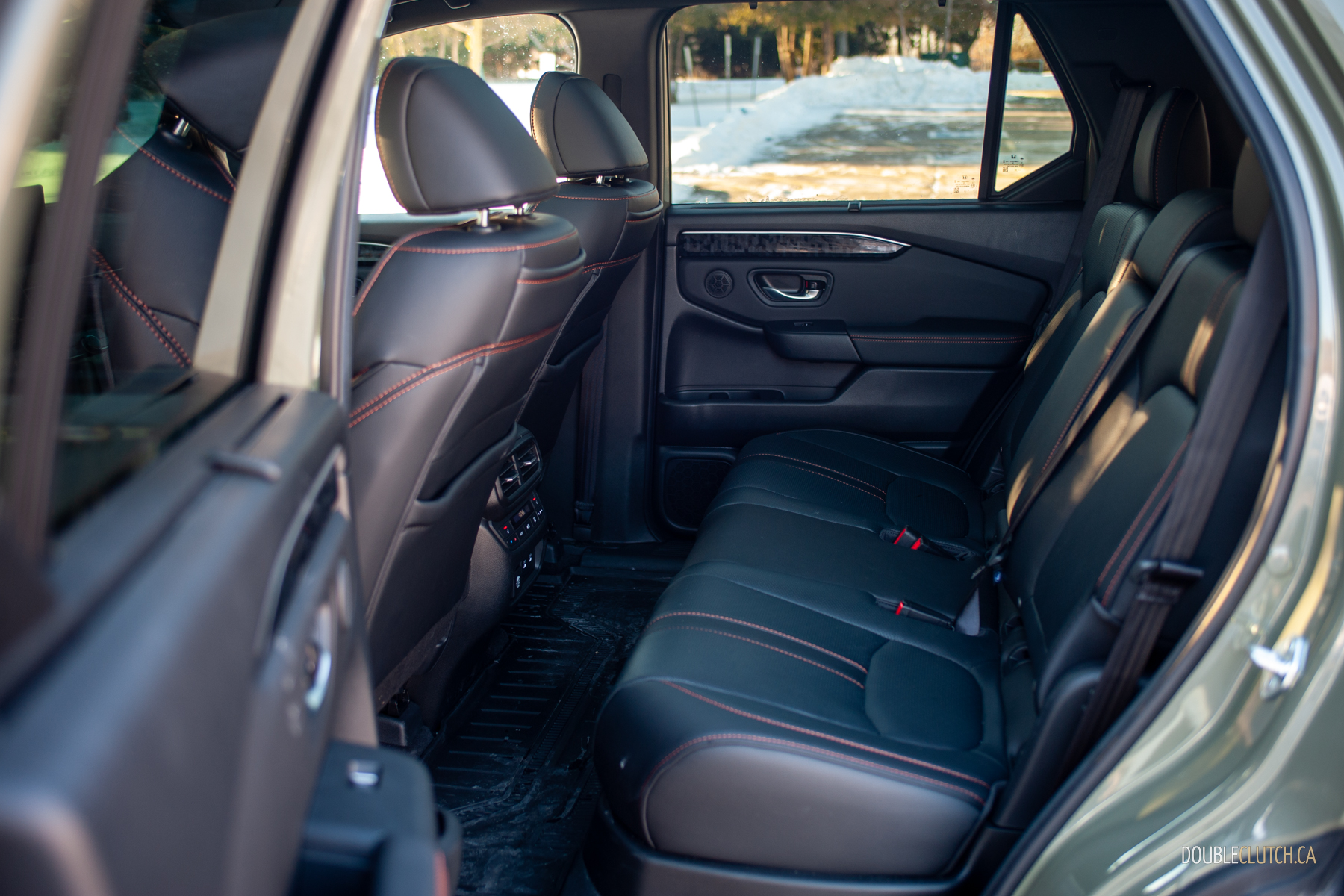
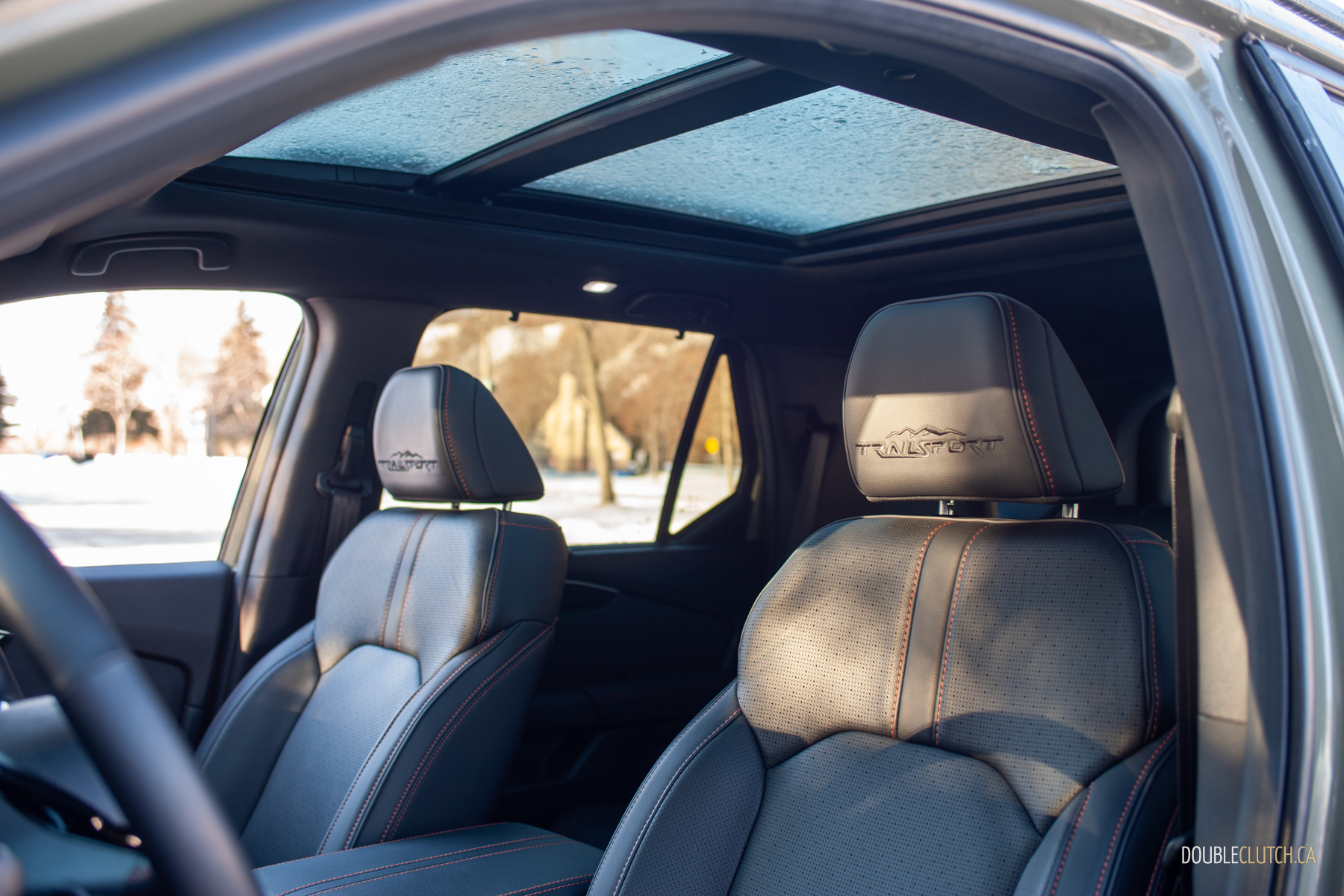
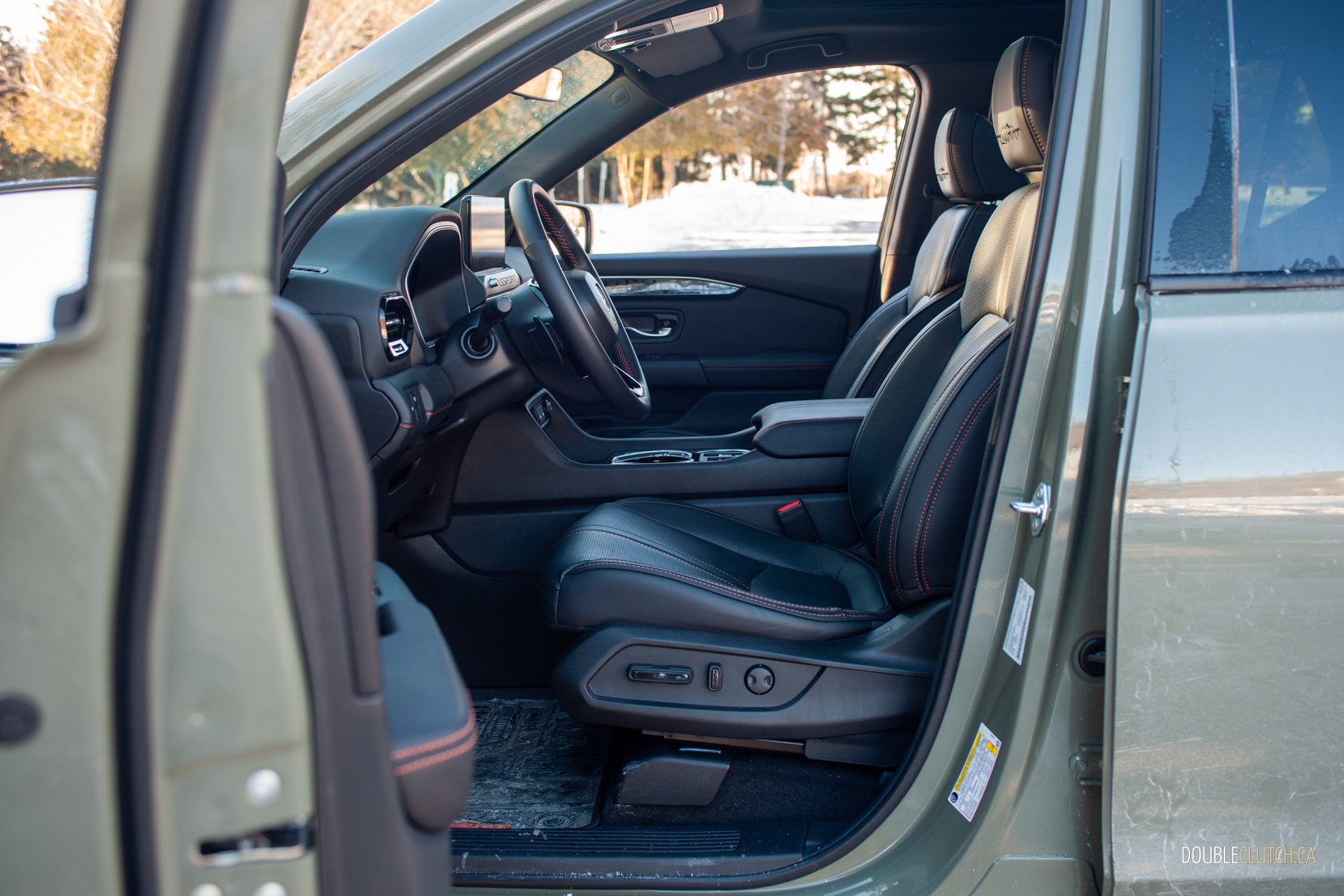
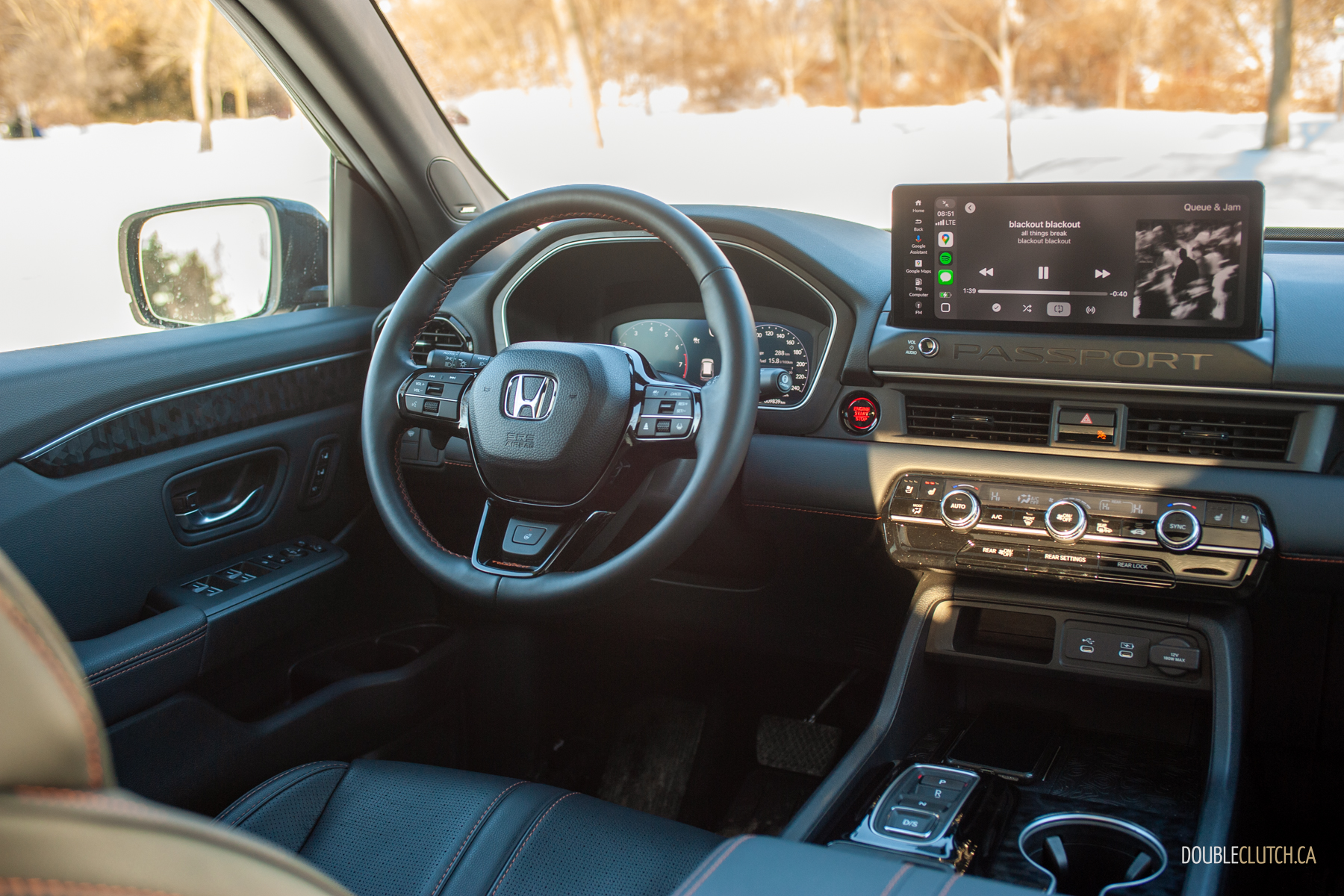
Inside, the Passport Blackout is finished in a predominantly dark interior palette complimented with a black cloth headliner, giving it a slightly more upscale feel along with the standard panoramic sunroof. While Honda’s materials aren’t as plush as some luxury rivals — especially with our tester’s Trailsport base — they’re robust and well-suited for active lifestyles. Surfaces that are likely to get wet, dirty, or scuffed up seem appropriately finished to withstand wear and tear. The orange contrast stitching injects some personality into the space without feeling out of place. Sound deadening is also excellent for this segment, minimizing unwanted road noise and crosswinds on those brutal days.
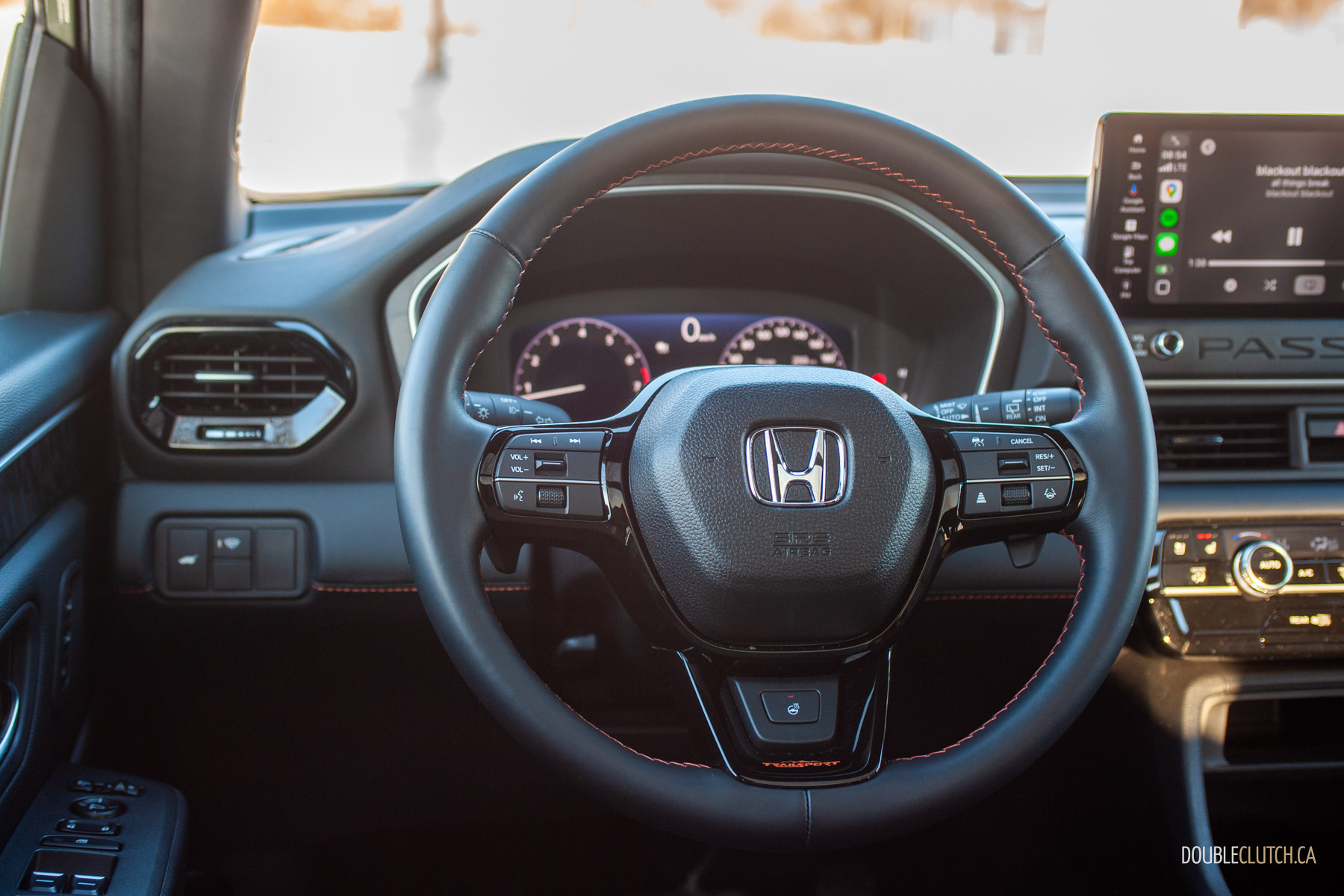
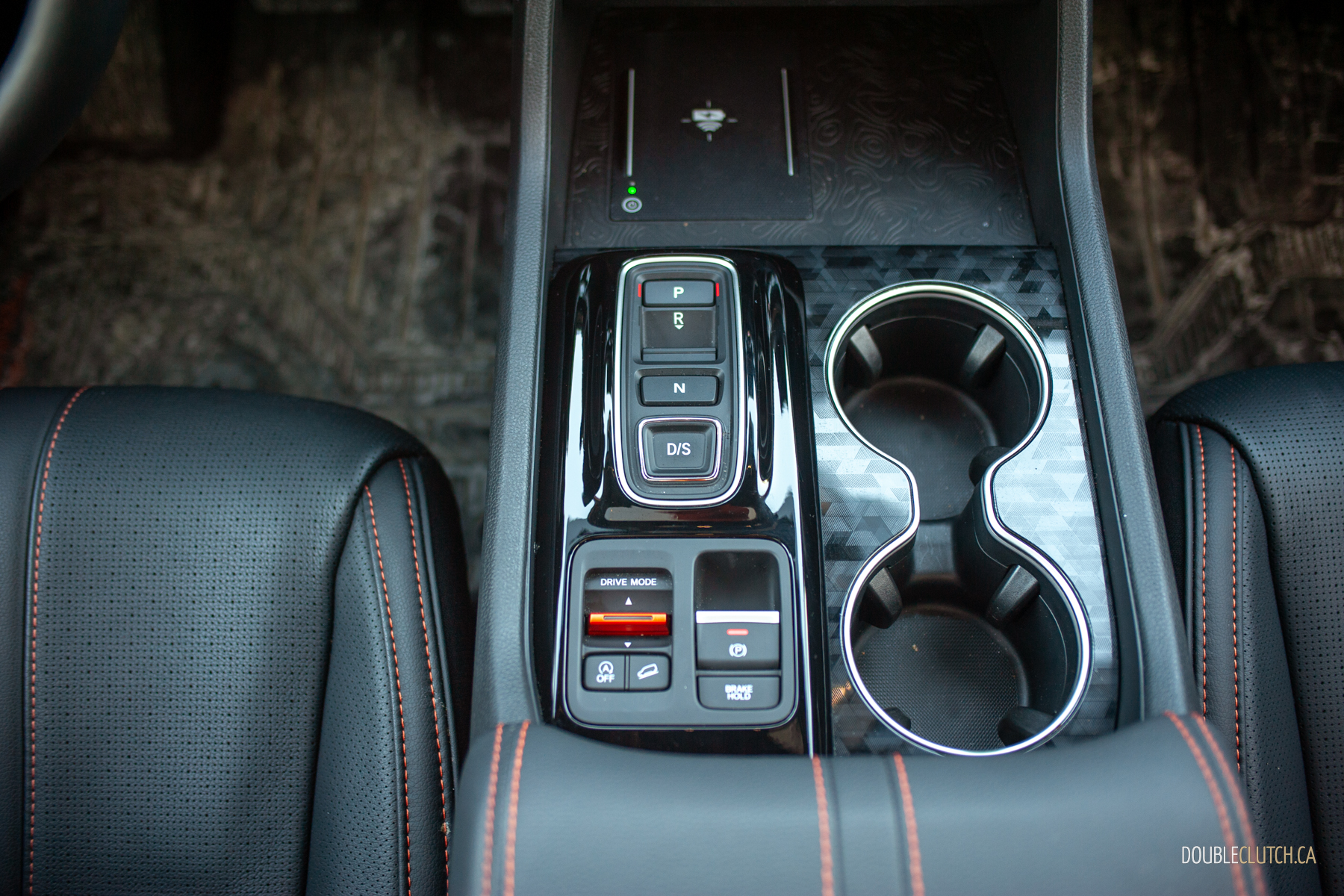
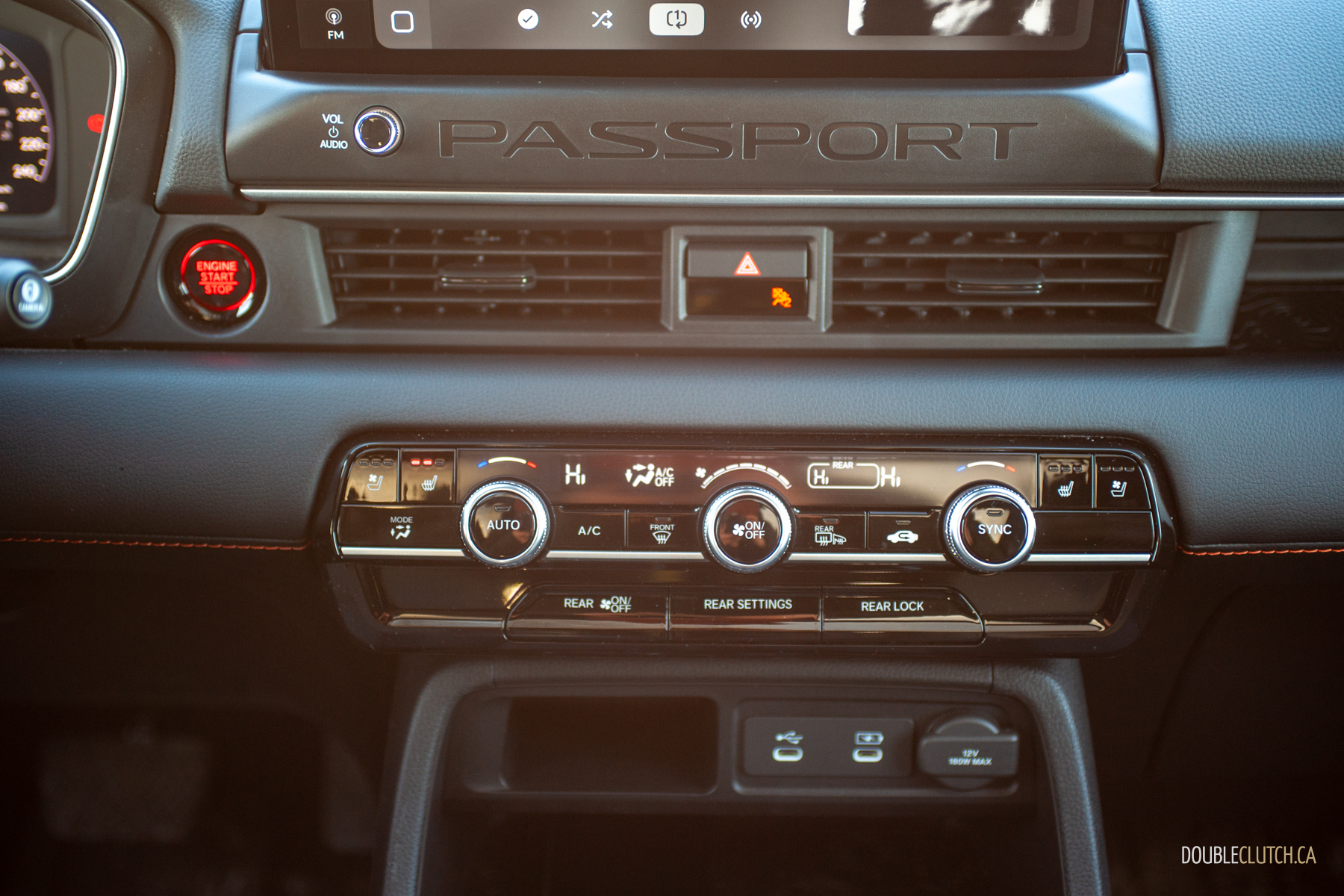
Honda’s long-standing tradition of prioritizing usable space and driver-centric ergonomics remains. Front occupants benefit from supportive seating flanked by door cards that have a two-tier storage system, perfect for people that tend to carry a lot of stuff with them. The wide centre console also offers ample space, with deep storage and a removable cubby. The infotainment layout and climate controls are straightforward, simple, and functional, accompanied by a plethora of physical buttons and switchgear designed for easy interaction without much hesitation.
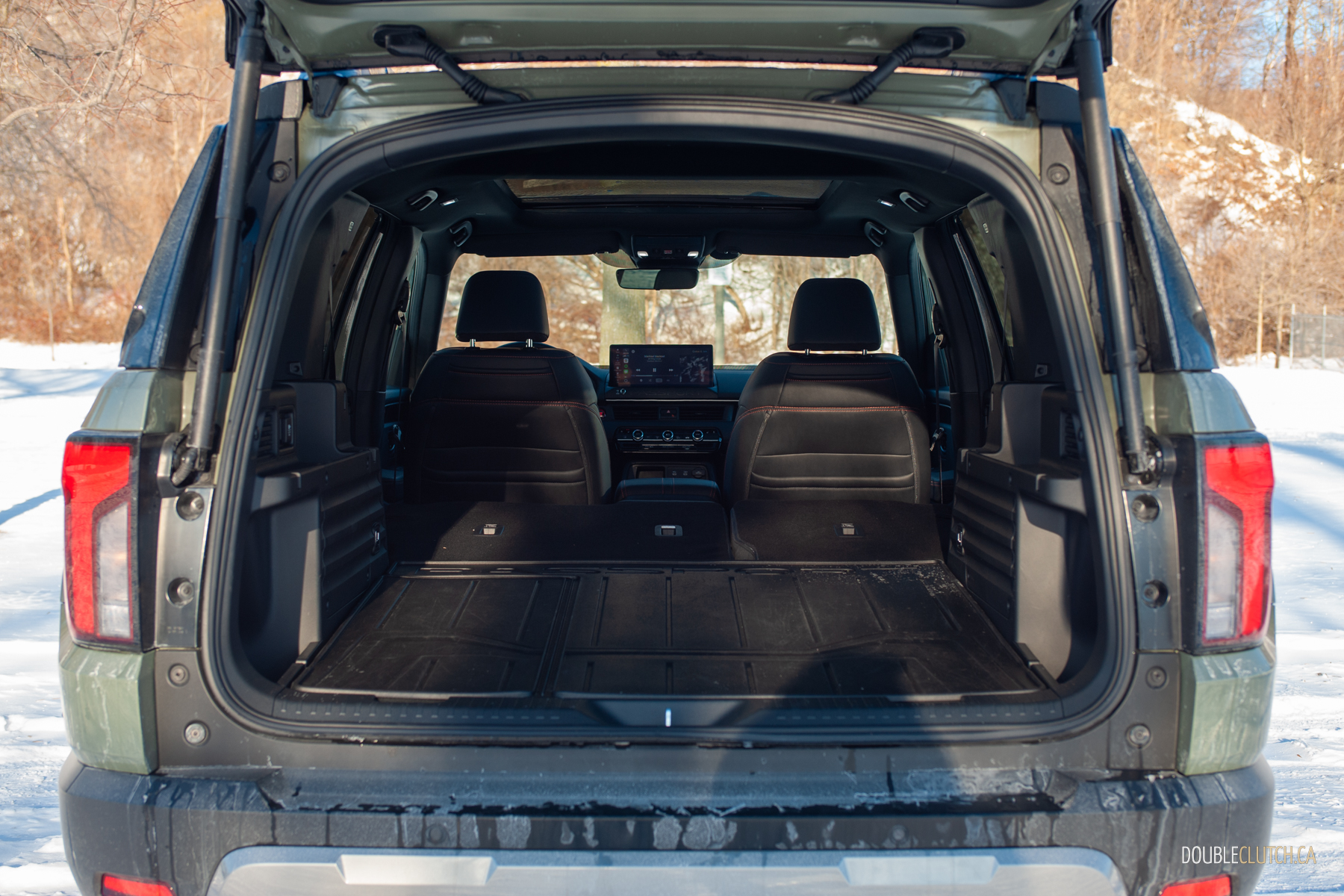
Seating for five is comfortable on long trips, with more than enough space in the back for tall adults. Considering the Passport is based on the Pilot, packing awkward and bulky gear is a cinch thanks to the squared-off cargo hold, flat load floor, wide rear opening, and overall generous cargo volume. Families and outdoorsy types alike have 1,246 litres at their disposal with the seats up; fold them and that grows to 2,356 L.
Screens and tech
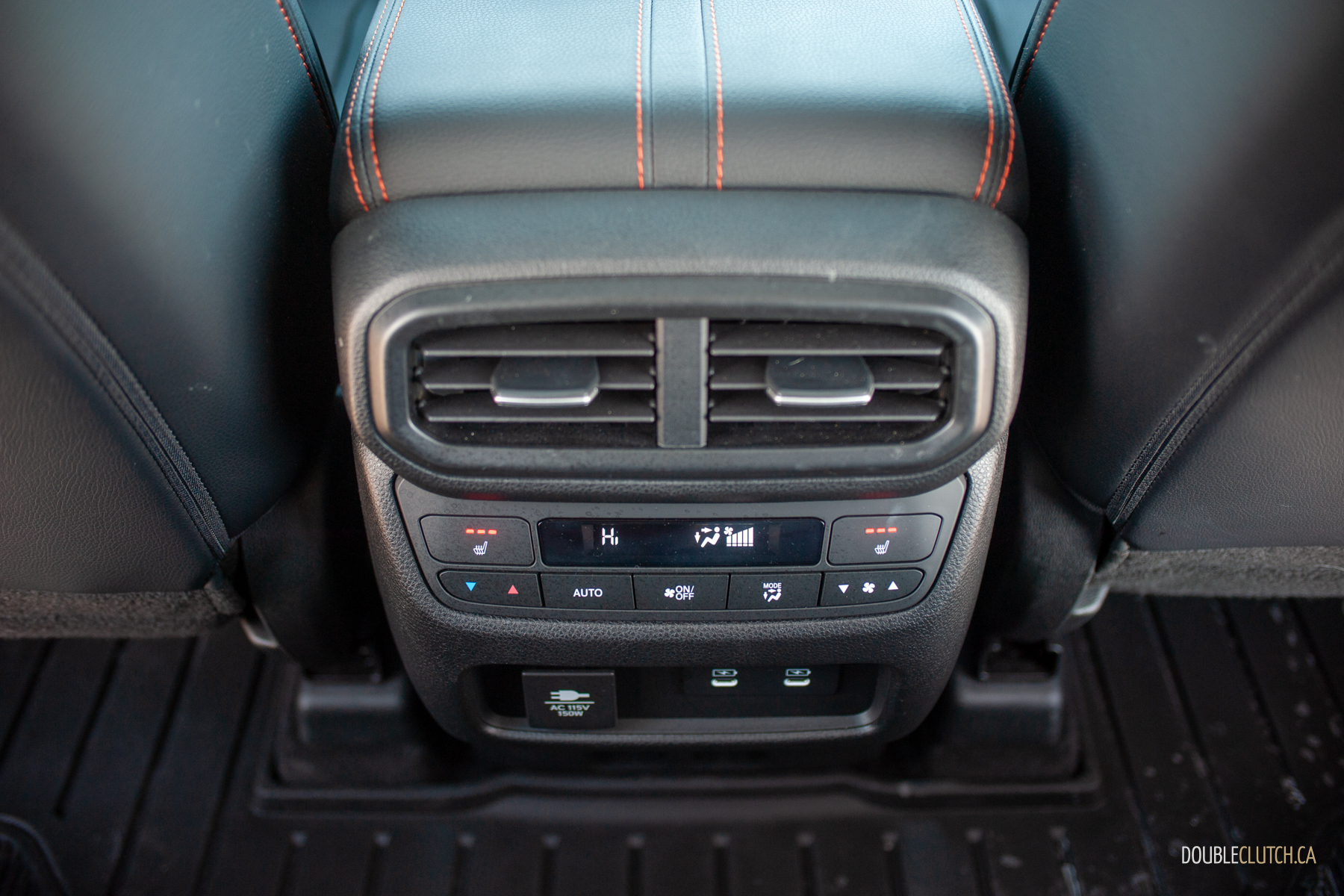
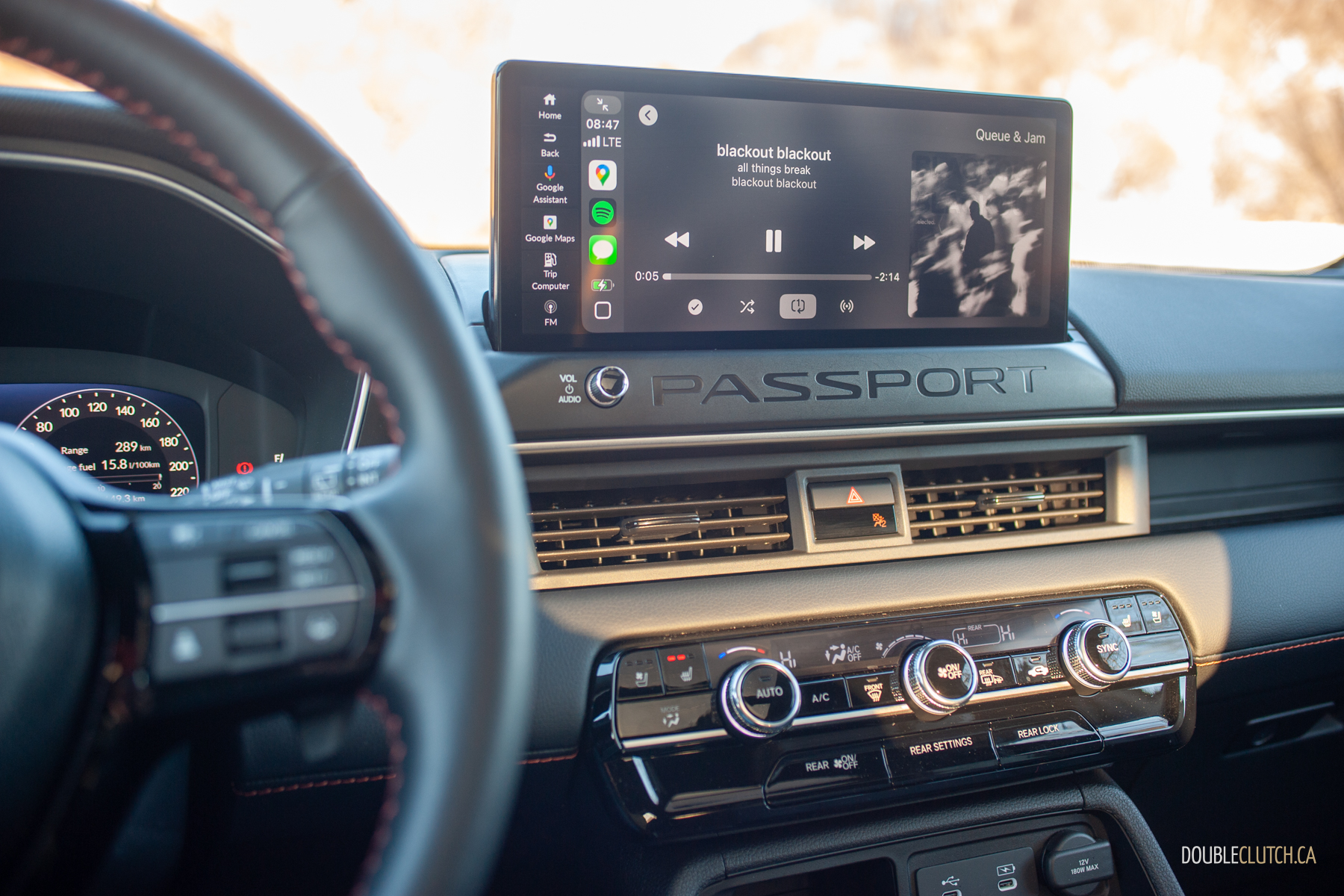
Tech conveniences such as the large 12.3-inch touchscreen infotainment is simple to use and all trims come with wireless Apple CarPlay and Android Auto. The wireless charging pad comes with a rubberized mat that, unlike certain other Honda models, prevents your phone from sliding around. The Passport also has lots of USB ports throughout, ensuring everyone can keep their phones and tablets charged on long road trips — which this Passport excels at.
Honda Sensing, the brand’s full suite of safety tech, comes standard on all Passports. It includes adaptive cruise control, lane-keep assist, forward collision mitigation, blind-spot monitoring, and cross-traffic alert, to name a few. Being the range-topping trim, the Touring blackout comes with Honda’s TrailWatch off-road camera system, as well as a 360-degree camera setup. They’re intended to help you confidently cut through narrow trails and cottage access roads off the beaten path, but yield a nice bonus of helping you also navigate awkward parking lots, especially when lines and curbs are difficult to see.
What’s under the Passport’s hood?
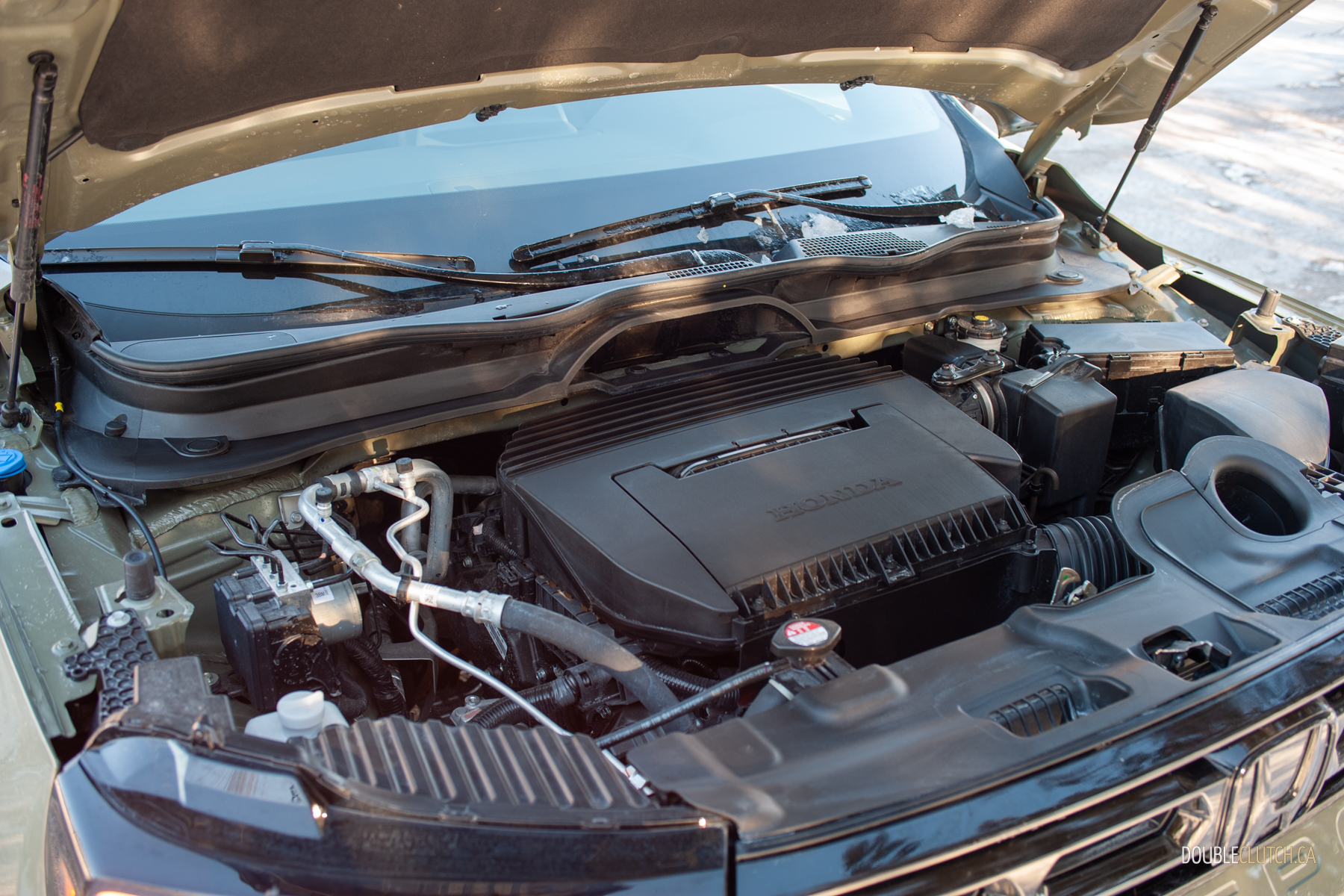
Under the hood, every single Passport (and Pilot) sticks with Honda’s tried-and-true 3.5-litre V6 engine we all know as the J35, paired to a 10-speed automatic transmission. This combination delivers a healthy balance of power and refinement appropriate for a midsize SUV, along with being able to tow up to 5,000 pounds. While raw acceleration numbers aren’t head-turning — most claim a zero-to-60 run in the mid seven-second range — this powerplant consistently supplies smooth throttle response and sufficient power for most situations. Honda’s J35 is still a peach after all these years.
The intelligent variable torque management all-wheel-drive system (i-VTM for short) is standard on all Passports. It optimizes and distributes power on-the-fly over slippery surfaces and uneven terrain. In the variable conditions Canadians aren’t strangers to — wet pavement, deep snow, gravel roads — having a smart all-wheel-drive system adds peace of mind and confidence. Ground clearance and ride height on Trailsport models is higher than the base, U.S.-only RTL trim, so you have some extra breathing room to tackle unpaved roads or trails without fear of scraping the underbody. Even if you do, the Trailsport comes standard with metal skid plates protecting the oil pan and gas tank.
Living with the Passport
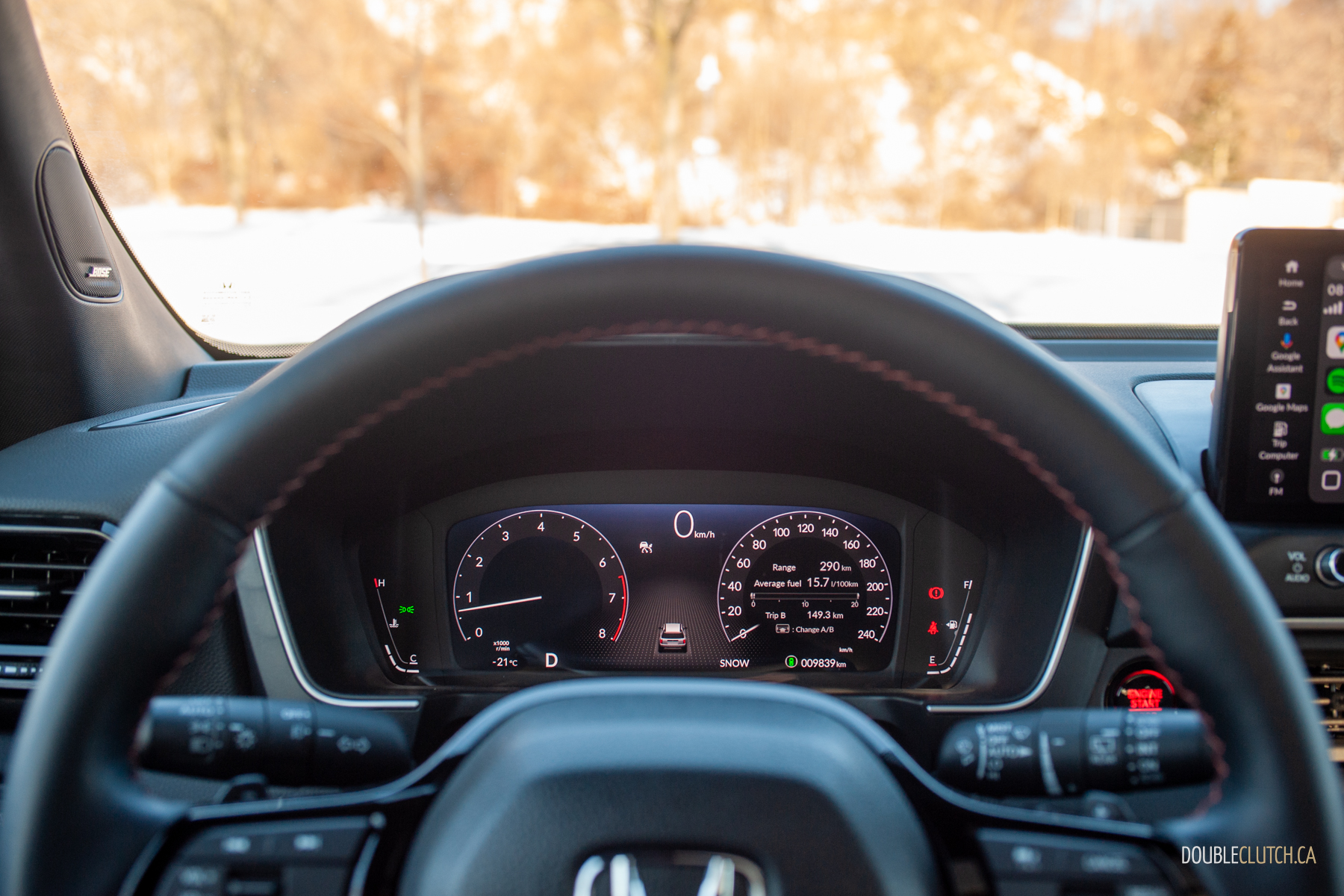
Where the TrailSport Blackout lacks in comparison compared to other two-row rivals is fuel economy. This is the trade-off to having a reliable and proven naturally aspirated V6 engine that has been around since the late 2000s. Much like the previous generation Toyota 4Runner, this V6 will outlive you so long as you can tolerate the inherent fuel economy trade-off. Combined fuel during our stint averaged an extremely thirsty 16.2 L/100 km combined, with mostly city driving and warming up the car during really cold days being the main contributors.
One of the Trailsport’s defining characteristics is its readiness for off-pavement excursions. With features such as a lifted suspension and skid protection, Honda has engineered the Passport to handle more than just pothole decimation. It isn’t a hardcore rock-crawler or a dedicated body-on-frame SUV like the 4Runner, but the Passport’s underpinnings and AWD system offer a level of confidence and genuine capability many competitors lack in their base setups.
Should you buy one?
The Passport Trailsport starts at $56,930, with our tester coming in at around $61,740 as-tested before any additional fees and taxes. It’s not the value pick of the segment, but like a Toyota, you’re paying for the high resale value, proven reliability, and long-term satisfaction.
Rugged, off-road-ready looks are very much in these days, but the Passport is more than just good looks. It’s also a well-engineered SUV tailored to families who want the capability of an off-road-ready vehicle without sacrificing everyday comfort or modern tech. It’s rugged where it counts, stylish where it’s seen, and practical where it matters most. While it isn’t a hardcore off-road specialist, nor is it a luxury SUV, the 2026 Honda Passport Trailsport Blackout strikes a compelling balance that will appeal to a broad audience. In a market that values flexibility and strength, Honda has produced a variant that fits perfectly into the Canadian lifestyle, whether that’s traversing snowy mountain passes, exploring backroads, or pulling up to daycare with a touch of rugged style.