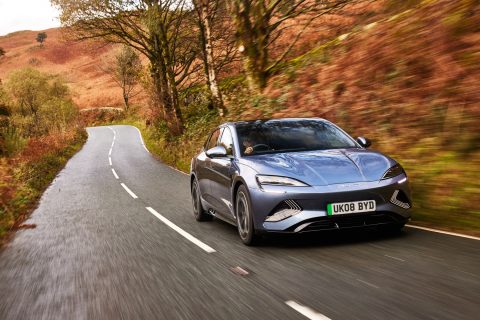
Unless you have been living under a blissful rock of ignorant tranquility, you have probably heard that the Canadian Government has decided to allow Chinese manufacturers to start selling vehicles in this country. This new policy undoes a protectionist tariff instituted alongside the Biden Administration in the US, which added 100% import tax to Chinese-made vehicles in order to protect local industry (read: three very powerful American corporate entities). That financial wall that effectively cut us off from Chinese EVs made behind the Great Wall is now gone.
There’s been much hullabaloo made about this, but I don’t think it’s going to change things as much as some seem to think it will. I hear a lot about this mythical $14,000 EV that’s gonna flood the market with transportation that is supposed to be superior to what we already have despite being dollar-store cheap; a frightening magical vehicle that’s going to upend the car business as we know it, just like Tesla was going to do twenty years ago.
I do not think this reality is going to come to pass. I think this will have far less of an effect than a lot of people seem to think, for better or worse. Having said that, I still think it’s a good idea. More choice is more good for more people.
“…of course their vehicles could be cheap; they could probably sell an EV here for less than we could, even if we developed and built an EV with a volunteer staff, because they (China) control the (lithium) supply and we’d have to buy from them anyway.”
This is a little funny, because in the few weeks leading up to this announcement, I’ve been grilled by a few people on my opinion about Chinese EVs. I was apprehensive about them, and I still don’t love the idea, but I’m far less opposed to it than I was as recently as a few weeks ago.
Some of this assuaging comes from a safeguard built into the government’s policy: it caps vehicle imports from China at 49,000 per year. As of this writing, it looks like ~1.9 million new cars were sold here last year, and a little over 100,000 of them were battery-electric vehicles (concrete data isn’t available as of this writing; these are estimates), so the potential harm of Chinese imports is limited, right out of the gate.
Another source of soothing came in the form of me sitting down and actually doing some homework, done in the interest of not being an arrogant blowhard confidently spouting garbage that feels correct, like so many AI hallucinations and fear-mongering pundits.
I was very concerned that China had one of the largest stores of lithium in the world, and as such, controlled the raw materials necessary to build EVs. Thinking this, of course their vehicles could be cheap; they could probably sell an EV here for less than we could, even if we developed and built an EV with a volunteer staff, because they control the supply and we’d have to buy from them anyway.
This is mostly inaccurate. More than half of the lithium in the world comes from just the four countries of Chile, Bolivia, Argentina, and Australia. China does indeed have a significant supply on their own, but what’s more important is that they are far and away the global leader in the capacity to refine lithium, and naturally, in lithium-ion battery production.
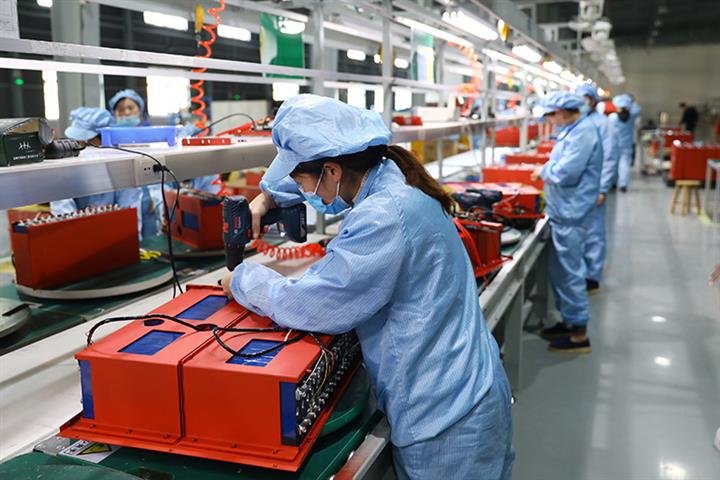
Lithium ion batteries depend on cobalt to work, and the leading source of cobalt is the Democratic Republic of Congo. Again, China is far and away the leader of cobalt refinement, which is hardly any surprise given that their government has a long history of massive investments in Africa, and specifically, the Democratic Republic of Congo.
Almost everyone does buy battery cells that are made in China, but they don’t have to. Either way, there are some reasonable grounds for trepidation, given that they do control the current majority of battery cell production and raw material refinement, but they aren’t necessarily the only game in town.
I was mostly worried about government subsidized cars with government controlled raw materials flooding markets to squeeze out local competition – and we all know this has happened before, in many industries. Who’s to say the immense cash coffers of the Chinese government, propped up by the most vast (and increasingly skilled) workforce in the world, couldn’t finance a generation of loss-leader vehicles to seize control of a massive industry, one that’s more than a little lost and struggling at the moment?
Mercedes accused Lexus of doing it with the first LS 400, and I accused China of threatening to do it on a global scale. Having looked into it, this concern is still semi-valid, but less valid than I thought, and as I already stated, pre-emptively kneecapped by import restrictions. Let’s not forget that some of those 49,000 import slots will inevitably end up being filled by legacy car companies, like Ford (Lincoln builds the Nautilus in Hangzhou), General Motors (Buick builds the Envision in Jinqiao), and Volvo (owned by Geely), who all build cars in China. Tesla also manufactures a huge amount of Model 3s in China… but I doubt that’ll be much of a factor for us.
More importantly, beyond a decent set of safeguards and China in less of a position of power than I feared, is that the very nature of our market undermines the viability of any cheap vehicles these companies might bring to market here.
“I was mostly worried about government subsidized cars with government controlled raw materials flooding markets to squeeze out local competition.”
For one, we have a lot of safety rules, rules that expand more every year. Along with mandatory seatbelts, seatbelt pre-tensioners, air bags, traction control, stability control, anti-lock brakes, backup cameras, the federal government is in the process of developing a new set of rules to make advanced driver assistance systems like lane guidance, automatic emergency braking, adaptive cruise control, and more, mandatory for all new vehicles.
This stuff is expensive, and getting it recognized and certified by Transport Canada is brutal. You may recall that a lot of very cool vehicles from Europe and Japan were never even considered for export here due to the expense of making them saleable – and that’s usually the case for North America as a whole, not just the relatively diminutive buying power that Canada represents.
And then there is the issue of our chronic proclivity for overbuying. In the last decade, almost all small, cheap new cars have been discontinued. The Nissan Micra was a charming little car that bypassed America altogether, and still couldn’t survive despite being the only new car you could buy for less than ten grand when it launched. It was handily a better car than the next cheapest car, the Mitsubishi Mirage.
“…the very nature of our market undermines the viability of any cheap vehicles these companies might bring to market here.”
Both of those were good little cars that seemed to offer what people say they want: a basic, no-frills new car that’s affordable. Both were discontinued due to slow sales. And this isn’t like Ford pre-emptively canning almost every car they make despite having strong sales on the basis of insufficient profit margins, these back-to-basics little cars were and are nowhere. How often do you see them? Do you see them more or less than full-size trucks?
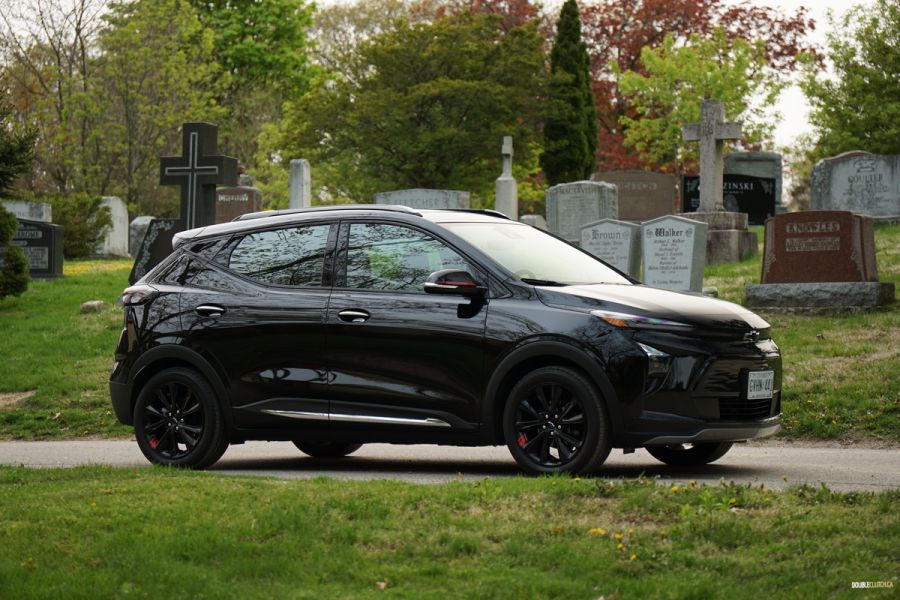
Mazda canned the 2, Toyota axed the Yaris, and Honda finished the Fit. The first EV to be discontinued in our market was the cheapest one, the Chevy Bolt (only to be brought back again, but that’s a different story). You can bitch all you want about cars not being affordable, but statically speaking, we’d rather stretch our budget on a faux-tough fake-truck crossover utility vehicle, or go up to our eyeballs in perpetually upside-down car loans on a gigantic pickup, rather than actually buy a simple little car from a real, established company that we say we want. Last year the Toyota RAV4 outsold the Corolla three-to-one. The Ford F-Series outsold the smaller Ranger and Maverick combined by ten-to-one.
Why would anyone believe this is going to bring about anything different?
We’ve made clear we aren’t willing to pay for inexpensive vehicles, because we all decided that if we’re gonna buy a new car, we’re gonna go all-in and try to snag something that comfortably covers every need and want we might have. Most pickups never tow anything in their lives, but they are the best-selling vehicles, and the biggest ones sell the best. Most EVs can clear more than 400 kilometers on a charge, and most people will rarely cover half of that in a day, but that possibility is why most people are afraid of trusting an EV on their statistical median commute.
“Please don’t think I am delusional when I say you should be wary of cheap new cars.”
So by the time BYD or Jaecoo or whichever Chinese car company brings a(n inevitably electric) vehicle here that has the safety net the government says we need, and the size, payload, all-wheel-drive, tech frills, and range we think we need, plus the cold weather hardiness we actually need, suddenly this cheap-as-chips magical car won’t be so cheap, and the magic will dissipate.
This brings me around to my last point: we should not be so excited about dirt-cheap cars. I am not a wealthy man. I have no retirement savings. I don’t own property and don’t think I ever will. My parents haven’t spent, gifted, or even loaned me more than a grand since I bought my first car (an old Ford LTD; thanks Dad) in 2008. I like to think I am still connected to the affordability concerns of the general populace. Please don’t think I am delusional when I say you should be wary of cheap new cars.
There is no free lunch; cheap is cheap for a reason. Dollar stores that promise affordability have been well-documented as bringing the opposite, often selling lesser quantities of a known product for a higher unit price, or selling unknown junk that’s a useless waste of money and resource. How many times have you bought something cheap on Amazon, only to find it barely worked, if at all, and then had to go buy the real/more costly version of the same thing anyway?
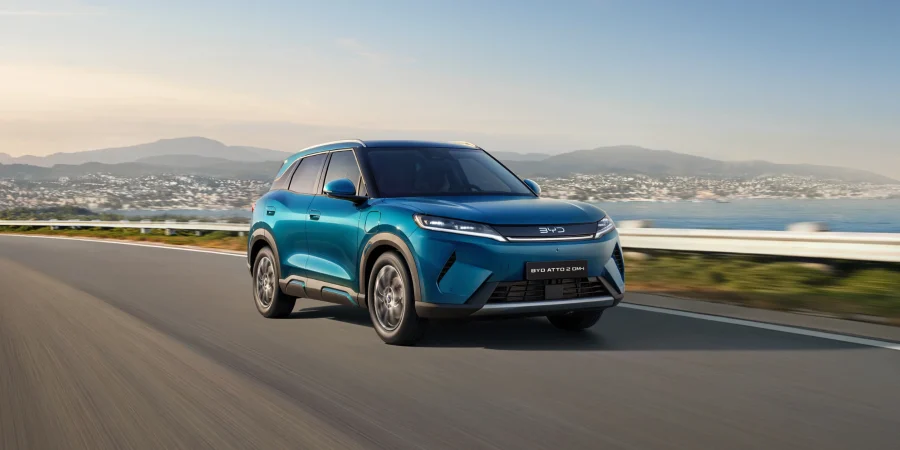
This should not happen to something as significant as our vehicles. It’s horrific enough that our landfills are being flooded with brand new products that were garbage before you threw them out, it would be a catastrophe if cars went this way more than they already are. EVs are heavy because batteries are heavy. They’re packed full of steel, rubber, plastic, wiring, glass, and an additional dollop of rare earth minerals, that all have to be mined from the Earth, shipped, refined, shipped again, assembled, and hopefully recycled at end-of-life.
All this stuff adds up and has to go somewhere, and even on the miraculous chance that it’s all ethically sourced and recycled properly, the energy required to do it all has to come from somewhere, and 100% efficiency is mechanically impossible, even if we care enough to strive for half of that. Battery recycling has gotten to be 95% effective, but it takes a lot of energy, and that energy comes from somewhere, and that 5% difference has to go somewhere.
“…suddenly this cheap-as-chips magical car won’t be so cheap, and the magic will dissipate.”
Worse still is the repairability of cheap stuff. A quality piece of hardware can be repaired, was designed with serviceability in mind, and has available replacement parts. This extra forethought all costs money, and you will not get it in a magical $14,000 EV, if it comes to fruition and survives our misguided tastes. I have first-hand experience in the repair side of the car business. Repairability is getting worse, and strides in efficiency and/or cost-cutting almost invariably come at the expense of serviceability. Brittle plastic parts, one-use fasteners, and disposable control modules are already a plague on the industry, and the planet.
Remember when phones used to have removable batteries? It wasn’t even that long ago. Now billions of phones and batteries end up wasted because one or the other was deemed unusable. All to eke out a little more power, to satisfy our need for “numbers go up,” and save a few bucks in design and assembly. If you are, hypothetically buying a $14,000 EV that somehow has enough features and range to please you, where do you think those savings are coming from?
You’re not getting a free lunch. It’s being paid for somehow.
I am more opposed to the idea of cheap Chinese EVs than the reality we’re probably going to see. I thought these companies were subsidized by the Chinese government, and that may have been true at one point, but they’re making their own money – and frankly it’d be hypocritical to hold that against them. I thought the Chinese government had a scary degree of control over raw materials, and they do have a lot of control, but not the absolute control I worried about.
We were just as terrified of Japanese vehicles fifty years ago, and now those Japanese companies are some of the best employers in the country.
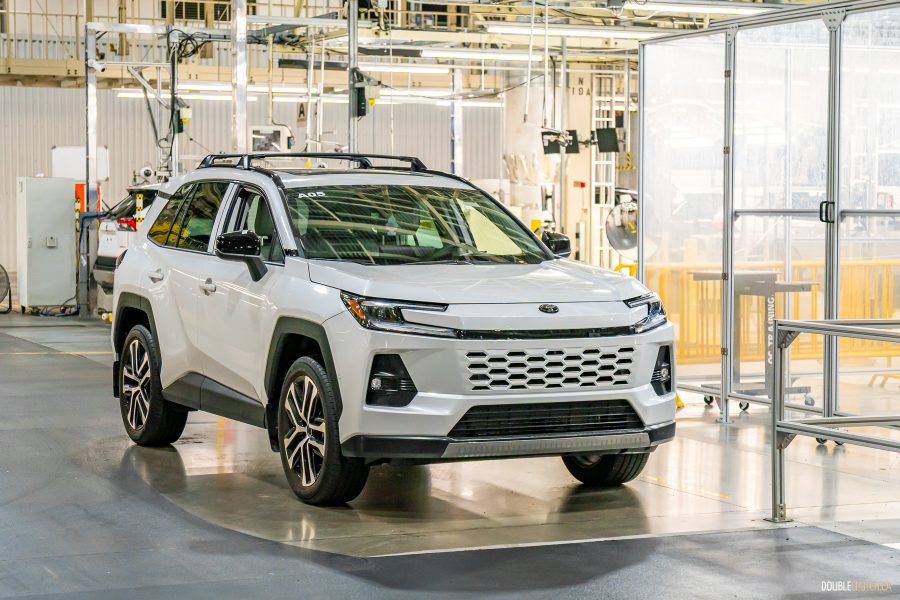
I think our expensive tastes in cars are going to neuter the cost advantage of Chinese EVs, and this goes especially so if our government follows through on its promise to favour companies who build here. I do not love capitalism as we know it in 2026, but I don’t know a better way, either. I say let these new enterprises try, and let people choose – but be careful what you wish for.
Dollaramification has no business near our cars, and you shouldn’t want it. You should want more honest competition and innovation, and if China can bring that, I’m all for it. If 49,000 vehicles can change how we look at electric vehicles as a viable alternative (I can’t stress enough: alternative, not replacement) and finally help create a decent charging infrastructure, then that’s great. Let the cards fall as they may. All I’m saying is that if you’re worried about Chinese EVs stealing local industry, don’t be, and if you’re excited about it, maybe ask yourself why. Personally, I think we’re far too wrapped up in the way things are to be open to be way things could be.

Editor-in-Chief
Nathan is an eccentric car enthusiast who likes driver-focused cars and thoughtful design. He can't stand listening to people reminisce about the "good ole days" of cars because he started doing it before it was cool, and is also definitely not a hipster doofus.