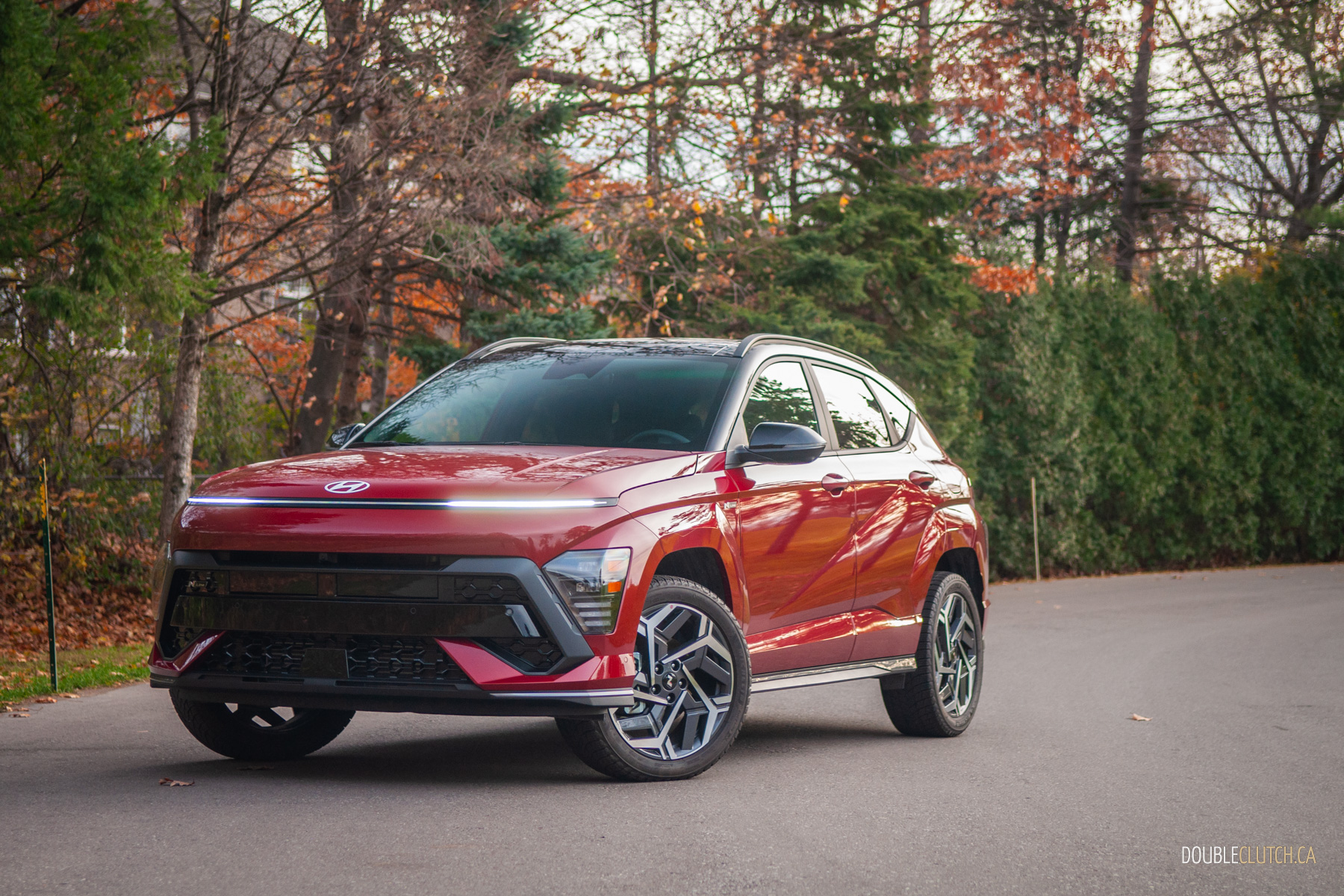
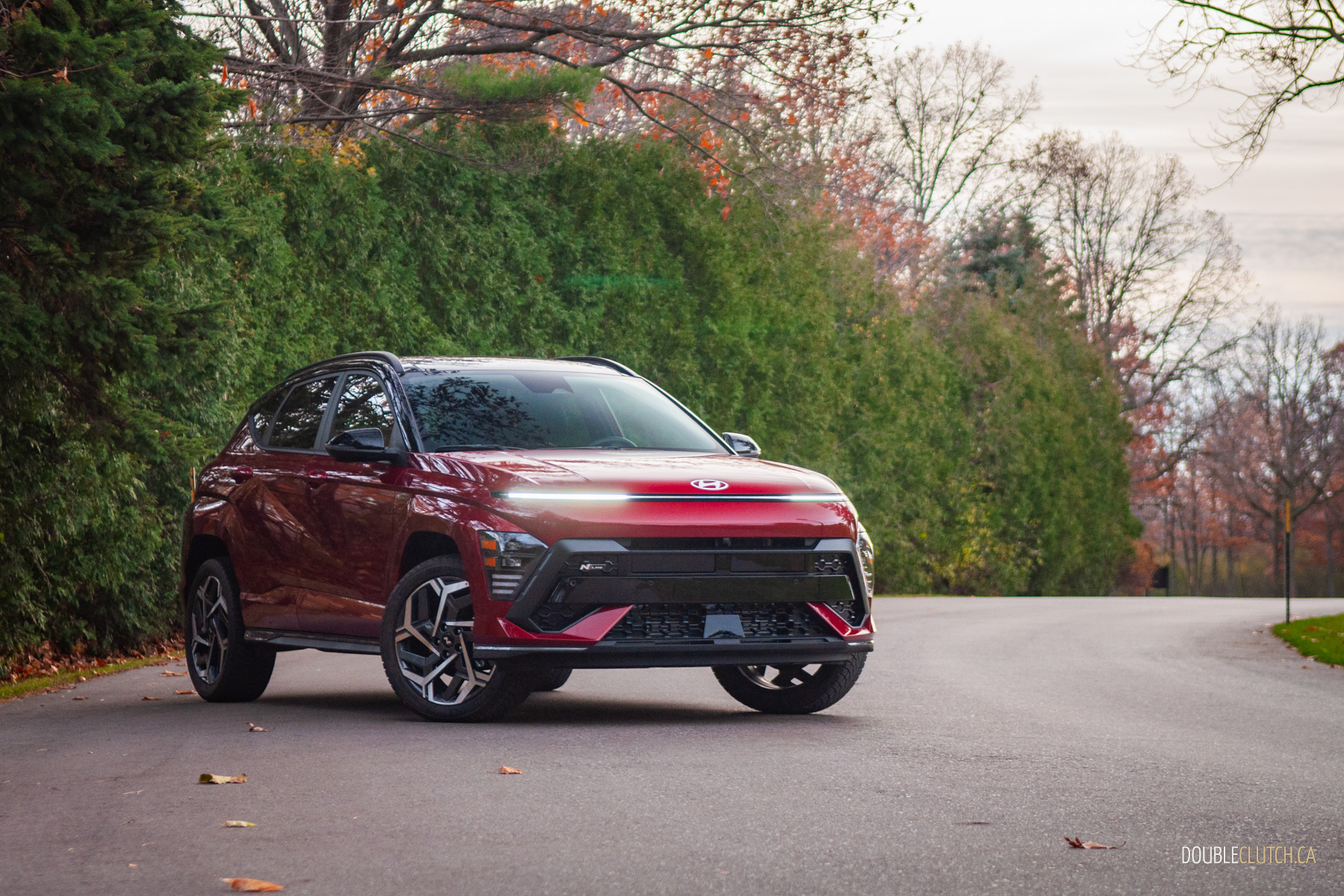
When you really think about it, there’s nothing really “subcompact” about subcompact crossovers like this 2026 Hyundai Kona N-Line. It’s almost a misnomer; when we think subcompact, we think of Hyundai’s dearly departed Accent rocking body cladding and a slight lift, not a baby Tucson that’s still plenty practical, easy to live with, and fun-enough to drive. First of all, how dare they. Second of all, it’s easy to see why these things are everywhere.
What’s new for 2026?
Not much. Hyundai launched the first-generation Kona in 2018, just as the “subcompact crossover” race to the bottom craze took off. It was very much the right cute-ute at the right time, setting the stage with diverse powertrain options, a boatload of bells and whistles, and styling and colour options you either loved or hated.
This second-gen follow-up debuted in 2024, refining the Kona formula while also addressing most of its predecessor’s shortcomings. It looks a bit more grown-up, it’s roomier, more comfortable, and feels better-built than before, and still gets a boatload of bells and whistles for the money. Evidently, Hyundai didn’t feel the need to mess with this at all — Canadian-spec Konas are completely unchanged for 2026. Interestingly, US-spec models see a massive trim level shuffle; the N-Line and its aggressive styling is no more south of the border, and the 1.6L turbo-four (with either front- or all-wheel-drive) is the only available powertrain.
Powertrain and driving impressions
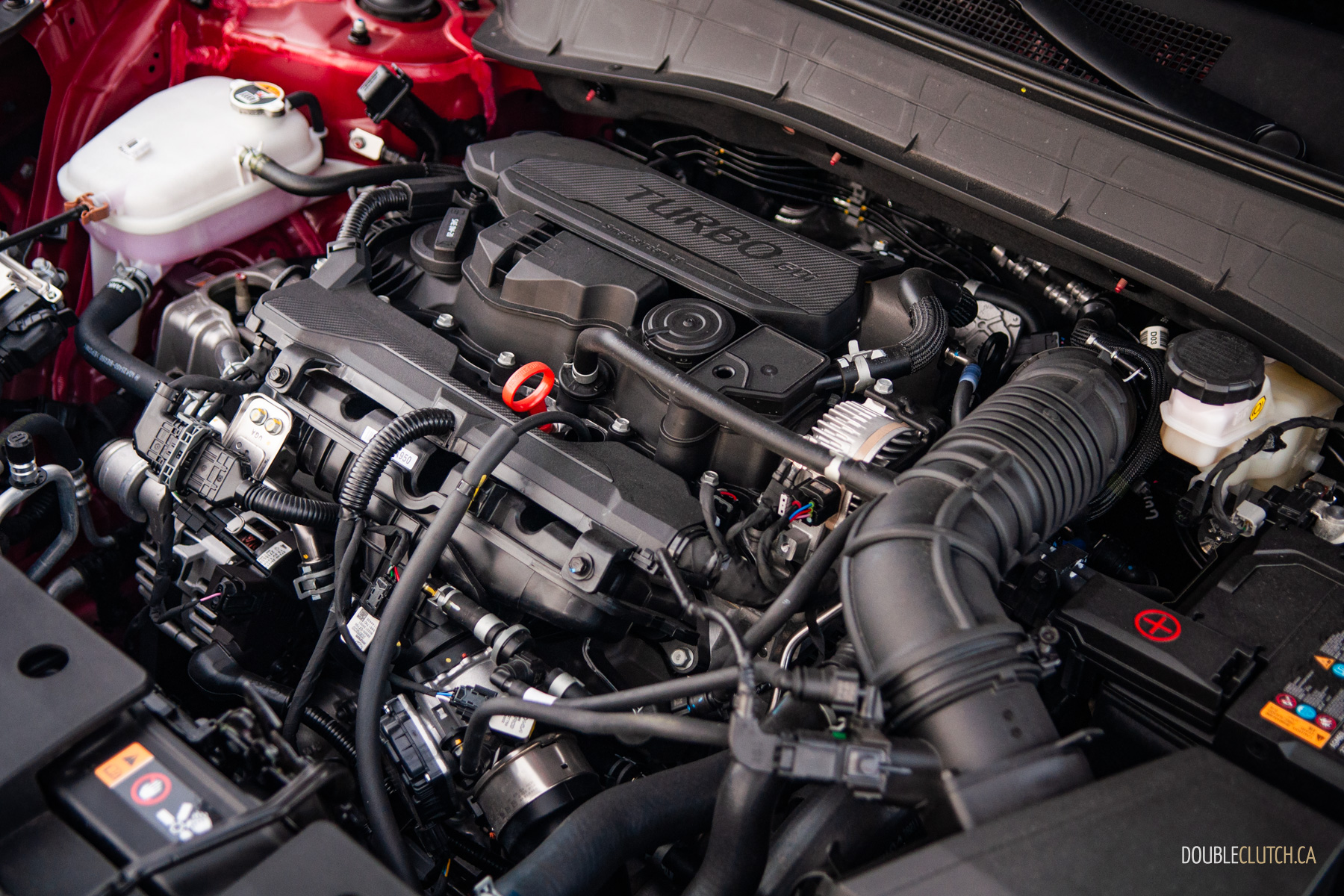
On the other hand, we Canadians can still spec one of three powertrains to motivate our Konas. Base trims keep the normally aspirated 2.0-litre four-cylinder engine, putting out 147 horsepower and 132 pound-feet of torque. That’s paired to a CVT, and all-wheel-drive is a $2,000 option. There’s enough zip for booting around town, but on the highway, the Kona’s base powertrain may feel a little strained.
For those seeking more kick, or if you’re reading this from Tennessee, the 1.6L turbo-four is a better (and/or your only) choice. Standard issue in our Kona N-Line tester, it puts out 190 horses, 95 pound-feet of torque, and it’s hooked up to an eight-speed automatic. A powerhouse the Kona is most definitely not, but the turbocharged engine is punchy and smooth, and the new automatic is far better behaved than Hyundai’s old seven-speed dual-clutch. Fuel economy is pretty good; on paper, Hyundai rates the turbo Kona at 9.7 L/100 kilometres in the city, 8.4 on the highway, and 9.1 combined. Our tester levelled off at 9.0 L/100 km over a week of mixed city and highway commuting. Not bad. If you’d rather not deal with gas at all, there’s an electric Kona, too.
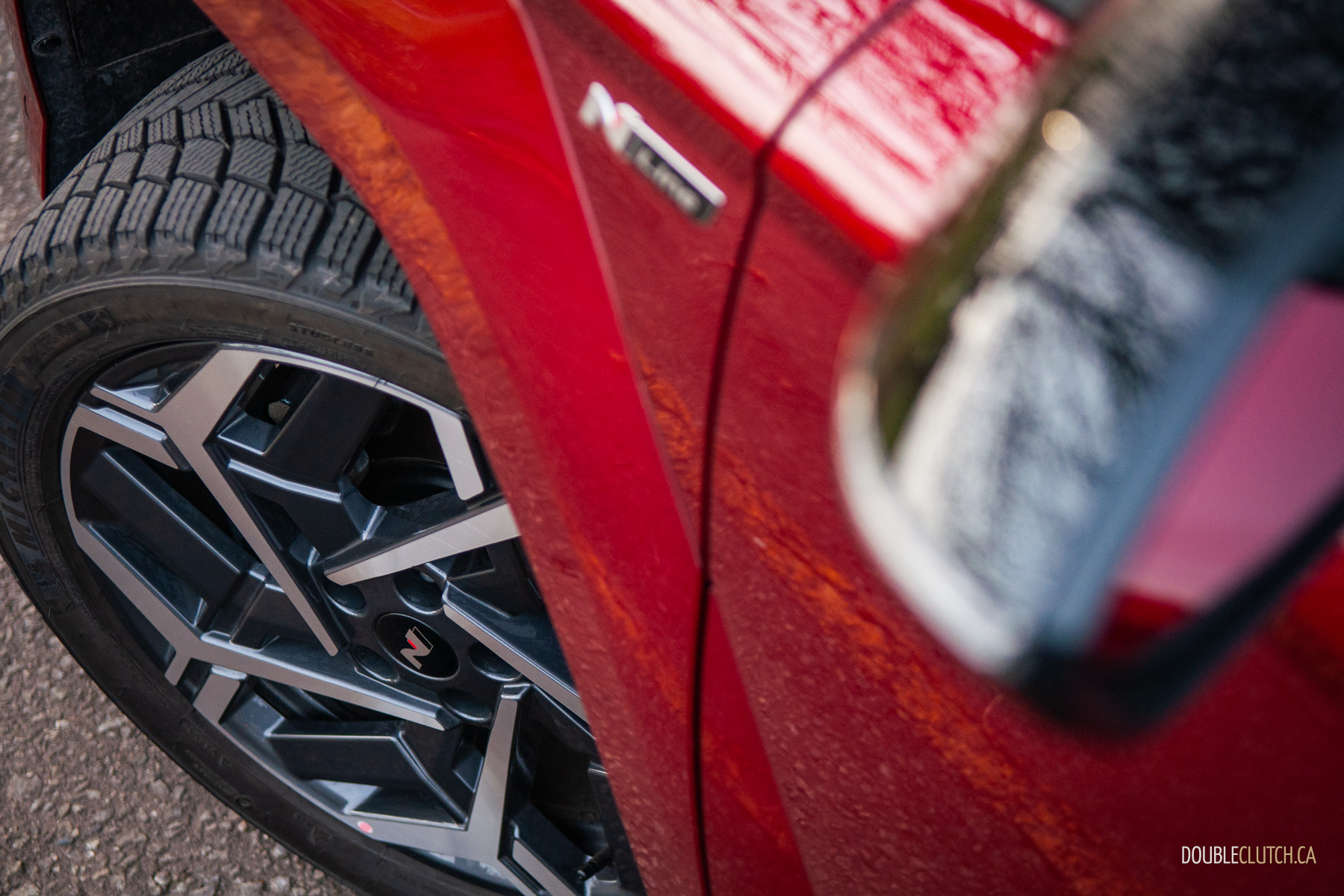
One of the weaker aspects to the first-gen Kona was ride quality. The second-gen follow-up does a much better job at filtering out bumps, potholes, and other imperfections, even on the N-Line’s standard issue 19-inch wheels and low-profile tires, though bigger and harsher bumps still make themselves known. If you’re trading up from an old Kona, you’ll find it’s quieter and more pleasant on the highway, with less wind and road noise than before. Along with the obvious traction benefit and foul-weather confidence-boost, all-wheel-drive Konas use a multi-link suspension setup in the rear, as opposed to the torsion beam on the two-wheel-drive variants. You’ll have to drive an N-Line back-to-back against a Preferred with a torsion beam to really suss out the differences, but the Kona is nevertheless well-mannered.
Inside and out
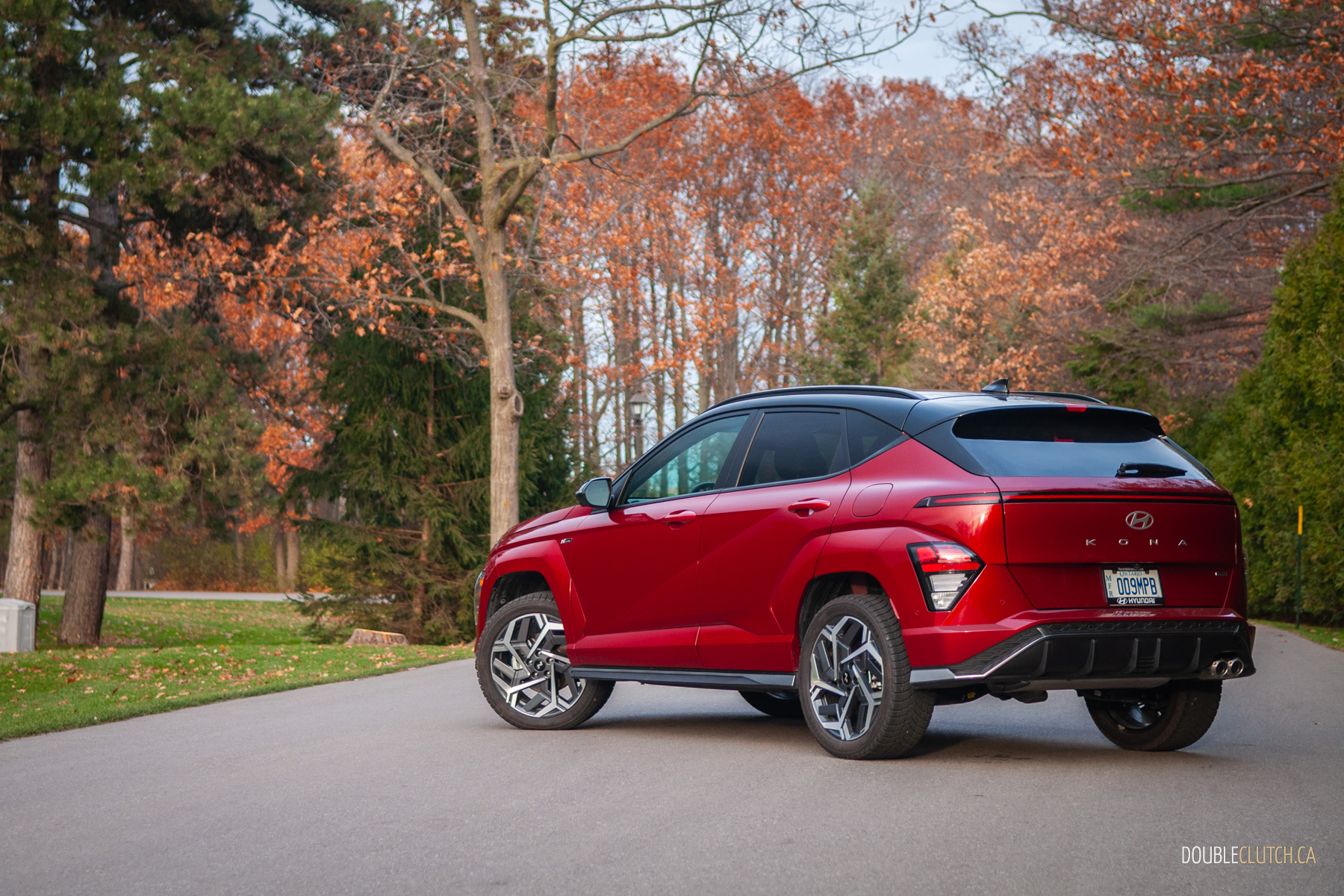
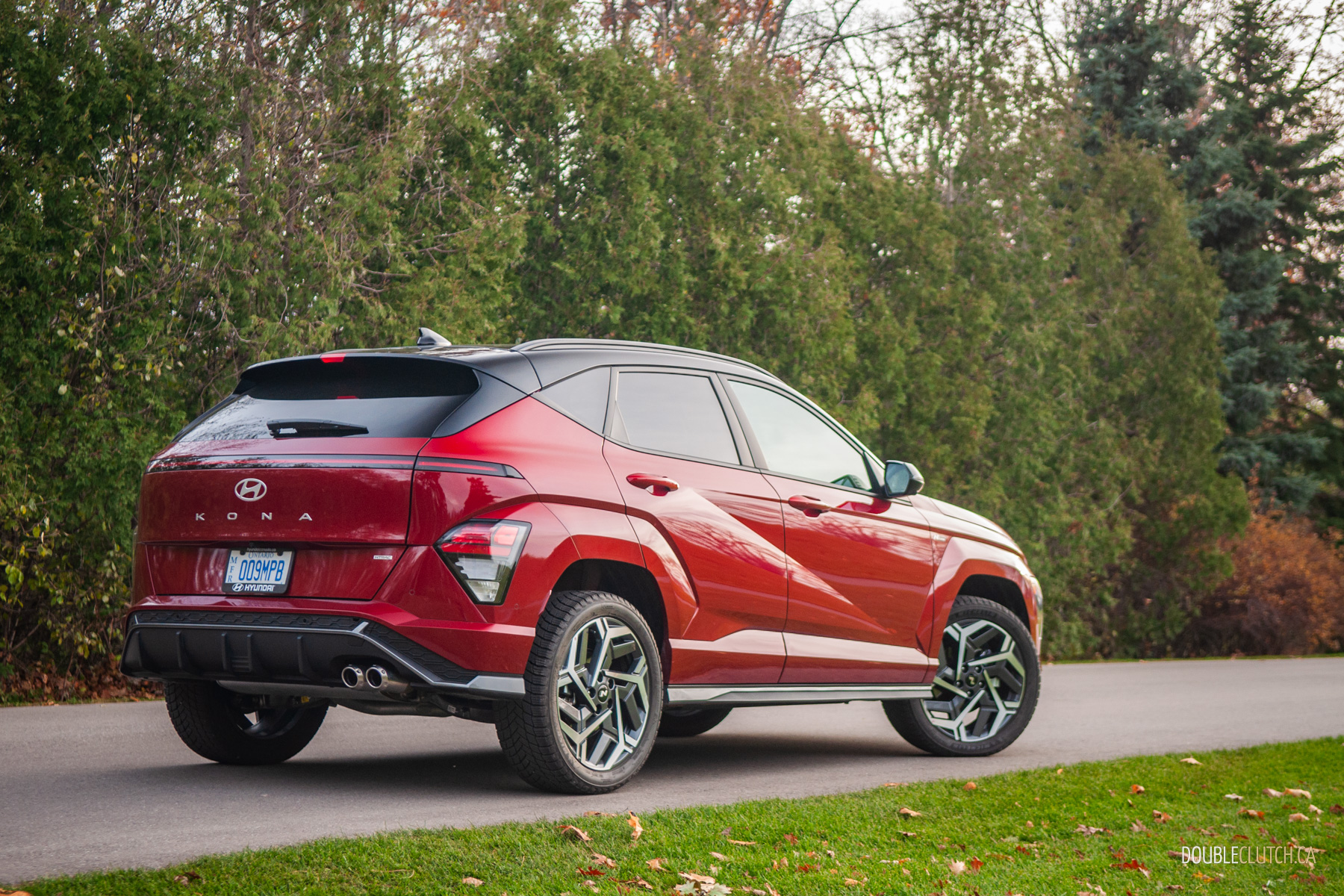
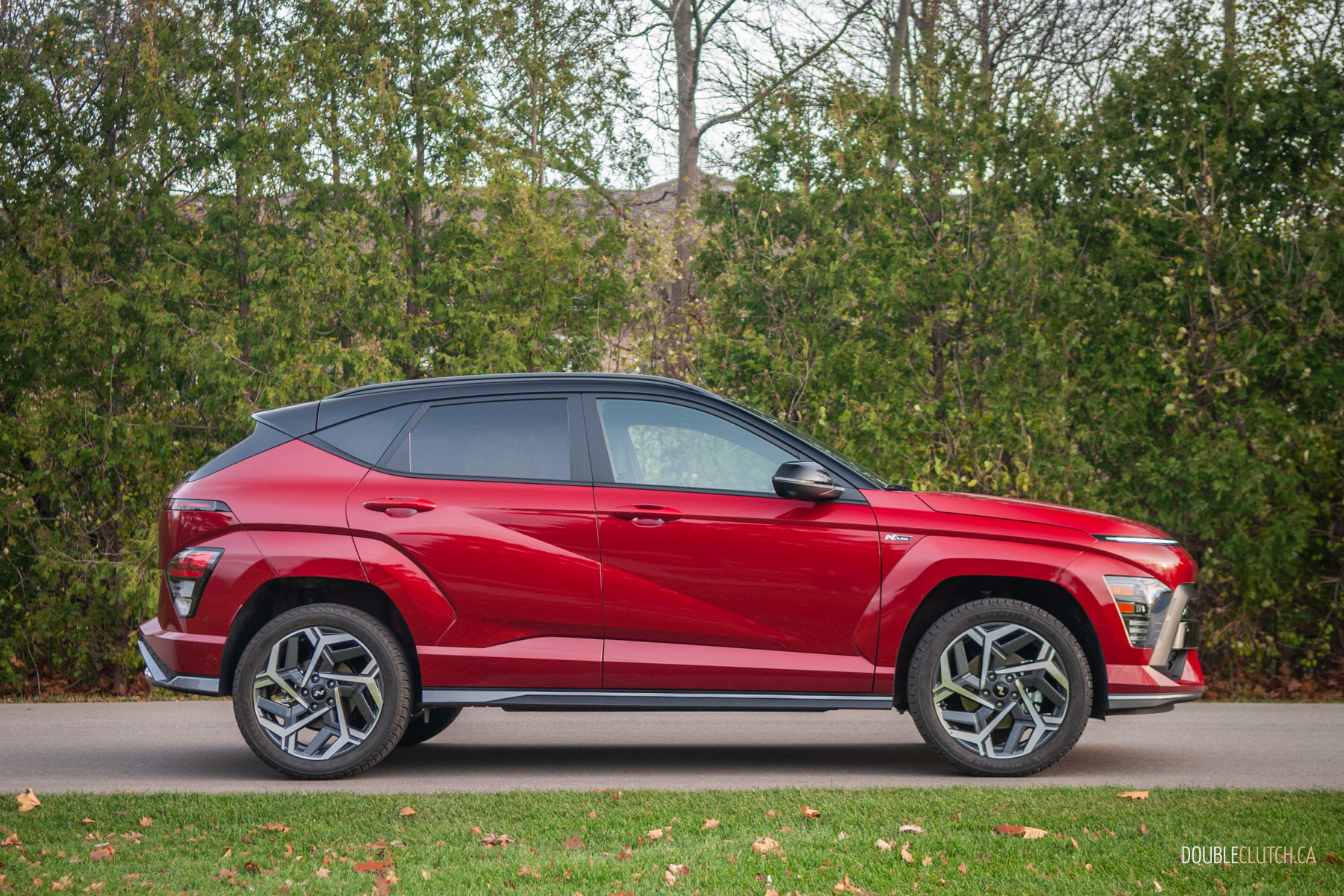
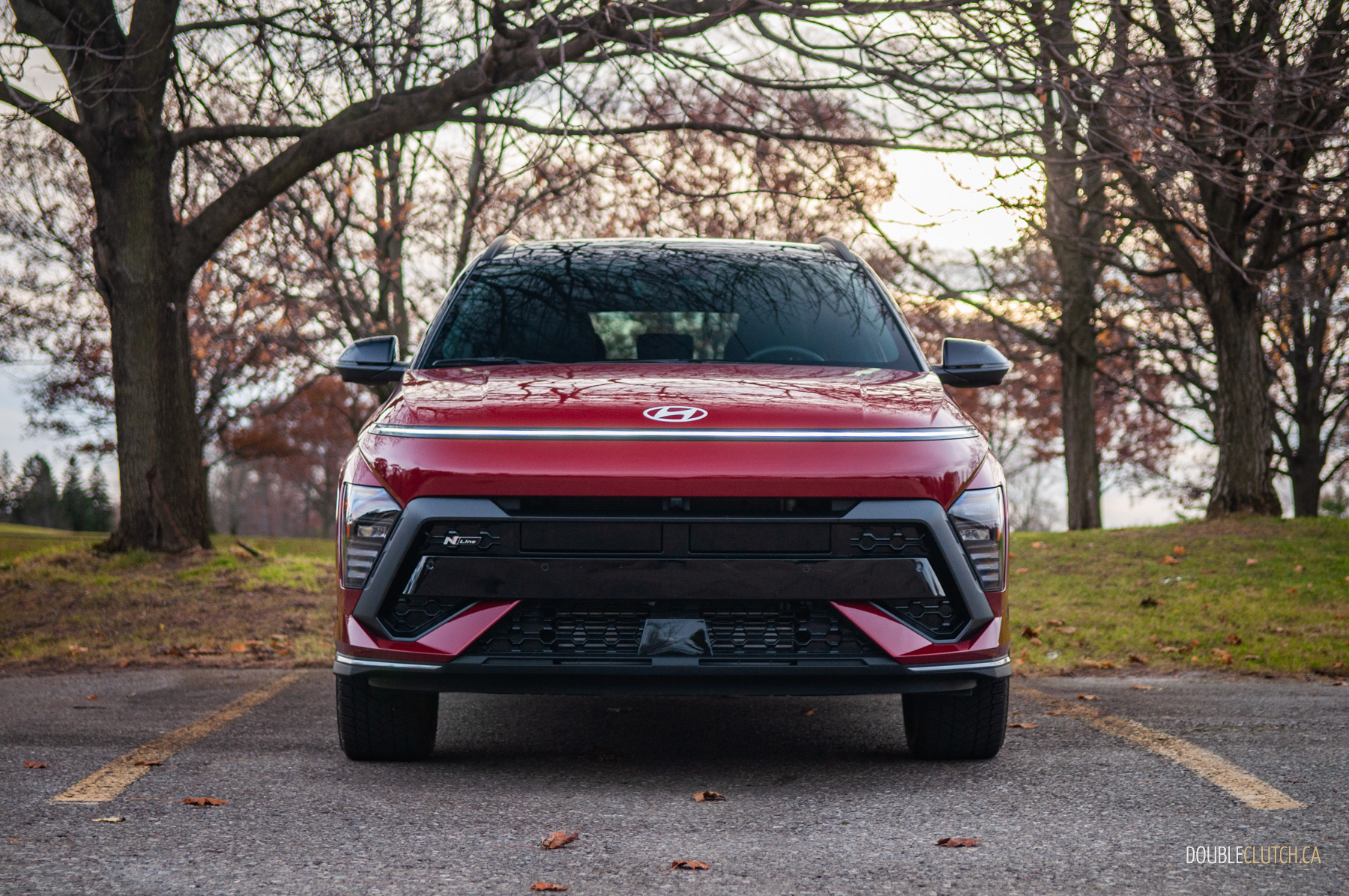
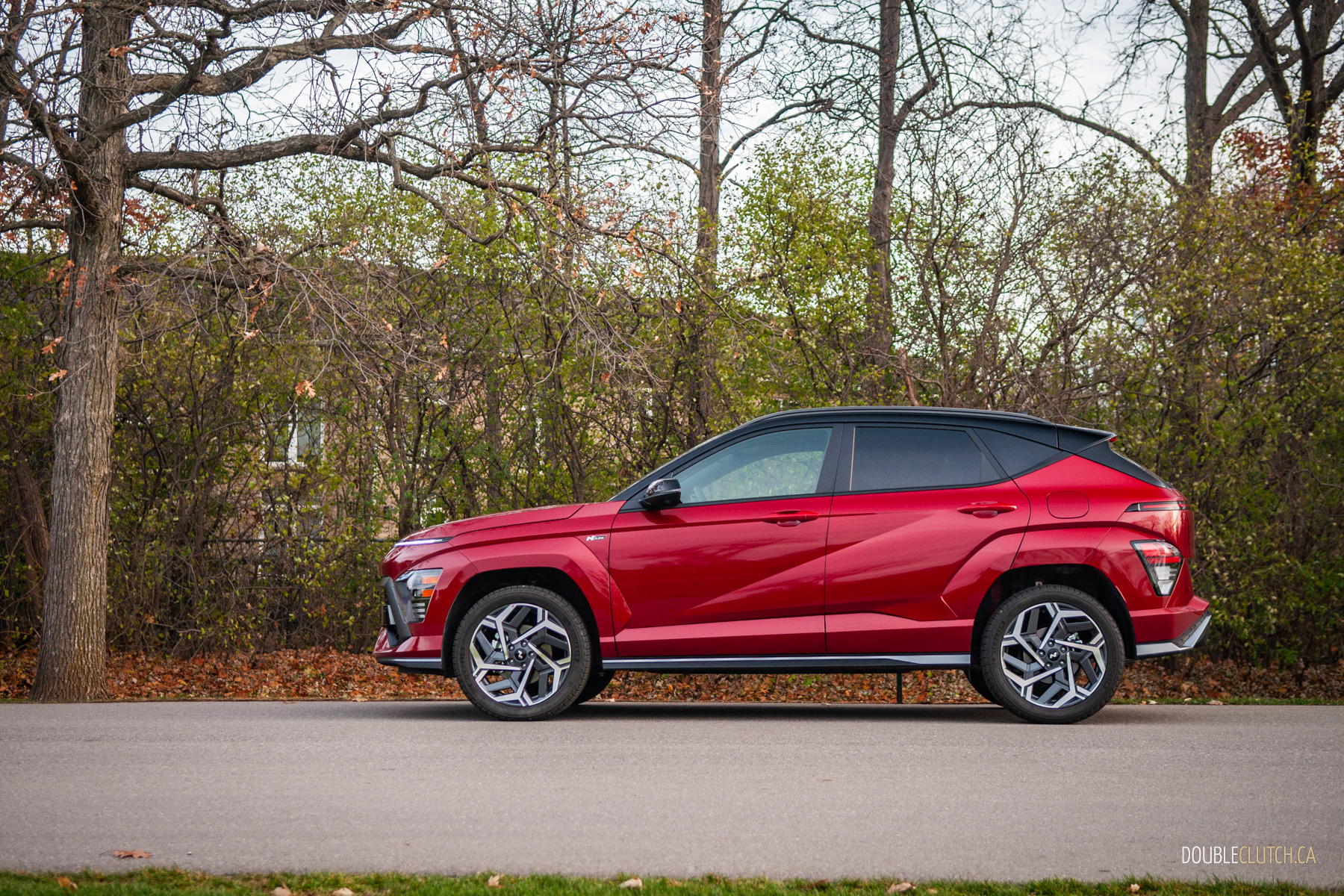
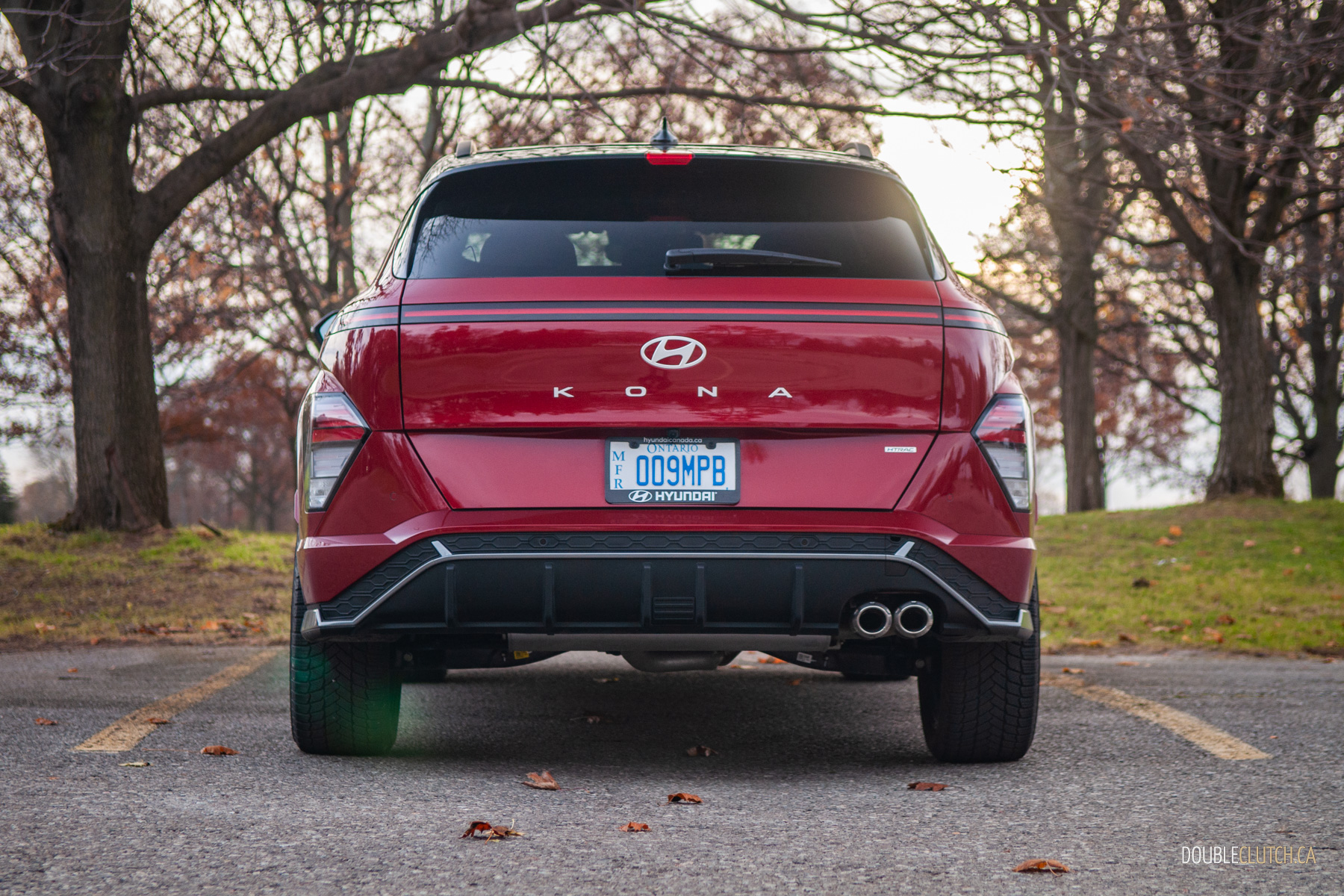
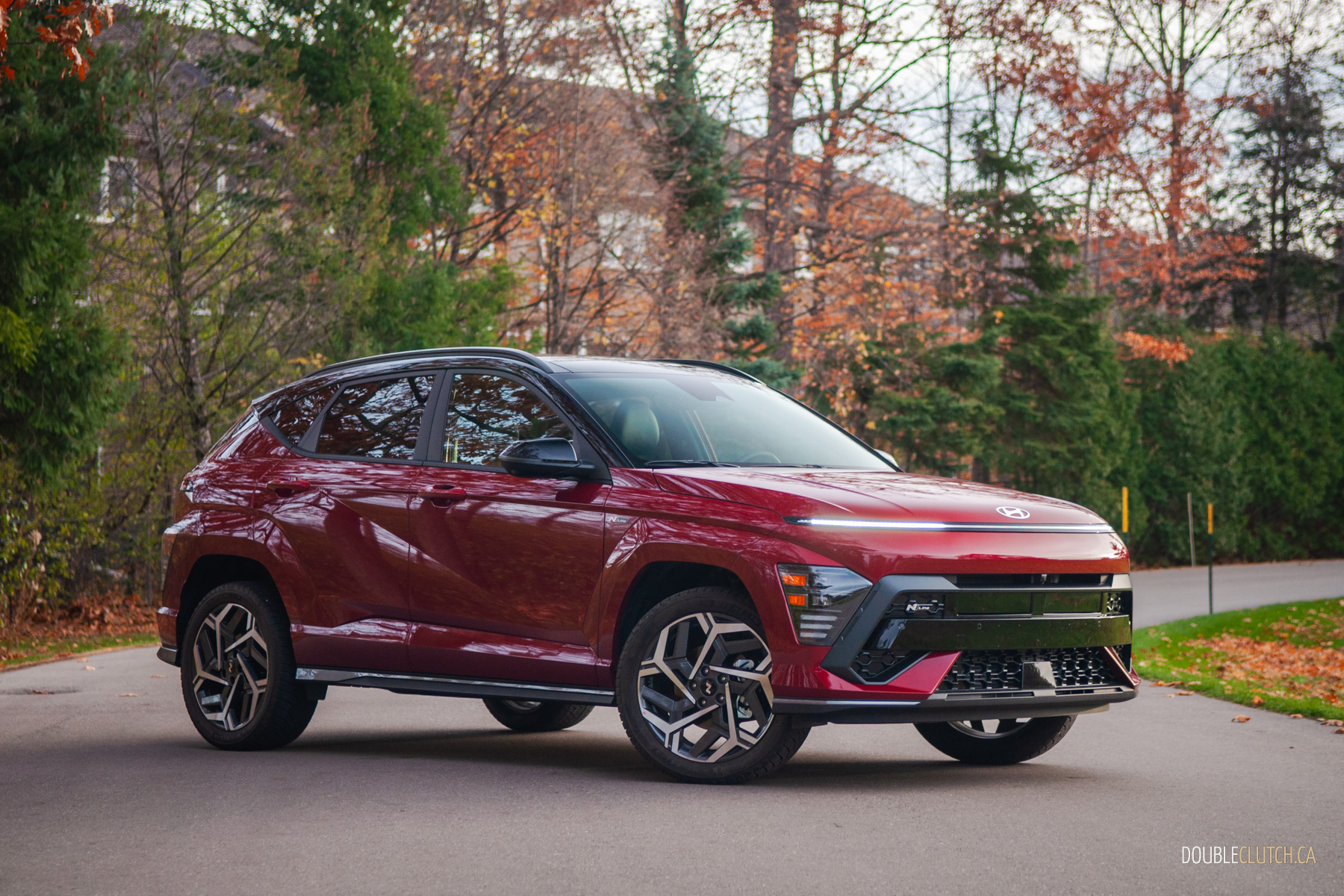
We still can’t shake the subtle EV-ness to the second-gen Kona’s styling. Toss a few more dots on the lightbar spanning across the front end, and it wouldn’t look out of place on an Ioniq. The Kona doesn’t really have a traditional upper grille, either, instead relying on active shutters and lower bumper air intakes for cooling and minimizing drag. Along the side, much of the Kona N-Line’s styling — the creases and folds, the up-ticked beltline, and the wheel design — comes across as a baby Tucson, while the back end is finished off by a tidy LED lightbar with separate lower tail lights, an aggressive-looking rear diffusor, and a twin-tip chrome exhaust.
Okay, I lied. There seems to be one tweak for 2026 that you probably didn’t notice: the aggressive-looking hatch-mounted spoiler is no more. But that’s OK because it cleans up the look, and felt a little silly on an N-Line model. Bet you can’t unsee it now.
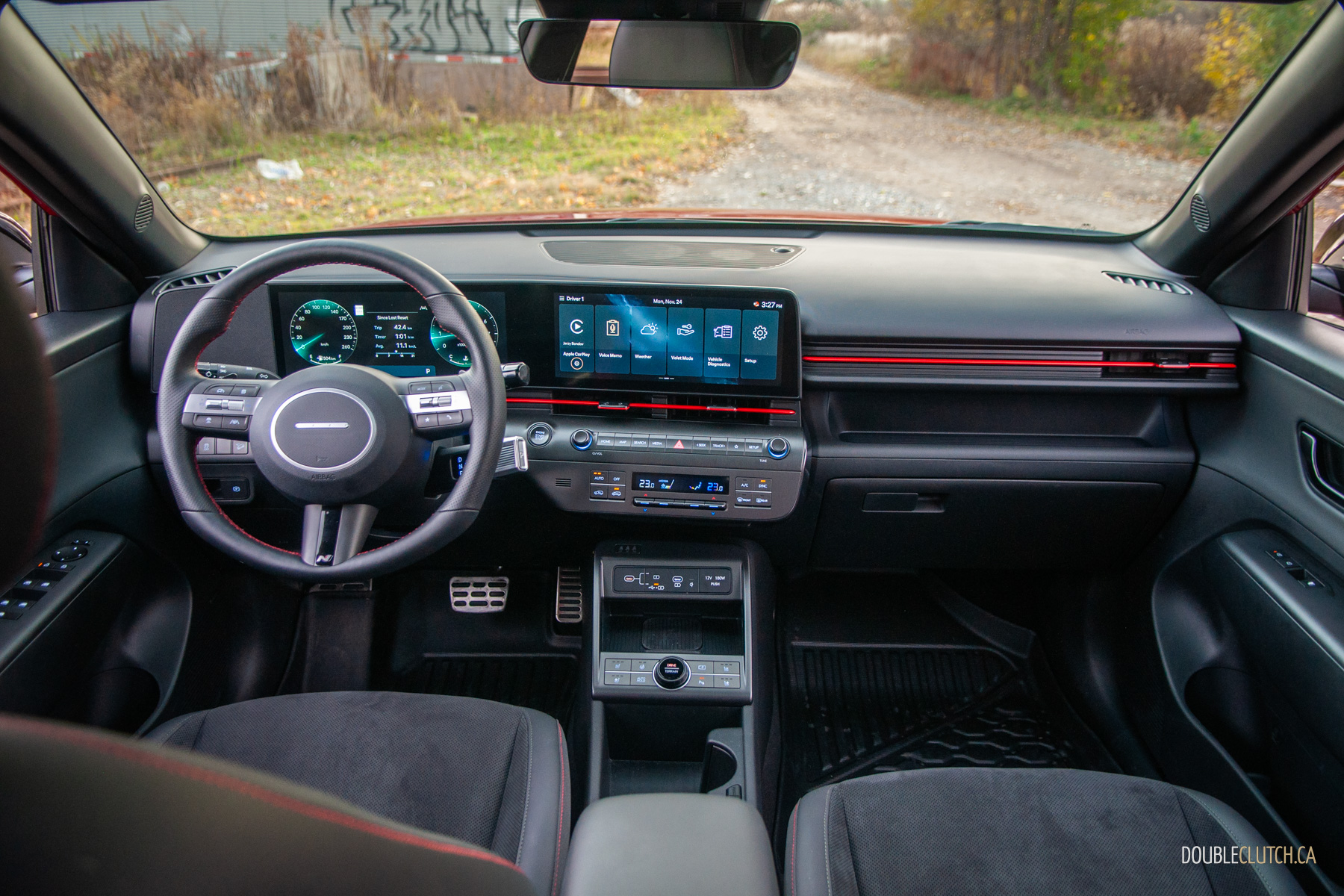
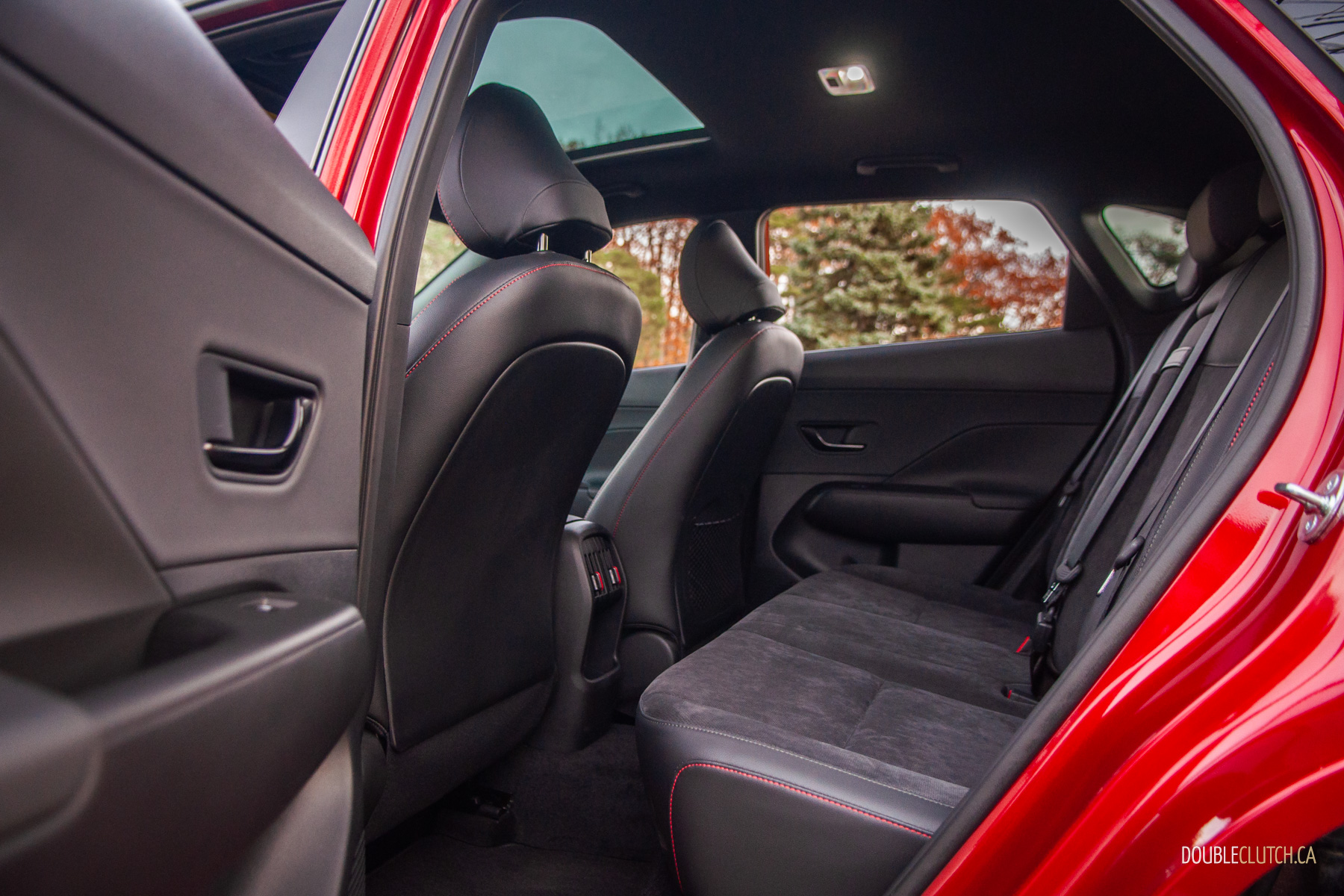
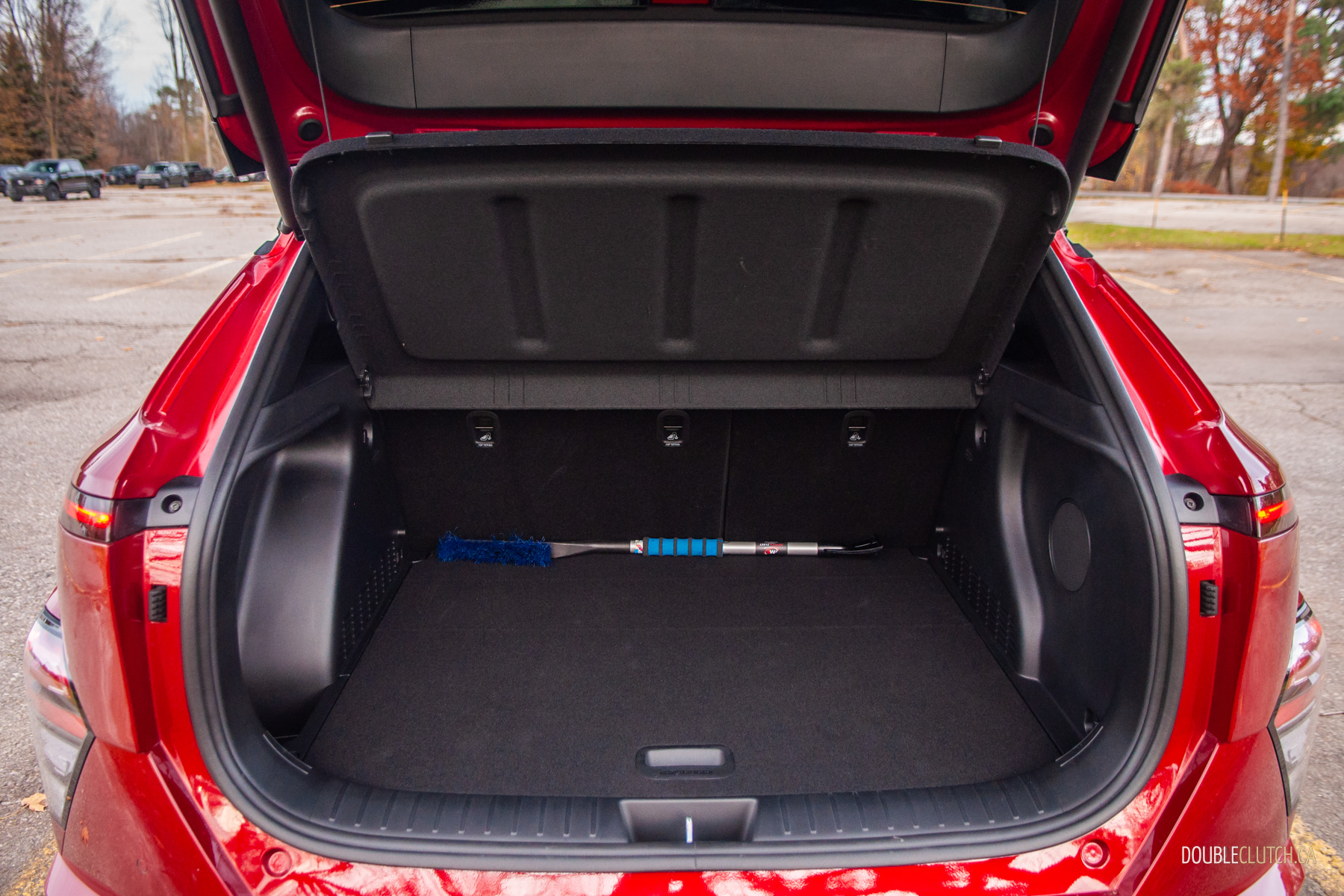
In moving into its second generation, the Kona saw a growth spurt. It’s longer, wider, and taller overall, making us question the defintion of “subcompact” even more while also resulting in a much more practical interior. If you’re coming from a first-gen Kona, you get a full three inches of extra rear-seat legroom, a bit of extra headroom overall, and much more cargo space. The 2026 Kona N-Line punches in at 723 litres with the seats up; drop them and that more than doubles, to 1,803 L. That’s more than competitive with the Toyota Corolla Cross and Honda HR-V.
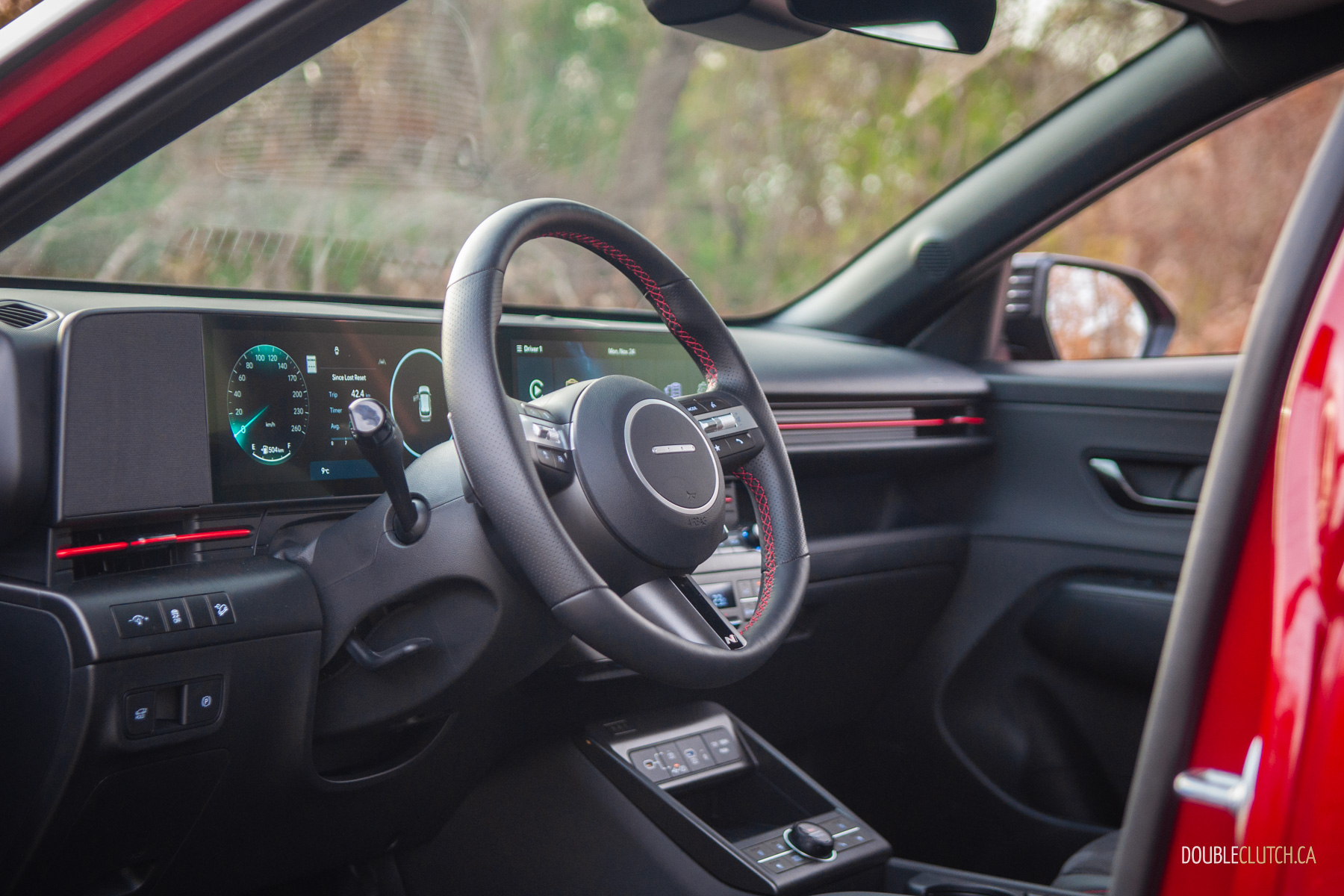
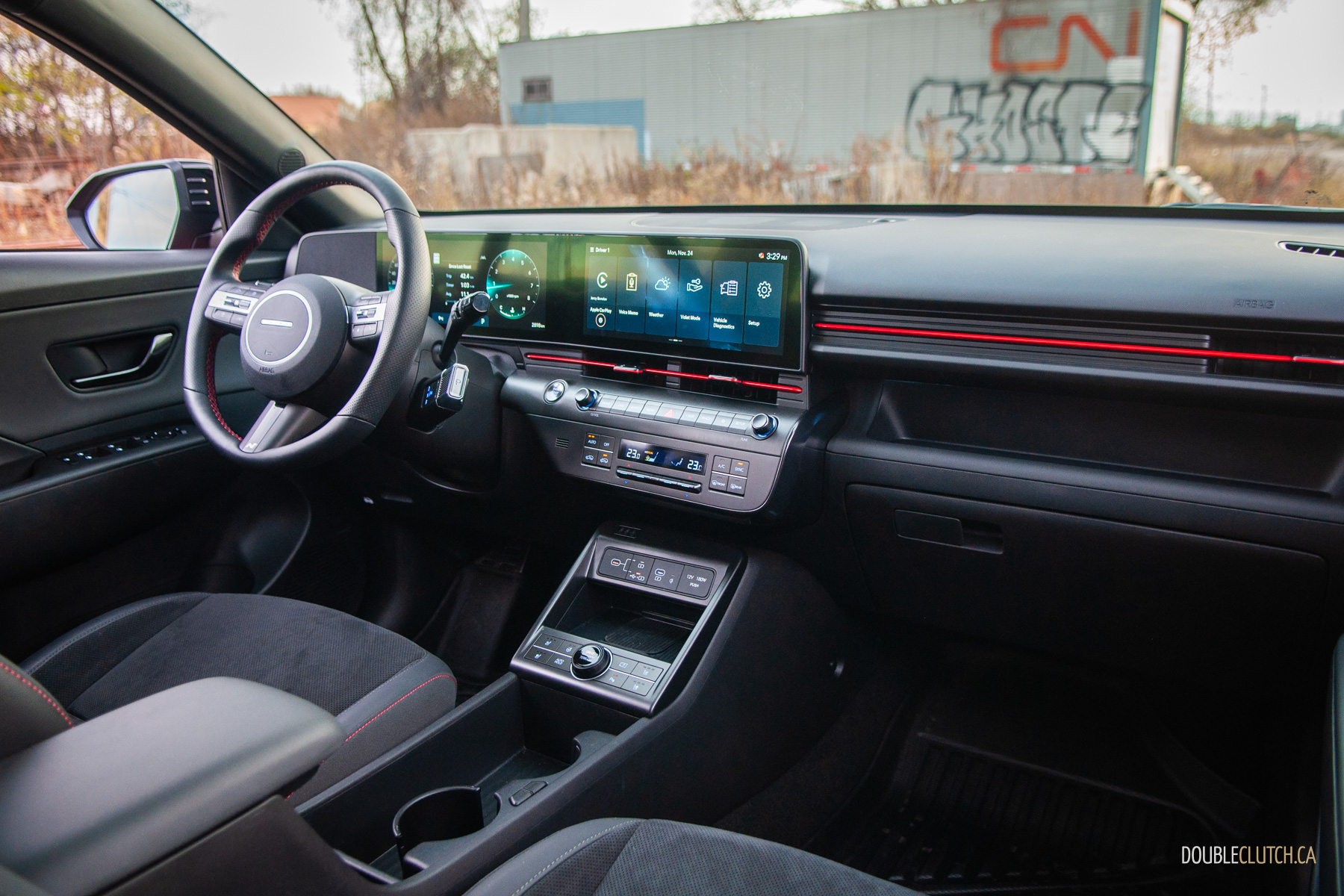
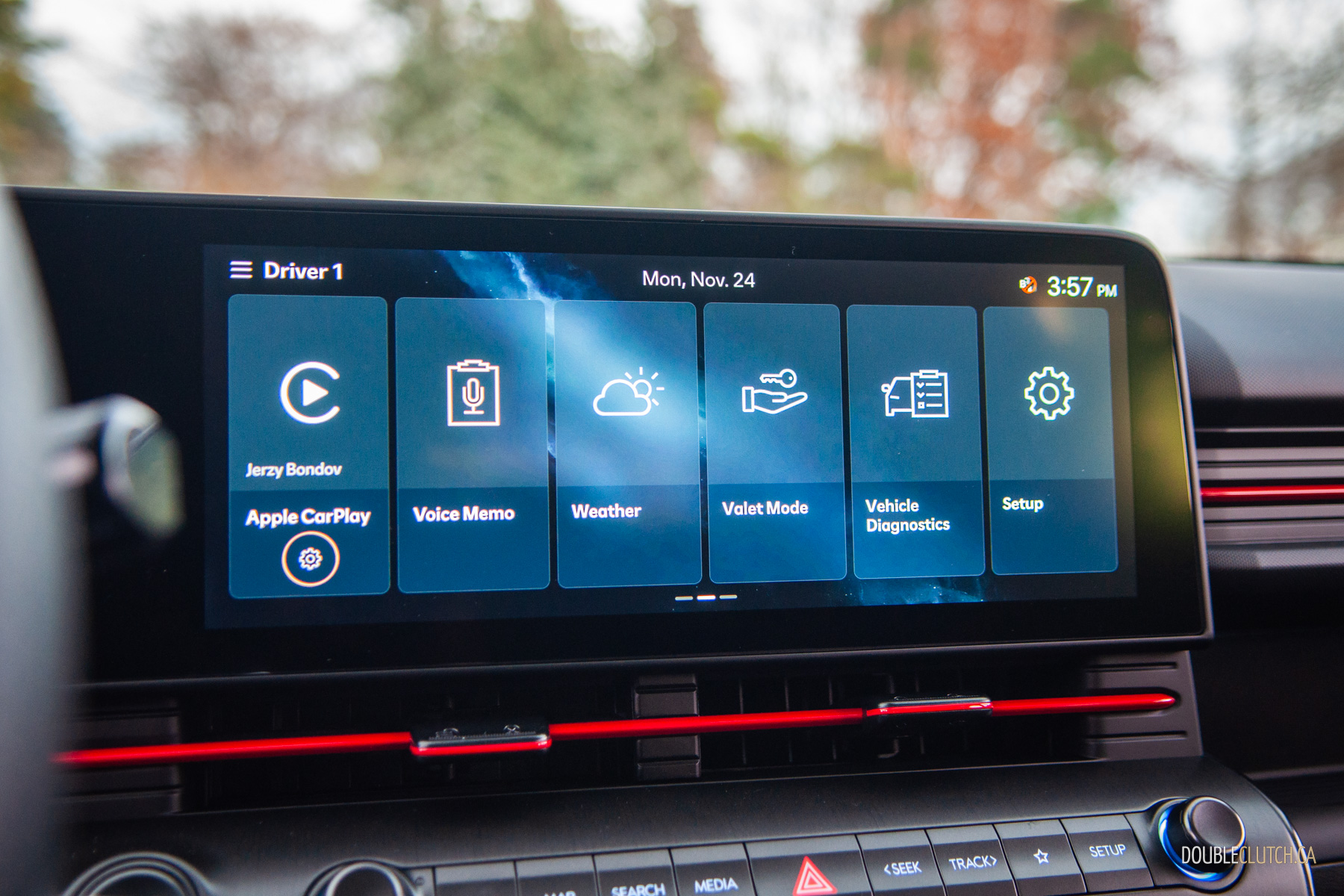
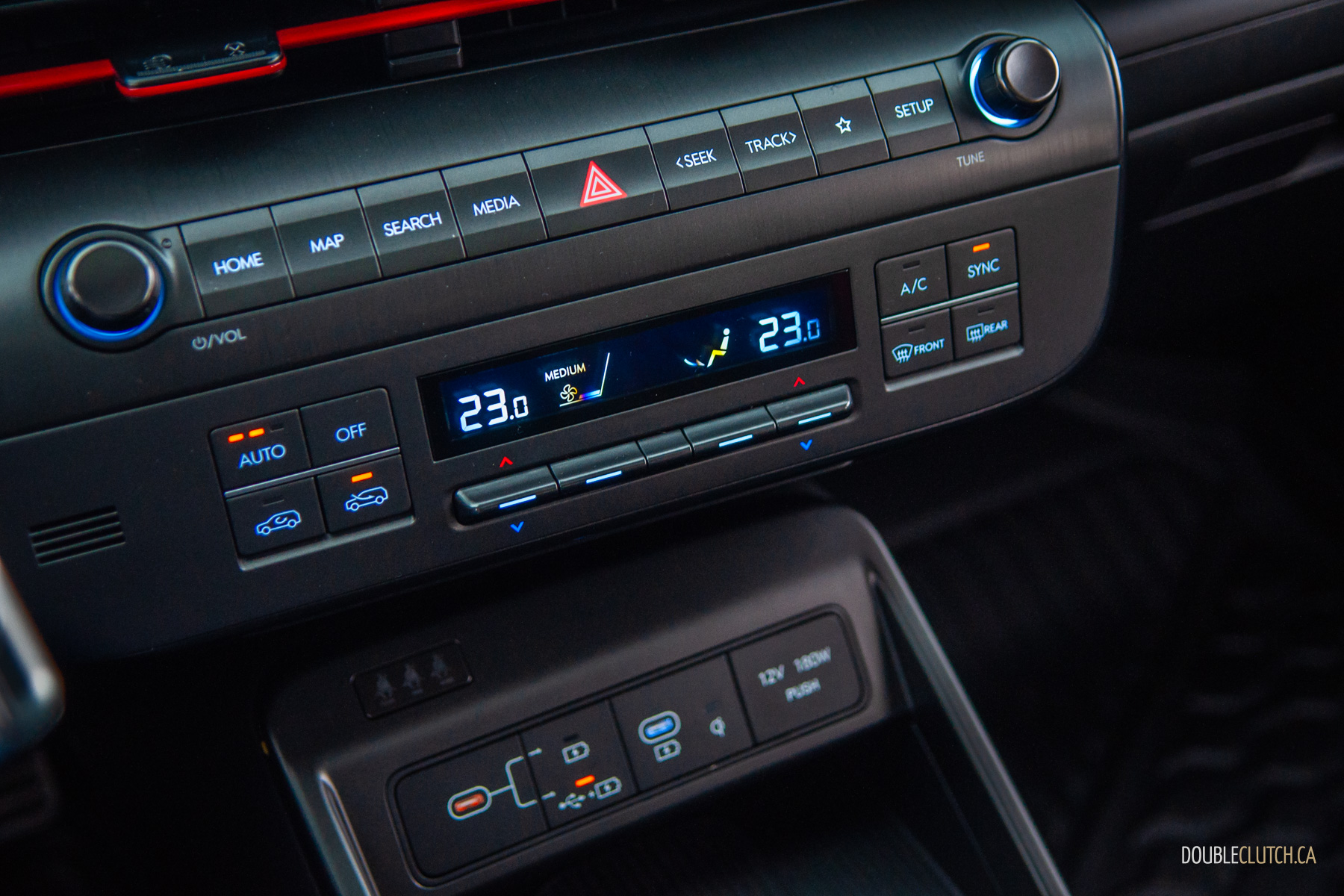
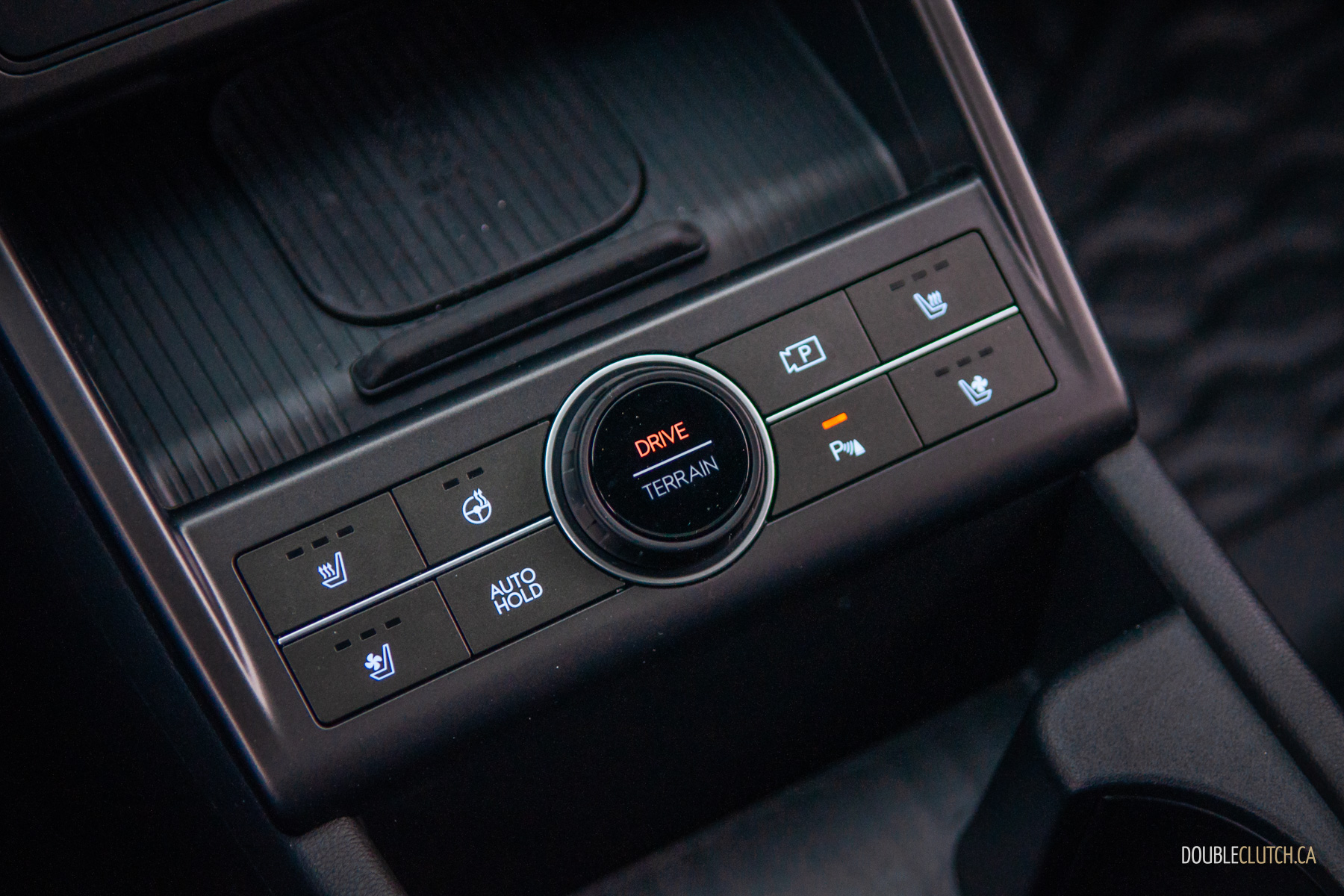
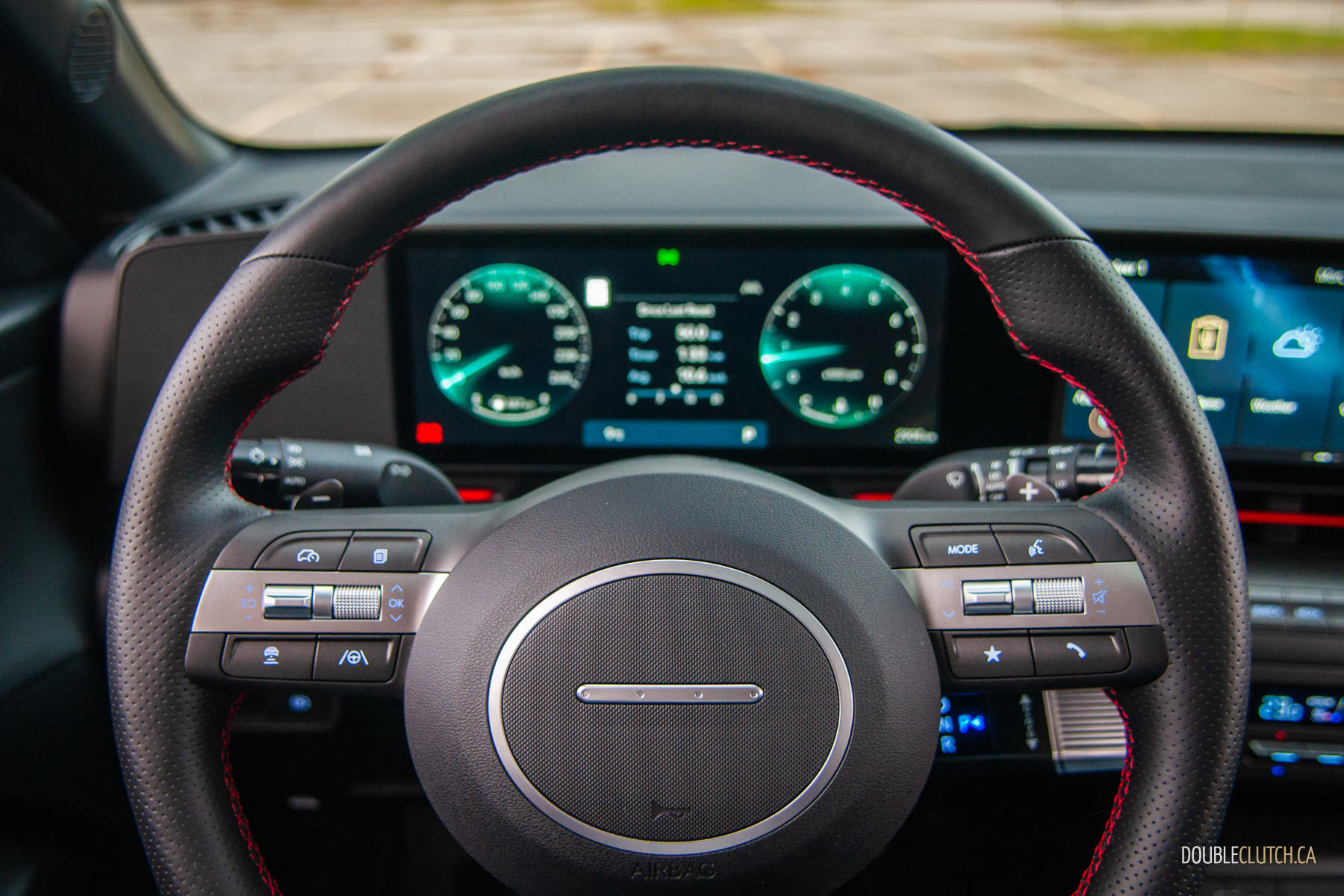
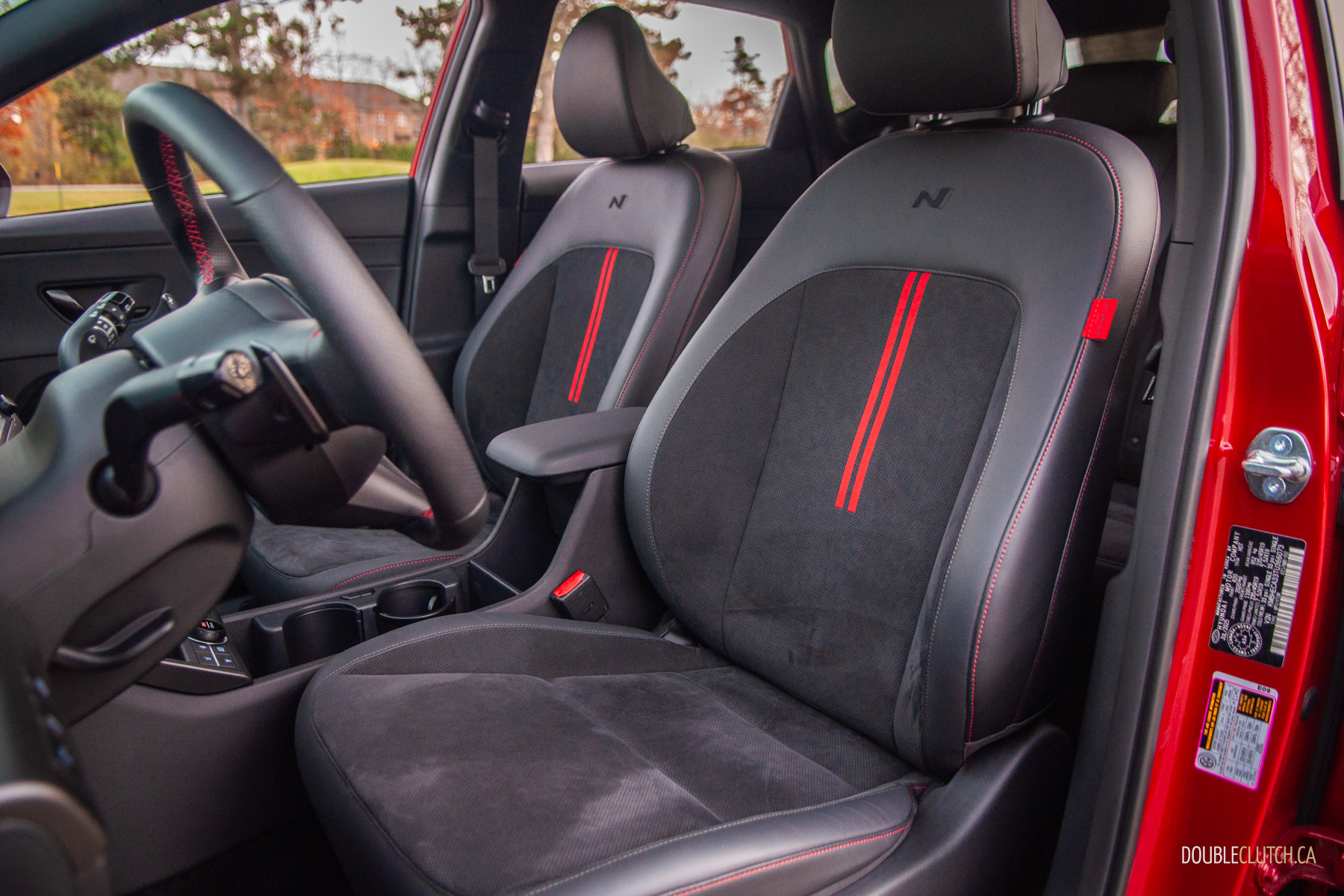
The rest of the 2026 Kona’s interior is mostly pleasant. There are quite a few hard touch-points, but everything feels solid and overall fit-and-finish is pretty good. Upper trims like our N-Line tester use twin 12.3-inch screens for the infotainment and gauge cluster under one glass panel; it’s all crisp, slick, and easy to use. Hyundai is usually great with ergonomics, and that’s mostly true with the Kona. The column-mounted shifter takes some getting used-to — twist-forward-for-drive and back-for-reverse makes sense in theory — but it opens up a lot of space on the centre console. The cubby between the seats can accomodate a small purse when you hide the cupholders, and further up, Hyundai still blesses the Kona with physical buttons and knobs. Praise be to the automotive gods, there’s even a tuning knob.
Final thoughts
The 2026 Hyundai Kona N-Line sure makes us question what defines a “subcompact” these days. At $40,099 as-tested, the Kona’s price tag certainly isn’t compact, overlapping a fair bit even with a well-equipped Tucson. But if you don’t need the footprint and size of the Tucson, the Kona has a lot to offer — it’s roomy, easy to drive, easy to park, and has all the bells, whistles, and driver assists you could possibly need and want. It hardly feels like a step down at all.