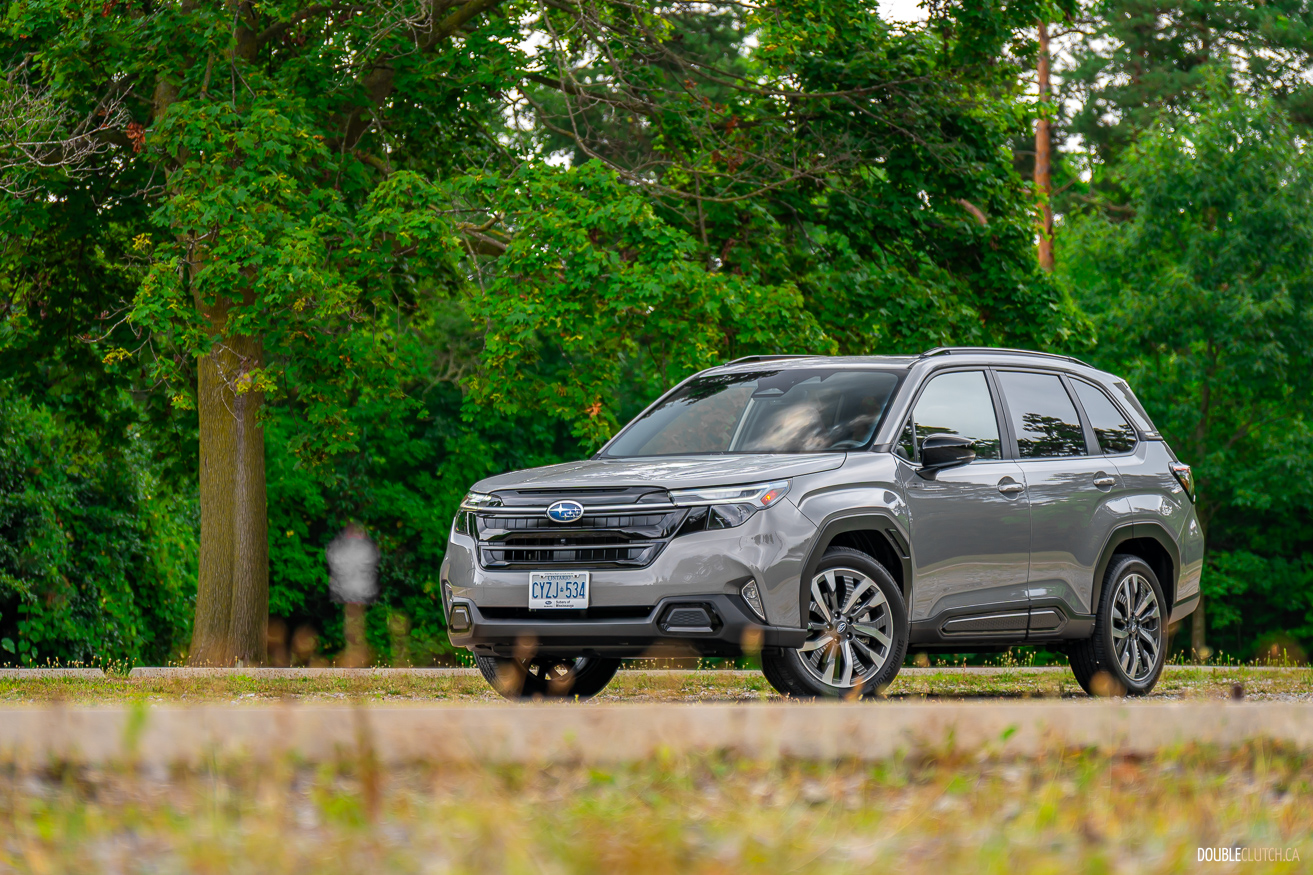
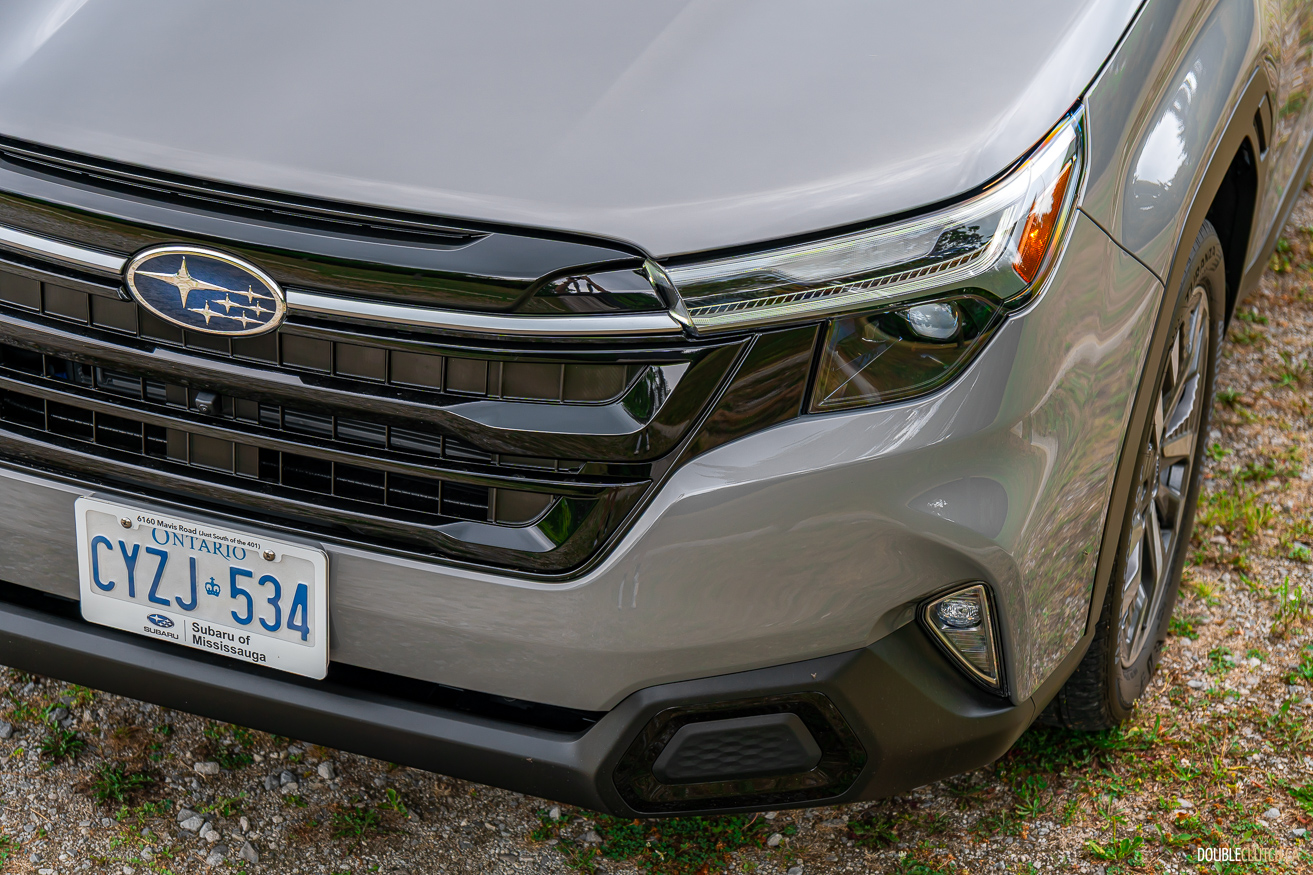
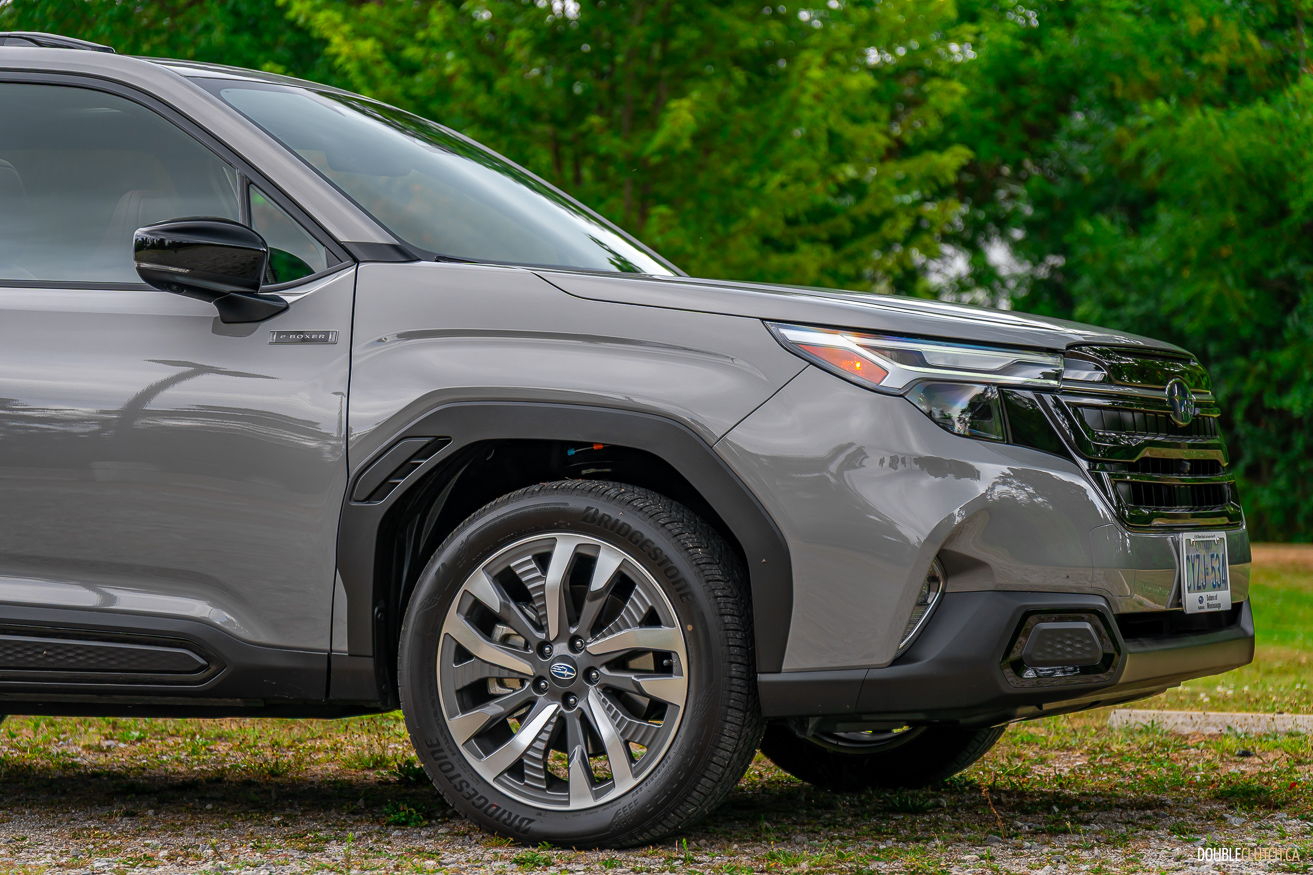
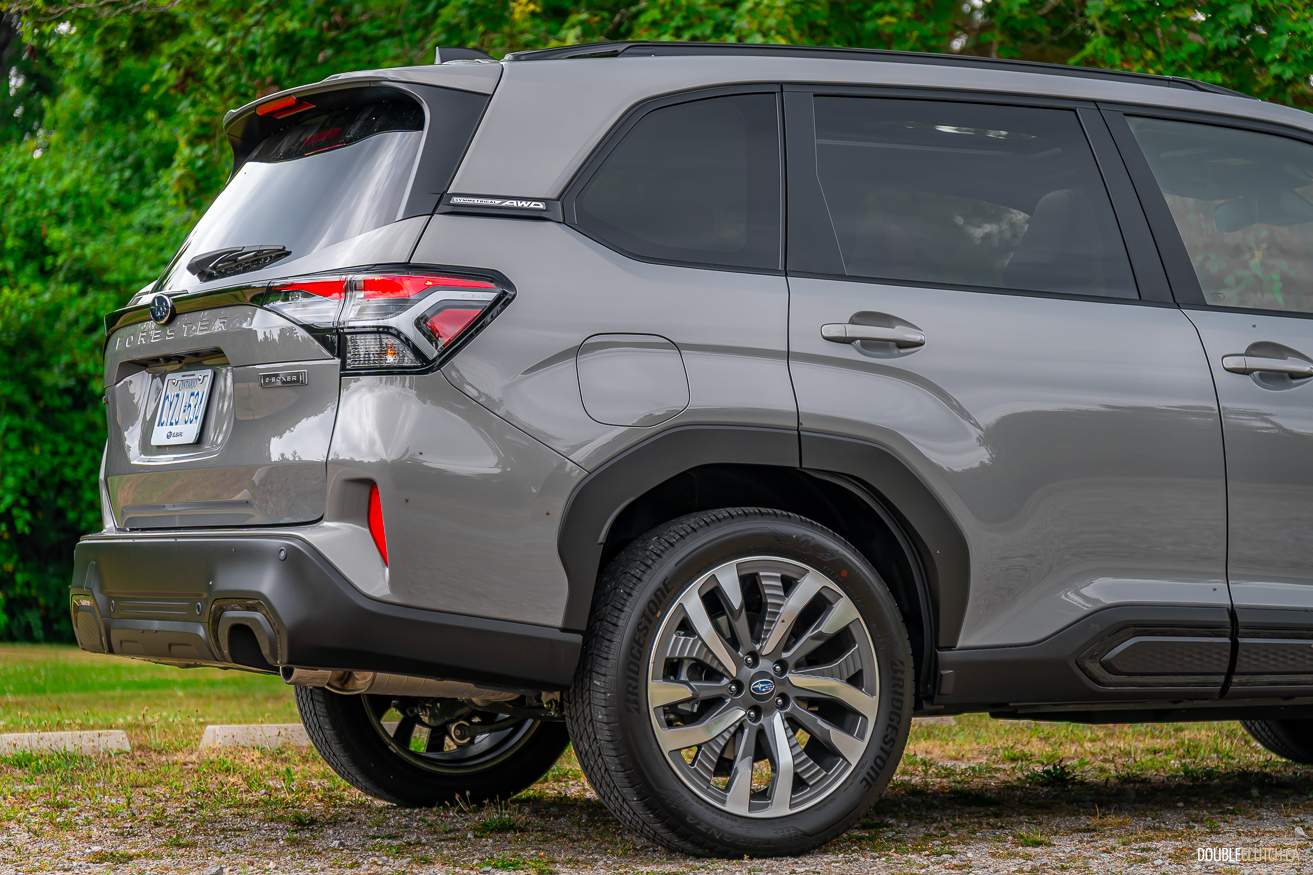
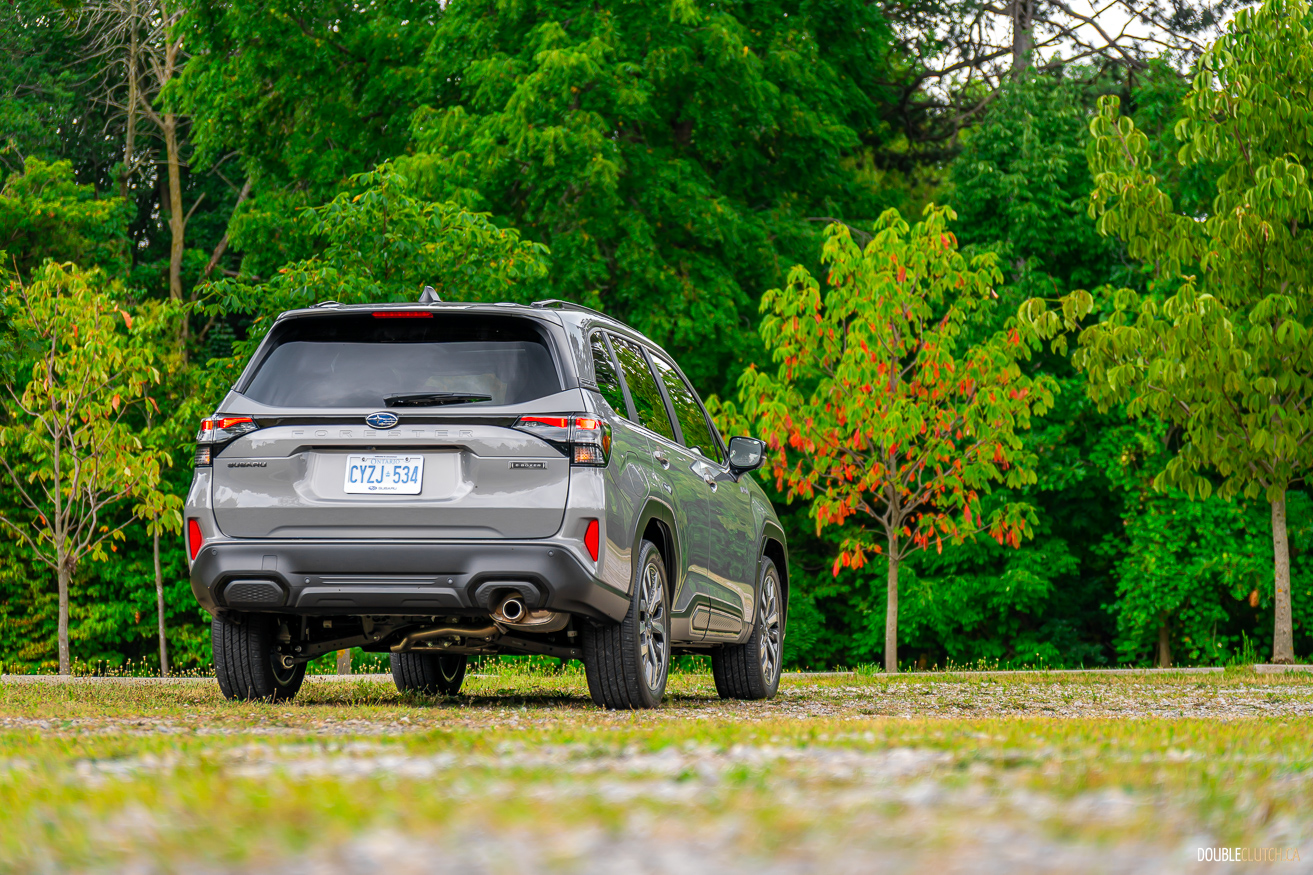
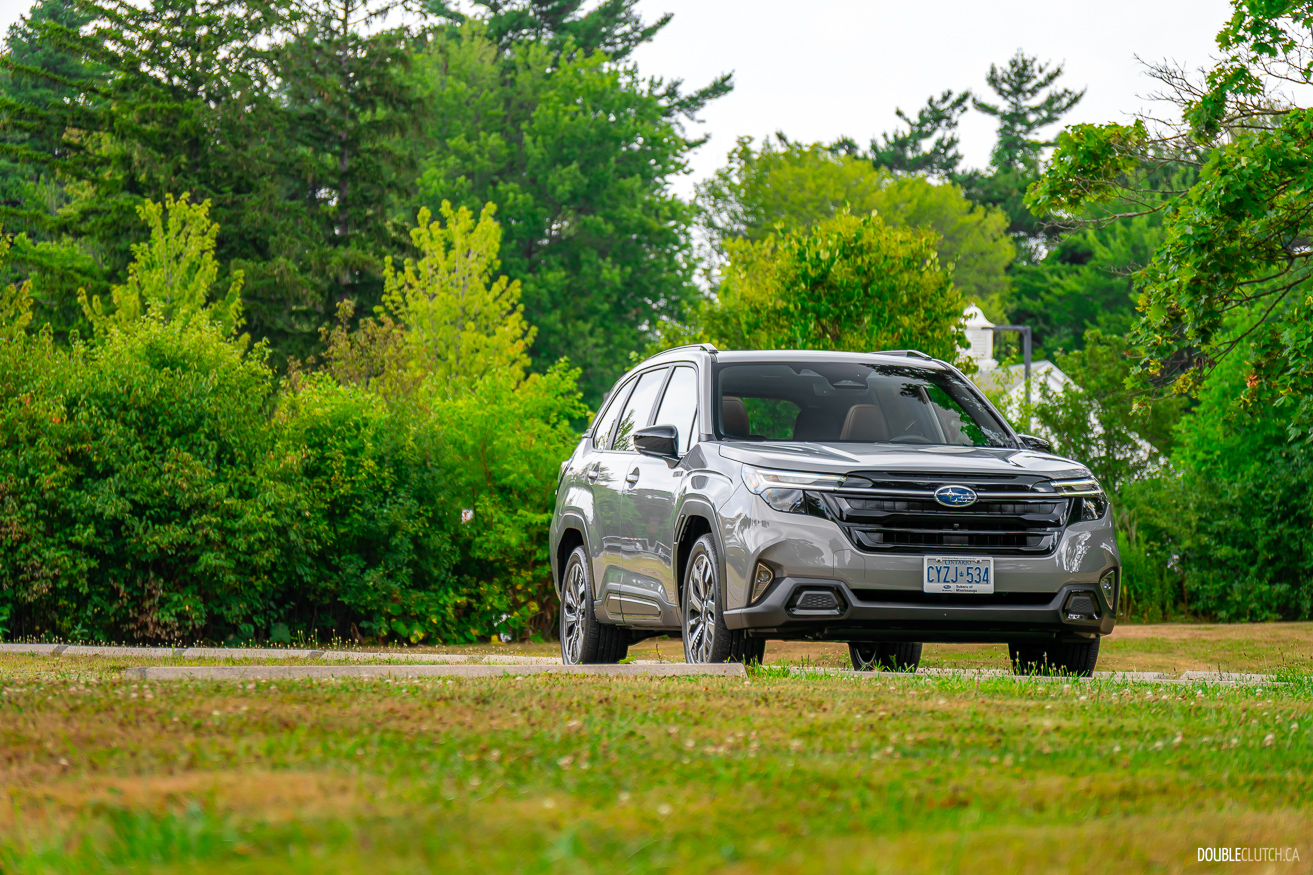
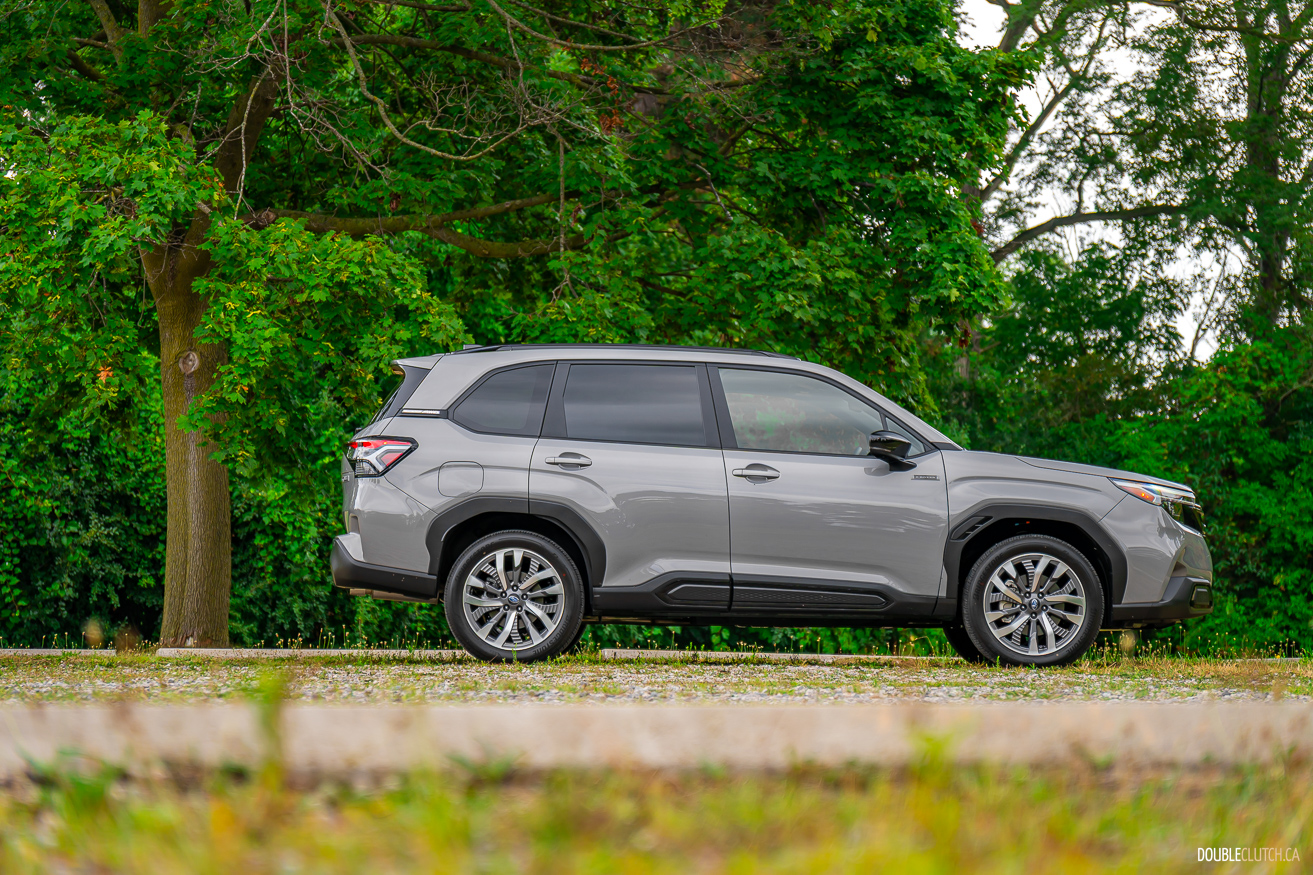
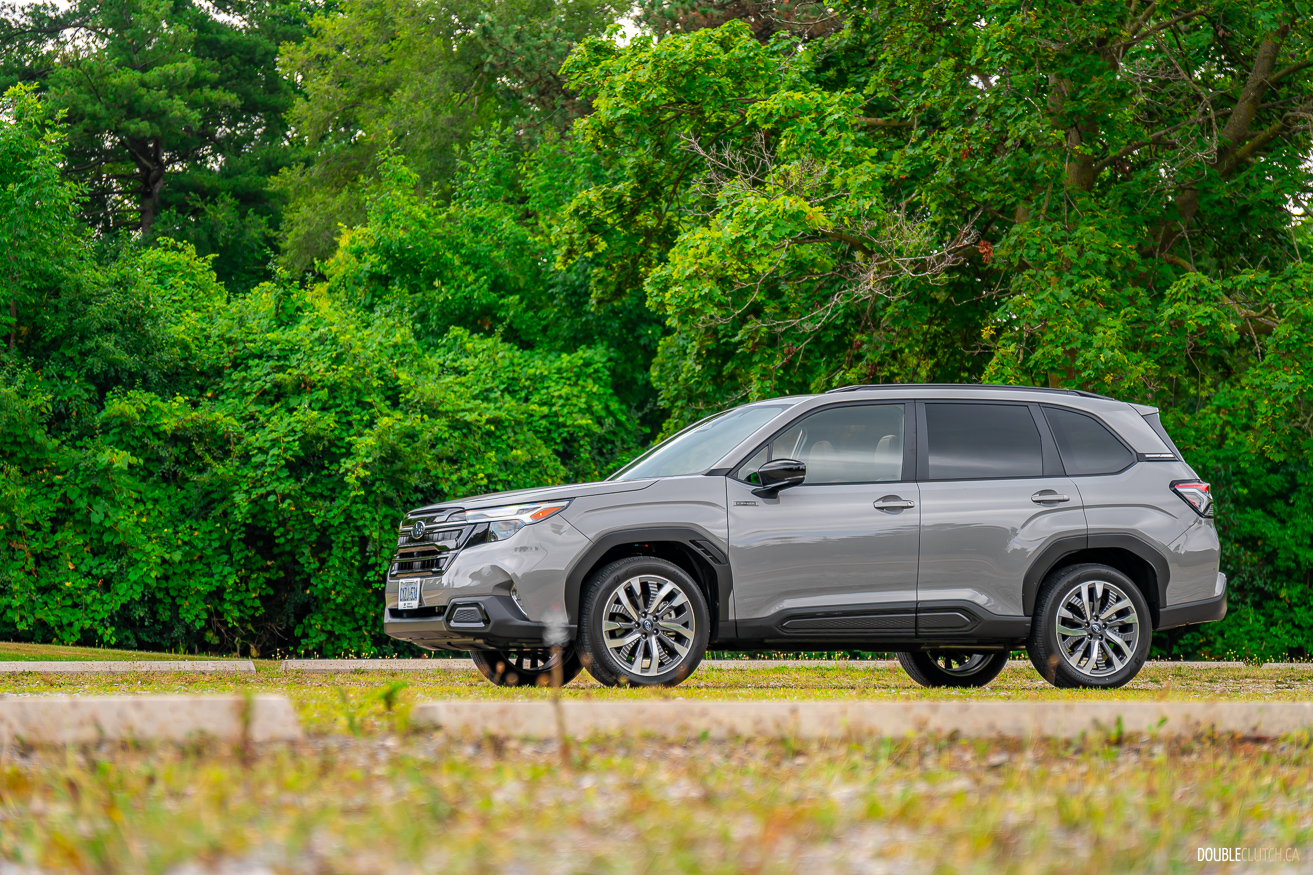
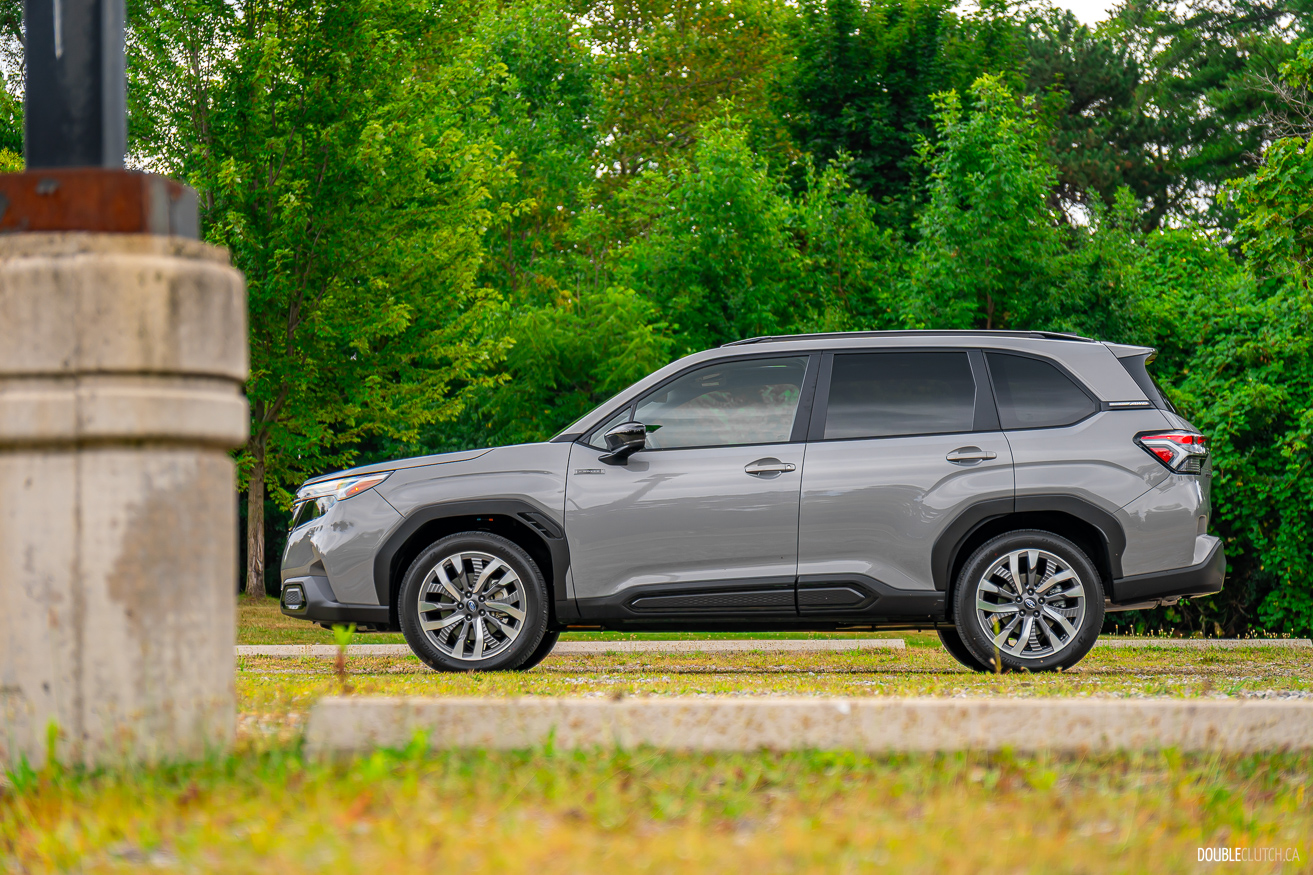
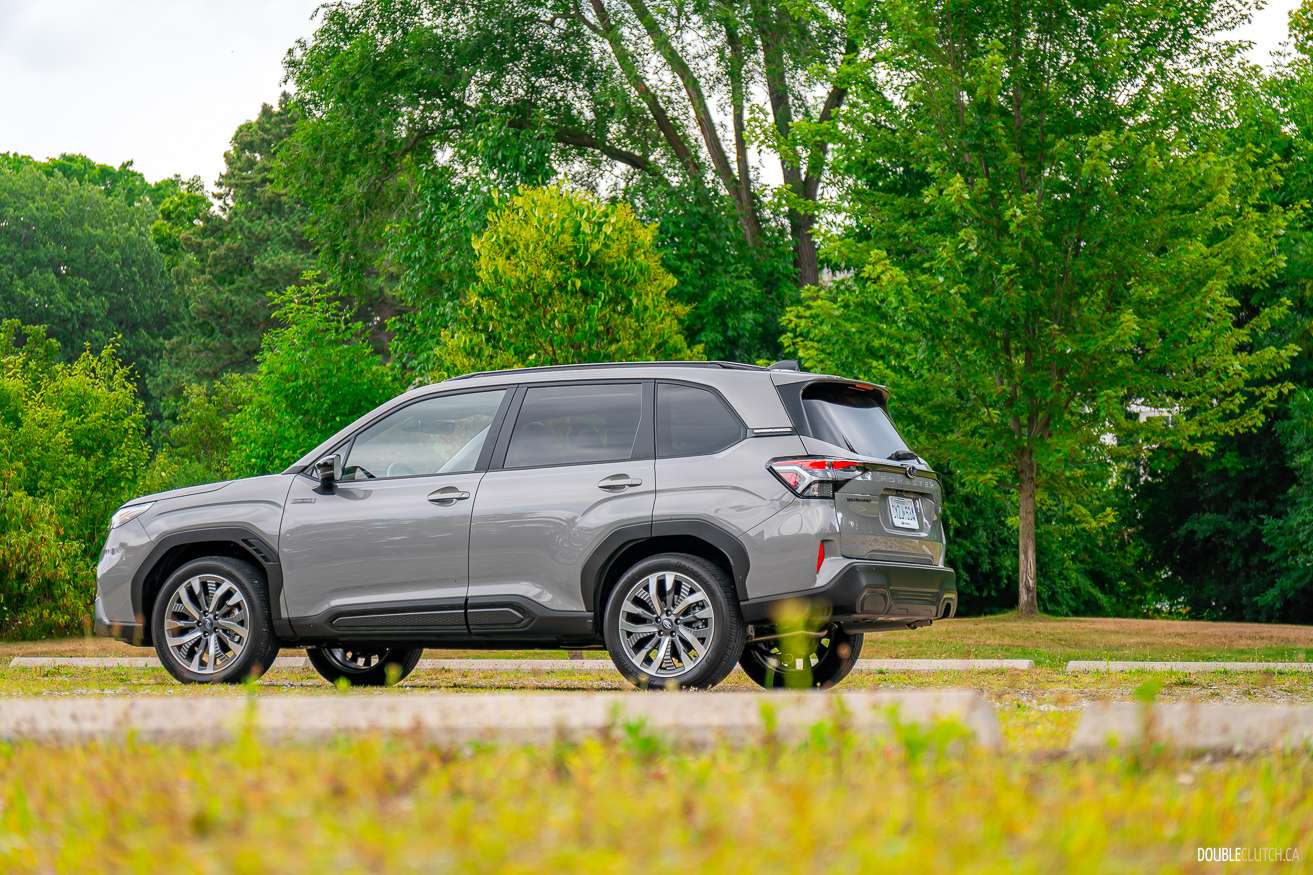
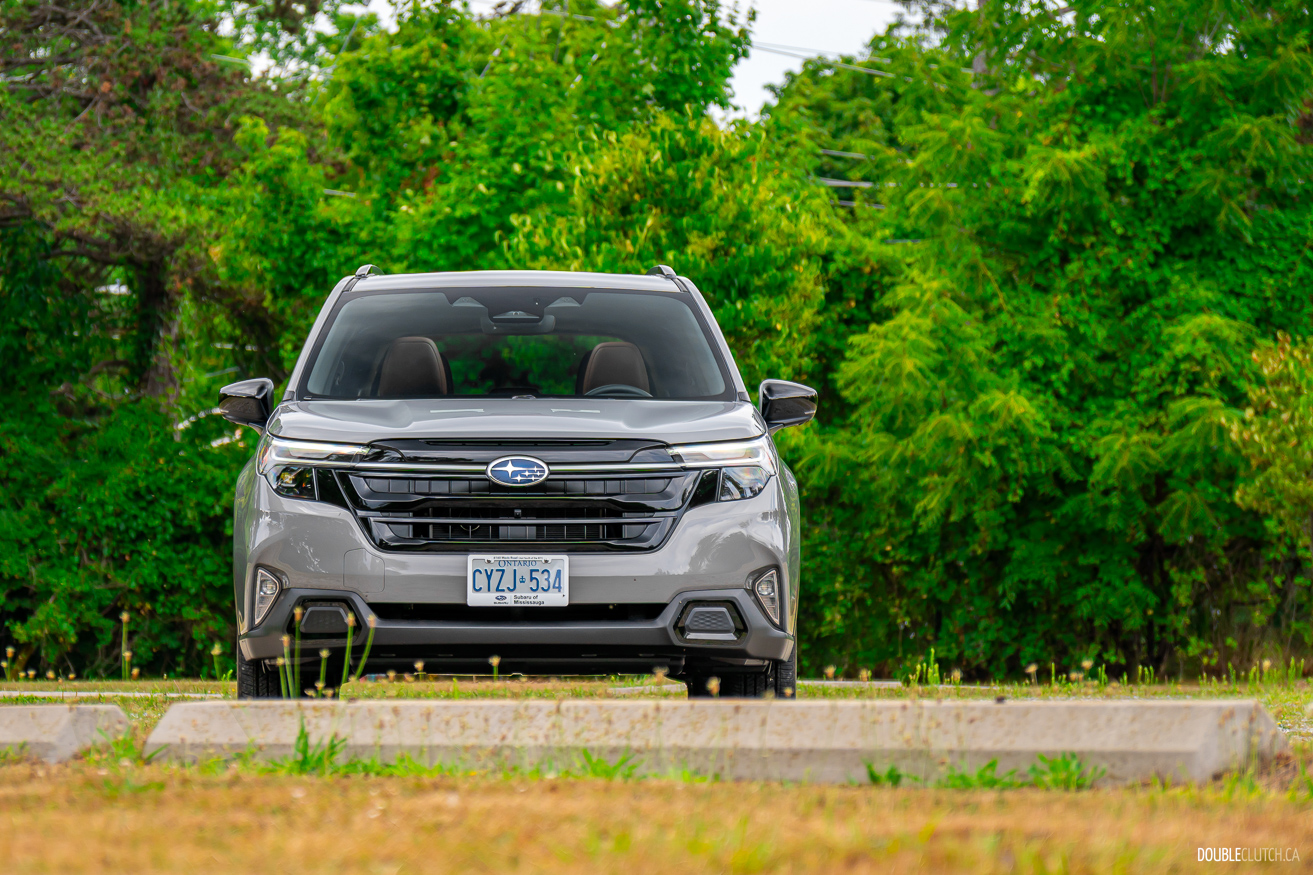
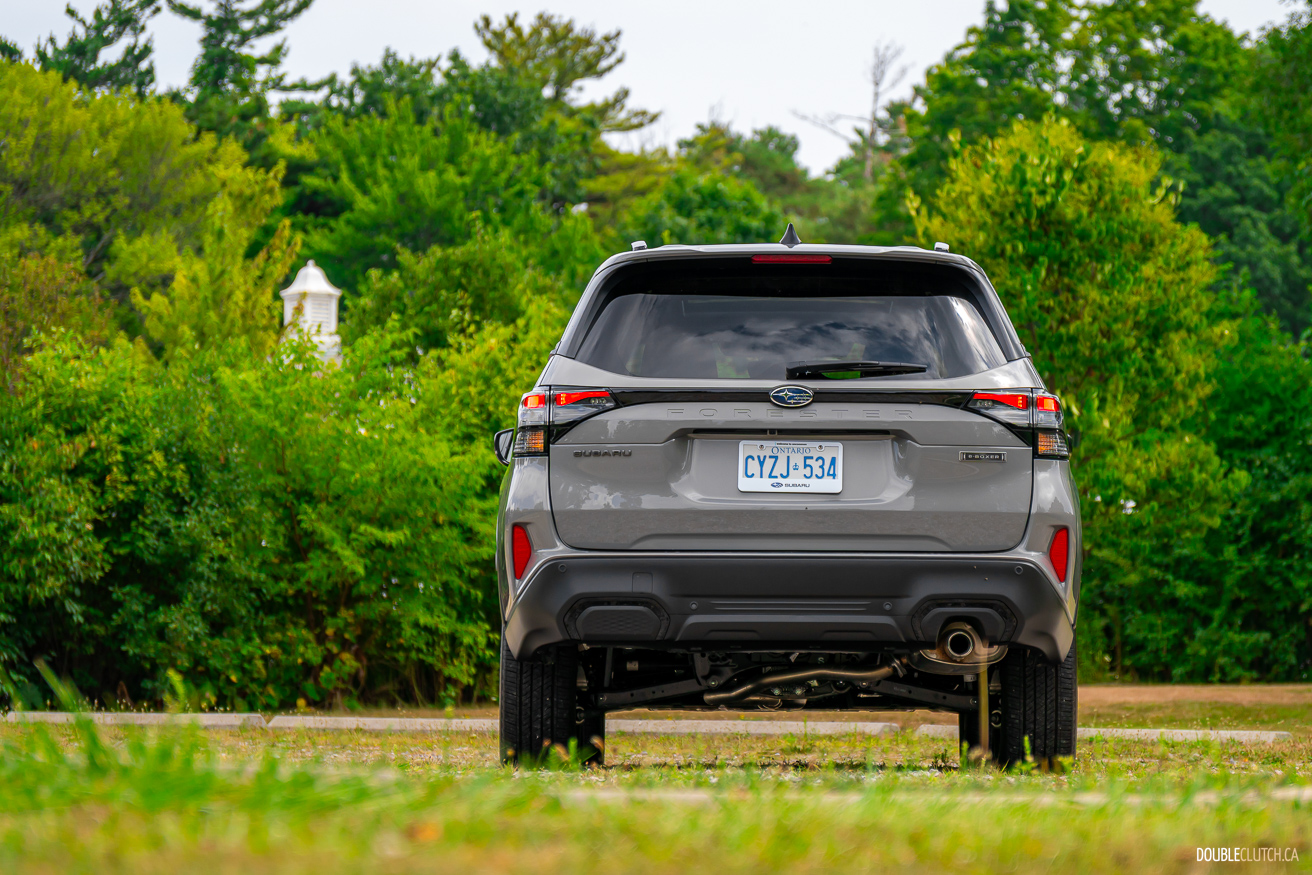
Subaru today is very different than what it was throughout the 1990s and 2000s. The rally-bred WRX STI was the talk of the town, and STI-versus-Evo debates dominated enthusiast circles. Jump to 2025 and the WRX STI is a distant memory, but Subaru’s mainstream offerings have struck a chord with buyers looking for reliable, inexpensive, and safe all-wheel-drive transportation. Saving a few bucks at the pump is nice, too, so the new 2025 Subaru Forester Hybrid has the goods to bring even more buyers into the fold.
What’s new for 2025?
The redesigned, fifth-generation Forester debuted last year, and this new hybrid version follows a few months later. It expands on Subaru’s partnership with Toyota beyond the BRZ/GR86 and Solterra/bZ models, borrowing the hybrid technology used in the popular Toyota RAV4 Hybrid. If you’re going to use a hybrid system from another manufacturer, why not use one among the best in the industry?
Powertrain, driving impressions, and fuel economy
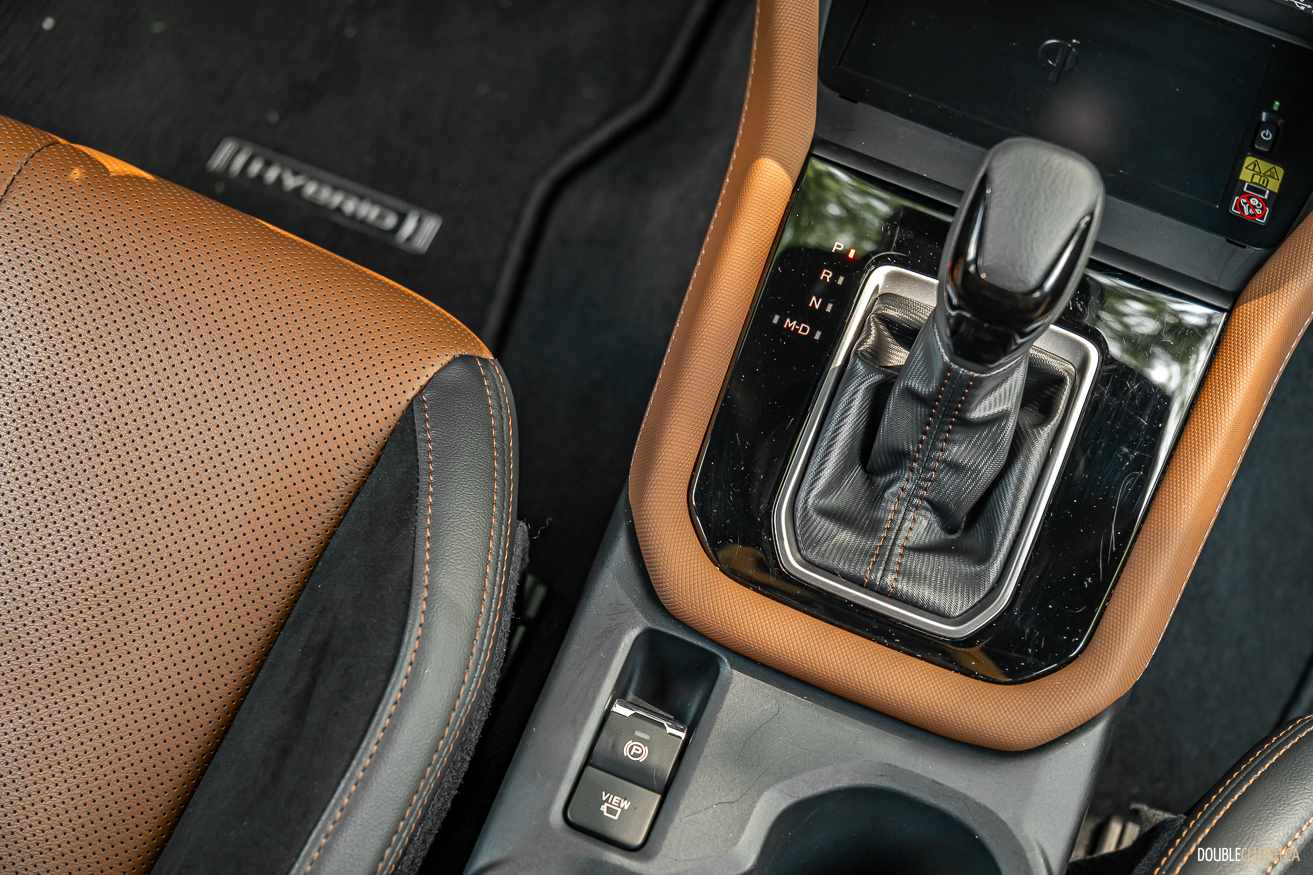
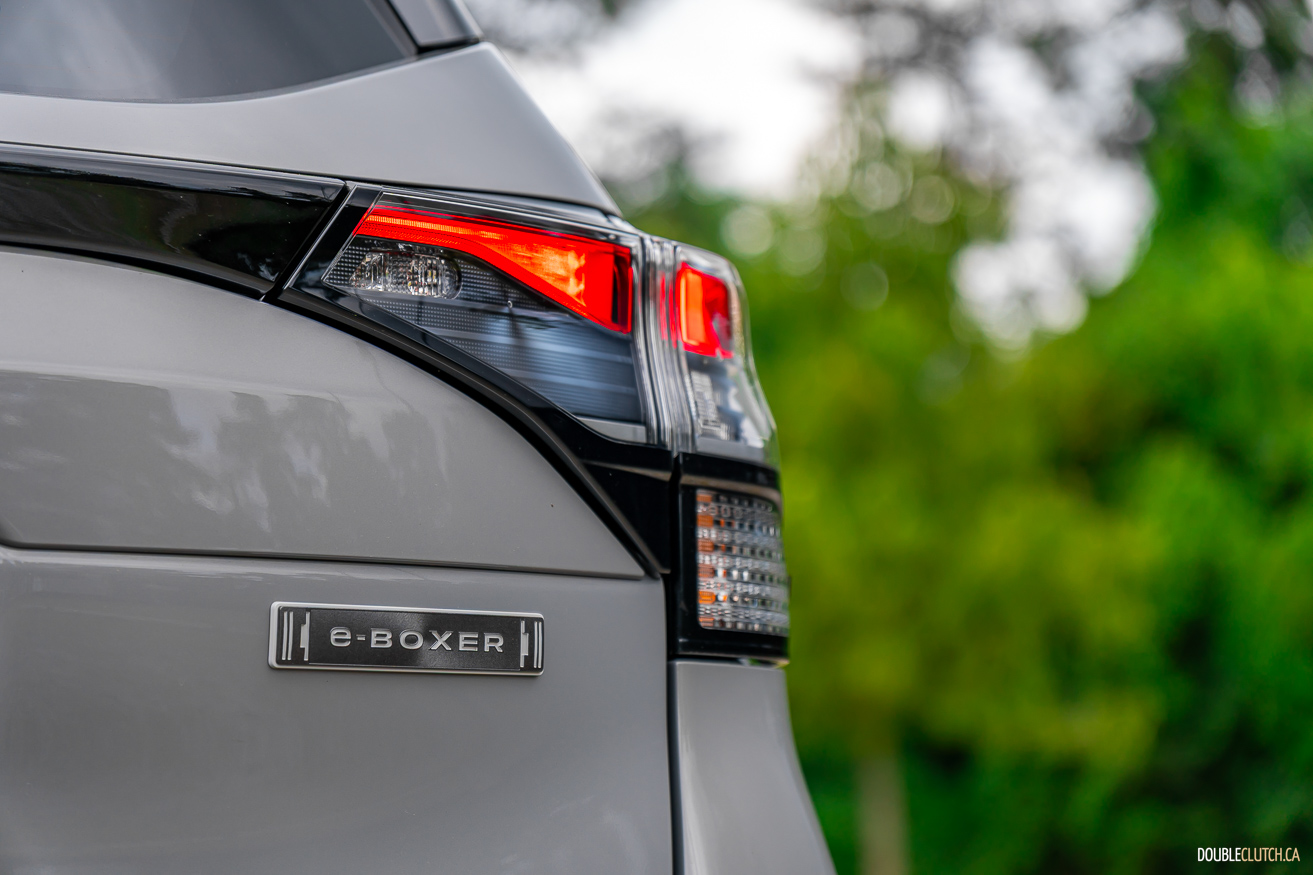
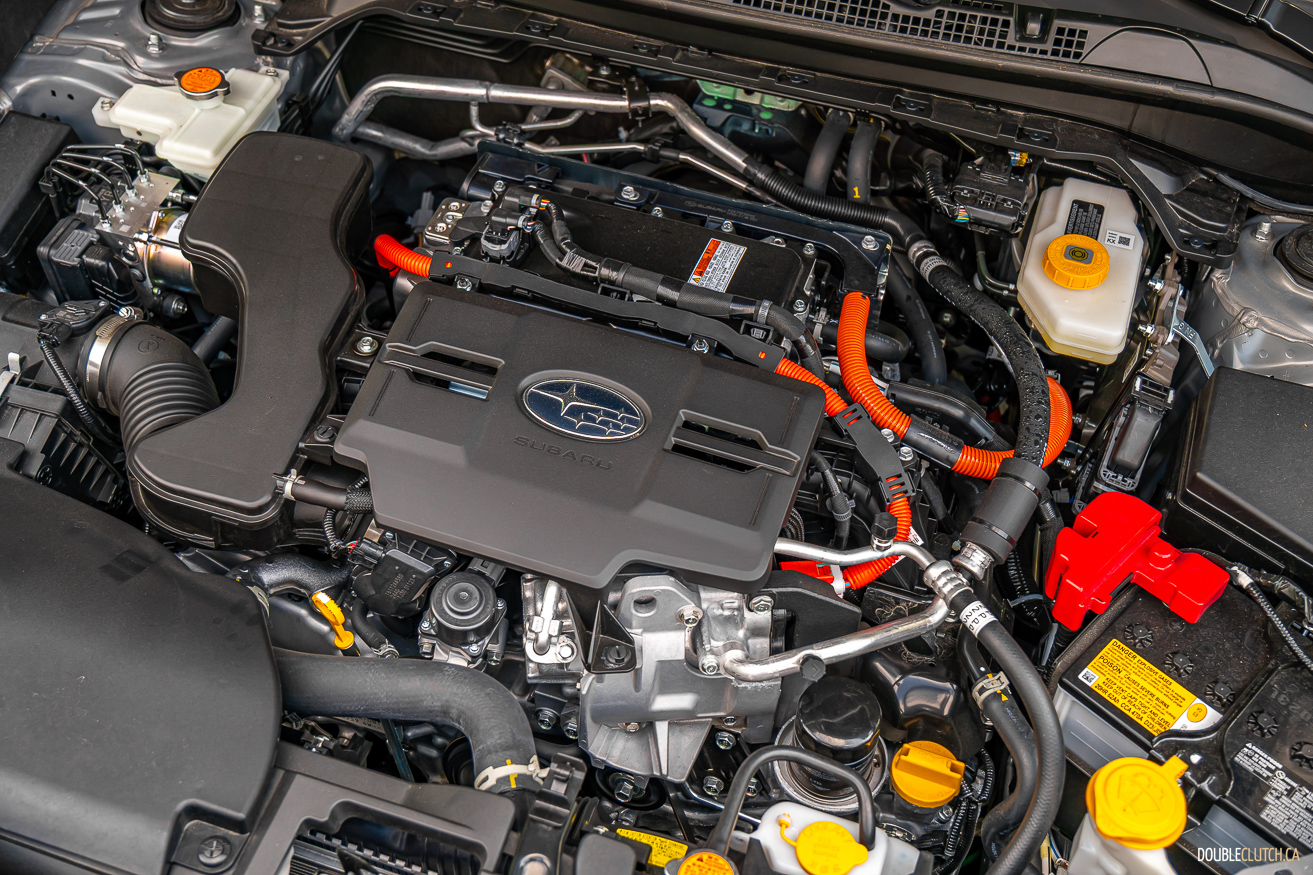
The Forester Hybrid isn’t the first non-Toyota to use the RAV4’s hybrid powertrain. The Mazda CX-50 does as well, but Subaru makes it their own by pairing their 2.5-litre Boxer four-cylinder engine to Toyota’s electric motors and batteries. Total output gets bumped to 194 horsepower and 199 pound-feet of torque; it’s only an extra 14 hp, but it’s noticeable, taking off with more gusto from a stop than the gas-only Forester. Power comes on smoothly, and even with the CVT, the powertrain feels quiet and refined. It finds its stride around town, sipping gas while giving you that signature four-season Subaru confidence.
Another area the Forester Hybrid differs despite the shared powertrain is its all-wheel-drive system. Unlike the RAV4 and CX-50 Hybrids, the Forester uses a physical driveshaft to connect to the rear, rather than an e-AWD setup. It’s as sure-footed as ever, handling some not-so-perfect city streets on one very rainy commute with ease. It gripped well, resisted hydroplaning, and the all-wheel-drive kept me on track through some very deep puddles. No muss, no fuss.
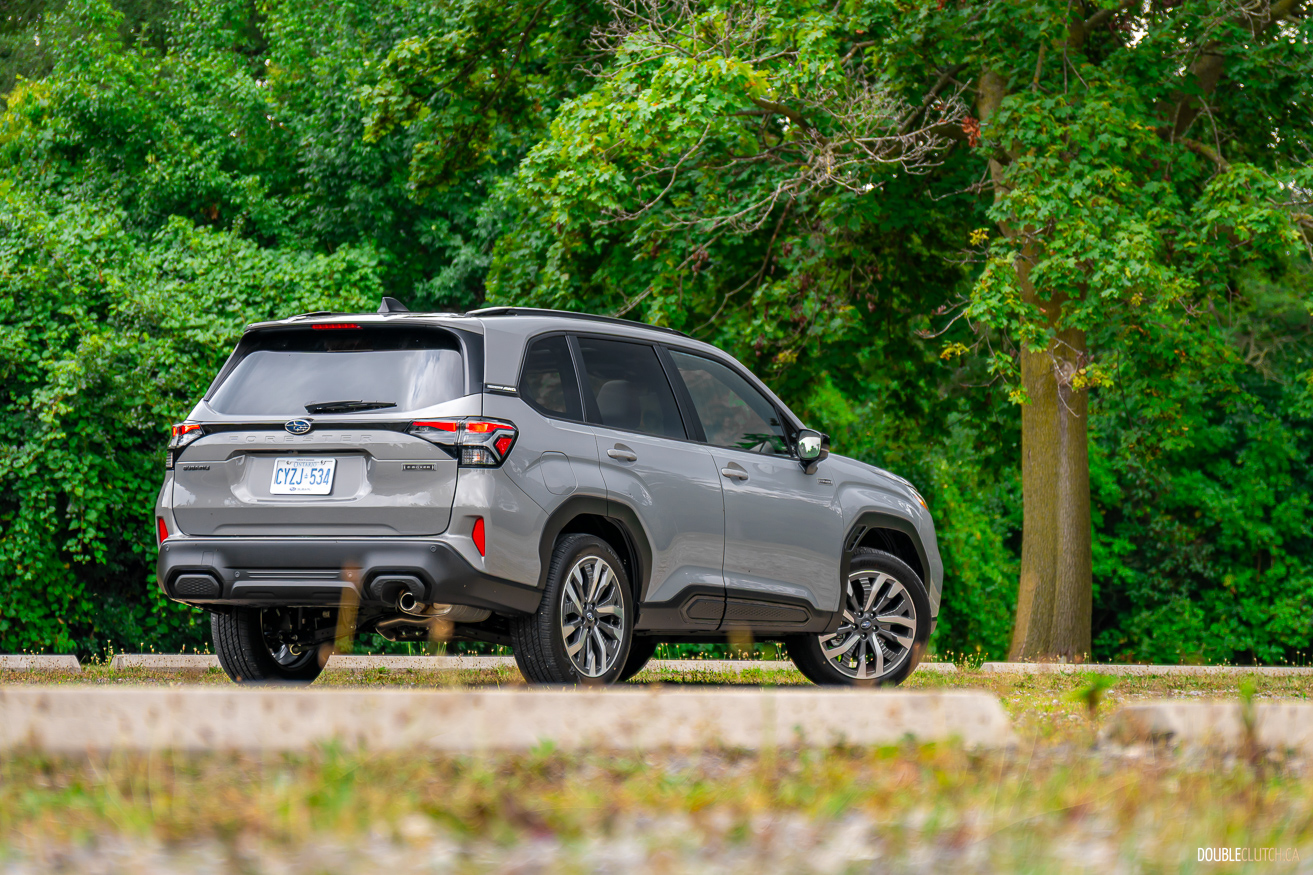
Ride quality with the Forester Hybrid is excellent. It’s smooth and exceptionally quiet, even compared to the RAV4. As a daily driver, prepare to feel relaxed as the Forester doesn’t beat you up, but rather soaks up road imperfections with ease. A long time ago, “sporty” and “Forester” might’ve belonged in the same sentence, but look at the Honda CR-V or Mazda CX-50 hybrids if sportier handling is more up your alley.
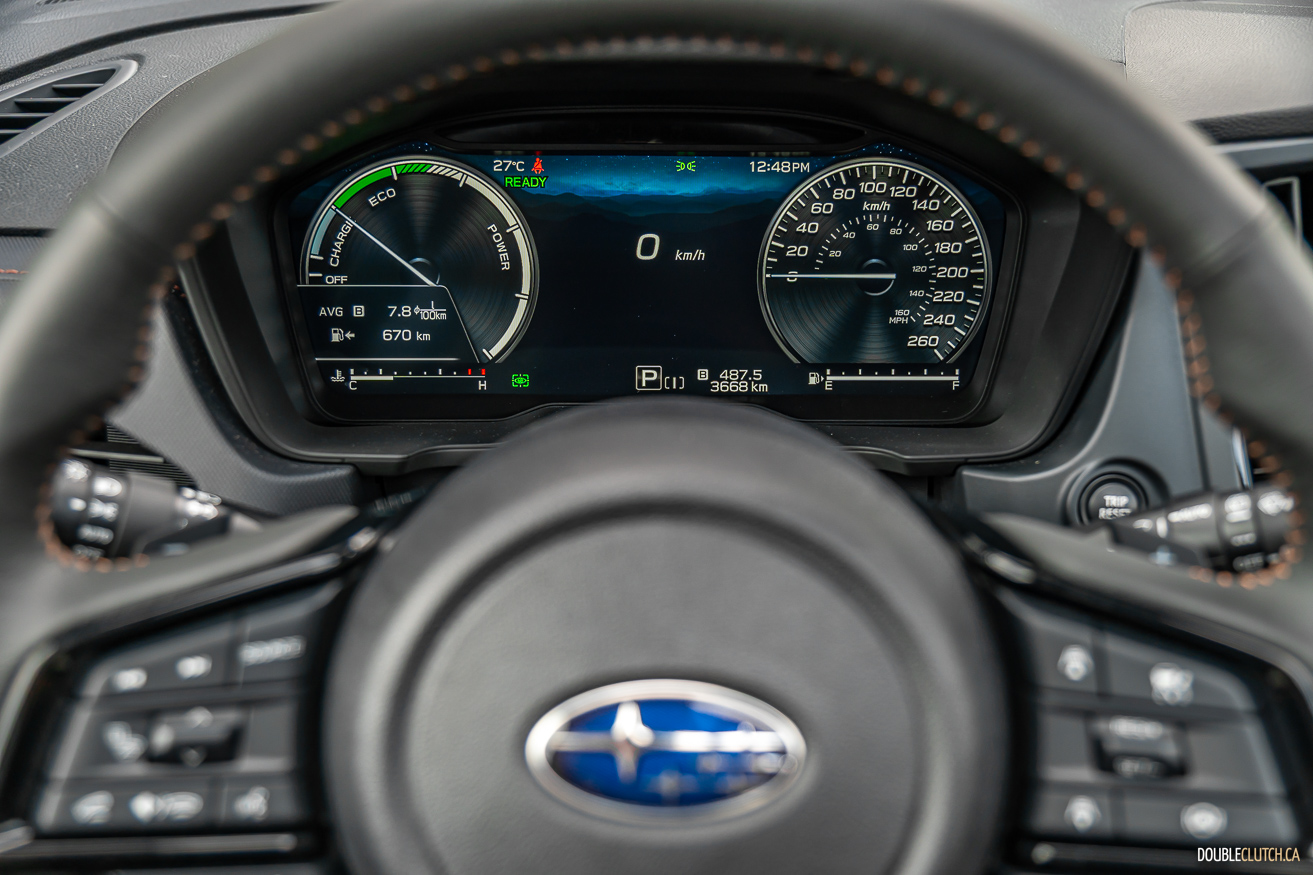
Fuel efficiency is the name of the game here. Using regular-grade fuel, expect to save quite a few dollars at the pump. Subaru rates the Forester Hybrid at 6.8 L/100 km in the city, 7.0 highway, and 6.9 L/100 combined. Even keeping the Forester Hybrid in Sport mode for most of my week with it, I achieved an impressive 7.2 L/100 km, which isn’t far off from official estimates.
How’s the Forester Hybrid inside?
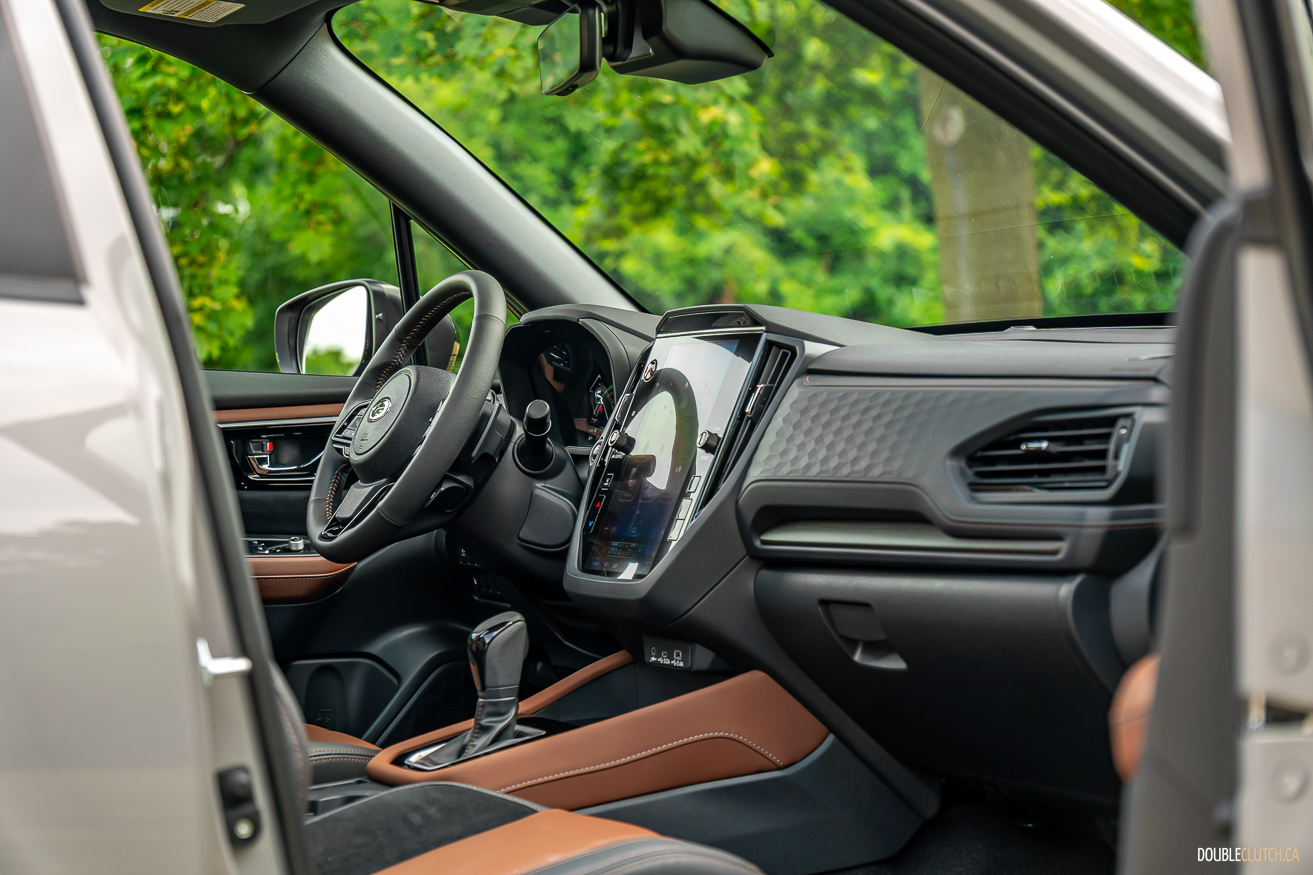
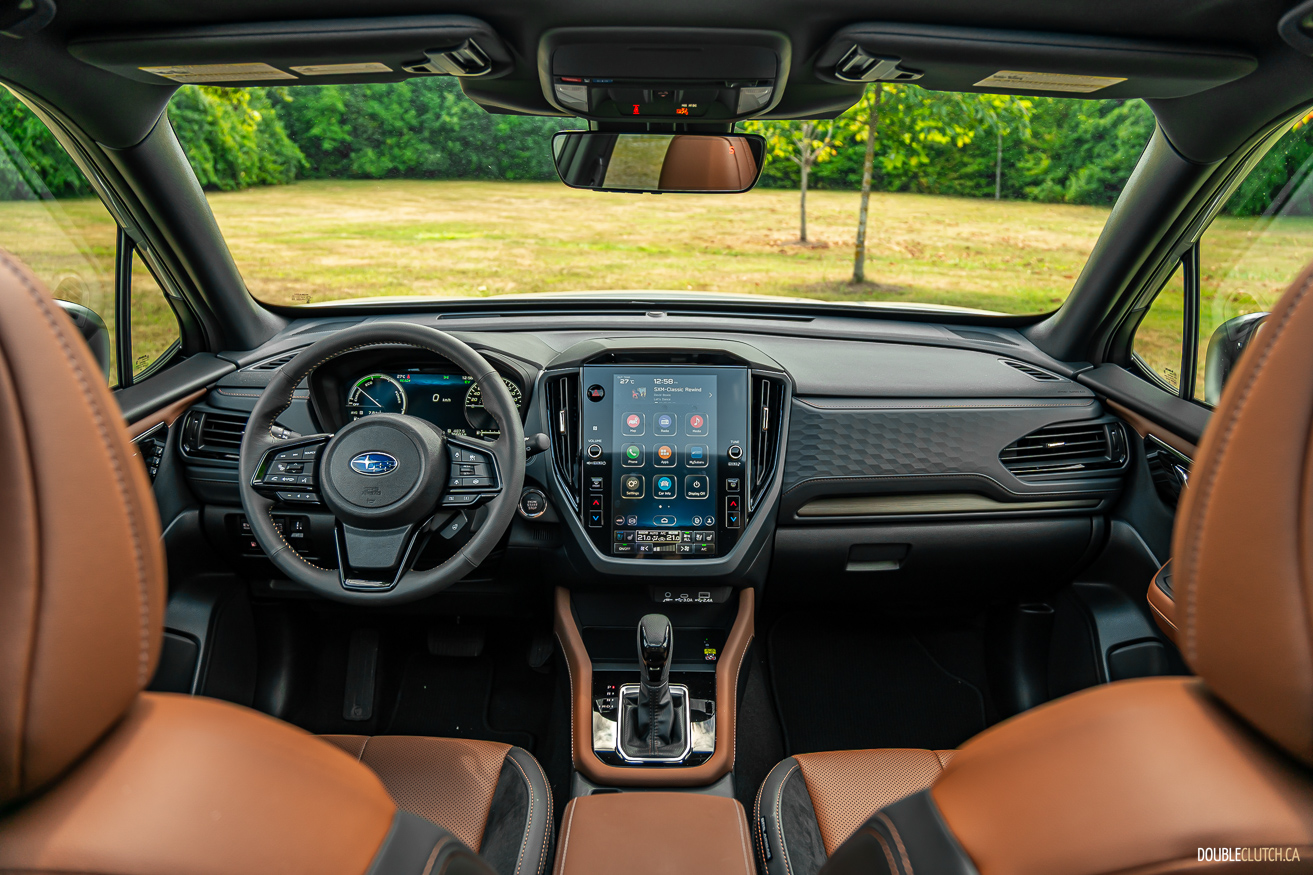
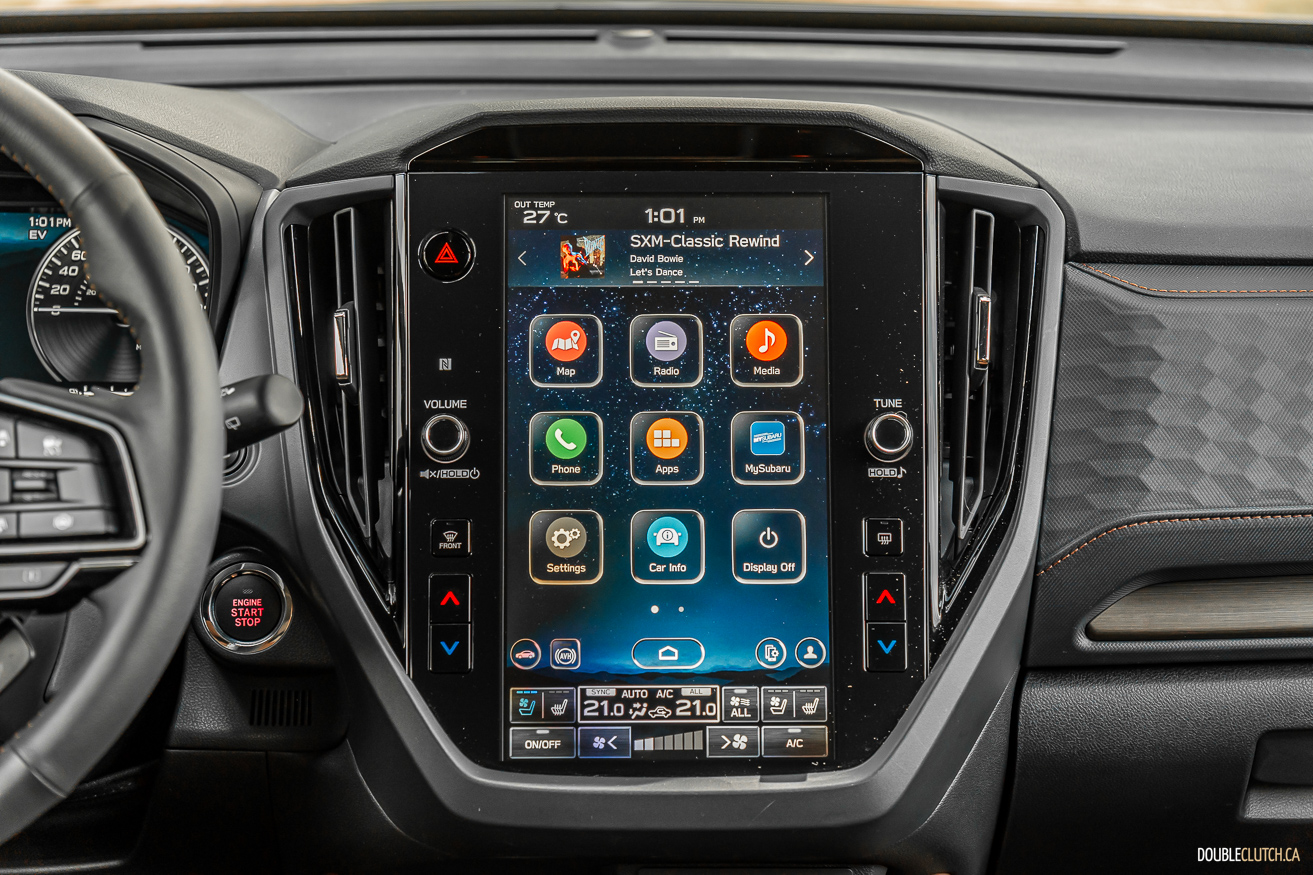
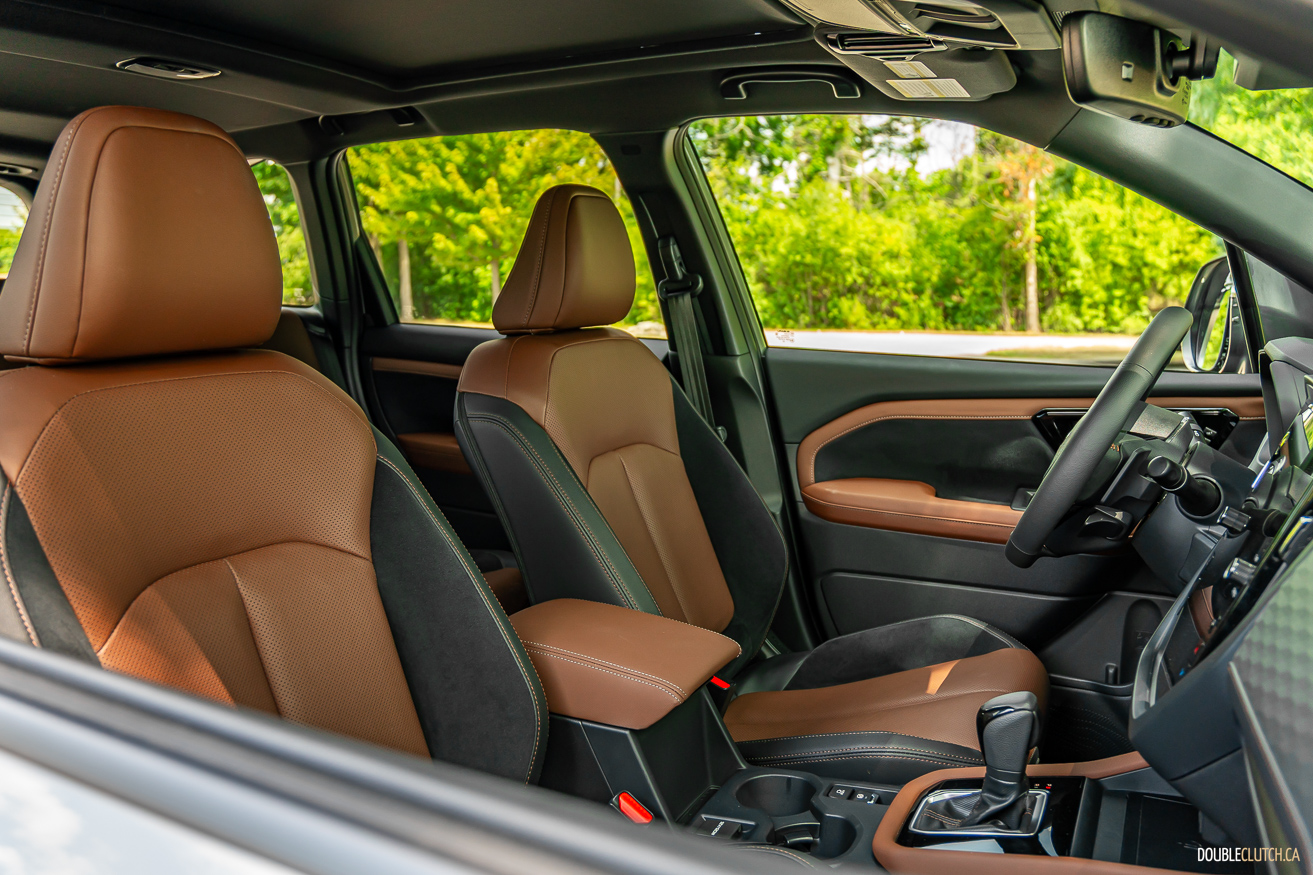
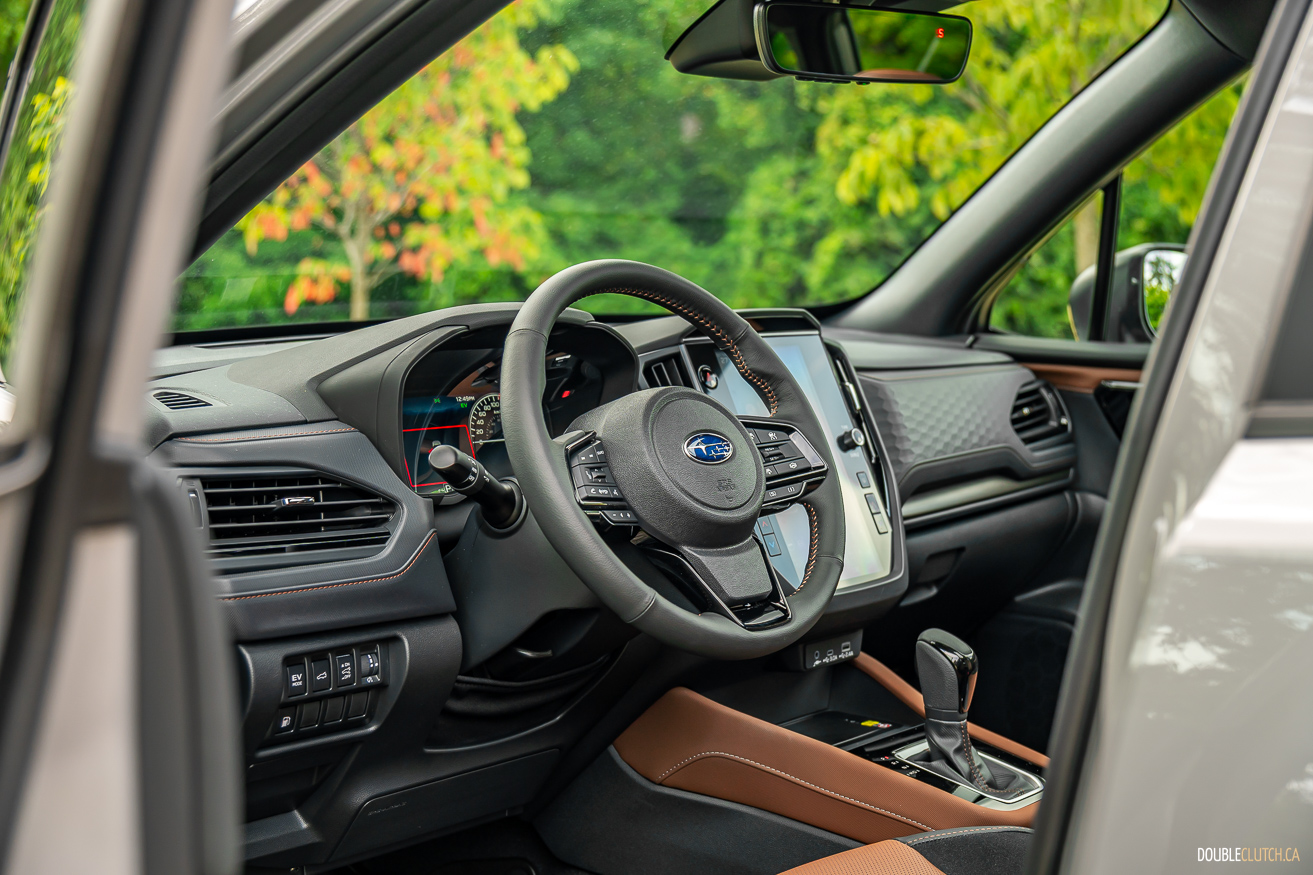
Inside you are treated to Subaru’s typical interior layout. The vertical infotainment screen is present whether you like it or not. I fall into the latter; the 11.6-inch screen still doesn’t integrate Apple CarPlay or Android Auto as cleanly as other vertical setups, but thankfully, both can connect wirelessly. The infotainment system maybe isn’t the smoothest out there; it would sometimes lag when I’d try to swipe across the screen with CarPlay connected, and even freeze on occasion. For now, Subaru only offers the hybrid powertrain with the loaded Premier trim—more on that later—meaning standard niceties like built-in navigation, an upgraded Harman Kardon sound system, and a new 12.3-inch digital gauge cluster.
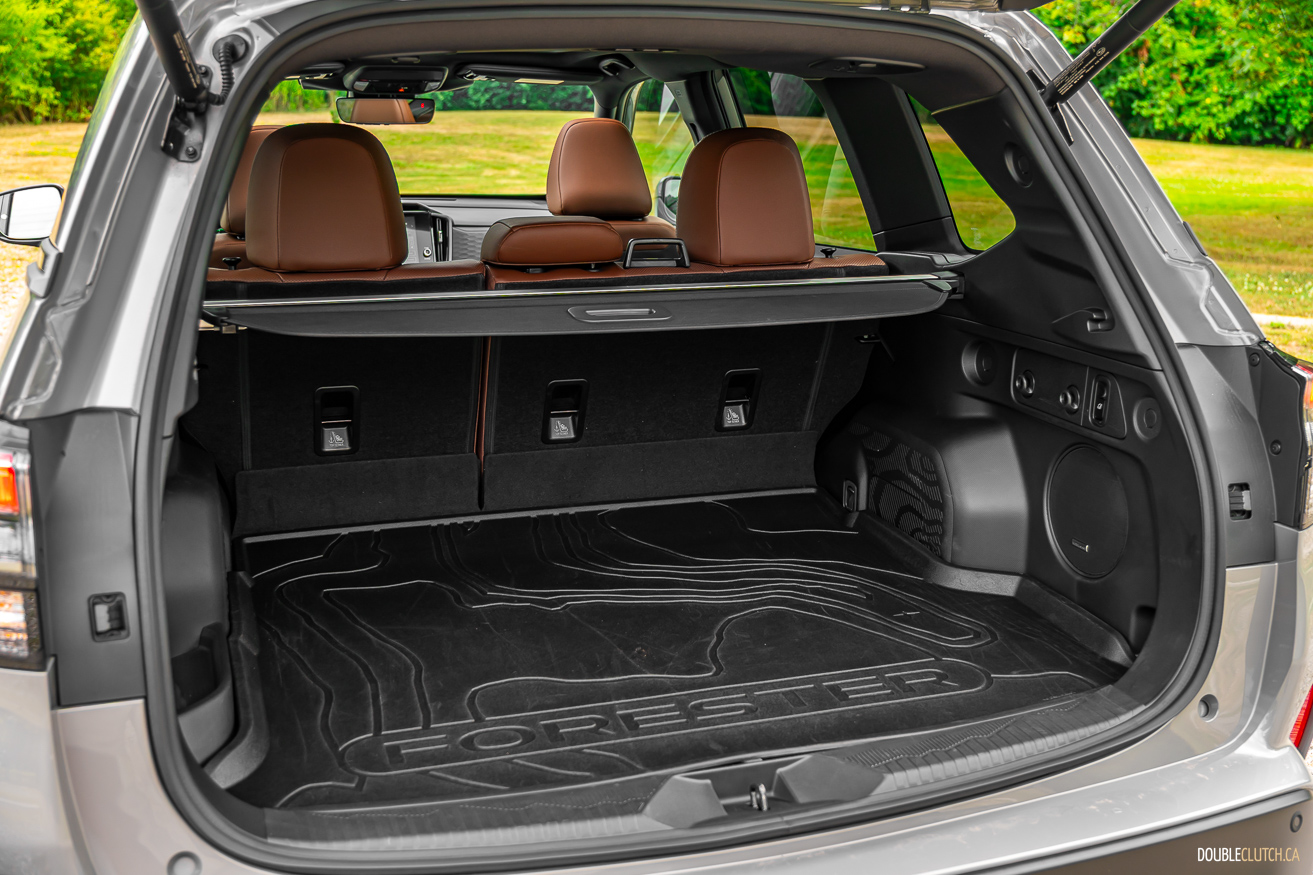
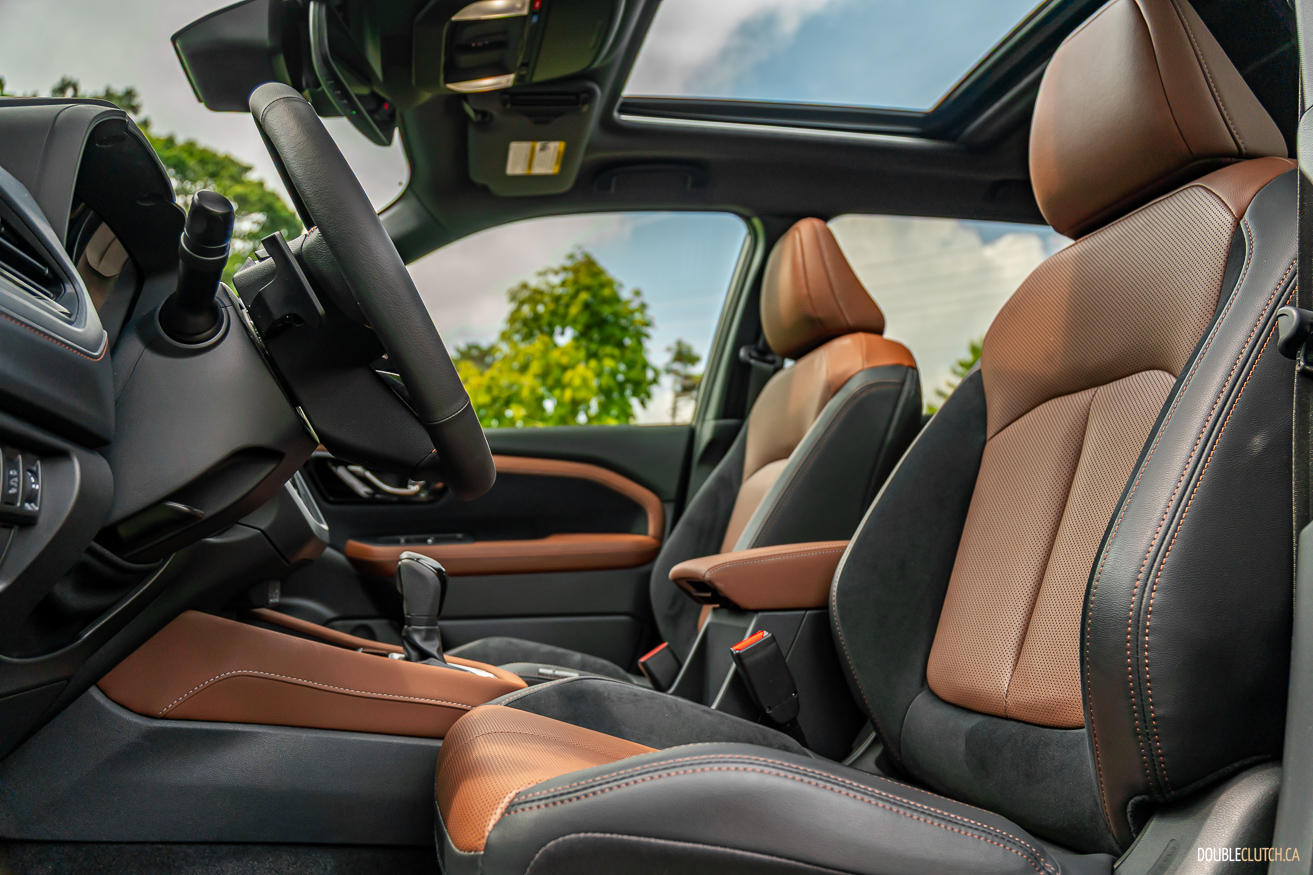
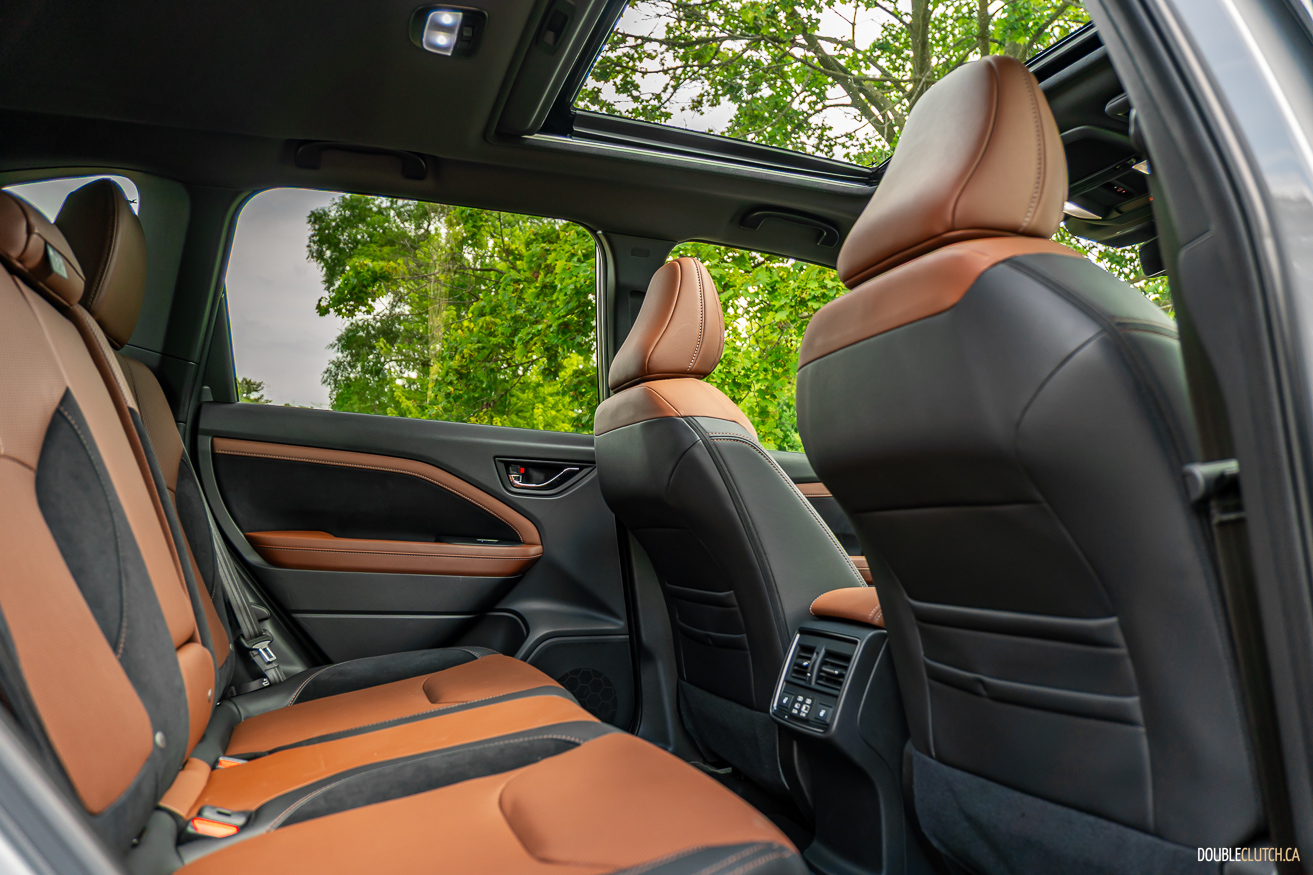
Materials are within spec in the segment. It’s not super luxurious, but the soft-touch plastics and leather upholstery feel good. Build quality is good and typical Japanese; not a squeak or rattle was present even on the roughest roads. There’s good space front and rear for both rows, tons of headroom is available due to its tall greenhouse, and 779 litres of cargo space behind the rear seats. Drop the second row and that increases to a competitive 1,957 liters. Road trips to the cottage loaded up are handled with ease.
Is the Forester Hybrid worth it?
Pricing for the 2025 Subaru Forester Hybrid comes in at $48,195 as-tested, plus destination, fees, and taxes. There are no special packages or extra costs for the available paint colours, but still, that’s a long way off a base, gas-only Forester Convenience and its $33,695 starting price. Where most other competitors offer hybrids on lesser trim levels, Subaru is locking their hybrid to the most expensive top trim for now, which does limit its appeal.
So, pricing is the biggest challenge, at least for now. Once they open it up to lower trim levels, Subaru will have a winner on its hands, bringing in even more budget-conscious buyers hungering for better fuel efficiency. Until then, if you can justify almost $50,000 for a Forester with all the bells and whistles, the 2025 Subaru Forester Hybrid does a lot of things right, looks great, and feels well-polished.