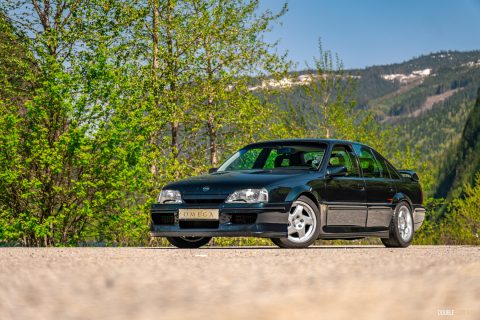
I suppose I should backpedal a little and explain why I’ve flown across the country to drive this museum piece of a Lotus Omega home. A dear friend of mine recently bought it, after going back and forth with its owner for months. The shipper he usually deals with wouldn’t have be able to collect the car for at least a month; being a somewhat eager man, he wanted the car now. So I was sent to bring it home with just a couple of days’ notice.
In his defence, I was also eager to see the car, and volunteered. I didn’t think he’d actually take me up on it, because was mostly kidding. It’s a ridiculous idea — but then again, we’re both ridiculous men.
This is the second chapter of a five-part series about my journey with this car.
One · Three · Four · Five
I landed in Victoria, B.C., shortly before lunch on a Thursday morning and proceeded straight to Porsche Centre Victoria, where the Lotus Omega was waiting. I’m not much of a planner and hadn’t booked a single thing, preferring to fly by the seat of my pants and see how it all went. After all, what’s the point of booking hotels if I don’t know my mode of transportation would even be fit enough to make it the first stop, let alone the fourth? Not only is this Omega a 35-year-old car, it’s a very exotic 35-year-old European car with approximately zero local parts support if anything beyond the most basic should go wrong.
Moreover, I’ve inspected and bought, both professionally and personally, so many cars that I’ve very cynically come to assume every single car might as well be on fire right now until I’ve personally verified it isn’t. Everyone thinks they take care of their car, everyone thinks they know best, and I’m no different. But I know we all have our little biases and become a little blind to things over time, like that intermittent no-crank problem on my old BMW that was definitely totally fine and not a failing starter; it’s just like that. When I was told the previous owner of the Lotus said he “wouldn’t hesitate to drive it anywhere,” I knew I was embarking on a voyage of the damned.
I spent the morning before my flight reviewing a Dropbox file containing photos and documents detailing the extensive reconditioning work that went into this Omega prior to its sale, as well as a detailed photo gallery of the car’s current condition. It presented very well: it was spotless underneath, the cooling hoses looked fresh, the fluids were all renewed, the brakes were rebuilt, the tires were new — the list went on, and had dizzying dollar figures attached. This seemed about as legit as an old car could get. It’s probably fine. Famous last words.
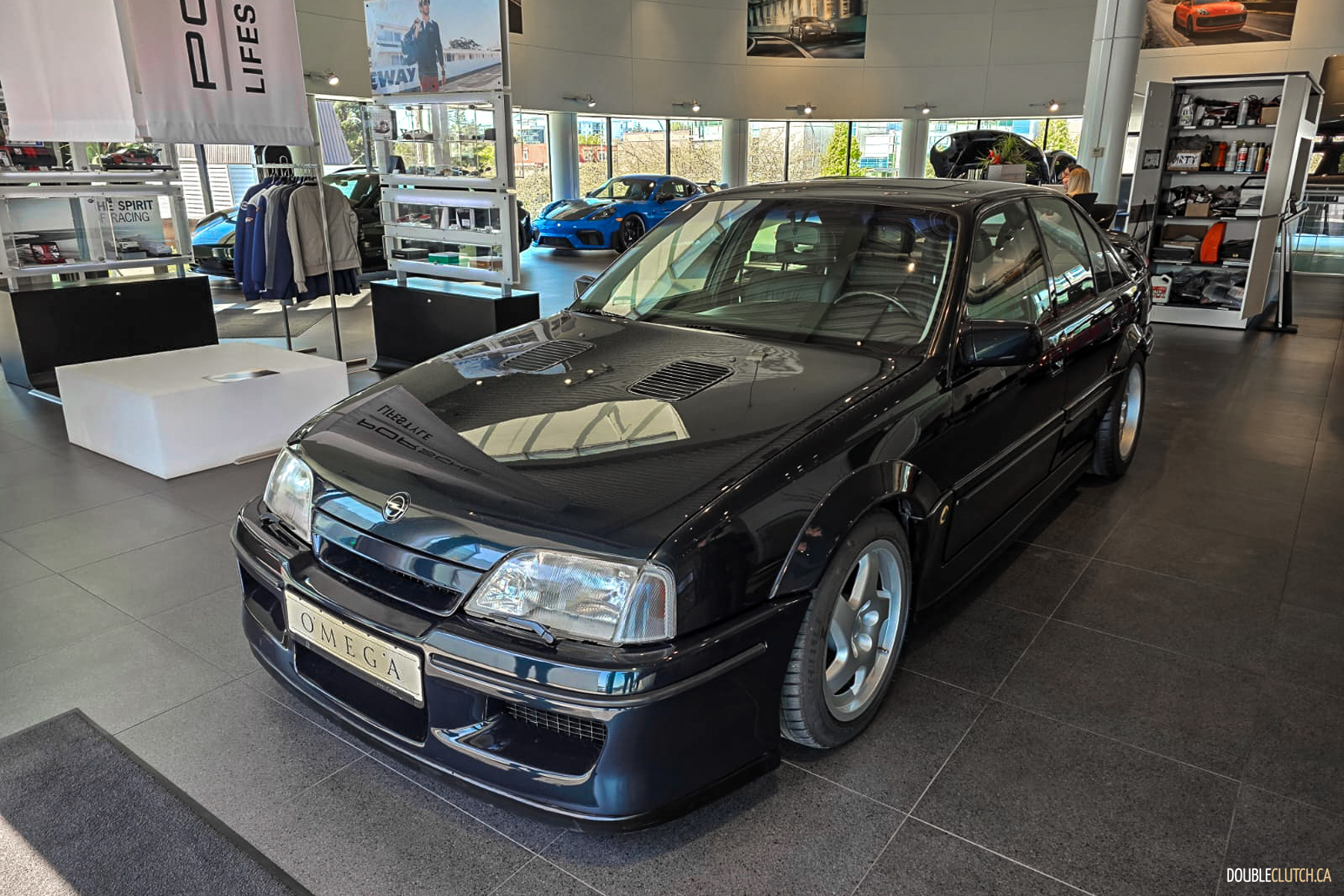
When I arrived at Porsche Victoria, the car wasn’t on site. While they fetched it from storage, I chatted with Matt, a Porsche brand ambassador at the dealer. He oversaw the exchange.
“I hope you’ve got a strong leg, because the clutch in this thing is heavy,” he said. When they pulled up and backed into the showroom, I was stunned. This isn’t supposed to be a real car. This was a car that, in my mind, only existed in the used car dealership in Gran Turismo 4 as an obscure curiosity. Now, I was picking it up from a very real car dealership very far from home.
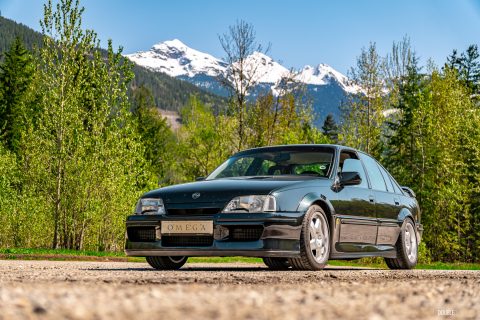
I looked over the car — money had already changed hands and none of it was mine, so I didn’t bother trying to hold a poker face — aghast at what I was seeing. It was real, and so very well preserved. With the exception of a sagging headliner, the interior could almost pass for new. The paint was excellent, save for a couple of spots of clear coat failure on the roof. The tires were fresh, and the engine bay was clean enough to eat out of.
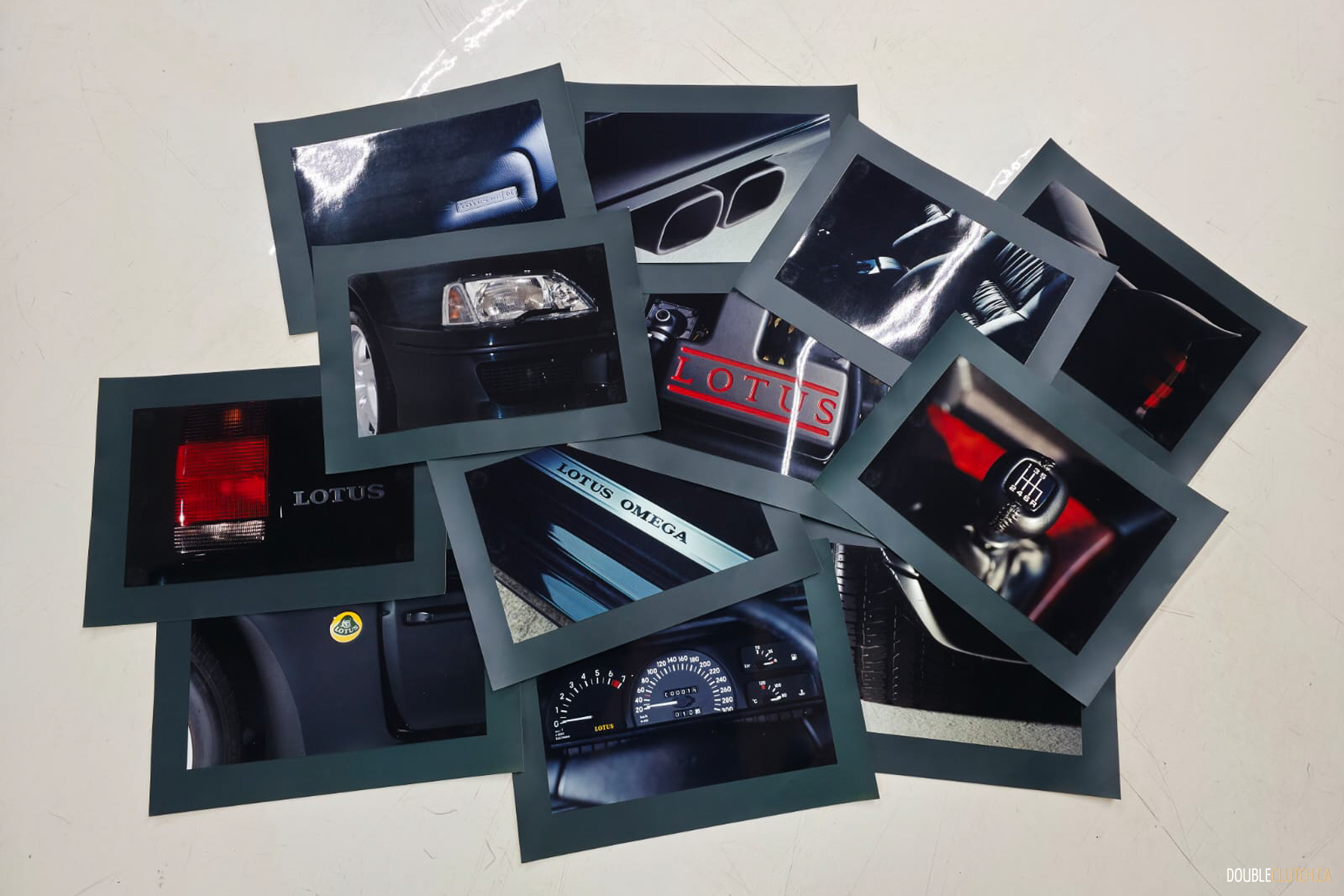
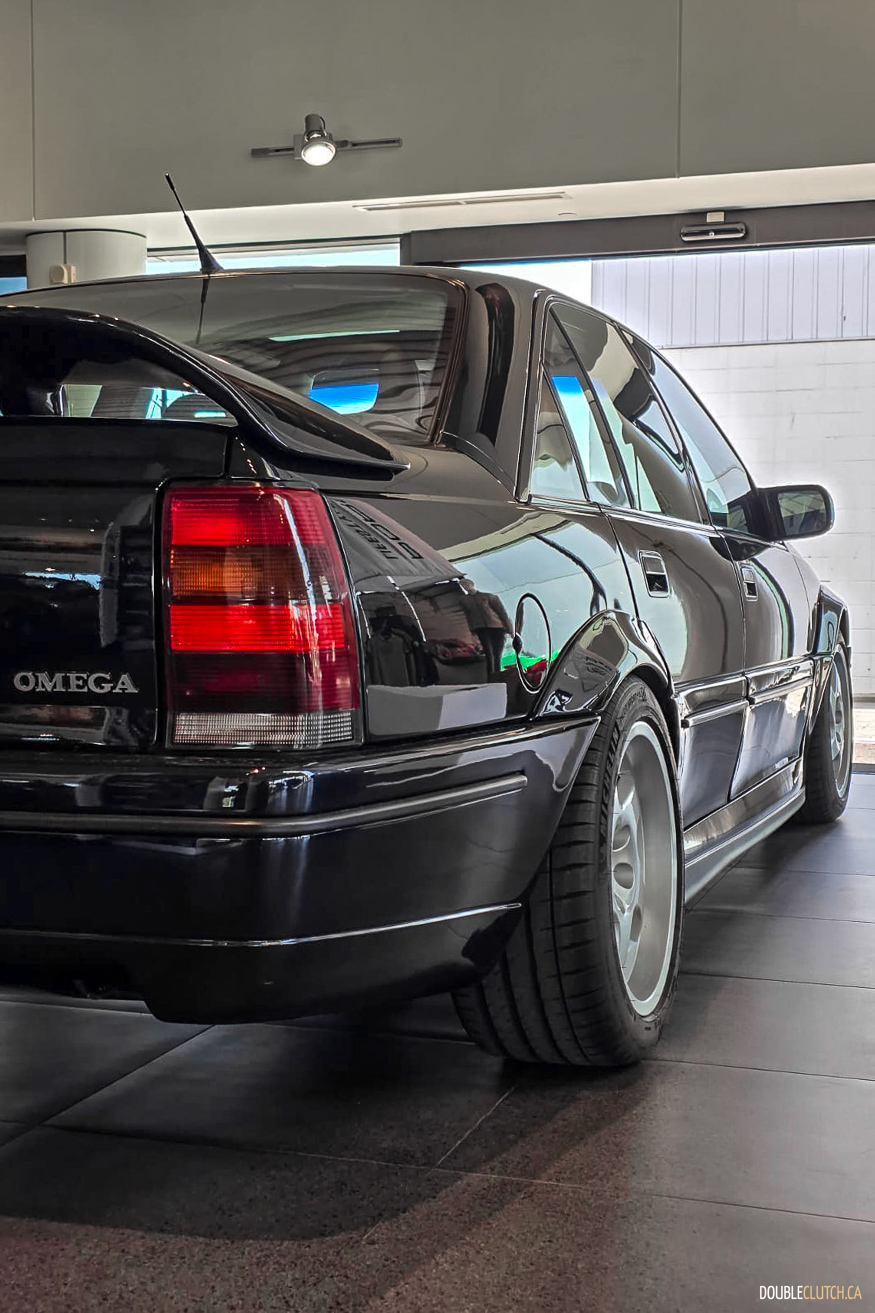
I could’ve spent hours poring over the contents of the trunk, like the 800-page technical manual, the three-inch binder of service history, the spread of promo photos of this car sent to Opel dealers, or the decorative LOTUS OMEGA 0002D license plate it wore while on display at the Paris and Geneva motor shows, but I didn’t want to take any more time nerding out. I loaded my junk in the generous trunk, plonked myself in the driver’s seat, and fired one of the very first Lotus Omegas to life.
There’s about half a second between turning the key and anything actually happening, which never stopped being unnerving. I guess, as is always the case with used cars, it’s just like that. It fired to life quickly and quietly, with a muted, industrial grumble of its straight-six mill. To be honest, I initially wrote off Matt’s warning about the clutch, but he was right. It’s brutal, reminding me of my first BMW and its ridiculously heavy, grabby, low-biting clutch that no one else could drive. I learned after a year it was not, in fact, “just like that.”
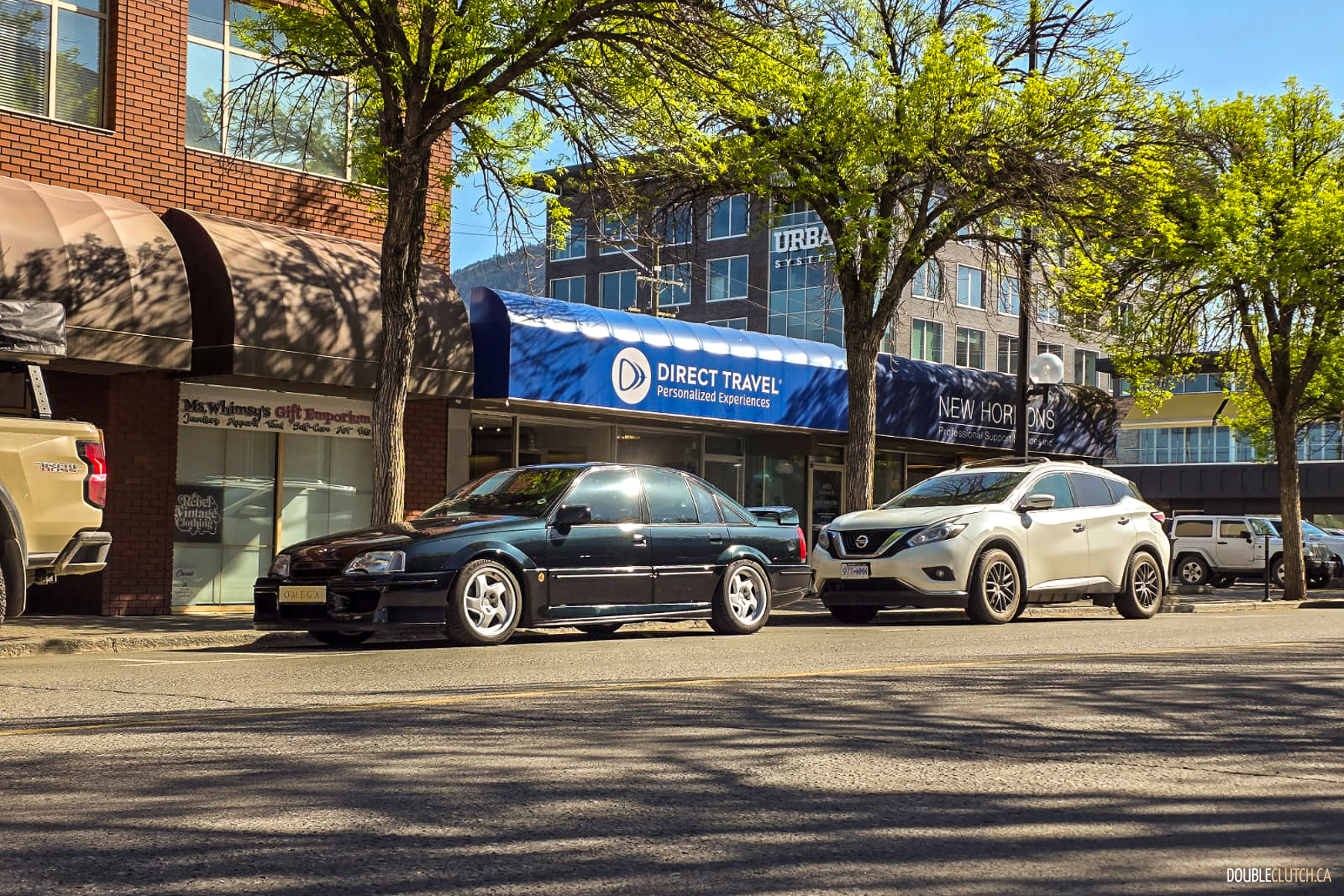
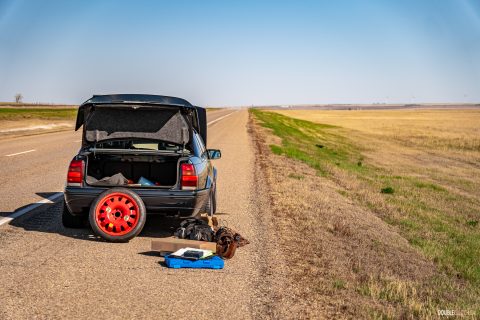
Easing out of the showroom, I went straight to a Best Buy around the corner to get a windshield mount for my phone, then to the aforementioned Canadian Tire for some preemptive supplies and spares. I planned to buy a jack as well, but decided against it; the car was so complete that surely it must still have its original tire change kit intact. More importantly, none were on sale. Who pays full price for anything at Canadian Tire? [Amen. —Ed.]
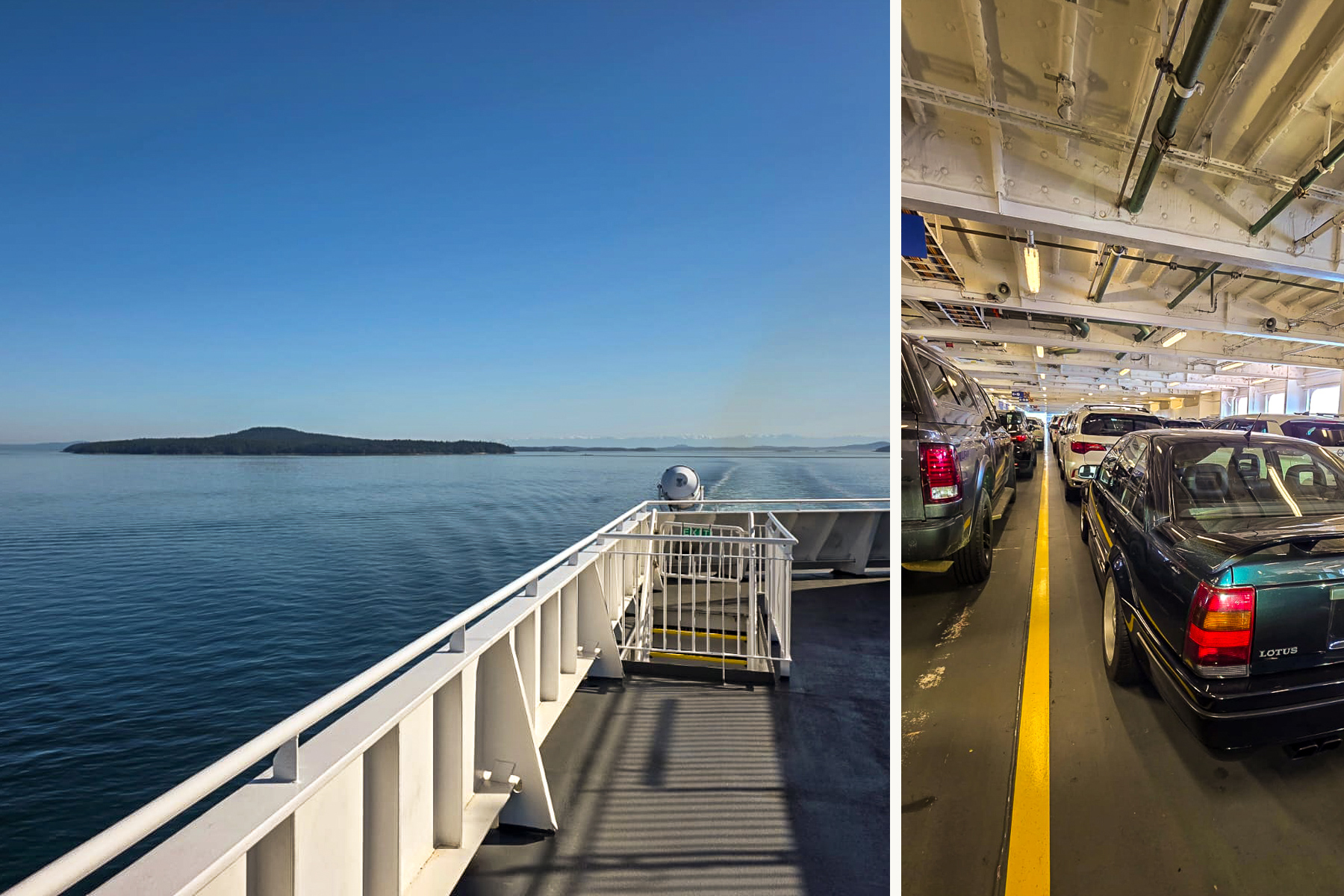
I set off towards the Swartz Bay Ferry Terminal, which Matt urged to book in advance — so I did, while I waited for the Omega to come out of storage. I’d have loved to see more of Victoria and Vancouver Island, but I only had time for a brief coastal detour, where I learned as a result of the huge wheel spacers having been fitted, the rear tires rubbed quite badly on the bespoke bodywork over heaves in the pavement. I filled it with 93-octane gas, checked the tire pressures, engine oil, coolant, and brake fluid levels, and headed for the ferry.
It was surreal to be in such a special car, confined into such a small space surrounded by so many other people — and no one had the faintest idea of what I was driving. It was just an old four-door sedan to them. Little did they all know this car and its outrageous performance was seen as such a menace, that the UK parliament tried to ban it from public roads.
It was mostly a knee-jerk reaction to an incendiary column published in Autocar & Motor — today known simply as Autocar — prior to the Omega’s release. But its case for innocence certainly wasn’t helped by a series of robberies committed in a stolen Lotus Omega. The police were completely hopeless in trying to pursue, because once they got onto a motorway, the car was gone, even with a smashed front end from ramming through the facades of several stores.
And now, one of these cars was on a lackadaisical afternoon ferry ride on the other side of the world, with no one being any the wiser.
At the same time, I planned my route, a task at which Google Maps was frustrating useless. It refused to not cross the U.S. border and save piles of time getting home, but I wanted to avoid that, so I decided to try being modern and ask ChatGPT. It immediately generated a lovely intinerary and recommended stops along the way over nine days, which I would greatly accelerate. For example, it recommended my first stop be Vancouver, but I skipped it and the evening rush-hour traffic altogether. Instead, I opted to bolt straight to Kamloops, deep into the Rocky Mountains, some 350 kilometres away.
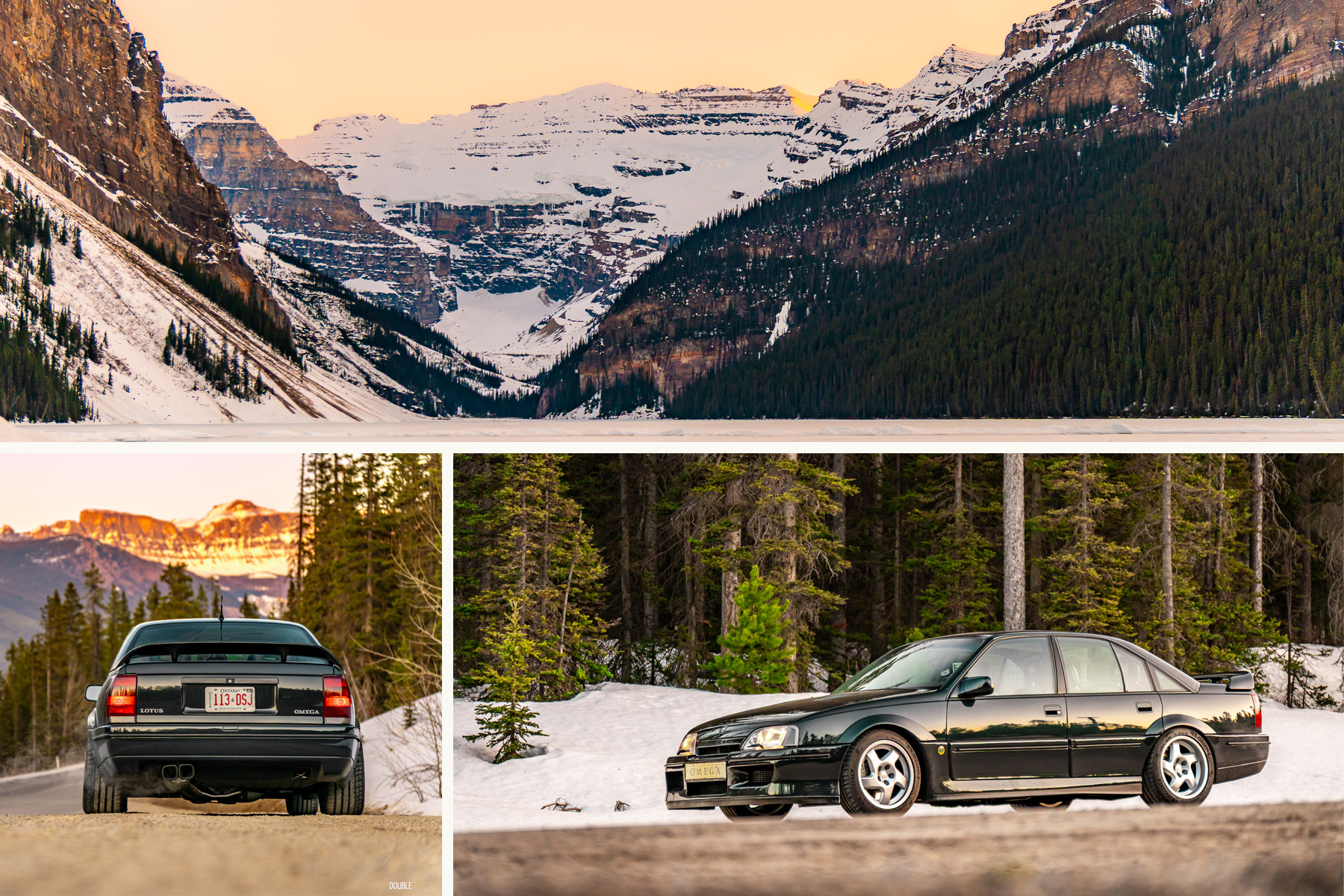
It was a reasonable goal for a shortened first day. I was still a little apprehensive of the car being an old, as-yet-unproven entity, and a little afraid of myself nodding off. It had been a very long day and I hadn’t slept the night before, but both concerns proved to be totally unfounded because he sunset drive up into the mountains was one of the most memorable of my life. Lotus wasn’t thinking about our side of the planet when they designed this car, but they inadvertently made the perfect car for British Columbia’s long stretches of picturesque winding highways.
The Omega’s driving position is excellent. The very low beltline leads to a sense of sitting high, with a commanding view of the road ahead and fabulous visibility all around. The cabin is very much of its time and place, dated but functional. Everything, from the decadent Connolly leather on the seats and pillow-soft armrest, to the velvet door cards, is ruched, wrinkled, or pleated — which was was the style at the time. The headliner on this one was wrinkled, too, but it wasn’t supposed to be, flapping in the breeze in the rear left corner, dislodged by wind turbulence and ancient adhesive giving up. Exceptionally intricate burled walnut veneer warms up the otherwise rather severe cabin.
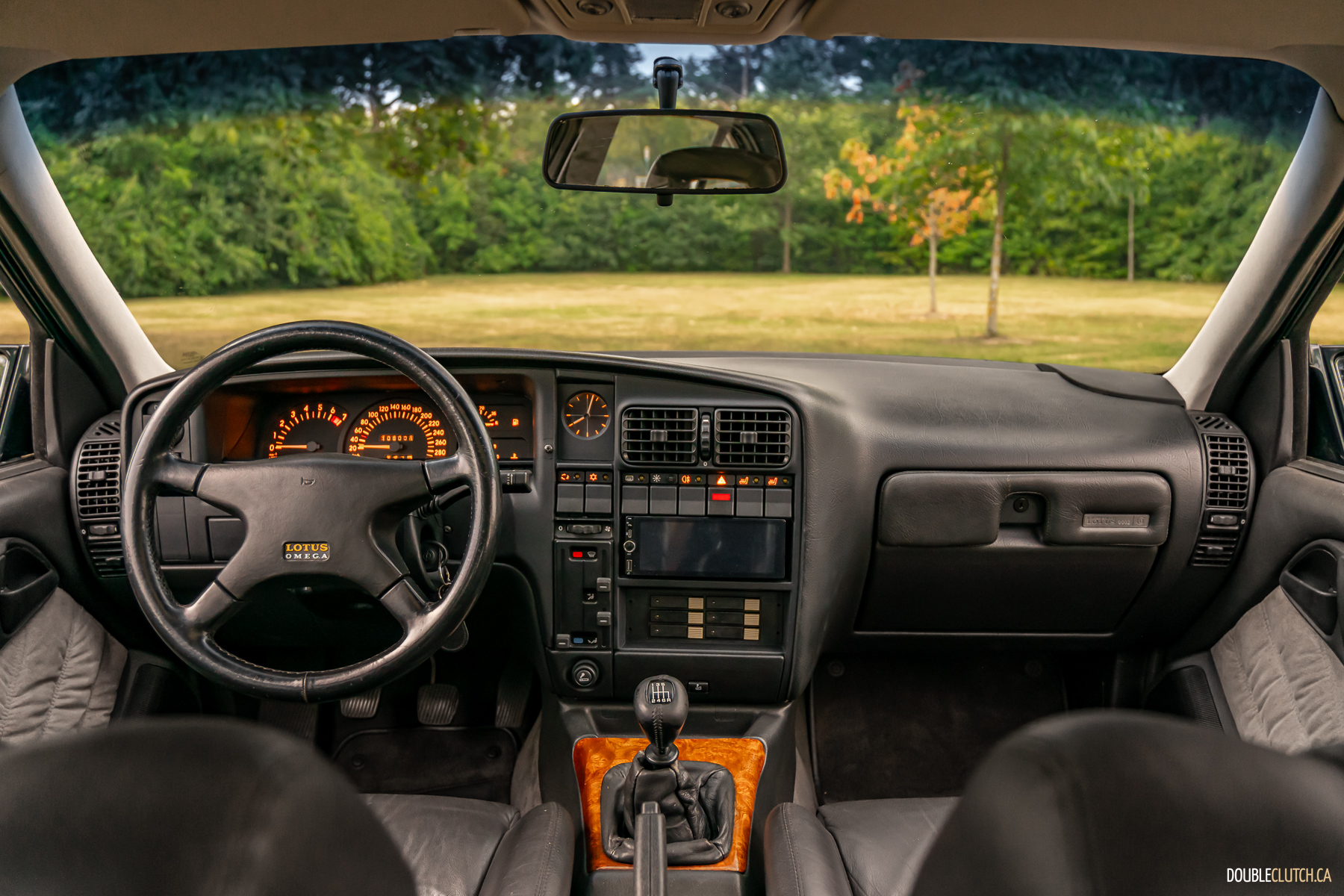
The climate controls are handled by vertical slider levers; if you’re not used to old German cars, they’re completely indecipherable. Major functions, like the hazard lights, heated seats, and air conditioning are handled by an array of almost garishly large rocker switches — and neither of the latter amenities worked anymore. The gauge cluster is rather plain, only made interesting by the bright yellow LOTUS lettering in the bottom of the tachometer, and the fact that the speedometer goes up to 300.
The engine is a smooth operator, its quiet character defying the raucous reputation of the vehicle it motivates. This was an era where refinement was still a noble pursuit; even a Ferrari 12-cylinder engine of the era was quieter than a modern Lexus performance car, or even a Hyundai without an engine at all. You have to adjust your expectations for a car like this, because for all the drama surrounding it, it’s very undramatic. Some might confuse it with being underwhelming.
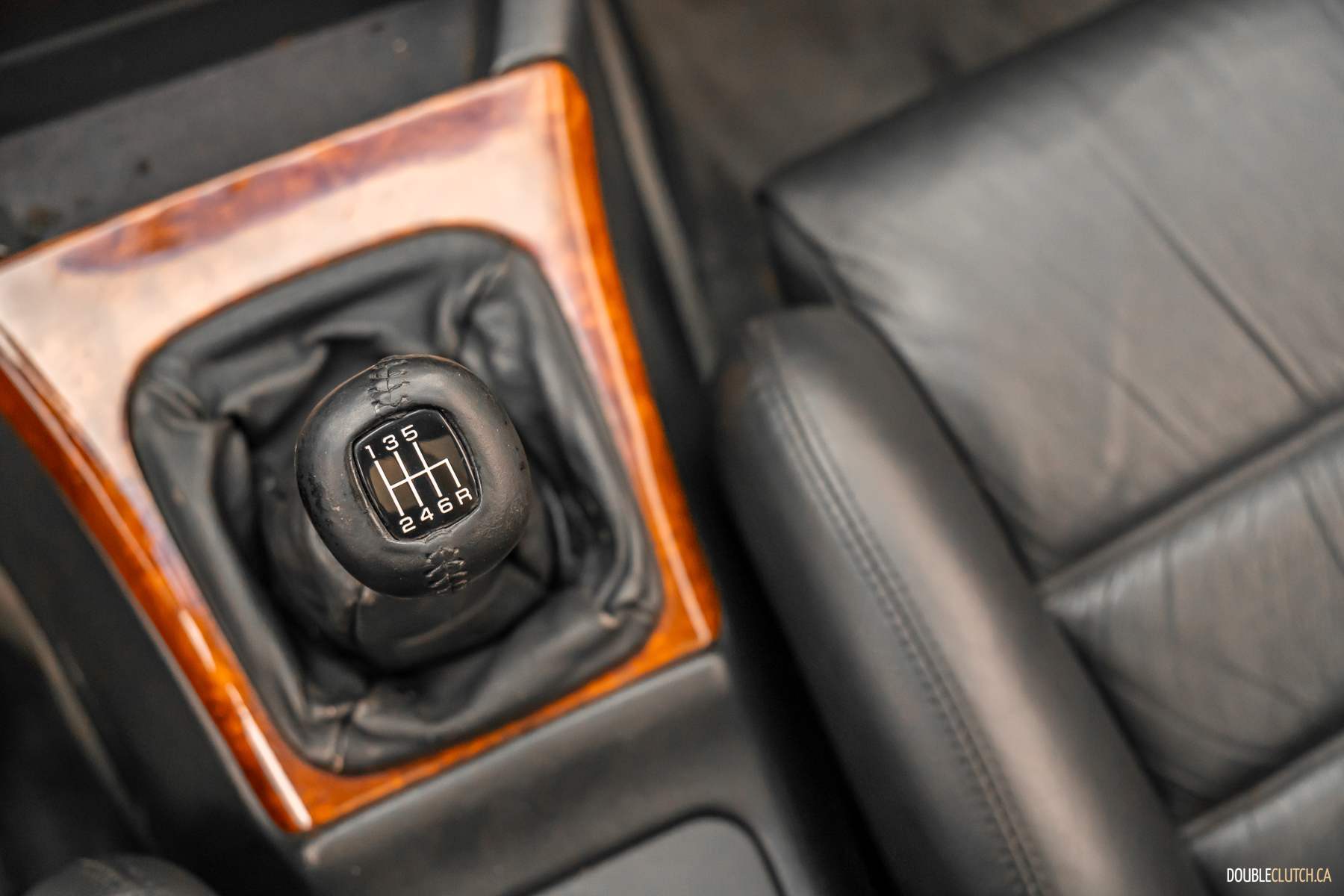
The Omega cruises through its intergalactic-long overdrive gear with a dull murmur, loping along at just over 1,000 rpm at a 100 km/h doddle. Even highway speeds feel too slow, and I spent the majority of the journey doing about 130, where it felt right at home. While the engine is a big, torquey thing with a remarkably linear powerband, any added gumption for B.C.’s long uphill grades or passing zones requires kicking down through the notchy ZF gearbox. It’s a bit of a curious thing, because in a modern context, it’s what most people would call bad because it’s balky and rubbery. But the linkage is tight and the gates are well defined, and if you get your timing right — which is rather easy thanks to the well-spaced pedals and crisp throttle response — it almost sucks you into the next gear.
It doesn’t feel so much like a stereotypical old turbo engine, with an eternity of turbo lag followed by an unruly wallop of power. From 1,500 rpm upward, the Omega starts building boost very steadily, building linearly upwards and not tapering off until the very top of the tach. It’s all accompanied by a dutiful straight-six thrum that wouldn’t be out of place in a Mercedes. Were it not for the soft whoosh and archetypal choof of the twin turbos building and blowing off boost pressure, you’d be hard-pressed to guess this engine breathes through iron snails.
But it does, and if you wind it out, the Omega will fly.
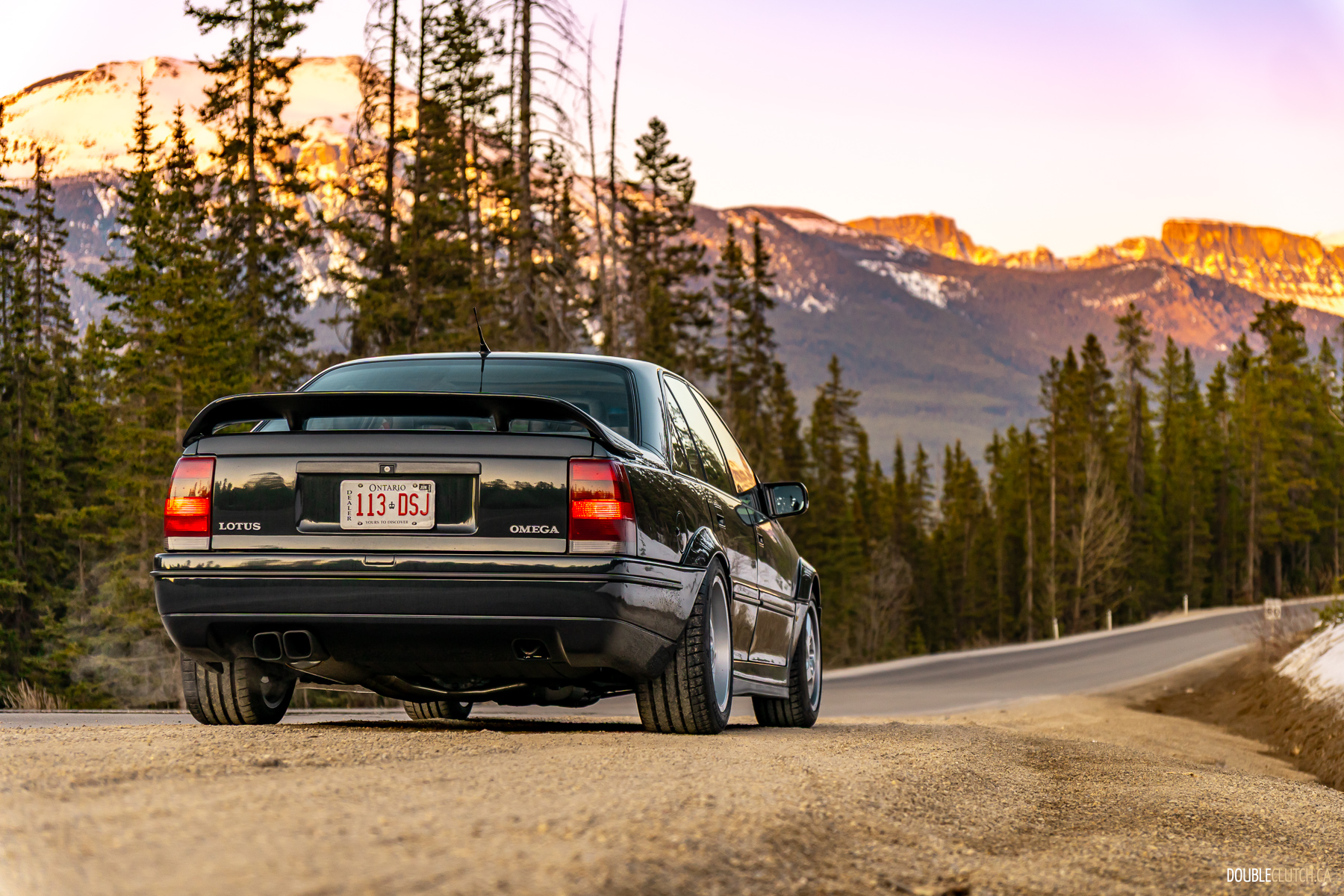
The sun was setting on a lonely section of highway, gently snaking up and down through the Rockies, and at that point, I’d been at the helm for about four hours without any disconcerting issues coming up. I picked up on the clutch throw-out bearing making noises in the lineup for the ferry terminal, like it wanted to be thrown out. And yes, the headliner was flapping all over the place, but that wasn’t gonna quell the quest. I was beginning to trust this mystical, aging star as a viable car.
I came over a crest into a shallow valley and could see down the empty highway for miles. I kicked the Omega down into third and buried the skinny pedal in the thick carpet. A dull roar and pronounced gale rose from the engine and its twin snails as the tachometer began the climb and the Omega took flight on a tidal wave of remarkably refined power. I could feel the snails running out of steam as the engine howled towards the top of tach and executed a quick snick into fourth gear, punctuated by a furious cough of the turbos relieving pressure and gathering their breath again.
I guided the Omega through a slight right-hand sweep, flat out, as the speedometer delved into the spooky side of its sweep. Through this gentle bend, the Omega revealed its true form as a phenomenally fast grand tourer, able to stay stable at silly speed and inspire confidence even long after its best-before date. I was inspired, feeling bold, and into fifth I went. A very slight shimmy that arose at (significant) speed cleared itself up at (even more significant) speed, and the car felt like it was just getting into its stride.
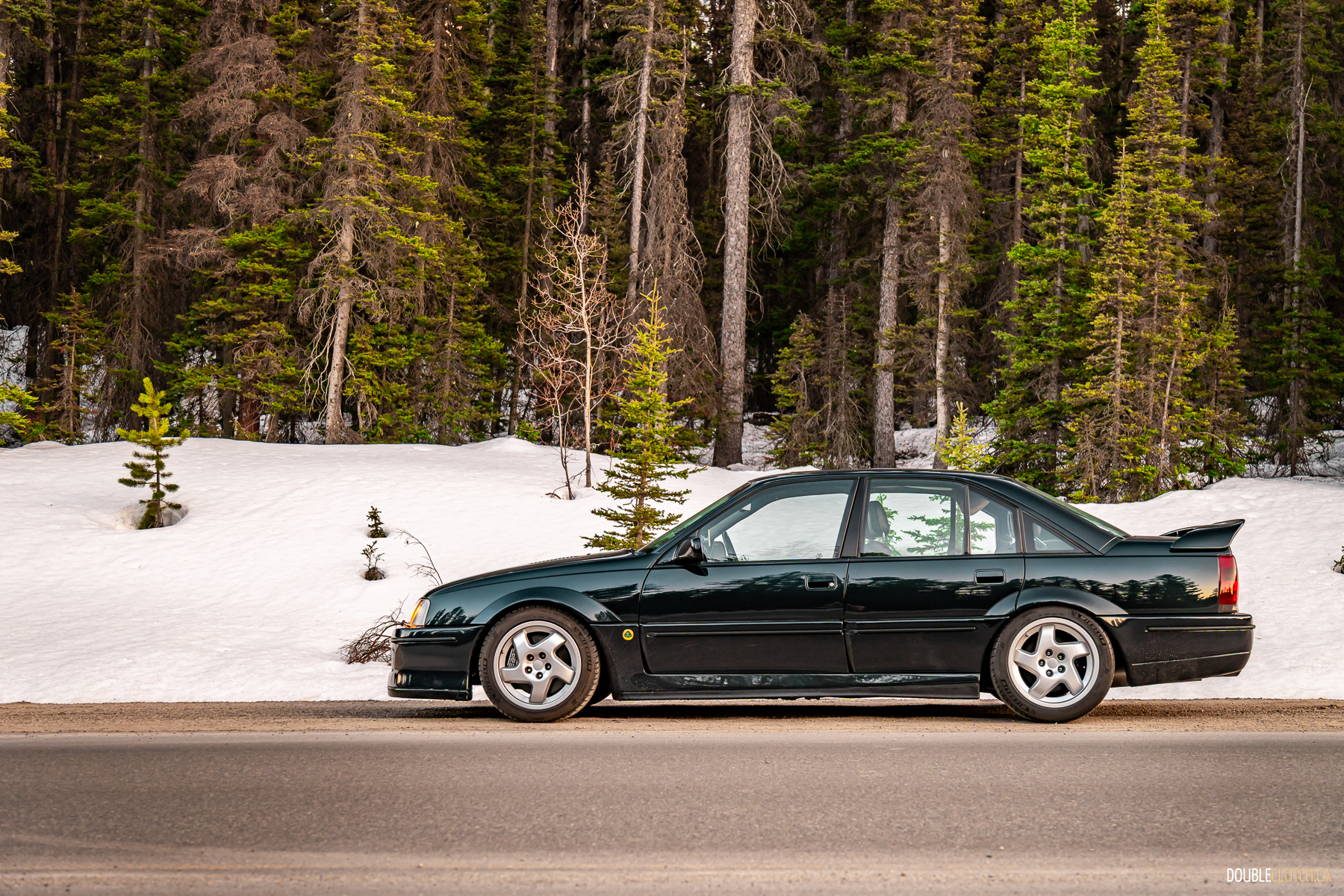
The Omega devoured another soft crest and a very fast left-hander without a care in the world. This car is absolutely sure of itself; others have disagreed with me about this, but when I’m talking to someone about performing a service for me that I’m uneasy about doing myself — like a contractor, doctor, or a professional mechanic — I find it reassuring if they sound a little bored. You might be nervous, but they’ve seen this a million times. This is going to be a core memory for you, but for them, it’s just a Thursday. This is the sense I got from the Omega as I sailed past my own personal land speed record, slotted it into sixth, and retrieved my sneaker from the depths of the footwell as a truck came into view in the distance.
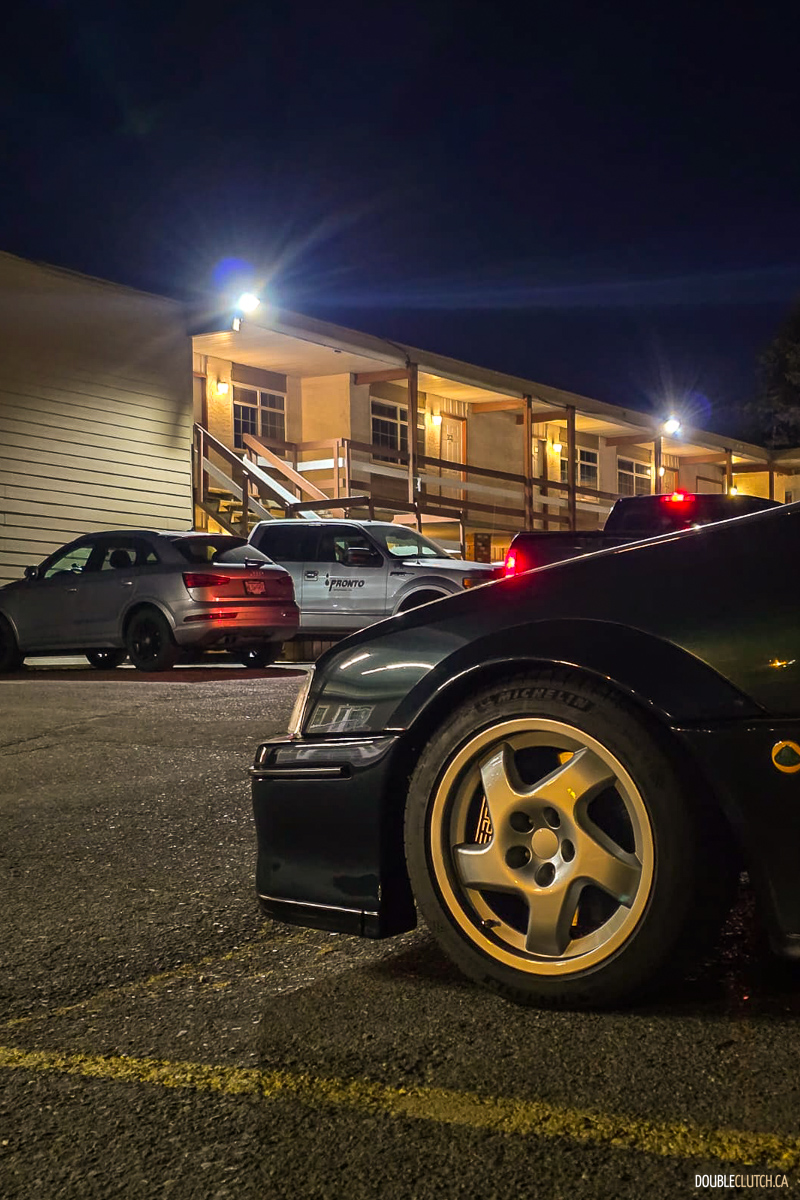
After a long and lovely day getting to know the Omega, I arrived in Kamloops under the cover of darkness and checked into a small motel. Despite having been awake for nearly 24 hours, I found myself fizzing, so I walked to a pub for a little chemical help and mediocre grub to wind down before meandering back to my room and scribble some notes about the day.
I promptly passed out without setting an alarm.

Editor-in-Chief
Nathan is an eccentric car enthusiast who likes driver-focused cars and thoughtful design. He can't stand listening to people reminisce about the "good ole days" of cars because he started doing it before it was cool, and is also definitely not a hipster doofus.