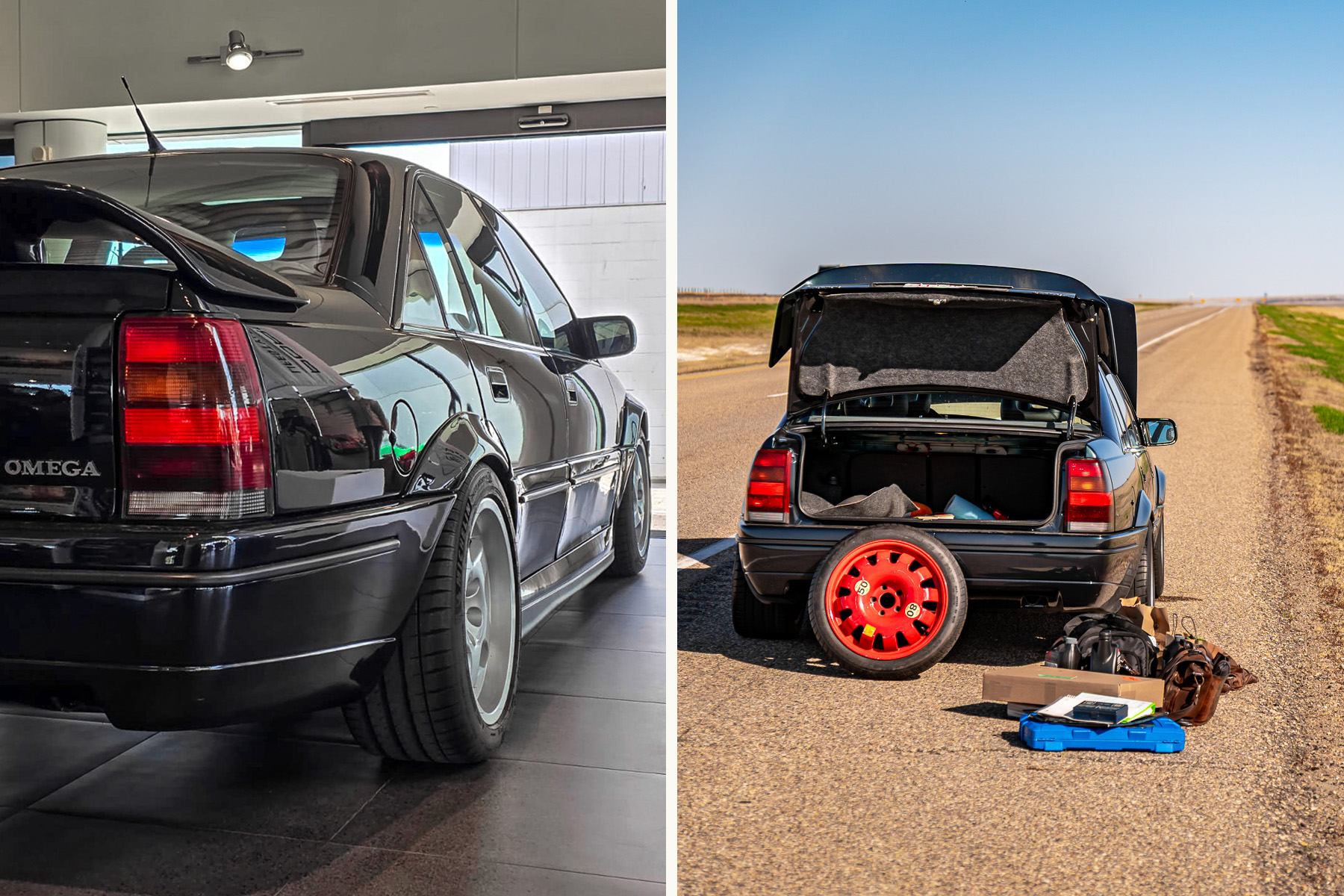
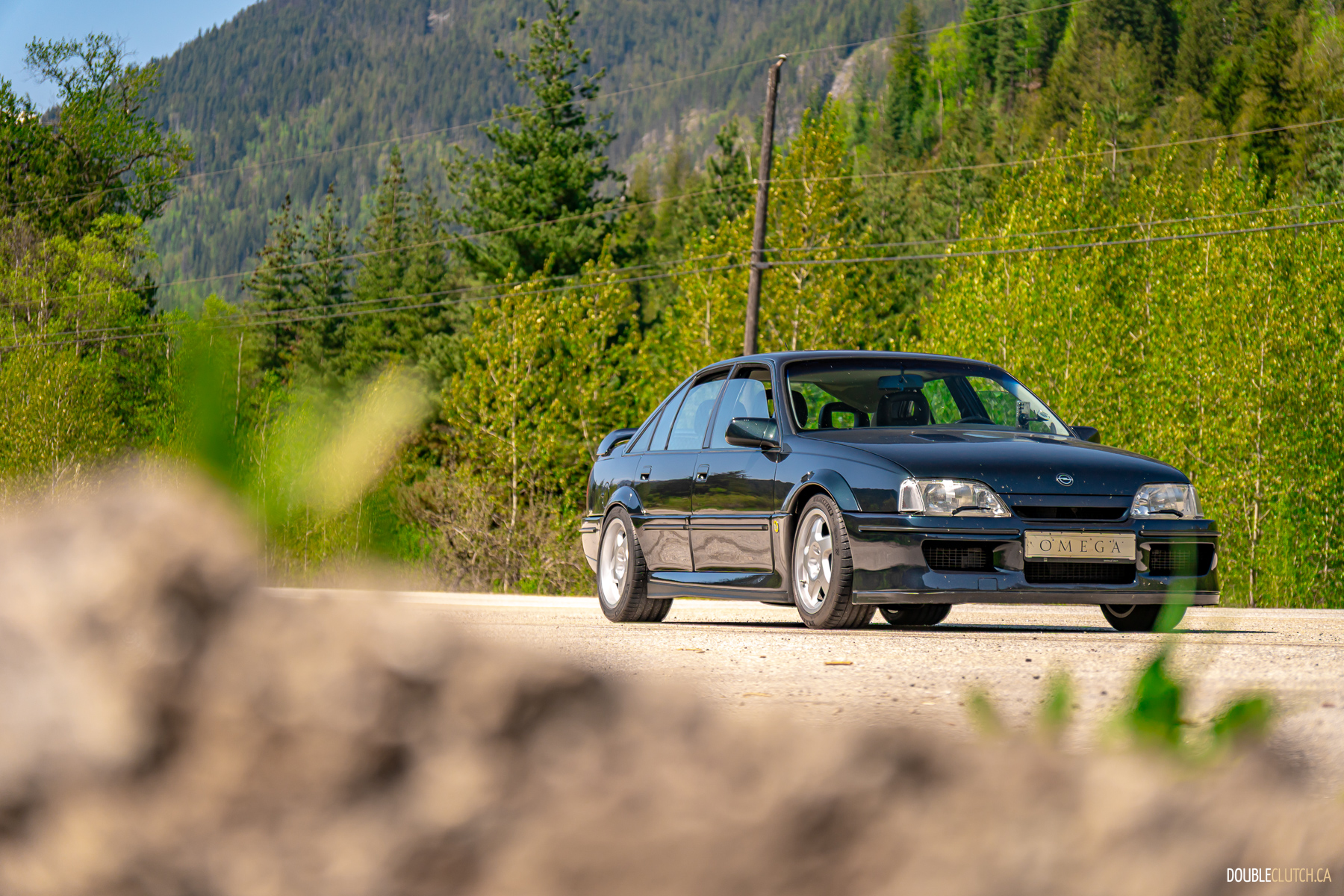
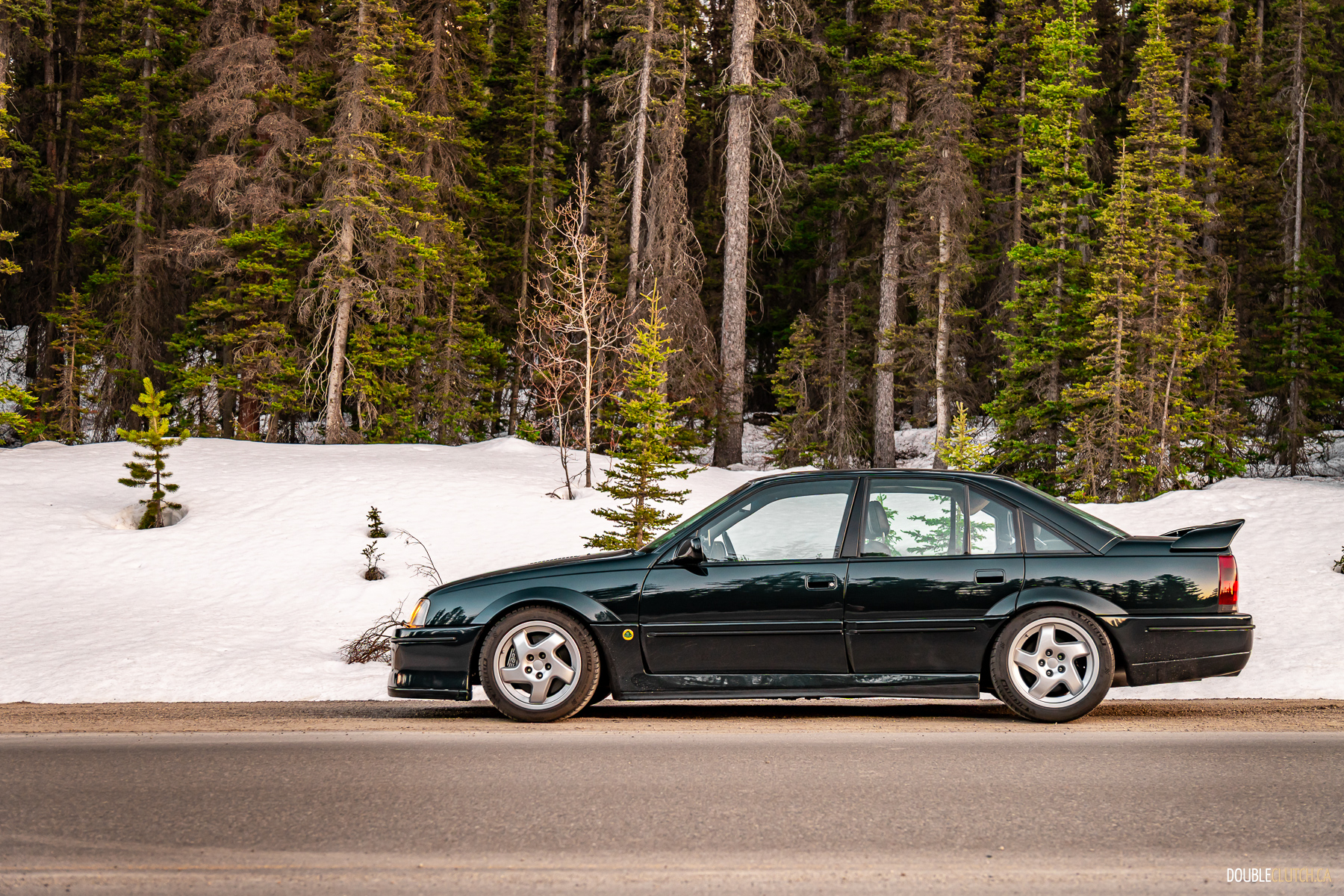
I walked out of a Canadian Tire store on Vancouver Island carrying a jug of engine oil, a jug of coolant, a 229-piece mechanic’s tool set, some beef jerky, and trail mix. It was a gorgeous, unseasonably warm afternoon, and the parking lot was bustling with life as people were getting into the spring swing. My press car was waiting for me in a remote corner of the parking lot, partially obscured by a contractor’s van. As I walked up to it, its metallic Imperial Green paint sparkling under the island sun, I could hardly believe what I was seeing, even though I’d just parked it there moments earlier: a 1990 Lotus Omega.
At face value, this was an assignment like any other: go get a press car, live with it for a week, bring it home, get some photos when you can, maybe make some notes here and there. The difference is that this press car belongs in a museum, and home is almost 5,000 kilometers away.
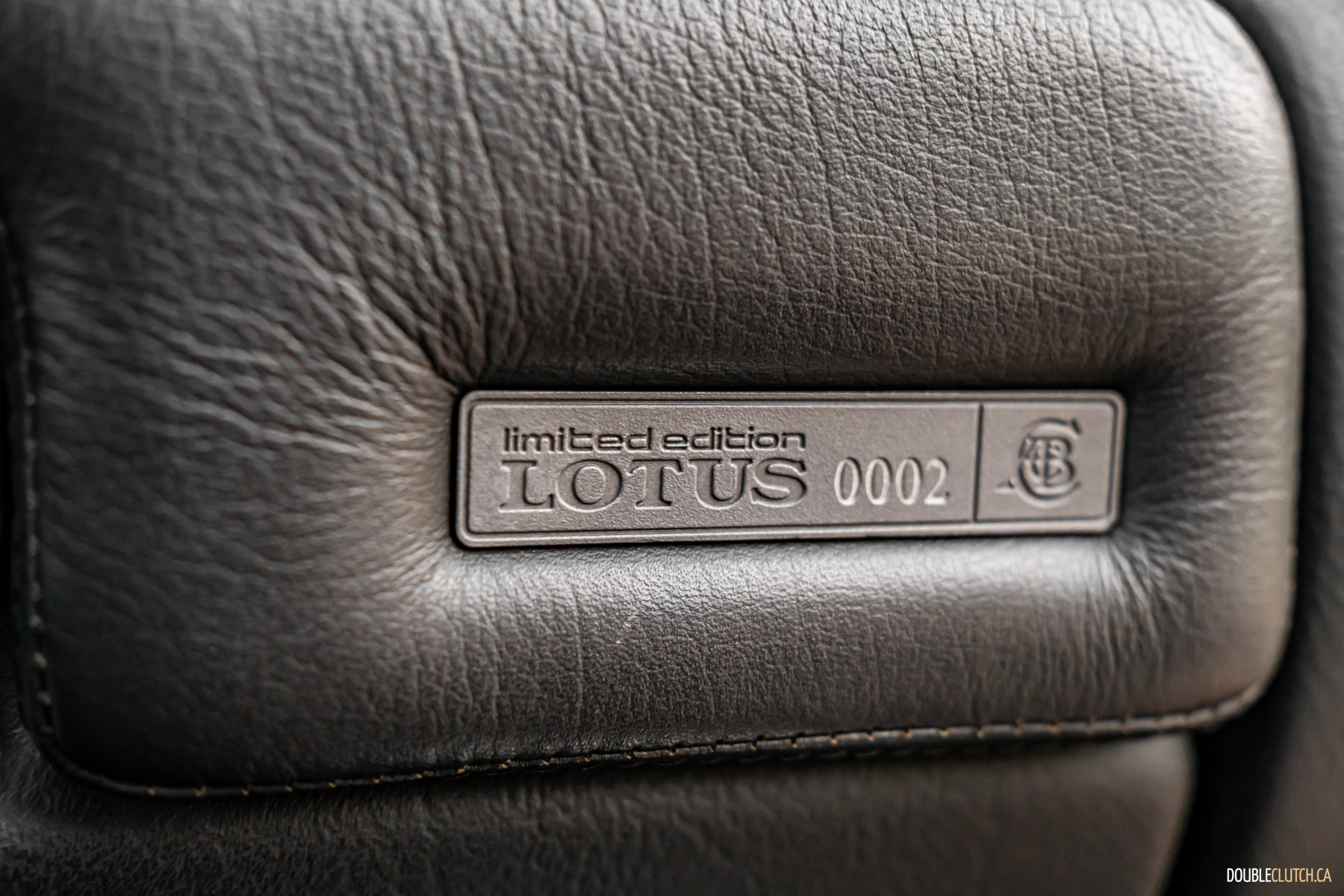
This Lotus Omega bears the serial number 0002 on its dashboard. It’s one of three pre-production vehicles initially set aside for Germany — and effectively all of mainland Europe. Not only was it lent out to outlets like ours for magazine spreads and testing against Europe’s finest, it was also the car used internally for promotional materials, like the package of 12 photos sent to Opel dealers. It was displayed at international auto shows in Paris and Geneva, and still has the decorative manufacturer license plates it wore at those shows.
My assignment was to collect this living legend of a retired press car in Victoria, B.C., and bring it home to its new owner in Toronto. The gravity of the task was only starting to hit me in that Canadian Tire parking lot, standing aghast at this old ghost of the Autobahn in front of me. I couldn’t believe it was sitting there. No one else seemed to notice. It doesn’t belong here. It’s not a real car for going to real places. It’s a fantasy.
It was a fantasy that I was holding the keys to. We were going to some very real places, real far away.
Lofty ambitions
More commonly known now as the Lotus Carlton owing to its popularization in Gran Turismo, this was a machine once revered — and reviled, more on that later — for being the fastest sedan in the world. This was a luxuriously appointed executive sedan that could not only leave BMW’s race-bred M5 in its wake with ease, but could even give the giants of its day, like the Ferrari Testarossa, a properly hard time.
The sedan this Lotus was based on was called the Opel Omega, and it was sold in the UK as the Vauxhall Carlton. An Opel Omega and a Vauxhall Carlton had more in common than a Pontiac Sunfire and a Chevy Cavalier … which were famously the same car. Some people insisted I was doing it and myself a disservice by calling it a Lotus Omega, but I’d counter that’s literally what it says on the car, Omega is way cooler than Carlton, and you might change your tune if you knew the story of how this car came to be.
It began as a desire from General Motors Europe to inject some excitement into Opel. They built a very competent lineup of cars by the late 1980s, but also had an image problem. Opels were perceived as dull cars better suited for rental fleets than discerning drivers; an Omega 3000 GSi could match or better a BMW 535i on all fronts, and no one was cross-shopping them. This was no secret to anyone, least of all Bob Eaton, then-president of GM Europe.
Eaton had just been promoted from head of advanced engineering, and was a notorious gearhead. One of his key initiatives under his previous tenure was to spearhead the acquisition of Lotus, a tiny carmaker and engineering consultancy firm whose portfolio was and still is the stuff of legend. Anything they lent their talent to was either going to be a fabulous sports car or a very successful race car, no ifs, ands, or buts.
Mike Kimberley, managing director and Lotus CEO at the time was relieved to find that he and Eaton saw eye-to-eye on a lot of things, chiefly the sanctity of the Lotus badge. There was a lot of concern that The General was going to steamroll Lotus and ruin the brand, but Eaton understood the importance of the Lotus name, and respected that Lotus was fiercely protective of their reputation. After all, their founder Colin Chapman — whose initials are integral to the Lotus badge — had only passed away a few years earlier. At the time, almost everyone at the company worked and learned under him.
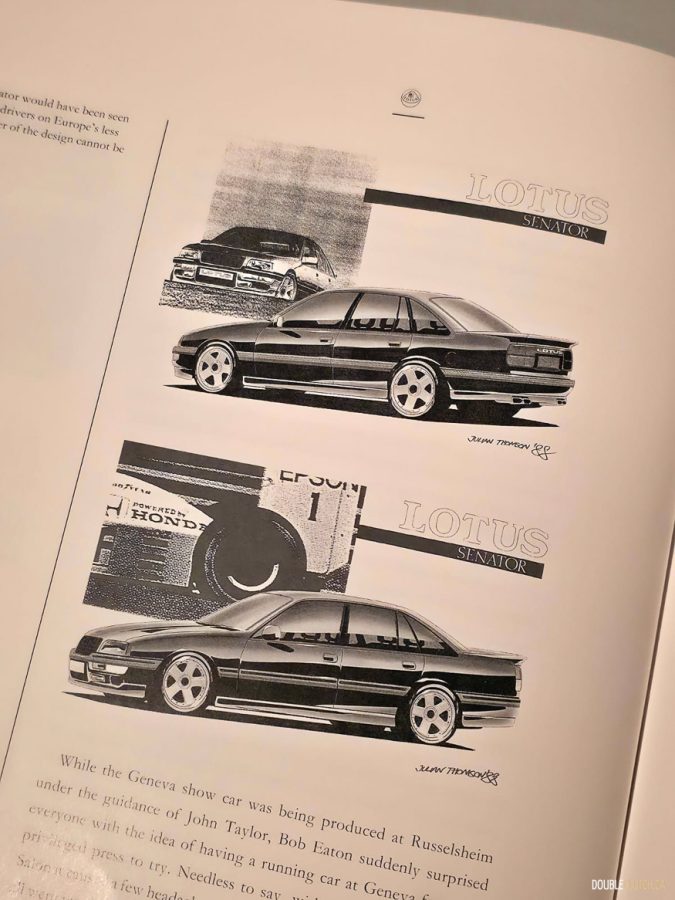
It was Kimberley who first pitched the idea of a Lotus-ified sedan, originally proposed to be based on the Opel Senator, their full-size flagship sedan — which also coincidentally went a long way to solve Opel’s image problem. When Bob Eaton officially took the reins of GM Europe, he got to work on making that idea a reality, and found that Fritz Lohr at Opel — unaware of Kimberley and Eaton’s ambitions — was already working on a “high-performance sedan with high visual profile to raise the overall image of the brand,” as head of Opel’s Technical Design Centre in Russelsheim, Germany.
So, while everyone seemed to be on the same page, this actually created a fair bit of friction. Opel wanted to build an impressive flagship sedan, but like any proud team of engineers and designers, they wanted to do it themselves and weren’t impressed at the idea of an outside entity taking over their idea. The two sides went back and forth, with Lotus ending up somewhat shocked at the final design proposal that Wayne Cherry’s design team at Opel submitted. It deviated from what they agreed upon, but it ended up working out well. The concept car displayed at the 1989 Geneva Motor Show looked positively evil, and Lotus had almost nothing to do with it, save for the wheel design and some very slight aerodynamic massaging. Cherry’s design was the smash of the show, and positive enough to convince GM to green-light a production run of 1,100 cars.
Now what?
Cherry and Lohr at Opel wanted a flashy, properly luxurious car. Eaton and Kimberley at GM and Lotus wanted a supercar that happened to have four doors. If it was going to be a Lotus, it needed to be the best or it wasn’t worth doing. Opel and Lotus squabbled in their differences, but ended up helping each other out to meet Eaton’s aggressive timeline for the project, from proposal to production in under two years.
The production process was terribly inefficient. Completed Omegas were shipped from Germany to England, to be stripped and slashed apart. The work Lotus put in to turn an Omega into the last letter in sports sedans was extreme. Almost everything was modified, with large assemblies like the engine and transmissions sent back to Opel, and small parts discarded. Lotus did not want to be responsible for body modification, but Opel’s reluctance to modify their production process won out.
One hundred and 35 working hours went into each car. Early examples needed much more, as the cars they received from Opel were substandard and needed massaging before they could even begin the fun part of the job. The bodies were cut to accommodate massive fender arches to house the colossal-at-the-time tires, spanning 265 millimeters at the rear and formulated from a bespoke rubber compound developed in partnership with Goodyear. It helps Lotus was already cozy with them.
The OG super sedan
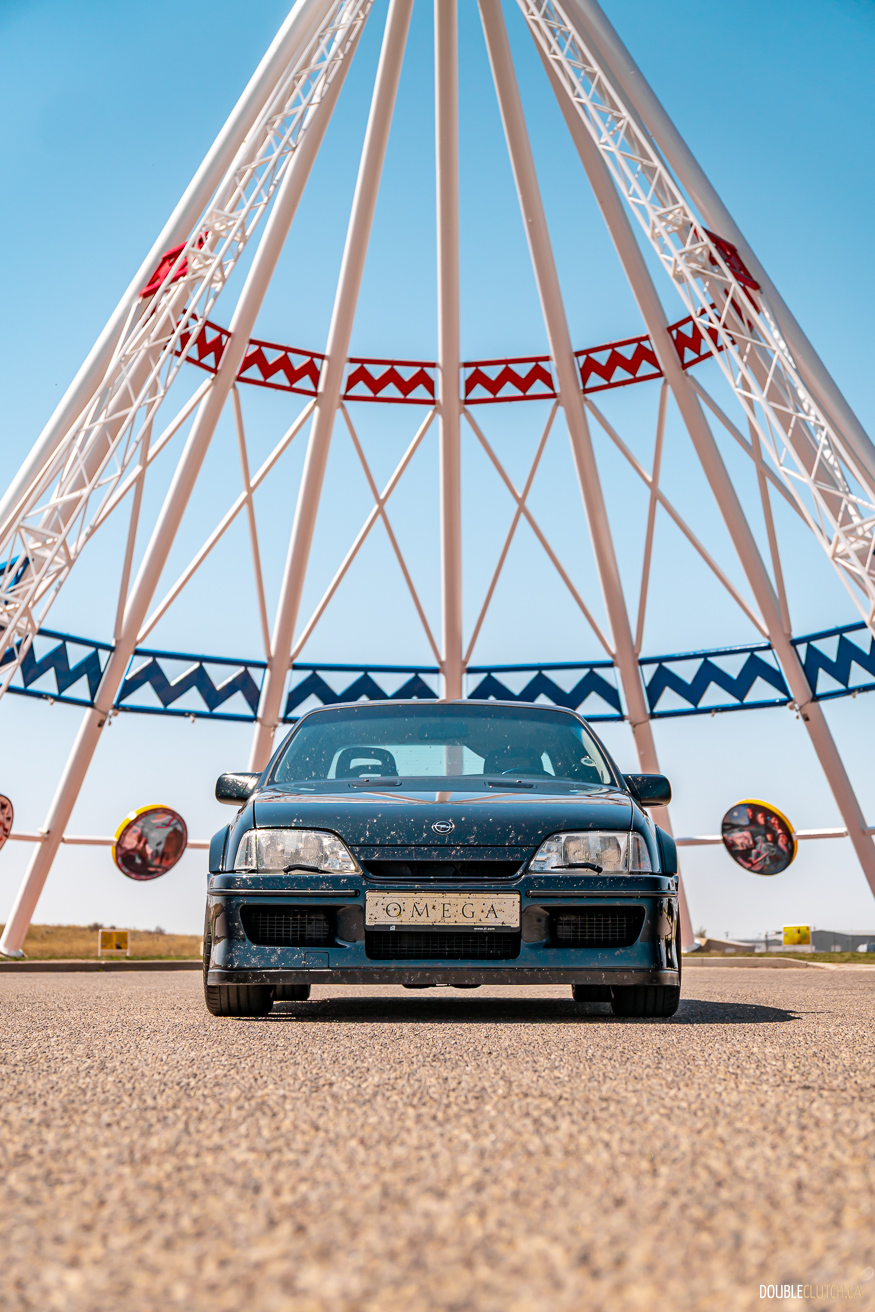
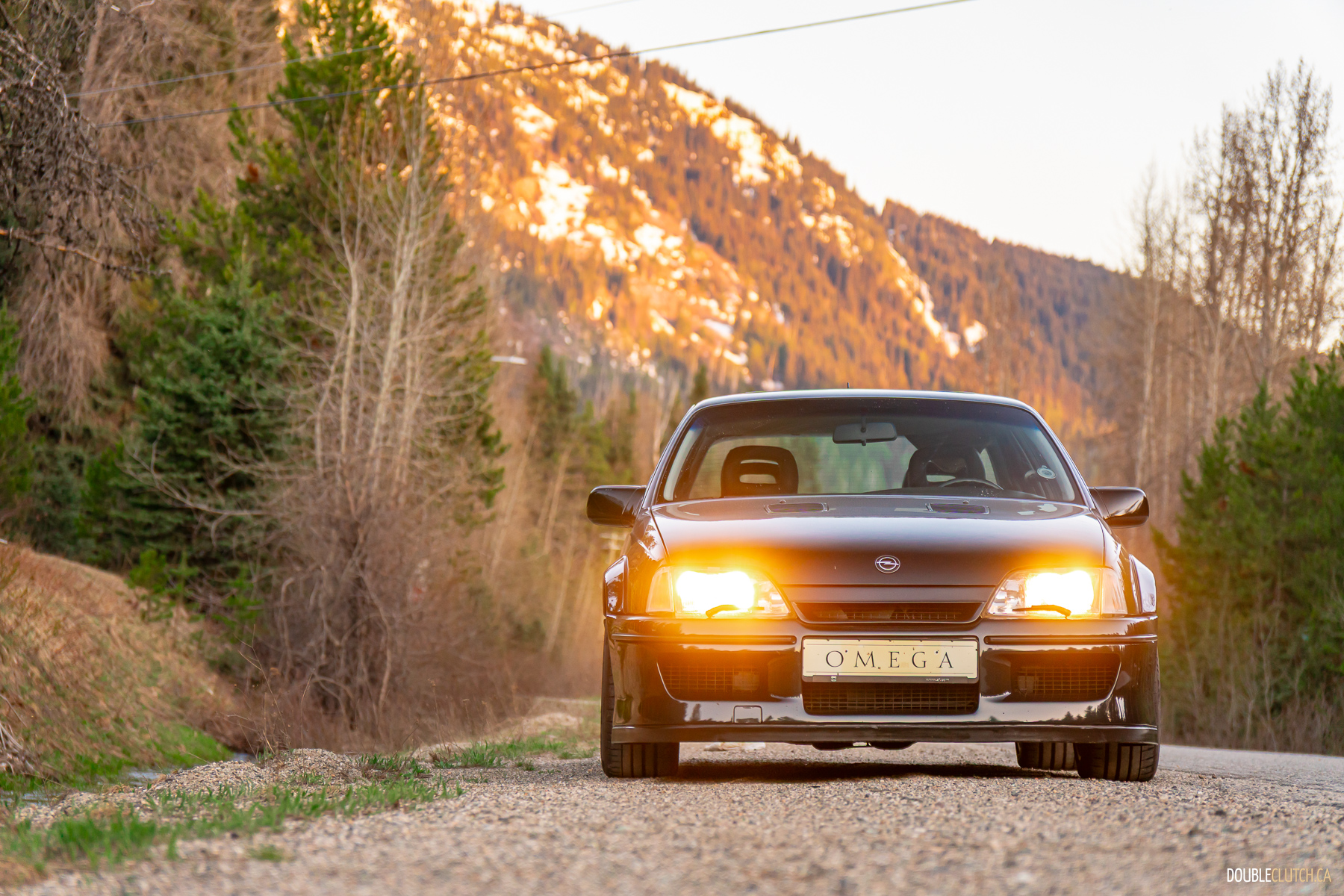
A large air dam gives this formerly subtle Omega a strong jawline. Deep side skirts accentuate the arched fenders and improve air flow under the car. A massive rear spoiler off a Lotus Esprit and an oversized pair of square exhaust tips cap off the rear end. All of it is functional, either in the pursuit of optimized air flow, more traction, or better cooling, hence the football-sized vents on the hood. Fit-and-finish had to be impeccable, lest they create aerodynamic drag. It may seem quaint now, but next to a BMW M5, this built-up and cut-up Omega was outrageous. [How the turntables, indeed. —Ed.]
AP Racing brakes, similar to what Group C Le Mans cars used, peek out from behind the deep dish wheels. They were very much necessary to reign in the mad performance sought; like the body, the original engine was largely discarded and unrecognizable after the fact. Only the then-new 24V head that was developed by Fritz Indra’s powertrain team at Opel, for their own new-and-not-nearly-as-high-performance Omega, was left largely untouched by Lotus.
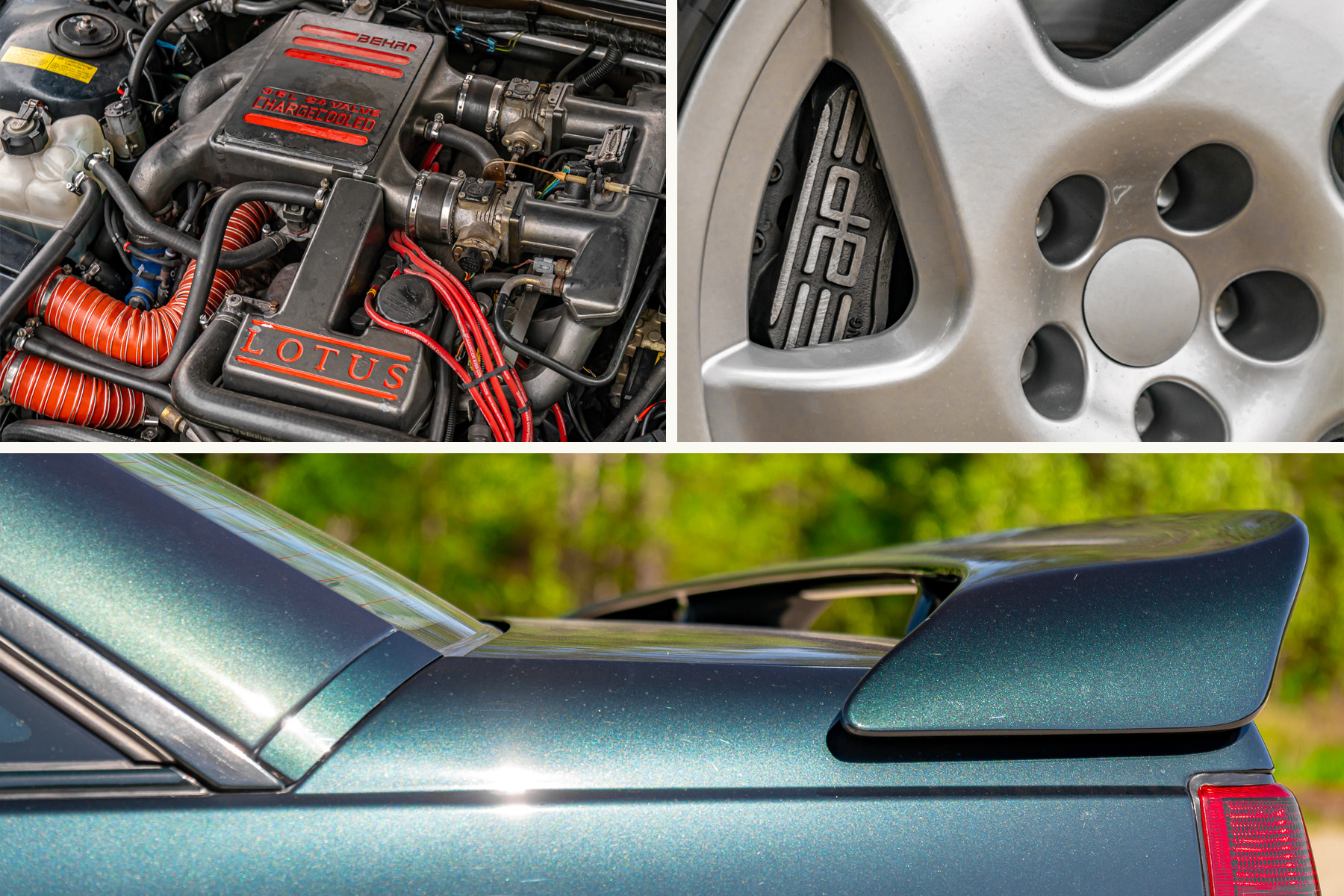
The block was replaced with a modified unit developed with help from Indra’s team, with additional webbing for strength, additional coolant and oil circulation, and punched-out cylinder bores. The crankshafts were forged from high-purity steel from Opel, sent to a specialty firm called Alfing Kessler for machining. The pistons — also forged — came from Mahle. These needed to stand up to the pair of Garrett T25 turbos Lotus wanted to bolt on to the engine, to achieve their lofty performance targets.
Turbocharging was still relatively new technology at the time. Only a few brands had any real experience with turbocharging at this point; Lotus was one of them via their Formula 1 program and the Esprit Turbo. In fact, the updated Esprit Turbo SE was being developed around the same time, and used General Motors’ knock detection technology and Lotus’ clever boost calibration to turn the little four-cylinder Esprit into one of the quickest cars in the world. It’s rumoured to have really annoyed the Corvette team, but that’s a story for another day. The case wasn’t so different with the Omega.
M5 who?
The final result of Lotus’ radicalization program was a 3.6-litre twin-cam straight-six engine, producing 377 horsepower and 419 pound-feet of torque. For context, a BMW M5 of the era, which was the gold standard for sports sedans and by all measures a phenomenal car, was down by more than 60 horses and made just about half as much torque, at 315 and 265, respectively. The Omega not only eclipsed its direct sedan rivals, but even matched heavy hitters like the Testarossa.
Conveniently, the new and novel six-speed manual that was just developed by ZF for the Corvette ZR-1 — which Lotus also lent a lot of engineering talent to — was the only gearbox in the world that could handle the Omega’s muscle. It nearly put the whole project in jeopardy when Chevrolet protested, citing an exclusivity clause with ZF. After some panic within Lotus, Eaton was able to convince Big Daddy Detroit to cut the snottiness and get over it.
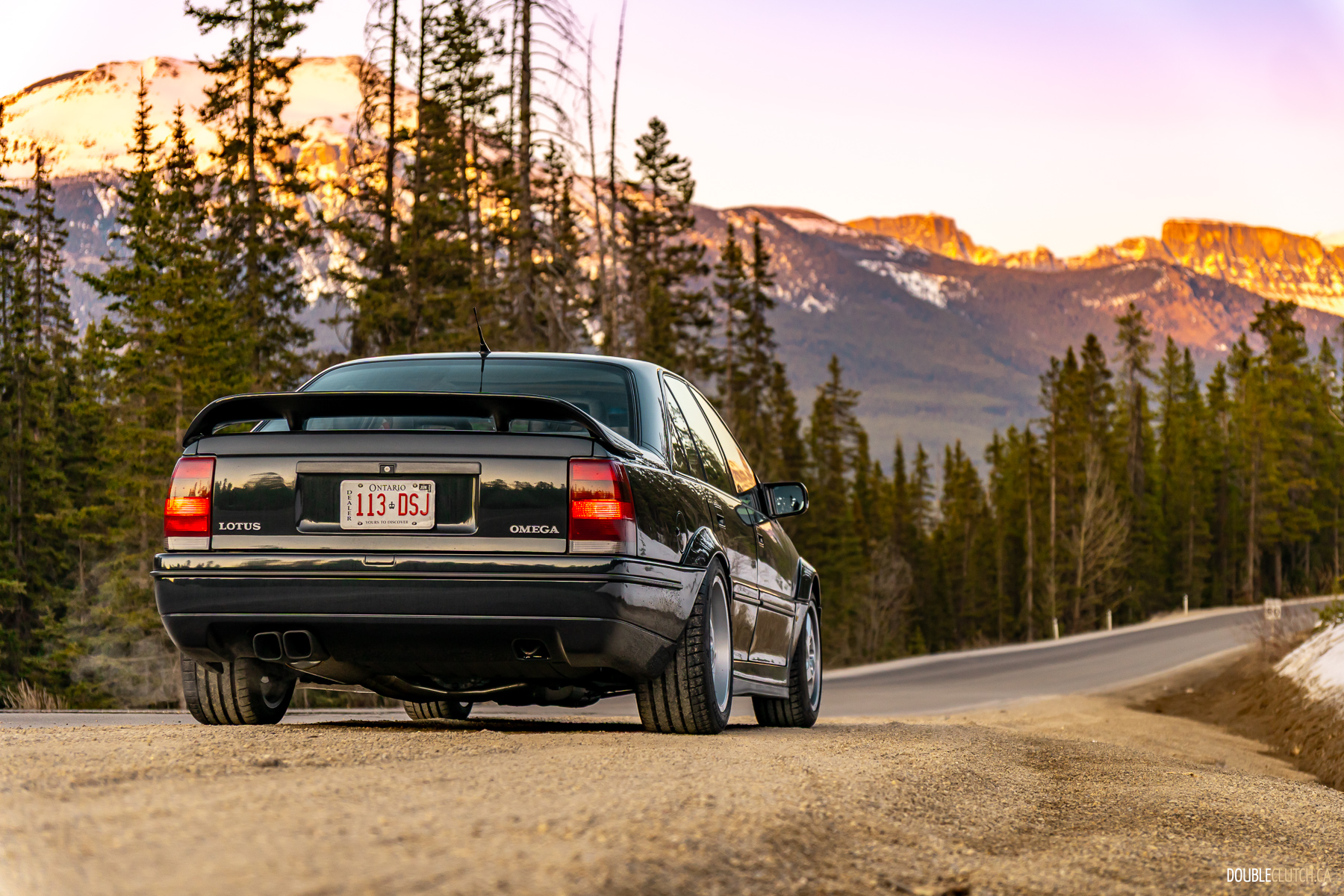
Suffice to say the finished product was very fast. It could sprint to 60 mph, or 96 km/h, in just over five seconds. That was impressive, but the Omega could then charge on to a top speed of nearly 300km/h. That was madness for a car that could also serve as a school shuttle. It was the fastest sedan in the world, and would stay that way until BMW trotted out the E39 M5 towards the end of the decade. Even then, those were limited to 155 mph from the factory.
Not many were expected to be sold and even fewer ended up rolling out of Lotus’ factory in Hethel, England, over its two-year production run. Lotus Omegas were expensive cars that bowed in the middle of a recession, and just 950 cars were built. None were exported to the West; the tiny handful of these our side of the Atlantic were privately imported by devotees of obscure cars.
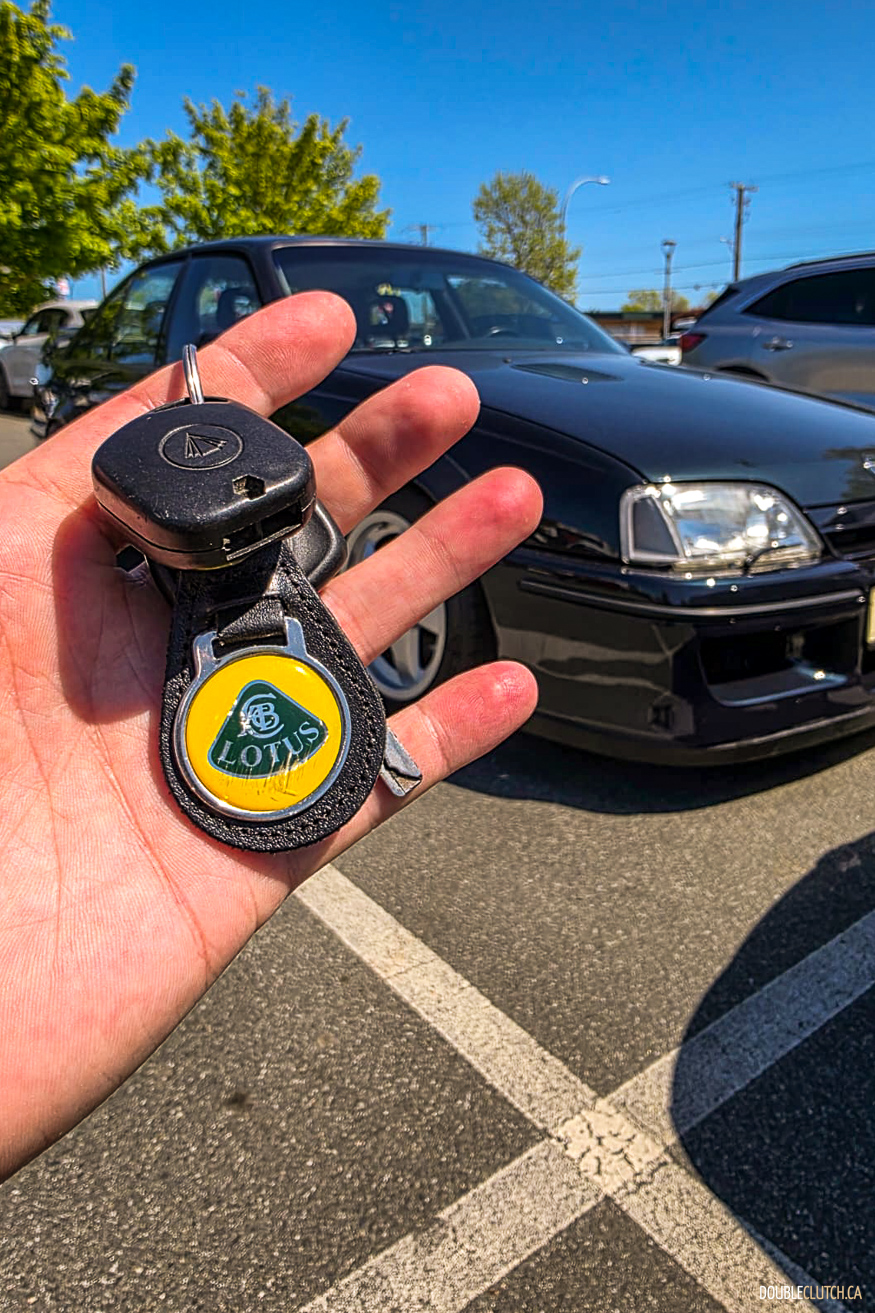
Bringing the legend home
Lotus’ effort weren’t all for naught. The deck was stacked against them, and the Lotus Omega debuted to glowing praise from everyone who drove it. It was one of the most impressive supercars ever built, and the fact it happened to be a comfortable four door sedan was just a bonus. Its remarkable refinement and blistering performance were a towering achievement, and I just so happened to be staring down one of the world’s longest continuous coast-to-coast highways with one of the most precious, early examples of this Lotus legend.
Right, then. I had 4,500 kilometres to cover with an old British car, so let’s get on with it. Gulp.