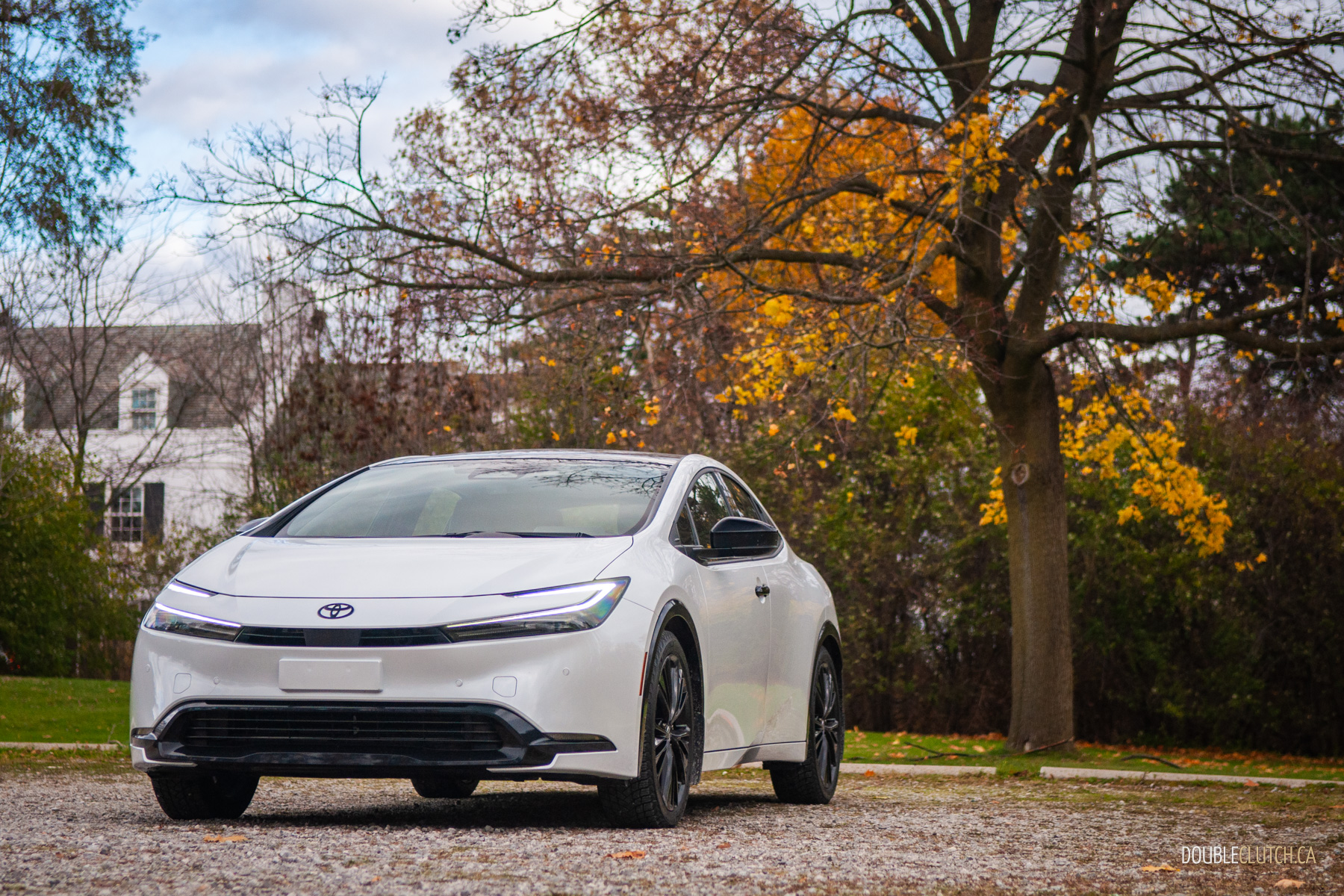
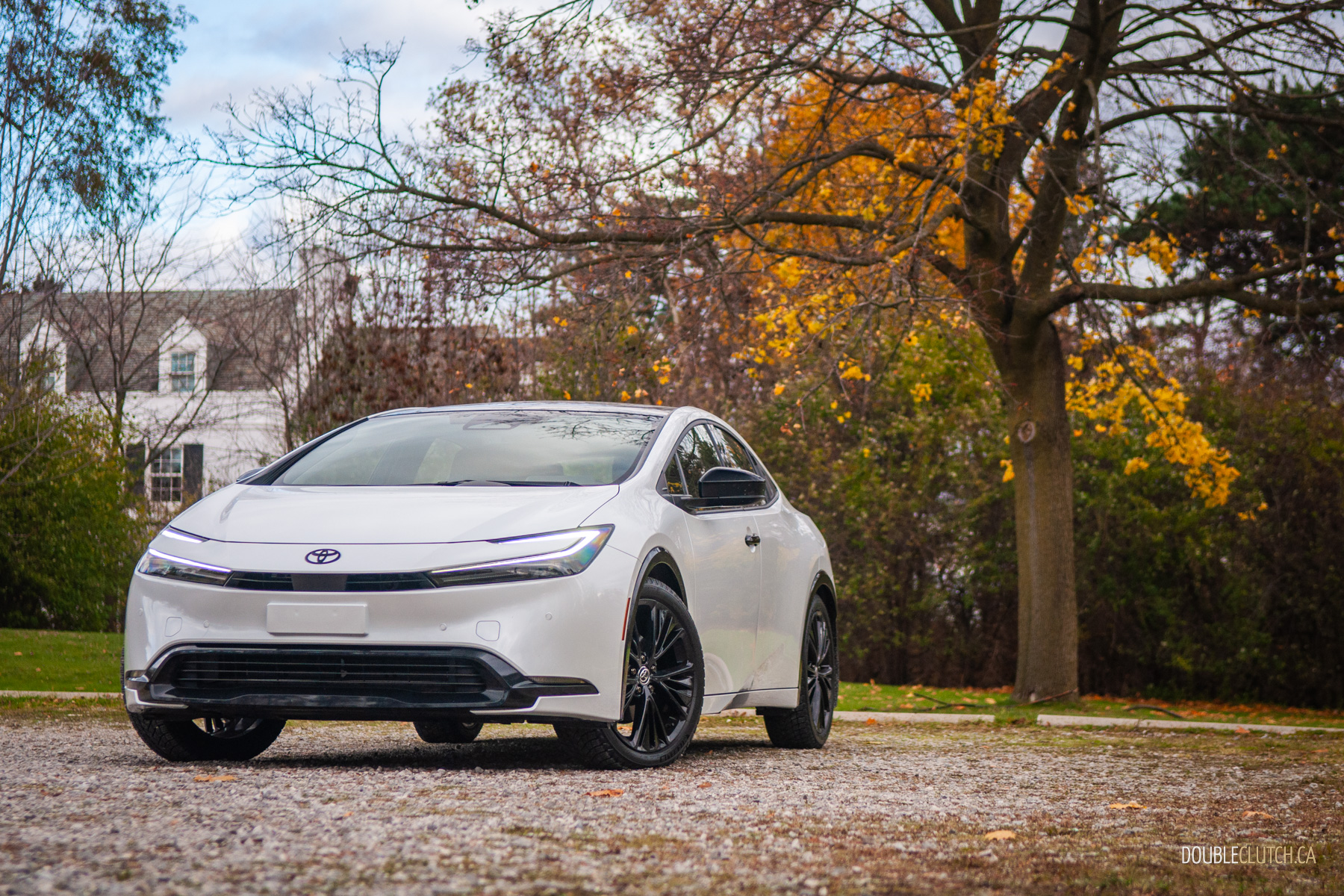
No other car in recent memory has enjoyed a glow-up as drastic as the Toyota Prius. In a few strokes of a pen, it went from being the punchline of every joke to something that actually turns heads and drives surprisingly well, while still delivering on the Prius promise. Three years in, the 2026 Toyota Prius Plug-in Hybrid changes none of that.
What’s new for 2026?
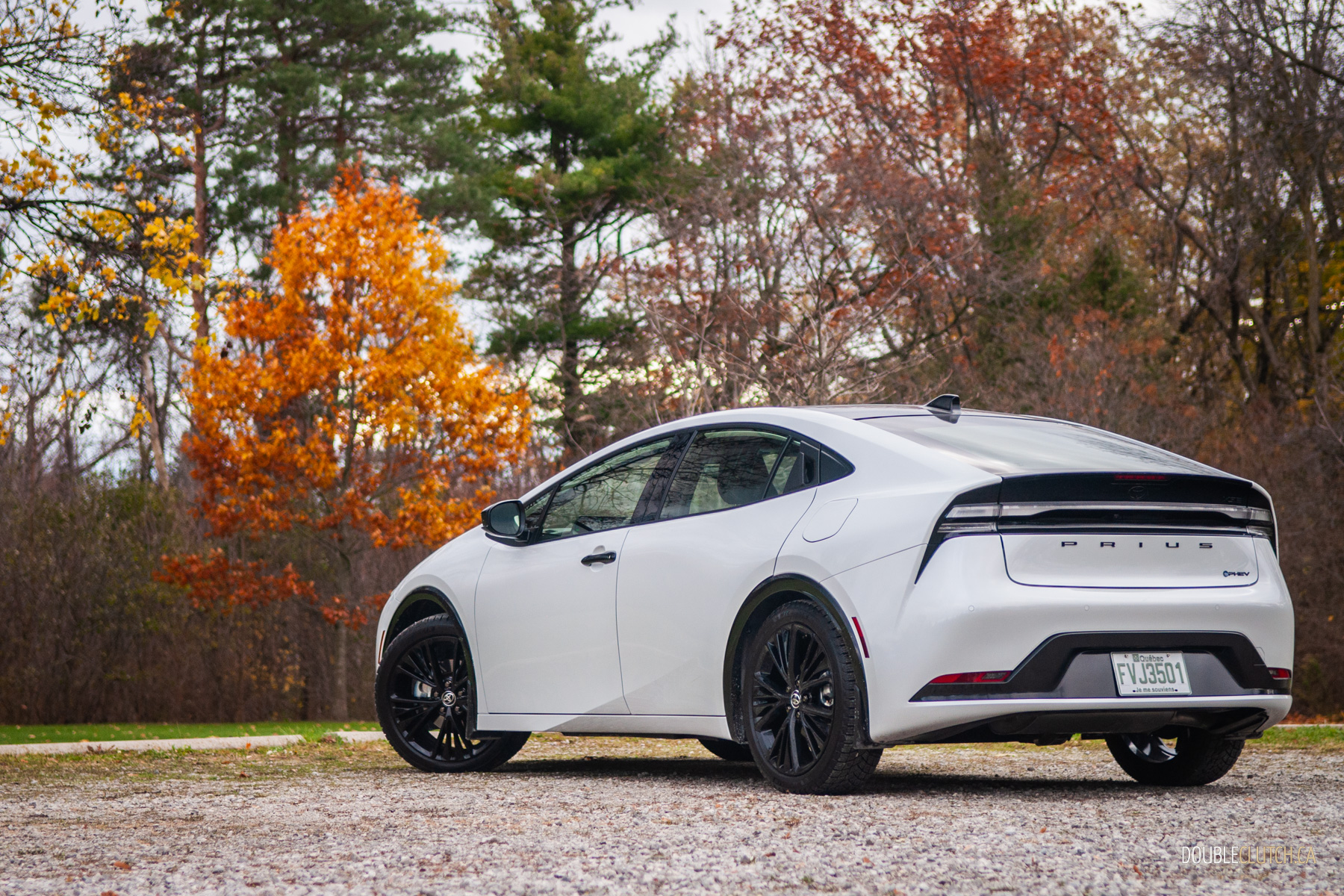
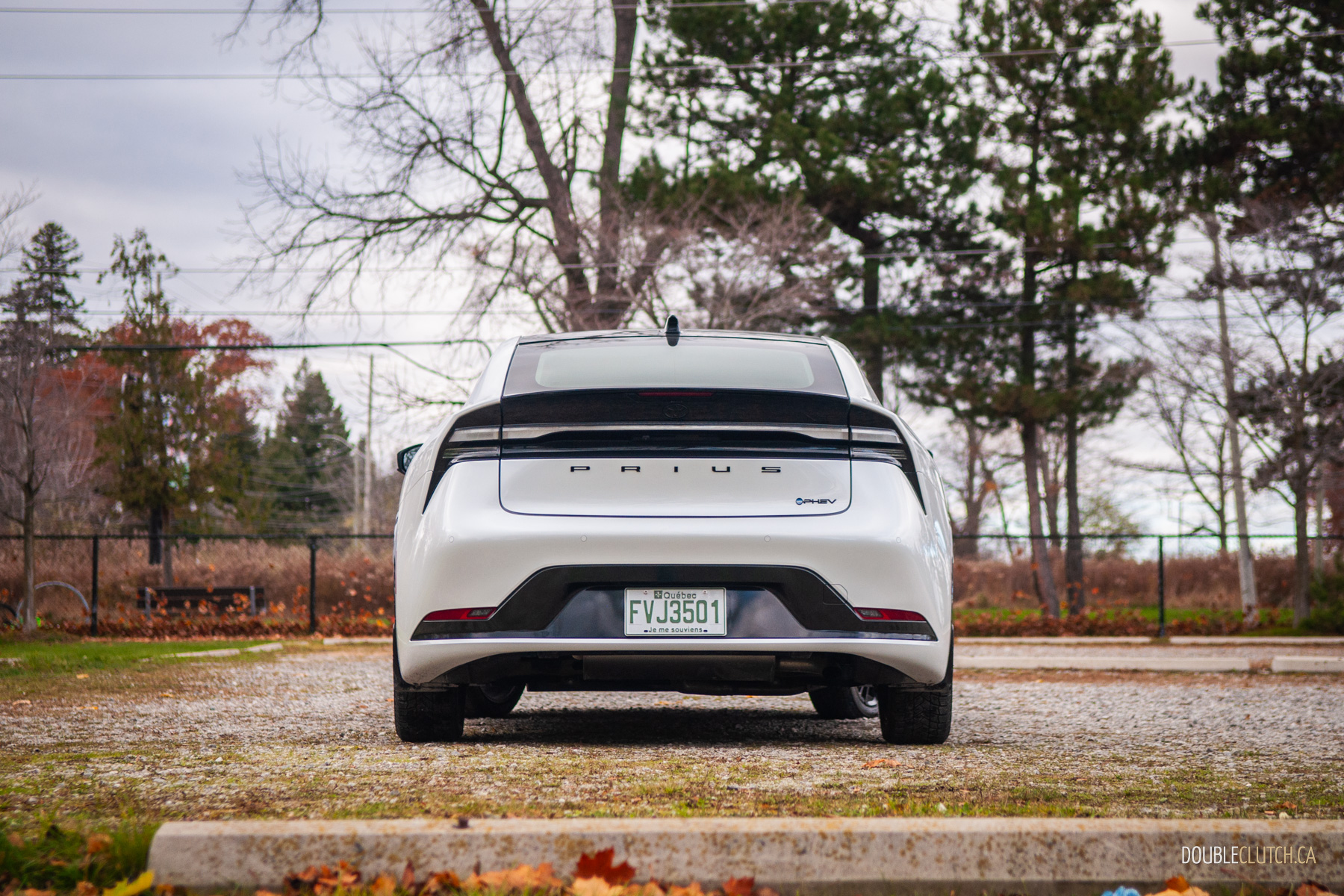
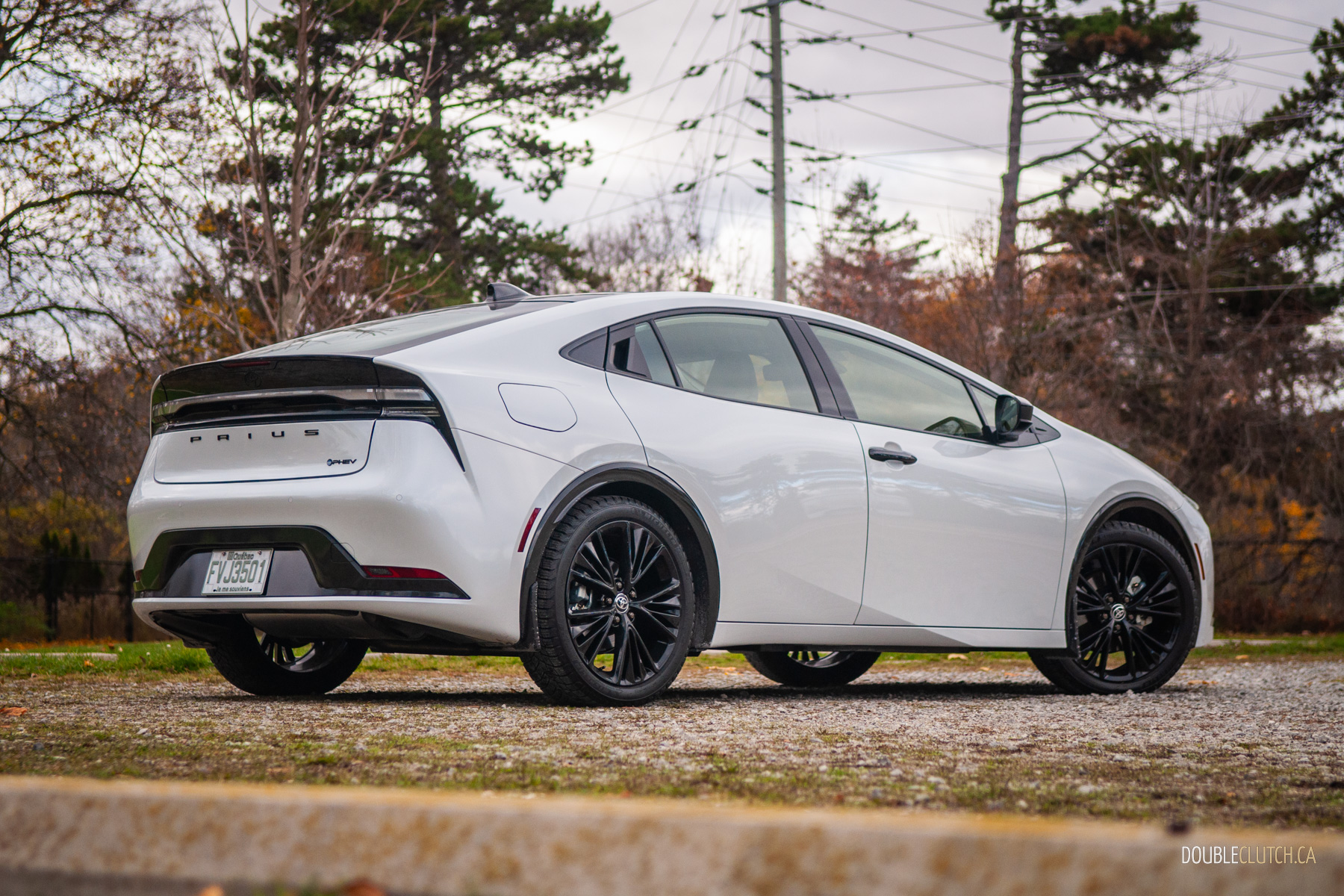
The current, fifth-generation Prius went on sale for the 2023 model year, but Toyota hasn’t messed with it too much. Case in point, the most significant change so far occurred last year, where it dropped the “Prime” name and badge in favour of a much more generic “Plug-in Hybrid” name in showrooms, and a “PHEV” badge on the trunk. For 2026, the Prius Prime — er, Prius PHEV — gets Toyota’s optional Nightshade trimmings for an extra $895 on top of the mid-range XSE, but that’s about it. If it ain’t broke, don’t fix it.
Form or function? Why not both?
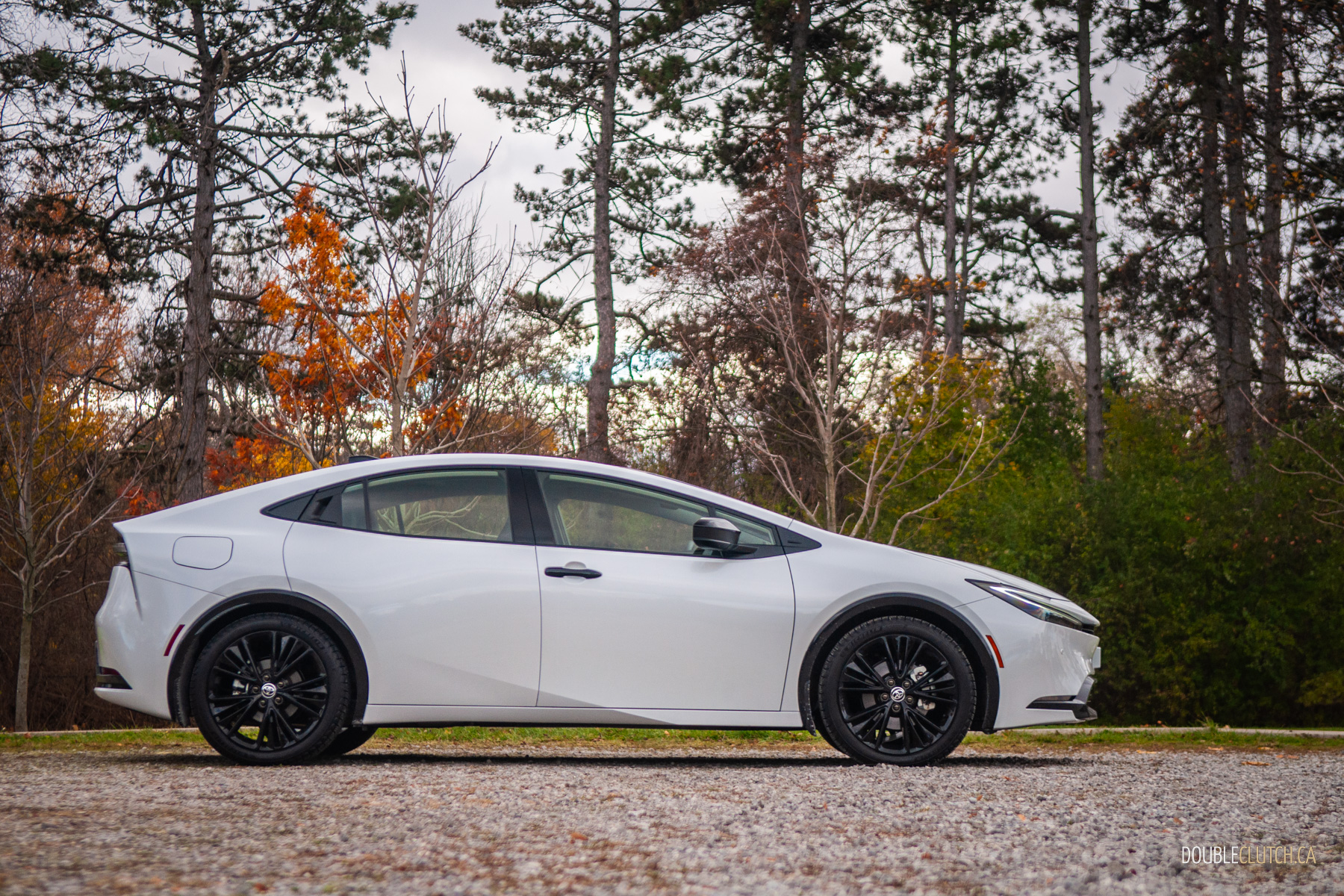
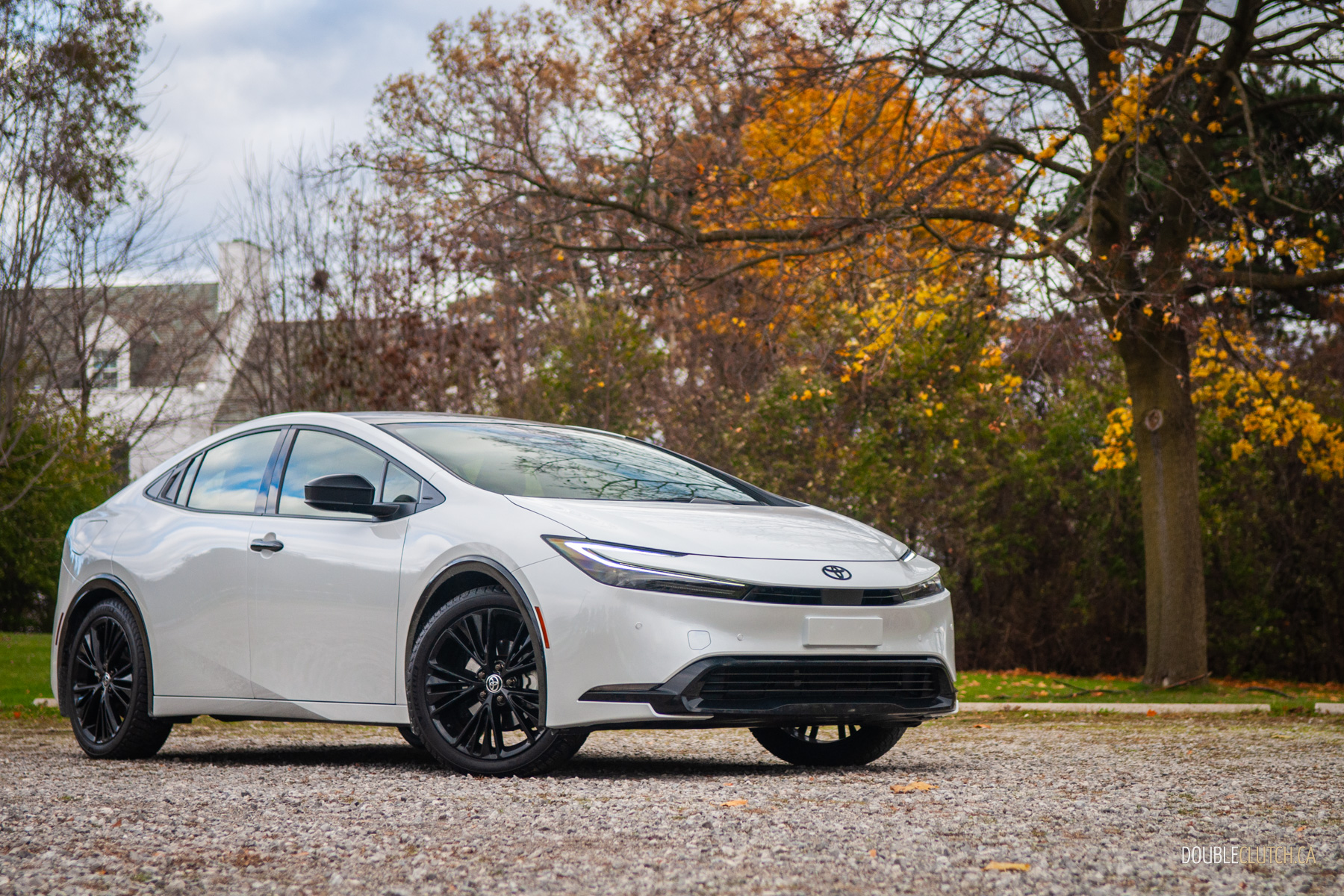
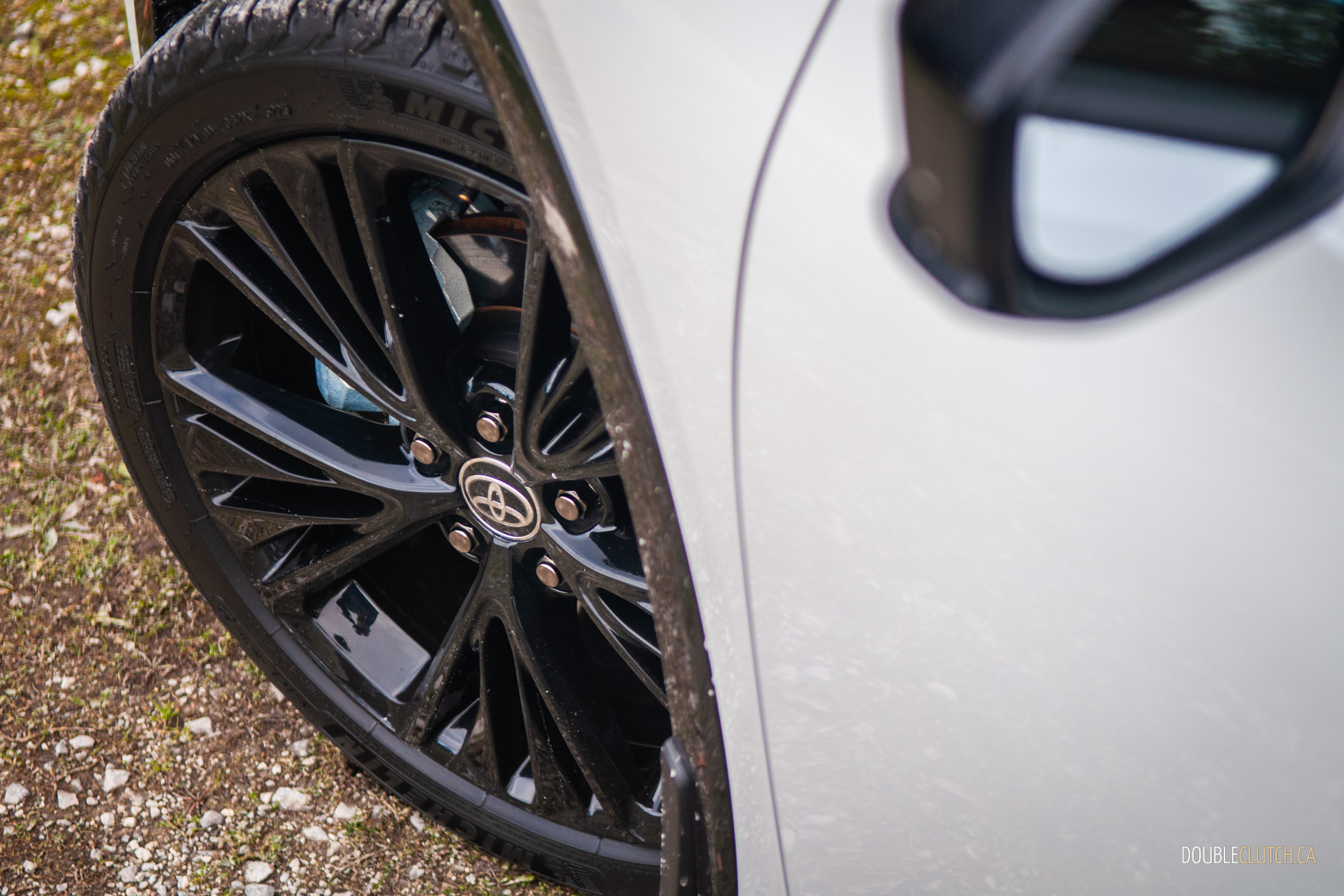
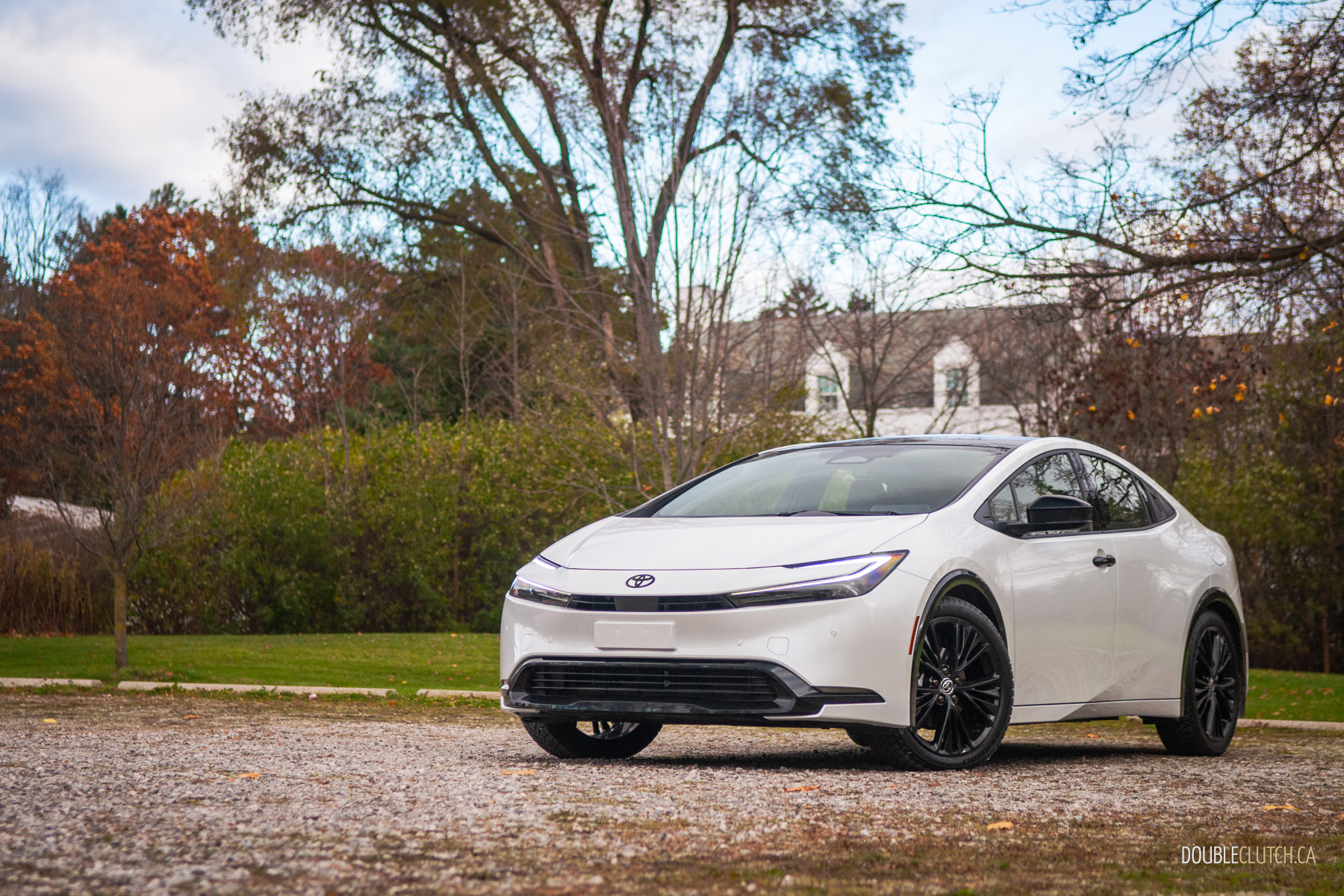
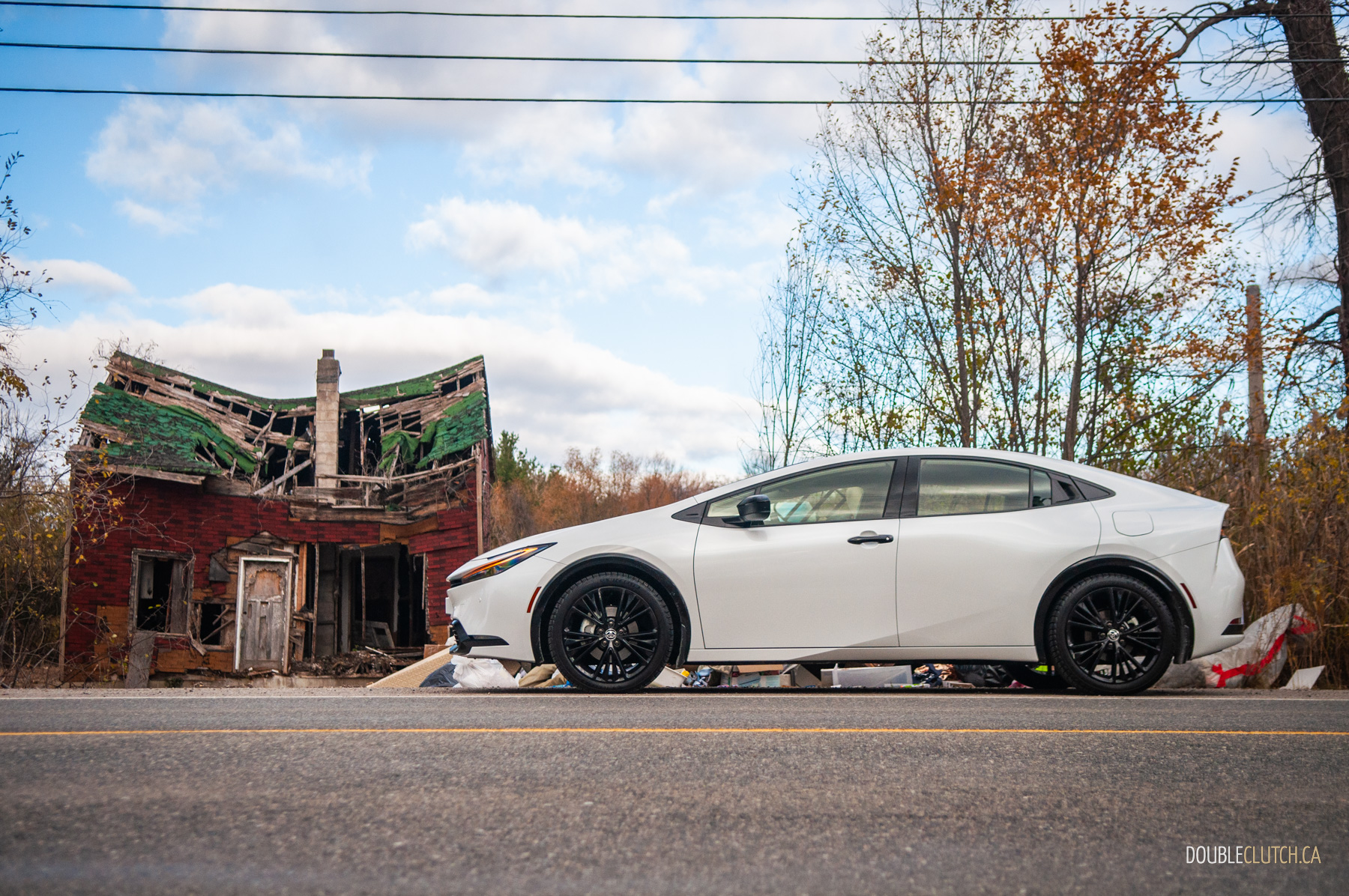
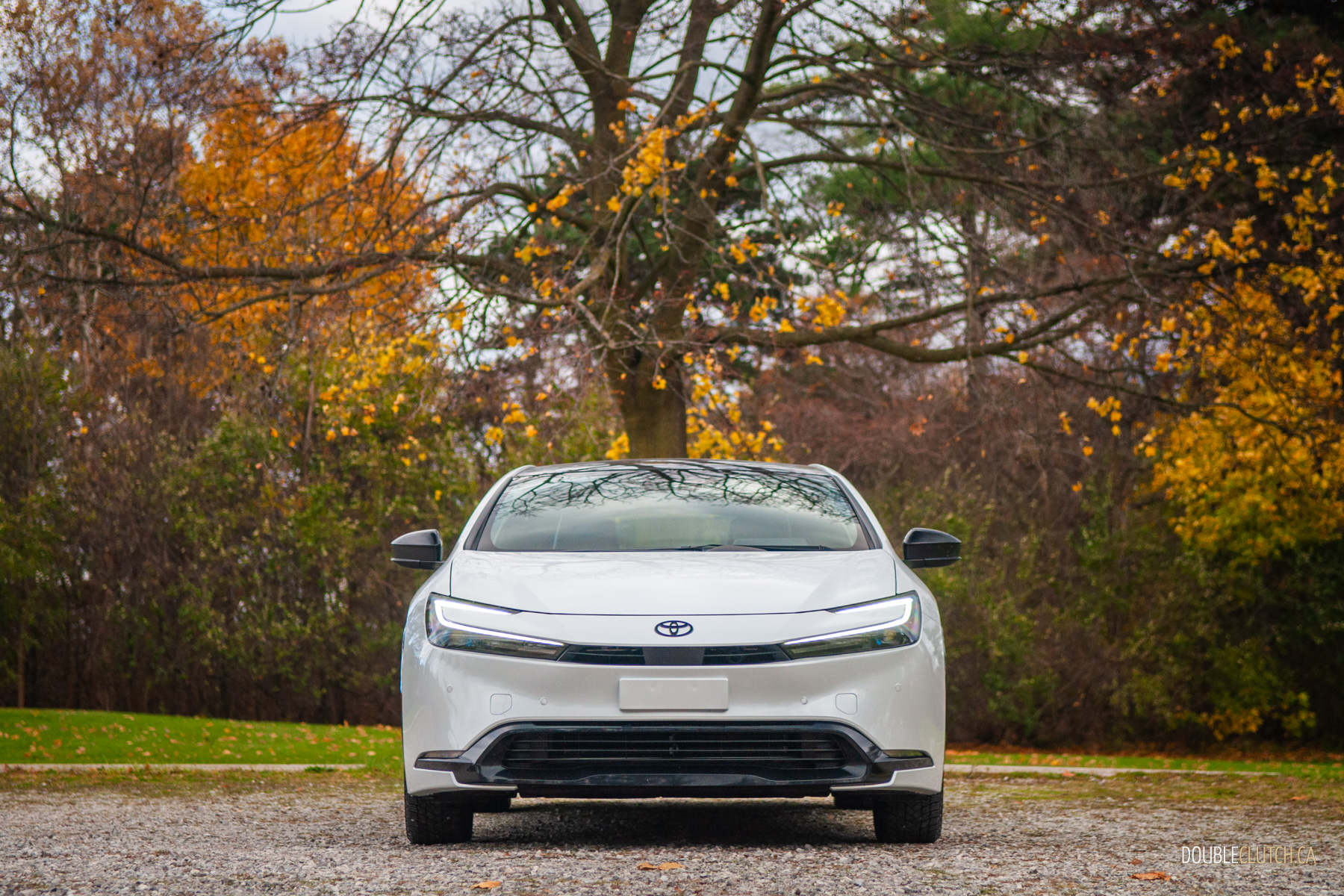
As we’ve seen with other Toyota models, the Nightshade package is entirely cosmetic. It adds blacked-out badges, door handles, grille trim, and wheels to the head-turning-in-a-good-way Prius. You can go for one of two main “looks” with the Prius Nightshade; for an extra $350, our tester’s Wind Chill Pearl paint shows off the changes nicely in a Stormtrooper-esque look, or stick with metallic black if you dig the whole “murdered out” motif. We’d skip the upcharge and stick with the “regular” XSE trim; black wheels are played out, anyway, and loud colours suit the Prius’ still-sexy bodywork better than shades.
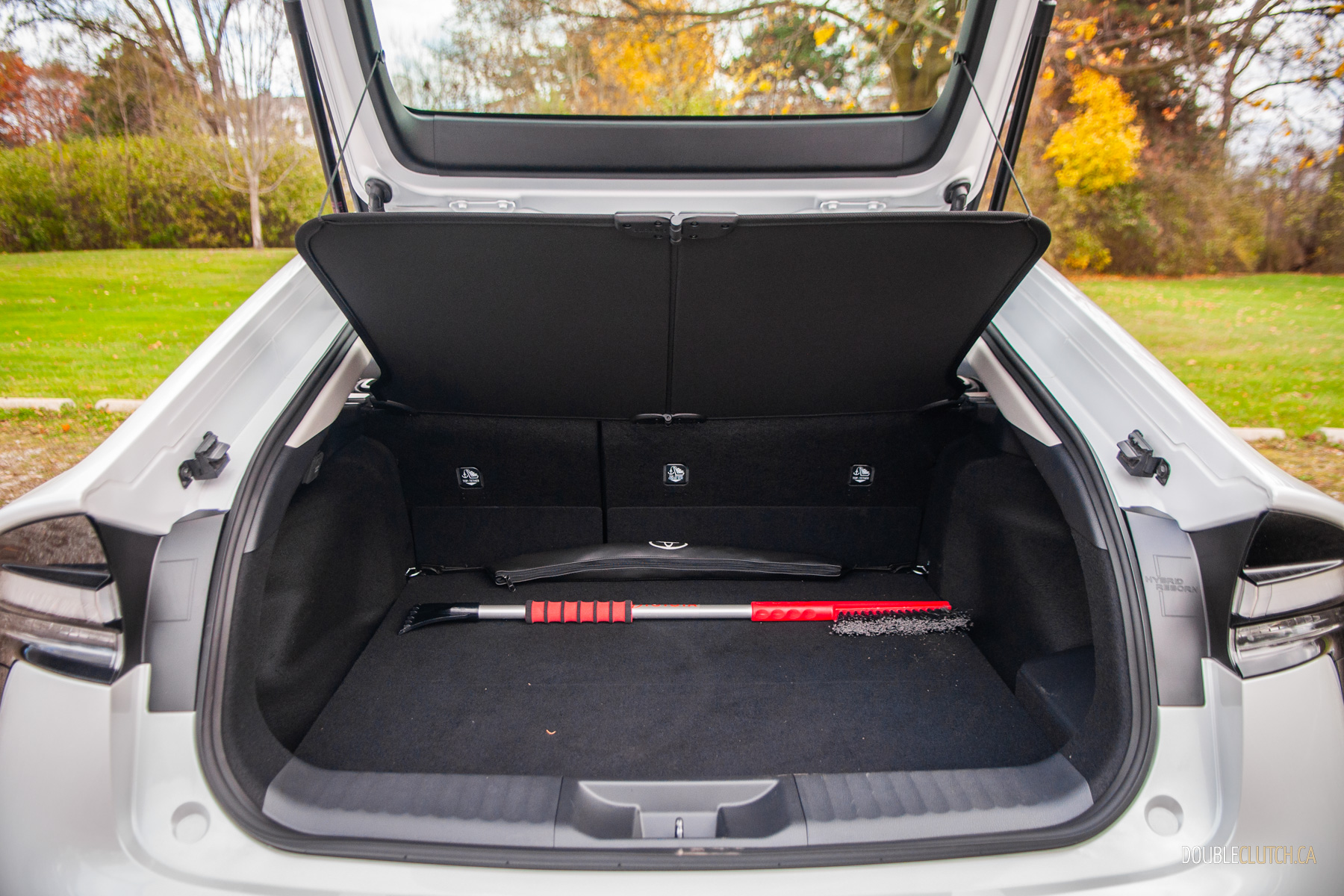
No matter the colour you spec, the Prius’ sleek silhouette and rakish likes are a refreshing glow-up from the dorky reputation its predecessors earned. It’s been a a genuinely good-looking thing for a few years now, but beauty requires sacrifice. The flowing silhouette and sleek roofline impact rear visibility, rear-seat headroom, and cargo space a wee bit. The Civic Hybrid hatchback has way more cargo space by a long shot, but the Prius is still usable. We had no trouble tossing a set of 19-inch wheels into the back of our tester and hauling them back to the shop.
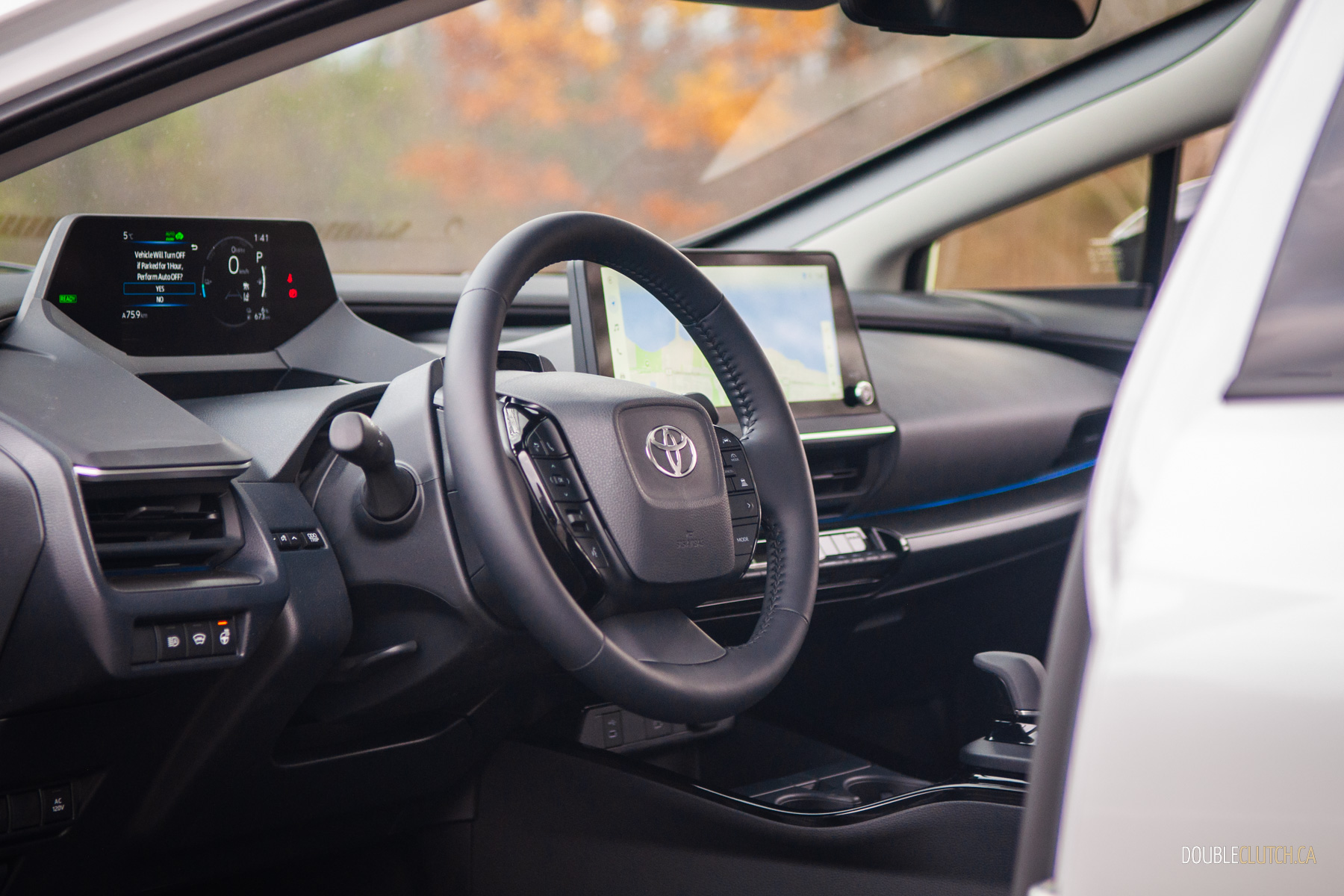
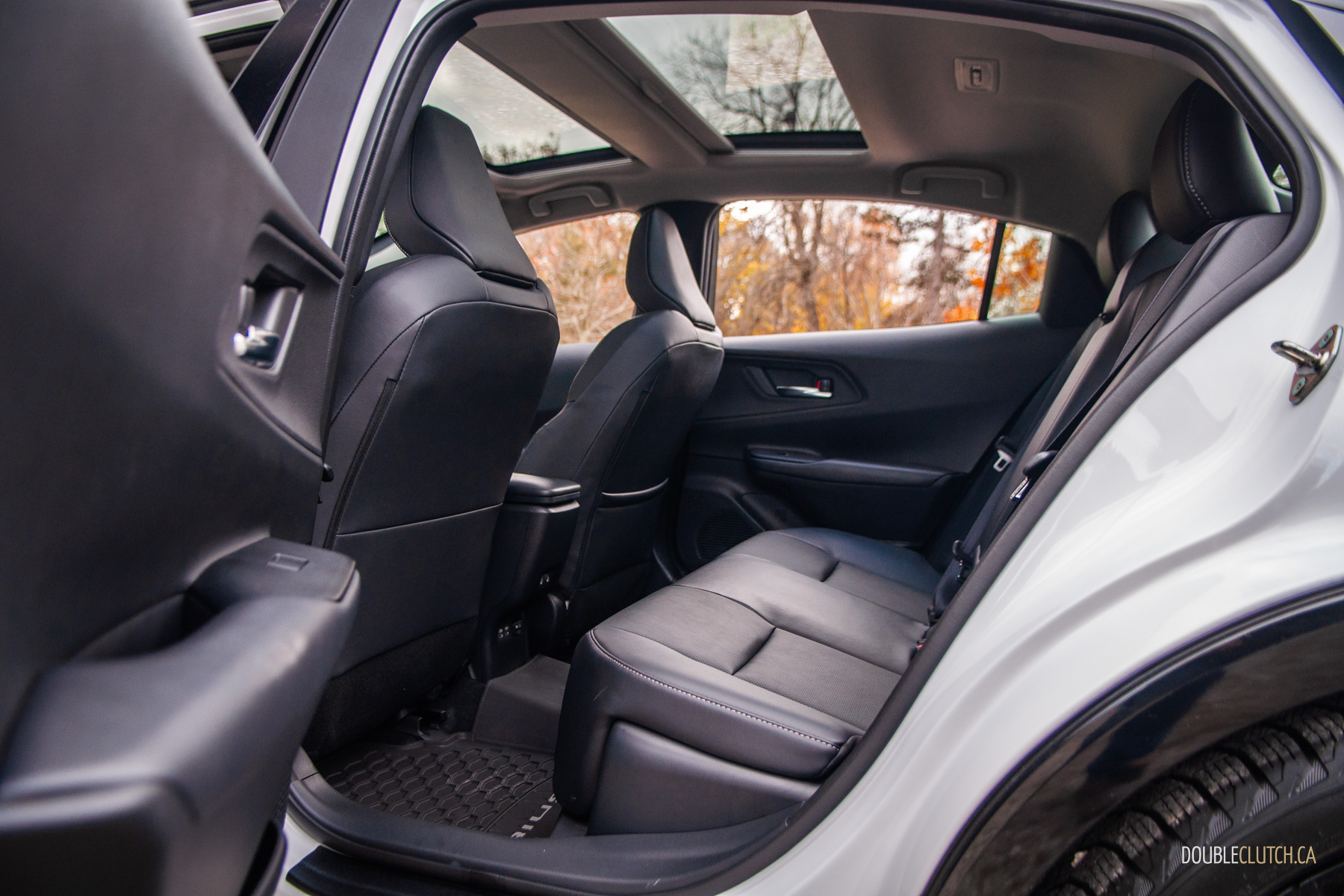
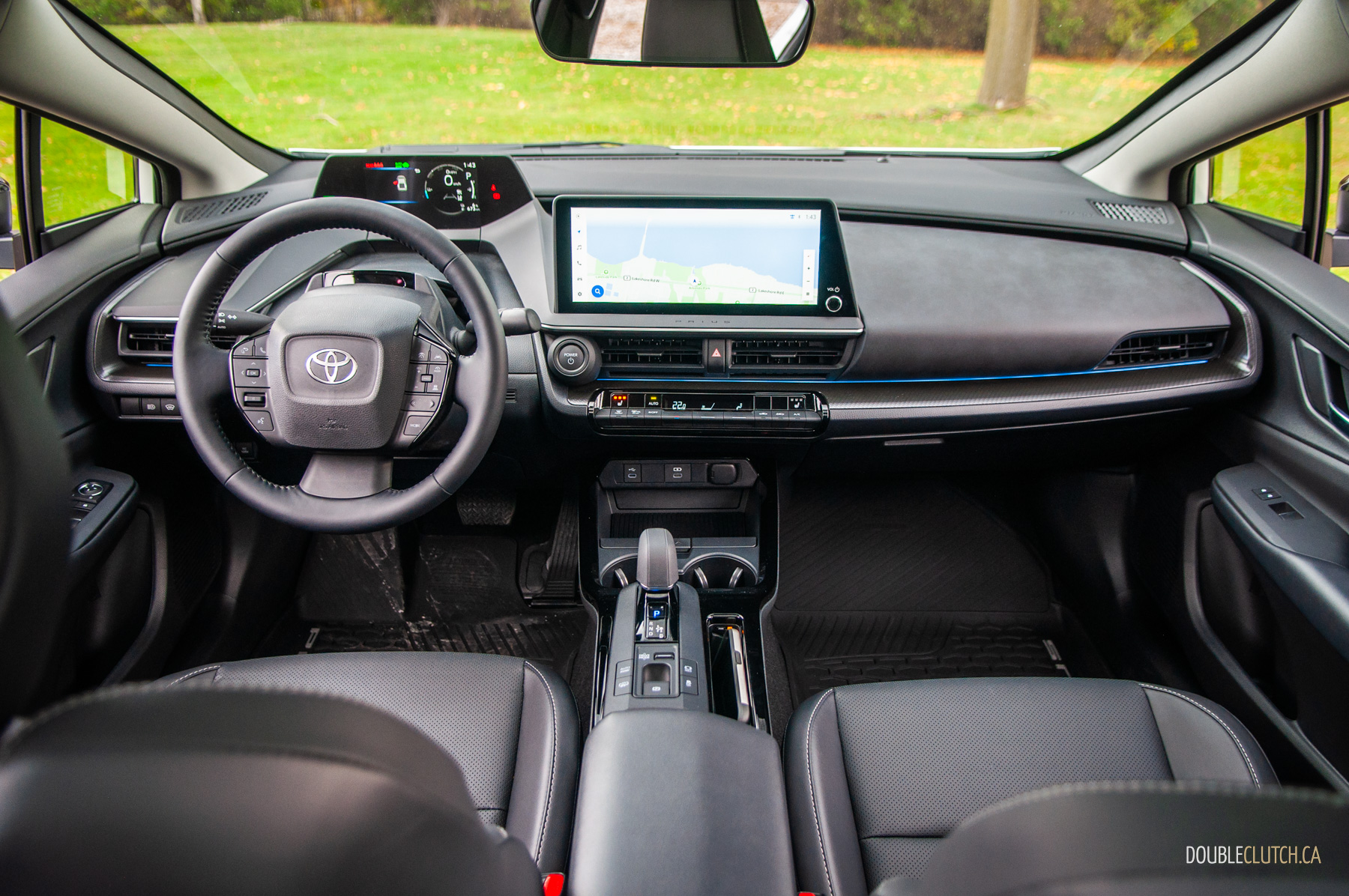
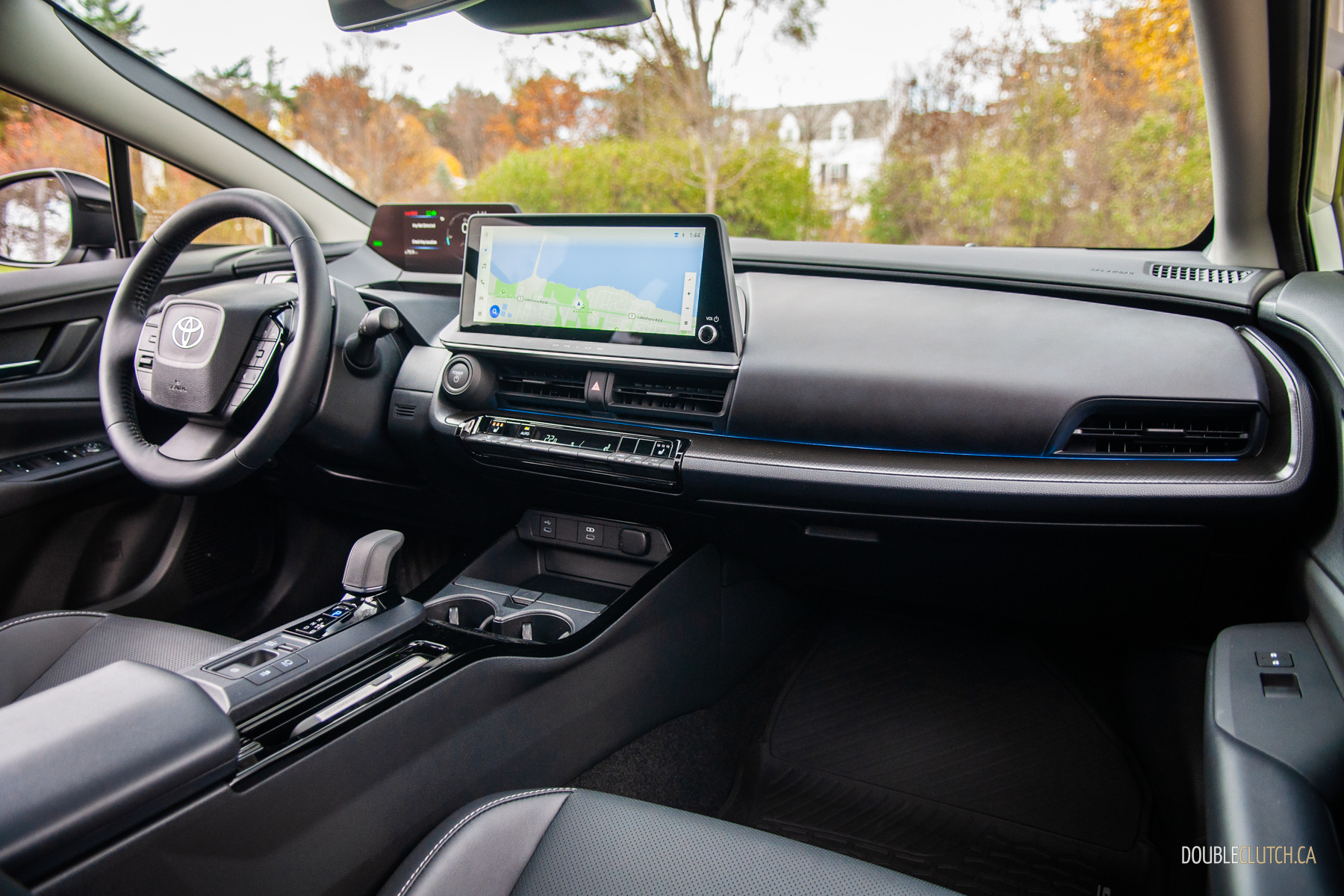
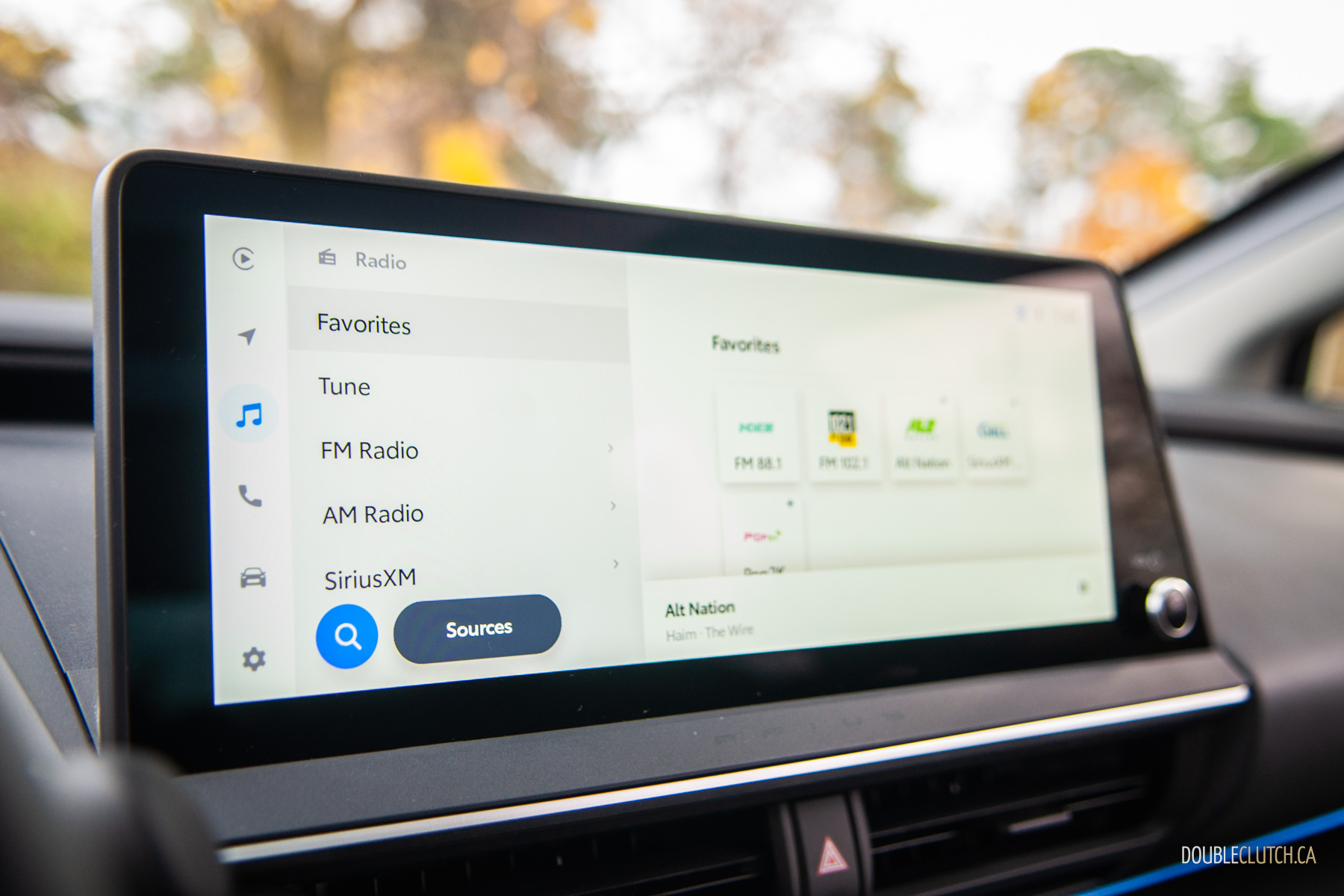
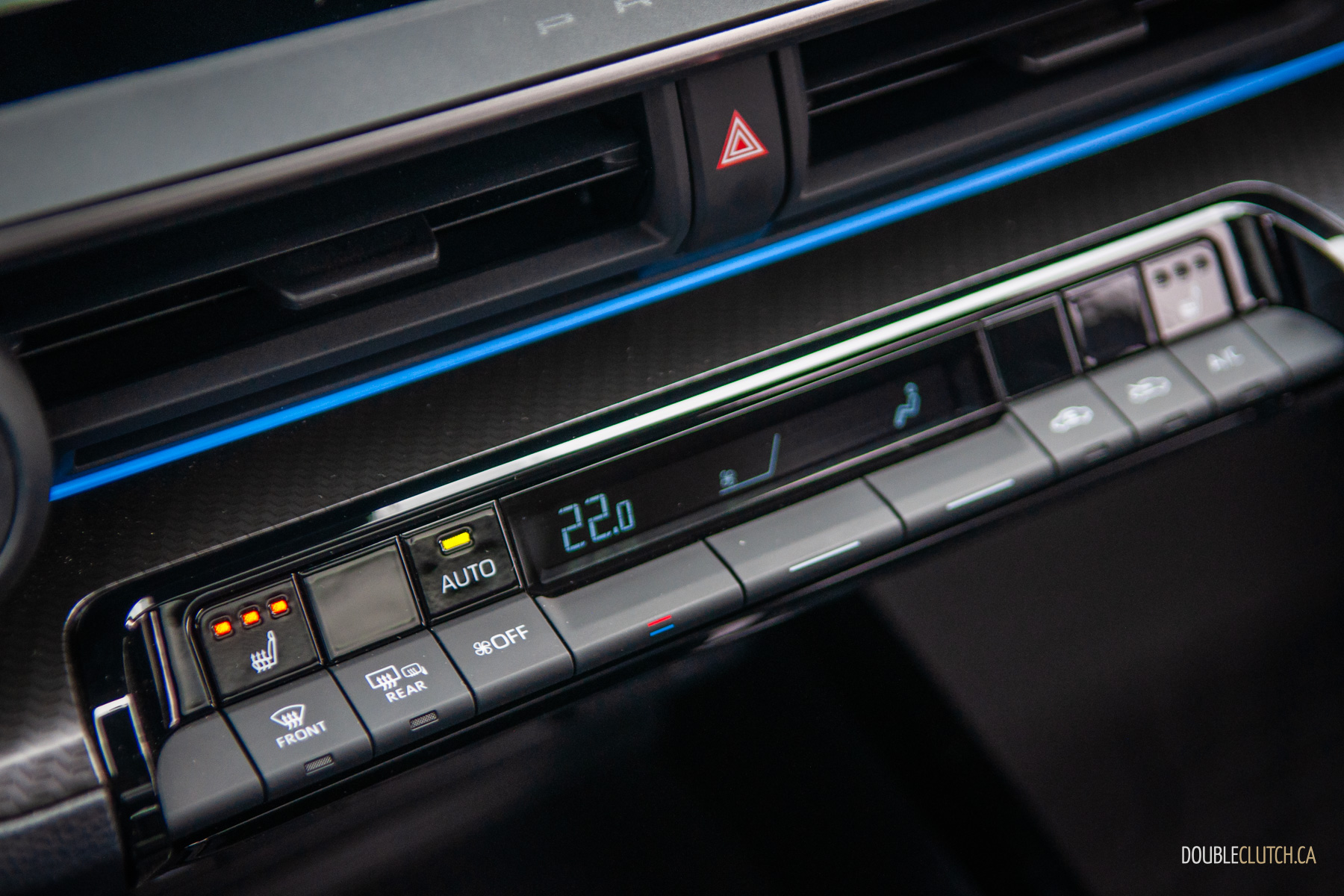
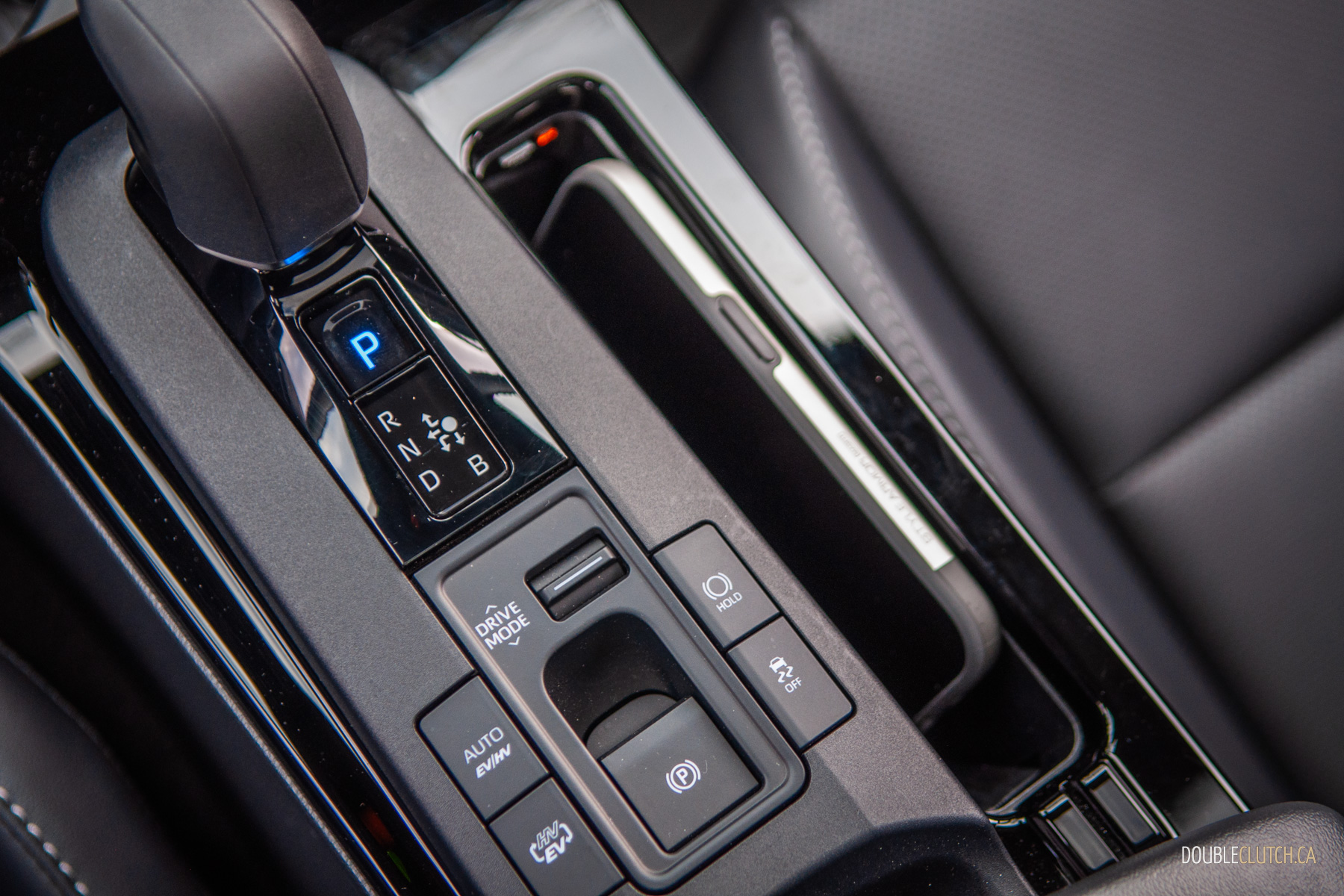
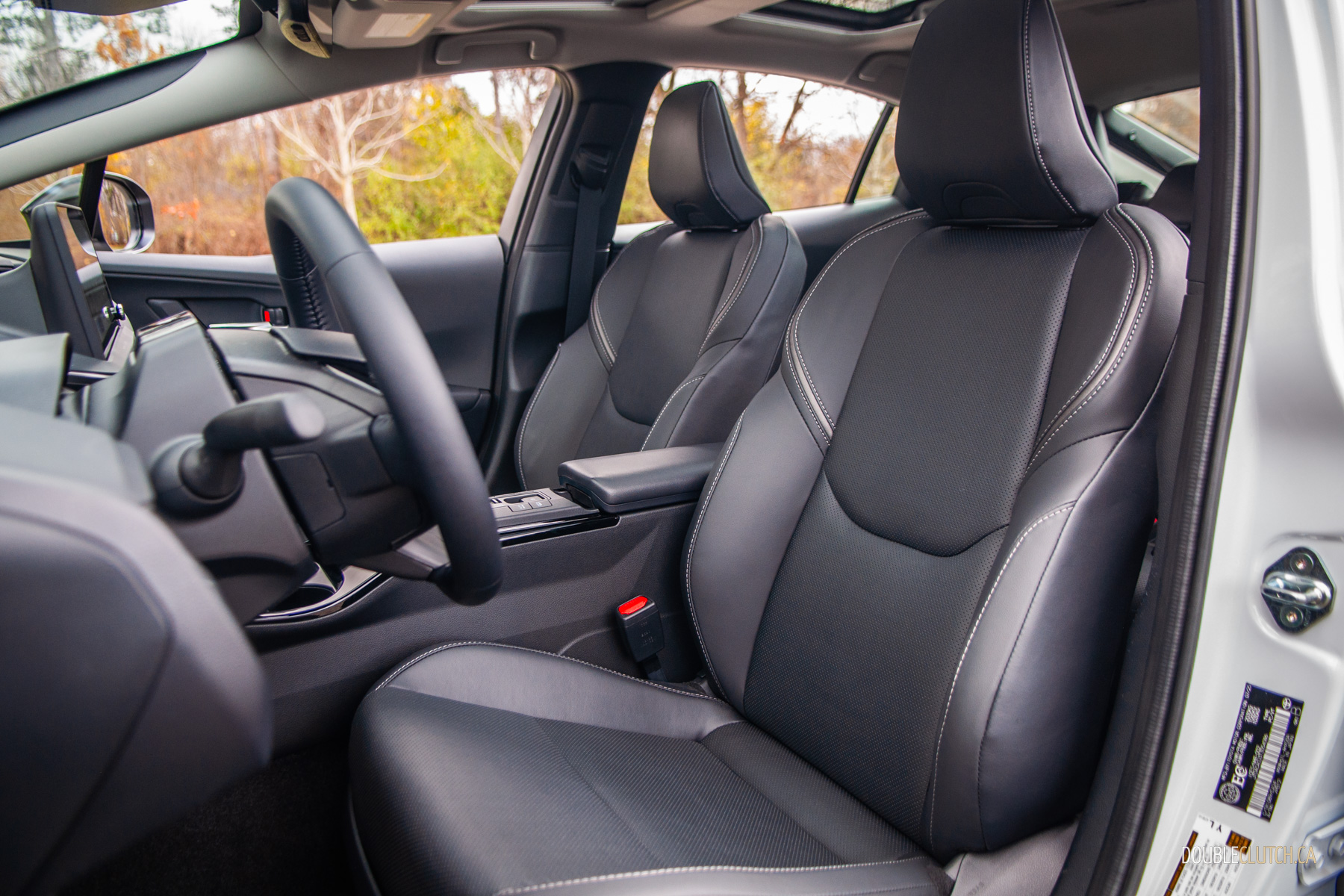
The rest of the fifth-gen Prius’ interior has aged well. Materials feel great, it’s all tight and well-built, and Toyota blesses the Prius with physical switchgear and real buttons for pretty much all of its controls. Base Prius PHEVs use an eight-inch touchscreen for infotainment; our Nightshade tester gets the upsized 12.3-inch widescreen, which is responsive and easy enough to use once you’ve mastered the slight learning curve. Wireless CarPlay and Android Auto, along with wireless charging for your phone, are all standard on the Nightshade, too.
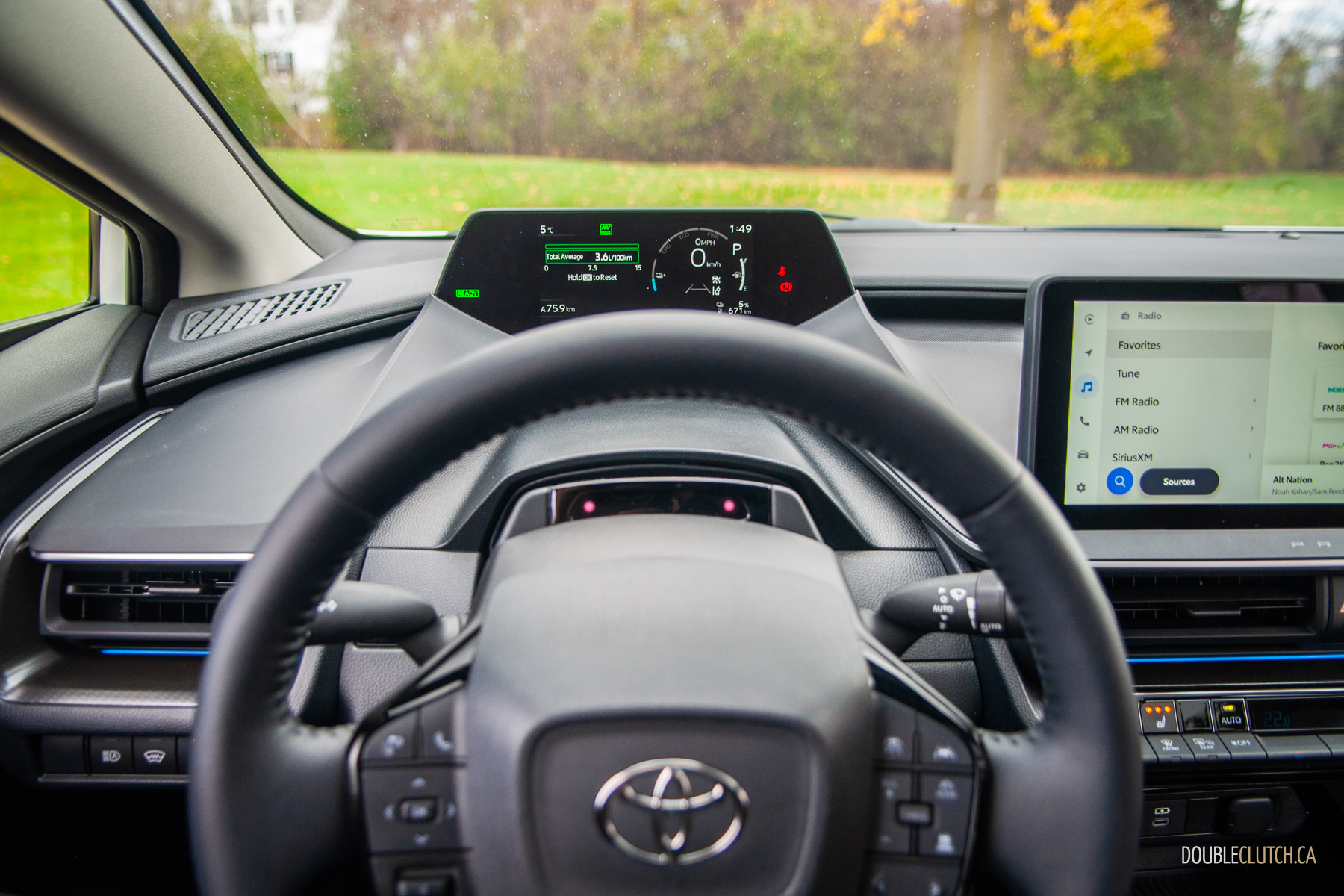
There’s a second, seven-inch screen mounted higher up on the dash serving as the digital instrument cluster. It gets the job done, but this arrangement — along with the Prius’ small-diameter steering wheel — takes some getting used-to. But once you do, and you will get used to it, you’ll realize the slightly smaller steering wheel suits the Prius’ playful nature.
How does the Prius drive?
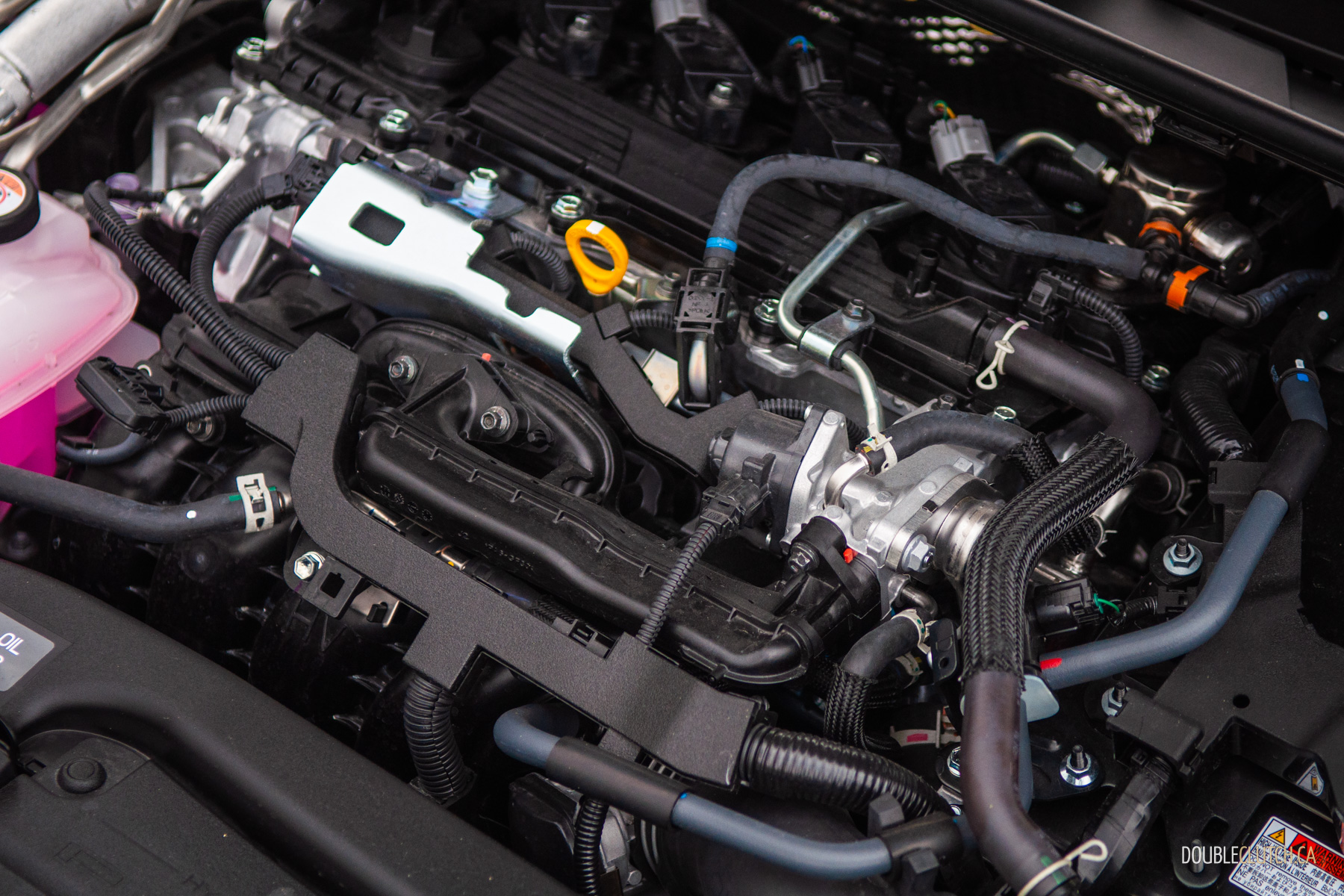
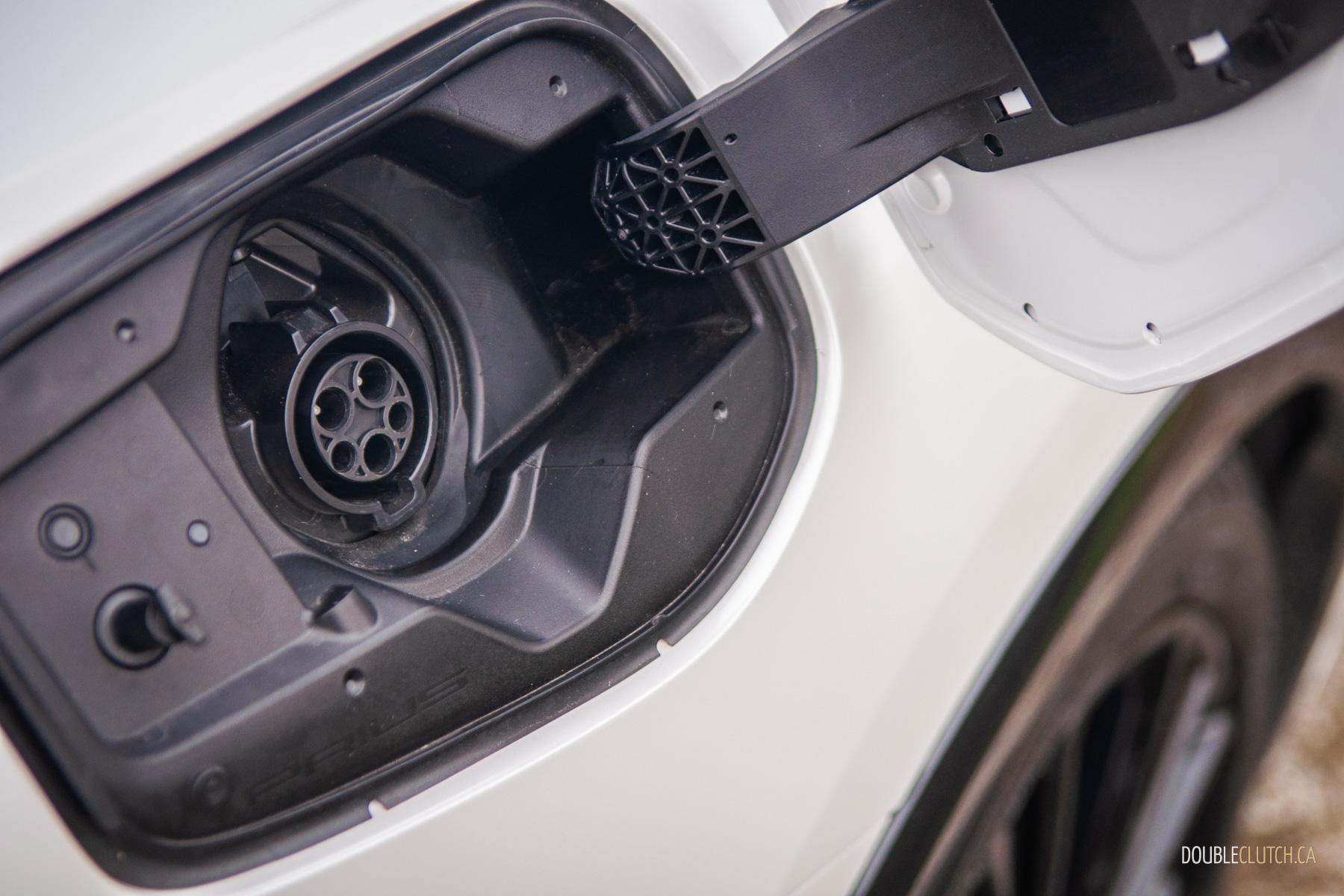
Yes, playful. Yes, really. The fifth-generation Prius rides on top of an evolved version of Toyota’s TNGA-C platform, and introduced a pair of more powerful hybrid and plug-in hybrid powertrains back in 2023. Our PHEV tester uses the same normally aspirated 2.0-litre four-cylinder gas engine as the standard Prius, but it’s connected to more powerful electric motors and a larger 13.6 kWh battery pack. It’s all good for 220 horsepower combined, and up to 72 kilometres of electric-only range.
Now, 220 ponies probably won’t win you a stoplight drag race against a Grand Highlander, but it’s more than enough to have fun. The Prius feels punchy; nail the skinny pedal off the line and you’ll probably outrun a Civic Si, which is crazy when you remember the third-gen Prius needed at least 10 seconds to knock off a 0-60 run. Even on the highway, the Prius’ electric motors are potent enough to keep up with traffic without having the gas engine kick on. When you’re not burning rubber (and hydrocarbons) the Prius PHEV is well-behaved. Wind and road noise are well-controlled, the suspension and chassis soak up bumps and rough pavement commendably despite the standard 19-inch wheels, and steering is predictably light but quick and responsive. It also feels unexpectedly tossable; carry a bit of extra speed into a tight on-ramp and the new Prius stays composed with surprising levels of grip and minimal body roll. That small steering wheel suddely doesn’t feel so out-of-place.
Obviously fuel economy is the star of the show, especially since the Prius manages to be quicker and more powerful than before. Officially, Toyota rates the Prius PHEV at 4.4 L/100 km in the city, 4.6 highway, and 4.5 combined as a hybrid. We averaged an impressive 4.7 L/100 km with it; keeping the battery topped up and leaning on it more would’ve brought that figure down considerably.
Should you buy a Prius PHEV?
Pricing for the 2026 Prius plug-in lineup runs from $40,050 for the base SE trim, all the way up to $48,535 for the top-of-the-line XSE Premium grade. Our Nightshade tester is an $895 option on top of the mid-range XSE’s $44,785 price tag; factor in another $350 for pearl white paint, and you’re looking at $46,030 as-tested, but before taxes, destination, and all that fun stuff. It’s a decent chunk of change, but the 2026 Toyota Prius Plug-in Hybrid is surprisingly fun to drive, surprisingly good-looking, unsurprisingly great on gas, and unsurprisingly easy to live with. It lets you have your cake and eat it, too.